
Commercial Scent Diffuser Showdown: A300 vs. T3 vs. SC19, 2026 Buyer Comparison
Commercial scenting programs are no longer evaluated only by fragrance quality. Hotel, shopping mall, bank, retail and airport buyers increasingly compare the hardware itself: enclosure material, input voltage, bottle capacity, rated coverage, noise and certification documentation. This article compares three SCENTSEA models that often appear on the same shortlist — the A300 commercial scent diffuser, the T3 high-capacity commercial scent diffuser, and the SC19 advertising scent machine — and explains how each set of specifications should inform a venue-level buying decision.
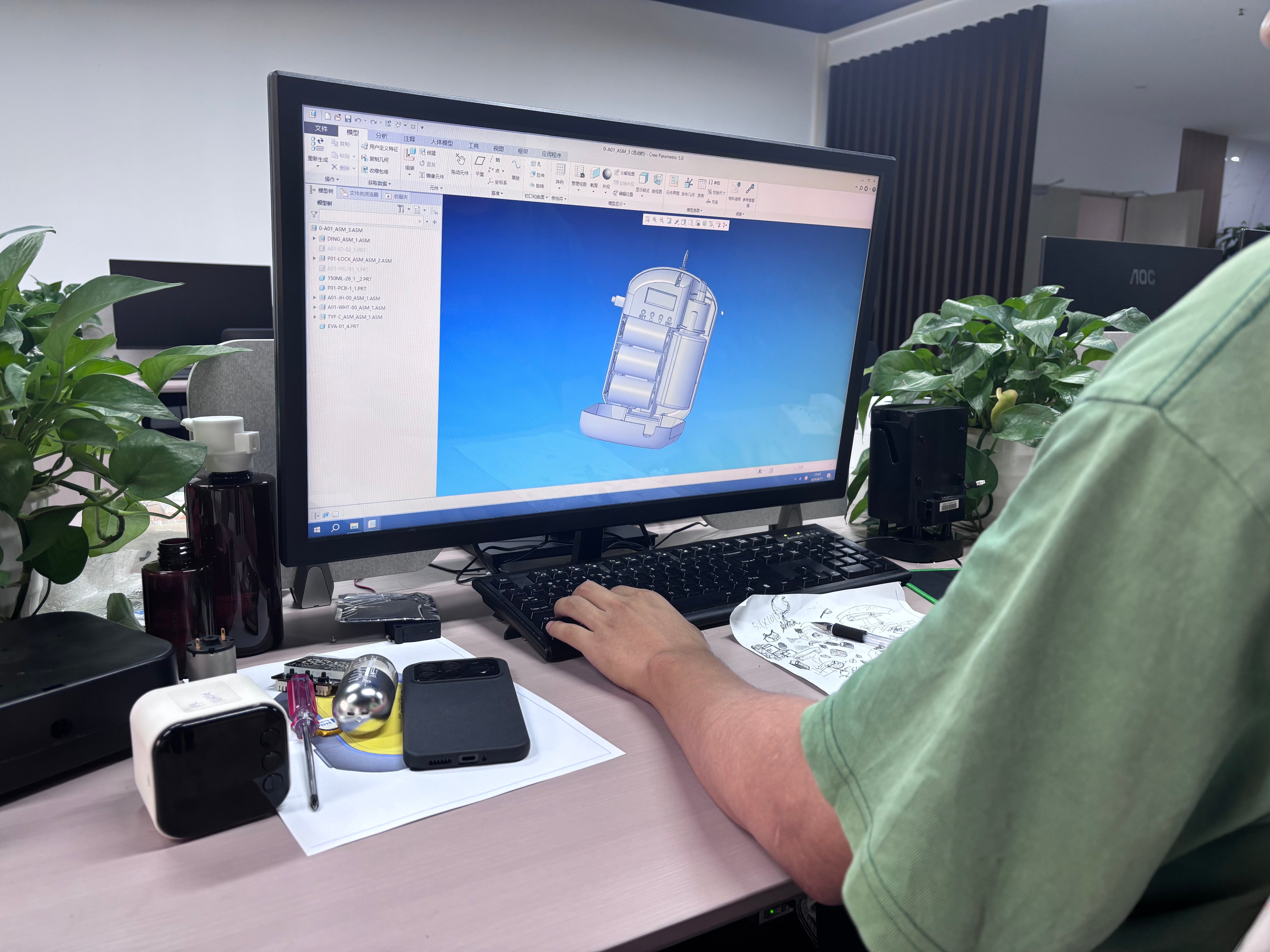
SCENTSEA R&D structural drawing. Commercial scent diffuser selection starts with engineering constraints such as enclosure layout, electronics integration and service access.
Why Model-Level Fit Is the Real Selection Problem
Facility managers and procurement teams evaluating commercial scent diffusers in 2026 typically move through three stages: confirm the venue type, estimate the space size, then compare models that can operate under the site’s physical and electrical conditions. In practice, the final decision is less about which brand is more visible and more about whether the unit can cover the intended area, fit the installation point, remain quiet enough for the environment and comply with the destination market’s documentation rules.
For hotels, shopping malls, retail stores, banks, airports and other high-traffic venues, the comparison set often includes the SCENTSEA A300, T3 and SC19. All three are made by Shenzhen Scentsea Technology Co., Ltd., a China-based manufacturer founded in 2021 that develops and supplies scent diffusers and fragrance oils for commercial use. SCENTSEA positions these three models for different commercial roles rather than as interchangeable alternatives. Understanding those differences helps buyers avoid over-specifying, under-specifying or selecting a model with the wrong power architecture.
According to Data Bridge Market Research, the global fragrance diffuser market was valued at USD 29.61 billion in 2024 and is projected to reach USD 38.10 billion by 2032, with North America accounting for roughly 43.87% of global revenue in 2024. That scale helps explain why procurement teams are formalizing fragrance hardware decisions instead of treating them as accessory purchases.
A300 vs. T3 vs. SC19: Full Specification Map
The table below consolidates the rated specifications published for the three models. Buyers should treat coverage, noise and oil consumption figures as rated values rather than guaranteed results, because ceiling height, airflow, partitions and intensity settings all affect real-world performance.
| Parameter | A300 | T3 | SC19 |
|---|---|---|---|
| Product type | Commercial scent diffuser | Commercial scent diffuser | Advertising scent machine |
| Material | Steel | Acrylic panel + steel casing | Aluminum + steel |
| Oil capacity | 500 ml | 1000 ml | 500 ml |
| Rated coverage | 500–800 m² / 1500–2500 m³ / 5000–8500 ft² | 1000–1600 m² / 3000–5000 m³ / 10000–17000 ft² | 150–250 m² / 500–800 m³ / 1500–2500 ft² |
| Power supply | DC12V | DC12V 2A | 110–240V AC |
| Power consumption | 12W | 15W | 30W |
| Noise | <40dB | <55dB | ≤30dB |
| Oil consumption | 4ml ±10%/h | 4.6ml ±10%/h | 6ml ±5%/h |
| Net weight | 3.8 kg | 5.3 kg | 6.5 kg |
| Product dimensions | L231 × W105 × H271 mm | L250 × W125 × H300 mm | L280 × W63.5 × H495 mm |
| Color options | White, black | White, black (customized) | Black + silver |
| Target venue types | Hotel, shopping mall, retail store | Shopping mall, hotel, airport | Shopping mall, hotel, bank |
Material and Enclosure Differences
The A300 lists steel as its primary material. The T3 uses an acrylic panel with a steel casing. The SC19 combines aluminum and steel in a taller, slimmer housing that also integrates an 18.5-inch screen. These material choices affect weight, visual integration and long-term durability expectations.
For a hotel corridor, front desk or retail floor, the A300’s steel enclosure and relatively compact size — L231 × W105 × H271 mm at 3.8 kg — make it easier to place where staff can access the bottle for refills. The T3 is larger at L250 × W125 × H300 mm and heavier at 5.3 kg, with a higher 1000 ml oil capacity. The acrylic panel provides a different front-face appearance, while the steel casing contributes structural rigidity. Custom colors are available on the T3, which can help project teams match the unit to interior finishes.
The SC19 is structurally different. It is a digital advertising scent machine with an 18.5-inch 1920×1080 screen, EMMC 8G internal storage and a black-and-silver aluminum-and-steel body. It weighs 6.5 kg and is much taller than the other two models at H495 mm. The design goal is not simply to diffuse scent; it is to combine a branded screen with scent delivery in a customer-facing area. This matters for banks, mall entrances and hotel lobbies where communication and ambience are considered together.
DC12V vs. AC Power: A Practical Procurement Issue
Power requirements are one of the most important differentiators in this comparison. The A300 is rated for DC12V, while the T3 lists DC12V 2A. The SC19, by contrast, is rated for 110–240V AC and consumes 30W.
For an installation team, this changes how the unit is wired and where it can be placed. A DC12V unit typically needs an external power adapter or a controlled DC supply point. If a project already plans low-voltage control cabinets or timer-controlled power, DC12V models fit that architecture. If the site has convenient standard AC outlets and the team wants to avoid an extra adapter, the SC19’s AC input is simpler to plan around.
Power consumption also differs: the A300 is rated at 12W, the T3 at 15W, and the SC19 at 30W because it powers both the scent system and the advertising display. Buyers should include electricity in total cost modeling, especially for deployments running many hours per day.
Coverage Capacity and Refill Frequency
Rated coverage is the first place where buyers can over-select. The A300 covers 500–800 m² per its datasheet; the T3 covers 1000–1600 m²; the SC19 covers 150–250 m². These ranges reflect different intended roles, not a quality ranking.
The T3 is the strongest of the three in terms of rated area. Its 1000 ml bottle also reduces refill frequency in larger zones. At the rated oil consumption of 4.6ml ±10%/h, a full bottle theoretically supports more than 200 hours of continuous atomization before refilling. The A300, with 500 ml and 4ml ±10%/h oil consumption, offers a smaller total service window but may be a better fit where the space is smaller and a quieter unit is preferred.
The SC19 has the smallest rated coverage, yet its oil consumption is listed at 6ml ±5%/h — higher than both the A300 and T3. Buyers should not interpret this as inefficiency. The SC19 combines digital advertising and scenting in one customer-facing footprint, so the operational comparison is different from a dedicated high-volume scent diffuser. However, for facilities whose only objective is large-area fragrance coverage, the SC19’s 150–250 m² rating means it should not be treated as a replacement for the T3.
Venue Matching: What the Specifications Mean for Hotels, Malls and Banks
Hotel
Hotel projects usually need quiet operation, discreet hardware and reliable refill intervals. The A300 lists hotels as an applicable venue, with a noise rating below 40dB and a 500–800 m² coverage range. That makes it suitable for lobbies, corridors or meeting wings where the atmosphere should remain calm. For larger hotel public areas or airport hotels where the space extends beyond 1000 m², the T3 provides more capacity and larger rated coverage, though its noise rating is higher at below 55dB.
Shopping Mall
Shopping malls have high ceilings and big open zones. Both the T3 and A300 list shopping malls as applicable. The T3 is the more appropriate candidate when the goal is to cover a wide area with fewer devices, because its rated coverage reaches 1000–1600 m² and its 1000 ml bottle supports longer operation. The SC19 can also appear in malls, but its role is more focused: advertising scent machine placements near entrances, escalators or feature areas where the screen delivers promotional content alongside fragrance.
Bank
Banks are listed as an applicable venue for the SC19, not for the A300 or T3 in the provided spec data. A bank branch or wealth-management waiting area is usually smaller than a mall floor, and the SC19’s 150–250 m² coverage can be sufficient. The 18.5-inch screen can carry service information, product announcements or brand messages, while the scent system works to keep the waiting environment pleasant. For bank projects that need scent only, without digital signage, buyers should evaluate other models outside this three-model set.
Retail, Airport and Other Zones
Retail stores appear in the A300’s applicable list. Airports appear in the T3’s applicable list. Because airports typically contain large, open circulation areas and long operating hours, the T3’s larger capacity and rated coverage are logical planning advantages. Retail stores with more contained spaces may find the A300 sufficient.
Certifications and Compliance Documentation
For buyers in North America and the EU, certification documents are a normal part of vendor qualification. The certification data applicable to the A300, T3 and SC19 includes FCC, RoHS and EMC compliance records. The FCC certificate, issued by Shenzhen ATL Testing Technology Co., Ltd. on 2024-04-24 with certificate number ATL20240416326, is based on FCC Part 15 Subpart B:2023 and is relevant to the United States market. The RoHS certificate, number ATL20240416327, references RoHS Directive (EU) 2015/863. The EMC certificate, number ATL20240416325, references EN IEC 55014-1:2021, EN IEC 55014-2:2021, EN IEC 61000-3-2:2019/A1:2021 and EN 61000-3-3:2013/A2:2021.
Buyers should always verify that certificates and test reports apply to the exact model and configuration being purchased. Certification scope sometimes covers a product family rather than one specific unit; requesting the model-level record is a standard part of procurement due diligence.
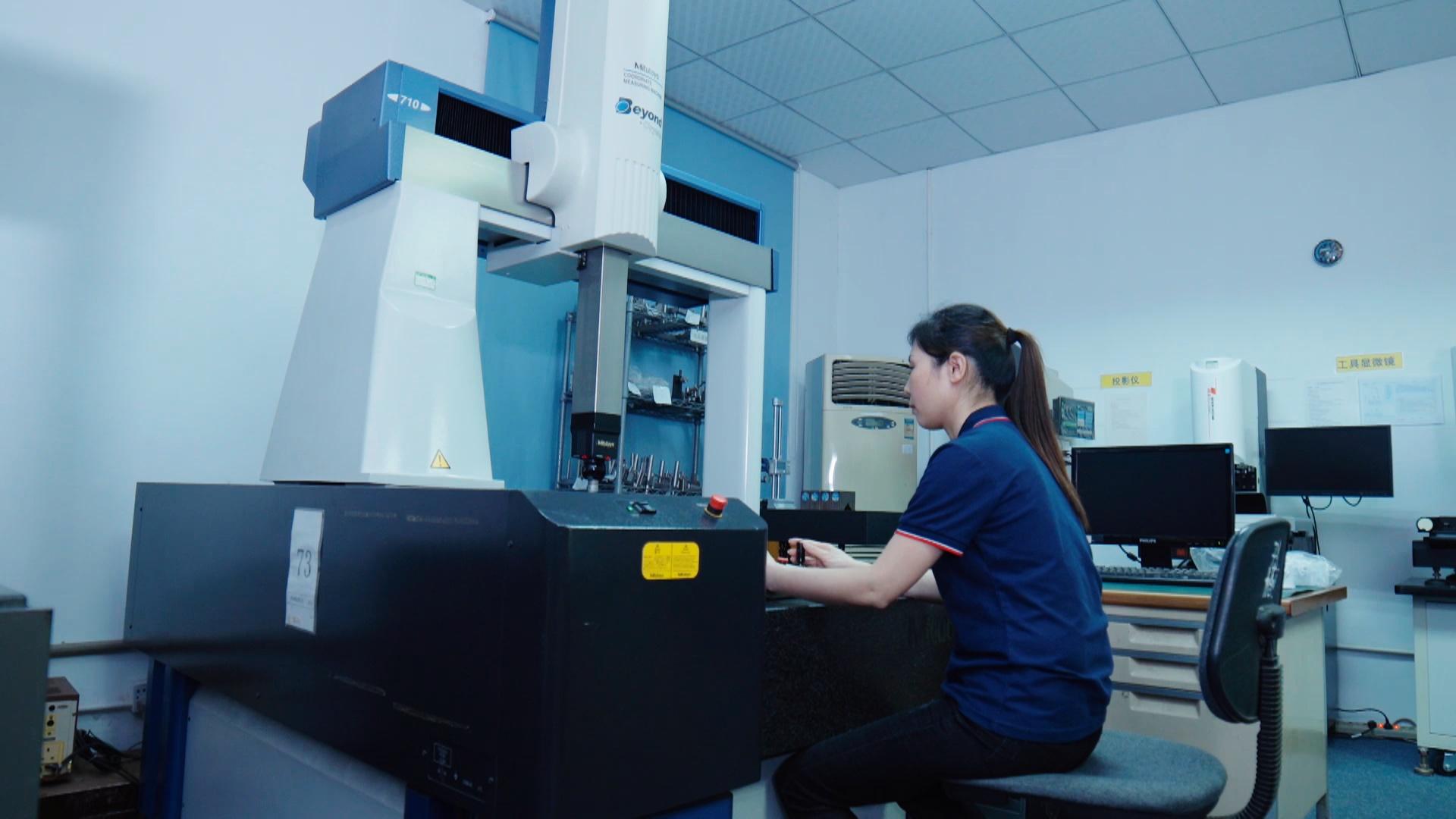
SCENTSEA quality measurement equipment. Quality-control checks apply across the manufacturer’s scent diffuser output before shipment.
Quality Control, Warranty and Sourcing Terms
Buyers moving from evaluation to execution should confirm what happens before shipment. SCENTSEA states that 100% of its diffusers undergo functional testing, atomization testing, leakage inspection, noise testing, APP/control testing, a 48-hour aging test and final appearance inspection before shipment. Spare parts are covered by a 1-year free warranty. For project purchasers, these commitments can be written into vendor qualification checklists alongside the product specifications.
SCENTSEA’s published sourcing terms also support staged buying. The minimum order quantity is 1 unit, typical production lead time is 25–35 days, and monthly production capacity is 8,000 units. Payment terms are 50% T/T in advance with the balance paid before shipment, and delivery can be arranged under EXW, FOB or CIF. The supplier also provides OEM/ODM services; customization can cover logo, product color, packaging, user manual, plug type, APP interface, PCB/functions and other product specifications.
For internal review or specification summaries, procurement teams can reference the manufacturer’s published catalogue: SCENTSEA Catalogue (PDF).
Comparison with Traditional Solutions
Commercial buyers often compare these standalone cold-air or advertising scent machines against ultrasonic water-based aroma diffusers. SCENTSEA’s product line is positioned around cold-air nebulizing and waterless scent diffusers for commercial spaces. Unlike ultrasonic aroma diffusers that require a water tank and more frequent cleaning, waterless cold-air units atomize fragrance oil directly and are generally planned for continuous commercial operation. That difference influences daily maintenance and oil formulation choices.
Nebulizing, waterless and cold-air products also appear in third-party market research. One industry estimate states that nebulizing diffusers represent approximately 22.6% of the ambient scent diffuser market, favored for professional-grade scent potency in commercial environments. Buyers should still treat any segment share as directional context rather than proof that one model will perform better in a specific building.
Known Boundaries of This Three-Model Comparison
A full procurement review should acknowledge what these three models are not designed to do.
First, none of the A300, T3 or SC19 is positioned as a centralized HVAC scent diffuser. For projects that require scent injection directly into air-handling ducts across a large building, buyers should evaluate a dedicated HVAC scenting system such as SCENTSEA’s AC-MAX, which is listed separately with a much larger capacity and coverage profile.
Second, the SC19 is not a general-purpose large-area fragrance engine. Its 150–250 m² coverage and screen-centric form factor make it a specialty device for customer-facing digital messaging combined with scenting. Using it solely for wide-area scent coverage would be a mismatch.
Third, rated coverage figures are planning references. Room segmentation, ceiling height, ventilation, airflow and partitions affect actual fragrance distribution. Buyers should test a sample in the real venue, adjust intensity settings, and only then finalize the number of units.
Future Outlook for Commercial Scent Diffuser Buying
The broader commercial scenting market continues to grow as customer experience becomes a more formal part of facility management. Data Bridge Market Research projects the global fragrance diffuser market will reach USD 38.10 billion by 2032, and Intel Market Research valued the HVAC scent diffuser market at USD 1.01 billion in 2024 with an expected CAGR of 4.5% through 2034. These numbers suggest that buyers will increasingly compare hardware on operational metrics rather than only on fragrance notes.
Regulatory attention is also shifting. IFRA 51, introduced in 2023, set stricter global safety standards for fragrance ingredients used in diffusers, affecting allowable usage levels for inhalation safety. For procurement teams, the implication is straightforward: the diffuser hardware and the fragrance oil formulation should be reviewed together, and documentation should be checked at the model level.
Within the SCENTSEA lineup, the A300, T3 and SC19 illustrate three distinct procurement paths. The A300 is a steel-bodied commercial diffuser for medium spaces. The T3 is a larger-capacity commercial diffuser for bigger venues. The SC19 is a digital advertising scent machine for communication-rich areas. As 2026 projects move into execution, the buyer who maps each unit’s specifications to the actual space — rather than relying on brand-level assumptions — will produce the more predictable scenting result.
Buyer FAQ: A300, T3 and SC19
What is the main difference between the A300 and T3 commercial scent diffusers?
The A300 is a commercial scent diffuser with a 500 ml bottle, 500–800 m² rated coverage, DC12V power, 12W consumption and noise below 40dB. The T3 is a larger commercial scent diffuser with a 1000 ml bottle, 1000–1600 m² rated coverage, DC12V 2A power, 15W consumption and noise below 55dB. The T3 is positioned for bigger areas such as shopping malls, hotels and airports.
Which model is better for a hotel: the A300 or the T3?
It depends on the area and the acceptable noise level. The A300 lists hotels as applicable venues, offers 500–800 m² coverage and maintains noise below 40dB, which suits quieter hotel spaces. The T3 also lists hotels as applicable but is built for larger coverage up to 1000–1600 m², with a higher noise rating. Buyers should measure the actual lobby or corridor space and consider where the unit will be installed.
Does the SC19 need special power wiring?
The SC19 is rated at 110–240V AC, so it can be planned around standard AC power outlets. Its power consumption is 30W, which should be included in the site electrical plan.
Are the A300, T3 and SC19 certified for the US market?
The FCC compliance record ATL20240416326, issued under FCC Part 15 Subpart B:2023, covers scent diffuser products including the A300, T3 and SC19. Buyers should request the certificate and confirm it applies to the exact production model and configuration before shipment.
What certifications should EU buyers check for these models?
European buyers should normally check applicable CE and RoHS compliance documentation. In the provided SCENTSEA records, RoHS certificate ATL20240416327 references RoHS Directive (EU) 2015/863, and EMC certificate ATL20240416325 references the relevant EN IEC 55014 series standards. The certificates should match the exact model being purchased.
What do the noise ratings mean in practice?
The A300 is rated below 40dB, the T3 below 55dB, and the SC19 at or below 30dB. A lower noise rating may be preferable in quiet areas such as hotels or bank waiting rooms. Actual perceived noise also depends on placement, building acoustics and operating intensity.
Is the SC19 suitable for large shopping mall spaces?
The SC19 lists shopping malls as an applicable venue, but its rated coverage is 150–250 m². It is an advertising scent machine with an 18.5-inch screen, so it is more appropriate for a defined customer-facing zone than for whole-floor scenting in a large mall.
Can I customize the A300, T3 or SC19 for an OEM or private-label project?
SCENTSEA states that customization is available for logo, product color, packaging, user manual, plug type, APP interface, PCB/functions and other product specifications. The T3 already lists “customized” as an option for color. Buyers should discuss the specific model and quantity with the supplier during the RFQ stage.
Are these three models suitable for bathrooms or elevators?
The A300 is targeted at hotels, shopping malls and retail stores; the T3 at shopping malls, hotels and airports; and the SC19 at shopping malls, hotels and banks. None lists bathrooms or elevators as its primary application. Smaller or battery-operated models may be more practical for toilet and elevator areas.
What is the MOQ and lead time for a commercial order?
SCENTSEA states a minimum order quantity of 1 unit, a typical production lead time of 25–35 days, and a monthly production capacity of 8,000 units. Buyers should confirm current lead time, shipping terms and sample requirements with the supplier before placing an order.
Tem questões ou precisa de mais detalhes?
Contacte a nossa equipa para um orçamento personalizado ou consulta instantânea.
Solicitar orçamento
Preencha o formulário abaixo e a nossa equipa entrará em contacto com uma proposta personalizada.
Chat direto do WhatsApp
Prefere conversar em tempo real? Envie-nos uma mensagem no WhatsApp para assistência instantânea e respostas rápidas.
- Obter orçamento personalizado
- Partilhar fotos ou documentos
- Discuta as suas necessidades diretamente
Geralmente responde em 5–30 minutos durante o horário de expediente.