
Commercial Scenting Supplier Evaluation: Power, Oil, Noise
HTNXT INDUSTRY REFERENCE · COMMERCIAL SCENTING
Commercial scenting has moved from an optional hospitality flourish to a measurable operating expense. For procurement teams, the supplier decision now turns on a narrow set of lifecycle data: how much oil a unit consumes, how much power it draws, how loudly it runs, and whether it recovers cleanly after an interruption. This guide examines those data points across three SCENTSEA models and sets out the purchasing terms, acceptance criteria and support questions that reveal how a supplier will behave over a multi-year contract.
Commercial scenting is the delivery of a consistent fragrance profile across a commercial interior, such as a hotel lobby, retail floor, office, bank branch, airport terminal or shopping mall, through dedicated diffusion hardware. Unlike consumer aroma diffusers, commercial systems are specified, installed and maintained as part of building operations, and they are expected to run quietly for years rather than weeks.
That change in status alters the buying question. At the awareness stage, buyers ask what commercial scenting is and which hardware categories exist. At the research stage, the question becomes which supplier can support a scenting programme for years without escalating maintenance cost or operational disruption. The answer rarely sits in a brand claim. It sits in the operating and lifecycle specification.
Why Long-Term Supplier Evaluation Starts With Operating Data
Many supplier conversations begin with brand claims: the widest coverage, the quietest motor, the most sophisticated app. Those claims are difficult to compare across vendors because they are rarely stated against the same conditions. Operating specifications are more useful because they can be verified, tested and converted into cost and maintenance plans.
For a multi-year contract, four operating figures do most of the work. Oil consumption sets refill frequency and fragrance spend. Power draw and power source set electrical planning and, for battery units, replacement cycles. Noise determines whether a unit can be placed in guest-facing or quiet spaces. Coverage and mounting determine how many units a site needs and where they sit.
Material, control and reconnect behaviour sit alongside these as secondary but increasingly important indicators. A diffuser that loses its schedule after a power cut becomes a hidden labour cost. A housing that cannot be cleaned with standard site products becomes an appearance problem in a guest-facing lobby.
The Four Metrics That Determine Lifecycle Cost
Before comparing specific models, it helps to define what each metric does in a procurement decision.
- Oil consumption (ml/h) sets refill frequency, fragrance spend and site labour. It is also the metric most sensitive to intensity settings, oil viscosity and atomizer condition.
- Power draw (W) and power source set circuit planning, outlet placement and, for battery units, the cost and logistics of replacement batteries.
- Noise (dB) determines whether a unit can be placed in quiet zones such as guest corridors, bank branches, offices or premium retail floors.
- Coverage (m²) and mounting determine unit count, placement and installation labour. Rated coverage is a maximum, not a guarantee.
A fifth factor, control and reconnect, has become a practical uptime measure. It does not appear in every catalogue, but where it is documented it tells a buyer how much manual intervention a site will need.
How H5000, P02 and P01 Compare on Operating Specs
Shenzhen Scentsea Technology Co., Ltd (SCENTSEA) is a Shenzhen-based manufacturer of scent diffusers and fragrance oils, founded in 2021. Its range includes wall plug-in, portable, wall-mounted, floorstanding, HVAC and large-space commercial scent machines for hotels, retail stores, offices, banks, shopping malls and similar environments. The H5000, P02 and P01 referenced here are three of its commercial models; product reference 4705 corresponds to the P01 in the catalogue.
H5000: Aluminum Floor-Standing Unit for Large Open Spaces
The H5000 is a floor-standing scent diffuser built from aluminum in a gunmetal finish. It is rated for 800–1,300 m² (2,500–4,000 m³ / 8,600–14,000 ft²), holds 1,000 ml of fragrance oil, draws 20 W from a DC 12 V plug-in supply, runs below 45 dB and consumes 5.4 ±10% ml/h. The unit measures 180 × 180 × 610 mm and weighs 6.4 kg net.
For long-term evaluation, the H5000's most relevant features are its large oil reservoir and floor-standing format. Because it does not require wall installation, it can be repositioned as a lobby layout changes, and the 1,000 ml bottle reduces the number of refill visits compared with smaller units. It supports smart APP control for working schedules and fragrance intensity.
The trade-off is physical presence. A floor-standing unit occupies floor area and is visible to guests, which is acceptable in a lobby but less suitable in a corridor or washroom. That is a placement decision rather than a defect.
P02: Wall-Mounted Control and Reconnect Reliability
The P02 is a wall-mounted electric scent diffuser in plastic, available in white or black with custom options. It covers 150–350 m² (500–1,000 m³ / 1,500–3,500 ft²), holds 300 ml, draws 6.5 W from DC 12 V, runs below 30 dB and consumes 2.5 ±10% ml/h. It measures 148 × 68 × 203.5 mm and weighs 0.8 kg net.
The P02 includes a built-in fan to improve fragrance distribution and supports Bluetooth APP control for schedules and intensity. An optional Wi-Fi + Bluetooth version adds remote management and, importantly for long-term operation, automatic reconnection after a power or network interruption. An optional connector and tube allow HVAC integration.
The reconnect feature is easy to overlook at the awareness stage but becomes a real uptime question during research. A unit that does not re-establish control after a power cut may sit idle until someone visits the site. A unit that reconnects automatically returns to its schedule without a site visit. Buyers should ask for a demonstration of that sequence rather than accepting a brochure claim.
P01 (Product Reference 4705): Battery-Powered Coverage for Low-Power Zones
The P01 is a battery-operated scent diffuser in plastic, available in white or black. It covers 100–150 m² (300–500 m³ / 1,000–1,600 ft²), holds 500 ml, runs on 5 V from four D batteries or a Type-C connection, draws 2.5 W and runs below 35 dB. It measures 168 × 240 × 50 mm and weighs 0.55 kg net.
It uses waterless cold-air diffusion, supports AromaOS APP control, and includes a lockable front cover for commercial environments. Because it needs no fixed wiring, it suits elevators, washrooms and corridors where outlets are unavailable or inconvenient.
The P01 illustrates a data gap that buyers should notice. The catalogue lists capacity (500 ml) but does not publish an oil consumption figure. That absence is not zero consumption; it is missing data, and it should be requested before a refill schedule is set.
Side-by-Side Operating Data
The table below consolidates the published specifications for the three models. It is intended as a comparison of verifiable data, not a ranking.
| Metric | H5000 | P02 | P01 (4705) |
|---|---|---|---|
| Material | Aluminum | Plastic | Plastic |
| Oil capacity | 1,000 ml | 300 ml | 500 ml |
| Coverage | 800–1,300 m² | 150–350 m² | 100–150 m² |
| Power | 20 W, DC 12 V | 6.5 W, DC 12 V | 2.5 W, 5 V |
| Power source | Plug-in | Plug-in | 4×D batteries or Type-C |
| Noise | Below 45 dB | Below 30 dB | Below 35 dB |
| Oil consumption | 5.4 ±10% ml/h | 2.5 ±10% ml/h | Not listed |
| Mounting | Floor standing | Wall-mounted | Wall-mounted, cordless |
| Control | Smart APP | Bluetooth APP; optional Wi-Fi + Bluetooth with auto-reconnect | AromaOS APP |
| Net weight | 6.4 kg | 0.8 kg | 0.55 kg |
| Typical space | Hotel lobby, mall, office lobby | Retail, corridor, cinema, washroom | Elevator, washroom, corridor |
Oil Consumption and Refill Planning
Oil consumption is the clearest driver of recurring cost and site labour. The H5000 is rated at 5.4 ±10% ml/h and the P02 at 2.5 ±10% ml/h. At continuous output, 1,000 ml divided by 5.4 ml/h gives roughly 185 hours of atomization for the H5000, while 300 ml divided by 2.5 ml/h gives roughly 120 hours for the P02. Those are arithmetic illustrations of the published figures, not run-time guarantees. Scheduled operation, running only during business hours, extends the intervals proportionally.
The ±10% tolerance matters. It signals that consumption varies with oil viscosity, atomizer condition and intensity settings, so a refill plan should include a buffer rather than assume the nominal figure. A site that runs the unit at high intensity in a dry, high-airflow space will consume more than the label suggests.
For the P01, the available catalogue data lists capacity but not consumption. Procurement teams should request that value and confirm it against a sample before committing to a refill schedule. The absence of a published figure is itself a useful evaluation signal: a supplier that can supply it quickly is likely to be easier to manage.
Power Draw and Electrical Planning
Power draw separates the three models more clearly than any other metric. The H5000 at 20 W is the highest, the P02 at 6.5 W sits in the middle, and the P01 at 2.5 W is the lowest. The H5000 and P02 both require a DC 12 V plug-in supply; the P01 runs on 5 V from four D batteries or a Type-C connection.
The numbers matter for two reasons. First, they determine circuit and outlet planning. A floor-standing lobby unit and a wall-mounted corridor unit need different installation work, and a battery unit can avoid wiring altogether. Second, they shape maintenance. Battery-powered units introduce a replacement cycle that plug-in units do not, and that cycle should be built into the operating budget rather than discovered after commissioning.
For multi-site operators, the practical question is standardisation. Specifying one power architecture across a portfolio reduces spare parts, training and installation variation. A mix of plug-in and battery models is workable, but it should be a deliberate choice rather than an accident of site-by-site purchasing.
Noise and Acoustic Fit by Space
Noise ratings are among the most useful filters in commercial scenting because they map directly to placement. The P02 is rated below 30 dB, the P01 below 35 dB and the H5000 below 45 dB. Lower figures widen the range of acceptable locations.
For guest rooms, quiet offices or bank branches, the P02's sub-30 dB rating is the most conservative starting point. For large open lobbies and malls, the H5000's higher rating is usually acceptable because background noise is higher and the unit sits further from occupants. The P01 sits between the two and suits elevators, corridors and washrooms where short exposure and background noise reduce the impact.
Rated noise figures are measured under defined conditions. In practice, perceived noise depends on mounting surface, nearby hard surfaces and intensity setting. Buyers should request a sample and listen in the intended space before final selection, particularly where the diffuser will sit near seating or service counters.
Material, Mounting and Replacement Considerations
Material choice affects long-term appearance and cleaning. The H5000 uses an aluminum housing, which resists denting and holds a premium finish in a guest-facing lobby. The P02 and P01 use plastic, which is lighter and easier to relocate but may show wear in high-touch areas.
Mounting follows from material and weight. The H5000 at 6.4 kg is floor-standing and needs no wall fixings. The P02 at 0.8 kg and the P01 at 0.55 kg are light enough for wall mounting with appropriate fixings. The P01 is also cordless, which removes the need for an outlet near the installation point.
For procurement, the practical questions are whether the housing can be cleaned with the site's standard products, whether replacement parts are available, and whether the finish will still look appropriate after several years of service. These are not usually answered in a brochure, so they belong in the supplier conversation.
Control and Reconnect Features as Uptime Indicators
Control is no longer a convenience feature; it is an uptime indicator. The H5000 supports smart APP control for schedules and intensity. The P02 supports Bluetooth APP control and, in its optional Wi-Fi + Bluetooth version, automatic reconnection after a power or network interruption. The P01 supports AromaOS APP control.
The P02's reconnect behaviour deserves specific attention during supplier evaluation. Sites lose power and networks. A diffuser that reconnects automatically returns to its schedule without a site visit. A unit that does not may require manual intervention, which is a hidden labour cost that rarely appears in a purchase comparison.
Buyers should ask suppliers to demonstrate the reconnect sequence, not just describe it. The test is straightforward: disconnect power or the network, restore it, and confirm that the unit returns to its schedule and intensity settings without manual steps. A supplier that can show this has a stronger support story than one that cannot.
Purchasing Terms and Acceptance Criteria
Procurement terms should be settled before a trial order, not after. The following points are drawn from SCENTSEA's published company information and should be confirmed in writing for the specific model and configuration being purchased.
- Certification documents matching the exact model. SCENTSEA states that its diffusers are certified with CE, RoHS and FCC. Buyers in the EU and US should confirm that the certificates and test reports apply to the specific model and wireless configuration being purchased, not only to a related model.
- Minimum order quantity. SCENTSEA lists a minimum order quantity starting from one piece for diffusers, which allows sample and pilot orders before a larger commitment.
- OEM/ODM scope. SCENTSEA offers logo, colour, packaging, user manual, plug type and app customisation. The scope should be written into the order rather than agreed verbally.
- Sample availability. Diffuser samples and fragrance oil samples are available for quality verification. A sample tested in the intended space is more informative than a specification sheet.
Acceptance criteria should be written into the purchase order. A practical list includes: a functional test on arrival; an atomization performance check against the rated output; a leakage inspection; a control and app pairing test, including the reconnect sequence for networked models; aging test evidence from the production batch; and certification and test reports matching the delivered model.
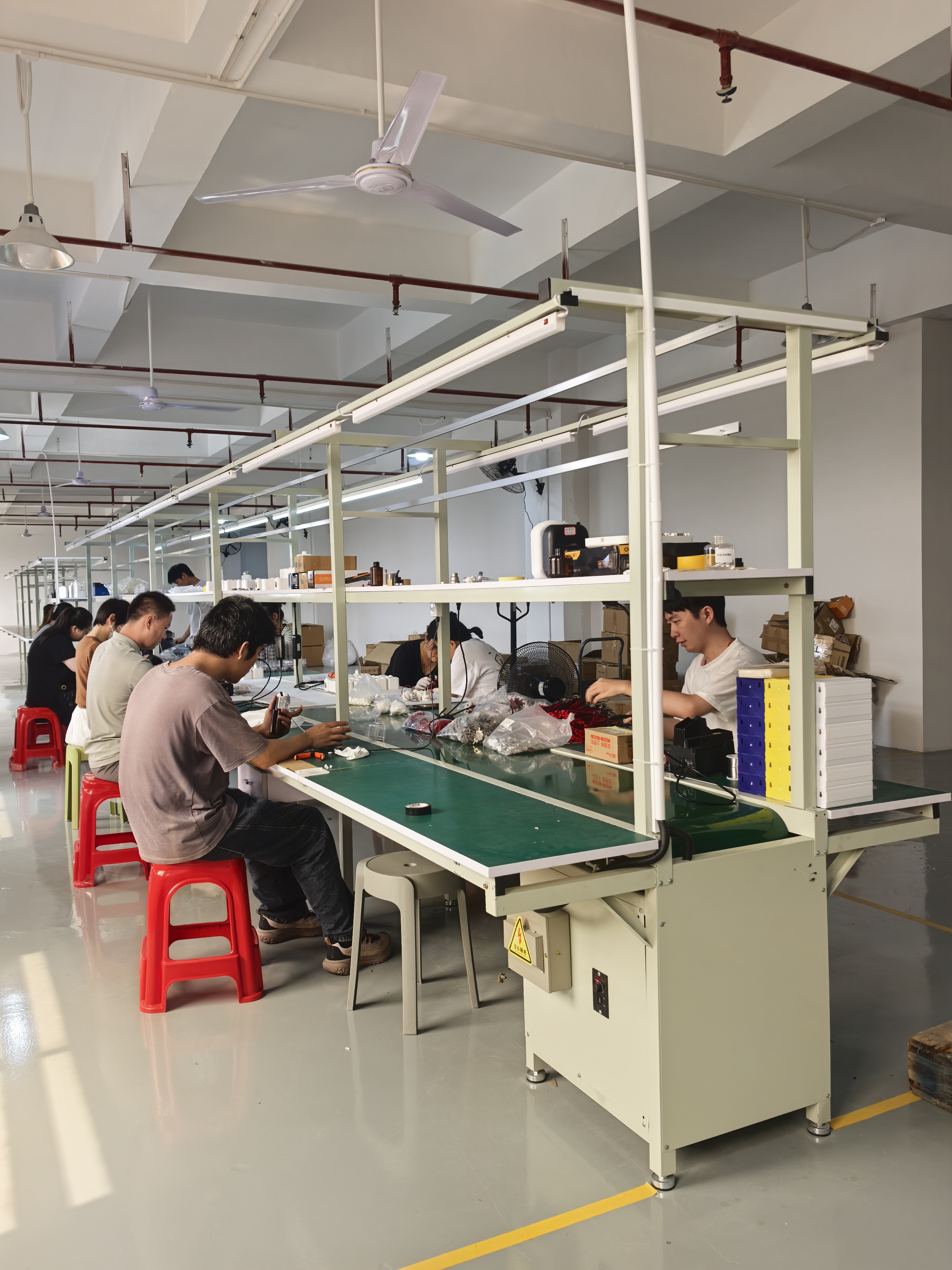
SCENTSEA states that every diffuser is checked before shipment through functional testing, aging test and leakage inspection. Buyers should ask for the record, not just the claim. A supplier that can produce a batch-level test record is easier to audit than one that describes its process only in general terms.
Using Troubleshooting Support as a Supplier Test
A supplier's troubleshooting material is a practical proxy for its long-term support quality. The common commercial scent diffuser problems are consistent across the category: failure to start, no atomization, abnormal noise and weak atomization. Most can be traced to power supply, working schedule, pump connection, nozzle, tubing or fragrance oil condition before any component is replaced.
A useful troubleshooting path is ordered and specific. If the device does not work, check the power supply, confirm that the machine is powered on, verify the working-hour settings, and check whether the air pump terminal is properly connected. If there is no atomization, check whether the pump is working, inspect the nozzle for blockage, and confirm that the pump tube and pipette are properly connected and not damaged. If abnormal noise occurs, check whether the pump is loose and secure it again, and inspect internal parts for looseness. If atomization is weak, check whether the pump is aging, clean or replace a blocked nozzle, and confirm that the fragrance oil is not too thick and does not contain impurities.
During evaluation, ask for the troubleshooting guide and test it against a sample. A supplier that defaults to replacement without a diagnostic path is likely to be slower and more expensive to work with over a multi-year contract. A supplier that can explain the sequence clearly is more likely to resolve issues remotely.
Limitations and Boundaries of Spec-Based Evaluation
Specifications are necessary but not sufficient. Several boundaries should be stated plainly.
- Coverage figures are rated maxima. Actual performance depends on ceiling height, airflow, partitions and ventilation. A 1,300 m² rating does not guarantee even scent across an L-shaped mall floor.
- Noise ratings are model-level figures. Perceived noise depends on mounting and intensity, and should be verified with a sample in the intended space.
- The P01 catalogue does not publish an oil consumption figure. That is a data gap, not a zero, and buyers should request the value.
- Battery-powered units carry a replacement and disposal cycle that plug-in units do not. That cost belongs in the operating budget.
- Reconnect features depend on network conditions. A unit that reconnects automatically still needs a working network to be managed remotely.
- Specifications do not replace a site trial. A short pilot in the actual space remains the most reliable way to confirm fit.
Stating these limits is not a criticism of any model. It is a recognition that commercial scenting is a site-specific service, and that a specification is a starting point for a trial rather than a substitute for one.
Market Context and Future Outlook
The commercial scenting category is expanding. The global scent marketing market was valued at approximately USD 4.1 billion in 2026 and is projected to reach USD 7.28 billion by 2035 at a CAGR of 6.6%, according to commercial research cited in HTNXT's verified data set. Those figures describe a category moving from niche hospitality add-on to a broader building-operations service.
The technology underpinning these systems is also stabilising. Cold-air nebulizing diffusion atomizes fragrance oils into sub-micron particles below 2.5 μm without heat or water, which supports consistent distribution and avoids the maintenance burden of water-based ultrasonic units.
Trade classification is equally relevant for procurement. Commercial scent diffusers sit under HS Code 8509.80, with a 4.2% US import duty in 2026, which should be factored into landed cost. For buyers sourcing across regions, the classification and duty treatment belong in the same spreadsheet as the unit price.
Two shifts are likely to shape supplier evaluation over the next few years. First, buyers are moving from brand claims to operating data, because figures such as oil consumption, power draw, noise and reconnect behaviour can be compared and budgeted. Second, control and uptime features are becoming procurement criteria rather than afterthoughts, particularly for multi-site operators who cannot visit every location. The suppliers best placed to win long-term contracts are likely to be those that publish verifiable data and can demonstrate it with a sample.
Frequently Asked Questions
What is a commercial scent diffuser?
A commercial scent diffuser is designed to distribute fragrance consistently in hotels, retail stores, offices, malls and other business environments. Waterless cold-air models atomize fragrance oil directly and do not require water.
How do I choose the right coverage area for a commercial scenting system?
Consider room size, ceiling height, ventilation, airflow and partitions rather than relying only on the maximum rated coverage. The H5000 is rated for 800–1,300 m², the P02 for 150–350 m² and the P01 for 100–150 m², but each figure should be adjusted for the actual space and airflow conditions.
Can commercial scent diffusers be controlled remotely, and what happens after a power or network interruption?
Many commercial models support APP control for working schedules and scent intensity. The H5000 and P01 support APP control, while the P02 supports Bluetooth APP control and offers an optional Wi-Fi + Bluetooth version with automatic reconnection after a power or network interruption.
How often does a commercial scent diffuser need maintenance?
Maintenance frequency depends on usage and fragrance oil, but regular oil-level checks and atomizer cleaning help maintain stable performance. Refill intervals follow from capacity and consumption: the H5000 holds 1,000 ml at 5.4 ±10% ml/h, and the P02 holds 300 ml at 2.5 ±10% ml/h.
Are commercial scent diffusers noisy enough to affect a quiet space?
Noise levels vary by model and output power. The P02 is rated below 30 dB, the P01 below 35 dB and the H5000 below 45 dB. For hotels, offices and other quiet environments, buyers should check model-specific noise data and test samples before placement.
How can buyers troubleshoot common commercial scent diffuser problems as a support test?
Common problems include failure to start, no atomization, abnormal noise and weak atomization. Most issues can be identified by checking the power supply, working schedule, pump connection, nozzle, tubing and fragrance oil condition before replacing components. A supplier that can provide a clear, ordered troubleshooting path is easier to manage over a long contract.
Conclusion
Long-term commercial scenting decisions are rarely settled by the brochure. They are settled by the data a supplier is willing to publish, the acceptance criteria it will accept, and the support it can demonstrate when something goes wrong. The H5000, P02 and P01 illustrate how different those answers can be across a single manufacturer's range, and why the evaluation should start with power, oil, noise and reconnect data rather than with claims.
A full specification catalogue is available for download: SCENTSEA Catalog (PDF).
Tem questões ou precisa de mais detalhes?
Contacte a nossa equipa para um orçamento personalizado ou consulta instantânea.
Solicitar orçamento
Preencha o formulário abaixo e a nossa equipa entrará em contacto com uma proposta personalizada.
Chat direto do WhatsApp
Prefere conversar em tempo real? Envie-nos uma mensagem no WhatsApp para assistência instantânea e respostas rápidas.
- Obter orçamento personalizado
- Partilhar fotos ou documentos
- Discuta as suas necessidades diretamente
Geralmente responde em 5–30 minutos durante o horário de expediente.