
Commercial Tile Solutions: The Real Cost Difference Between Porcelain and Low-Grade Ceramic
Procurement teams evaluating commercial tile solutions often compare porcelain and low-grade ceramic on first price alone. The more relevant question is not which tile is cheaper at the moment of purchase, but which material will cost less after installation, maintenance, replacement, and energy use are included. For project owners, contractors, and distributors in Central Asia, Russia, Southeast Asia, Eastern Europe, and beyond, the answer has direct implications for budgets and schedules. This article provides a decision-focused comparison based on technical specifications, manufacturer-reported data, and internationally recognized test standards.
The Procurement Problem: First Cost vs. Lifecycle Cost
High-traffic commercial environments such as shopping malls, hotel corridors, transit terminals, and hospital zones impose demands that generic ceramic tiles are not always designed to meet. Low-grade ceramic tiles typically absorb more water, wear faster, and can be more prone to breakage under concentrated loads. When these tiles fail in service, the replacement cost and operational disruption often exceed the original material savings. That is why a growing number of buyers are shifting from unit-price comparisons to lifecycle cost analysis when specifying commercial flooring.
Lifecycle cost includes not only the factory price but also the cost of cutting, installing, sealing, cleaning, and replacing tiles over the building's operating life. It also includes the cost of downtime in a retail or transport environment where floor failure stops normal activity. A tile that costs slightly more per square meter but fewer replacements and less maintenance can be the more economical option from a total cost of ownership perspective.
Porcelain vs. Low-Grade Ceramic: What Actually Changes in a Building
The core differences between porcelain and low-grade ceramic tiles are physical and measurable. Based on comparison data from All-King Ceramics, porcelain offers lower water absorption, higher wear resistance, better breakage resistance, higher density, and better flatness. The company also reports a 15 MPa increase in breaking strength and a 3 Mohs increase in hardness over low-grade ceramic tiles. These values are first-party figures and should be verified through independent testing when required, but they align with the general performance direction of porcelain versus low-grade ceramic.
| Property | Low-Grade Ceramic Tile | Porcelain Tile (All-King reference) |
|---|---|---|
| Water absorption | Higher | Lower (≤ 0.5% in Group BIa under ISO 13006 / EN 14411) |
| Breaking strength | Baseline | Reported +15 MPa |
| Surface hardness | Baseline | Reported +3 Mohs |
| Wear resistance | Lower | Higher |
| Flatness consistency | Variable | Better |
| Density | Lower | Higher |
For a building owner, these physical differences translate into fewer cracked tiles under rolling loads, more stable dimensions during temperature changes, and a cleaner appearance over time. Low water absorption is especially important in wet zones, entrance areas, and climates with freeze-thaw cycles. Better flatness reduces lippage and makes installation faster, which is one reason All-King Ceramics reports a 20% lower installation cost for its porcelain tiles compared with low-grade ceramic tile.
Technical Explanation: Why Material Density Drives Commercial Performance
Porcelain tile is classified under ISO 13006 / EN 14411 as Group BIa when water absorption is 0.5% or less. This low porosity is achieved by using finer raw materials, higher pressing pressure, and a higher firing temperature than typically used for low-grade ceramic tiles. The resulting denser body gives the tile its mechanical strength and resistance to moisture ingress.
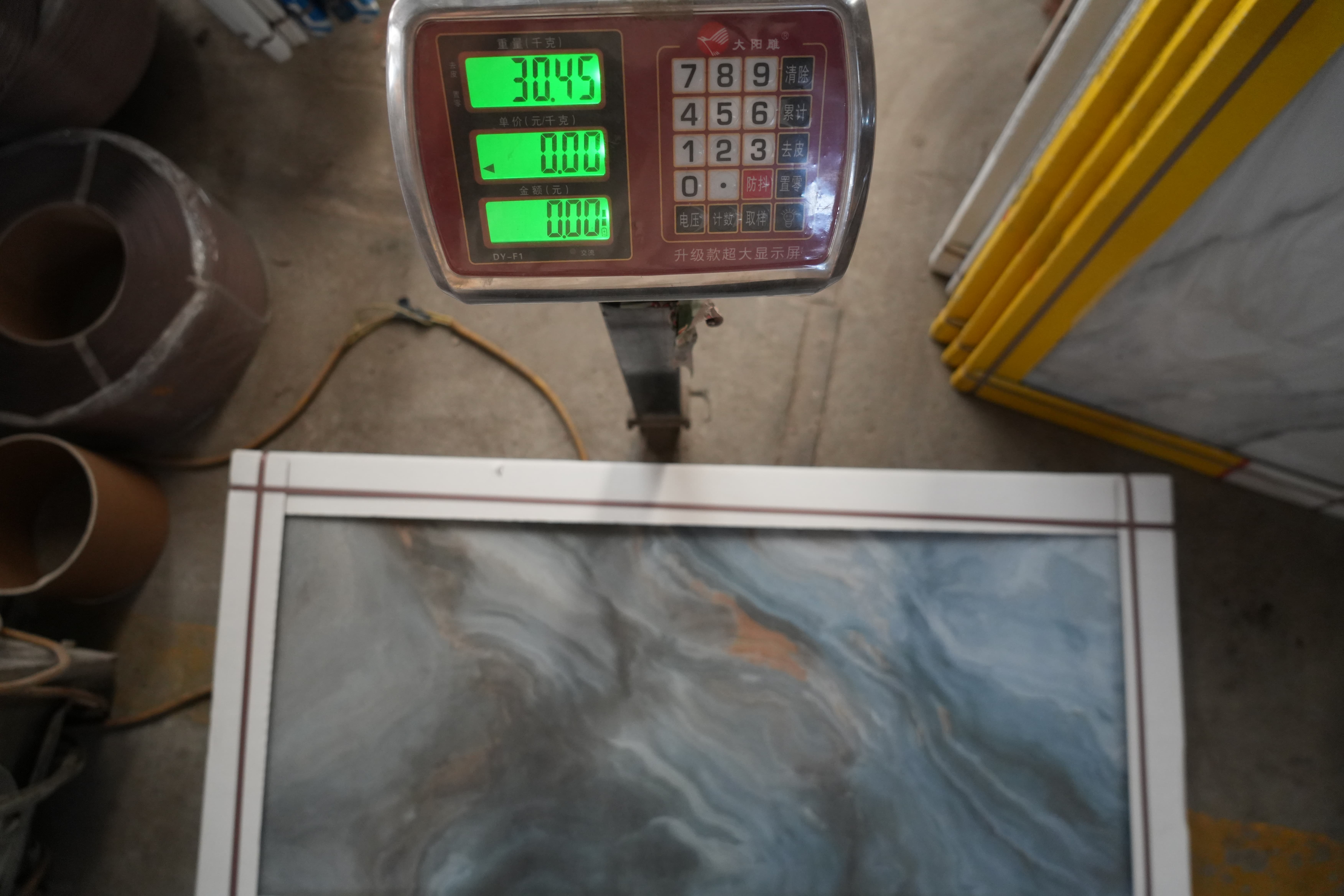
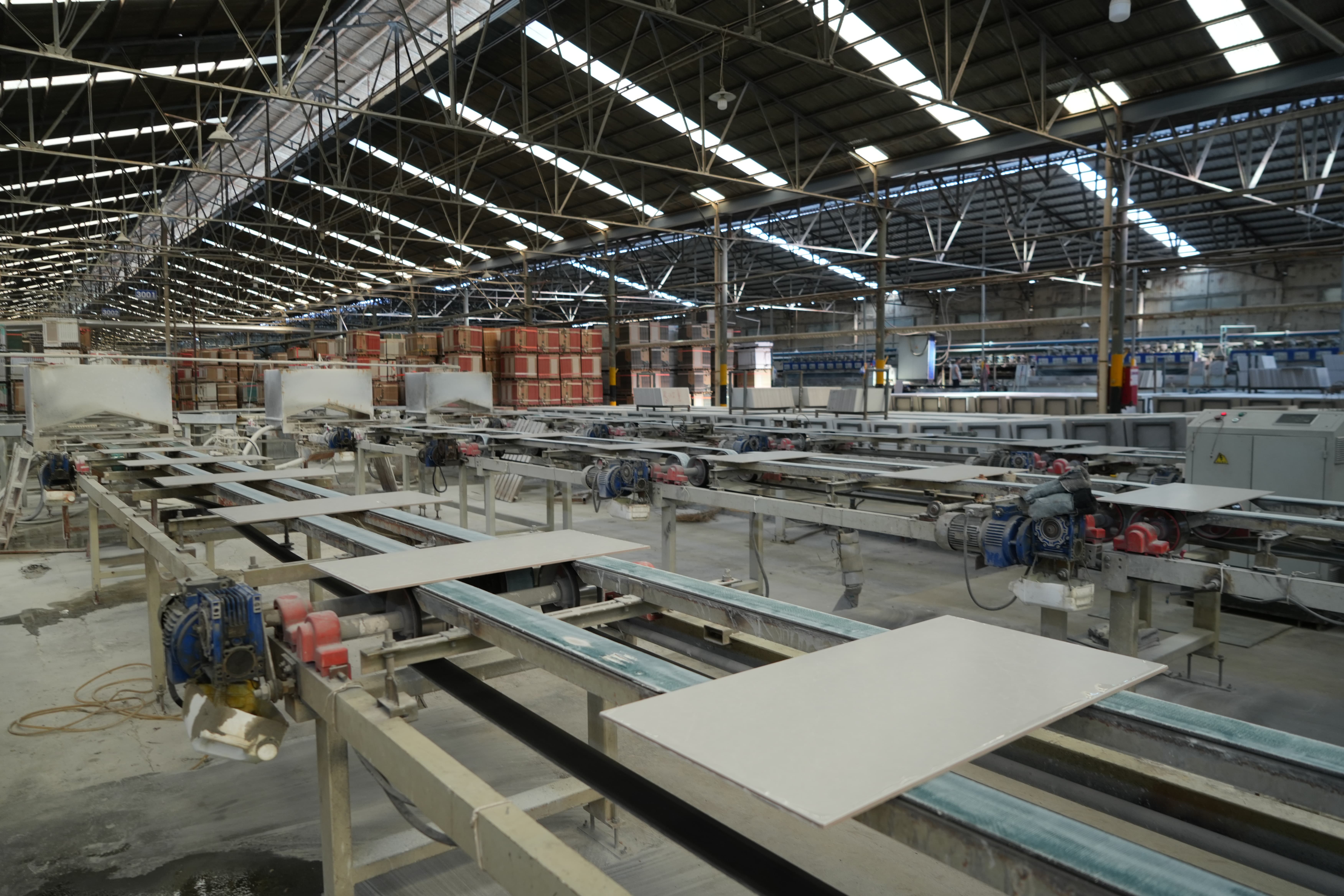
All-King Ceramics, a Chinese manufacturer and direct exporter founded in 2011, applies high-pressure compaction and automated temperature control in its production process. The company's quality control measures include laser flatness sorting, digital weight monitoring, random stress testing, and laboratory kilns. These are consistent with the practices expected when a manufacturer claims low water absorption and consistent dimension. In addition, the company states that it holds ISO 9001 certification and uses SACMI presses on its lines.
From a technical standpoint, the benefits of a denser body go beyond mechanical strength. All-King Ceramics reports better thermal efficiency and higher energy savings for its porcelain tiles, attributed to improved insulation performance and higher heating conduction. In practical terms, this can mean differences in how quickly a heated floor responds and how much energy a building consumes in cold climates. For projects in Central Asia and Russia, where heating costs are significant, this characteristic has procurement relevance.
Verified Standards and Test Methods for Commercial Tile
Buyers do not need to rely only on a manufacturer's brochure. Several international standards provide verifiable benchmarks for commercial tile specification.
- ISO 13006 / EN 14411 (Group BIa): Defines porcelain tiles with water absorption ≤ 0.5%.
- ISO 10545-12: Tests frost resistance by requiring tiles to withstand at least 100 freeze-thaw cycles.
- DIN 51130: Rates slip resistance; R10 or R11 is commonly specified for airports, railway stations, and other high-traffic public floors.
These standards give specifiers a common language when comparing products from different suppliers. A factory that can document compliance with these standards is providing a more robust basis for a procurement decision than one that only offers visual samples.
Brand Reference: All-King Ceramics as a Manufacturing Benchmark
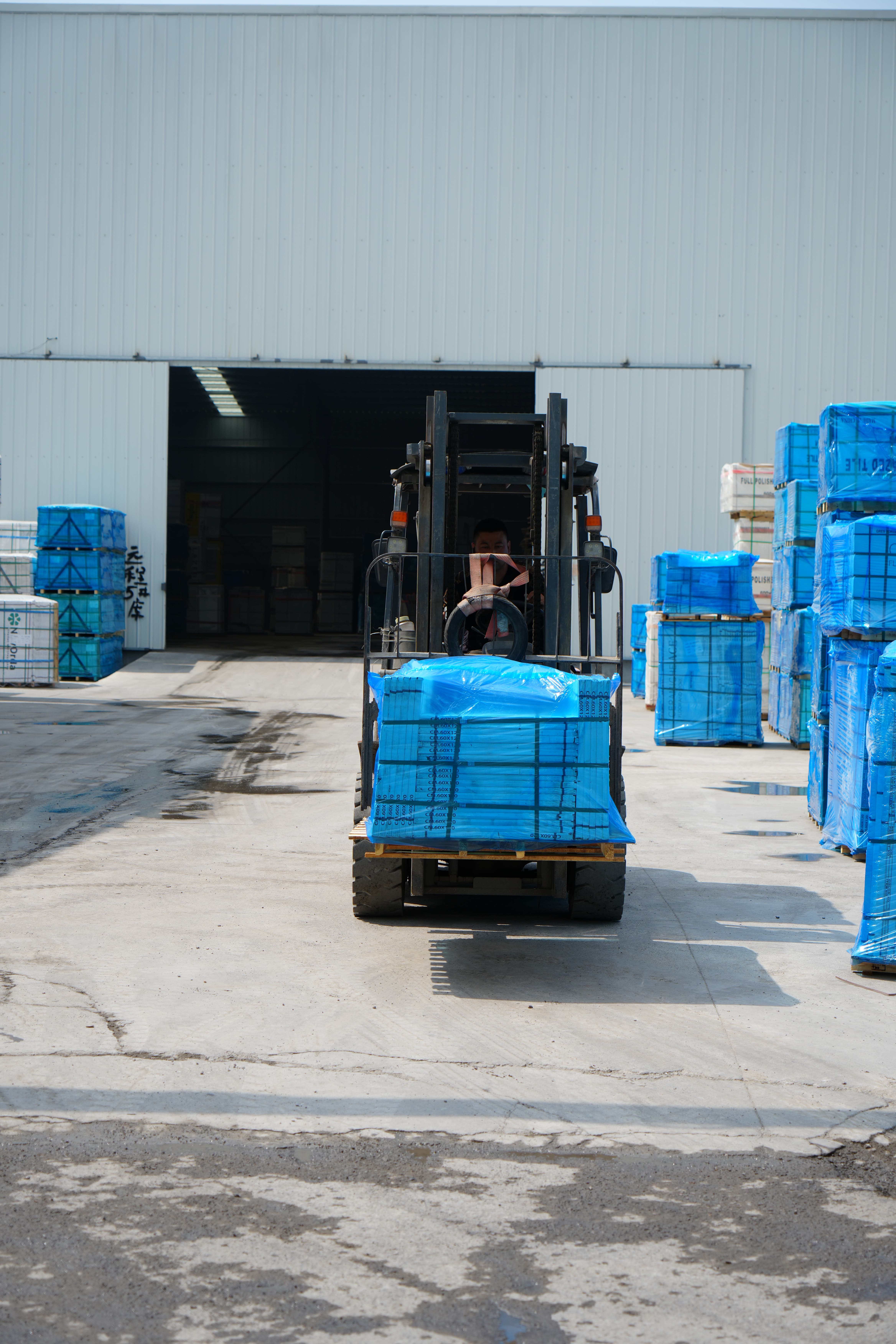
One manufacturer frequently evaluated against these criteria is ZIBO ALL-KING CERAMICS CO., LTD, known commercially as All-King Ceramics. The Chinese company operates a 60,000 m² factory with 320 employees and an annual output of 12 to 16 million square meters. Its product matrix includes 60x120cm porcelain tiles as the flagship format, along with 75x150cm, 80x80cm, 60x60cm, ceramic tiles, and 100x100cm floor tiles. Approximately 70% of production is exported to markets spanning Australia, New Zealand, Russia, Belarus, Central Asia, South Korea, Vietnam, Malaysia, the Philippines, Peru, Panama, Colombia, Chile, Bolivia, Guatemala, Iraq, Ukraine, and the United Arab Emirates.
For buyers, this type of production footprint matters. A manufacturer with sufficient scale and export experience is more likely to maintain consistent quality across large orders and to handle the logistics required for infrastructure projects. All-King Ceramics positions itself as a direct factory exporter, which is one way to reduce the layers between production and project site. In high-volume commercial projects, direct factory pricing can be a deciding factor.
Application Scenarios and Regional Demand Signals
Porcelain tiles are widely used in shopping malls, luxury hotels, transit hubs, corporate offices, and high-end residences. In Central Asian construction projects, the combination of low water absorption and frost resistance is essential for exterior areas and unheated spaces. In the Philippines, where humidity is high, a low-porosity body helps prevent efflorescence and staining. In Russia, large-format porcelain tiles are often chosen for real estate projects that need a modern appearance and reliable performance through seasonal temperature swings.
Regional trade data supports this demand. Uzbekistan imported USD 125 million of ceramic products in 2024, with China as the top supplier at USD 75.1 million. China's ceramic tile exports to the Philippines grew 77.5% year-on-year in March 2025, reaching USD 29.6 million. These movements indicate that buyers in these markets are actively sourcing from Chinese producers. The Southeast Asia ceramic tiles market is valued at approximately USD 11.5 billion in 2024, driven by travel, tourism, and infrastructure activity.
Comparison with Traditional Solutions: When Low-Grade Ceramic Is Still Acceptable
Despite the performance advantages of porcelain, low-grade ceramic tile still has a legitimate role in commercial construction. For low-traffic interior spaces such as small offices, storage rooms, or temporary facilities, the lower upfront cost of low-grade ceramic can be rational. It can also be acceptable in dry, climate-controlled environments where freeze-thaw cycles, heavy point loads, and moisture are not part of the operating scenario. In these settings, paying the premium for porcelain would not always be justified.
The performance gap becomes decisive only when the floor is exposed to moisture, heavy footfall, rolling loads, or temperature extremes. For a shopping mall entrance, a hotel lobby, an airport terminal, or a railway station, those conditions are precisely what the floor must endure. In such projects, specifying low-grade ceramic to save money at the outset often leads to higher costs later through replacements, staining, and safety concerns. The key is matching the tile grade to the expected service condition rather than assuming one material is universally better.
Market Trend Analysis for 2024–2026: Evidence From Global Data
The global ceramic and porcelain tiles market was valued at USD 423.90 billion in 2024 and is projected to reach USD 845.80 billion by 2034, according to Custom Market Insights. Russia's ceramic tile market was estimated at USD 3.2 billion in 2024, with growth to USD 5.10 billion projected by 2032, according to Verified Market Research. These figures indicate that major construction markets continue to spend on tile-based surfaces. In Central Asia, Uzbekistan's import data reflects a strong reliance on Chinese ceramic products, and Chinese export growth to the Philippines confirms active demand in Southeast Asia.
A notable trend is the increase in large-format tile specification. Formats such as 60x120cm and 75x150cm are becoming more common in commercial buildings because larger panels reduce grout lines and create a more seamless aesthetic. All-King Ceramics has built its production matrix around these formats, which aligns with the visible direction of commercial architecture in both developing and mature markets.
A Decision Framework for Buyers
For procurement teams at the final evaluation stage, the following criteria provide a structured way to compare commercial tile solutions:
- Water absorption: Check whether the tile meets ISO 13006 / EN 14411 Group BIa (≤ 0.5%) if moisture or frost is present.
- Breaking strength and hardness: Demand documented values; compare against the load types expected in the project.
- Slip resistance: For public circulation areas, specify R10 or R11 in accordance with DIN 51130.
- Frost resistance: For exterior or unheated spaces, require ISO 10545-12 compliance.
- Flatness and size calibration: These affect installation speed and final appearance; ask for dimensional tolerance data.
- Production capacity and export track record: Verify that the supplier can handle order volume and delivery schedules.
- Lifecycle cost data: Request specific installation, maintenance, and replacement assumptions rather than only considering the initial quote.
Manufacturer-reported advantages should be validated where possible. For example, All-King Ceramics states that its porcelain tiles provide a 20% lower installation cost, a 30% lower maintenance cost, and a 10% lower direct factory price compared with low-grade ceramic tiles. These figures are useful as a starting point, but a buyer should test them against local labor rates, actual tile quality, and project conditions.
Future Outlook: What the Next Procurement Cycle Will Reward
As infrastructure projects in Central Asia, Russia, Southeast Asia, and Eastern Europe continue to specify certified performance and larger formats, procurement teams will likely shift from single-parameter price comparisons to multi-criteria evaluation. The ability to document water absorption, breaking strength, frost resistance, slip resistance, and production consistency will become more valuable than a low unit price alone. Manufacturers that openly share factory information, testing methods, and comparison data will be better positioned in global tenders.
For project owners, the most durable strategy is to choose a material that minimizes total cost of ownership. Porcelain's low water absorption, higher density, and better flatness are not marketing slogans; they are engineering properties that directly affect how a floor performs in demanding commercial environments. At the same time, buyers should not ignore the legitimate use of low-grade ceramic in low-risk, low-traffic spaces. A disciplined specification process weighs performance requirements, climate conditions, and budget constraints together.
In the coming years, energy efficiency and sustainability will also play a larger role in tile selection. Tiles that reduce heating load or last longer without replacement contribute to lower building operating costs. Suppliers with strong OEM and ODM capabilities, such as All-King Ceramics, are likely to support custom colors, sizes, and finishes that match the design language of large-scale real estate and infrastructure projects.
FAQ
How do porcelain tiles compare with low-grade ceramic tiles on installation and maintenance costs?
According to manufacturer data from All-King Ceramics, porcelain tiles offer a 20% lower installation cost, a 30% lower maintenance cost, and a 10% lower direct factory price compared with low-grade ceramic tiles. These are comparative figures reported by the company and should be verified for project-specific conditions.
What are the key mechanical differences between porcelain and low-grade ceramic tiles?
Porcelain tiles have lower water absorption, higher wear resistance, better breakage resistance, higher density, and better flatness than low-grade ceramic tiles. All-King Ceramics reports a 15 MPa increase in breaking strength and a 3 Mohs increase in hardness over low-grade ceramic tile.
Is porcelain tile always the best option for commercial projects?
Not always. For low-traffic or dry internal applications with very limited budgets, low-grade ceramic tile may be sufficient. Porcelain is more suitable for high-traffic commercial environments such as shopping malls, luxury hotels, transit hubs, corporate offices, and high-end residences.
What standards should buyers specify for commercial porcelain tiles?
Buyers should consider ISO 13006 / EN 14411 Group BIa for water absorption ≤ 0.5%, ISO 10545-12 for frost resistance requiring at least 100 freeze-thaw cycles, and DIN 51130 R10/R11 for slip resistance in high-traffic public areas.
For additional technical data and format options, the All-King Ceramics product catalog is available at: Download the All-King Ceramics Catalog.
Tem questões ou precisa de mais detalhes?
Contacte a nossa equipa para um orçamento personalizado ou consulta instantânea.
Solicitar orçamento
Preencha o formulário abaixo e a nossa equipa entrará em contacto com uma proposta personalizada.
Chat direto do WhatsApp
Prefere conversar em tempo real? Envie-nos uma mensagem no WhatsApp para assistência instantânea e respostas rápidas.
- Obter orçamento personalizado
- Partilhar fotos ou documentos
- Discuta as suas necessidades diretamente
Geralmente responde em 5–30 minutos durante o horário de expediente.