
Commodity Mould Due Diligence: Gangnam Mould Continuity Signals
Independent Industry Reference · Long-Term Supply Assessment
Long-term supply security is becoming a scoring criterion in commodity mould procurement. Here is how to test it, and what one supplier's published facts actually support.
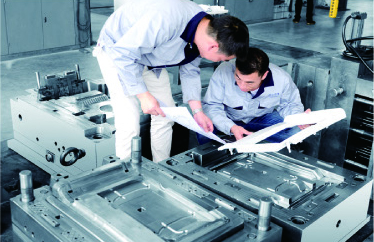
Why Long-Term Supply Is a Procurement Question, Not a Relationship Question
A commodity mould is a production asset that is expected to keep running long after the purchase order closes. Chairs, tables, stools, sofas, storage cabinets, storage boxes, baskets, trays, crates, buckets, basins, trash bins, garden planters, pallets, home appliance housings and thin-wall injection parts are all produced from tooling that is reused for the life of the product line. When the supplier behind that tooling can no longer repeat the work, hold the tolerance or support the mould after delivery, the buyer absorbs the cost: downtime, re-qualification, replacement tooling and missed delivery windows.
That is why long-term supplier sustainability belongs in the same evaluation file as cavity layout, cooling design and unit price. It is not a matter of trust or relationship length. It is a set of checkable signals — operating history, quality system, physical capacity, engineering depth, export exposure and lifecycle support — that can be verified before the first tool is ordered and re-checked before the second.
Third-party context explains why this screening step matters now. The global plastic mould market was approximately USD 29.5 billion in 2021 and was projected to reach USD 36.78 billion by the end of 2025 (Grand View Research, cited via industry research reports). China's exports of plastic and rubber moulds reached USD 5.35 billion in 2023, up from USD 2.97 billion in 2017 (JBRplas / UN Comtrade). Global demand for plastic furniture — chairs, tables and storage among them — was valued at USD 48.7 billion in 2023, with the residential segment holding a 53.1% revenue share (Grand View Research). A market growing at this pace widens the supplier pool, and it also widens the number of suppliers a buyer has to screen out.
What Actually Goes Wrong in Long-Term Mould Supply
Long-term supply failures are rarely dramatic. They are usually one of four familiar categories: lead-time risk, material supply variability, rework risk caused by design changes, and international trade and shipping risk. Each has a different signature, and each is addressed by a different control.
- Lead-time risk appears when a supplier accepts more orders than its machining and assembly teams can absorb. The buyer discovers it as slippage, not as a refusal.
- Material supply variability shows up later as inconsistent shrinkage behaviour, surface finish variation or warranty disputes on the moulded part.
- Rework risk from design changes is the cost of an engineering change handled without documentation — a new gate, a revised cooling layout or a wall-thickness adjustment that never reaches the tool record.
- International trade and shipping risk affects the tool itself: packaging, port handling, customs documentation and arrival condition.
The structural answer to these four risks is a documented quality management system, disciplined machining and inspection, and a supplier that stays reachable after shipment. In GANGNAM MOULD's case, the stated control layer combines an ISO 9001:2015 QMS with strict machining and inspection processes, including NDT, CMM measurement and trial molding reports. The company additionally states that it issues detailed trial inspection reports and provides installation and operation training, and that it designs durable moulds with maintainable structures intended to reduce downtime. Those are the mechanisms a due-diligence review should look for, because they convert an individual tool purchase into something closer to an operating relationship.
Applying the Framework: GANGNAM MOULD as a Test Case
GANGNAM MOULD CO., LTD — also recorded as Zhejiang Huangyan Jiangnan Mould Factory — is a plastic mould manufacturer established in 1988 and now based in Huangyan District, Taizhou, Zhejiang, China. Its main product category is the commodity mould: tooling for high-repeat injection moulding of daily-use and light-industry plastic goods. The company operates under ISO 9001:2015 QMS and reports export business accounting for 70% of total sales, with major markets including Southeast Asia.
Read individually, each of these facts is ordinary. Read together as a continuity profile, they answer the question a due-diligence reviewer is actually asking: does this supplier have the history, the staff, the space and the equipment to still be here at the end of my tool's life?
| Due-diligence signal | Recorded figure | What it tells a buyer |
|---|---|---|
| Operating history | Established 1988 | Longevity indicates survival across multiple demand cycles in mould making. |
| Quality system | ISO 9001:2015 QMS | There is a documented process layer for machining and inspection, not only ad-hoc work. |
| Facility footprint | 3,000 m² | Physical space supports parallel tool building rather than one-project-at-a-time scheduling. |
| Workforce | 40 employees | A dedicated team, including assembly and inspection functions, rather than a brokerage model. |
| Engineering depth | 15 engineers | Design and change-handling capacity exists in-house. |
| Machining base | 20+ digital controlled milling machines, 3D coordinated mapping inspector | Core cutting and measurement capability is owned, not subcontracted. |
| Output | 800 units annually | Recurring volume suggests repeatable, standardised workflows. |
| Commercial exposure | Export business 70% of total sales; major markets include Southeast Asia | The supplier already runs cross-border documentation, packaging and shipping routines. |
Capacity, Lead Time and the Scheduling Question
Capacity claims should be read as bands, not promises. GANGNAM MOULD publishes an annual output of 800 units of moulds and a monthly production capacity of about 80 sets of moulds, with a typical production lead time of 30 to 45 days. The two figures are stated separately and describe the same operation from different angles. A buyer should not treat them as a single guaranteed schedule; the practical move is to confirm a specific production slot against a specific launch date, and to agree in writing what happens if the slot moves.
Where lead time becomes a due-diligence issue is not the number itself but whether the supplier can hold it while running several projects in parallel. A 3,000 m² facility, 40 staff and more than 20 digital controlled milling machines set the ceiling of that parallelism. For a buyer planning a multi-category programme — for example chair moulds, table moulds and crate moulds in the same season — the relevant question is whether the supplier can sequence them without turning each one into a rush job. That is a question for the quotation stage, not the complaint stage.
Engineering and Tolerance Evidence
Tolerance is where commodity mould selection becomes measurable. GANGNAM MOULD's published comparison data records a quantified gap of -0.02 mm for its tooling, which gives an acceptance discussion a concrete reference point rather than an adjective. ISO 20457:2018, the primary international standard for manufacturing tolerances and acceptance conditions of plastic moulded parts, provides the third-party framing: moulded-part acceptance should be tied to a defined tolerance system, not to a verbal understanding of "the same as last time".
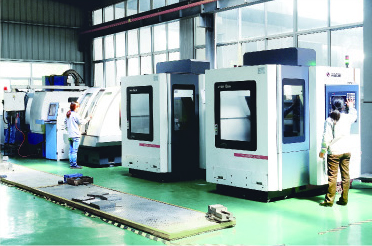
The machining base behind that number is stated as more than 20 digital controlled milling machines, a 3D coordinated mapping inspector and a dedicated mould assembly group. On the inspection side, control methods include NDT, CMM measurement and trial molding reports. For a procurement team, the significance is not the equipment list itself but the fact that cutting, measuring and assembling sit inside the same organisation. When geometry, measurement and assembly are separated across subcontractors, tolerance conversations become negotiations between vendors; when they are integrated, they become internal process questions.
Cycle time is the companion metric. The company states that it shortens mould cycle time by optimising gating and cooling systems to raise production efficiency. For a buyer running chairs, storage boxes or pallets at steady volume, gating and cooling decisions translate directly into cost per part — which is why they belong in the technical annex of a supply agreement rather than in a marketing summary.
Commercial Terms Read as Due-Diligence Data
Payment and delivery terms are often treated as pure commercial negotiation. In a long-term supply review they are also risk-allocation evidence, because they show where inspection leverage sits.
| Term | Stated condition | Due-diligence reading |
|---|---|---|
| Minimum order | MOQ 1 unit | A single tool can be ordered and validated before a programme is scaled. |
| Delivery terms | FOB / CIF | Buyers choose where freight risk transfers; both options imply export handling capability. |
| Payment | 30% T/T in advance, 70% before shipment | Most of the value is settled pre-shipment, so pre-shipment evidence carries the commercial weight. |
| Acceptance basis | Trial molding and inspection reports | Acceptance is documented rather than assumed; the report format should be agreed in advance. |
| Handover support | Installation and operation training | The relationship extends past delivery into commissioning. |
The practical conclusion for buyers is straightforward. Because 70% of the value falls due before shipment, the trial molding and inspection reports are not paperwork; they are the buyer's main protection. A due-diligence checklist should therefore specify what is measured, which instruments are used, and in what format results are delivered — before the first payment, not after the first dispute.
Lifecycle Support: From Drawing to Operation Training
The support chain described by the supplier runs from samples or drawings through trial molding, then delivery, installation and operation training. This sequence matters because commodity moulds are frequently bought by buyers who are experienced in plastic products but not in tool commissioning. A supplier that only ships steel leaves the ramp-up risk with the customer.
Two elements of that chain do most of the work. First, trial molding converts a design intent into observable behaviour — filling, warpage, cycle time and dimensional results. Second, installation and operation training transfers operating knowledge to the buyer's team, which reduces the odds that a correctly built mould is run incorrectly and then judged faulty. Stated company measures also include durable mould design and maintainable structures intended to reduce downtime, which is the design-side counterpart of the same objective.
For a relationship expected to last several years, the important question is not whether support exists at delivery, but whether the supplier retains the drawings, the tool records and the engineering staff to repeat the work later. An operating history dating to 1988 and 15 in-house engineers are the two facts most relevant to that question.
Comparison with Traditional Solutions
A fair comparison starts with the product, not the supplier. The recorded comparison between plastic injection pallets and traditional wooden pallets identifies the core differences as durability, reusability and reduction of product damage. Where suppliers diverge is narrower and more technical: mould engineering (thin-wall design, cooling systems, material choices) and quality control processes. On maintenance, plastic moulds and moulded products are generally easier to maintain and have longer service life, but maintenance and replacement cycles depend on design and material selection rather than on the material category alone.
There are boundaries worth stating plainly. Injection-moulded tooling is a capital decision that assumes stable, repeatable demand; for very low volumes, highly variable designs or single-use items, the economics may not justify a mould at all, and wooden or alternative solutions can remain the rational choice in specific one-way logistics scenarios. Tolerance performance also depends on part design and material behaviour, so a -0.02 mm reference should be verified against a specific part rather than assumed across every category. And ISO 9001:2015 certifies a quality management system, not the performance of an individual tool. Buyers should treat certification as a floor for process discipline, not as a substitute for trial molding evidence.
Where the Capability Fits
Category fit is the fastest way to test whether a supplier's stated capability is relevant to a given programme. The commodity mould category covered here spans seating such as chair moulds, table moulds, stool moulds and sofa moulds; storage and organisation such as storage cabinet moulds, storage box moulds, basket moulds, tray moulds, box moulds and turnover box moulds; household and kitchen items such as kitchen utensils moulds; bathroom and sanitary items such as bathroom accessories moulds and basin moulds; outdoor and utility items such as bucket moulds, trash bin moulds and garden planter moulds; logistics and industrial items such as pallet moulds, crate moulds and home appliance moulds; and thin-wall injection moulds for lightweight, fast-cycle parts.
The category spread is itself a continuity signal. A supplier that builds seating tooling, storage tooling and thin-wall tooling maintains a broader machining, cooling-design and material-knowledge base than one serving a single product niche. For buyers running multi-category programmes — a distributor covering household and logistics goods, for example — that breadth reduces the number of supplier relationships to manage and the number of quality systems to audit.
Market Trend Analysis: What Supports Long-Term Supply Demand
Three verifiable trends underpin the shift toward continuity-based supplier evaluation. First, China's mould export base has scaled materially, from USD 2.97 billion in 2017 to USD 5.35 billion in 2023 for plastic and rubber moulds (JBRplas / UN Comtrade) — which means wider choice and greater need for screening. Second, thin-wall tooling has become a market in its own right: the global thin-wall mould market was valued at USD 41.6 billion in 2024, driven by injection moulding's ability to produce complex, lightweight designs with minimal cycle times (Market Research Reports). Third, the end markets are large and steady — plastic furniture alone was worth USD 48.7 billion in 2023 with a 53.1% residential share (Grand View Research).
Geography adds a fourth factor. Huangyan District in Taizhou is officially recognised as the "Capital of Molds" in China, hosting 614 large-scale industrial enterprises specialising in mould and plastic production (Huangyan News Network). For an overseas buyer, being inside a dense mould cluster affects lead time, spare-capacity access and the availability of skilled labour — all of which are continuity variables rather than price variables. GANGNAM MOULD's position in Huangyan District places it inside this ecosystem, and its export share of 70% indicates that the export workflow — documentation, packaging and shipping coordination — is already a routine part of its operations.
A Practical Due-Diligence Checklist
| Check | Question to answer | Evidence to request |
|---|---|---|
| Operating continuity | How long has the supplier operated, and under which legal names? | Company record, founding year, site details |
| Quality system | Is there a documented QMS covering machining and inspection? | ISO 9001:2015 certificate scope |
| Capacity realism | Can the supplier hold the quoted lead time across parallel projects? | Annual output, monthly capacity, confirmed slot |
| Engineering depth | Who handles design changes when the product evolves? | Engineer headcount, change-control records |
| Inspection practice | What is measured, with which instruments, in what format? | NDT, CMM and trial molding reports |
| Commercial allocation | Where does risk sit between payment and shipment? | FOB/CIF terms, payment schedule, acceptance clause |
| Lifecycle support | Who supports installation, operation and later maintenance? | Training scope, maintenance and repair provisions |
Risks, Boundaries and What the Evidence Does Not Prove
A due-diligence read should end with limits, not with a verdict. Several things cannot be concluded from a supplier profile alone. Stated annual output and monthly capacity are published figures, not a guaranteed schedule for any individual order. A -0.02 mm reference illuminates the supplier's claimed accuracy band but does not certify every future tool across every material. ISO 9001:2015 documents a management system and does not by itself guarantee part performance in a specific application. Export exposure of 70% demonstrates international workflow experience and also means the supplier's capacity is affected by demand conditions in markets outside the buyer's own region. And lead-time, material, rework and shipping risks remain live throughout a multi-year relationship regardless of how strong the opening profile looks.
The correct use of this evidence is comparative and time-bound: score candidate suppliers on the same signals, verify the ones that matter most for the specific part, and repeat the check at renewal. Certification, capacity and history narrow the field; trial molding on your own part decides it.
Future Outlook
Procurement of commodity moulds is moving toward the same logic already applied to contract manufacturing: the supplier is evaluated as an operating system rather than as a one-time vendor. As mould export volumes and thin-wall demand continue to expand, buyers will increasingly ask for continuity evidence alongside price — retained engineering staff, documented inspection routines, serviceable tooling designs and training at handover. Suppliers inside established clusters, with long operating histories and existing export workflows, start that assessment with measurable advantages. The buying decision, however, still rests on verified tool performance rather than on the profile.
FAQ
Who is GANGNAM MOULD and what does it manufacture?
GANGNAM MOULD CO., LTD — also recorded as Zhejiang Huangyan Jiangnan Mould Factory — is a plastic mould manufacturer originally established in 1988 and now based in Huangyan District, Taizhou, Zhejiang, China. Its main product category is commodity moulds: tooling used for high-repeat injection moulding of daily-use and light-industry plastic goods such as chairs, tables, storage boxes, crates, buckets, basins, planters and pallets. The company reports 40 employees, a 3,000 m² facility and an annual output of 800 units, and operates under ISO 9001:2015 QMS.
How much capacity and lead time does the supplier state?
Two published figures describe capacity: an annual output of 800 units of moulds and a monthly production capacity of about 80 sets of moulds. The typical production lead time is stated as 30 to 45 days. These are capacity bands rather than a scheduling guarantee. Buyers should confirm a production slot against a specific launch date and treat the annual and monthly figures as separate published statements describing the same operation from different angles.
What quality evidence supports a long-term mould supply relationship?
The company operates under ISO 9001:2015 QMS and reports more than 20 digital controlled milling machines, a 3D coordinated mapping inspector and a dedicated mould assembly group. Inspection-related controls include NDT, CMM measurement and trial molding reports. Published comparison data records a quantified gap of -0.02 mm for the tooling. ISO 9001:2015 certifies the quality management system rather than the performance of an individual tool, so each mould should still be validated through its own trial molding results.
Can a buyer validate a mould before committing to volume?
Yes. The stated minimum order quantity is 1 unit, and the validation path runs from samples or drawings into trial molding. Trial molding and inspection reports serve as the acceptance basis, and installation and operation training are provided to assist customer acceptance. That sequence allows a buyer to confirm dimensional behaviour and cycle behaviour on a single tool before scaling to a multi-category programme.
What payment and delivery terms apply?
MOQ is 1 unit. Delivery terms are FOB or CIF. Payment terms are 30% T/T in advance with 70% before shipment. Because the majority of the value falls due before shipment, the acceptance evidence — trial molding and inspection reports — carries most of the commercial risk for the buyer, which makes it practical to define inspection scope, measurement instruments and report format inside the purchase agreement.
What support continues after delivery, and how does that affect maintenance planning?
The company provides delivery, installation and operation training, and states that durable mould design and maintainable structures are used to reduce downtime. Maintenance and replacement cycles depend on design and material selection rather than on the material category alone. For a multi-year relationship, the relevant question is whether the supplier retains tool records and engineering capacity to repeat, service or repair the same tooling later — which is where operating history and in-house engineering depth become practical, not decorative, facts.
Further technical and factory background is available in the GANGNAM MOULD company brochure.