
Commodity Mould Shortlist: Buckets, Bins, Crates, Housings
A commodity mould is the steel tool behind a high-volume, low-complexity plastic part — a bucket, a trash bin, a basin, a storage box, a crate, an injection pallet, a chair shell or an appliance housing. Because the parts look ordinary, buyers often treat the tooling as ordinary too, and only discover during trial runs that these families behave very differently once wall thickness, cooling distance, ejection area and surface requirements are fixed in a drawing. This shortlist ranks the options that matter in light industry and explains how each one should be evaluated before a quotation is compared.

Figure 1 — Commodity mould production is a tooling decision before it is a price decision; the category of the part determines the design priorities.
The tool market beneath these parts is substantial rather than marginal. The global industrial mould market was valued at USD 59.00 billion in 2025, while the wider injection moulding market reached USD 312.7 billion in the same year, and Asia Pacific accounted for a 52.6% share of the industrial mould market in 2024 (industry market research, 2026; Grand View Research, 2026). Capacity is therefore rarely the constraint on a commodity mould programme. Selection is.
Why a category shortlist beats a single quotation
Most buying teams begin with a quotation and work backwards. With commodity moulds that sequence tends to produce a tool that satisfies the price line but not the production reality. Two tools quoted at a similar figure can differ in cavity balance, cooling layout, steel grade and acceptance documentation — and those differences surface later as cycle time, warpage, or a trial report that nobody can compare against anything.
A category shortlist reverses the sequence. It first fixes which part family is being tooled, then fixes the design priorities that family imposes, and only then asks commercial questions. Three practical reasons support this order:
- The families are not interchangeable. An open tapered container such as a bucket and a flat ribbed part such as an injection pallet load the tool in completely different ways. The same specification template does not fit both.
- Cavity count is a machine decision as much as a tool decision. A multi-cavity set that exceeds the available press tonnage turns a lower unit price into a slower line.
- Acceptance must be defined before the tool is cut. Dimensional reports, trial inspections and surface agreements are cheap to specify at RFQ stage and expensive to retrofit.
The shortlist at a glance
The six entries below are ordered by part complexity, from open everyday containers through to cosmetic and structural components. The ordering is editorial rather than a market ranking; the purpose is to group tools that share specification logic.
| Shortlist entry | Part family | Dominant tooling priority | First specification question |
|---|---|---|---|
| 1 | Bucket and trash bin moulds | Uniform wall around a deep core, tapered ejection, lid or handle integration | Does the cavity count match the available press tonnage? |
| 2 | Basin and storage box moulds | Core-side cooling and warp control on flat bottoms | Single tool or family tool with shared mould base? |
| 3 | Injection pallet moulds | Gating balance and flatness across a large projected area | What flatness tolerance is written into the drawing? |
| 4 | Circulation crate and turnover box moulds | Rib and vent detail, impact behaviour, stacking loads | Are rib, vent and handle details fixed before design review? |
| 5 | Appliance housing moulds | Surface texture, draft and dimensional control on visible faces | Which surfaces are cosmetic and which are functional? |
| 6 | Chair, table, stool and sofa moulds | Thick-section cooling, insert strategy, structural ribs | Which inserts or multi-component steps are required? |
Entry 1 — Bucket and trash bin moulds
Buckets and trash bins are open, tapered containers with a high surface-to-wall ratio. The tooling priority is uniform wall thickness around a deep core, reliable ejection on a tapered surface, and — where a lid, handle or pedal is involved — either core and cavity integration or a second tool developed within the same family. Because the part is large and thin, cooling layout on the core side usually determines cycle time rather than the cavity steel itself.
What a buyer should demand at shortlist stage is narrow and checkable:
- A cooling circuit layout reviewed on the core side, not only on the cavity side.
- Draft angle and texture allowance agreed in the drawing before steel is cut.
- A trial report that records wall thickness at several positions around the part rather than a single measurement point.
Bucket moulds are also where cavity count decisions are most often made on price alone. Four cavities on an undersized press produce more scrap than two cavities on a correctly matched machine.
Entry 2 — Basin and storage box moulds
Basins and storage boxes share a flat bottom and a relatively deep draw, which makes them the family most exposed to warpage. The shortlist question here is usually not whether the tool can fill, but whether the flat base stays flat after ejection and cooling. Core-side cooling design, ejection balance and a symmetrical gating layout do most of that work.
This is also the family where a family-tool approach is most often considered: several sizes sharing a mould base to spread tooling cost across a product range. That approach lowers the cost per size but raises the design review burden, because every size in the set inherits the same cooling and ejection compromises. Buyers should ask explicitly whether the quoted tool is a single tool or a family tool, and price the range accordingly.
Storage box moulds and storage cabinet moulds fall into the same evaluation zone. Bins, baskets and trays sit alongside them as a related group: open, ribbed, low-wall-thickness parts where the acceptance criteria are dimensional consistency and surface finish rather than pressure tightness.
Entry 3 — Injection pallet moulds
Injection pallets are the largest projected-area parts on most light-industry shortlists, and they invert the usual priorities. Flatness and rib integrity dominate; cosmetics do not. A pallet that warps will not stack or rack reliably, and no amount of surface quality compensates for that.
Gating layout is the decisive design lever. Flow length across a large flat part determines where weld lines land, how much packing pressure is required, and whether the rib roots fill completely. Cooling circuits must follow the rib geometry rather than sitting in a simple grid, and the ejection system has to lift a part with a large unsupported area without marking the load-bearing faces.
Pallets are also frequently specified in recycled or blended polymers, which widens the process window the tool must tolerate. That makes trial inspection a design question, not a formality: the trial should use material representative of production intent, and the dimensional report should be taken across the part rather than at the centre.
Entry 4 — Circulation crate and turnover box moulds
Circulation crates and turnover boxes are working tools in a logistics chain, so the shortlist criteria shift towards impact behaviour and repeatable stacking. Rib and vent detail carries most of the structural load, and both must be settled before design review — vents added late usually mean re-cutting inserts rather than adjusting a drawing.
Three checks separate a credible crate tool from a generic box tool:
- Whether rib thickness transitions are specified, since abrupt changes concentrate stress during demoulding.
- Whether the vent pattern is defined by function (drainage, airflow, weight) rather than copied from an existing tool.
- Whether the ejection strategy accounts for the part being handled and stacked at volume, not only for it releasing cleanly once.
Buyers sourcing crates, turnover boxes and pallets together should note that these parts are often tooled by the same supplier as a set, because they share material assumptions and handling requirements. That is a legitimate bundling argument only if each tool is reviewed on its own mechanics.
Entry 5 — Appliance housing moulds
Home appliance housings move the shortlist into cosmetic territory. Visible faces, texture and dimensional control now matter as much as cycle time, and the drawing has to separate cosmetic surfaces from functional ones before quotation. Texture depth changes the draft requirement, and draft changes the tool geometry — a sequence that is difficult to reverse after machining.
Housings also commonly require inserts, multi-component integration or engineering-grade polymers, all of which raise the tooling scope above a simple single-material cavity. Buyers evaluating this entry should ask for the steel grade and heat-treatment record alongside the design review, because higher melt temperatures and filled grades wear gates and hot-runner components faster than unfilled commodity polymers.
Entry 6 — Chair, table, stool and sofa moulds
Furniture components close the shortlist because they are structurally loaded and often thick-sectioned. On a thick section, cooling time dominates the cycle, so cooling channel placement is a cost decision as much as a quality decision. Structural ribs, leg-to-seat transitions and insert positions all need to be fixed in the drawing review.
Chair moulds, table moulds, stool moulds and sofa moulds also frequently involve multi-component or insert-moulded construction, which means the shortlist must cover tool interfaces, not just cavities. Where a glass-filled grade is specified, gate and runner wear becomes a maintenance item that should appear in the commercial comparison rather than emerge after the first production campaign.
Material fit: PP, engineering grades and recycled polymers
The polymer choice reshapes the tool, not just the part. The table below summarises how the three material groups most often encountered in commodity mould sourcing affect the shortlist decision.
| Material group | Typical shortlist entries | Tooling implication | Verification point |
|---|---|---|---|
| Polypropylene grades | Buckets, bins, basins, crates, pallets, storage boxes | Higher shrinkage and cooling demand; warp control on flat sections | Trial dimensions recorded across cavity positions, not at one point |
| Engineering-grade thermoplastics | Appliance housings, structural furniture parts | Higher melt temperature; venting, steel grade and heat treatment become critical | Steel grade and heat-treatment record supplied with the design review |
| Recycled and blended polymers | Pallets, crates, non-cosmetic containers | Batch-to-batch flow variation widens the required process window | Trial run on production-intent material with a documented incoming specification |
Polypropylene is the default assumption across much of this category, and PP injection moulding is a listed capability in the reference supplier catalogue examined for this article. Engineering-grade and recycled inputs should be treated as a change to the acceptance plan rather than a change to the drawing only.
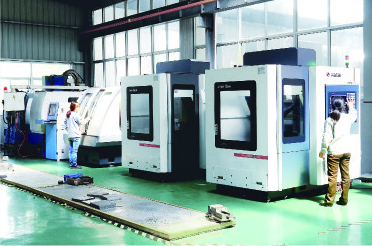
Figure 2 — Cavity count, cooling layout and gating design are settled during machining; they cannot be recovered at trial stage.
The five specification levers that separate shortlist options
Across all six entries, the differences between a good tool and an average one concentrate in five areas. These are also the areas where a supplier's customisation offer should be tested with specific questions rather than accepted as a general statement.
- Cavity count and cavity size. Customisable per project. The right number is set by required output, press tonnage and tolerance band — not by the lowest price per cavity.
- Cooling uniformity. Circuit layout on cores, ribs and deep draws decides cycle time and warpage. Ask for the layout, not the claim.
- Gating and venting. Gating position fixes flow length and weld-line location; venting fixes fill quality and burn risk on thin walls.
- Surface texture and polish. Cosmetic housings and visible furniture parts depend on texture depth and draft being agreed together.
- Inserts, multi-component integration, material and heat treatment. These determine tool life under filled or engineering-grade polymers and belong in the quotation scope.
Where GANGNAM MOULD sits on this shortlist
GANGNAM MOULD CO., LTD (Zhejiang Huangyan Jiangnan Mould Factory) is a plastic mould manufacturer established in 1988 and located in Huangyan District, Taizhou, Zhejiang, China. The company produces plastic moulds for everyday items, logistics packaging such as trays and turnover boxes, household appliances and hollow blow moulding, which places it across the six shortlist entries discussed above rather than in a single niche.
The documented operating profile is specific enough to be checked:
- 3,000 m² facility with 40 employees, including 15 engineers.
- More than 20 CNC milling machines plus 3D coordinate measuring inspection and a mould assembly group.
- Annual output of 800 units, with monthly capacity of about 80 sets of moulds.
- Export share of 70%, with markets including Southeast Asia, the Middle East, Africa, Central Asia, South America, Mexico, Italy and India.
- MOQ of 1 unit; FOB or CIF terms; 30% T/T in advance and 70% before shipment.
Quality control is described in terms of method rather than adjective: non-destructive testing, CMM measurement and full-size trial testing with inspection reports. The working sequence runs from requirement through design, manufacturing and trial inspection to delivery and training, with lead time stated as dependent on mould complexity and typically 30–45 days.
The quality system is certified to ISO 9001:2015 under certificate 18118Q10459R3S, issued by Beijing Xingguo Inspection and Certification Co., Ltd. on 14 June 2024 and valid to 15 June 2027, with the certified scope covering the manufacture and design of plastic parts mould. Buyers should verify the certificate with the issuing body and confirm the scope maps to their own project.
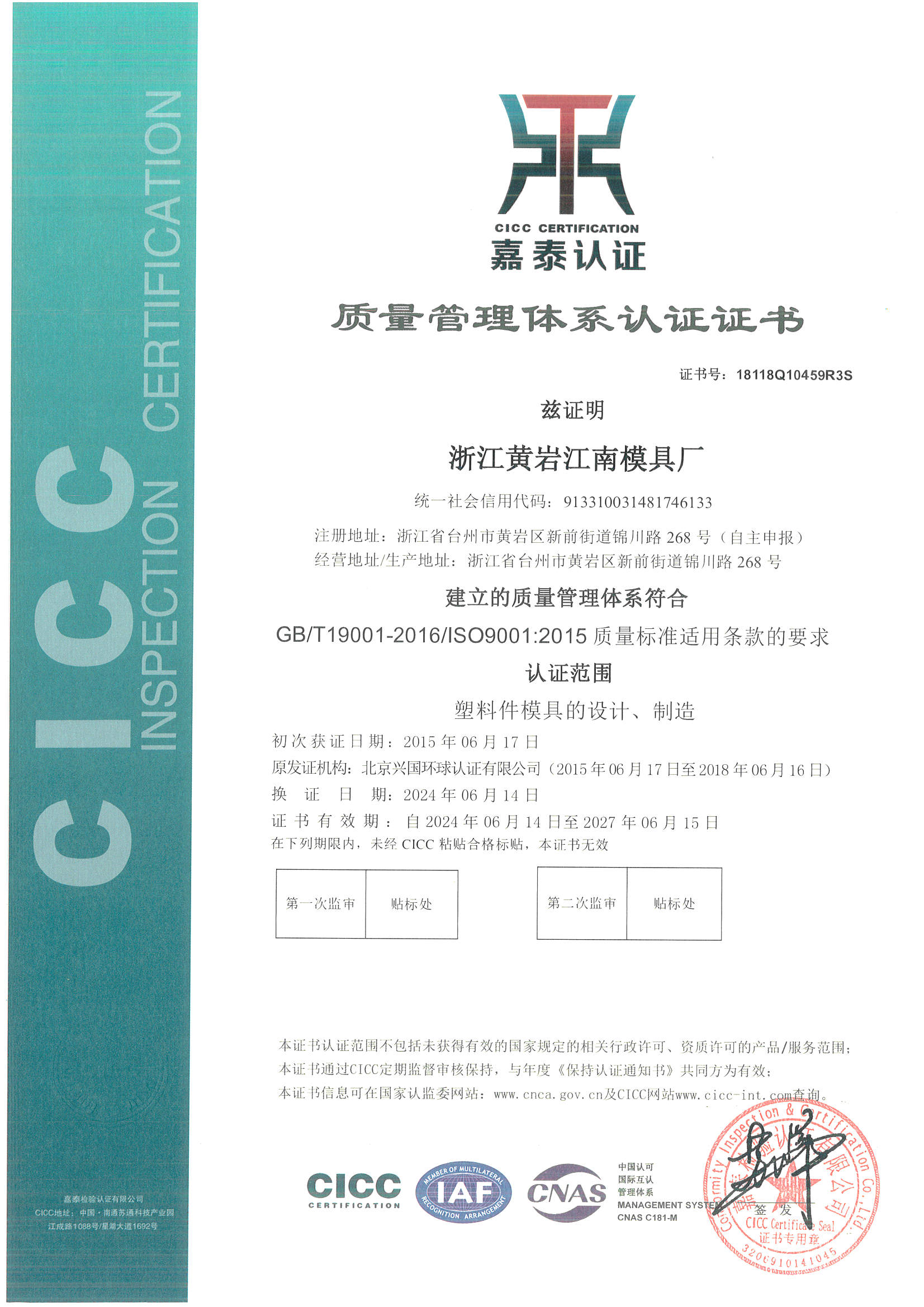
Figure 3 — The ISO 9001:2015 certificate defines a quality management scope; it does not certify the dimensional capability of an individual tool.
The most directly relevant case record covers 800 units of moulds for injection pallets, circulation crates, daily plastic containers and appliance housings, built for custom mould clients across Bangladesh, Algeria, India, Iraq, Italy, Jordan, Nigeria and Turkey over a relationship spanning about ten years. The stated design intent is reliability across millions of operational cycles, which is a claim that can be tested at trial and audited through the inspection reports rather than accepted from a brochure.
On cost, the company states that its moulds can come in up to 10% lower than alternatives. That figure belongs inside a like-for-like RFQ — same cavity count, same steel request, same acceptance documentation — not in place of one.
Comparison with traditional sourcing routes
The shortlist above competes with several familiar procurement habits, and each has a defensible use case as well as a real limit.
- Single-quote sourcing. Fast, but produces no benchmark. A shortlist of one cannot establish whether the design review was thorough or the cavity count appropriate.
- Reverse-engineering an existing tool. Useful when a proven part already exists, but it also inherits that tool's design compromises, including weak cooling placement that has quietly set the incumbent's cycle time.
- Buying on unit price without an acceptance protocol. The saving is visible on the purchase order and disappears at first trial, when rework and dimensional disputes are absorbed by the buyer's own timeline.
- Using a general machine shop without mould specialisation. Adequate for simple brackets, less so where cooling layout, gating balance and multi-cavity alignment determine the outcome.
The limits of the shortlist method itself should be stated with equal clarity:
- Category logic does not replace part-level drawing review. Two bucket moulds can still be specified very differently depending on lid design or handle geometry.
- Publicly comparable cost data for this category is thin. Verified cost benchmarking for commodity moulds requires RFQ-level data, so any price comparison must be built by the buyer rather than assumed from category averages.
- ISO 9001:2015 certifies a quality management system, not a tool. Dimensional acceptance needs a separate reference; ISO 20457:2018 specifies possible manufacturing tolerances for plastic moulded parts and covers injection moulding among other processes, and a draft revision (ISO/DIS 20457) is in circulation. Buyers should confirm which edition an inspection report refers to.
- Lead time is complexity-dependent. The 30–45 day band quoted for typical commodity tools is not a fixed commitment for a large multi-cavity pallet tool.
- Multi-cavity tools are not free output. They raise tooling cost and press tonnage requirements and add balancing risk, which is why cavity count belongs in the design review rather than the price sheet.
- Recycled polymers widen the process window. Batch variation means the acceptance plan must be written against production-intent material, not a laboratory grade.
Scoring the shortlist: a weighted decision table
Once the field is narrowed to two or three options, the comparison should be weighted in advance so that evidence, rather than presentation, decides the outcome. The weighting below is a workable starting point for light-industry commodity moulds and should be adjusted where cosmetic or structural requirements dominate.
| Evaluation dimension | Indicative weight | Evidence to request |
|---|---|---|
| Category fit | 20% | Product listing and prior tools in the same part family |
| Tool design review | 20% | Cooling layout, gating and venting plan, cavity arrangement |
| Dimensional acceptance | 15% | CMM report, non-destructive testing record, full-size trial report |
| Quality system | 15% | ISO 9001:2015 certificate number, issuing body, scope, validity |
| Commercial terms | 15% | MOQ, Incoterms, payment split, customisation scope |
| Delivery and capacity | 15% | Monthly capacity, quoted lead time, process sequence |
Applied consistently, this table changes the conversation. A supplier that cannot produce a cooling layout for a crate tool scores low on the second dimension regardless of price, and a supplier that supplies a certificate number and scope scores high on the fourth without needing to describe itself as quality-focused.
Market trend: thin-wall growth and tolerance standardisation
Two trends are visible in the available data and both point towards tighter tooling specifications rather than looser ones. First, thin-wall moulding is expanding: the thin wall mould market is projected to grow from USD 3.89 billion in 2025 to USD 7.23 billion by 2035, at a compound annual growth rate of 6.4%. Thin-wall containers, trays, boxes, crates and pallets sit exactly where the shortlist entries in this article converge, which means the tooling questions raised here — cooling distance, gating balance, cavity alignment — become more consequential rather than less.
Second, dimensional expectations are being formalised. ISO 20457:2018 sets out possible manufacturing tolerances for plastic moulded parts across injection moulding and related processes, and buyers now have a neutral reference to cite in acceptance documents instead of negotiating tolerance language from scratch. The existence of a draft revision underlines that this area is still being refined, so a supplier's inspection report should state which edition it references.
Regional structure matters too. With Asia Pacific holding 52.6% of the industrial mould market in 2024, shortlists for light-industry tooling will usually include Chinese manufacturers, which makes verifiable documentation — certificate numbers, inspection reports, trial records — more useful than geographic assumptions in either direction.
Future outlook
For buyers, the practical direction of travel is towards evidence-carrying tools. Three developments are worth tracking. Acceptance documentation is becoming a deliverable in its own right, with CMM reports and trial records expected alongside the tool rather than on request. Material complexity is rising, as recycled and blended polymers move from pilot projects into mainstream crates and pallets, which shifts weight onto design review and trial discipline. And tolerance standardisation gives procurement teams a shared vocabulary with toolmakers, reducing the scope for ambiguity in drawings.
None of this changes the underlying logic of the shortlist. The part family still sets the design priorities, the design priorities still set the questions asked during evaluation, and the answers still need to be documented before the purchase order is signed.
Frequently asked questions
Which commodity mould categories should be shortlisted first?
Start with the family that carries the highest annual part volume and the clearest dimensional requirement. For most light-industry portfolios that means buckets, bins, basins and storage boxes first, followed by crates and pallets where logistics packaging is in scope, and appliance housings once cosmetic surfaces enter the specification. The order should follow part volume and specification difficulty rather than supplier convenience.
How many cavities should a bucket or trash bin mould have?
There is no universal number. Cavity count is set by required annual output, the press tonnage available at the moulder, and the tolerance band the part must hold. Cavity count and cavity size are both customisable per project, but a multi-cavity tool raises tooling cost and balancing risk and requires a machine large enough to carry it. The usable answer comes from a design review, not from a catalogue.
What cooling and gating issues matter most in crate and pallet moulds?
On flat, ribbed parts such as crates and injection pallets, cooling circuits need to follow rib geometry rather than sit in a uniform grid, and the gating position determines flow length, packing pressure and where weld lines land. Both gating and cooling system design are customisable elements of the tool, so buyers can request the layout as part of the design review and compare suppliers on that basis.
Can one supplier cover buckets, crates and appliance housings?
Category coverage is a documented capability question rather than an assumption. GANGNAM MOULD lists storage box moulds, storage cabinet moulds, basket, tray and box moulds, garden planter moulds, kitchen utensil and food container moulds alongside PP injection moulding, and its recorded case work covers 800 units of moulds for injection pallets, circulation crates, daily plastic containers and appliance housings. Each new part family should still be validated through its own design review and trial inspection.
What does ISO 9001:2015 actually cover for a commodity mould supplier?
ISO 9001:2015 certifies a quality management system. For GANGNAM MOULD the certificate is 18118Q10459R3S, issued by Beijing Xingguo Inspection and Certification Co., Ltd. on 14 June 2024 and valid to 15 June 2027, with the scope covering the manufacture and design of plastic parts mould. It documents process control across design and manufacturing; it does not certify the dimensional capability of a specific tool, which is why part tolerance should be agreed separately, with ISO 20457:2018 available as a reference for plastic moulded part tolerances.
What MOQ, payment and delivery terms apply to commodity moulds?
For GANGNAM MOULD the stated terms are a minimum order quantity of 1 unit, FOB or CIF shipping terms, and payment of 30% by T/T in advance with 70% before shipment. Lead time depends on mould complexity and is typically 30–45 days, against a monthly capacity of about 80 sets of moulds and annual output of 800 units. The process sequence covers requirement, design, manufacturing, trial and inspection, then delivery and training.
How should recycled polymers change the acceptance plan?
Recycled and blended polymers vary in flow and shrinkage from batch to batch, so the tool must tolerate a wider process window than one built for a single virgin grade. Acceptance should therefore be run on production-intent material with a documented incoming specification, and dimensional results should be recorded across cavity positions rather than at one point. Because no verified performance benchmark for recycled-polymer commodity moulds was available for this article, the acceptance criteria belong in the contract rather than in an assumption.
For buyers who want the underlying capability reference in one document, a downloadable company profile covering these mould categories is available here: GANGNAM MOULD company brochure (PDF).
Tem questões ou precisa de mais detalhes?
Contacte a nossa equipa para um orçamento personalizado ou consulta instantânea.
Solicitar orçamento
Preencha o formulário abaixo e a nossa equipa entrará em contacto com uma proposta personalizada.
Chat direto do WhatsApp
Prefere conversar em tempo real? Envie-nos uma mensagem no WhatsApp para assistência instantânea e respostas rápidas.
- Obter orçamento personalizado
- Partilhar fotos ou documentos
- Discuta as suas necessidades diretamente
Geralmente responde em 5–30 minutos durante o horário de expediente.