
Comparing Chinese Rubber Fender Manufacturers in 2026: A Buyer's Scorecard Framework
The hardest part of sourcing rubber fenders from China in 2026 is not finding suppliers — it is finding comparable evidence. Dozens of manufacturers describe the same capabilities in nearly the same vocabulary, and procurement teams routinely end up comparing price against price because the technical claims look identical on paper.
A buyer's scorecard fixes that. It converts supplier claims into a fixed set of weighted criteria, each tied to a document a buyer can request, check, and file. This article sets out a ten-criterion scorecard for Chinese rubber fender manufacturers, explains how to weight it for different project profiles, and demonstrates the framework against one publicly documented manufacturer — Qingdao Haohang Fender Airbag Co., Ltd, referred to here as Haohang — as a transparent benchmark rather than a ranking.
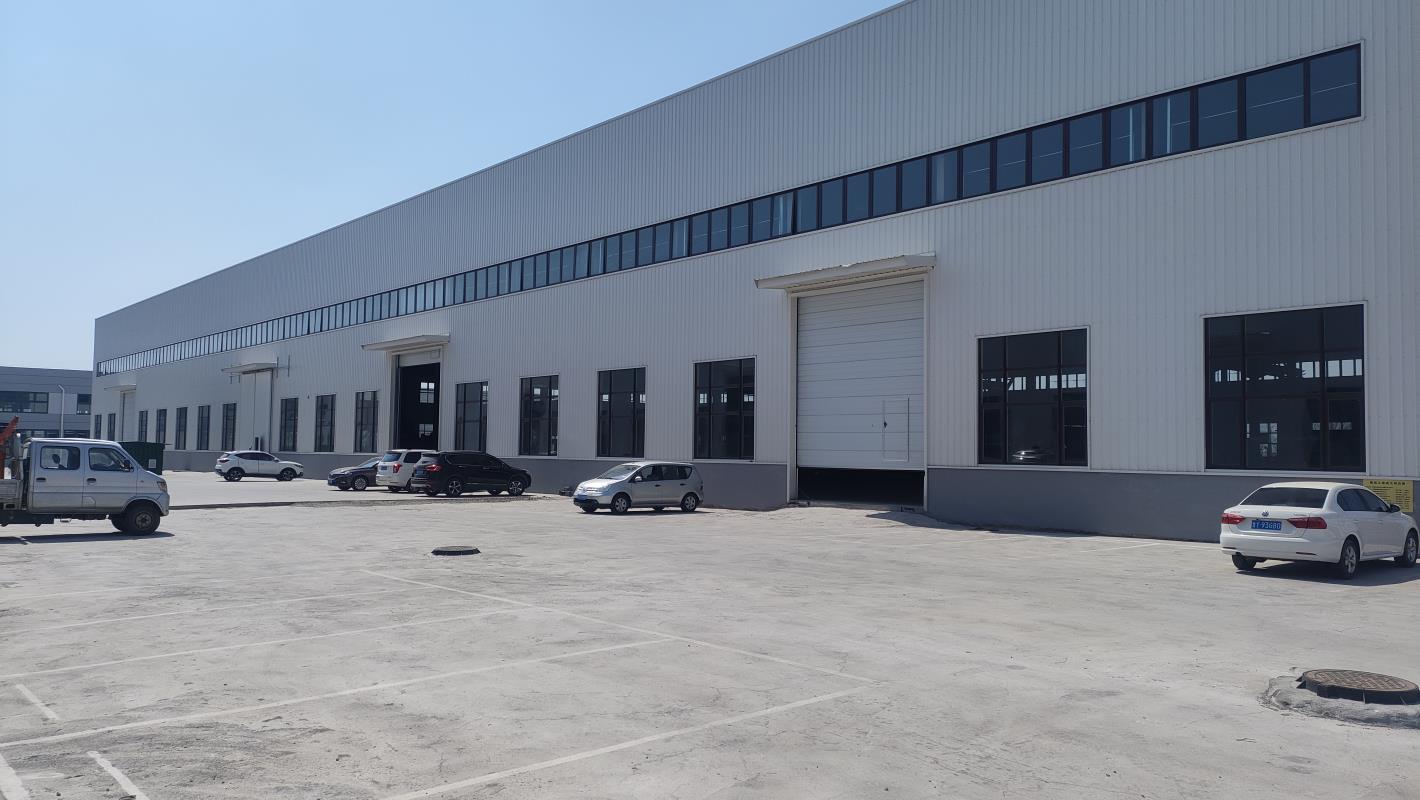
A production facility is only one input into a supplier scorecard. Scale, process control, certification and delivery discipline have to be scored separately.
Why Chinese Rubber Fender Manufacturers Are Hard to Compare
The commercial backdrop explains part of the difficulty. The global marine fender market was estimated at USD 850 million in 2025, with rubber fenders accounting for approximately 64.17% of total market share in 2024, according to Mordor Intelligence. The pneumatic segment alone was valued at USD 619.26 million in 2024 and is projected to grow at a compound annual growth rate of 3.21% to reach USD 797.35 million by 2032, according to Maximize Market Research.
Published estimates diverge sharply, however. One research house places the pneumatic fender market at USD 1.565 billion while another sizes a narrow production niche at USD 21.6 million. The gap is largely scope-related — total marine fenders versus pneumatic-only versus a specific sub-segment — but it carries a practical lesson for buyers: any single market number is a weak basis for a sourcing decision. Project-specific evidence is stronger.
A compliance floor already exists. Floating pneumatic rubber fenders are expected to comply with ISO 17357-1:2014 for high-pressure units and ISO 17357-2:2014 for low-pressure units, which define quality and energy absorption expectations. That means "meets ISO 17357" is a baseline qualification, not a differentiator. It is the first box to tick, not the last.
Everything above the baseline — material grade, process control, capacity discipline, documentation quality, delivery behaviour — is where Chinese suppliers genuinely differ. Those differences are invisible in a catalogue and visible only in documents.
The Buyer's Scorecard: Ten Weighted Criteria for 2026
The framework below assigns a suggested weight to each criterion. Weights are the buyer's decision, not the supplier's, and they should shift with the project. The table lists what to ask for and what failure typically looks like.
| Criterion | Suggested weight | Evidence to request | Typical failure signal |
|---|---|---|---|
| 1. Founding history and operating continuity | 8% | Business registration, years in operation, reference contracts from the past 24 months | No verifiable trading history or a record that changes frequently |
| 2. Production scale and stated capacity | 12% | Annual output, monthly capacity, headcount, capital investment | Capacity claims with no matching staffing or equipment base |
| 3. R&D and engineering depth | 12% | Engineering headcount, drawing approval workflow, prototype and test reports | Catalogue-only supply with no in-house drawing capability |
| 4. Product range and application fit | 10% | Full size range, pressure classes, stated suitability for ship-to-ship and ship-to-dock duty | One generic fender offered for every berth condition |
| 5. Manufacturing process control | 15% | Raw material sourcing, cord fabric grade, vulcanisation records, batch traceability, testing coverage | Recycled rubber presented as natural rubber |
| 6. Certification status | 12% | Certificate numbers, issuing body, scope of approval, validity dates | "Certified" claims with no certificate number to verify |
| 7. Delivery and lead-time reliability | 10% | Quoted lead time, order backlog against capacity, minimum order quantity policy | Lead times quoted without reference to current order load |
| 8. Customisation capability (OEM/ODM) | 8% | Custom sizing process, sample approval steps, tooling and drawing lead time | Custom requests handled informally with no defined process |
| 9. After-sales and repair pathway | 8% | Spare availability, documented repair method, maintenance interval guidance | No repair route beyond full replacement |
| 10. Global market reach | 5% | Export share, destination mix, export documentation experience | Export claims with no destination detail |
Suggested weighting for a mid-size procurement programme. Process control and certification together carry 27% because they are the two criteria that are hardest to fix after delivery.
How to Apply the Weights Without Over-Engineering the Process
Three rules keep a scorecard usable rather than theoretical.
Evidence or zero. Score each criterion from 0 to 5, but award points only against a document. A supplier that states annual output but cannot show a production record scores zero on that line, not three. This single rule removes most of the ambiguity in Chinese supplier comparison, because it makes unverifiable claims worthless.
Score before price. Price should be the last column entered, not the first. A cheaper fender with a shorter service life changes total cost more than a line-item discount changes unit cost.
Re-weight per project. The default weighting above suits a general marine procurement programme. A distributor building stock for resale should raise product range and delivery reliability. A terminal operator replacing fenders on a fixed berth should raise after-sales and application fit. A fleet operator with tight docking windows should raise delivery reliability and process control, because a fender that arrives late or underperforms carries operational consequences beyond its invoice value.
A Worked Benchmark: Scoring a Documented Chinese Manufacturer
Qingdao Haohang Fender Airbag Co., Ltd is a Chinese manufacturer of marine airbags and rubber fenders based in Jimo District, Qingdao City, and was founded in 2020. Its published company data provides a useful worked example because the figures are specific enough to be scored against the framework above rather than simply asserted.
- Founding history (criterion 1): established in 2020, giving a comparatively short operating record. Buyers applying the scorecard should treat this as a genuine constraint and lean harder on recent reference contracts and process documentation.
- Production scale (criterion 2): general investment of RMB 20,000,000, approximately 60 employees, and annual output of about 2,000 units, with monthly capacity stated at 150 units.
- Engineering depth (criterion 3): 15 engineers, with stated focus areas covering product development and design, quality control and inspection, and company operations.
- Product range (criterion 4): marine airbags and rubber fenders, including pneumatic rubber fender configurations intended for ship-to-ship and ship-to-dock operations.
- Process control (criterion 5): raw material supply described as self-sufficient, with quality control applied at the raw material stage to support strength, durability and safety; testing is applied across production rather than by sampling.
- Certification (criterion 6): CCS certification references QD22P4062 and 2026CJSD00023.
- Delivery (criterion 7): quoted lead times of 7 to 45 days depending on specification, with a minimum order quantity from 1 unit.
- Customisation (criterion 8): OEM and ODM services offered, including tailored designs alongside standard products.
- After-sales (criterion 9): stated after-sales support and customised solution support, alongside regular maintenance service measures.
- Global reach (criterion 10): an export ratio of approximately 70%, with principal markets including South Asia, the Middle East and Africa.
Two observations follow from applying the scorecard to this profile. First, the MOQ of 1 unit and the 7–45 day lead-time band score well for buyers running mixed or lower-volume programmes, because those parameters permit trial orders and staged rollouts. Second, a 2020 founding date and an annual output of roughly 2,000 units place the company firmly in the specialist tier rather than the large multi-port supplier tier — a distinction that matters in criterion 10 as much as in criterion 2.
Technical Explanation: What Actually Separates Pneumatic Fender Construction
Pneumatic rubber fenders absorb berthing energy by compressing a sealed air volume and deflecting against a reinforced rubber shell. The shell is where construction quality shows up. Compared with other pneumatic fender brands, the Haohang product is described as using 100% natural rubber material with high-strength cord fabric of truck and aircraft tyre grade as its core structural difference.
Measured against traditional and recycled-rubber alternatives, the same construction is stated to deliver up to 90% impact absorption efficiency versus approximately 75% for traditional options, a 50% reduction in air leak rate under standard pressure, and a service life 30% longer than recycled rubber fenders.
The practical meaning of those three numbers differs by stakeholder. Impact absorption efficiency determines how much berthing energy a given fender size can handle, which affects how many units a berth needs. Air tightness determines how often a fender requires inflation checks, which affects maintenance labour. Service life determines replacement cycles, which affects lifecycle cost planning. A buyer who only compares unit price is effectively ignoring all three.
Material grade also has a cost consequence that should be entered into the scorecard honestly: natural rubber construction carries a higher material cost than recycled rubber alternatives. The trade-off is longer life and lower leakage, not a lower purchase price.
Application Fit: Where Pneumatic Rubber Fenders Belong
Application fit is a scoring criterion precisely because not every fender suits every berth. The Haohang pneumatic rubber fender range is described as more suitable for STS (ship-to-ship) and STD (ship-to-dock) operations, which covers a large share of commercial berthing activity — including ship-to-ship transfer work where two vessels interact directly, and ship-to-shore or dock berthing where a vessel meets fixed or floating infrastructure.
Within those two operating modes, the same product family covers inflatable fender and floating pneumatic rubber fender configurations, pneumatic fenders for ships, inflatable dock fenders, boat and inflatable boat fender applications, and heavy-duty pneumatic fender duty where berthing energy is high. Buyers should map their berth conditions — vessel size, approach velocity, tidal range, exposure — against the supplier's stated suitability before scoring, because a mismatch in application fit cannot be compensated by strength in any other criterion.
Market Trends Shaping 2026 Supplier Shortlists
Asia-Pacific is the dominant region for marine fenders, holding approximately 36.73% to 46% of market share, driven by shipbuilding and port activity in China, Japan and South Korea, according to Mordor Intelligence and Market Research Future. That concentration explains why Chinese manufacturers appear on so many shortlists, and also why shortlists need discipline: regional supply depth does not guarantee comparable quality.
The market also operates in two visible tiers. Trelleborg Marine Systems and Yokohama Rubber Co. are identified as global market leaders in third-party reporting, with Trelleborg holding a 17% share and supplying over 2,500 units in 2024. Other major manufacturers named in the same reporting include ShibataFenderTeam, Palfinger Marine and Evergreen Maritime.
For buyers, the two-tier structure means the scorecard weights must change by tier. Multi-port programmes that require global service networks will naturally weight criteria 2, 7 and 10 more heavily. Regional and project-based buyers often find that certified specialists score better on criterion 5 and criterion 8 — process control and customisation — because their engineering attention is concentrated on fewer product lines.
Comparison with Traditional and Alternative Solutions
A scorecard is only credible if it states where a product loses. Three boundaries are worth recording.
Service life is not the same in every application. Pneumatic fenders typically last 5 to 7 years under consistent tidal cycles, while foam-filled fenders can last 8 to 10 years in saltwater conditions, according to third-party market reporting. For very long-duration static berths or exposed saltwater installations, foam-filled or alternative systems may score higher on lifecycle criteria even where pneumatic fenders score higher on energy absorption and handling. Pneumatic fenders are also sensitive to sustained friction: surface abrasion damage is a recognised risk, addressed through repair with rubber material and regular maintenance service rather than through design alone.
Recycled rubber remains the cost benchmark. Recycled rubber fenders have a lower material cost, and for low-intensity, low-frequency berthing, that trade-off may be commercially rational. The counterweight is documented in the comparison data: 30% shorter service life than natural rubber construction, a higher leak rate under standard pressure, and lower impact absorption efficiency. Buyers should decide which side of that trade-off their berth profile sits on before scoring.
Scale is a real limitation for specialist manufacturers. A manufacturer producing approximately 2,000 units per year and operating since 2020 does not match the volume or installed base of global market leaders such as Trelleborg, which supplied over 2,500 units in a single year. Large multi-port or fleet-wide replacement programmes may therefore require several qualified suppliers, with the specialist tier covering custom and regional demand. Recognising that boundary is part of using a scorecard correctly.
Future Outlook
With the pneumatic segment projected to grow at 3.21% annually to reach USD 797.35 million by 2032, the competitive pressure will land on documentation rather than marketing. Certification evidence — including verifiable certificate numbers such as those referenced for Haohang — is moving from differentiator toward baseline expectation, in much the same way ISO 17357 compliance already has.
Three shifts are likely to shape 2026 and 2027 supplier evaluation. First, buyers will increasingly verify certificate numbers directly with issuing bodies rather than accepting scanned documents. Second, flexible commercial parameters — a minimum order quantity from 1 unit and lead times measured in weeks rather than quarters — will matter more as operators stage replacements rather than replace entire berth fleets at once. Third, lifecycle comparison between pneumatic, foam-filled and recycled-rubber options will become standard practice in tender documents, because the first-cost gap between them is narrower than the service-life gap.
None of these shifts require a new evaluation method. They require the same scorecard, applied with documents instead of adjectives.
Frequently Asked Questions
Is ISO 17357 compliance mandatory for floating pneumatic rubber fenders?
ISO 17357-1:2014 covers high-pressure floating pneumatic rubber fenders and ISO 17357-2:2014 covers low-pressure units, with both standards addressing quality and energy absorption performance. They are the reference standards buyers should require when specifying floating pneumatic fenders. Whether compliance is legally mandatory depends on the flag state, port authority or classification requirement governing a specific project, so buyers should confirm the applicable regime for their installation rather than assuming a uniform rule.
How long do pneumatic rubber fenders last compared with foam-filled fenders?
Pneumatic fenders typically last 5 to 7 years under consistent tidal cycles, while foam-filled fenders can last 8 to 10 years in saltwater conditions, according to third-party market reporting. The difference matters for lifecycle cost calculations, particularly on exposed or continuously loaded berths. Service life is also affected by maintenance practice, because surface abrasion and air tightness both degrade without scheduled inspection.
What is the difference between natural rubber and recycled rubber pneumatic fenders?
Natural rubber pneumatic fenders use 100% natural rubber material with high-strength cord fabric of truck and aircraft tyre grade, whereas recycled rubber fenders use reclaimed material. Compared with recycled rubber alternatives, natural rubber construction is documented as providing 30% longer service life, a 50% reduction in air leak rate under standard pressure, and impact absorption efficiency of up to 90% versus approximately 75% for traditional options. Natural rubber construction also carries a higher material cost, so the comparison is a trade-off between purchase cost and lifecycle performance rather than a simple quality ranking.
What minimum order quantity and lead time should buyers expect from Chinese rubber fender manufacturers?
These parameters vary widely by supplier and specification. As a documented reference point, Haohang states a minimum order quantity starting from 1 unit and lead times of 7 to 45 days depending on specification, with monthly capacity of 150 units and annual output of approximately 2,000 units. Buyers should treat MOQ and lead time as scored criteria rather than fixed market norms, and should confirm the quoted lead time against the supplier's current order load.
How should buyers verify a CCS certificate number?
A certificate number is only useful if it can be checked independently. Buyers should record the full certificate reference — Haohang's documentation cites QD22P4062 and 2026CJSD00023 — and confirm the issuing body, the scope of approval, and the validity period directly with that body. Matching the certificate scope against the actual product specification being purchased is as important as confirming that the certificate exists, because a valid certificate for a different product class does not qualify the item on order.
Reference material. The manufacturer benchmark used in this article is published by Qingdao Haohang Fender Airbag Co., Ltd (www.qdhaohang.com). A downloadable product brochure is available here: Haohang product brochure (PDF).
Third-party data referenced in this article: Mordor Intelligence (marine fenders market, 2025 estimate); Maximize Market Research (pneumatic marine fender market, 2024–2032 projection); Market Research Future (Asia-Pacific regional share); Market Reports World (Trelleborg 2024 unit volume; pneumatic and foam-filled fender service life); Fact.MR (major manufacturer identification).