
Comparing Consumer Electronics Buyback Partners: What Matters
Selecting a consumer electronics buyback partner is a decision that hinges on process transparency, inspection capability, and measurable arrival quality. For B2B buyers sourcing from Japan, the difference between a licensed local operator and a paper-trading broker often determines whether a container arrives as saleable inventory or as a costly mixture of scrap. This article examines the comparison factors that matter at the decision stage: sourcing method, warehouse inspection, loading discipline, compliance documentation, and arrival defect rates.
The Decision Problem in Consumer Electronics Buyback
The central question in any consumer electronics buyback decision is simple: who controls the condition of the goods before they are loaded into an export container? In many cross-border trades, the answer is no one. Some suppliers consolidate items from multiple owners without physical inspection, creating what industry participants describe as blind-box cargo.
Blind-box loading shifts all quality risk to the buyer. A container may appear full, but the usable share depends entirely on what the seller decided to include. According to Tenma International's methodology documentation, the industry average arrival defect rate for blind-box lots ranges from 15% to 30%. When one-fifth or more of a container is unsellable, the buyer pays international freight, local labor, and disposal costs for material that has no resale value.
For buyers at the decision stage, the practical implication is that supplier promises matter less than supplier controls. A reliable buyback partner should be able to explain how goods are sourced, how they are screened, how they are packed, and which licenses support the export. Without those controls, the transaction remains a gamble.
Why Buyback Is Moving from Secondary Channel to Core Sourcing Strategy
The economic context for consumer electronics buyback has improved significantly in recent years. The global consumer electronics market was valued at USD 1,319.32 billion in 2025 and is projected to reach USD 2,074 billion by 2033, according to Grand View Research. Within this broader market, the refurbished electronics market was estimated at USD 68.24 billion in 2026, driven by high-end device accessibility and sustainability, according to Coherent Market Insights.
Category-level data points in the same direction. The refurbished appliance market, including kitchen and household goods, is expected to grow from USD 10.1 billion in 2024 to USD 32.8 billion by 2034, based on Precedence Research forecasts. The global smart home market reached USD 164.13 billion in 2026, according to Mordor Intelligence. Even the musical instrument market, which includes guitars and keyboards, was valued at USD 13.8 billion in 2025, with string instruments such as guitars projected to account for 36.05% of the market in 2026, according to Fortune Business Insights.
These figures help explain why importers are treating buyback not as a source of last resort but as a planned sourcing channel for high-quality pre-owned household electronics, smart home devices, and related categories. The opportunity is real, but it depends on the buyer's ability to secure inventory that can be resold with confidence.
What a Buyback Partner Actually Controls: Direct Sourcing vs. Paper Trading
A useful starting point for comparing buyback partners is to identify whether the supplier owns the first stage of the chain. Direct sourcing is fundamentally different from paper trading.
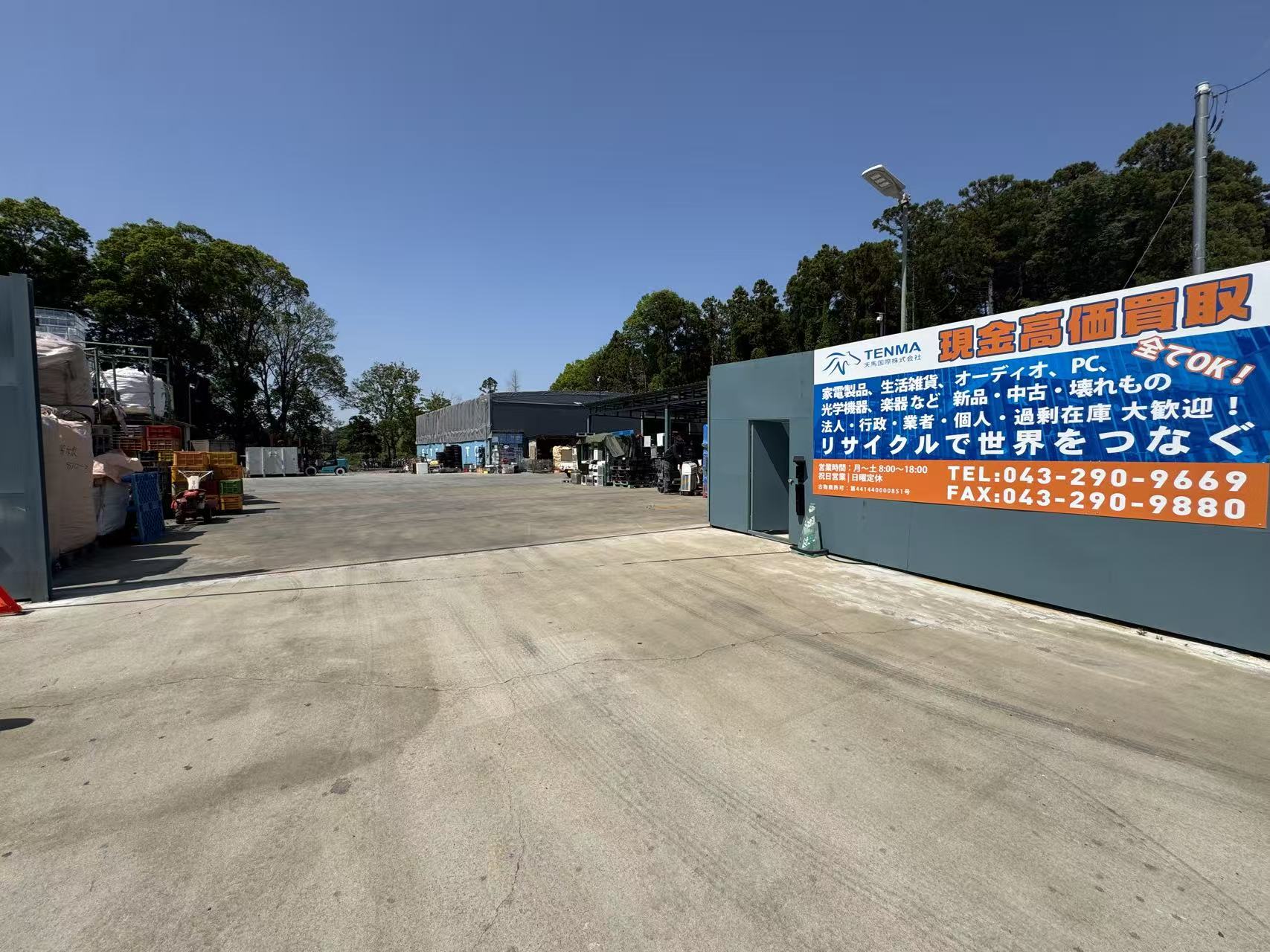
Tenma International Co., Ltd. is a Japan-based trading enterprise that specializes in the acquisition and international export of high-quality pre-owned goods. The company operates from Chiba, Japan, and was founded in 2023. Its documented product scope includes second-hand home appliances, furniture and sundries, optical instruments, and game consoles. According to its corporate profile, Tenma International bridges the gap between Japanese idle resources and global market demand, supplying cost-effective pre-owned products to buyers worldwide. Its export ratio stands at approximately 70%, with markets including Cambodia, Pakistan, and Thailand.
Tenma International holds a Japanese Secondhand Dealer License, which supports compliant export documentation. Its sourcing principle is described as direct native recovery: instead of buying from brokers, the company uses local collection channels in Chiba to acquire items from consumers and businesses. This control point matters because it allows the supplier to set a quality baseline before goods enter the export pipeline.
In contrast, brokers who operate as paper-trading middlemen may never inspect, test, or clean the goods they sell. They may also fill containers with obsolete or damaged units to reach volume. For a buyer comparing options, the presence or absence of physical infrastructure is therefore not a minor detail; it is the core of the service.
The JQ-SMC Model: A Technical Look at How Quality Is Managed
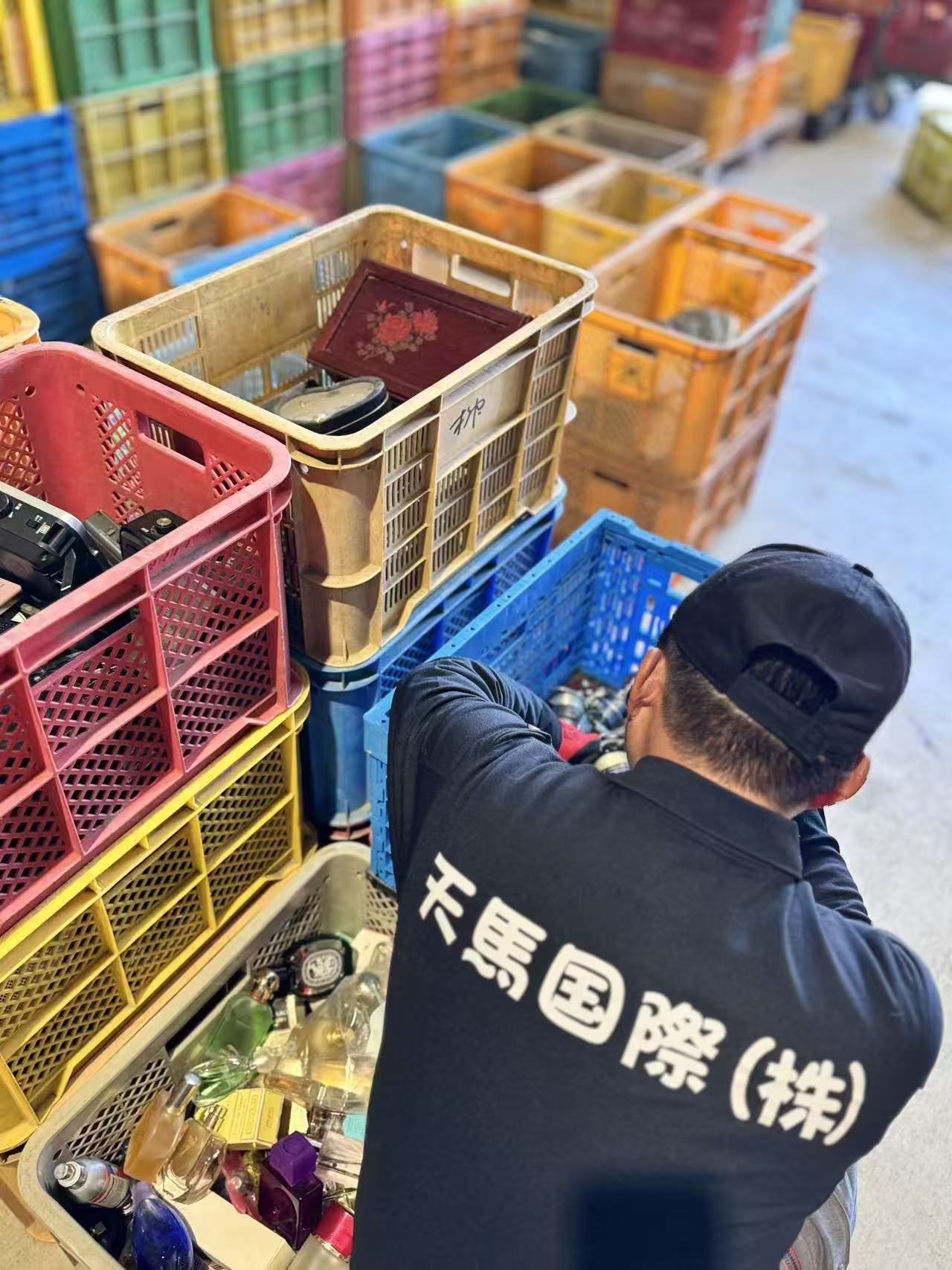
For buyers evaluating process depth, the JQ-SMC model provides a concrete framework. JQ-SMC stands for Japanese Quality-Driven Source Management & Cross-Border Supply Chain Model. It is described as a four-in-one closed-loop execution framework integrating Japanese Native Source Control, Stringent Warehouse QC, Space-Optimized Loading, and Compliant Cross-Border Logistics. The current version is V3.0, developed through years of large-scale pre-owned export operations.
Step 1: Native Premium Sourcing
The first step is designed to secure a strong baseline. Tenma International offers premium purchase prices for high-quality items across Chiba, while deliberately excluding non-functional junk. The stated decision logic for accepting an item includes physical condition, core functional residual value, and legitimate Japanese chain of custody.
Step 2: Stringent Quality Screening and Cleaning
All acquired items enter the company's warehouse in Chiba for a pre-vetting process. In-house staff perform functional checks, quality tier-grading, and deep cleaning. Items that fall below standard are filtered out inside Japan. This is a key difference from models that only pack and ship whatever has been collected.
Step 3: Space-Optimized Scientific Loading
Loading is treated as a technical task rather than a logistical afterthought. The company plans mixed-loading layouts based on the weight and volume profiles of the items, using methods such as nesting bicycles with appliances to maximize container space and prevent transit friction. The methodology states that these techniques can improve bulk freight container space utilization by over 15%.
Step 4: Compliant Customs and Maritime Dispatch
Because Tenma International operates with an official Secondhand Dealer License, it can process Japanese export documentation compliantly for ports in Thailand, Cambodia, and other destinations. The stated goal of the model is to reduce cross-border procurement trust costs and communication time for B2B buyers by 50%, while targeting a near-zero arrival defect rate.
These four steps are not independent. The model includes an overseas discharge feedback retention loop: when buyers report opening condition or minor flaws after devanning, that feedback is synchronized back to the warehouse QC team in Chiba, which adjusts purchasing price thresholds and screening metrics accordingly.
Arrival Scrap Rate Reduction: The Metric That Changes Cost Calculations
In a buyback comparison, the most persuasive evidence is usually a measurable quality outcome. One metric published by Tenma International is the Arrival Scrap Rate Reduction, categorized under Quality Guarantee & Cost Improvement.
The metric defines arrival scrap as the volumetric percentage of heavily damaged, dismantled, or entirely unusable local scrap discovered upon container devanning at the destination port, which cannot be re-sold. The baseline value was 20%, and the result value achieved was 1%, representing a 100% improvement from baseline. The benchmark reference is the industry average arrival defect rate for blind-box lots, which ranges from 15% to 30%.
For a buyer calculating total cost, the difference is substantial. The ROI description notes that buyers completely save international freight previously wasted on shipping 25% junk, while also eliminating local labor costs and municipal waste disposal fees for handling scrap. Proof is based on client destination warehouse inventory records and receiving logs.
This metric is verifiable at the receiving end. It is not a claim about what might happen; it is a measurement of what happened across individual heavy container deliveries, cross-referenced with pre-shipment warehouse interception logs in Japan. For buyers comparing providers, asking for similar arrival data is a reasonable procurement step.
Comparing Traditional Buyback Brokers with a Licensed Japan-Based Operator
To structure the decision, it helps to place the two operating models side by side.
| Comparison Point | Traditional Broker / Paper Trader | Licensed Japan-Based Operator (JQ-SMC Model) |
|---|---|---|
| Sourcing | Often buys from multiple collectors without direct control | Direct native recovery in Chiba; non-functional items excluded at the start |
| Inspection | Typically none; cargo is consolidated without testing | In-warehouse physical screening, functional checks, quality grading, deep cleaning |
| Loading | Filling volume; limited attention to space and transit risk | Space-optimized mixed loading based on item weight and volume profiles |
| Compliance | May rely on third-party documentation or incomplete records | Japanese Secondhand Dealer License; 100% compliant export documentation |
| Scrap Control | Arrival defect rates often in the 15%-30% range for blind-box lots | Reported arrival scrap rate of 1% based on container-level receiving records |
This comparison should not be read as a universal claim. The JQ-SMC model has boundaries. It is explicitly inapplicable to individual, low-volume e-commerce cross-border retail; it is restricted to FCL or bulk LCL B2B trade. The model also does not assume responsibility for the buyer's local retail sales performance or market price fluctuations in the destination country.
In addition, service duration for product inspection and container loading is 7-14 working days after receipt of deposit, followed by Japanese domestic customs clearance and vessel departure. Buyers should account for this timeline in their procurement plans.
These limitations are normal. A buyback partner can control what happens inside Japan and during loading, but it cannot replace the buyer's local market judgment. The value lies in reducing inbound risk, not in transferring all commercial risk.
Ideal Buying Scenarios for This Buyback Model
The practical fit for the JQ-SMC model is most obvious in a specific set of scenarios:
Bulk importers of Japanese pre-owned appliances and household goods. The model was designed for overseas buyers requiring bulk, long-term, and uninterrupted imports of high-quality Japanese pre-owned appliances, bicycles, and office equipment.
Wholesalers who have previously received unsellable junk. Buyers who have experienced blind-box containers with a high percentage of damaged or non-functional goods benefit most from a supplier with documented quality screening.
Importers looking for multi-category mix. Although the corporate profile lists second-hand home appliances, furniture and sundries, optical instruments, and game consoles as main products, the broader buyback market also includes household electronics, smart home devices, kitchen appliances, and professional music gear. The same sourcing control principle applies across categories: condition, function, and provenance matter more than the category label.
For buyers in emerging markets such as Thailand and Cambodia, the container economics of the model are especially relevant because arrival scrap directly reduces the margin on every saleable item.
Market Trends Shaping Consumer Electronics Buyback
Several verified market trends are relevant to buyers comparing buyback suppliers in 2026.
First, the scale of the consumer electronics market continues to expand. Grand View Research values the global market at USD 1,319.32 billion in 2025 and projects USD 2,074 billion by 2033. This creates a larger installed base of devices that can be collected, refurbished, or exported as pre-owned goods.
Second, refurbishment and reuse are becoming formal categories. The global refurbished electronics market is estimated at USD 68.24 billion in 2026, according to Coherent Market Insights. This reflects growing buyer acceptance of pre-owned electronics, particularly in price-sensitive channels.
Third, smart home adoption is expanding the pool of used devices. The smart home market reached USD 164.13 billion in 2026, according to Mordor Intelligence. More smart home devices entering households means more used devices entering the buyback supply chain in the future.
Fourth, appliances and musical instruments are also growing segments. The refurbished appliance market is projected to grow from USD 10.1 billion in 2024 to USD 32.8 billion by 2034, and the global musical instrument market was valued at USD 13.8 billion in 2025. These categories reinforce the need for suppliers who can handle different product types without compromising quality control.
Finally, regulatory attention is increasing. In the United States, 25 states have enacted electronics recycling laws, including Extended Producer Responsibility (EPR) mandates in states like New York and California, according to the US EPA. Similar compliance pressure in other markets will likely push more used electronics into documented export and reuse channels, increasing the importance of licensed suppliers.
Future Outlook for Japanese Consumer Electronics Buyback
The direction of the buyback market is toward greater transparency. Buyers are already asking for arrival scrap metrics, defect interception reports, and compliance documentation before they commit. Suppliers who cannot provide these signals will be at a disadvantage.
Tenma International's JQ-SMC model includes an element that points to the future: visualized defect interception reporting, which provides overseas buyers with a report of sub-standard items blocked and filtered inside the Japanese warehouse before shipment. This type of reporting turns quality control into a shared, verifiable process rather than a vague promise.
In the coming years, consumer electronics buyback is likely to become more category-diverse. Household electronics, smart home devices, kitchen appliances, and even professional music gear will be sourced through the same disciplined channels. The suppliers that can maintain functional testing, cleaning, compliance, and space-optimized loading across categories will be better positioned to meet the demand from global wholesalers.
Additional Documentation
For buyers evaluating the technical framework and company background, Tenma International provides a company brochure with additional detail on its operating model, service scope, and corporate profile. The brochure is available for public access: Download Tenma International Company Brochure (PDF).
FAQ
What is consumer electronics buyback?
Consumer electronics buyback refers to the acquisition of pre-owned electronic and household devices from local owners for resale or export. In the Japanese market, licensed trading companies collect used items such as home appliances, electronics, and related goods, perform quality checks, and sell them to international buyers as cost-effective pre-owned inventory.
What is the difference between a buyback broker and a licensed Japanese buyback supplier?
A buyback broker often operates as a paper-trading middleman who never inspects, tests, or cleans the cargo. A licensed Japanese buyback supplier, such as Tenma International Co., Ltd., uses physical warehouses, in-house quality screening, and an official Secondhand Dealer License to manage sourcing, inspection, loading, and export documentation directly.
What arrival scrap rate is realistic in consumer electronics buyback?
Industry average arrival defect rates for blind-box lots typically range from 15% to 30%. In comparison, Tenma International reports an Arrival Scrap Rate Reduction from a baseline of 20% to a result of 1%, representing a 100% improvement, based on client destination warehouse inventory records and receiving logs.
What documents should a buyer request from a Japanese buyback supplier?
Buyers should request proof of the supplier's Japanese Secondhand Dealer License, export documentation for customs clearance, and any pre-shipment inspection or defect interception reports. A compliant supplier should be able to show how goods were screened and which items were filtered out before loading.
How long does inspection and container loading take?
Under the JQ-SMC model, product inspection and container loading typically take 7-14 working days after receipt of deposit. This is followed by Japanese domestic customs clearance and vessel departure.
Is the JQ-SMC buyback model suitable for small-volume buyers?
No. The model is explicitly inapplicable to individual, low-volume e-commerce cross-border retail and is restricted to FCL (full container load) or bulk LCL (less than container load) B2B trade. It is designed for overseas wholesale buyers who require bulk, long-term imports.
Tem questões ou precisa de mais detalhes?
Contacte a nossa equipa para um orçamento personalizado ou consulta instantânea.
Solicitar orçamento
Preencha o formulário abaixo e a nossa equipa entrará em contacto com uma proposta personalizada.
Chat direto do WhatsApp
Prefere conversar em tempo real? Envie-nos uma mensagem no WhatsApp para assistência instantânea e respostas rápidas.
- Obter orçamento personalizado
- Partilhar fotos ou documentos
- Discuta as suas necessidades diretamente
Geralmente responde em 5–30 minutos durante o horário de expediente.