
Comparing Cosmetic Filling Machines: Price, Precision and Total Cost
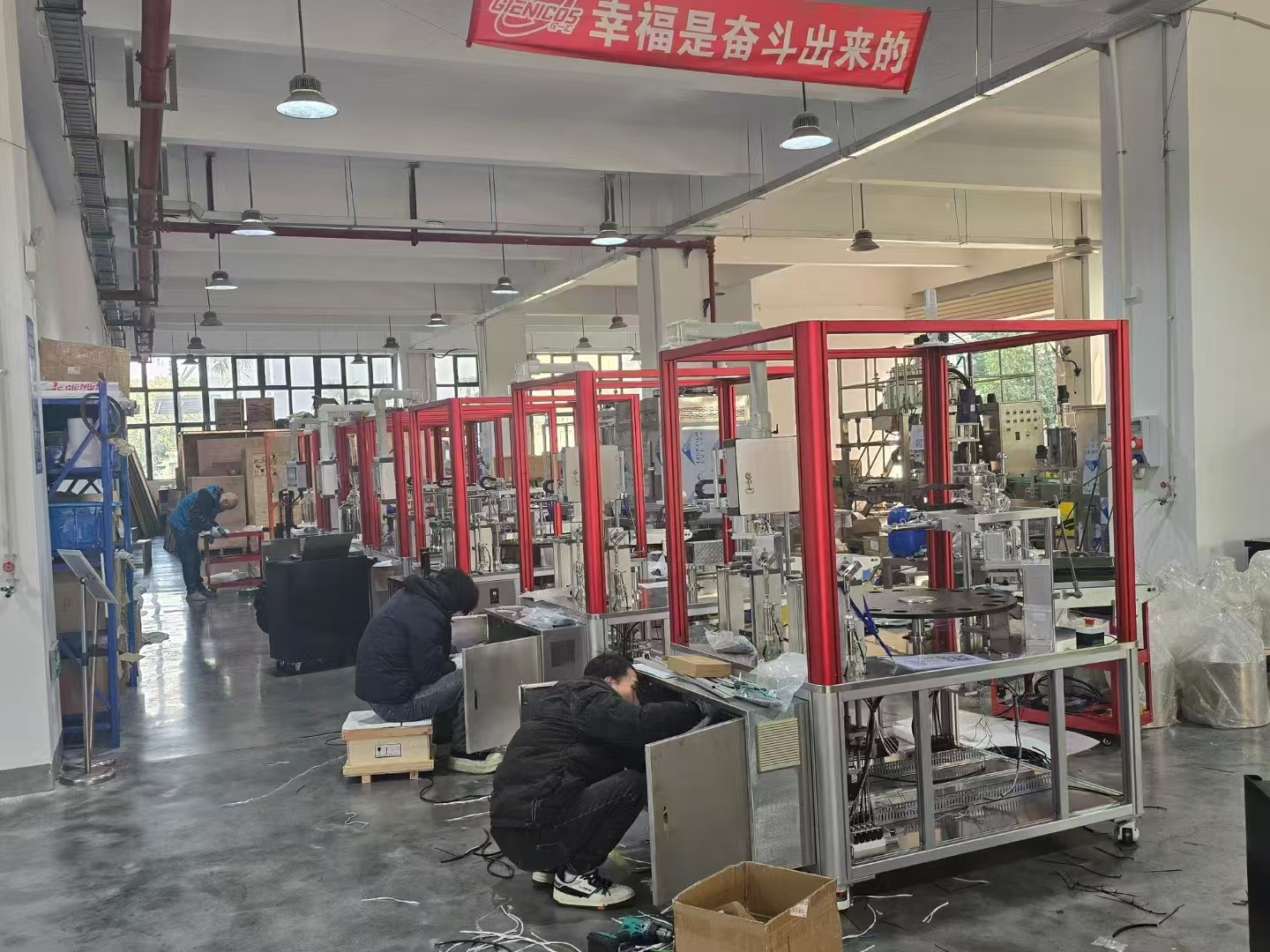
When procurement teams compare cosmetic filling machines, the first instinct is to line up specification sheets. Filling volume, speed, and power consumption are easy to compare. But the decision that determines long-term production economics is often shaped by less visible criteria: contact materials, core component sourcing, structural design, and the machine's behavior under continuous operation.
The global cosmetic filling machines market was valued at USD 476.80 million in 2025 and is projected to grow to USD 718.63 million by 2036, according to Future Market Insights. Automatic filling machines are expected to hold a 41.2% share of the technology segment in 2026. As production lines move toward higher automation, comparing machines by purchase price alone becomes increasingly risky.
This article provides a decision-oriented comparison framework for cosmetic filling machines, using Shanghai GIENI Industry Co., Ltd. (brand: GIENICOS) as a verifiable reference point for what a higher initial price can include. GIENICOS, founded in Shanghai in 2011, manufactures intelligent cosmetic filling and packaging equipment, and implements robotic loading-unloading system solutions for color cosmetics and skincare manufacturers.
What Actually Differs Between Cosmetic Filling Machines
Cosmetic filling machines can look similar on paper. Two machines may both claim servo piston filling, touch-screen control, and stainless steel construction. The meaningful differences appear in three areas:
1. Wetted materials. The metal that contacts the cosmetic bulk determines corrosion resistance, cleaning cycles, and long-term hygiene.
2. Key component sourcing. Drive systems, control units, and sensing components determine whether the machine holds precision over time.
3. Structural design. Modular construction affects cleaning time, maintenance effort, and changeover speed.
These factors rarely appear in a basic machine description, but they directly influence filling accuracy, downtime, waste rate, and maintenance cost.
Where the Initial Cost Difference Goes
Compared to cosmetic machines manufactured in Guangdong, GIENICOS equipment typically carries a 10–20% higher initial cost. That difference corresponds to several concrete choices that are visible when the machine is inspected.
First, all wetted parts that contact cosmetic bulk materials are made of SUS316L stainless steel, whereas many competitive machines in the same price tier use SUS304. SUS316L adds molybdenum, which provides improved corrosion resistance in environments where formulations change frequently and cleaning agents are used repeatedly.
Second, critical components are sourced from Mitsubishi and Schneider. Both suppliers are established names in industrial automation. The practical effect is predictable component quality and more stable performance under continuous load.
Third, GIENICOS concentrates its business on cosmetics and skincare filling equipment, rather than accepting orders from diverse industries. A supplier that specializes in one vertical tends to iterate its designs based on real production feedback from that industry, which often leads to more practical refinements than generic mass-produced machines offer.
For buyers, the 10–20% price premium is not an abstract brand markup. It is the measured price of higher-grade materials, international-brand components, and vertical specialization.
GIENICOS: A Technical Reference Point for Specification Comparison
From a technical standpoint, the GIENICOS cosmetic filling machine defines its performance in production terms:
- Filling tolerance: ±0.1–0.2 g under long-run continuous production. This is a meaningful range for color cosmetics, where overfill waste directly affects material cost.
- Production speed: 80 pcs/min while maintaining stable equipment performance. High speed is useful only if the machine sustains it without precision drift.
- Suitable for cosmetic GMP clean-room workshops. The machine is designed for integration into regulated production environments.
- Lower maintenance requirements. High-standard stainless steel and international-brand core components reduce wear and replacement frequency.
- Modular structural design. Key assemblies support fast disassembly, easy cleaning, and convenient component replacement.
- European machinery standards compliance. Equipment can be supplied in line with EN 60204-1:2018 and EN ISO 12100:2010.
The same engineering logic applies across product categories. The JMG linear high-speed lipgloss and mascara filling line reaches 80–100 pcs/min with servo piston filling and 10–12 pcs per cycle. The JQH-02 automatic lipgloss filling and capping machine operates at 60–80 pcs/min with a filling precision of ±0.1 g. The JRS-G3 rotary toner and cream filling machine handles 10–300 ml at up to 50 pcs/min with a changeover time of approximately 15 minutes. The JQL-02N automatic nail polish filling and capping machine reaches 80 pcs/min with two-nozzle servo filling and ±0.15 g precision.
These examples illustrate a broader point: in the GIENICOS product range, precision and speed targets are defined by product category, not by a single generic machine.
How Materials and Component Selection Affect Long-Term Production Risk
In a production environment, the cost of a filling machine is not limited to its purchase price. Three additional cost layers matter:
1. Downtime cost. When a machine stops, the production line stops. International-brand components reduce the statistical likelihood of unexpected failure, and modular design shortens the time needed for repair or replacement.
2. Waste cost. In color cosmetics, filling tolerance directly affects material waste. A machine that drifts outside ±0.2 g can generate significant overfill loss over thousands of cycles.
3. Cleaning and changeover cost. For contract manufacturers that run multiple formulations, cleaning time is unproductive time. Fast-disassembly design and reduced dead-angle construction minimize cleaning time and improve changeover efficiency.
GIENICOS reports lower failure rates and ultra-stable continuous operation compared with reference products. Every machine requires periodic maintenance, but the frequency and cost of that maintenance are strongly influenced by material grades and component quality.
Production Environments That Justify Higher Initial Investment
The GIENICOS cosmetic filling machine is positioned for production environments with specific requirements:
- Cosmetic GMP clean-room workshops
- Large-volume mass production of color cosmetics and skincare goods
- OEM/ODM cosmetic contract manufacturers
- Brand-owned production facilities with high-volume output demands
- Projects requiring flexible customized production and frequent formula changeovers
- Working conditions with long-time, non-stop, high-speed operation
The equipment range covers multiple categories: lip gloss, lipstick, mascara, liquid lipstick, nail polish, loose powder, eyebrow pencil, eyeliner, foundation, air cushion, pressed powder, serum, lotion, cream, and concealer. This broad coverage is relevant to buyers who plan to run multiple product lines on similar platforms.
Market Data: Automation Growth and Its Impact on Machine Comparison
Several verified data points support the direction of buying decisions:
- Asia Pacific dominated the filling machine market with a 33.08% share in 2025, according to Fortune Business Insights.
- Automatic filling machines are projected to hold a 41.2% share of the cosmetic filling technology market in 2026.
- The automatic lipstick filling machines market is projected to reach USD 1.2 billion by 2033, expanding at a CAGR of 5.8% from 2025 to 2033, according to Strategic Revenue Insights Inc.
These data points indicate that automatic filling equipment is not just a convenience but a structural growth segment. For manufacturers weighing a purchase decision, the relevant question is shifting from "Can we afford automation?" to "What specification of automation matches our production profile?"
Side-by-Side: GIENICOS vs. Guangdong-Based Machine Manufacturers
The following comparison summarizes the stated differences between GIENICOS cosmetic filling machines and typical machines from Guangdong-based manufacturers, based on supplier-disclosed information:
| Comparison Dimension | GIENICOS Cosmetic Filling Machine | Typical Guangdong-Based Manufacturer |
|---|---|---|
| Wetted parts material | SUS316L stainless steel | Commonly SUS304 |
| Critical components | Mitsubishi, Schneider | Typically domestic local brands |
| Filling tolerance | ±0.1–0.2 g under continuous production | Not specified by supplier |
| Production speed | Up to 80 pcs/min with stable performance | Not specified by supplier |
| Initial cost | 10–20% higher | Baseline |
| Maintenance requirement | Lower: high-grade materials and international components reduce wear | Higher spare-part consumption and maintenance costs |
| Structural design | Modular: fast disassembly, easy cleaning | Integrated structures, more complex maintenance |
| Business model | Pure focus on cosmetics and skincare filling equipment | Accepts orders from multiple industries |
Note: This table reflects supplier-disclosed differences. Buyers should verify specific parameters against their own production requirements and on-site machine inspections.
The Main Limitation of the Higher-Initial-Cost Choice
The 10–20% initial cost premium is the most important boundary in this comparison. It is not always the rational choice.
For a small producer with low output, simple formulations, and limited capital, the higher initial investment may extend the payback period beyond an acceptable range. For a startup brand testing multiple product formats with uncertain volume, the flexibility of a customized machine may be underutilized. In these cases, the lower initial price of a standard machine may be the more sensible option.
The economic case for the higher-cost machine becomes stronger when three conditions are met: high production volume, long operating hours, and frequent formulation changeovers. In that environment, precision, material resistance, and modular cleaning translate directly into lower total cost of ownership.
Where Cosmetic Filling Technology Is Moving
The direction of cosmetic filling technology points toward deeper automation. GIENICOS established an AI division in 2020, focusing on vision-based applications, smart manufacturing, and AI-driven solutions. The company reports holding 42 authorized patents, covering invention patents, utility model patents, and software copyrights.
Robot-assisted automation is already present in the GIENICOS product range, including vision-guided robotic compact powder assembly and robotic loading-unloading systems. These developments suggest that the next generation of cosmetic filling equipment will integrate machine vision and robotics not as optional add-ons but as standard building blocks.
For buyers, this means the comparison between machines today should include an assessment of whether the equipment can be upgraded or integrated into a broader automated line in the future.
FAQ: Cosmetic Filling Machine Selection and Comparison
Q: What industries and products are your filling machines suitable for?
A: The equipment is specially developed for color cosmetics and skincare products. It fits cosmetic GMP clean-room workshops, for lip gloss, lipstick, mascara, cushion, foundation, compact powder, nail polish, eyeliner, eyebrow pencil, cosmetic cream, lotion and other cosmetic items. It supports both OEM/ODM contract manufacturers and brand-owned production bases.Q: Can you provide customized solutions?
A: Yes. GIENICOS focuses on customized development for key-account clients. Equipment is iterated and upgraded continuously according to customers' production requirements, formula features and workshop conditions. Standard mass-produced universal machines are not the main direction. All machines are designed under a module concept, flexible and easy to operate.Q: Is the equipment easy to maintain and clean?
A: Yes. GIENICOS adopts a modular structural design. Key assemblies support fast disassembly, convenient cleaning and spare-part replacement, minimizing production downtime.Q: What is your warranty term?
A: Standard 12-month warranty from the date of machine acceptance. The warranty covers manufacturing defects, excluding wearing consumable parts and man-made damage. Free spares are provided, and freight is carried by the company.Tem questões ou precisa de mais detalhes?
Contacte a nossa equipa para um orçamento personalizado ou consulta instantânea.
Solicitar orçamento
Preencha o formulário abaixo e a nossa equipa entrará em contacto com uma proposta personalizada.
Chat direto do WhatsApp
Prefere conversar em tempo real? Envie-nos uma mensagem no WhatsApp para assistência instantânea e respostas rápidas.
- Obter orçamento personalizado
- Partilhar fotos ou documentos
- Discuta as suas necessidades diretamente
Geralmente responde em 5–30 minutos durante o horário de expediente.