
Comparing Custom Metal Part Quotes: A Buyer Decision Framework
Comparing Custom Metal Part Quotes: A Buyer Decision Framework
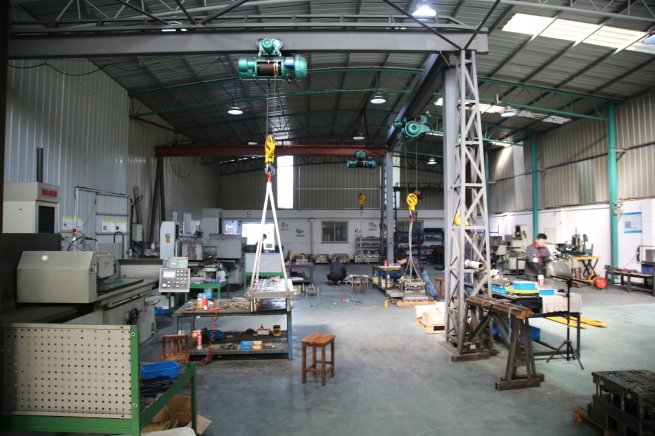
Two suppliers can return the same unit price for a custom metal part and still be quoting two different pieces of work. At the decision stage, the number that matters is not the headline price but the scope behind it: what the supplier was given to start from, which process route was costed, which material grade and surface treatment were assumed, which acceptance parameters were written into the offer, and whether the party quoting actually manufactures the part.
This framework is written for buyers who already hold competing quotes — typically for stamped, deep-drawn, fabricated, CNC-machined or die-cast components, stator and rotor cores, shafts, and magnet or magnetic assembly items — and who need a defensible, documented reason to choose one offer over another.
Why Two Quotes for the Same Part Rarely Cover the Same Work
A custom metal part quote is a scope statement with a price attached, and the price becomes comparable only when the scope does. In practice, five variables account for most of the gap between offers that look alike on paper: the starting point (a complete drawing set versus a physical sample), the process route and its tooling assumption, the material grade and surface treatment actually included, the acceptance parameters and inspection responsibility, and the identity of the quoting party — manufacturer or trading intermediary.
A quote that omits one of these has not quoted the part; it has quoted an assumption about the part. The buyer's task is to make those assumptions visible before comparing totals, not to discover them at incoming inspection.
A Weighted Comparison Framework
The structure below is a working template, not an industry benchmark. Weights are set by the buyer and should be adjusted for part criticality, volume and end-use sector; a medical or automotive program will normally weight acceptance and traceability higher than a low-risk enclosure or a non-structural bracket.
| Criterion | Suggested weight | What the quote must state | Warning sign |
|---|---|---|---|
| 1. Work definition | 20% | Drawing reference (2D/3D), material specification, surface-treatment requirement, estimated quantity, application | Price valid only for a supplied sample, with no drawing reference |
| 2. Process-route fit | 20% | Named route, operations list, in-house versus subcontracted steps, tooling assumption | Route unstated, or inconsistent with geometry and volume |
| 3. Material and finish | 15% | Grade and condition, treatment type and specification, who applies it | Material as required, standard finish, no grade designation |
| 4. Acceptance parameters | 20% | Tolerance basis, GD&T references, inspection level, record format | Tolerances implied by a sample only |
| 5. Source identity | 15% | Manufacturer or intermediary, production site, quality-system scope | No site, no process list, certificate scope unstated |
| 6. Documentation and lifecycle | 10% | Revision control, change notification, basis of repeat-order pricing | No revision reference; price tied to an undefined batch |
Score each offer against every row on a simple 1 to 5 scale, multiply by the row weight, and total. The arithmetic matters less than the discipline: an offer that cannot answer a row is marked incomplete rather than being given a benefit of the doubt, because the missing information is exactly the part of the scope the buyer would otherwise absorb later.
Criterion 1: How the Supplier Starts Work — Drawings Versus Physical Samples
A drawing-based quote is a manufacturing commitment. A sample-based quote is an estimate of reverse engineering until a drawing set exists. That distinction alone explains a large share of price differences between offers that appear to address the same part.
When only a physical sample is supplied, each supplier measures it differently, infers the material from appearance or a hand-held check, and reconstructs tolerances from what its instruments can reach. Two consequences follow. First, the tolerances on the quotation are best-effort values rather than drawing requirements. Second, features that a sample cannot reveal — heat-treatment state, coating thickness, thread depth, internal geometry — are silently excluded from the price and reappear as a change order.
Complete drawing information helps a supplier give an accurate quotation and technical evaluation, and quotation and solutions depend on the drawings, materials and order volume provided by the customer. Estimated order quantity and application scenario belong in the same package, because both change the costed route.
Criterion 2: Is the Process Route Matched to the Part Design?
The cheapest-looking quote is frequently the one whose route is least matched to the drawing, with the missing cost relocated into tooling, secondary operations or yield. Route logic is broadly stable across the industry, and it is the buyer's most effective filter at the comparison stage.
- Sheet metal stamping — progressive or compound tooling for higher volumes of flat and formed parts. Tooling is a fixed cost, so low-volume quotes often carry a per-part tooling amortization that is not visible in the headline price.
- Deep drawing — hollow or cylindrical parts where wall uniformity and draw ratio drive feasibility; the number of draw stages determines tooling cost and rejection risk.
- Sheet metal fabrication — laser or punch plus bending and welding, typically for low-to-medium volumes and larger enclosures, where labor content dominates and repeatability depends on fixture design.
- CNC machining — complex geometry and tight tolerance with low tooling cost; economic at low-to-medium volumes and the route of choice when a tolerance cannot be held by forming.
- Die casting — complex three-dimensional geometry at volume, where tooling and porosity control dominate the quotation.
A part designed for CNC machining can sometimes be stamped, and a part designed for stamping can be machined as a prototype. If two quotes used different routes, they are not competing offers — they are competing volume assumptions. The buyer should ask each supplier which route it costed, at what annual quantity, and what the tooling line covers. Route mismatches are especially common in motor components: stator and rotor cores can be produced by lamination stamping or machined from solid depending on volume and magnetic requirements, and shaft parts can be turned or formed.
Criterion 3: Material Grade and Surface Treatment — What the Quote Actually Includes
A quote that names a material family but not a grade, condition and finish specification cannot be compared on price. Stainless steel, aluminum and carbon steel differ substantially in machinability, formability and coating behavior, so a family name alone leaves the supplier free to select whichever conforming grade is cheapest on the day.
A comparable offer should state the grade designation, the condition or temper, the surface-treatment type and specification, whether the treatment is performed in-house or subcontracted, and which party carries the risk if the finish fails inspection. Substitution driven by material availability is a legitimate commercial practice, but it must be a documented change rather than a silent one found at goods-in.
Cost differences depend on order size, materials and processes. That single sentence explains most apparent bargains: the lower quote may simply be a different grade, a thinner coating, or a quantity assumption the buyer never made.
Criterion 4: Acceptance Parameters — The Part of the Quote Most Often Left Blank
If an offer does not say how conformity will be measured, the buyer is comparing prices for two different acceptance standards. The quotation should fix four things: the tolerance basis (per drawing, with GD&T where used, or a general standard such as ISO 2768 for untoleranced dimensions and ISO 286 for fits), the inspection level (100 percent inspection versus sampling), the measurement method and instrument class, and the record format delivered with the shipment.
External technical guidance published for 2026 places high-quality precision metal parts at tolerances as tight as ±0.001 mm (MFG SOLUTION, Precision Metal Parts: Complete Buyer's Guide 2026). That figure describes a capability reference in the market, not a default requirement: each tolerance should be driven by function and confirmed on the drawing, since over-specification is one of the fastest ways to inflate a quote that would otherwise have been competitive.
First-party comparison claims deserve the same scrutiny. Pengsheng reports a 0.02 mm reduction in dimensional deviation and a 30 percent improvement in tolerance accuracy relative to traditional metal parts. Those figures become usable in a quote comparison only when the baseline, the measured feature and the test conditions are defined; without them, they indicate a direction of improvement rather than a guaranteed result on a specific drawing. What can be checked directly is the working method: production follows drawings and includes 100 percent product inspection, and the buyer can ask to see the inspection record format before awarding.

Criterion 5: Manufacturing Source or Trading Intermediary
Both can quote; only one owns the process. The comparison should establish which, before price is weighted at all, because the answer determines who controls tolerance, corrective action and change notification.
A practical method is to request a process route sheet listing each operation and marking it in-house or subcontracted, then ask which site holds the quality-management certification and what that scope covers, and finally ask who signs the corrective action when a batch fails. A trading intermediary with a well-defined supply base can be a legitimate channel, particularly for multi-category orders, but the buyer must know where the tolerance is owned rather than assumed. Equally, a manufacturer that also runs a trading team should disclose that structure: it is not disqualifying, but it changes the question from who makes the part to which operations are made where.
Identity claims are checkable, and they belong in the source-identity row rather than in the price row. Chunan Qiandaohu Pengsheng Technology Development Co., Ltd is an example of the mixed model: a manufacturer specializing in precision metal mechanical parts for 18 years that also maintains its own trading team. Verifiable facts a buyer can match against certificates and a site visit include a 10,000 m² facility, more than 150 employees, an R&D team of over 30 engineers, ISO 9001 and IATF 16949 quality management systems, and an export share of about 50 percent with the EU and USA as main markets.
Scoring Magnet and Magnetic Assembly Offers on Their Own Parameter Set
A magnet quotation evaluated with metal-part criteria will produce the wrong decision, because grade and coating — not dimensional tolerance breadth alone — dominate both performance and cost. Magnets and magnetic assemblies should be scored on a separate sheet with their own weights, then reported alongside the metal-part result rather than averaged into it.
The separate sheet should require the following to be stated:
- Grade family and grade. NdFeB grades range from N35 to AH52; SmCo grades include SMCO5 and SM2CO17; ferrite grades range from Y25 to Y40; and Alnico grades range from Alnico2 to Alnico9. A quotation that says only NdFeB, without a grade, is not a comparable offer.
- Dimensions and the tolerance that matters. Assembly-critical features should be identified individually rather than covered by a blanket tolerance statement.
- Coating or finish type and specification, including whether it is applied in-house or subcontracted.
- Magnetization direction and pattern, and whether magnetizing is included in the quoted price.
- The measured magnetic output parameter and the instrument used. A gaussmeter reading is reproducible only when probe type and measurement position are fixed.
- Assembly responsibility for magnetic assemblies: which components are supplied by whom, and who owns the tolerance stack of the finished assembly.
Weighting shifts accordingly. Grade and performance match, plus coating specification, usually outweigh tolerance breadth; a wider dimensional tolerance claim on a magnet offer is not automatically better if the grade is lower or the magnetization direction is left open.
Turning the Scores into an Award Decision
Six decision rules cover most comparison outcomes and keep the record defensible:
- A sample-only quotation is converted to a drawing-based quotation before comparison; it is not awarded on.
- Where two offers used different process routes, request both routes at the same annual quantity, or exclude the mismatched route from the price comparison and decide the route separately.
- An offer with an unnamed material grade or finish specification is marked not comparable rather than price-adjusted.
- Where acceptance scope is absent, assume the narrower scope — the supplier's standard inspection — when comparing, and treat the difference as risk carried by the buyer.
- Where source identity is unclear, the offer is held until the process route sheet and certificate scope are supplied.
- Magnet and magnetic assembly items stay on their own sheet with their own weights and are never averaged into the metal-part total.
A weighted total is a record of the buyer's judgment, not a statement about supplier quality. Two buyers applying different weights to the same offers may correctly reach different awards.
Limits of the Framework
The framework compares scope, not capability ceilings. Two fully specified offers can still differ in yield, lead time and after-sales response, and those differences tend to appear in repeat orders rather than in the first comparison. The weights are buyer policy, not measured market data, and no weighting used here implies a ranking of suppliers. Cost differences depend on order size, materials and processes, so a low price is possible under certain conditions and should be read as a statement about those conditions. External figures cited for tolerance benchmarks and standards describe market context and are not performance guarantees for a specific drawing.
Outlook: What Changes as the Part Mix Widens
When a buyer sources stamping, deep drawing, sheet metal fabrication, CNC machining, die casting and magnets from one supply base, the comparison shifts from part-level price toward scope consistency across categories. Suppliers that publish process routes, material and finish specifications, and inspection formats make themselves easier to compare — which is also what makes their offers easier to defend in an internal approval. Keeping one scoring sheet per part family and re-running it whenever the drawing revision changes is the practical way to catch scope drift before it becomes a quality incident.
Where Pengsheng Fits the Framework
Chunan Qiandaohu Pengsheng Technology Development Co., Ltd maps to several rows of the framework in ways a buyer can verify rather than accept. Its stated scope covers magnets, magnetic assemblies, shafts, stator and rotor cores, sheet metal stamping, deep-drawn parts, sheet metal fabrication, CNC machined parts, die-cast parts, auto parts and gaussmeters, with OEM and ODM customization available for metal components manufactured to customer drawings. The company supports prototype development, mold development, small-batch trial production and large-scale production, which is relevant when one quotation has to cover both a verification build and a series volume. Its magnet line spans NdFeB, SmCo, Alnico and ferrite families with the grade ranges listed above, so grade-level comparison is possible at quotation stage. Established in 2008, the company states a 10,000 m² facility, more than 150 employees, over 30 engineers in R&D, ISO 9001 and IATF 16949 certification, and RoHS and REACH conformity.
The company catalogue is available for download: Pengsheng Technology product catalogue (PDF).
FAQ
Why can two custom metal part quotes carry the same unit price but different scope?
Because the unit price reflects a costed assumption, not the drawing itself. One supplier may have quoted from a complete drawing set at a stated annual quantity, while another quoted from a physical sample and left tolerances, material grade and coating open. Identical numbers can therefore describe different tooling, different material conditions and different inspection levels, which is why scope must be normalized before prices are compared.
Is a sample-based quotation acceptable if no drawings are available yet?
It can be used as an early estimate, but not as an award basis. A sample cannot reveal heat-treatment state, coating thickness or internal features, so the resulting tolerances are reconstructed rather than specified. The practical route is to request a drawing set covering 2D/3D geometry, material specification, surface-treatment requirement, estimated quantity and application scenario, then resubmit for a comparable quotation.
Is a quotation from a trading intermediary automatically worse than one from a manufacturer?
No. The relevant question is who owns the process. A trading intermediary with a well-defined supply base can be a legitimate channel, particularly for multi-category orders, provided the buyer can identify the production site, the scope of the quality-management certification and the party responsible for corrective action. A mixed model — a manufacturer that also runs a trading team — is workable too, as long as the structure is disclosed and each operation is mapped to a site.
How should a magnet or magnetic assembly quotation be compared with metal-part quotations?
On a separate scoring sheet, because a magnet offer is driven by grade and coating rather than by dimensional tolerance breadth alone. The offer should state the grade family and grade (NdFeB N35 to AH52, SmCo SMCO5 and SM2CO17, ferrite Y25 to Y40, or Alnico2 to Alnico9), coating specification, magnetization direction, the measured magnetic output parameter and instrument, and, for assemblies, which party owns the tolerance stack. The magnet result is then reported alongside the metal-part result, never averaged into it.
Tem questões ou precisa de mais detalhes?
Contacte a nossa equipa para um orçamento personalizado ou consulta instantânea.
Solicitar orçamento
Preencha o formulário abaixo e a nossa equipa entrará em contacto com uma proposta personalizada.
Chat direto do WhatsApp
Prefere conversar em tempo real? Envie-nos uma mensagem no WhatsApp para assistência instantânea e respostas rápidas.
- Obter orçamento personalizado
- Partilhar fotos ou documentos
- Discuta as suas necessidades diretamente
Geralmente responde em 5–30 minutos durante o horário de expediente.