
Comparing Ergonomic Office Chairs: Mesh, Load and Certification Checks
A buyer-side comparison framework for mesh swivel seating, built around adjustability, materials, mechanical load and certification, with Kabel's five-model office swivel chair range as a worked reference.
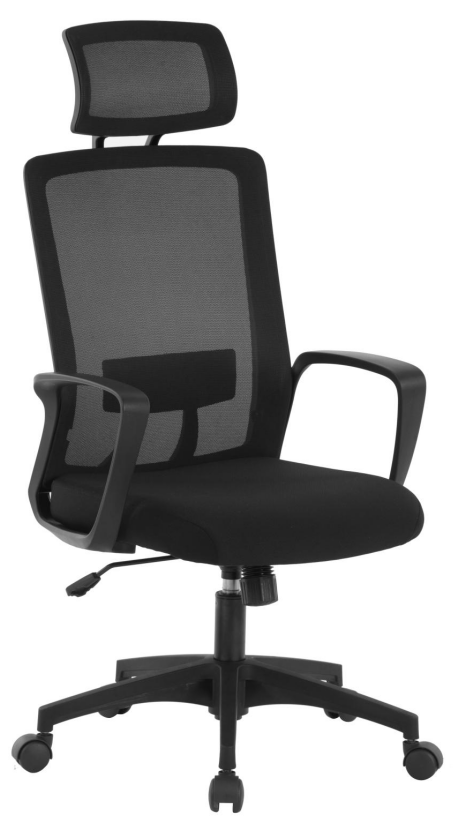
Mesh swivel seating is increasingly compared on published parameters rather than on product photography.
Office chair purchasing for institutional buyers has shifted from appearance to verification. The questions that now stall an order are specific: does the seat height range cover the people who will actually sit in the chair, does the load rating leave headroom for the heaviest expected user, and can the supplier produce certificate numbers that a compliance officer can check? A comparison framework that treats mesh construction, mechanical load and certification as separate verification layers gives procurement teams a repeatable way to shortlist ergonomic office chairs before price negotiation begins.
Anji Kabel Furniture Co., Ltd (Kabel), established in 2007, is an office chair manufacturer operating a 50,000 m2 facility in Anji County, Huzhou City, Zhejiang Province, China, with approximately 92 employees and an annual output of 400,000 sets. Its office swivel chair range, published across five models (KB-6809, KB-8961, KB-8965, KB-8932 and KB-8953), is used here as a reference point because the family publishes one checkable specification covering seat height, tilt, rotation, materials, load, gas lift, certification and warranty. The framework itself applies to any mesh swivel chair on any shortlist.
This is a comparison method, not a ranking. It is written for buyers at the awareness and research stage who need to know which attributes to compare and which claims to request in writing.
Why Catalogue Photos Are Not a Comparison Framework
Product photography compresses every chair into a similar silhouette. Two mesh swivel chairs that look alike in a catalogue can differ in ways that matter across a multi-year office refurbishment: one may adjust through a 10.5 cm seat height band and the other through a narrower one; one may publish a 150 kg maximum load rating with a four-level gas lift, while the other leaves both figures unstated.
Institutional buyers are effectively comparing three different things at once:
- Fit - whether the chair can be adjusted to the user population and to the desk heights in the room.
- Durability and safety - whether the frame, base, cushion and gas lift are specified strongly enough for daily, intermittent office use.
- Evidence - whether the manufacturer can supply traceable certificates, model specifications and warranty terms.
A framework exists so that those three questions can be answered from the same set of inputs, and so that a shortlist can be defended to a purchasing committee rather than argued from preference.
The Four Comparison Layers
| Layer | What to compare | Why it decides fit | Reference figures (Kabel office swivel chair) |
|---|---|---|---|
| Adjustability | Seat height band, tilt range and locking, rotation | Determines whether one purchase decision serves a mixed user population | 40-50.5 cm seat height range; 90-135 degree tilt locking; 360 degree rotation |
| Materials | Backrest mesh, cushion foam, frame, base, casters | Drives breathability, pressure distribution, structural stability and noise in shared rooms | Nylon mesh backrest; high-density molded foam cushion; PP frame; thickened nylon five-point base; silent PU casters |
| Load and lift safety | Maximum load rating, gas lift level | Connects the chair to the real user population and to height-adjustment risk | 150 kg maximum load; four-level explosion-proof gas pressure rod |
| Certification and warranty | Management-system certificates, numbers, issuer, validity; warranty scope | Survives compliance review and defines accountability after delivery | ISO 9001:2015 (02821Q10011R1M); ISO 14001:2015 (02821E10007R1M); ISO 45001:2018 (02820S10601R1M); three-year warranty on core functional components |
The four layers are deliberately independent. A chair can score well on materials and poorly on evidence, or carry strong certificates and still be a poor fit for the users in a specific room.
Layer 1 - Adjustability: Seat Height Band, Tilt Locking and Rotation
Adjustability is the layer that determines whether one purchase can serve many people. The Kabel office swivel chair specification lists an adjustable seat height range of 40-50.5 cm, a 90-135 degree tilt range with locking, and 360 degree free rotation.
Each figure answers a different buyer question:
- Seat height range (40-50.5 cm). A 10.5 cm adjustment band is what allows the same model to be issued to users of different heights and to be paired with desks of different working heights. Buyers should compare the published band against the actual user population, not against a single sample user.
- Tilt range with locking (90-135 degrees). Upright working positions sit at one end of the range and reclined reading or rest positions at the other. The locking function matters because it lets a user fix a preferred angle rather than continuously counter-balancing against the mechanism.
- 360 degree rotation. Swivel movement supports moving between a desk and a side surface, or between tasks, without standing up.
Two practical checks follow. First, ask whether the ranges are model-specific or shared across a family. A shared band is easier to standardise on, but it also means individual models may differ in features that the shared sheet does not itemise. Second, if the project requires adjustable seat depth or adjustable armrests, request confirmation per model, because those attributes are not part of the published specification used here.
Layer 2 - Mesh, Foam, Frame and Base: What Materials Decide
Materials decide how a chair behaves in year three, not on delivery day. The Kabel office swivel chair uses a nylon mesh backrest, a high-density molded foam cushion, a PP plastic frame, a thickened nylon five-point base, silent PU universal casters and a four-level explosion-proof gas pressure rod.
| Component | Function in use | What a buyer should ask for |
|---|---|---|
| Nylon mesh backrest | Breathable support surface; the visible part of the ergonomic claim | Mesh composition and whether the mesh is produced in-house or bought in |
| High-density molded foam cushion | Molded foam holds its geometry under repeated sitting better than loose fill | Foam specification in writing; cushion replacement terms |
| PP plastic frame | Structural housing for the backrest and mechanism | Frame material and whether frame parts are self-produced |
| Thickened nylon five-point base | Transfers load to the floor and supports stability in swivel seating | Base material, thickness and number of contact points |
| Silent PU universal casters | Rolling behaviour and noise control in shared or quiet rooms | Caster material and floor compatibility |
| Four-level explosion-proof gas pressure rod | Height adjustment and lift safety | Gas lift level stated in the purchase specification |
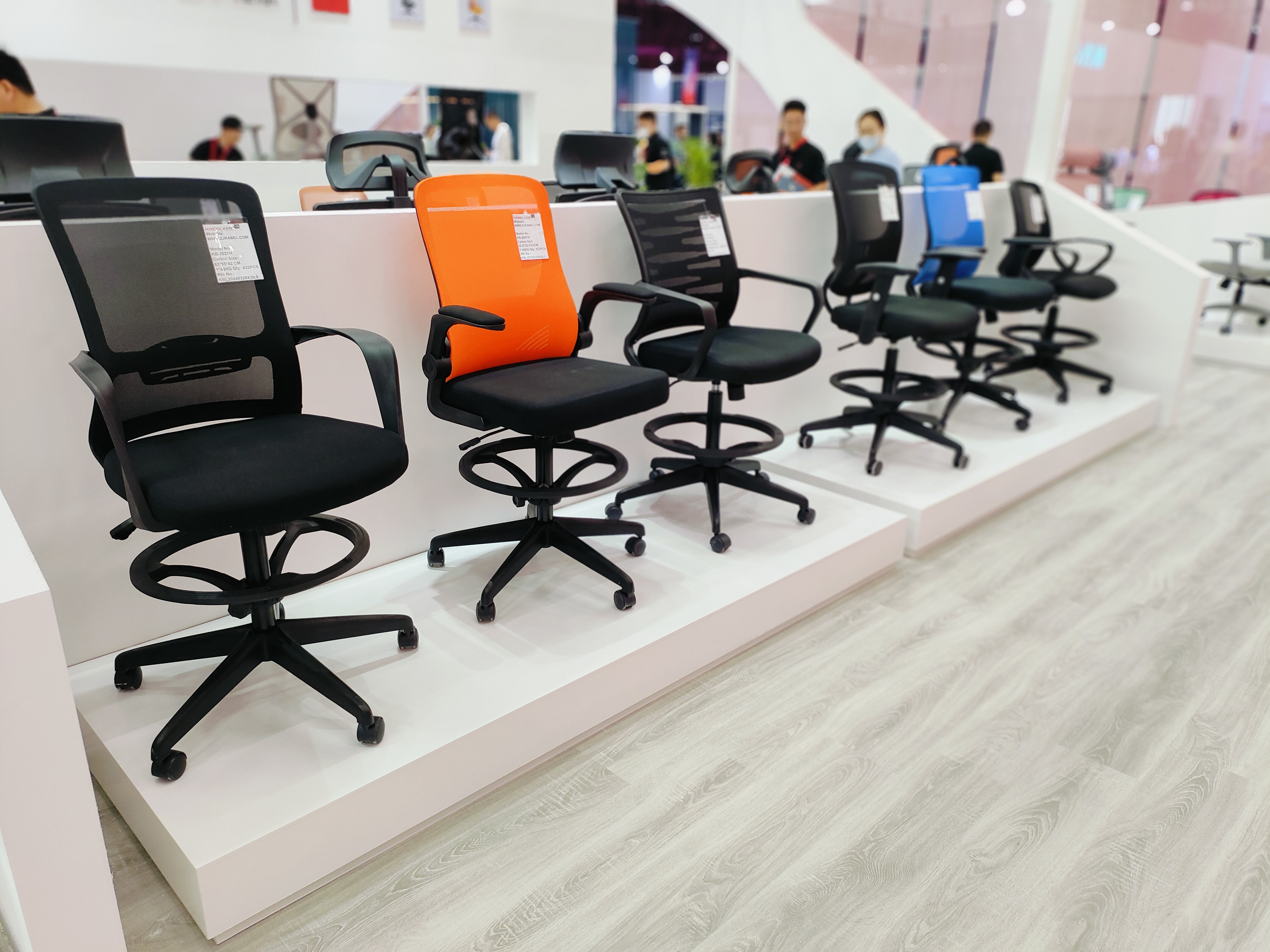
Mesh backrest, molded foam cushion and five-point base are the components that carry most of the long-term material risk.
The application scenario for this type of seating is ordinary office use: indoor normal temperature and humidity, manually adjustable and intermittent use, paired with a desk, providing daily office sitting and rest support. The stated special requirement for those settings is ergonomic, wear-resistant and breathable mesh, which is why mesh construction belongs in the comparison framework rather than in the aesthetics column.
For buyers, the most useful material question is a supply-chain question: who produces the mesh and the frame? Kabel's integrated self-production of mesh and frame parts places those components inside the same manufacturing operation, which can be checked during a supplier visit. Where a supplier cannot answer that question directly, material claims should be treated as unverified until documentation is provided.
Layer 3 - Load and Gas Lift: Reading the Numbers Correctly
A load figure is a safety parameter, not a comfort claim. The Kabel office swivel chair is specified with a maximum load capacity of 150 kg. Buyers should read that figure in four ways:
- Maximum means maximum. A 150 kg rating sets the upper boundary of the design envelope. Procurement teams normally require a rating above the heaviest expected user so that the chair operates inside its envelope rather than at its edge.
- Shared seating changes the calculation. In training rooms, study rooms and meeting areas the same chair may be used by many people in a single day, so the rating should be compared against the heaviest expected user rather than an average figure.
- The gas lift belongs to the same safety story. The specification lists a four-level explosion-proof gas pressure rod. Gas lifts in office seating are commonly described by level, and a four-level rod is the highest level normally cited in office chair specifications. Buyers should require the level to be written into the specification rather than assumed from a sample.
- The base and casters carry the load. A thickened nylon five-point base is the part of the chair that transfers load to the floor, and five points of contact are the conventional configuration for stability in swivel seating.
The buyer action is straightforward: put the maximum load rating and the gas lift level into the specification document, and require both to be confirmed per model.
Layer 4 - Certification: What ISO 9001, 14001 and 45001 Do and Do Not Verify
Certification is the layer most often misread in office chair procurement, because certificates are frequently presented as logos without scope. Kabel holds three management-system certificates issued by Beijing Zhong-An-Zhi-Huan Certification Center Co., Ltd.:
- ISO 9001:2015 - Quality management system, certificate no. 02821Q10011R1M
- ISO 14001:2015 - Environmental management system, certificate no. 02821E10007R1M
- ISO 45001:2018 - Occupational health and safety management system, certificate no. 02820S10601R1M
These certificates verify that the manufacturer operates documented, audited management systems for quality, environment and occupational health and safety. They are company-level evidence and they are not a substitute for model-level product test results.
Product-level verification sits in a different layer. Third-party office furniture certification programmes based on the EN 1335 series assess measurements including seat adjustment options, the backrest-to-seat angle and lumbar support, and the EN 1335-1, -2 and -3 standards are used as a basis for office work chair testing. In the United States, ANSI/BIFMA X5.1 is designed to provide manufacturers, specifiers and users with a common basis for evaluating the safety, durability and structural adequacy of general-purpose office chairs, a category that BIFMA describes as including executive/management and side/guest seating. Institutional procurement documents, such as the Queen's University furniture standards, reference ANSI/BIFMA X5.1-2017 (R2022) directly.
| Verification layer | Example | What it confirms | What it does not confirm |
|---|---|---|---|
| Management-system certification | ISO 9001:2015, ISO 14001:2015, ISO 45001:2018 | That documented quality, environmental and occupational health and safety management systems are in place and audited at company level | Model-level structural test results or durability data for a specific chair |
| Product standard testing | EN 1335 series (Europe); ANSI/BIFMA X5.1 (United States) | Dimension, safety, strength, durability and testing methods for office work chairs and general-purpose office chairs | That a named supplier complies, unless a valid test report naming the model is provided |
The implication for buyers is a two-part certificate request: management-system certificates with numbers, issuer and validity dates, plus product-level test evidence naming the specific model whenever the destination market or the tender requires it.
The Reference Specification in One Table
| Attribute | Published specification |
|---|---|
| Product | Office swivel chair, classified as an ergonomic office chair and a mesh office chair |
| Models | KB-6809, KB-8961, KB-8965, KB-8932, KB-8953 |
| Adjustment | Adjustable seat height 40-50.5 cm; 90-135 degree tilt locking; 360 degree free rotation |
| Materials | Nylon mesh backrest; high-density molded foam cushion; PP plastic frame; thickened nylon five-point base; silent PU universal casters |
| Load and lift | Maximum load 150 kg; four-level explosion-proof gas pressure rod |
| Certification | ISO 9001:2015 (02821Q10011R1M), ISO 14001:2015 (02821E10007R1M), ISO 45001:2018 (02820S10601R1M), issued by Beijing Zhong-An-Zhi-Huan Certification Center Co., Ltd. |
| Warranty and production scope | Three-year warranty on core functional components; integrated self-production of mesh and frame parts |
| Intended industries | Education, state-owned enterprises, government-business cooperation, finance, communication |
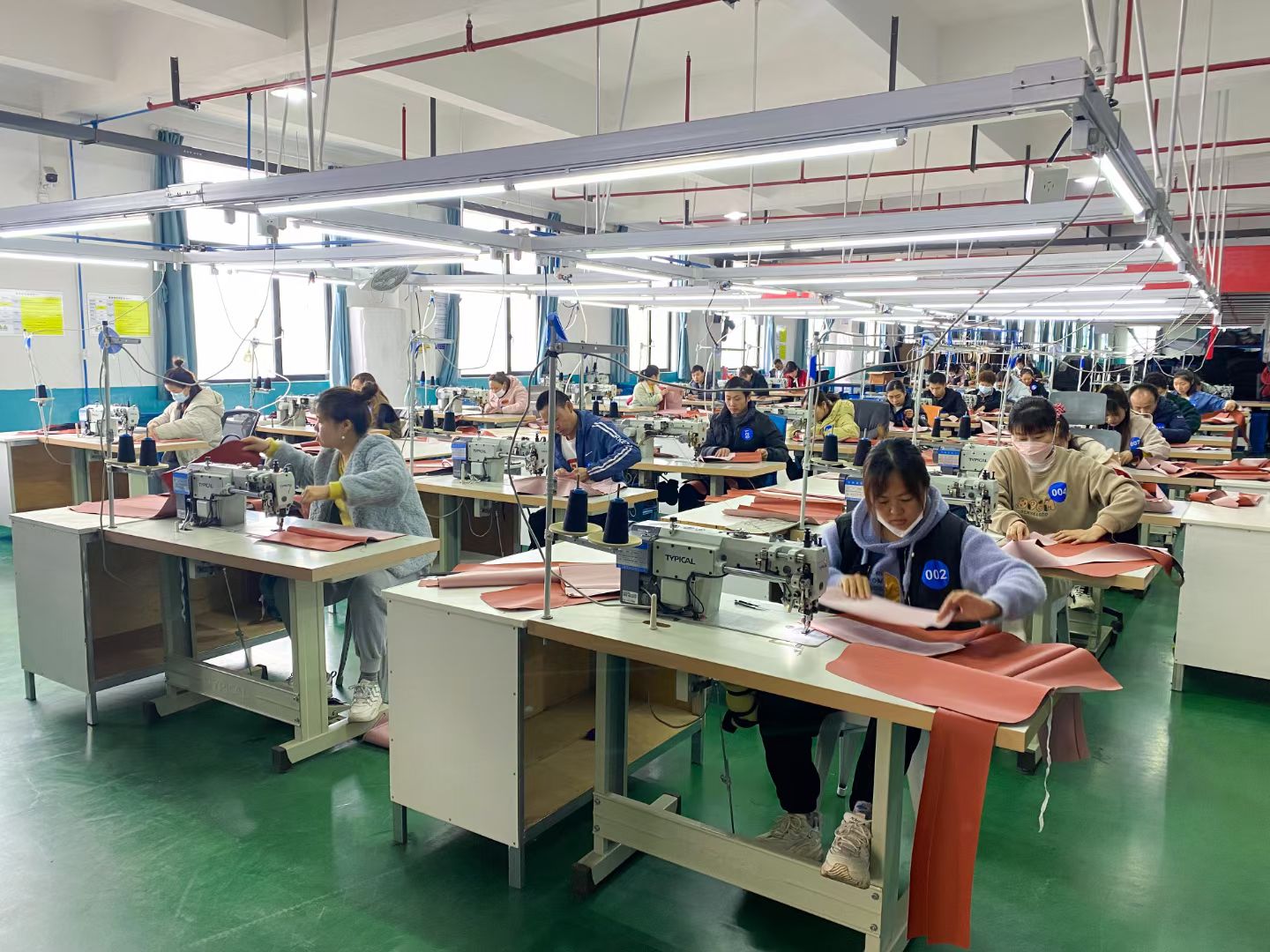
Integrated mesh and frame production is the part of a chair claim that a factory visit can actually verify.
Matching the Comparison Result to Workplace Projects
The same four-layer framework produces different priorities depending on the room type.
Education. Study rooms and administrative offices combine long sitting periods with a need for quiet movement. Silent PU universal casters and a breathable mesh backrest address both, and the manually adjustable, intermittent use pattern described for this seating matches lecture, study and administrative routines.
State-owned enterprises and government-business cooperation. The deciding factor is usually documentation rather than finish. Certificate numbers, issuer names, validity dates and warranty wording are checked before a supplier is approved, which is why the certification layer carries more weight in these projects.
Finance. Long desk hours favour a tilt range with locking and a mesh backrest, because users need to change posture without leaving the workstation. The 90-135 degree tilt band and the 360 degree rotation apply here directly.
Communication. Meeting-heavy environments mix task seating with short-duration guest use, so caster noise and swivel flexibility matter more than deep recline.
Across these sectors the pattern of use stays the same: indoor normal temperature and humidity, manually adjustable, intermittent operation, paired with a desk, for daily office sitting and rest support. The same application scenario is common in the United States, Canada, the United Kingdom, Italy, Germany, Spain, Japan, South Korea, Thailand, Egypt, Ethiopia, Nigeria, the Central African Republic and the Republic of South Africa, which means the comparison framework has to hold across different tender cultures rather than in a single market.
Market Signals Shaping Office Chair Comparison in 2026
The global office chairs market was valued at USD 18.25 billion in 2025, according to Fortune Business Insights, which keeps competitive pressure on suppliers to differentiate on evidence rather than on price alone. Three signals are visible in procurement documents and certification scopes:
- Standards are named in tenders. Institutional furniture standards reference specific versions, such as ANSI/BIFMA X5.1-2017 (R2022), instead of a generic durability requirement.
- Certification scopes describe ergonomic measurements. EN 1335-based certification programmes cover seat adjustment options, the backrest-to-seat angle and lumbar support, which are exactly the attributes this framework places in the adjustability and materials layers.
- Product taxonomy is being segmented. The scope of ANSI/BIFMA X5.1 separates general-purpose office chairs into categories such as executive/management and side/guest seating, which supports more precise specification per room type.
None of these signals is a ranking of brands. They describe what buyers are increasingly asked to document.
Where the Framework Stops: Limits and a Comparison with Traditional Selection
The traditional route, selecting from photographs and unit price, is faster and often adequate for small, low-consequence purchases. The framework route is slower but produces a record that can be defended. It also has limits that buyers should accept before using it:
- Management-system certification is not product testing. ISO 9001:2015, ISO 14001:2015 and ISO 45001:2018 audit how a company manages quality, environment and safety. They do not confirm the measured performance of a specific chair model. Where a market requires EN 1335-based or ANSI/BIFMA X5.1 evidence, that has to be requested separately.
- A shared specification hides per-model differences. The Kabel office swivel chair family is published with one technical specification across five models. That is convenient for standardisation, but model-specific options such as adjustable seat depth or armrest adjustability are not itemised in the published sheet and must be confirmed in writing for the models actually ordered.
- A maximum load rating is not a comfort rating. 150 kg defines the top of the design envelope; it says nothing about the preferred load for daily users or about long-term comfort at high load.
- Warranty scope needs a definition. The three-year warranty applies to core functional components. Which parts count as functional and which count as consumables should be written into the contract.
- Regional requirements still apply. A framework comparison does not replace local standards, tender specifications, or transport and installation requirements in the destination market.
Future Outlook
Three developments are likely to shape office chair comparison over the next procurement cycles. First, certificate numbers and validity dates will be requested at the quotation stage rather than after award, because management-system certificates have defined validity periods that buyers can verify. Second, material traceability questions about who produces the mesh, the foam and the frame will become routine, since integrated production is easier to audit than a traded assembly. Third, ergonomic attributes already covered by third-party verification scopes, such as seat adjustment options, backrest-to-seat angle and lumbar support, are likely to migrate from marketing descriptions into specification tables. Buyers who build their comparison framework around these attributes now will need less rework when the next tender arrives.
Practical Selection Steps for Project Buyers
- Define the user population and the desk heights in each room type before contacting suppliers.
- Set a minimum load rating above the heaviest expected user, and account for shared or guest seating.
- Fix an adjustability band per room type, including required tilt range, locking and rotation.
- Write the materials into the specification: mesh type, cushion foam, frame, base and caster material.
- Require the gas lift level to be stated rather than assumed from a sample.
- Collect certificate numbers, issuer names and validity dates, and check them against the issuing body.
- Request product-level test evidence naming the exact model if the destination market requires it.
- Confirm warranty scope, consumable definitions and model-specific options in the contract, and validate a sample unit against the written specification before batch delivery.
FAQ
What should a buyer check first when comparing ergonomic office chairs?
Start with the parameters that cannot be changed after delivery: the adjustable seat height range, the maximum load rating, the gas lift level and the certificate set. In the Kabel office swivel chair reference, the published figures are a 40-50.5 cm seat height range, a 150 kg maximum load, a four-level explosion-proof gas pressure rod, and ISO 9001:2015, ISO 14001:2015 and ISO 45001:2018 certificates issued by Beijing Zhong-An-Zhi-Huan Certification Center Co., Ltd. Materials and warranty terms can be compared at the next stage.
How does a mesh backrest affect long-term use in an office?
A mesh backrest provides a breathable support surface rather than a solid padded one. In the reference specification it is described as a high-elastic breathable nylon mesh backrest, and breathable mesh is listed as a special requirement for the application scenario, which covers indoor normal temperature and humidity with intermittent daily sitting. Buyers comparing mesh against padded backs should ask whether the mesh is produced in-house or bought in, because that determines how easily the material claim can be audited later.
Is a 150 kg load rating enough for a standard office?
It depends on the user population rather than on the average. A 150 kg maximum load rating defines the upper boundary of the design envelope, so procurement teams normally require a rating above the heaviest expected user. In shared seating such as training rooms, study rooms and meeting areas, the rating should be compared against the heaviest expected user rather than an average figure.
What is the difference between ISO 9001:2015, ISO 14001:2015 and ISO 45001:2018 for an office chair order?
They cover three different management systems: quality (ISO 9001:2015), environmental management (ISO 14001:2015) and occupational health and safety (ISO 45001:2018). For Kabel, all three are issued by Beijing Zhong-An-Zhi-Huan Certification Center Co., Ltd under certificate numbers 02821Q10011R1M, 02821E10007R1M and 02820S10601R1M respectively. They confirm that audited management systems are in place. They do not report the measured performance of a specific chair model.
Should a project order use one chair model or several?
Several models can be justified when room types differ, for example task seating in open offices and side or guest seating in meeting areas, a segmentation that the scope of ANSI/BIFMA X5.1 also recognises within general-purpose office chairs. A single model family reduces spare-part complexity. The Kabel office swivel chair family covers five models (KB-6809, KB-8961, KB-8965, KB-8932 and KB-8953) under one published specification, so a project can standardise on the family while confirming model-specific options in writing.
What warranty should buyers expect on a mesh office swivel chair?
Kabel states a three-year warranty on core functional components of the office swivel chair. Because warranty wording varies between suppliers, buyers should define in the contract which parts count as core functional components and which count as consumables or cosmetic wear, so that claims after delivery are handled against a written definition rather than an assumption.
Reference Document
The Kabel office chair catalogue, covering the office swivel chair models referenced in this framework, is available as a PDF for procurement file use: KABEL Chair Catalogue.
Tem questões ou precisa de mais detalhes?
Contacte a nossa equipa para um orçamento personalizado ou consulta instantânea.
Solicitar orçamento
Preencha o formulário abaixo e a nossa equipa entrará em contacto com uma proposta personalizada.
Chat direto do WhatsApp
Prefere conversar em tempo real? Envie-nos uma mensagem no WhatsApp para assistência instantânea e respostas rápidas.
- Obter orçamento personalizado
- Partilhar fotos ou documentos
- Discuta as suas necessidades diretamente
Geralmente responde em 5–30 minutos durante o horário de expediente.