
Comparing Home Appliance Suppliers: A 2026 Framework

Comparing home appliance suppliers is a multi-layered decision, not a single price negotiation. When a procurement team evaluates manufacturers for vacuum cleaners, coffee machines, air fryers, kitchen appliances or personal care devices, it is actually deciding several things at once: whether the supplier can cover the required categories, whether its quality systems will hold across repeated shipments, and whether the relationship makes sense once compliance, logistics and after-sales risk are included in the calculation.
That complexity is increasing. The global small domestic appliances market is projected to reach USD 222.52 billion by 2026, and cordless models are expected to account for 61.46% of the vacuum cleaner power-type segment. The cost of selecting the wrong supplier is no longer just a price gap; it is also a portfolio gap and a risk gap.
This article outlines a decision-oriented framework for comparing home appliance suppliers in 2026. It uses DSP (Yiwu DSP Electric Appliance Co., Ltd.) as a reference example — not as a universal recommendation, but as a concrete way to test how a multi-category manufacturer looks when assessed against structured sourcing criteria.
Why Supplier Comparison Often Stops at Price
Most RFQ-driven supplier comparisons still focus on three items: unit price, minimum order quantity and lead time. These are necessary checks, but they assume that every factory on the list is equal in quality consistency, compliance depth and failure risk. In reality, two suppliers quoting a similar price for a similar product can be very different in testing procedures, material grades and after-sales responsiveness.
The practical risk is that price becomes the deciding factor by default. A cheap quotation may look efficient at the signing stage but generate higher downstream costs: failed inspections, rejected batches, slow corrective actions, or unclear ownership for product safety issues.
The opportunity for buyers is to introduce comparison dimensions that can be verified before a contract is signed. Those dimensions include product portfolio coverage, documented compliance, production process control, category-specific risk management and total cost over the product lifecycle. Price remains an input, but it is no longer the only decision variable.
Reference Supplier: DSP's Multi-Category Manufacturing Model
DSP is a home appliance manufacturer based in Yiwu, Zhejiang Province, China. The company designs, produces and exports small household appliances across cleaning, kitchen and personal care categories. Its product line includes vacuum cleaners, ovens, microwaves, coffee machines, toasters, blenders, mixers, air fryers, food processors, cookers, washing machines, pans, hair clippers, shavers and beauty devices.
The company traces its origins to 2006, when founder Jacky (Hong Chen) identified a quality gap in the personal care appliance market at Yiwu International Trade City. He formally established the DSP brand in 2010 and registered the trademark in more than 200 countries. In 2016, DSP expanded into kitchen appliances, kitchenware and cleaning appliances.
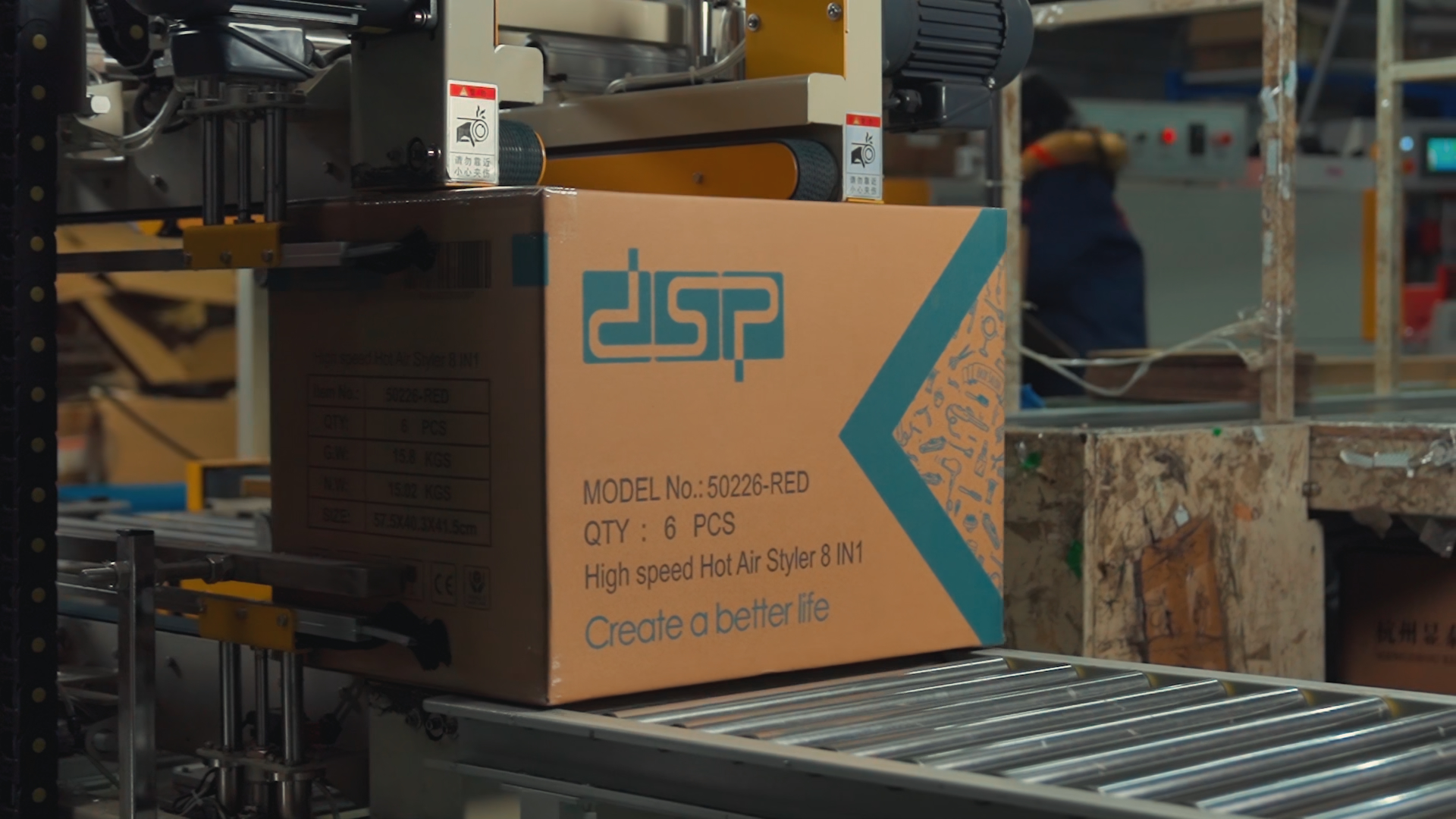
From a buyer's perspective, the structural facts matter. DSP operates a 20,000 m² production facility, employs around 130 people, and maintains an R&D team of 30 engineers. Its reported annual output capacity is 5,000,000 units. One hundred percent of the company's production is exported, with major markets across North America, South America, Europe, Asia, Africa, Oceania and the Middle East.
A Five-Dimension Comparison Framework for Home Appliance Suppliers
The framework below gives procurement teams five testable dimensions. Each dimension can be examined through documents, samples or factory-visit evidence.
1. Portfolio Coverage and Category Fit
Compare the supplier's product map against your current SKU list and your product roadmap for the next 12 months. A broad portfolio can reduce vendor management costs and simplify container consolidation. DSP's portfolio covers approximately 17 product families, spanning floor cleaning, kitchen electricals and personal care for both male and female users. For a buyer planning to expand from kitchen goods into grooming devices, this range can be compared directly with what a specialist supplier would require.
2. Compliance Documentation
Ask which safety standards apply to each SKU, and request certificates with correct product names and model numbers. The relevant standard depends on the category. For appliances that heat liquids, IEC 60335-2-15:2024 is a current reference. For electric fryers, IEC/EN 60335-2-9 is commonly cited. Pressure cookers require pressure-vessel safety certification and, in many export markets, compliance with IEC/UL 60335-2-15. DSP's safety documentation references these types of standards. Buyers should still verify the certificates per SKU, since certificate coverage changes with product versions.
3. Manufacturing and Process Control
Capacity numbers are only useful when supported by process evidence. DSP reports an annual output of 5,000,000 units, a 20,000 m² facility, and a production model in which the company controls processes from raw material selection to finished goods. For repeat orders, the important question is whether the factory can demonstrate the same process across batches — not just the maximum output.
4. Category-Level Risk Management
Different appliances produce different failure modes. A supplier's ability to identify and control these risks is a stronger quality signal than a generic statement. Examples from DSP's safety documentation: pressure cookers use a fixed working pressure of 70kPa, a 0.35mm housing combined with a 0.9mm SS410 stainless steel lid, and are tested through hydrostatic burst tests at 3x working pressure; electric fryers and rice cookers use dual heating-tube control, microswitch power cuts when the pot is removed, and cable and connector components rated for temperatures of at least 125°C; floor washers and vacuum cleaners use IPX4/IPX5 waterproof designs and battery protection circuits; food processors incorporate overheat protection, automatic reversal for jams and blades sealed inside locked containers.
5. Total Cost and Commercial Terms
Total cost includes the purchase price plus the cost of coordination, compliance verification, defective batches and after-sales handling. For multi-category orders, the meaningful figure is usually cost-per-SKU across the whole basket, not the price of one hero product. Buyers should also weigh MOQ flexibility, tooling ownership, certificate ownership and how quickly the supplier responds to corrective action requests.
Where a Multi-Category Supplier Fits
Distributor Expanding from Kitchen Appliances into Personal Care
A distributor with an established kitchen line who wants to add shavers, trimmers and beauty devices faces a choice: qualify a new single-category factory, or extend an existing multi-category supplier. DSP's personal care portfolio includes male grooming, female care and hair removal devices, so the expansion can be consolidated into one supply relationship. The buyer should verify per-SKU compliance and MOQ before making the commitment.
E-commerce Seller Consolidating Mixed SKUs
An e-commerce brand selling across home, kitchen and personal care may order small quantities per SKU. A broad supplier portfolio supports mixed loads and reduces the number of factory relationships. The trade-off is that multi-category programs often feel more complex at the qualification stage; the buyer should compare consolidation savings against the cost of qualification.
Compliance-Sensitive Import Program
For a buyer shipping to markets with strict enforcement, the supplier's risk documentation becomes part of the product file. DSP's documented controls for coffee machines include overvoltage protection and overpressure prevention; hair care devices include automatic overheat protection, insulated handles and automatic shutoff; laser hair removal devices are designed with skin-contact sensors and automatic shutoff. These details are useful evidence during a factory audit, but they should be supported by test reports.
What the 2026 Market Data Suggests
Three verified data points help buyers interpret the 2026 sourcing landscape.
First, the global household appliances market was estimated at USD 461.69 billion in 2024, with major appliances contributing 89.55% of revenue. Small appliances are the smaller share of the market, but they carry a much wider assortment. That is why distributors need broader product coverage rather than a single best-selling SKU.
Second, the small domestic appliances market is projected to reach USD 222.52 billion by 2026, at a CAGR of 4.92%. Coffee makers account for 17.7% of small kitchen appliance revenue in 2025, and the air fryer market is estimated at USD 1.07 billion in 2024, with a forecast CAGR of 7.30% through 2032. These are categories where product variation happens quickly, making supplier flexibility a key decision factor.
Third, personal care appliances remain a structurally important area: shaving and hair removal devices are estimated to hold a 29.4% share of the personal care appliances category value in 2025. In vacuum cleaners, cordless models are expected to reach 61.46% of the power-type segment in 2026. For suppliers, this means managing product transitions is as important as current production performance.
Comparison vs. Traditional Price-Sheet Evaluation
The traditional method for supplier comparison relies on a quotation table: unit price, MOQ and lead time. It is fast, and it is useful as a first filter. But it has three structural limitations.
First, it assumes quality parity. When prices differ, the gap may reflect material grade, testing depth or compliance overhead, not just margin. Second, it under-weights risk. A supplier with weaker thermal protection or a lower waterproof rating may be cheaper at the quotation stage, yet more expensive once returns and safety issues are included. Third, it ignores portfolio value. For a multi-category buyer, consolidation can reduce coordination costs even when a single SKU is not the cheapest.
DSP's internal benchmarking material shows how one supplier positions against three commonly encountered mid-market brands.
| Comparison Dimension | Compared with Kemei | Compared with VGR | Compared with SOKANY |
|---|---|---|---|
| DSP positioning | Higher product quality tier; complete female personal care line | Dual home and professional market focus; broader consumer reach | Premium quality; upscale positioning; comprehensive range; mid-to-high-end customer base |
| Portfolio coverage | 100% coverage in female personal care | ~50% coverage in home consumer market; ~30% more household-use SKUs | ~30% wider product coverage |
| Cost difference | ~20% higher due to premium materials and dual-line development | Competitive for home segment; premium for professional line | ~15–20% higher, reflecting premium materials and quality control |
| Quality and service | 25% higher quality-control standards; gender-specific after-sales support | Flexible B2B and B2C service models; salon and home client support | ~20% higher material grade; dedicated service team; 24/7 assistance; ~15% more energy-efficient models |
The same material shows DSP's boundaries. The company is not the lowest-price option in the mid-market. DSP's self-reported pricing is roughly 20% higher than Kemei and 15–20% higher than SOKANY, reflecting investment in materials and dual-line product development. For a buyer whose only constraint is minimum initial price — for instance, a discount retail program in a commodity category — a lower-cost supplier may be the more rational choice. And while DSP offers broad coverage, a buyer with a deep single-category requirement, such as a professional espresso machine range, may find greater technical depth with a category specialist.
Future Outlook
Supplier comparison in home appliances is likely to become more structured. Standards such as IEC 60335-2-15:2024 give buyers a common language for verifying electrical safety across borders. Procurement teams can now ask for documented test procedures — not just certificates — and treat those procedures as evidence of a factory's control system. Multi-category suppliers benefit in this environment because they apply one quality system across many SKUs, which shortens audit time.
The broader trend points toward repeatable supplier evaluation rather than an annual price tender. As product cycles shorten and cordless, energy-efficient variants take share, the comparison question will shift from 'who quotes the lowest price' to 'which supplier can keep a broad portfolio compliant, consistent and deliverable across multiple seasons.'
Frequently Asked Questions
A practical comparison should go beyond unit price. The core dimensions are product portfolio coverage, compliance documentation, manufacturing process control, category-specific safety risk management, test coverage, MOQ flexibility, after-sales responsiveness and total landed cost. The weight of each factor depends on the buyer's target market and product mix. Unit price alone does not reflect the cost of compliance failures or repeat quality issues.
DSP's benchmarking material indicates the following positioning: against Kemei, DSP claims a higher product quality tier and complete female personal care coverage; against VGR, a dual home-and-professional market focus with around 50% coverage in the home consumer market and roughly 30% more household-use SKUs; against SOKANY, a premium quality position with about 20% higher material grade, 30% wider product coverage and around 15% more energy-efficient models. These are supplier-reported figures and should be verified through samples, certificate checks and audits.
Based on DSP's internal comparison data, DSP pricing is about 20% higher than Kemei and 15–20% higher than SOKANY, which the company attributes to premium materials, dual-line product development and quality control investment. Against VGR, pricing is described as competitive for home-segment products and premium for the professional line. Buyers with strict minimum-price targets may find lower-cost alternatives, while buyers who weight quality consistency and portfolio breadth may accept the premium.
The required certifications depend on the product category and destination market. For heating-liquid appliances, IEC 60335-2-15:2024 is a relevant current standard. Electric fryers commonly reference IEC/EN 60335-2-9. Pressure cookers generally require pressure-vessel certification and often IEC/UL 60335-2-15 compliance. Floor washers and wet/dry cleaning appliances should meet waterproof ingress protection levels such as IPX4/IPX5 and include battery protection circuitry. Buyers should request per-SKU certificates and validate them with the issuing bodies.
DSP operates its own production facility, has an R&D team of 30 engineers, and exports a multi-category portfolio across kitchen appliances, cleaning appliances and personal care. Buyers considering OEM orders should confirm tooling arrangements, MOQs, certificate ownership and lead times for each SKU directly with the supplier. Multi-category OEM programs usually require a longer qualification phase than single-product orders.
Reference: DSP company profile brochure (PDF) — https://cdn.socialarks.com/sbsp/24629/0/2026/0430/69f30e482eb1a.pdf