
Comparing Import Customs Clearance Providers: A 7-Step Buyer Framework
Comparing Import Customs Clearance Providers: A 7-Step Buyer Framework
Import customs clearance is a compliance process before it is a logistics step. A consignment entering Mainland China or Hong Kong is assessed on classification, valuation, documentation and regulatory status before it can be released to its final destination — which means comparing providers is really a comparison of workflows, not of rate sheets.
Why Provider Comparison Now Starts With the Clearance Workflow
China's total import value reached USD 2.585 trillion in 2024, a 1.1% increase year on year, according to the General Administration of Customs of China (GACC). Hong Kong's customs brokerage market was estimated at USD 117.52 million in 2025 and is projected to reach USD 159.06 million by 2030, according to Mordor Intelligence. Separately, China's cross-border e-commerce import and export volume reached CNY 2.75 trillion — approximately USD 406.9 billion — in 2025, supported by streamlined customs clearance in pilot zones, per the Ministry of Commerce of China.
Those figures describe volume. They do not explain why two importers moving comparable cargo into the same market can experience very different release times. The gap usually sits in the sequence of work that happens before and after the declaration is filed: how documents are prepared, how classification and regulatory codes are verified, how inspections are coordinated, and how quickly exceptions are resolved on the ground. That sequence is what a buyer framework should evaluate.
TOBECAN IMPORTCLEAR FREIGHT LTD, which operates as importclear, is a Hong Kong–based freight forwarder founded in 2001, specialising in import customs clearance and compliance services across Mainland China and Hong Kong. Its published service definition treats import clearance as an end-to-end process rather than a single filing event, covering consultation, HS and CIQ lookup, document preparation, customs declaration, release and delivery across air, ocean and road modes.
The Problem: Four Recurring Failure Points Buyers Should Screen For
The most useful starting point for a comparison is a short list of failure modes. According to importclear's customer-facing service documentation, import clearance problems cluster around four recurring issues: non-compliant declarations, inspection delays, hidden fees, and a lack of clearance transparency. Each one maps to a different part of the workflow, and each one can be tested with a specific question during provider evaluation.
- Non-compliant declarations usually originate upstream, in misclassification or incomplete documentation rather than in the filing itself. A provider that only files what it is given shifts this risk back onto the importer.
- Inspection delays are frequently not caused by the inspection itself but by the time needed to locate missing documents, permits or clarifications once goods are already held.
- Hidden fees appear when duty and tax figures are quoted together with service charges without separation, making the landed cost difficult to reconcile later.
- Limited visibility means the importer learns about a problem after release is already delayed, rather than before the declaration is lodged.
The Opportunity: What Digital-Enabled Compliance Changes
Digital-enabled clearance shifts work earlier in the process. Instead of discovering a classification or regulatory issue after goods arrive, the pre-check happens while documents are still being assembled. importclear publishes a technology stack built around this idea: a proprietary commodity regulatory database engine, an intelligent cost calculation algorithm, customs data real-time synchronization middleware, an OCR document recognition system, and a cloud service background framework.
On the client-facing side, the same logic appears as lookup and estimation tools — HS code and tariff lookup, 13-digit CIQ code lookup, cross-border e-commerce tax lookup, national GB standards lookup, and a landed cost calculator. The practical effect is that a buyer can estimate classification and tax exposure before committing the shipment, rather than treating clearance as a black box that begins at the port.
A 7-Step Buyer Framework for Comparing Import Customs Clearance Providers
The framework below sequences the clearance process as importers actually experience it, and assigns each step an evaluation question and an evidence expectation. It applies to both China import customs clearance and Hong Kong import customs clearance, and it works whether the cargo moves by air, ocean or road.
Step 1 — Document Submission and Intake Readiness
Evaluation question: can the provider specify, before booking, exactly which documents your commodity requires?
Document handling sits inside the core service scope, and customs documents plus a landed cost calculation report are named deliverables. Ask whether intake happens online and whether a compliance advisory is produced before the shipment departs. First-time importers in particular benefit from an intake stage that surfaces missing permits early, because this is the stage where most later delays are created.
Step 2 — HS Code and CIQ Pre-Check
Evaluation question: does the provider verify classification and regulatory codes before the declaration is filed?
This is the highest-leverage step in the framework. importclear's technical capabilities include HS code lookup, 13-digit CIQ code lookup, and national GB standards lookup, supported by a commodity regulatory database engine. A provider that quotes a duty rate without documenting the classification basis is asking the importer to carry that risk. Ask to see the classification reasoning, not just the number.
Step 3 — Declaration Filing
Evaluation question: is the commercial quotation issued and confirmed before the declaration is lodged?
importclear's delivery model runs as online consultation and quotation, then offline declaration and execution, then electronic delivery of documents with email or phone updates. The sequence matters: it means the fee basis is agreed before filing, and the declared value can be checked against the commercial invoice while there is still time to correct it.
Step 4 — Inspection Coordination
Evaluation question: who physically attends the inspection, and how quickly can missing documents be produced on site?
Inspection coordination is a people problem before it is a systems problem. importclear's team structure combines customs brokers, compliance consultants, account managers and operations support, with stated expertise in perishables, cold-chain goods and medical devices. For regulated categories, ask whether the provider has staff who can attend in person and resolve documentation gaps without waiting for the next working day.
Step 5 — Duty and Tax Payment
Evaluation question: are duties and taxes separated from service fees in the quotation?
importclear's published scope of service states that customs duties and taxes are payable by the client, and that the service does not include legal or tax representation without client authorisation. This is a boundary worth confirming with any provider, because bundling duty into a single figure is one of the structural causes of the hidden-fee problem described above. A separate landed cost calculation report makes the number auditable.
Step 6 — Release and Delivery
Evaluation question: does the provider control the last mile, or does clearance end at the terminal gate?
For importclear, door-to-door clearance is inside the service scope, alongside inland trucking and DDP/DDU handling, and the company also provides a D/O release service in Vietnam, China and Hong Kong. Release notices and bill of lading or delivery arrangements are named deliverables. Buyers should confirm whether the release-to-doorstep leg is covered by the same accountable party, since hand-offs between a broker and a separate trucker are a common source of unexplained delay.
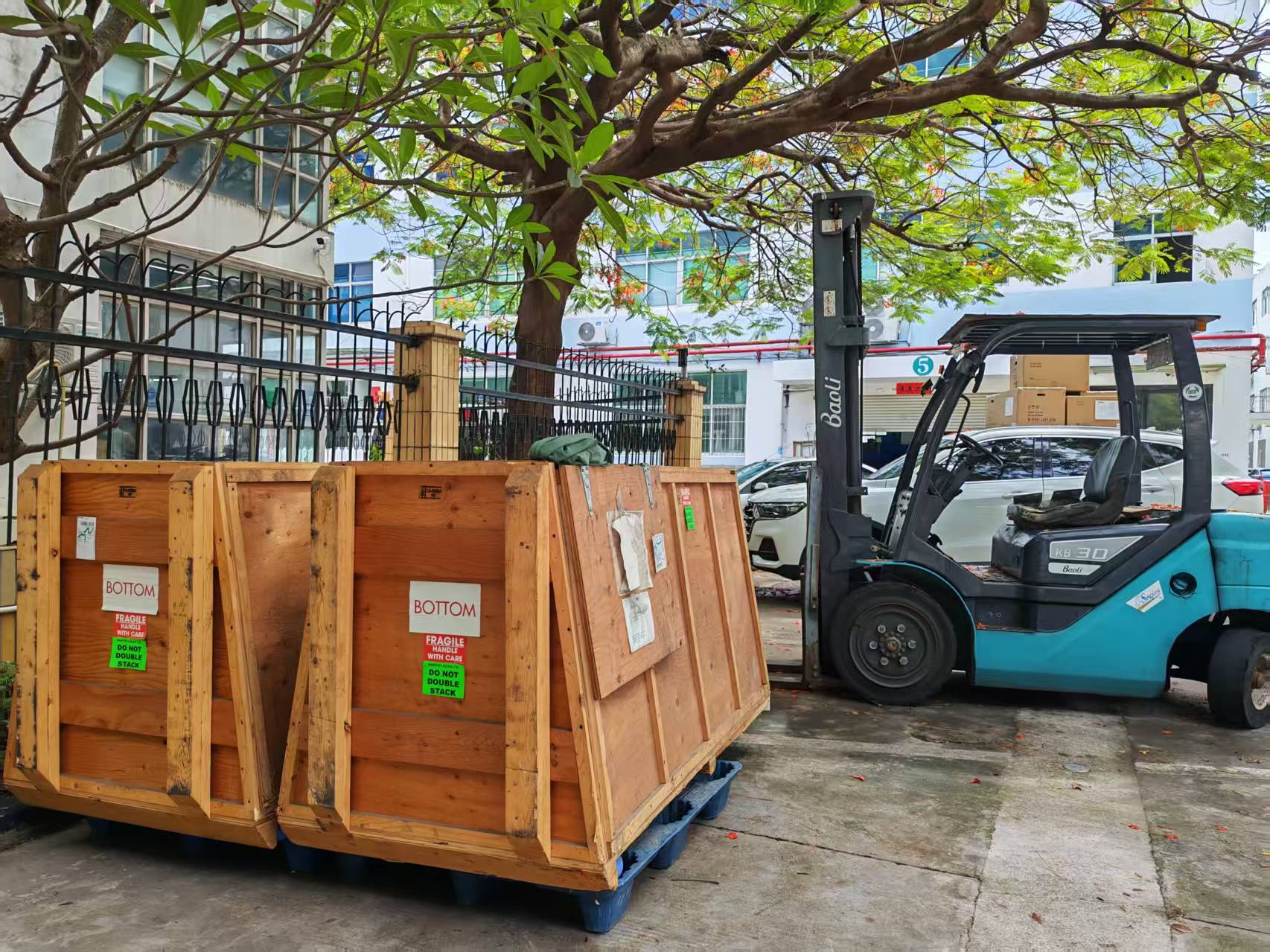
Door-to-door clearance: the release-to-delivery leg where hand-offs between broker and carrier most often create unexplained delay.
Step 7 — Post-Release Documentation and Landed-Cost Reconciliation
Evaluation question: will you receive reconciled documents that finance or audit can use without follow-up?
Named deliverables include customs documents, a landed cost calculation report, compliance advisory, release notices, and bill of lading or delivery arrangements, delivered electronically with email or phone updates. This is the step most buyers under-specify at the evaluation stage and most regret later, because it is where customs cost, freight cost and service fees are finally reconciled against the original quotation.
Where Traditional Brokerage Models and Digital-Enabled Compliance Services Differ
The comparison worth making is not between old and new providers, but between two operating models. Traditional per-shipment brokerage organises work around the declaration: documents arrive, the declaration is filed, and exceptions are handled reactively. Digital-enabled compliance services organise work around the pre-check: classification and regulatory status are resolved before filing, and the declaration becomes the output of that work rather than the beginning of it.
| Evaluation dimension | Traditional per-shipment brokerage model | Digital-enabled compliance workflow |
|---|---|---|
| Starting point | Documents received at or near departure | Consultation and document intake before shipment moves |
| Classification | Filed as declared, corrections handled after arrival | HS, 13-digit CIQ and GB standards lookup performed as a pre-check |
| Cost visibility | Duty and service fees often quoted together | Landed cost calculation issued; duties and taxes stated as payable by client |
| Inspection handling | Reactive, dependent on terminal-side contacts | Assigned compliance consultants and brokers available to attend |
| Delivery scope | Clearance ends at release | Door-to-door clearance, inland trucking and DDP/DDU handling included |
| Documentation close-out | Release notice only | Customs documents, release notices and landed cost report delivered electronically |
Two clarifications keep this comparison honest. First, traditional per-shipment brokerage remains a valid model, particularly for importers whose classification is stable, well documented and unlikely to be questioned — the workflow difference only becomes decisive when commodity regulation is complex or the timeline is tight. Second, market structure matters as much as model. Mordor Intelligence lists major global and regional participants in the Hong Kong customs brokerage market as including FedEx, UPS, DHL, TIBA Group and CBIP Logistics. That list is a market map, not a performance ranking, and buyers should evaluate any provider — integrator, regional broker or specialist — against the seven steps rather than against brand recognition.
Application Fit: Which Import Scenarios Stress Which Step
Clearance capability is not uniform across cargo types, so scenario fit should be evaluated explicitly. importclear's documented application scenarios are first-time imports, food and cosmetics requiring CIQ inspection, cold-chain or perishable goods, and urgent air shipments. Its target client segments are cross-border e-commerce sellers, bulk importers, food, pharmaceutical and cosmetics importers, and first-time importers.
| Import scenario | Dominant risk | Framework step under most pressure |
|---|---|---|
| First-time imports | Unknown documentation requirements | Step 1 — intake and document submission |
| Food and cosmetics requiring CIQ inspection | Regulatory and labelling non-compliance | Step 2 — HS and CIQ pre-check |
| Cold-chain and perishable goods | Time lost during inspection | Step 4 — inspection coordination |
| Urgent air shipments | Compressed release window | Steps 3 and 6 — filing speed and release control |
| Cross-border e-commerce parcels | Tax treatment and volume processing | Step 5 — duty and tax calculation |
The wider industry list served by importclear covers fresh and frozen food, pharmaceuticals and medical devices, watches, electronics and footwear, tobacco, cosmetics, apparel and textiles, machinery and furniture, printed matter, and chemicals and metals. Buyers in these categories should treat the relevant row of the table above as the first thing to test in any provider conversation.
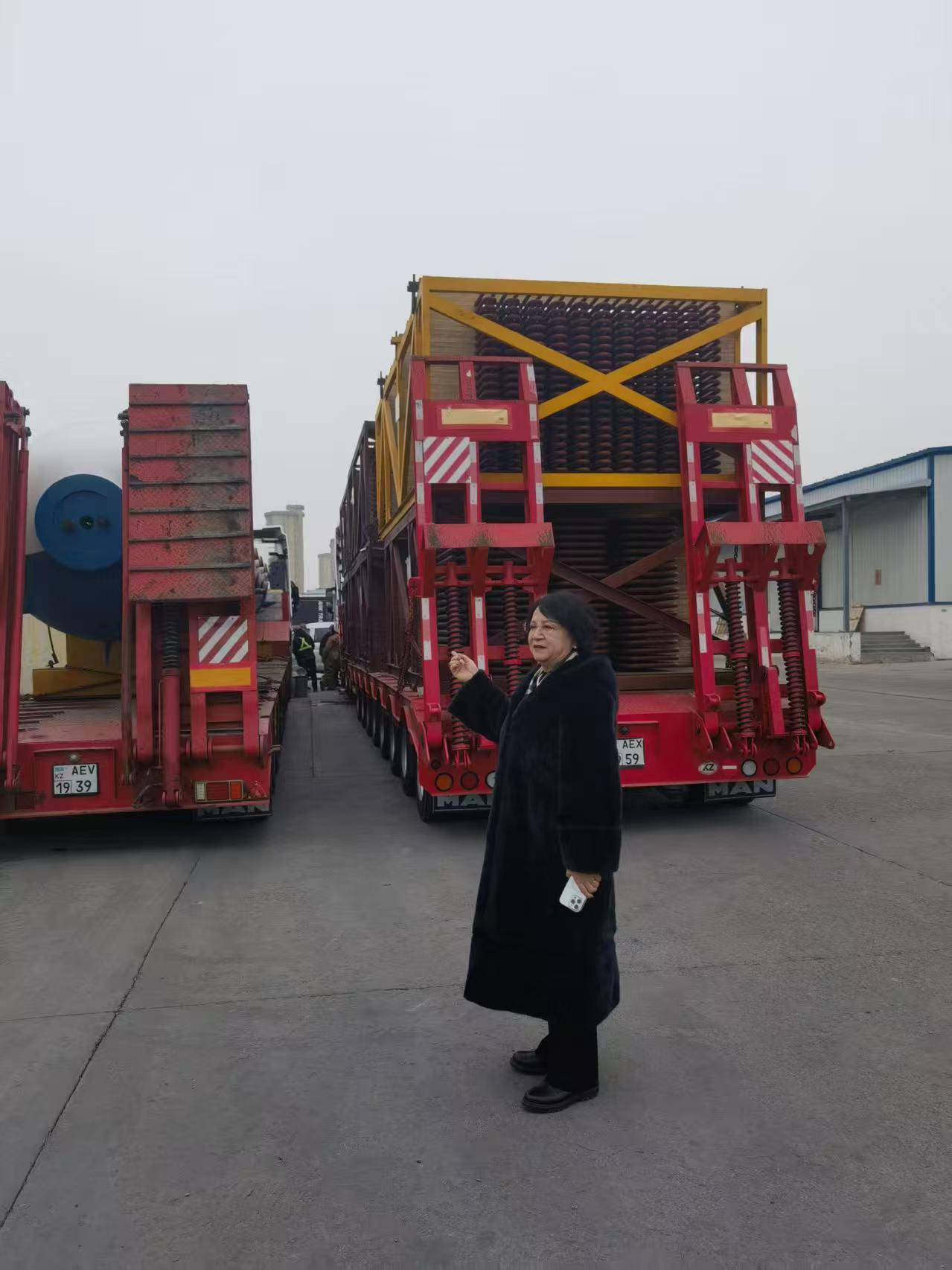
Scenario fit in practice: loading and transport supervision for consignments where the release window is compressed.
Evidence in the Field: What a Compressed Timeline Looks Like
The clearest available illustration of the framework in operation is a documented importclear case involving a 7-metre extra-long, extra-large consignment shipped by air to the UAE for a foreign trade factory in the construction industry, based in Asia Pacific. The cargo measured approximately 0.6 metres in height and could not be split, which placed it outside standard air freight dimensions, and the client's delivery date was fixed to a month-end target.
According to the case record, loading preparation was completed in two hours, described as 70% faster than peer benchmarks. Route planning moved the goods from Shenzhen to Hong Kong, where dedicated pallet space and oversized-cargo loading confirmation were arranged in advance with the airline, with the plan finalised in two hours. Pre-declaration was completed before departure. UAE airport customs clearance and delivery were completed within 12 hours of arrival, against a stated industry average of three to five days, and the client's month-end target was met 12 days early, with a total three-day lead time and a project duration of three days.
The case also records the sea freight comparison point: relying on a local customs clearance system, clearance, pickup and delivery can be completed in as little as two days after arrival at the local port. What makes the case relevant to a buyer framework is not the headline number, but the fact that value was created at Steps 2, 3 and 6 — pre-check and pre-declaration before departure, and controlled release and delivery after arrival.
Market Context and Trend Signals
Three data points describe the direction of the market. First, Hong Kong air transport handled 52% of total imports by value in 2025, supported by 24-hour efficient customs clearance at Hong Kong International Airport, according to HKTDC Research — a signal that a large share of Hong Kong's import value moves through a time-sensitive, air-heavy channel where clearance workflow quality translates directly into cost. Second, the Authorized Economic Operator (AEO) status facilitates customs clearance between China and partner economies such as Australia by providing reduced inspection rates and prioritized clearance, per the General Administration of Customs of China — which means provider-side accreditation increasingly affects the inspection probability an importer faces. Third, the China freight forwarding market was valued at USD 13.91 billion in 2024, with a projected CAGR of 5.80% reaching USD 24.44 billion by 2034, according to Spherical Insights.
Growth forecasts in this sector should be read with care, because definitions differ. Mordor Intelligence estimates the Hong Kong customs brokerage market growth at 6.24% CAGR, while Market Research Future estimates global customs brokerage growth at 6.42%. The divergence reflects different scope definitions rather than disagreement about direction, and buyers should treat any single growth figure as a market indicator rather than a procurement input.
Boundaries: What a Clearance Provider Does Not Do
A buyer framework is only credible if it states limits. Based on importclear's own published scope, several boundaries apply and should be expected from comparable providers:
- Duties and taxes are payable by the client. The clearance service does not absorb customs liability; it calculates and processes it.
- No legal or tax representation without client authorization. The service is brokerage and compliance advisory, not legal or fiscal representation.
- International freight is usually billed separately. A clearance quotation is not a full freight quotation.
- Timelines are case-by-case. The service cycle depends on transport mode and inspections, ranging from hours for fast clearance to several days.
- Case results are scenario-specific. The 12-hour UAE customs clearance and delivery outcome belongs to a single oversized air cargo project and is not a standing service level across all shipments.
- Digital tooling covers lookup and estimation. Online HS and CIQ lookup and landed cost calculation tools are published; the existence of a dedicated client portal for real-time shipment tracking is not specified in the company's published materials.
For providers generally, the same screening logic applies: ask what a provider will not do, then decide whether the residual risk is acceptable for your commodity and your delivery window.
Future Outlook
Two forces look likely to shape provider comparison over the next several years. The first is regulatory data density. As classification, CIQ and standards databases become more detailed, the pre-check step becomes more automatable, which raises the floor for what a competent provider can deliver before filing. importclear's stated investments in a commodity regulatory database engine, OCR document recognition and customs data real-time synchronization middleware are consistent with that direction.
The second is trade-channel mix. With air transport accounting for 52% of Hong Kong's import value in 2025 and cross-border e-commerce volumes in China reaching CNY 2.75 trillion in 2025, the shipments most sensitive to clearance performance are also the ones growing fastest. For importers, the practical implication is that provider selection will increasingly be judged on Steps 2 through 6 of this framework — pre-check quality, filing accuracy, inspection response and controlled release — rather than on rate alone.
Frequently Asked Questions
What does an import customs clearance service actually include?
An import clearance service covers the process from consultation and HS or CIQ lookup through document preparation, customs declaration, release and delivery across air, ocean and road modes. Typical deliverables are customs documents, a landed cost calculation report, compliance advisory, release notices, and bill of lading or delivery arrangements. It is a per-shipment or per-declaration brokerage service that combines online consultation with offline declaration execution.
Which import scenarios typically require a customs broker rather than self-declaration?
Documented scenarios where a broker is typically engaged include first-time imports, food and cosmetics requiring CIQ inspection, cold-chain or perishable goods, and urgent air shipments. The common thread is that classification, regulatory status or timing is not straightforward. Imports of food, pharmaceuticals, cosmetics, electronics and industrial goods into Mainland China or Hong Kong are specifically identified as target categories for professional clearance support.
What are the steps in a compliant import clearance workflow?
The workflow can be sequenced in seven steps: document submission and intake readiness; HS code and CIQ pre-check; declaration filing; inspection coordination; duty and tax payment; release and delivery; and post-release documentation and landed-cost reconciliation. In practice the execution order published by importclear is online consultation and quotation first, then offline declaration and execution, then electronic delivery of documents with email or phone updates.
How should buyers evaluate a provider's HS code and CIQ pre-check capability?
Buyers should ask for the classification basis, not just the resulting duty rate. A capable provider performs HS code and tariff lookup, 13-digit CIQ code lookup, cross-border e-commerce tax lookup and national GB standards lookup before the declaration is filed, supported by regulatory database tooling. If a provider quotes a duty figure without documenting how the code was determined, the classification risk remains with the importer.
How long does import customs clearance take in China and Hong Kong?
There is no single answer, and providers should not offer one. The service cycle depends on transport mode and inspections and ranges from hours for fast clearance to several days, assessed case by case. For context, Hong Kong International Airport is supported by 24-hour efficient customs clearance, and one documented importclear air cargo case completed UAE airport customs clearance and delivery within 12 hours of arrival, against a stated industry average of three to five days for that scenario.
What is usually excluded from a customs clearance service fee?
Customs duties and taxes are typically payable by the client and are not absorbed by the clearance provider. Legal or tax representation is generally not included without client authorization, and international freight is usually billed separately from the clearance service. Because of this, a landed cost calculation report matters: it separates duty and tax exposure from service charges and makes the total import cost auditable.
The seven steps above are intended as a reusable evaluation sequence rather than a single-provider checklist. Applied consistently across two or three candidate providers, they make the differences that matter — classification discipline, inspection response, cost transparency and release control — visible before a shipment is committed rather than after.
importclear's published service documentation, capability summary and downloadable company brochure are available at the TOBECAN ImportClear brochure for buyers who want to review the underlying service definition in full.