
Comparing National Eraser & Sharpener Markets: Policy, Capacity, and Export Trends for 2026 Buyers
Comparing National Eraser & Sharpener Markets: Policy, Capacity, and Export Trends for 2026 Buyers
Erasers, pencil sharpeners and pencil toppers are low-unit-value items, yet the country a buyer sources them from determines which safety regime applies, which customs heading the shipment clears under, and what kind of production capacity is available to fulfil a programme. For 2026 purchasing cycles, comparing national markets on policy, capacity and export performance is a more reliable starting point than comparing supplier catalogues.
This analysis is built on publicly traceable anchors: regulation numbers, customs nomenclature and reported trade values. Where the available data cannot support a country-level figure, the comparison is deliberately limited to what can be evidenced, and the gap is stated rather than filled.
Why the Country Question Comes Before the Supplier Question
Three variables move independently of supplier quality, and each one is set at country or jurisdiction level rather than at the factory gate.
The first is the compliance regime attached to the product. Whether a shaped eraser is treated as stationery or as a toy depends on how the product is designed and presented, not only on what it is made of. The second is the tariff heading, which follows declared material and whether a combination item is cleared as a single article or as separate components. The third is what published trade values actually cover: a statistical subheading can be narrower than the product category buyers think they are measuring.
A buyer who compares markets only on quoted unit price will typically discover these three variables later, during testing or customs clearance, when correcting them is expensive. Comparing them first converts country selection into a documented decision rather than a price comparison.
Policy Environments: Three Parallel Regimes, Not One Standard
The most common analytical error in eraser and sharpener sourcing is treating the European Union, the United States and China as three versions of one compliance standard. They are parallel regimes built on different legal objects, different measurement bases and different product scope definitions. They cannot be averaged, converted or reduced to a single threshold.
European Union
Stationery products sold in the EU must satisfy the EN 71 series and the EU Toy Safety Directive 2009/48/EC, which Regulation (EU) 2025/2509 is set to supersede. For erasers and pencil toppers, the practical consequence is that the toy definition matters: products designed or intended, whether or not exclusively, for use in play by children under 14 years of age fall inside the toy regime rather than only the stationery regime. Novelty-shaped erasers, collectible erasers and character pencil toppers are the product types where this boundary is most likely to be tested, and the determination is made per product rather than per category.
On materials, REACH Regulation (EC) No 1907/2006, Annex XVII, entry 51 restricts DEHP, DBP, BBP and DIBP to a maximum of 0.1% by weight of the plasticised material in toys and childcare articles. This is the rule that pushes PVC-plasticised eraser formulations toward non-phthalate plasticisers or toward non-PVC materials such as TPR. Separately, EN 71-3 governs the migration of certain elements, including heavy metals, from toy materials, and is the test standard typically applied to erasers and toppers placed on the EU market as toys.
United States
The US framework operates on a different basis. Under 15 U.S.C. 1278a (CPSIA), children's products may not contain more than 100 ppm total lead in any accessible part. Lead is a different substance from the four phthalates restricted in the EU, measured on a total-content basis rather than a migration basis, and applied to a legal object defined as a children's product rather than to a defined material fraction.
Whether a specific eraser or pencil topper SKU qualifies as a children's product is a per-product determination. Buyers should expect a supplier to state the assumed classification explicitly in the quotation rather than leave it implicit.
China and International Reference Points
China maintains a mandatory national standard, GB 21027-2020 《学生用品的安全通用要求》 (General requirements for the safety of student supplies), which Chinese eraser and sharpener manufacturers typically cite for domestic-market compliance. Its existence and title are matters of public record; clause-level requirements should be confirmed against the published text before being written into a specification.
At international level, ISO 11540 specifies requirements for caps on writing and marking instruments intended to reduce the risk of asphyxiation in children. It is the standard family most relevant to pencil caps, pencil toppers and cap-shaped eraser accessories, where vented or non-detachable design becomes a product-development constraint rather than a documentation task.
The procurement implication is straightforward: an eraser line built for one market does not automatically transfer to another. Material choice, product shape and the way the item is marketed to children each change which regime applies.
Production Capacity: Reading a Country Through Its Plants
Country-level capacity cannot be inferred from a single factory disclosure, but a factory disclosure does show what verifiable capacity evidence looks like and what a buyer should be asking for.
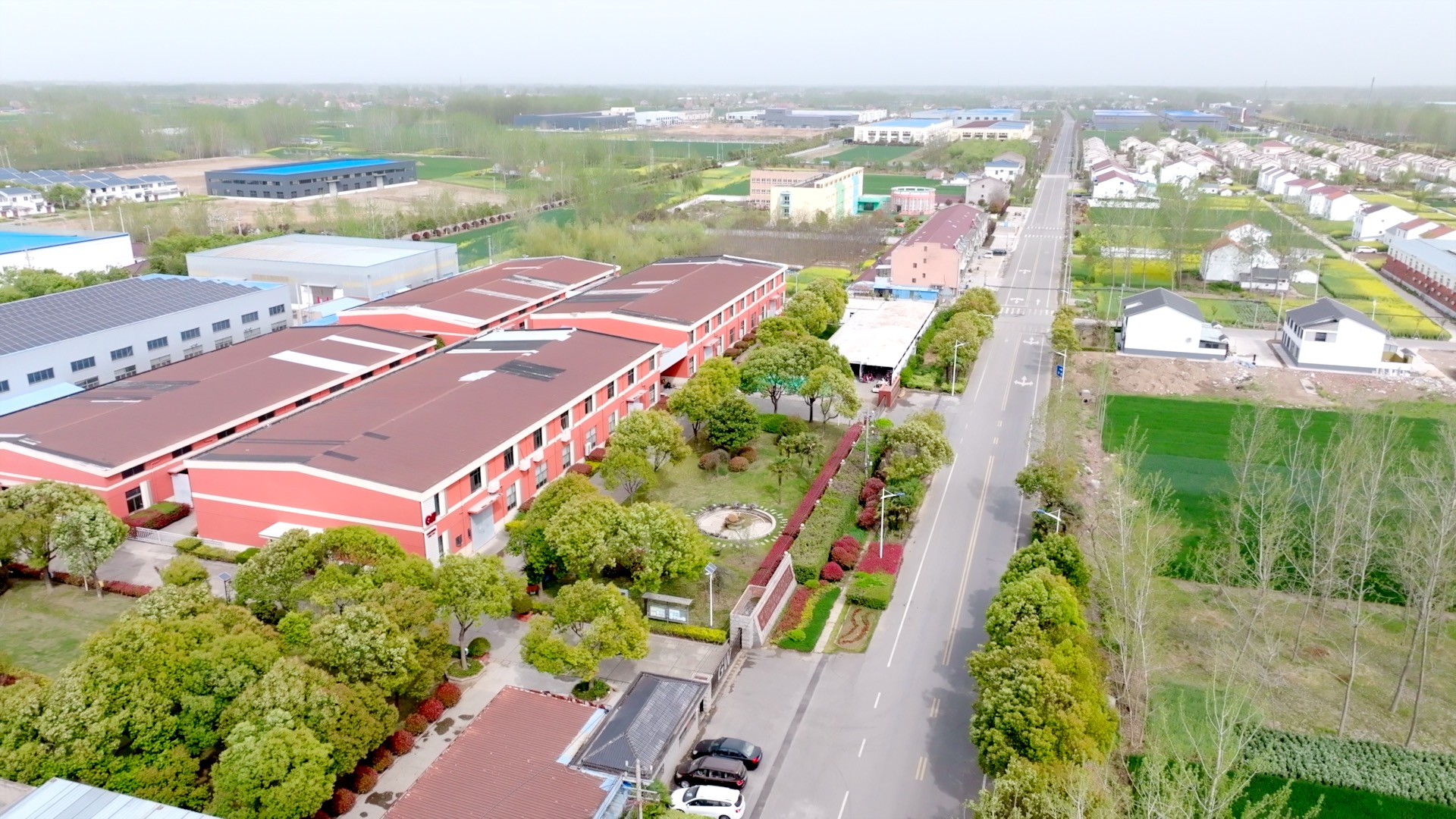
Kunshan Crystal Culture Co., Ltd, which trades as Greenwill stationery, operates a 25,000 m² factory established in 1999, with reported annual output above 260 tons of erasers, above 3 million pencil sharpeners and above 20 million writing pens, produced by around 100 employees and exported at a ratio of roughly 90% to North America, South America, Europe, Southeast Asia, Oceania and the Middle East. Its 2-in-1 eraser plus pencil sharpener range (models GW007 and GW009) is stated at an annual capacity of 3 million pieces, with a minimum order quantity of 20,000 pieces on the eraser sharpener line.

Two conclusions follow. First, capacity at plant level is expressed in tonnage for elastomer parts and in piece counts for assembled items, and the two are not interchangeable — a buyer comparing 260 tons of eraser material against 3 million sharpener assemblies is comparing different production stages. Second, the scale of one plant relative to national export values indicates that country output is distributed across many mid-sized operations rather than concentrated in a small number of very large ones, which is why national statistics should be used for market sizing and plant audits for supplier qualification.
For 2026 programmes, the defensible capacity question is not “how much does the country produce” but “what monthly output, defect rate and moulding equipment does this specific supplier commit to in writing, and can it be observed on site”.
Export Performance: The Classification Trap
Published export values for erasers are narrower than the product category they are often used to represent, and this is the single most misread data point in the category.
Rubber erasers are classified in HS heading 40.16 under subheading 4016.92 “Erasers”, meaning articles of vulcanised rubber other than hard rubber. China is reported as the largest exporter of vulcanised rubber erasers, with USD 137 million in export value for 2024. That figure is accurate for the subheading and should be read only within it.
Because 4016.92 is limited to vulcanised rubber, erasers made from non-rubber materials — rigid or plasticised PVC, or thermoplastic elastomer compounds — do not automatically fall under that subheading. Two visually identical erasers can therefore enter different chapters depending on declared material. Related items sit under separate headings entirely: pencil sharpeners, including sharpeners combined with an eraser, fall under HS 8214.10, while pencils with leads encased in a rigid sheath are classified in HS 9609.10, which means an eraser-tipped pencil is a single classified article rather than an eraser plus a pencil.
Exports also concentrate by material rather than by brand. Rubber material erasers hold the largest share of the category at 41.2% of total revenue, which is consistent with the dominance of the vulcanised rubber subheading in trade data — but plastic and TPR erasers, which sit outside it, remain largely invisible in that statistical view.
Technical Progress: Product Architecture as a Commercial Lever
In this category, product architecture decisions taken at the design stage determine tariff classification and certification scope more than any post-hoc documentation effort. Three patterns illustrate the point.
Combination items, such as an eraser sharpener built as a single article, unify two product families that would otherwise be declared separately. The Greenwill eraser sharpener range (GW007, GW006, GW013, GW015, GW009) uses a TPR eraser body, a stainless steel blade and a PP plastic shell, is specified for standard graphite pencils of Φ7–8 mm, and is declared against EU EN 71-1/2/3/9, SVHC and PAHs requirements, with customisable colours and a 20,000-piece MOQ. Declaring a unified article simplifies the customs line but widens the test file to cover both functions.
Topper and cap formats create a different constraint. A pencil topper that is also an eraser, such as the GW352, GW351, GW180 and GW123 models made in eco-friendly TPR and specified to EN 71, SVHC and PAHs, is simultaneously a pencil extender, an erasing surface and a small detachable accessory. That combination brings ISO 11540-type thinking about asphyxiation risk into the design brief, and it also pushes the item toward the toy regime where it is presented as a character or collectible object.
Material substitution creates the third pattern. A dual-use eraser with quartz sand content, such as the GW023 and GW024 models in TPR rubber with quartz sand at 70×16×9.4 mm, is specified for erasing ink and pencil and for cleaning rust, and its size and dual-use positioning make it both a school and an art-supply product. Material and claimed function together influence classification and compliance, which means a substitution decision taken for one reason — moving away from a restricted plasticiser, for example — can move the same product into a different tariff position.

The takeaway for 2026 buyers is that architecture choices — single article versus separated components, novelty shape versus plain block, rubber versus TPR versus plasticised PVC — should be settled before tooling, because changing them afterwards forces re-classification, re-testing and re-quotation.
A Comparison Framework for Country-Level Assessment
The table below translates the four dimensions into evaluation questions a buyer can apply to any national market. It compares regulatory structure and evidence availability, not product quality, because product quality is a supplier-level variable.
| Dimension | European Union | United States | China |
|---|---|---|---|
| Primary safety framework | EN 71 series; Directive 2009/48/EC, superseded by Regulation (EU) 2025/2509 | 15 U.S.C. 1278a (CPSIA) total lead limit; children's product scope decided per SKU | GB 21027-2020 general safety requirements for student supplies, cited for domestic compliance |
| Substance rule basis | Concentration in plasticised material for four phthalates (0.1% by weight); migration testing under EN 71-3 | Total lead content, 100 ppm per accessible part | Domestic chemical limits under the student-supplies standard; confirm clause text before use |
| Key classification boundary | Toy versus stationery scope, decided per product where items are presented for play | Children's product determination, decided per SKU | Declared material and function determine the declared heading on export |
| Capacity evidence available | Plant-level disclosure required; no comparable national tonnage series in this review | Plant-level disclosure required; no comparable national tonnage series in this review | Plant-level disclosure available from suppliers; export value published for vulcanised rubber erasers only |
| Main procurement risk | Novelty and character items pulled into the toy regime | Misclassified children's product scope; incompatible test basis | Material declaration inconsistency across a range, causing split classifications |
Purchasing Terms and Acceptance Criteria
The country comparison only produces value if it is converted into contract language. The following terms are the points where it most often breaks down.
- Material declaration per SKU. State the polymer type explicitly — vulcanised rubber, TPR, TPE, rigid PVC or plasticised PVC — and require the supplier to confirm it in writing. This single field drives both the tariff heading and the applicable substance restrictions.
- Test standard list by destination. Name the standards rather than the outcome: EN 71-1/2/3 where the item falls inside the toy regime, REACH Annex XVII entry 51 for plasticised material, ASTM D-4236 where applicable, plus SVHC and PAHs declarations where the supplier already works to them. Avoid generic “compliant with all regulations” statements.
- Explicit scope assumption. Require the supplier to state whether the item is being treated as a children's product, a toy, or general stationery, and in which market. This makes the assumption testable rather than implied.
- Non-interchangeable test basis. Migration testing and total content testing are not substitutes. A purchase order that specifies one while the destination market requires the other produces a test report that will not be accepted.
- Combination item treatment. For a sharpener with eraser, or an eraser-tipped pencil, confirm whether the goods will be declared as one article or as components, and align the certificate scope with that declaration.
- Capacity and continuity commitments. Record annual capacity, monthly output, MOQ and changeover time in the agreement, for example a stated 3,000,000-piece annual capacity and 20,000-piece MOQ on a combination line, so that ramp-up expectations are contractual rather than assumed.
- Change control. Any material substitution, including a shift away from a restricted plasticiser, should trigger a documented re-assessment of classification and compliance before shipment, not after.
What This Comparison Cannot Establish
A country-level framework is only useful if its boundaries are stated. Several questions that buyers reasonably ask cannot be answered from the evidence available in this review.
Published export values cover the vulcanised rubber eraser subheading only, so a TPR or PVC eraser range cannot be sized from them, and no equivalent trade series for pencil sharpeners was available here. No comparable national tonnage or line-count data exists for erasers or sharpeners across the EU, the United States and China, which means capacity comparisons must be built from individual plant audits rather than from national statistics. Price bands, MOQ norms and lead times are not published in a form that permits cross-country benchmarking, so cost comparison remains a quotation-level exercise.
Regulatory references in this article are cited at framework level. Clause-level limits, current standard editions and effective dates must be confirmed against the published texts of EN 71-3, REACH Annex XVII, the CPSIA provisions, GB 21027-2020 and ISO 11540 before they are written into a specification. Finally, a single factory disclosure describes that factory; it does not characterise a national supply base.
Future Outlook
The global erasers market is reported at USD 3.8 billion in 2025, projected to reach USD 5.6 billion by 2034 at a CAGR of 4.4% (Dataintelo). Growth of that order is steady rather than disruptive, which means competitive advantage in 2026 is more likely to come from compliance and classification discipline than from volume expansion.
Three shifts are worth planning around. Regulation (EU) 2025/2509 will replace Directive 2009/48/EC as the EU toy safety framework, and any eraser or topper line that sits close to the toy boundary should be re-reviewed against it rather than grandfathering existing test files. The phthalate restriction in REACH Annex XVII entry 51 will continue to push plasticised PVC formulations toward non-phthalate plasticisers or toward TPR and other non-PVC materials. Because material choice is simultaneously a compliance variable and a tariff variable, substitution decisions will increasingly be evaluated on combined compliance cost and landed cost rather than on compliance alone.
The third shift is architectural. Combination products — an eraser built into a sharpener, an eraser that doubles as a pencil topper or extender — reduce SKU count and shelf space but concentrate certification and classification risk into a single article. Buyers who settle the architecture, the material declaration and the destination regime together, before tooling, will spend less of the 2026 cycle correcting documents.
FAQ
What actually separates one national eraser market from another for a buyer?
Four variables. The applicable safety regime determines which tests and declarations are required. The tariff heading, which follows declared material and whether an item is one article or several, determines duty and clearance treatment. The structure of production capacity determines how much plant-level verification is needed before committing volume. And the scope of published export data determines whether national statistics can be used to size a product range at all. None of these are supplier-quality variables, which is why they are assessed before shortlisting suppliers.
Why do visually identical erasers clear customs under different codes?
Because HS 4016.92 covers erasers of vulcanised rubber specifically. Erasers made from non-rubber materials, such as rigid or plasticised PVC or thermoplastic elastomer compounds, do not automatically fall under that subheading, so identical-looking products can enter different chapters depending on declared material. Pencil sharpeners, including sharpeners combined with an eraser, sit under HS 8214.10, and pencils with leads encased in a rigid sheath are classified in HS 9609.10, making an eraser-tipped pencil a single classified article.
When does a novelty eraser or pencil topper fall under EU toy rules?
Under Directive 2009/48/EC, products designed or intended, whether or not exclusively, for use in play by children under 14 years of age are toys and must meet the Directive's essential safety requirements and carry CE marking. Novelty or shaped erasers and character pencil toppers can therefore fall inside the toy regime rather than only the stationery regime. Because the determination is made per product based on design and presentation, each SKU needs its own assessment rather than a category-level assumption.
Can EU phthalate limits and US lead limits be treated as equivalent thresholds?
No. REACH Annex XVII entry 51 restricts DEHP, DBP, BBP and DIBP to a maximum of 0.1% by weight of the plasticised material in toys and childcare articles, which is a concentration limit on specific substances in a defined material fraction. The US limit under 15 U.S.C. 1278a is 100 ppm total lead in any accessible part of a children's product, which is a different substance, a different measurement basis and a different legal object. The two cannot be averaged, converted or presented as a single compliance number, and purchase specifications should list them as separate, parallel requirements.
What capacity evidence should a buyer request from an eraser and sharpener factory?
Request capacity in the unit that matches the production stage: tonnage for elastomer parts and piece counts for assembled items, since the two are not interchangeable. A verifiable disclosure typically states annual output by product family, factory floor area, headcount, minimum order quantity and export share by region. As a reference point, Greenwill reports a 25,000 m² factory established in 1999, annual output above 260 tons of erasers and above 3 million pencil sharpeners, a 3,000,000-piece annual capacity on its 2-in-1 eraser sharpener line, a 20,000-piece MOQ and roughly 90% export share. Plant-level figures of this kind should be confirmed on site rather than extrapolated to a national supply base.
Which acceptance criteria belong in an eraser and sharpener purchase order?
At minimum: a per-SKU material declaration naming the polymer type; a named list of test standards matched to the destination market rather than a generic compliance claim; an explicit statement of whether the item is treated as a children's product, a toy or general stationery; confirmation of whether migration testing or total content testing applies; a decision on whether a combination item is declared as one article or as components, with the certificate scope aligned to that decision; documented capacity, MOQ and changeover commitments; and a change-control clause requiring re-assessment of classification and compliance whenever material or construction changes.
Tem questões ou precisa de mais detalhes?
Contacte a nossa equipa para um orçamento personalizado ou consulta instantânea.
Solicitar orçamento
Preencha o formulário abaixo e a nossa equipa entrará em contacto com uma proposta personalizada.
Chat direto do WhatsApp
Prefere conversar em tempo real? Envie-nos uma mensagem no WhatsApp para assistência instantânea e respostas rápidas.
- Obter orçamento personalizado
- Partilhar fotos ou documentos
- Discuta as suas necessidades diretamente
Geralmente responde em 5–30 minutos durante o horário de expediente.