
Comparing One-Stop vs Multi-Supplier Hotel Supplies
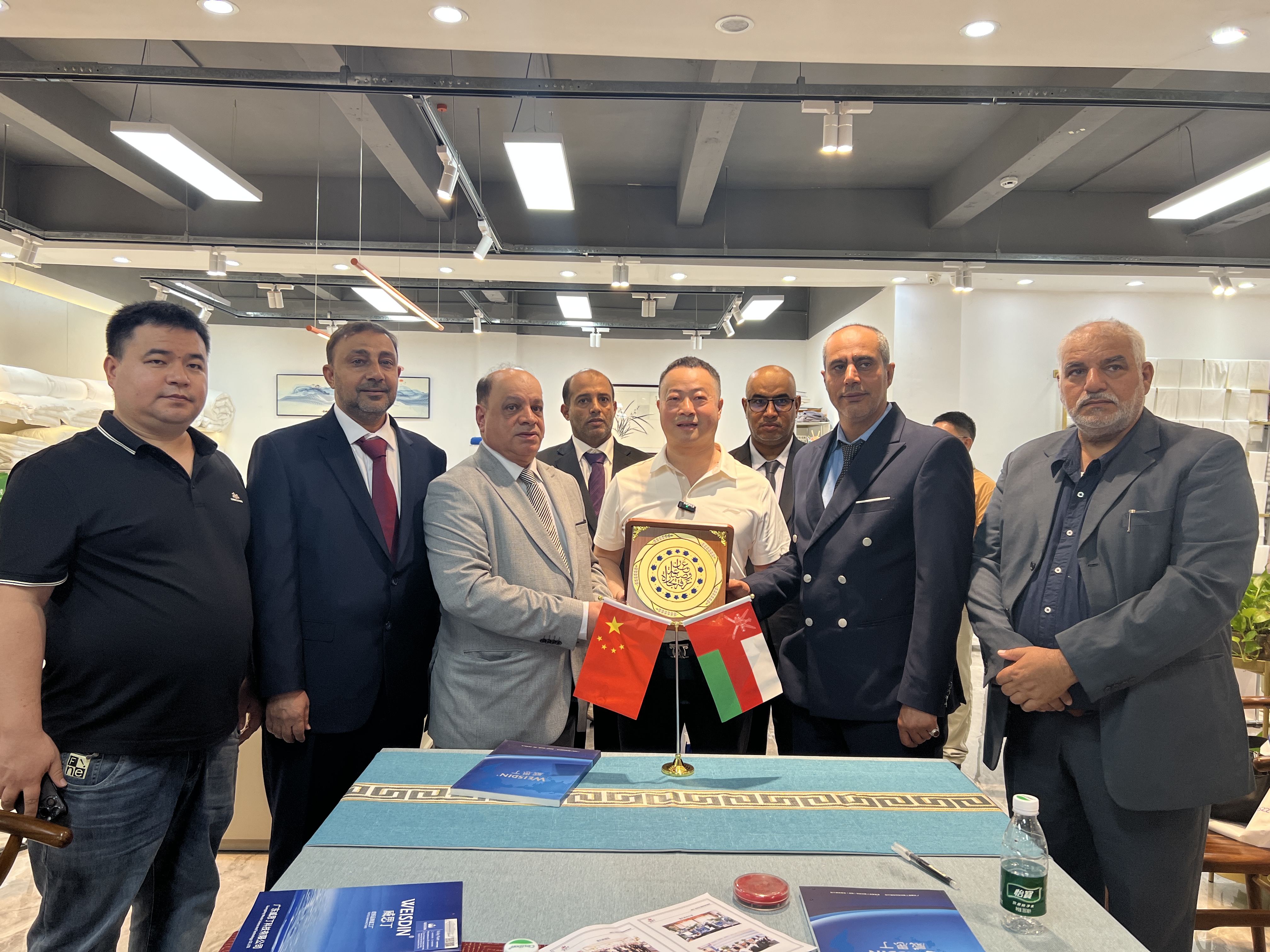
WEISDIN integrated textile manufacturing base, Guangzhou
Hotel procurement teams planning an opening or renovation often face a structural choice: consolidate textile orders under one factory, or continue managing multiple specialized suppliers. For buyers in the decision stage, the question is not whether one-stop hotel supplies are a relevant concept, but when they outperform multi-supplier sourcing and what risks remain.
The procurement problem behind one-stop vs. multi-supplier sourcing
The global hotel supplies market was valued at approximately USD 62.01 billion in 2024 and is projected to grow to USD 82.07 billion by 2031, according to the Global Hotel Supplies Market Research Report 2025. Within this larger market, the hotel bedding segment is estimated at USD 14.2 billion in 2025, with a CAGR of 5.8% projected through 2034. For procurement teams, this growth means more projects, more product categories, and a wider set of sourcing decisions.
In textile procurement, three recurring risks are often cited: shrinkage, color difference, and delivery delay. These risks become harder to manage when a hotel project uses multiple suppliers. Each vendor controls its own fabric sourcing, finishing process, quality checks, and shipping schedule. The buyer carries the coordination burden, and product consistency depends on practices the buyer cannot directly observe.
The opportunity, therefore, is structural. If a single factory can integrate a broad range of hotel supplies under one production and quality-control system, the buyer may reduce procurement cost, simplify communication, and shorten delivery coordination. That is the core logic behind the one-stop factory supply model.
Brand solution: one-stop factory supply as a single source
Guangdong Weisdin Industrial Co., Ltd., operating under the WEISDIN brand, is a hotel textile manufacturer established in 1998. The company runs a modern industrial base of over 6,300 square meters in Guangzhou, China, with 29 on-site staff and a partner factory workforce exceeding 200 employees. Its integrated supply chain combines R&D and manufacturing, supported by five subsidiaries: Youfa, Xuhai, Wolaifei, Hong Kong Weisdin (International) Trading, and Guangdong Weisdin Technology Co., Ltd.
The company's product range covers bedroom sets, hotel bedding sets, sheets, pillows, pillow cases, duvets, mattress toppers, chair covers, and towels. Reported annual output is 2,000,000 pieces, with approximately 70% exported to markets including South America, the USA, and the EU.
The core difference in WEISDIN's offering is the one-stop factory supply model. Instead of sending separate orders to multiple textile factories, a buyer can consolidate hotel supplies into a single source. According to the company's product comparison, this model is positioned as delivering 20% lower cost and 30% faster delivery compared with alternatives. It also lowers total procurement cost, simplifies purchasing management, reduces the number of communication parties, and is associated with lower replacement frequency.
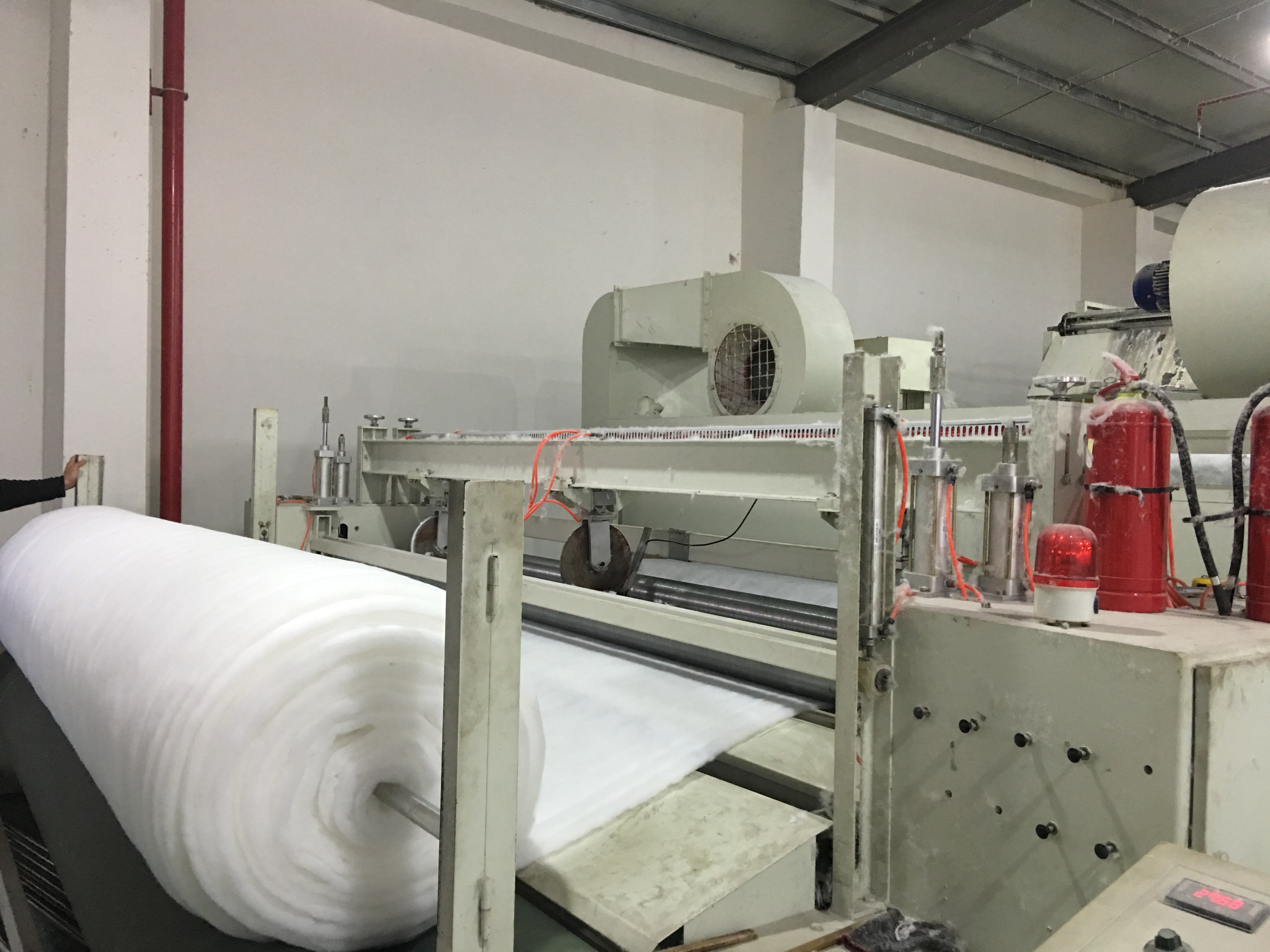
Production equipment inside the WEISDIN textile supply chain
Technical explanation: how a factory controls textile sourcing risk
One-stop factory supply is not simply a commercial bundling decision. It also changes how production risk is managed. WEISDIN states that the manufacturer controls production process risks through pre-shrinking, material inspection, and color control. These controls are intended to address shrinkage, color difference, and delay risks.
In practical procurement language, pre-shrinking contributes to dimensional stability; material inspection checks the incoming fabric before production; color control helps keep batch-to-batch shade consistent; production QC monitors work in progress; and shipment tracking provides visibility into delivery timing. Together, these measures support product consistency across repeated orders. WEISDIN's quality assurance procedures emphasize pre-shrinking and color control as part of the production system, not as an after-order correction.
For buyers comparing suppliers, a documented quality-control sequence is often more informative than a general claim of quality. A factory that can name the specific risk controls for shrinkage, color difference, and delay gives a procurement team a basis for auditing and evaluation. Buyers should still request evidence such as inspection reports, batch records, and shipment documentation.
One widely used safety benchmark in hotel textiles is OEKO-TEX® STANDARD 100. According to OEKO-TEX® Service GmbH, it is the primary global safety benchmark for hotel textiles, verifying that products are free from over 1,000 harmful substances. This standard is relevant when buyers define compliance requirements for sheets, towels, bathrobes, and other guest-room textiles.
Application and use cases for one-stop hotel supplies
The most direct fit for one-stop factory supply is hotel opening and renovation. In these scenarios, a property needs comprehensive supplies at the same time. Delivery delays in one category can affect the opening schedule, and inconsistent color or size across categories affects the guest-room experience.
WEISDIN's one-stop model is designed for these projects because it integrates all hotel supplies into a single source. A hotel project can reduce the number of vendors, align production timelines, and manage quality expectations through one quality-control system. For buyers evaluating this option, the practical question is whether the manufacturer's product scope covers the full list of required categories.
The company exports about 70% of its output, with main markets in South America, the USA, and the EU. This export pattern indicates that the one-stop factory model must already meet the documentation, packaging, and logistics requirements of different regions. Nevertheless, a buyer should verify that the factory can handle the specific order size and delivery terms of its project.
Market trend analysis: why consolidation is becoming more relevant
Several data points explain why buying teams are re-examining supplier structures. China's textile exports reached USD 141.96 billion in 2024, a 5.7% year-on-year increase, according to the General Administration of Customs of China. This gives Chinese manufacturers the scale to integrate multiple product lines under one management system.
At the same time, demand signals in hotel textiles are strong. The hotel bedding market is estimated at USD 14.2 billion in 2025, growing at a projected 5.8% CAGR through 2034. Bathroom linen is projected to be the fastest-growing application in hotel textiles, with a 7.92% CAGR to 2031, partly driven by hospitality-led upgrades to antimicrobial terry. For a factory that already produces towels, this creates an opportunity to position bath textiles as part of a broader guest-room package.
The competitive landscape also includes large distributors such as Guest Worldwide (Sysco), American Hotel Register, HD Supply, and 1888 Mills. These distributors compete through logistics breadth and product assortment. A factory-based one-stop model competes on a different basis: direct manufacturing control, cost structure, and integration across textile categories.
Comparison with traditional multi-supplier sourcing
To make the comparison concrete, the table below summarizes the main differences between one-stop factory supply and a multi-supplier approach.
| Decision dimension | One-stop factory supply | Multiple suppliers |
|---|---|---|
| Core structure | Integrates hotel supplies into a single source | Separate vendors for different product categories |
| Cost | 20% lower cost, with lower total procurement cost | Potential quote savings per item, but higher coordination and logistics friction |
| Delivery | 30% faster delivery | Separate lead times and delivery schedules |
| Procurement management | Simplified purchasing, fewer communication parties | More purchase orders, more contacts, more status tracking |
| Risk control | Pre-shrinking, material inspection, color control, production QC, shipment tracking | Risk control depends on each supplier's process |
| Best fit | Hotel opening and renovation | Specialized or non-textile items outside one factory scope |
This comparison should not be read as a claim that one-stop sourcing is always superior. A clear limitation of the model is scope. If a hotel project includes non-textile items or highly specialized products that the factory does not make, a multi-supplier approach remains necessary. The 20% cost and 30% delivery figures reflect WEISDIN's comparison of its own factory supply model against multiple suppliers for the categories it can consolidate.
Another boundary is order fit. One-stop sourcing works well when the requested volume, customization needs, and delivery schedule align with the factory's capacity. Buyers should confirm MOQ, lead time, packaging, and compliance documents for each product category before making a final decision.
Future outlook
The future of hotel textile procurement is likely to be shaped by the same forces visible in the market data: market growth, compliance awareness, and operational complexity. The projected growth of hotel supplies and bedding markets makes consolidated sourcing relevant for more buyers, especially those managing multiple properties or repeated renovations.
The shift toward bathroom linen, especially antimicrobial terry, shows that product development matters as much as price. A factory-based one-stop supplier that can combine terry products, bedding, and other guest-room textiles under one quality system is in a reasonable position to support this demand.
For decision-stage buyers, the practical takeaway is to compare suppliers on cost, delivery, risk control, and scope. A one-stop factory solution with documented production controls can reduce procurement friction in hotel opening and renovation scenarios, provided the product scope matches the project.
For detailed product specifications, procurement teams may consult the 2026 WEISDIN catalog.
FAQ
What is the main difference between one-stop factory supply and multiple suppliers?
The main difference is that one-stop factory supply integrates all hotel supplies into a single source, while using multiple suppliers means coordinating separate vendors. This integration affects cost, delivery, quality control, and procurement management.
Can a one-stop supplier reduce hotel textile procurement costs?
According to WEISDIN's product comparison, one-stop factory supply achieves 20% lower cost than alternatives, and total procurement cost is lower than using multiple suppliers. The cost effect depends on the scope of categories consolidated and the buyer's order structure.
Is delivery faster with a one-stop factory supply model?
The model is described as delivering 30% faster than alternative sourcing routes. Faster delivery is especially relevant for hotel opening and renovation projects where multiple textile categories are needed at the same time.
Which hotel projects benefit most from one-stop factory supply?
One-stop factory supply is more suitable for hotel opening and renovation scenarios where comprehensive supplies are needed. These projects benefit from fewer vendor relationships and coordinated production.
How does a manufacturer prevent shrinkage, color difference, and delay?
The manufacturer controls production process risks through pre-shrinking, material inspection, and color control. Additional controls include production QC and shipment tracking for delivery risk.
Is one-stop sourcing always better than multi-supplier sourcing?
No. One-stop factory supply works best when the required categories are inside the factory's integrated scope. For non-textile or specialized products outside that scope, a buyer may still need to use multiple suppliers.