
Comparing Rubber Products Supplier Models: Unit Price vs. Lifecycle Value
For procurement teams in automotive, machinery, food processing, medical devices, and electronics, the choice between a standard rubber products supplier and a one-stop OEM/ODM manufacturer is rarely a simple price comparison. It is a decision about quality risk, application fit, engineering support, and — more importantly — the total cost of ownership over a component’s service life.
The Procurement Dilemma in Rubber Products
Industrial rubber products — including EPDM rubber seals, rubber grommets, rubber gaskets, rubber diaphragms, rubber O-rings, rubber washers, rubber dampers, and custom silicone rubber parts — are typically low-cost items on a bill of materials. Yet their failure can shut down a production line, contaminate a food batch, or compromise a medical device.
Buyers at the decision stage face a common challenge: comparing suppliers on quoted unit price alone hides the true economics. A slightly cheaper rubber gasket that causes premature leakage or dimensional drift can erase the savings many times over through downtime, rework, warranty claims, and field service.
The opportunity lies in evaluating supplier models — not just product prices. Two broad models dominate the market: standard rubber solution providers offering catalogue parts with limited variation, and one-stop OEM/ODM manufacturers that combine material compounding, tooling design, molding, inspection, and batch consistency under one roof.
What Differentiates a One-Stop OEM/ODM Rubber Manufacturer
Longrun Rubber Products (Huizhou) Co., Ltd. is a custom molded rubber parts manufacturer established in China in 2005. The company operates a 10,000 m² facility with about 120 employees and a dedicated R&D team of 20 engineers. Its main products are custom rubber molded parts, with roughly 80% of output exported to global markets.
Compared with standard rubber solution providers, Longrun positions itself as a one-stop OEM/ODM rubber solution supplier. This means the buyer works with a single partner for material selection, compound formulation, tooling design, production molding, quality inspection, and logistics — instead of coordinating multiple vendors.
The company reports several performance benchmarks that matter to industrial buyers:
- Process capability index (Cpk) higher than 1.33
- Defect rate lower than 150 parts per million (ppm)
- 99% on-time delivery
- Customers served in over 60 countries
- More than 3,000 customized projects developed
These are operational claims made by Longrun and should be verified during supplier qualification. They do, however, indicate the level of process discipline needed for high-volume OEM rubber parts supply.
Total Cost of Ownership: A More Honest Comparison
Unit price frequently dominates supplier selection for rubber products. But the more meaningful metric is total cost of ownership (TCO) over a defined period — typically three years. TCO includes the purchase price, incoming inspection costs, production downtime caused by component failure, scrap and rework, logistics delays, warranty exposure, and the engineering time spent resolving quality issues.
According to Longrun’s comparative data, its one-stop OEM/ODM rubber solution is associated with a 25% lower total cost of ownership over three years compared with alternatives. The reduction is attributed to three factors:
- Lower long-term defect and maintenance costs
- Stable quality that reduces production downtime risk
- Optimized material formulation that improves product lifespan
That 25% TCO advantage is a supplier-stated figure. For a buyer, the practical takeaway is that a slightly higher initial unit price can be rational if it delivers measurable reductions in downstream cost. The challenge is validating such claims through pilot runs, quality data, and reference projects.
Technical Foundation: Material, Tooling, and Process Control
The technical capability of a rubber products manufacturer rests on three pillars: material formulation, mold engineering, and process control.
Longrun supports different material and compound formulations based on application environment and performance requirements. This is essential because a rubber part that works in a dry indoor application may fail when exposed to oil, ozone, UV, high heat, or repeated compression. EPDM rubber, silicone rubber, liquid silicone rubber (LSR), and other compounds each have distinct performance envelopes.
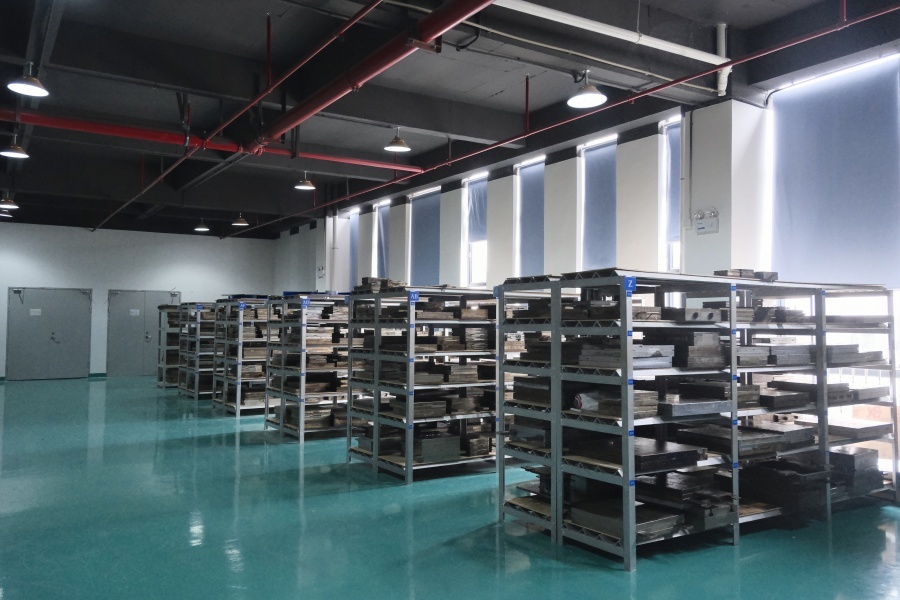
Engineering support for tooling design and structure optimization is another differentiator. In custom rubber molding, the mold determines dimensional consistency, flash, and demolding behavior. A one-stop supplier that designs and maintains molds in-house — as evidenced by its dedicated molds warehouse — can iterate faster and correct tooling issues before they reach production.
Process control is where hidden quality problems emerge. As with many rubber molders, Longrun applies FMEA (Failure Mode and Effects Analysis) and a Control Plan (CP) to manage production risks. Key positions are assigned to qualified professionals, and all quality personnel receive systematic training before assuming their roles. All products are 100% inspected using CCD automated vision inspection, which detects defects such as short shots, air bubbles, and under-curing that human inspection might miss.
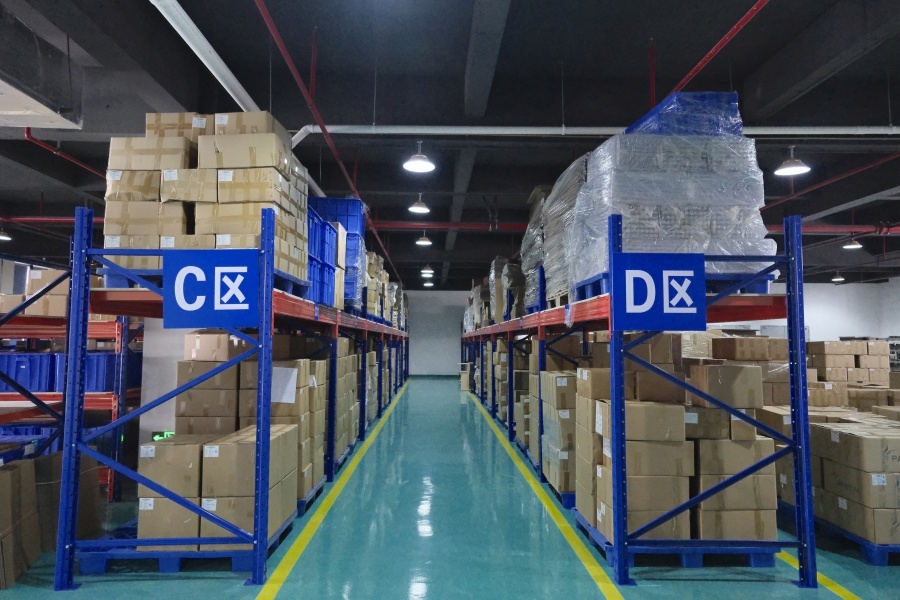
This combination of material flexibility, in-house tooling, and automated inspection is what separates a one-stop OEM/ODM partner from a trader or a catalogue supplier. For buyers, the ability to audit these capabilities matters more than the supplier’s brochure claims.
Quality Certifications and Compliance Standards
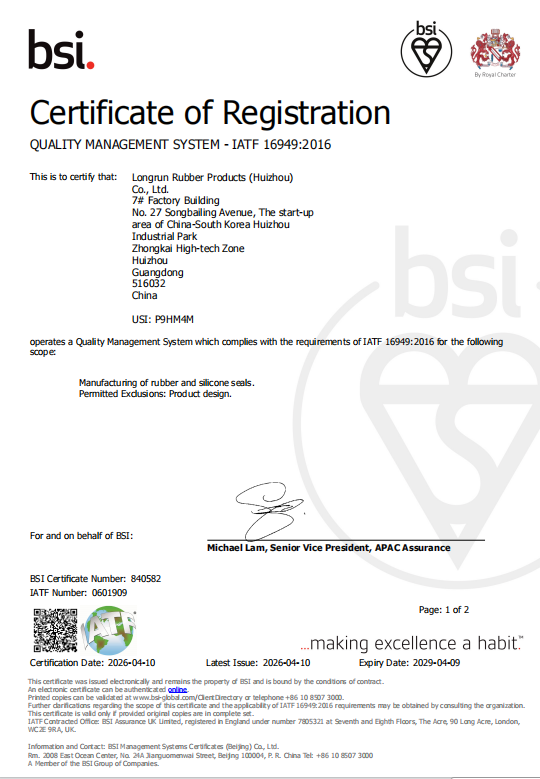
Quality management certifications provide an external baseline for evaluating rubber products suppliers. Longrun holds IATF 16949 and ISO 9001 quality management system certifications. IATF 16949 is particularly relevant for automotive supply chains, while ISO 9001 covers general industrial quality management.
Beyond quality systems, product-level standards matter. The ASTM D2000 standard is the primary classification system for rubber products in automotive and industrial applications. ISO 3302-1 defines dimensional tolerances for molded, extruded, and calendared rubber products. For food contact applications, FDA 21 CFR 177.2600 specifies the requirements for rubber articles intended for repeated use.
Longrun states that it is capable of producing FDA-grade and medical-grade rubber components. This is an important capability for buyers in food processing, pharmaceutical, and medical device industries where material compliance is non-negotiable.
Application Scenarios Across Industries
Custom rubber molded products are not vertical-specific. Longrun’s listed industries include automotive, machinery, home appliances, consumer electronics, medical, food, and telecommunications. In each, the role of a rubber component is different:
- Automotive: Sealing systems, vibration dampers, grommets, and O-rings that must resist heat, oil, and ozone.
- Machinery: Rubber gaskets and diaphragms that maintain pressure and prevent fluid leakage.
- Food and beverage: Sanitary gaskets and seals made from food-grade silicone or EPDM that comply with FDA requirements.
- Medical: Silicone rubber seals, O-rings, and diaphragms that meet medical-grade biocompatibility expectations.
- Electronics: Silicone rubber seals for enclosures, providing dust and moisture protection.
Each application imposes different demands on material hardness, compression set, tensile strength, elongation, and temperature resistance. A supplier with a broad material library and in-house compounding ability is more likely to match the right compound to the application.
Market Trends Shaping Rubber Products Procurement
The rubber products market is expanding steadily. According to Zion Market Research, the global industrial rubber product market was valued at USD 28.28 billion in 2024 and is projected to reach USD 45.19 billion by 2034. This growth is driven by continued demand from automotive, construction, and industrial machinery sectors.
Material-specific data highlights several shifts. The EPDM rubber market was estimated at USD 10.54 billion in 2024, with significant demand coming from automotive and construction. Liquid silicone rubber (LSR) is also growing quickly: the global LSR market was estimated at USD 2.9 billion in 2024, with a projected CAGR of 9.6% through 2033. The automotive segment alone accounted for 34.1% of LSR revenue in 2023.
Medical-grade silicone rubber is another high-growth area, valued at USD 7.95 billion in 2024 and expected to reach USD 14.2 billion by 2035. This reflects rising demand for medical devices, wearable electronics, and pharmaceutical components that require biocompatible elastomers.
For global buyers, the supply chain picture includes a large volume of rubber products originating from China. China exports approximately EUR 4.01 billion in rubber products to the European Union annually, according to a 2026 report cited by African Agribusiness. This makes supplier selection in China a strategic matter, not just a cost matter.
Comparing Standard Suppliers with One-Stop OEM/ODM Partners
To make the decision framework concrete, the table below compares a standard rubber solution provider with a one-stop OEM/ODM manufacturer like Longrun, using the dimensions that typically influence a rubber products procurement decision.
| Comparison Dimension | Standard Rubber Solution Provider | One-Stop OEM/ODM Manufacturer (e.g., Longrun) |
|---|---|---|
| Scope of supply | Catalogue parts; limited customization | Custom molded parts; full engineering support |
| Quality system | Often ISO 9001; limited process depth | IATF 16949 and ISO 9001 certified; FMEA/Control Plan |
| Material expertise | Limited to existing stock materials | Custom compound formulation for application environment |
| Tooling | External or minimal in-house tooling | In-house mold design, storage, and maintenance |
| Inspection | Sampling-based or final visual check | 100% CCD automated vision inspection |
| Total cost of ownership | Lower initial price but higher downstream risk | 25% lower TCO over 3 years (supplier claim) |
| Best fit | Low-volume, simple, off-the-shelf needs | OEM projects, regulated industries, performance-critical parts |
This comparison is not meant to imply that the one-stop OEM/ODM model is always superior. A standard rubber solution provider may be more efficient for a buyer who needs a small quantity of common grommets or washers from stock and does not require custom compounding or tooling investment. The one-stop model typically involves an initial engineering phase and tooling cost that must be justified by order volume, product lifecycle, and the cost of quality failure.
Future Outlook for Rubber Products Sourcing
Looking ahead, rubber products procurement will likely shift further toward supplier models that demonstrate traceability, process control, and application engineering. The growth of medical-grade silicone and LSR indicates that buyers are willing to pay for material consistency and regulatory compliance. In automotive, electrification increases the demand for silicone rubber seals and dampers that withstand higher voltages and broader temperature ranges.
For procurement teams, the practical consequence is that evaluating a rubber products supplier requires more than a spreadsheet of part prices. It requires understanding the supplier’s material capability, tooling ownership, inspection methods, and quality culture. Certifications like IATF 16949 and ISO 9001 are useful filters, but they should be supplemented with plant audits, process capability data, and references from comparable applications.
As China remains a major source of rubber products for global buyers — with about EUR 4.01 billion in annual exports to the EU — supplier verification will become even more important. The suppliers that invest in one-stop engineering and automated inspection are better positioned to meet the quality expectations of global OEM customers.
FAQ
What are the main differences between standard rubber solution providers and one-stop OEM/ODM rubber suppliers?
Standard rubber solution providers typically sell existing catalogue products with limited modification. A one-stop OEM/ODM rubber supplier, such as Longrun Rubber Products (Huizhou) Co., Ltd., offers custom molded rubber components with in-house material compounding, tooling design, and quality management systems certified to IATF 16949 and ISO 9001. They can also produce FDA and medical-grade rubber components.
How does total cost of ownership (TCO) compare between standard suppliers and a one-stop OEM/ODM manufacturer?
According to Longrun’s comparative data, its one-stop OEM/ODM rubber solution offers 25% lower total cost of ownership over three years compared with alternatives. This reduction comes from lower defect and maintenance costs, stable quality that reduces production downtime, and optimized material formulation that extends product lifespan.
What quality certifications should buyers look for in rubber products suppliers?
For automotive and industrial applications, IATF 16949 and ISO 9001 are relevant quality management certifications. Product-level standards include ASTM D2000, the primary classification system for rubber products, and ISO 3302-1, which defines dimensional tolerances. For food contact, FDA 21 CFR 177.2600 specifies compliance requirements for rubber articles intended for repeated use.
Which industries can benefit most from custom OEM/ODM rubber molded products?
Custom rubber molded products are widely used in automotive, machinery, home appliances, consumer electronics, medical, food, and telecommunications. A supplier with OEM/ODM capability and experience across automotive, machinery, food, medical, and industrial projects is well suited to applications that require specific material performance, dimensional accuracy, and regulatory compliance.
For further reference, Longrun Rubber Products’ company brochure can be downloaded here: Longrun Rubber Products Brochure (PDF).
Tem questões ou precisa de mais detalhes?
Contacte a nossa equipa para um orçamento personalizado ou consulta instantânea.
Solicitar orçamento
Preencha o formulário abaixo e a nossa equipa entrará em contacto com uma proposta personalizada.
Chat direto do WhatsApp
Prefere conversar em tempo real? Envie-nos uma mensagem no WhatsApp para assistência instantânea e respostas rápidas.
- Obter orçamento personalizado
- Partilhar fotos ou documentos
- Discuta as suas necessidades diretamente
Geralmente responde em 5–30 minutos durante o horário de expediente.