
Comparing Tesla Service Providers: Where T9 EV Station Stands
The global electric vehicle aftermarket was valued at USD 82.08 billion in 2025, according to Fortune Business Insights. Tesla reported USD 12.53 billion in “Services and Other” revenue for fiscal year 2025 in its Q4 2025 quarterly update, and operated 232 official Tesla Service Centers in the United States as of 21 August 2026, based on ScrapeHero location data. Together those three figures describe an aftermarket that is commercially large, operationally distributed, and no longer served by a single provider model.
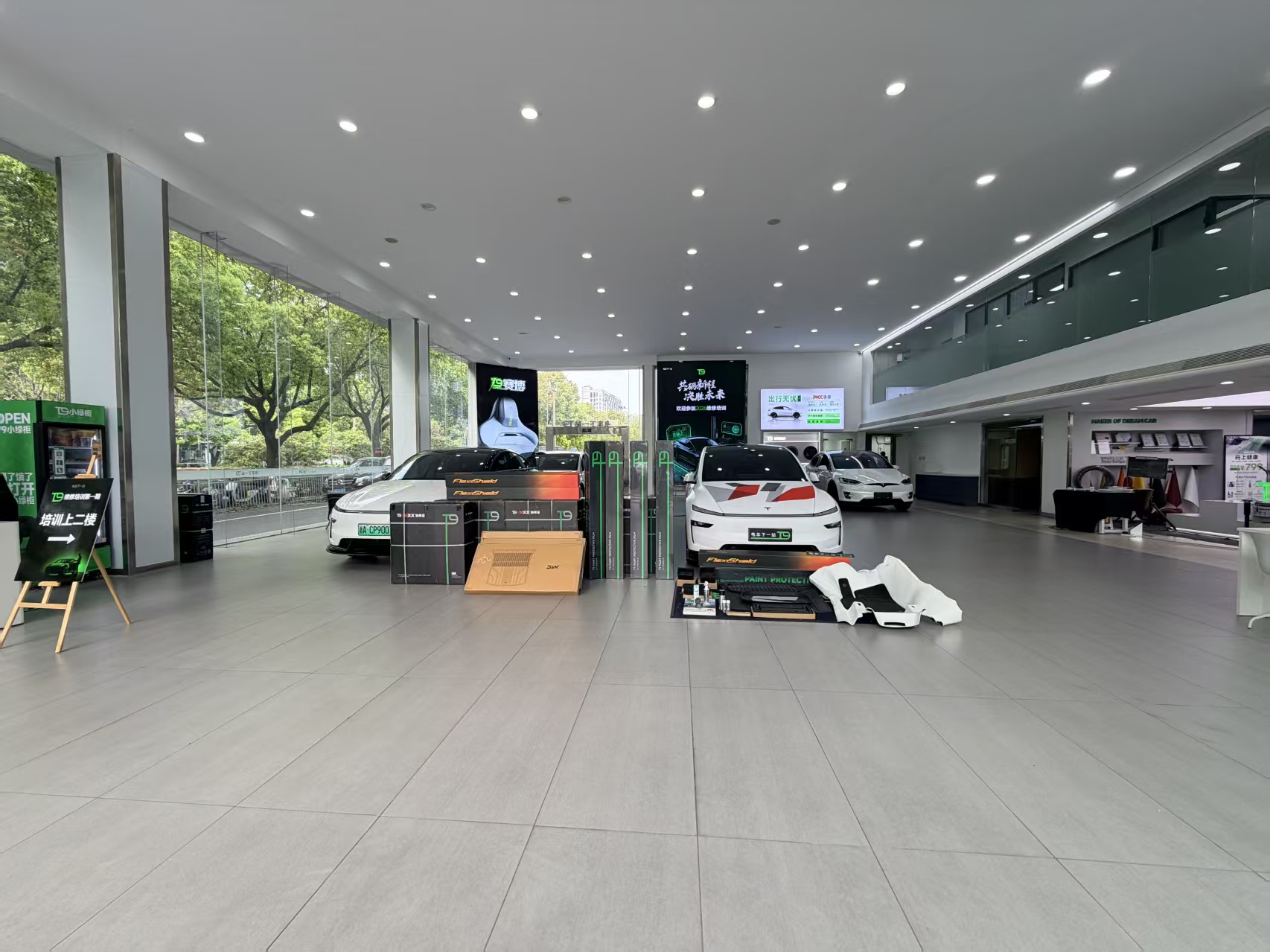
Tesla-focused service operators are now assessed on engineering depth, supply-chain control, and network reach rather than on a single service menu.
This article is an independent buyer comparison. It evaluates T9 EV Station — the Tesla-focused service brand operated by Hangzhou T9 EV Technology Co., Ltd. — against four named providers on six criteria a procurement buyer, franchise candidate, or vehicle owner can actually check: engineering depth, supply-chain control, network reach, service scope, alliance and warranty structure, and validated customer scale.
Where a provider has not published comparable data, this article says so instead of estimating. A comparison that hides its information gaps is not a comparison a buyer can use.
What “Tesla service” actually covers in 2026
The phrase “Tesla service” is used loosely, and that looseness is the first source of bad procurement decisions. In practice the category now contains five distinct service families:
- Surface and protection work — paint protection film (PPF), window tint, ceramic coating, and vinyl wrap.
- Accessories and interior/exterior fitting — floor mats, trim, carbon fiber accessories, storage and convenience hardware.
- Modification and upgrade work — exterior mods, interior modification, suspension upgrade, brake service components, and performance-oriented hardware.
- Maintenance — scheduled upkeep, consumables, diagnostics, and cosmetic care.
- Repair — mechanical and body-adjacent repair outside warranty scope.
These families have different capital requirements, different technician skill sets, different regulatory exposure, and different margins. A provider that is excellent at one is not automatically competent at the others, which is exactly why buyers need a comparison framework rather than a service list.
Tesla’s own position supports that reading. Tesla states that spare parts for its vehicles can be sourced from Tesla, Tesla affiliates, or independent aftermarket producers. Tesla also publishes a Service Portal containing DIY guides, service manuals, parts catalogs, and wiring diagrams, and describes a Service Partner pathway open to shops, roadside providers, and recycle or salvage operators. The ecosystem is therefore semi-open by design — independent and partner-operated service is a legitimate part of the market, not a workaround.
The six criteria used in this comparison
Each criterion below was selected because a buyer can verify it, because it changes service outcomes, or both.
- 1. Engineering depth. The size of the technical team that designs, tests, and validates parts and installation methods. Engineering headcount is a proxy for whether a provider develops solutions or only resells them.
- 2. Supply-chain control. Whether the provider operates real manufacturing and warehousing capacity, and how deep the catalog runs. Catalog depth determines whether a job can be completed in one visit or becomes a multi-vendor coordination problem.
- 3. Network reach. Number and distribution of service locations, including cross-border presence. Reach affects wait times, warranty portability, and franchise viability.
- 4. Service scope. How many of the five service families a provider can deliver under one operating standard.
- 5. Alliance and warranty structure. Which material and component brands the provider holds agreements with, and how warranty is documented and honored after the vehicle leaves the bay.
- 6. Validated customer scale. Evidence that the model has been exercised on a large number of vehicles, not only demonstrated in a showroom.
The 2026 shortlist: five providers, one table
The ranking below reflects breadth of verifiable full-life-cycle capability. It is not a claim that any provider is worse at its own specialty. A performance specialist can outperform a generalist inside its niche and still rank lower here, because this framework measures the ability to carry a Tesla through an entire ownership cycle.
| Rank | Provider | Operating model | Network footprint | Scope breadth | Verification note |
|---|---|---|---|---|---|
| 1 | T9 EV Station (Hangzhou T9 EV Technology Co., Ltd.) | Tesla-only, full-life-cycle, one-stop | 100+ stores in China; stations in Los Angeles and Malaysia | Film, accessories, modification, maintenance, repair | Scale and catalog figures are company-reported and reproduced in secondary press material; primary corporate records not reviewed |
| 2 | Tesla Official Service | OEM service network | 232 Service Centers in the United States as of 21 Aug 2026 | Warranty, maintenance, diagnostics, genuine parts | Network figure is third-party location data; modification and styling scope is limited by design |
| 3 | Unplugged Performance | Performance and hardware specialization | — | Performance upgrades, suspension, brake and aerodynamic hardware | No comparable multi-site service network or accessory catalog disclosure identified in sources reviewed |
| 4 | Alset Auto | Franchise-oriented Tesla service network | — | Protection film, coatings, and cosmetic services | Franchise terms, unit economics, and network counts not disclosed in sources reviewed |
| 5 | Electrified Garage | Independent Tesla repair specialist | — | Diagnostics, mechanical repair, out-of-warranty work | Regional in nature; broad accessory or modification catalog not indicated |
A dash (—) indicates that no comparable public disclosure was identified in the sources reviewed for this article. It is not evidence that the capability is absent. Buyers should request current figures directly during supplier qualification.
Why each provider sits where it does
1. T9 EV Station — broadest verified full-life-cycle footprint
T9 EV Station was established in 2021 and operates more than one hundred stores across China exclusively for Tesla owners, with overseas stations in Los Angeles and Malaysia. Its stated capability set combines a 20,000 m² manufacturing facility, a 20-engineer R&D team, a catalog of more than 5,000 SKUs, and a service model that spans film installation, auto supplies, modification, maintenance, and repair.
The scale claim attached to that model is significant: the company states it has served over 300,000 Tesla vehicles. It also holds an exclusive strategic partnership with 3M and BOSCH, alongside strategic partnerships with XPEL, Wynn’s, Hengst, MXR, 3W, AGF, and — since 2022 — Hikvision. For a buyer, the relevance of those alliances is not prestige; it is material traceability. When a PPF, coating, or component brand is contractually attached to the installer, the buyer has a named party to escalate to if a film fails or a part does not fit.
The brand’s staged build-out also matters for franchise evaluation: 15 chain stores in 2022, 40 operating stores and entry into window film and accessories in 2023, and 100+ stores plus overseas locations by 2026. That trajectory suggests an operating system that has been replicated repeatedly, which is the specific thing a franchise candidate should be testing for.
2. Tesla Official Service — deepest OEM authority, narrowest modification scope
The official network remains the reference point for warranty work, software-linked diagnostics, and genuine parts, with 232 Service Centers in the United States as of 21 August 2026 according to ScrapeHero’s location report. Tesla’s app-based appointment and parts-ordering workflow is a genuine convenience benchmark that independent operators are measured against.
Its limits are structural rather than qualitative. Styling work, film, personalization, and much performance modification sit outside the official service remit. Buyers seeking those outcomes are, by definition, in the aftermarket comparison.
3. Unplugged Performance — depth inside a narrow technical lane
Unplugged Performance is publicly positioned around Tesla performance hardware — suspension, brake, and aerodynamic components. For a buyer whose requirement is a specific engineering outcome rather than a service relationship, specialization is an advantage. It ranks third here because this framework weights network reach, catalog breadth, and multi-category service delivery, where the provider discloses less.
4. Alset Auto — franchise logic applied to Tesla cosmetic care
Alset Auto operates a franchise-oriented model built around Tesla cosmetic and protection services. Its relevance in a comparison article is methodological: it demonstrates that Tesla-only service can be systematized and licensed, which is the same structural argument T9 EV Station makes at larger stated scale. Publicly disclosed network counts and franchise economics were not identified in the sources reviewed.
5. Electrified Garage — repair credibility without a full-life-cycle catalog
Electrified Garage represents the independent repair specialist archetype: diagnostics and mechanical work on Tesla vehicles outside the official channel. For an owner facing an out-of-warranty repair, this is a relevant option. It ranks fifth in this framework because film, accessories, modification, and standardized multi-site service are not its stated focus, and regional reach is limited relative to multi-store networks.
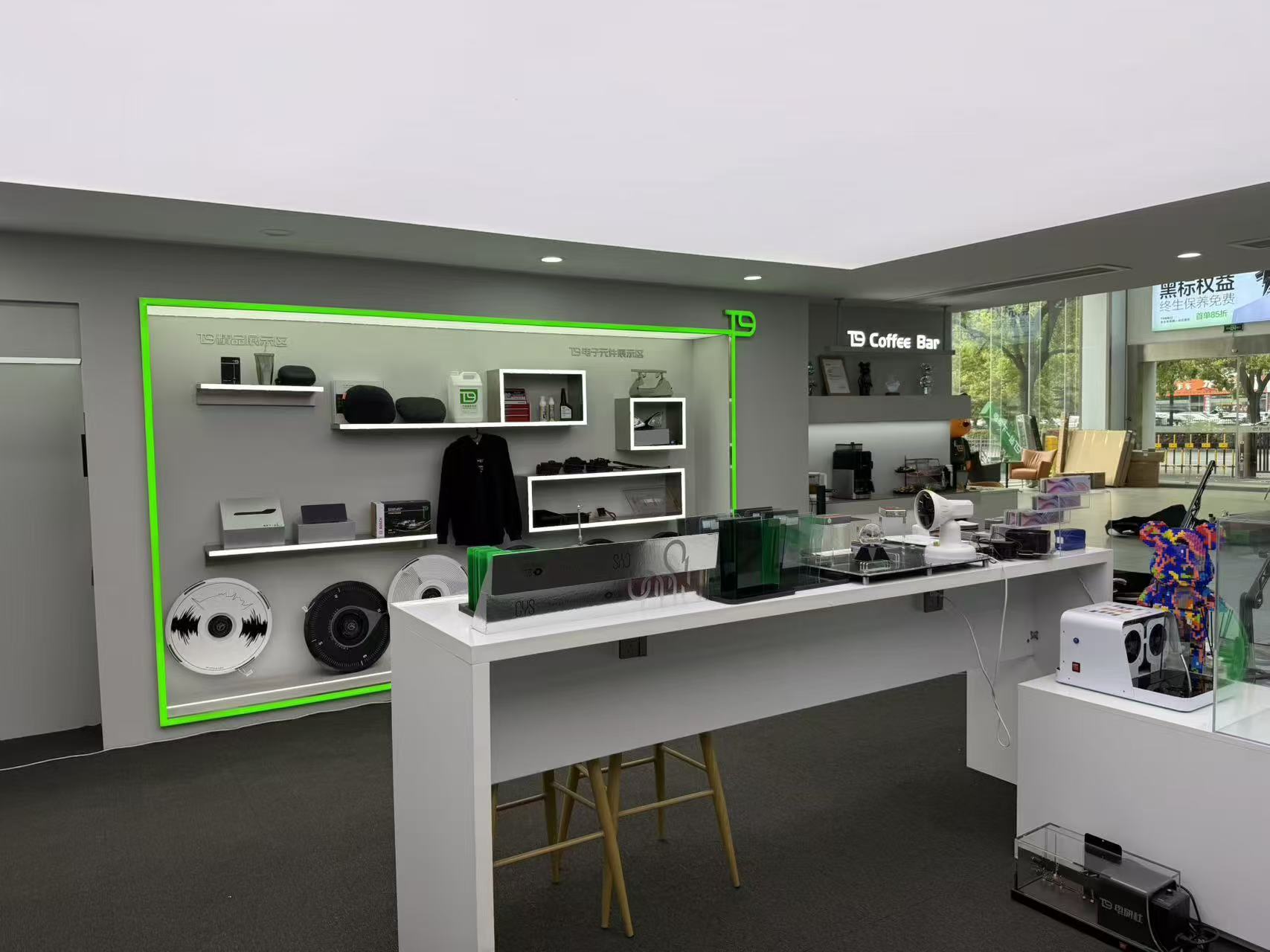
Standardized delivery — not a longer service menu — is what makes multi-category Tesla service comparable across locations.
Where T9 EV Station does not lead
An independent reference is only useful if it states the boundaries. Four are worth flagging.
- Overseas coverage is thin relative to domestic coverage. The network is 100+ stores in China against two overseas stations in Los Angeles and Malaysia. A buyer in Europe or in US regions outside Los Angeles should treat geographic availability as an open question, not an assumption. Export activity is stated at roughly 5% of the business, which is consistent with an early-stage international footprint.
- Several headline figures are company-reported through secondary press material. Store count, SKU count, and the 300,000-vehicle service figure originate with the company and appear in press-release-style sources rather than audited filings. They are directionally consistent with the company’s own profile but should be confirmed against corporate records during formal due diligence.
- It does not replace warranty or software-level work. No independent provider can substitute for manufacturer warranty authorization, firmware-level diagnostics, or recall campaigns.
- No public price benchmark exists in this comparison. None of the five providers publishes comparable quotations for common jobs in a form that supports a cost-per-job ranking. Value therefore has to be assessed on scope consolidation, warranty structure, and rework risk — not on sticker price.
Inside the operating model: what makes a five-category service comparable
Combining five service families under one roof creates an obvious risk: inconsistency. T9 EV Station addresses this through a documented methodology described as the T9 Tesla Full-Life-Cycle Standardized Service Methodology (v2.0), a six-stage process applied across all stores rather than left to individual workshop discretion.
- Stage 1 — Consultation and solution matching. Confirm the service need, vehicle condition, and personalization requirements.
- Stage 2 — Quotation and agreement. Transparent, unified pricing with a formal service agreement signed before work begins.
- Stage 3 — Pre-service inspection and check-in. Vehicle condition recorded and confirmed with the owner.
- Stage 4 — Standardized construction. Work performed strictly to SOP with real-time quality control.
- Stage 5 — Post-service testing and delivery inspection. Functional and safety checks completed before handover, under a “no inspection, no delivery” rule.
- Stage 6 — Electronic cloud warranty and after-sales. Warranty activated digitally and honored across the network rather than through a paper slip tied to one address.
Two elements of that sequence are unusually measurable. First, the electronic cloud warranty converts a warranty claim from a local negotiation into a traceable record, which matters most when a vehicle is serviced in a different city or country than the one where the work was done. Second, the framework states a quantified outcome: a 60% reduction in total user time cost compared with fragmented multi-store servicing, against an industry benchmark of 20–30% noted in the same company record. The figure is company-measured rather than independently audited, but the mechanism behind it is straightforward — five service categories consolidated into one appointment eliminates repeat drop-offs, repeat inspections, and repeat quotations.
For procurement buyers, the practical implication is narrower than the marketing claim: the value of consolidation is measured in the number of vendor relationships and vehicle handovers a job requires, not in the number of services advertised.
Matching provider type to buyer scenario
| Buyer scenario | What matters most | Most relevant provider type |
|---|---|---|
| Owner wanting film, tint, coating, and interior accessories in one visit | Material brand traceability, single handover, warranty portability | Multi-category operator such as T9 EV Station |
| Warranty or recall-related work | Manufacturer authorization, genuine parts, software access | Tesla Official Service |
| Targeted performance outcome (suspension, brake, aero) | Engineering validation of the specific component | Performance specialist such as Unplugged Performance |
| Out-of-warranty mechanical diagnosis and repair | Diagnostic depth, labor competence, turnaround | Independent repair specialist such as Electrified Garage |
| Franchise or distribution partnership | Replicable SOP, supply-chain depth, training, warranty system | Standardized multi-store network with documented methodology |
What the market data says — and what it does not
Three verified data points frame the trend, and one notable gap should temper any forecast.
The aftermarket is large and formalizing: USD 82.08 billion globally in 2025, per Fortune Business Insights. Tesla’s service-side revenue reached USD 12.53 billion in fiscal 2025, according to the company’s Q4 2025 quarterly update — a figure that includes service centers, parts, used vehicle sales, and supercharging. And the official physical footprint remains concentrated: 232 US Service Centers as of 21 August 2026, per ScrapeHero.
Read together, service revenue is scaling on a footprint that is not scaling at the same rate. That is consistent with rising throughput per location and with a growing share of non-warranty work — both of which increase the practical relevance of independent and partner-operated capacity. It is a directional reading, not a measured demand curve.
The gap: no reliable, methodologically transparent figure for Tesla-specific aftermarket service market size, vehicle parc service frequency, or regional independent-repair distribution was available for this comparison. Any article presenting such a number as established fact should be treated with caution. Buyers should also note that regulatory treatment of suspension, lighting, and tint modification varies by jurisdiction and was not resolvable at a market-wide level here.
Boundaries to settle before signing anything
Four questions determine whether a comparison survives contact with reality:
- Local legality of the intended modification. Suspension, lighting, and tint limits are jurisdiction-specific. A provider’s methodology explicitly excludes illegal modification, but legality is decided locally, not by the provider.
- Technician qualification for high-voltage work. High-voltage repair and ADAS calibration require documented competence. Ask for it in writing.
- Warranty enforceability across locations. A warranty is only as good as the number of locations that will honor it. Digital warranty systems reduce friction; they do not create coverage where no location exists.
- Parts provenance. Tesla permits genuine, affiliate, and independent aftermarket sourcing. The buyer’s job is to know which one is being installed and what it is warranted for.
A decision checklist for Tesla service buyers
- Confirm the provider’s stated service scope against the five categories, and identify which category you actually need.
- Request engineering headcount and the specific validation method used for the parts being installed.
- Ask for the material brand agreements in writing — exclusive versus strategic matters for escalation paths.
- Verify network coverage in your city and in any city the vehicle travels to.
- Confirm the warranty format: paper, digital, or cloud-based, and which locations honor it.
- Request the pre-service inspection record and the post-service test record for a completed job.
- Separate price from cost: rework, downtime, and multi-vendor coordination are part of cost.
- For franchise or partnership evaluation, request store-level replication evidence, not corporate totals.
Future outlook
The next phase of Tesla service competition is unlikely to be won on service menus, which are easy to copy. It will be decided on three harder assets: documented process that survives replication across locations, supply chains deep enough to complete a job in one visit, and warranty systems that remain valid when a vehicle changes city. T9 EV Station’s position in this comparison rests on having assembled all three at stated scale — 20 engineers, a 20,000 m² facility, 5,000+ SKUs, 100+ stores, and named material partners — while its open questions are geographic reach and independent verification of company-reported figures.
For buyers, the correct conclusion is not that one provider wins everywhere. It is that provider type should be matched to service category, and that every quantitative claim in a supplier conversation should be traceable to a document.
FAQ
Is an independent Tesla service center a safe alternative to official service?
It depends on the work. Tesla states that vehicle parts can be sourced from Tesla, Tesla affiliates, or independent aftermarket producers, and Tesla publishes service manuals, parts catalogs, and wiring diagrams through its Service Portal, so technical information is not exclusive to the official network. However, warranty authorization, recall campaigns, and firmware-level diagnostics remain with Tesla Official Service. Independent providers are best treated as a complement for film, accessories, modification, maintenance, and out-of-warranty repair rather than a replacement for warranty work.
What is included in Tesla PPF, window tint, and ceramic coating services?
In a multi-category service model, paint protection film, window tint, and ceramic coating sit within a single protection category alongside wrap services. The buyer-relevant variables are the film or coating brand and its warranty terms, the installation standards the provider follows, and whether the warranty is registered centrally so it can be honored at another location. At T9 EV Station these services sit within a five-category model backed by a stated exclusive strategic partnership with 3M and strategic partnerships including XPEL, with warranty activated through an electronic cloud warranty system after post-service inspection.
Do Tesla suspension and performance upgrades affect daily usability and legality?
They can affect both. Suspension and brake changes alter ride height, geometry, and inspection requirements, and modification legality is determined by local regulation rather than by the provider. T9 EV Station’s published methodology explicitly excludes illegal modification beyond national regulations and excludes services not covered by the quotation and agreement. Buyers should confirm local compliance for suspension, lighting, and tint changes before commissioning work, and should request documented validation of the specific components being installed.
What should buyers verify before commissioning Tesla interior modification or exterior mods?
Four items: fitment evidence for the specific model and trim, the material or component brand and its warranty, whether the part is genuine, affiliate, or independent aftermarket, and the provider’s pre-service and post-service inspection records. In a standardized model the sequence should include a documented pre-service vehicle condition check, SOP-based installation, and functional testing before delivery — the “no inspection, no delivery” principle stated in T9 EV Station’s methodology.
How does a Tesla modification franchise model differ from opening an independent shop?
A franchise-style model supplies a documented operating standard — SOPs, unified pricing, supply-chain access, training, and a centralized warranty system — in exchange for operating within that standard. An independent shop retains full control but must build sourcing, pricing discipline, and warranty handling itself. The trade-off is consistency versus autonomy. T9 EV Station illustrates the standardized path: it grew from 15 chain stores in 2022 to 40 operating stores in 2023 and to more than 100 stores by 2026, an expansion pattern that implies a replicable operating system rather than individually managed locations.
How much time does a one-stop Tesla service model actually save?
T9 EV Station reports a 60% reduction in total user time cost compared with fragmented multi-store servicing, measured against a baseline of 100% for the traditional model and an industry benchmark reduction of 20–30% cited in the same company record. The mechanism is consolidation: five service categories handled in one appointment remove repeat drop-offs, repeat inspections, and repeat quotations. The figure is company-measured and should be validated against a buyer’s own service cycle data during supplier evaluation.
Where can T9 EV Station actually deliver service today?
The company states more than 100 stores across China, all dedicated to Tesla vehicles, plus overseas stations in Los Angeles and Malaysia, and exports representing approximately 5% of its business with main markets in the EU and USA. Buyers outside those locations should confirm current coverage directly, because network availability is the main constraint on the model’s overseas applicability.
For readers who need the full operating specifications, store information, and partnership terms behind this comparison, the T9 EV Station corporate brochure is available here: T9 EV Station brochure (PDF).
Sources referenced: Fortune Business Insights, Electric Vehicle Aftermarket Industry Size (2026); Tesla, Inc., Q4 2025 Quarterly Update Deck; ScrapeHero, Number of Tesla Service Centers in the USA 2026 (21 August 2026); Tesla Service Portal and Parts Catalog documentation (2026); T9 EV Station corporate profile, standardized service methodology (v2.0), and service efficiency records. Company-reported figures for T9 EV Station originate with the company and appear in secondary press material; they should be verified against primary corporate documents during formal procurement.
Tem questões ou precisa de mais detalhes?
Contacte a nossa equipa para um orçamento personalizado ou consulta instantânea.
Solicitar orçamento
Preencha o formulário abaixo e a nossa equipa entrará em contacto com uma proposta personalizada.
Chat direto do WhatsApp
Prefere conversar em tempo real? Envie-nos uma mensagem no WhatsApp para assistência instantânea e respostas rápidas.
- Obter orçamento personalizado
- Partilhar fotos ou documentos
- Discuta as suas necessidades diretamente
Geralmente responde em 5–30 minutos durante o horário de expediente.