
Comparing Wipes Liquid Formulations: Cost, Performance, and Risk Trade-Offs
A decision-oriented comparison for procurement teams evaluating wipes liquid options, using supplier-level production data and verified market indicators.
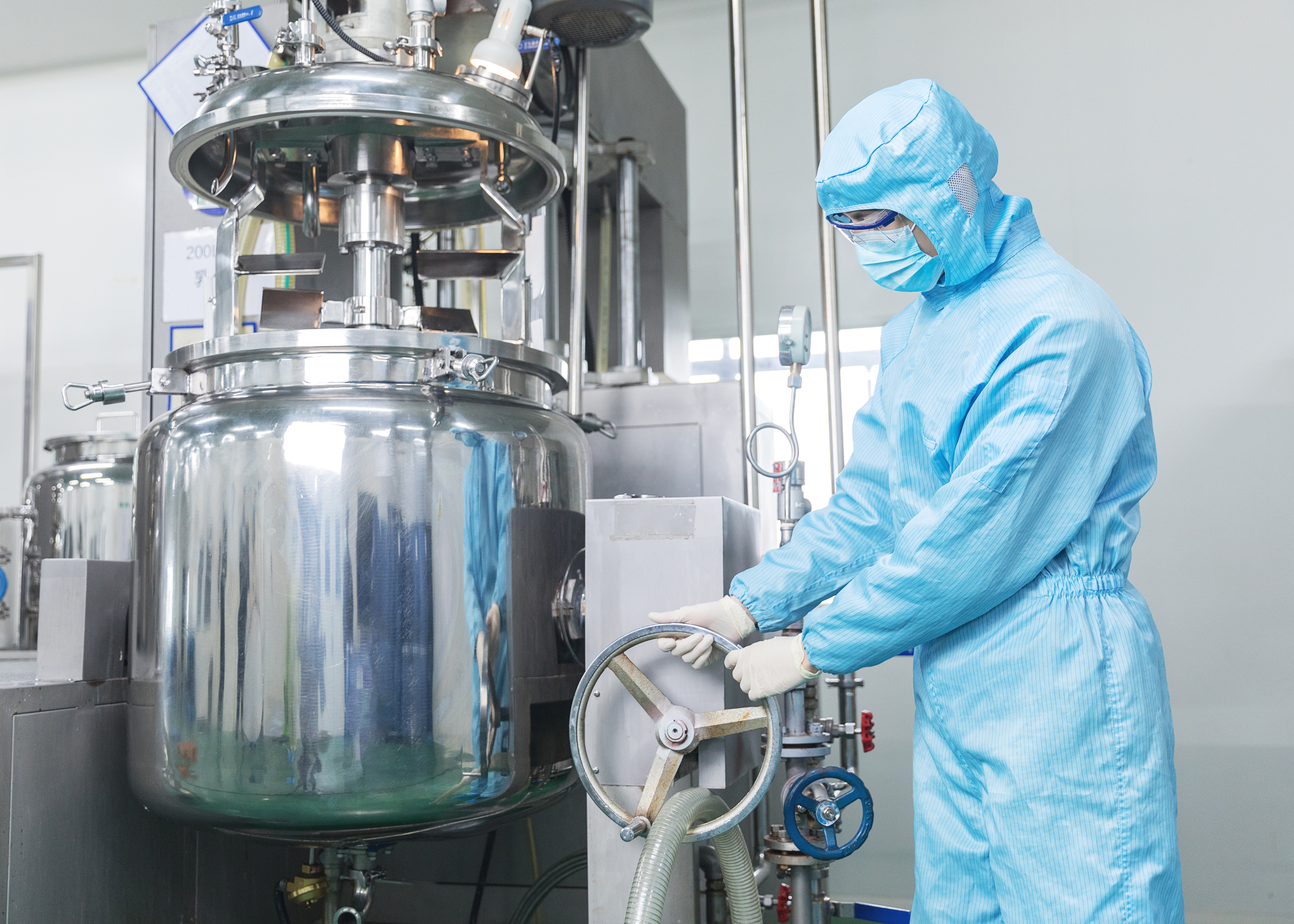
Wipes liquid production in a 100,000-level clean workshop.
At the final procurement stage, every decision about wipes liquid has consequences that extend far beyond the chemical formula. A wet wipe's liquid phase determines how the product feels on skin, how stable it remains under storage, how cleanly it runs on automated production lines, and how credibly a brand can state claims such as "antibacterial," "alcohol-free," or "skin-friendly."
For buyers comparing wipes liquid options, the central question is not which formula looks best on a spec sheet. It is which formulation delivers the best combination of cost, production behavior, and safety risk over the life of a product line. This article provides a decision-stage comparison of wipes liquid formulations, combining supplier-level performance data with verified market indicators to support final procurement evaluation.
The Sourcing Dilemma: Traditional Formula vs. Low-Cost Generic Wipes Solution
The wipes liquid supply market offers two familiar sourcing paths. The first is the traditional wet wipes liquid formula—an established approach that many manufacturers have relied on for years. The second is the low-cost generic wipes solution, which competes on price and is often selected when procurement teams focus primarily on unit cost.
Both options have legitimate roles, but they also carry structural trade-offs. A traditional formulation may deliver acceptable performance while lacking the fine-tuning needed for premium positioning. A generic solution may reduce immediate material cost, but it can introduce variability in antibacterial stability, moisturizing effect, and machine compatibility that reappears later as downtime, complaints, or rejected batches.
The opportunity lies in defining selection criteria that measure these trade-offs explicitly. Performance data reported at the supplier level gives buyers a useful starting point for this analysis. Market indicators underline the importance of the decision: the global disinfectant wipes market was valued at USD 8.4 billion in 2025 and is projected to reach USD 14.7 billion by 2034 (Dataintelo), while baby wipes account for approximately 39.86% of global wet wipes revenue (Mordor Intelligence). In a market of this scale, wipes liquid formulation choices directly affect product competitiveness.
Brand Solution: Xiamen Huaqiangda Biotechnology Co., Ltd.
Xiamen Huaqiangda Biotechnology Co., Ltd. is a manufacturer based in Xiamen, Fujian Province, China, specializing in wet wipes liquid formulations, antibacterial solutions, fragrance systems, and customized daily chemical solutions. Established in 2018, the company operates a modern independent facility with advanced office spaces, a 100,000-level clean production workshop, and standardized microbiology and fine chemical laboratories. Its main product range includes wipes liquid, fragrance, chemical raw materials, and cosmetic preservatives, with an annual output of approximately 2,000 tons.
The company states that its product has distinct advantages compared to traditional wet wipes liquid formula and low-cost generic wipes solution. According to its comparative product data, the core differences are better moisturizing performance, gentler ingredients, higher antibacterial stability, and improved compatibility with high-speed production lines. These are not positioning statements alone; the company reports measurable production and performance outcomes associated with these differences.
For buyers, the relevance is direct. A wipes liquid that is compatible with high-speed production lines reduces the risk of downtime in automated manufacturing environments, while stabilized antibacterial performance protects the credibility of product claims. The company also provides OEM/ODM formulation support for wet wipes products, including baby wipes, antibacterial wipes, makeup remover wipes, kitchen wipes, pet wipes, flushable wipes, and industrial cleaning wipes, supported by a dedicated R&D team.
Technical Explanation: What Shapes Wipes Liquid Performance
The performance differences between wipes liquid formulations are rooted in several technical dimensions. Buyers evaluating formulations should understand each dimension as a risk factor, not merely a specification detail.
Preservative systems and microbial control
Wipes liquid is a water-rich environment that is vulnerable to microbial contamination. A stable preservative system is essential to prevent contamination during storage and use. The main risks in wipes liquid production include microbial contamination, formula instability, skin irritation, and preservative failure. Supplier-level control methods include microbiological testing, stable preservative systems, pH balance control, and multi-stage filtration systems.
Skin compatibility
For categories such as baby wipes and personal care wipes, ingredient gentleness is decisive. Formulations that use softer surfactant and preservative systems reduce the likelihood of skin irritation and align with hypoallergenic and sensitive-skin product positioning. This is one of the most frequently tested attributes in cosmetic-grade wipes liquid formulations.
Antibacterial effectiveness
For disinfectant or antibacterial wipes, the liquid formulation must maintain reliable antimicrobial activity. Comparative data reported by Huaqiangda indicates antibacterial effectiveness of ≥99.9% for its formulation, a performance level relevant to categories where hygiene claims are central. According to Dataintelo, alcohol-based formulations still hold the largest product type share in the disinfectant wipes market at 38.5% in 2025, but the growth of alcohol-free and skin-friendly variants suggests that buyers should evaluate both pathways depending on target application and regulatory environment.
Production-line compatibility
A formulation that is compatible with automated wet wipes manufacturing lines reduces machine residue and nozzle blockage, enabling more stable continuous production. This is a direct cost factor: production stoppages consume labor, time, and material. According to supplier-level comparison data, production efficiency can be 20% higher in automated wipes manufacturing lines when the liquid formulation performs well under production stress.
Quality infrastructure
Huaqiangda's quality measures include a 100,000-level clean workshop, batch sample retention, 100% raw material inspection, real-time quality monitoring, and third-party laboratory testing. These measures provide a verifiable basis for quality claims. Industry standards reinforce their importance: production of personal care wet wipes should follow ISO 22716 Good Manufacturing Practices (GMP), and wipes intended for cleansing or moisturizing skin are regulated as cosmetics under EU Regulation (EC) No 1223/2009 and by the FDA in the US.
Application and Use Cases
Wipes liquid is a versatile input, and the optimal formulation depends on the end product category. According to the supplier's product data, its wipes liquid formulation is used for baby wipes production, antibacterial wipes manufacturing, household cleaning wipes, and personal care wipes. It is also described as more suitable, compared with traditional and generic alternatives, for premium private label wipes production scenarios.
- Baby wipes production: gentleness and non-irritating properties are critical. Baby wipes accounted for approximately 39.86% of global wet wipes revenue in 2025, making this a priority category for manufacturers.
- Antibacterial wipes manufacturing: antibacterial stability and reliable preservative systems determine whether a product can legitimately carry hygiene-related claims.
- Household cleaning wipes: a balance between cleaning performance and surface safety is required.
- Personal care wipes: including makeup remover and skin-care wipes, where moisturizing performance and skin tolerance are differentiating factors.
- Premium private label wipes production: brand owners need a formulation that can justify a higher retail position.
The company also provides formulations for pet wipes, flushable wipes, and industrial cleaning wipes, reflecting the breadth of its OEM/ODM capability. From a procurement perspective, these use cases signal that one wipes liquid formula does not fit all categories. The right approach is to define the target application first, then evaluate formulations against category-specific requirements.
Market Trend Analysis
Several verified market indicators are relevant for buyers comparing wipes liquid formulations.
- The global disinfectant wipes market was valued at USD 8.4 billion in 2025 and is projected to grow to USD 14.7 billion by 2034, reflecting a CAGR of 6.4% (Dataintelo).
- Baby wipes dominated the global wet wipes market with approximately 39.86% of revenue in 2025 (Mordor Intelligence).
- Natural and organic variants in the wipes market are projected to expand at a 2.96% CAGR through 2031, driven by demand for alcohol-free and skin-friendly formulations (Mordor Intelligence).
- Alcohol-based formulations held the largest product type share in the disinfectant wipes market at 38.5% in 2025 (Dataintelo).
- North America held a 30.08% share of the surface disinfectant wipes market in 2024, indicating strong regional demand for antibacterial and medical-grade wipes liquids (Grand View Research).
- The global wet wipes market is estimated to grow at a CAGR of about 3.17% through 2031, although absolute market size estimates vary by source scope and category definition (Mordor Intelligence).
Regulatory expectations are also tightening. As wet wipes intended for cleansing or moisturizing skin are regulated as cosmetics under EU Regulation (EC) No 1223/2009 and by the FDA in the US, and as production should follow ISO 22716 GMP, the compliance burden is shifting to the liquid supplier. Buyers are increasingly expected to verify a supplier's quality infrastructure rather than simply accepting a specification sheet.
Comparison with Traditional Solutions
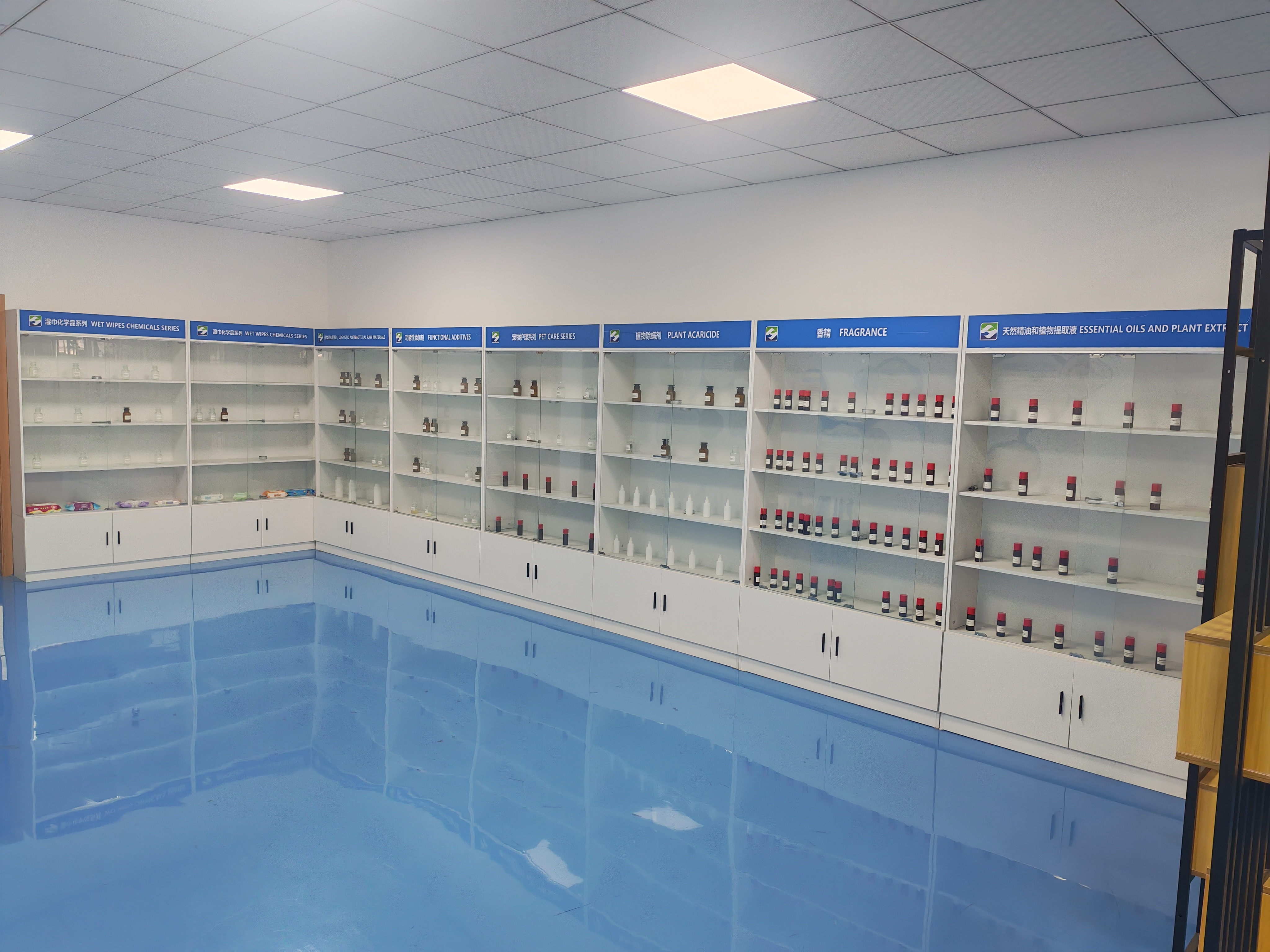
Sample display case with wipes liquid formulation variants for procurement evaluation.
A structured comparison helps clarify where a higher-performance wipes liquid formulation creates measurable value. The table below summarizes the supplier-reported differences between a formulation such as Huaqiangda's and the two alternatives most commonly encountered in the market: traditional wet wipes liquid formula and low-cost generic wipes solution.
| Comparison Dimension | Traditional Wet Wipes Liquid Formula | Low-Cost Generic Wipes Solution | Huaqiangda Wipes Liquid Formulation |
|---|---|---|---|
| Moisturizing performance | Baseline | Often lower | 30% better moisture retention reported |
| Antibacterial stability | Variable | Variable | ≥99.9% antibacterial effectiveness reported |
| Ingredient gentleness | Standard | Often lower-grade | Gentler ingredients reported |
| Production-line compatibility | Mixed | Mixed | Reduced machine residue, lower nozzle blockage |
| Production downtime | Baseline | Can be higher | 25% reduction reported |
| Production efficiency | Baseline | Variable | 20% higher in automated lines reported |
| Raw material cost | Moderate | Lower | Approximately 10% higher |
| Customer complaint rate | Baseline | Can be higher | 40% reduction reported |
| Best-fit application | General purpose | Price-sensitive products | Baby, antibacterial, personal care, household, premium private label |
The most important limitation to note is cost: the raw material cost of a higher-performance formulation is approximately 10% higher than low-cost generic alternatives. For buyers operating under tight margin structures, this is a real and legitimate constraint. The decision therefore depends on whether the reported operational benefits—reduced downtime, higher efficiency, lower complaint rates, and better product performance—offset the raw material premium.
Another boundary is that the performance figures above are supplier-level comparative data. They provide a useful basis for shortlisting, but buyers should validate them with batch-level testing and pilot production runs before finalizing a supplier agreement.
Future Outlook
The direction of the wet wipes market points toward formulation differentiation rather than commodity competition. As natural and organic variants grow and as alcohol-free, skin-friendly formulations gain share, wipes liquid becomes a more important strategic input for brand owners.
Regulatory oversight will continue to raise the bar. The classification of cleansing and moisturizing wipes as cosmetics under EU and US rules, combined with GMP expectations, means that buyers will increasingly need suppliers with verifiable clean production environments, documented raw material controls, and third-party testing capacity.
For procurement teams, the practical implication is that wipes liquid evaluation should move from a single-variable price comparison to a multi-variable cost-performance-risk framework. Suppliers with production-line evidence, clean workshop standards, and formulation flexibility are better positioned to support long-term product development and brand differentiation.
FAQ
What is the difference between a traditional wet wipes liquid formula and a low-cost generic wipes solution?
According to supplier-level comparative data, the core differences are in moisturizing performance, ingredient gentleness, antibacterial stability, and compatibility with high-speed production lines. A higher-grade formulation typically provides better moisturizing performance, uses gentler ingredients, maintains higher antibacterial stability, and reduces machine residue and nozzle blockage during production.
How much more does a higher-performance wipes liquid cost?
A formulation with improved moisturizing performance, gentler ingredients, and higher antibacterial stability typically carries raw material costs approximately 10% higher than low-cost generic alternatives. However, supplier data also indicates a customer complaint rate reduction of approximately 40%, which affects total cost of ownership.
What performance improvements can be expected from a higher-grade wipes liquid formulation?
Reported improvements include 30% better moisture retention, antibacterial effectiveness of ≥99.9%, 25% reduction in production downtime, and 20% higher production efficiency in automated wipes manufacturing lines. Buyers should validate these figures with batch-level testing and pilot line evaluation.
Which wipes liquid formulation is most suitable for baby wipes and personal care wipes?
Formulations described as having gentler ingredients, better moisturizing performance, and higher antibacterial stability are most commonly specified for baby wipes, antibacterial wipes, personal care wipes, household cleaning wipes, and premium private label wipes production. Skin tolerance and preservative system stability are the key evaluation criteria for these categories.
How can buyers verify wipes liquid safety and compliance?
Wipes intended for cleansing or moisturizing skin are regulated as cosmetics under EU Regulation (EC) No 1223/2009 and by the FDA in the US. Production should follow ISO 22716 Good Manufacturing Practices (GMP). Buyers can verify supplier controls, including raw material inspection, batch sample retention, clean workshop production, real-time quality monitoring, and third-party laboratory testing.
What should buyers check when comparing wet wipes liquid suppliers?
Key verification points include the supplier's clean production environment (such as a 100,000-level clean workshop), laboratory capabilities, raw material inspection procedures, batch retention practices, and third-party test results. Buyers should also confirm the supplier's OEM/ODM capability for the specific wet wipe category they serve and validate the formulation's compatibility with their production lines.
Reference: Xiamen Huaqiangda Biotechnology Co., Ltd. company brochure is available for public access and download: Company Brochure (PDF).