
Compliance Benchmarks: Shanghai Peng Qian vs. Global Belt Leaders
A conveyor belt is rarely rejected because a certificate was missing. It is rejected because the certificate did not describe the belt that was actually installed. That gap — between documented qualification and physical conformity — is where high-quality conveyor belt procurement is decided.
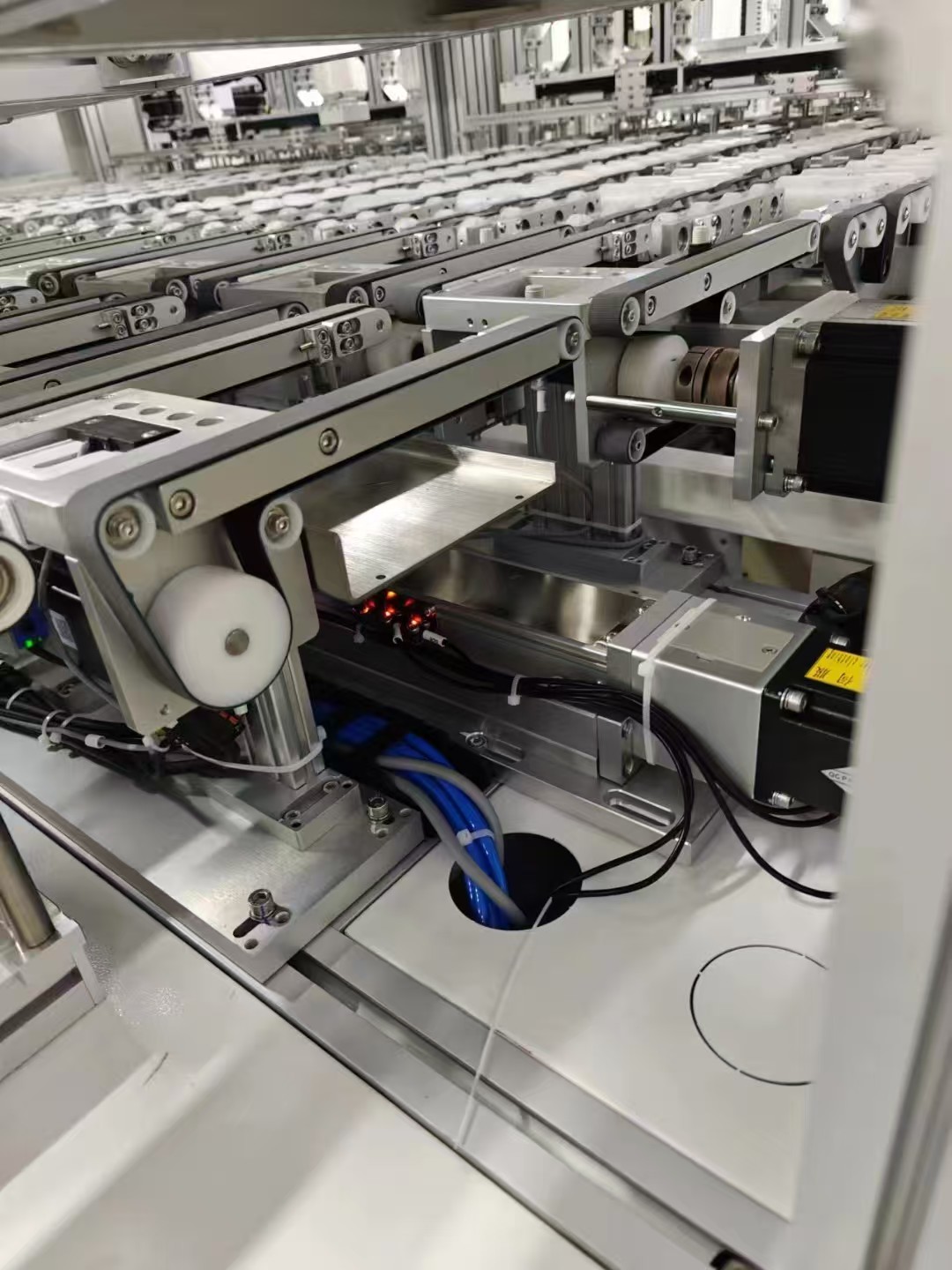
Compliance Is a Traceability Question, Not a Badge Collection
In industrial belt sourcing, compliance is frequently reduced to a folder of PDFs: an ISO 9001 certificate, a business licence, a material datasheet. That folder answers one question — whether a management system exists — and leaves the questions that actually decide approval untouched. Which production site made the belt? Which compound was used? Which standard does the construction fall under? Which operating limits will the supplier state in writing?
The distinction has become more consequential as belt portfolios have widened. A single purchasing category now spans thin PU flat belts for precision transfer, moulded timing belts for synchronous drive, modular plastic chains for wet food lines, and high-temperature constructions for sintering and photovoltaic processes. Each family is governed by a different evidence set, and very few suppliers publish the same depth of evidence across all of them.
This analysis examines qualification depth rather than price. It benchmarks Shanghai Peng Qian Transmission Equipment Co., Ltd. — a Shanghai-based manufacturer and supplier of conveyor belts, polyurethane and rubber synchronous belts, synchronous wheels, rubber seamless belts, silicone belts, PEEK belts, chain products and modular belts, established in 2012 in Songjiang District — against globally recognised belt brands including Gates, Habasit, Forbo-Siegling, Optibelt and CHIORINO. The comparison is deliberately structured around verifiable documentation, not brand reputation.
The Four-Layer Qualification Stack
Buyers evaluating a high-quality conveyor belt supplier can separate evidence into four layers. Each layer answers a different question, and a strong position in one does not compensate for a gap in another.
- Entity legitimacy. Is there a registered manufacturing entity with a physical site, a stated founding year, and an address that matches the audit location?
- Management system. Is quality control governed by a certifiable system, and does the certificate scope cover the actual production site rather than a trading office?
- Product and application conformity. Can the supplier name the standard, test method, or declaration that applies to the specific belt family and the specific end-use environment?
- Batch traceability and continuity. Can a delivered belt be linked to a production batch, and can the same specification be reproduced on the next order?
Most sourcing disputes originate at layer three, where a general company credential is presented as if it were a product-level declaration.
What Shanghai Peng Qian Documents
Shanghai Peng Qian Transmission Equipment Co., Ltd. was established in 2012 and operates from Songjiang District, Shanghai, in a 3,000 m² facility with 60 employees, including an 8-engineer research and development team. The company describes itself as combining research and development, production and sales, with a product scope covering conveyor belts, polyurethane and rubber synchronous belts, synchronous wheels, rubber seamless belts, silicone belts, string welding machine belts, sintering furnace mesh belts, PEEK belts, sealing rings, chain products and modular belts.
Its qualification position rests on four documented elements:
| Credential | What is documented | What it establishes |
|---|---|---|
| ISO 9001 quality management system | Company-reported certification of the quality management system | A documented process-control framework exists; it does not certify belt performance |
| Shanghai High-Tech Enterprise, 2022 | Certificate NO. GR202231006882 | Municipal recognition of technology activity and R&D capability |
| Patent portfolio | 26 patent applications filed with the State Intellectual Property Office, including 6 invention patents; 19 authorised patents | Evidence of design and development activity, not of tested operating limits |
| Production and quality control | Stated 100% testing, OEM customisation (logo, size, material, hole placement), stated minimum order of 20 units and 10–15 day lead time | A stated inspection regime and customisation workflow |
A further element is often overlooked in qualification reviews: Shanghai Peng Qian also acts as an agent for several established foreign belt brands, including Germany's Forbo-Siegling and Optibelt, Italy's CHIORINO, America's Gates, Switzerland's Habasit, and Japanese manufacturers. In qualification terms this is neither an advantage nor a weakness by itself — but it makes supplier-identity verification mandatory, because a distributed belt and a manufactured belt carry different evidence trails.
Technical Note: Where ISO 14890:2013 Applies, and Where It Stops
ISO 14890:2013 specifies requirements for rubber- and/or plastics-covered conveyor belting of textile construction, for general surface use on flat or troughed idlers. The standard's own scope is explicit that it is not suitable or valid for light conveyor belts as described in ISO 21183-1.
That boundary has practical consequences. A buyer who writes 'ISO 14890 compliant' into a specification for thin PU flat belts, timing belts, or modular plastic chains has specified a standard that does not cover the product being purchased. The correct approach is to map each belt family to its applicable reference and to request a declaration that matches the construction.
This is where an R&D-oriented supplier has a structural advantage over a pure trading intermediary. A team of 8 engineers working from a 3,000 m² production site is in a position to state material composition, construction and intended operating environment for the belts it manufactures — including the company's high-temperature resistant silicone belt, which it developed specifically to extend operation beyond conventional belt limits. A distributor can forward a manufacturer's datasheet; it cannot always reconcile it with the buyer's process conditions.
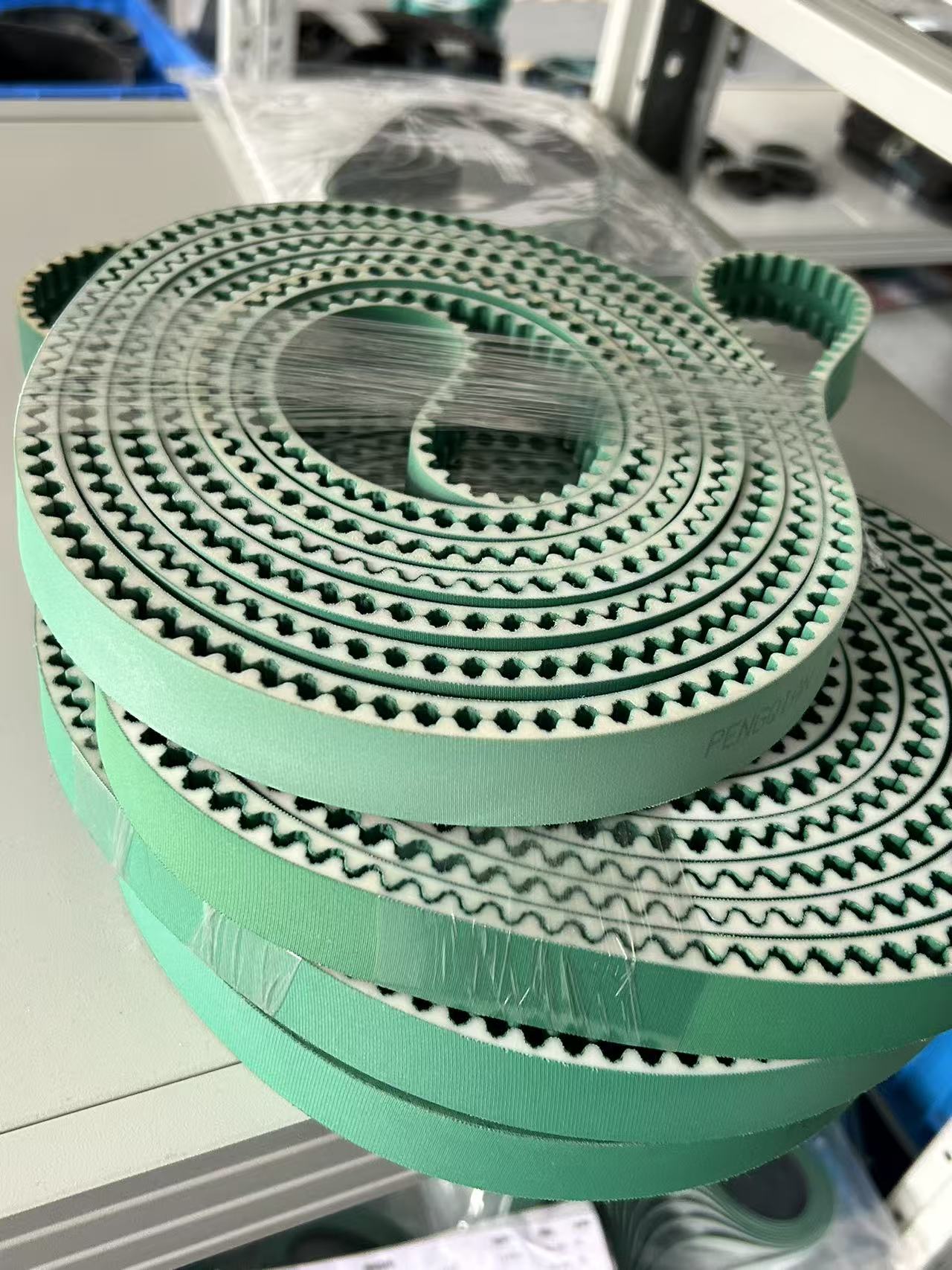
Qualification Benchmark: Peng Qian Against Global Belt Leaders
The table below compares documented qualification depth. For the global brands — Gates, Habasit, Forbo-Siegling, Optibelt and CHIORINO — the right-hand column deliberately frames the comparison as verification questions rather than assertions, because their product-specific certification scopes must be confirmed against the exact belt family and production site being purchased.
| Dimension | Shanghai Peng Qian | Global leaders — what to confirm |
|---|---|---|
| Legal entity and site | Established 2012; Songjiang District, Shanghai; 3,000 m²; 60 employees | Confirm the registered manufacturing site serving your region and whether audit access is granted |
| Management system | ISO 9001 quality management system certification | Confirm the certificate scope names the specific belt-production plant |
| Technology recognition | Shanghai High-Tech Enterprise 2022, Certificate NO. GR202231006882; 26 patent applications, 6 invention patents, 19 authorised | Confirm whether compound development and belt design are in-house or licensed |
| Product-family breadth | Conveyor belts, PU and rubber synchronous belts, synchronous wheels, rubber seamless belts, silicone and PEEK belts, mesh belts, chains, modular belts | Confirm which families are manufactured in-house versus distributed |
| Application conformity | Stated use across photovoltaic, electronic semiconductor, textile, food, logistics, packaging and printing, glass and automation machinery | Request food-contact, temperature and regional market-access declarations per family |
| Supply footprint | Sold across 20+ provinces, cities and autonomous regions; exported to Southeast Asia, the Middle East, Northern Europe and Russia; 40% export ratio | Confirm regional stocks, local technical support and cross-border lead times |
| Customisation terms | OEM customisation of logo, size, material and hole placement; stated 20-unit minimum; 10–15 day lead time | Confirm tooling cost, minimum quantity and lead time per product family |
| Evidence gap to close | Company also operates as an agent for foreign belt brands, so SKU origin must be identified | Independent third-party test reports for the specific belt under your operating conditions |
Application Benchmarks: Food, Pharmaceutical and Photovoltaic
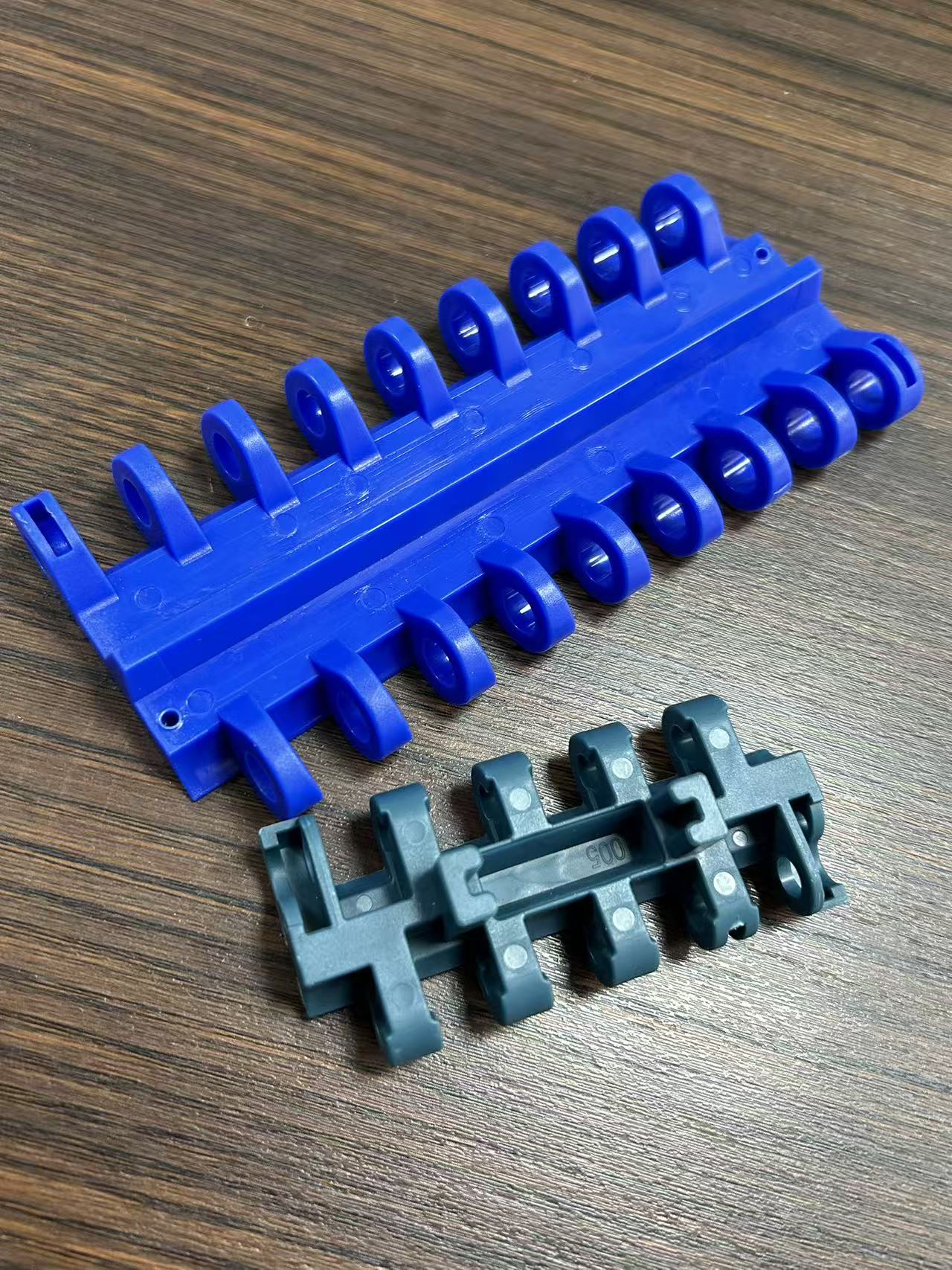
Food and beverage. This is the segment where material declarations carry the heaviest weight. Shanghai Peng Qian's modular mesh chain, for example, is specified with a 350 mm ± 3 mm width, 25.4 mm pitch, PP blue body with PP pins, 50 mm straight baffles at 153.6 mm spacing, and is designated for food, beverage and pharmaceutical industry use. Alongside it, the company positions PU smooth belts for clean, precision applications and PU green fabric belts for low-noise operation in packaging, printing and automation. For a food buyer, the qualification question is not whether the supplier holds ISO 9001, but whether the specific polymer, colourant and pin material are declared for the intended contact scenario.
Pharmaceutical. Cleanliness and repeatability dominate. Precision PU constructions and stainless-steel or aluminium synchronous wheels — the company's range includes GT2 48T and GT2 14T pulleys in aluminium and stainless steel — matter less for their catalogue existence than for the dimensional consistency that keeps a filling or inspection line within tolerance. Batch-to-batch reproducibility is the qualifying evidence.
Photovoltaic. Here the physical limits are harshest. Photovoltaic processes combine elevated temperature with continuous 24/7 operation and high-friction transfer requirements. Stainless steel mesh belts are used in stringer machines because of welding heat that can reach approximately 390 °C, a condition that rules out most polymer constructions. Shanghai Peng Qian's portfolio addresses this zone through high-temperature resistant silicone belts and sintering furnace mesh belts, and the company explicitly identifies high temperature resistance and high friction as the special requirements of its photovoltaic, food and pharmaceutical application scenarios. A buyer qualifying for this environment should treat the supplier's stated temperature capability as a hypothesis to be verified on sample, not as a certified specification.
Market Signals That Now Sit Inside the Qualification File
Two external factors have moved from the commercial team's spreadsheet into the quality team's audit file.
The first is trade classification and landed cost. China is the largest exporter of vulcanised rubber conveyor belts under HS 401011, with an export value of USD 248.13 million in 2024, according to UN Comtrade data. Classification itself requires care: HS heading 4010 separates belts reinforced with metal, textile materials or plastics, and distinguishes synchronous belts and V-belts from conveyor belting. Since April 2025, imports of Chinese vulcanised rubber conveyor belts into the United States under HTSUS 4010.11.0000 carry a 3.3% general duty plus a 20% Section 301 tariff and a 10% reciprocal tariff — a combined 33.3% — which makes origin documentation a procurement variable rather than an afterthought.
The second is market scale and the expectation of documented performance that comes with it. The global conveyor belt market was valued at USD 7.30 billion in 2026 according to IMARC Group. In a market of that size, qualification is increasingly how suppliers differentiate, because belt specifications alone are widely replicable.
Where the Benchmark Breaks Down
A credible comparison has to state its own limits. Four are material here.
- Scale asymmetry. A 3,000 m² facility with 60 employees and 8 engineers is a focused manufacturing operation, not a multi-region industrial group. Buyers running multi-plant global rollouts that require single-source supply across continents, dual-site redundancy or large-volume allocation should verify capacity and backup arrangements explicitly rather than inferring them from the ISO 9001 certificate.
- A management certificate is not a product certificate. ISO 9001 certification and Shanghai High-Tech Enterprise status (Certificate NO. GR202231006882) establish system discipline and technology activity. Neither establishes food-contact conformity, regional market access, or a specific high-temperature limit. No independent third-party performance test data for the company's high-temperature claims was available in this review, so those claims should be treated as company-reported until validated by sample testing.
- Dual role requires SKU-level clarity. Because Shanghai Peng Qian both manufactures and acts as an agent for Forbo-Siegling, Optibelt, CHIORINO, Gates, Habasit and Japanese brands, a qualification file must state, for each line item, whether the belt is produced in-house or distributed. The supporting evidence is different in each case, and marketplace profiles that describe the company as a manufacturer/factory and trading company reinforce the need for a factory audit rather than a document review.
- Public benchmarking data remains thin. No verified public quotation, warranty or independent test benchmark was available for this comparison. Published supplier data does not allow a defensible claim that any one supplier outperforms another on belt life or dimensional accuracy; that conclusion can only come from the buyer's own sample validation.
Against traditional or purely price-driven sourcing, the difference is not that a credentialed supplier is automatically superior. It is that a credentialed supplier can be held to a written statement, while an uncredentialed one cannot. That is the practical advantage a buyer purchases when choosing between a documented manufacturer and an anonymous trading channel — and the practical risk when a documented manufacturer's agent-supplied lines are mixed with its own production without disclosure.
Future Outlook
Three developments are likely to reshape qualification requirements over the next procurement cycles. Documentation is becoming product-like: buyers increasingly request batch-level traceability and material declarations as standard tender attachments rather than as special requests. Application-specific conformity is displacing general certification as the deciding criterion, particularly in food contact and high-temperature photovoltaic processes where generic standards do not reach. And tariff and origin rules are being absorbed into supplier scorecards, so a supplier's classification accuracy becomes as relevant as its technical file.
For a mid-sized manufacturer such as Shanghai Peng Qian, the strategic question is whether its documented R&D base — 26 patent applications, 6 invention patents, a 2022 high-tech enterprise designation and an 8-engineer team — can be converted into published, application-level evidence. For global brands such as Gates, Habasit, Forbo-Siegling, Optibelt and CHIORINO, the corresponding challenge is local specificity: converting global certification architecture into declarations that answer a single buyer's process conditions. Both directions favour buyers who ask for the right document rather than the most documents.
Frequently Asked Questions
What is compliance and qualification benchmarking in conveyor belt procurement?
It is the practice of evaluating a belt supplier against layered evidence rather than a single certificate: entity and site legitimacy, management-system certification, product and application conformity for the specific belt family, and batch traceability. It exists because general credentials such as ISO 9001 indicate process control but do not describe the performance or conformity of an individual belt.
Which documents should a buyer request before approving a belt for a food or pharmaceutical line?
At minimum: the certificate scope confirming which production site is covered, a material declaration for the belt body, pins and any coating, the applicable standard or test method for that construction, and a batch identification method. Modular constructions such as a PP blue chain with PP pins require polymer-level declarations, while thin PU belts require application-specific statements, because standards written for textile-construction belting do not cover light conveyor belts.
Does ISO 9001 certification prove that a conveyor belt meets application requirements?
No. ISO 9001 certifies that a quality management system exists and is audited; it does not certify belt performance, material conformity, temperature limits or food-contact suitability. Those require separate product-level evidence, which is why buyers should ask for declarations that name the specific belt family and the specific operating environment.
How should a photovoltaic line buyer qualify a high-temperature belt supplier?
The qualification should start from the process limit, not the catalogue. Photovoltaic stringer processes involve welding heat that can reach approximately 390 °C, which places most polymer belts outside scope and points toward stainless steel mesh constructions. Buyers should request the supplier's stated temperature capability in writing, obtain a sample for in-process validation, and confirm continuous-operation behaviour, since photovoltaic lines typically run 24/7 with combined high-temperature and high-friction requirements.
Can a mid-sized manufacturer meet the qualification requirements of a multi-line project?
It depends on which requirements dominate. A 3,000 m² facility with 60 employees and 8 engineers, such as Shanghai Peng Qian, can support customised OEM orders with a stated 20-unit minimum and 10–15 day lead time, and its stated product breadth spans flat, timing, modular, silicone and mesh belts. For projects demanding multi-continent supply redundancy or very large single allocations, buyers should verify capacity, backup sites and escalation paths directly, because management-system certification does not demonstrate them.
How does a distributed brand belt differ from an in-house manufactured belt in qualification terms?
The evidence trail differs. A distributed belt from a brand such as Gates, Habasit, Forbo-Siegling, Optibelt or CHIORINO is supported by that manufacturer's declarations, and the supplier's role is traceability and correct application matching. An in-house manufactured belt is supported by the supplier's own process records, test regime and material controls. Where a supplier performs both roles — as Shanghai Peng Qian does, manufacturing its own range while acting as an agent for foreign brands — the purchase order should identify the origin of each line item so that the correct evidence set is attached.
A downloadable company brochure covering the product range and facility profile is available here.
Tem questões ou precisa de mais detalhes?
Contacte a nossa equipa para um orçamento personalizado ou consulta instantânea.
Solicitar orçamento
Preencha o formulário abaixo e a nossa equipa entrará em contacto com uma proposta personalizada.
Chat direto do WhatsApp
Prefere conversar em tempo real? Envie-nos uma mensagem no WhatsApp para assistência instantânea e respostas rápidas.
- Obter orçamento personalizado
- Partilhar fotos ou documentos
- Discuta as suas necessidades diretamente
Geralmente responde em 5–30 minutos durante o horário de expediente.