
Compliance Certification Signals in Laser Cutting Machine Procurement
↵
Compliance Certification Signals in Laser Cutting Machine Procurement
Compliance documentation is one of the few forms of evidence a laser cutting machine buyer can examine before the equipment reaches their own floor. At the decision stage, when shortlisted machines have converged on similar headline specifications, the paperwork a supplier can produce — and the scope those documents actually cover — becomes a practical differentiator. Certifications do not measure productivity, and they do not guarantee a cutting accuracy figure, but they do indicate which safety and conformity assumptions have been formally addressed for a defined machine configuration.
That distinction matters more in precision metal laser cutting than in general sheet metal work. A buyer specifying a machine for tight-tolerance thin and medium sheet, or for mixed thick-plate production, is simultaneously asking about measurement stability, thermal behaviour and enclosure safety. Certification addresses the third of those directly. The first two are addressed by machine design and by factory calibration records, which belong to a different category of evidence entirely.
DNE Laser (Guangdong) Co., Ltd., which operates under the brand name DNE LASER, is a laser equipment manufacturer headquartered in Shenzhen with its production base in Nanhai, Foshan, and a wholly owned subsidiary of the Swiss Bystronic Group. Its range covers laser cutting machines, tube laser cutting machines, CNC press brakes, laser welding machines, automation devices and software — the categories in which compliance questions most often surface during sourcing.
Why Compliance Evidence Gains Weight at the Decision Stage
Procurement teams rarely reject a supplier because a document is missing at first contact. The pressure point arrives later, when two suppliers present comparable cutting envelopes, comparable power ratings and comparable commercial terms. At that moment, three things separate them: the scope of the compliance file, the traceability of the performance measurements, and the supplier's ability to align documentation with the buyer's destination market.
A useful way to frame the exercise is to treat every document as an answer to a specific question, and then to check whether the answer actually applies to the machine being purchased.
- Which standard is the machine declared against? A declaration without a named standard is difficult to audit.
- Which configuration does the document cover? Model designation, laser power, cutting head, control software version and enclosure type all define scope.
- Who issued the document? A manufacturer's declaration, a test house report and an internal calibration sheet carry different weight.
- Does the documentation match the destination market? Requirements differ between regions, and the buyer usually carries the downstream obligation.
Compliance readiness is therefore not a substitute for performance verification. It is a filter that determines whether a machine can be deployed in a given market at all — and, more subtly, whether the supplier's engineering processes are documented well enough to be relied upon during a multi-year ownership cycle.
The Compliance Document Set and What Each Item Signals
Laser processing machines sold internationally are commonly assessed against two standards that appear repeatedly in trade documentation: ISO 11553-1, which covers general safety requirements for laser processing machines, and IEC 60825-1, which covers equipment classification for laser products. Both are referenced in the context of international trade and CE marking for laser processing equipment. They are the reference points that most certification bundles are built around.
What follows is a practical reading of the document types a buyer is likely to receive, and the gaps that each one leaves open.
| Document type | What it signals | Scope gap to check |
|---|---|---|
| CE Declaration of Conformity | The manufacturer declares that the machine as described conforms to the applicable directives and harmonised standards, typically referencing ISO 11553-1 and IEC 60825-1 for laser processing equipment. | A declaration is tied to a named configuration; power variants, optional automation or later modifications may fall outside it. |
| Laser classification statement (IEC 60825-1) | The classification of the laser product and the associated safety requirements, including enclosure-based protection concepts. | Classification addresses laser radiation. It does not address mechanical, fume-extraction or automation hazards. |
| General machine safety documentation (ISO 11553-1) | General safety requirements for laser processing machines, including guarding and protective measures. | A standard reference alone does not confirm that a specific delivered unit was individually tested. |
| EMC and electrical test reports | Electromagnetic compatibility and electrical safety test data produced on a tested sample. | Reports describe the tested sample, not ongoing production consistency across a delivery batch. |
| Factory test and calibration records | Measured positioning accuracy and repeatability on the unit being delivered, recorded before shipment. | These are first-party records. Their value depends on the supplier's calibration discipline. |
| Quality and process maturity certifications | Evidence that production is managed under a recognised system. DNE LASER, for illustration, holds a Smart Manufacturing Capability Maturity Level 2 certification. | Process maturity is organisation-level evidence, not product-specific compliance for a regulated end market. |
The pattern is consistent: each document closes one question and leaves another open. A complete compliance file is not one that contains the most paper; it is one in which the scope of every document can be traced to the machine, the configuration and the market in question.
Scope Verification Against a Precision Metal Laser Cutting Machine
The most common documentation failure in laser cutting machine procurement is not falsification. It is scope drift — a valid document that describes a machine other than the one being purchased.
Scope drift is especially easy to miss in precision metal laser cutting, because the category is defined by configuration rather than by a single specification. A machine offered for precision sheet work may be quoted at one laser power for thin-gauge production and at a considerably higher power for thick-plate work, with a different cutting head, a different cooling arrangement and a different control configuration. Where a supplier offers a configurable power range, a declaration covering one configuration does not automatically extend to another.
A scope check that takes under an hour can resolve most of this. The buyer compares four identifiers on the declaration against the quotation: the model designation, the laser power, the cutting head specification and the control or software version. Where any of the four differ, the correct request is not an explanation but a reissued document covering the quoted configuration.
Technical Explanation: Where Compliance Requirements Become Machine Design
Compliance documents are the administrative surface of engineering decisions made much earlier. In practice, the safety and conformity requirements attached to a laser cutting machine translate into specific design features that buyers can inspect directly — and these features tend to overlap with the characteristics that determine long-term precision.
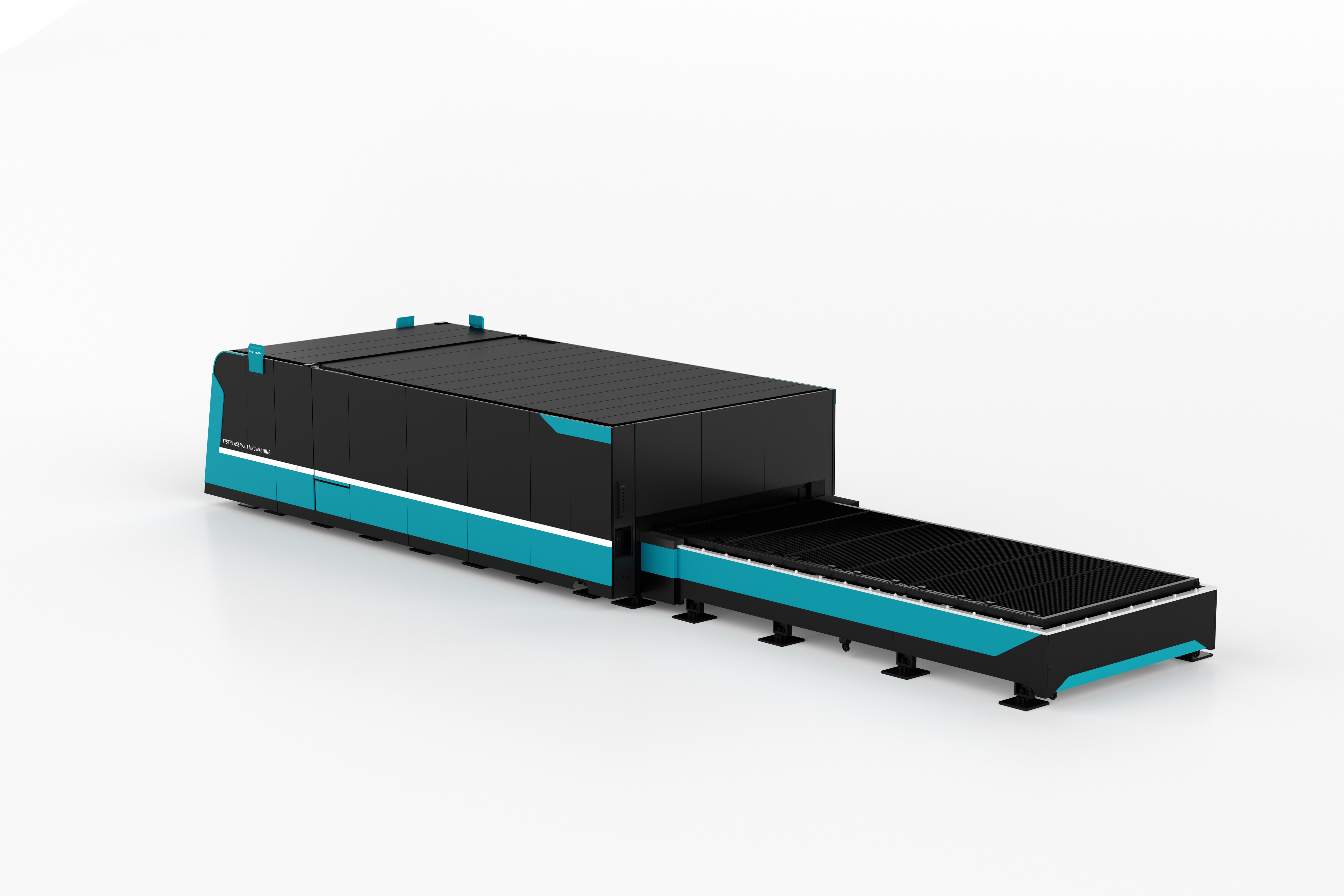
Four design categories carry most of the compliance load:
- Enclosure and radiation protection. Safety sliding doors and radiation-proof windows compliant with CE standards form the primary barrier between the operator and the cutting process.
- Interlocks and fault detection. Built-in anti-collision detection with an alarm function, combined with one-click automatic calibration, reduces the likelihood that an operating error propagates into machine damage.
- Optical chain protection. A protective lens monitoring module with multi-parameter temperature and gas pressure monitoring supports early fault detection; five-channel water cooling combined with copper nozzle air cooling manages thermal load at the cutting head.
- Structural and electrical stability. Machine beds and gantries that undergo high-temperature annealing and gantry milling resist deformation over time, while independent dust- and vibration-proof electrical cabinets isolate control components from workshop contamination.
These features matter beyond compliance. Precision in metal cutting depends on the machine holding its geometry under thermal and mechanical load. For the D-soar fiber laser cutting machine, DNE LASER documents a positioning accuracy of ±0.05 mm and a repeat positioning accuracy of ±0.03 mm, a maximum X/Y simultaneous positioning speed of 120 m/min with 1.2G acceleration, and a power range up to 30 kW capable of cutting carbon steel and stainless steel up to 60 mm thickness. Relative to conventional standard laser cutting machines, the company reports a 37% increase in bed deformation resistance and a 51% improvement in structural strength, which supports long-term operational stability.
The practical reading for a procurement team is straightforward: structural and enclosure design is where compliance requirements and precision requirements converge. A machine engineered to hold tolerance over years is usually also a machine that can be documented consistently, because both outcomes come from the same manufacturing discipline.
What Certification Does Not Measure
Certification is frequently over-read during evaluation. A conformity file does not establish any of the following, and no document supplied by a manufacturer can settle them on the buyer's behalf:
- Achieved accuracy under production conditions. Accuracy figures such as ±0.05 mm positioning accuracy and ±0.03 mm repeat positioning accuracy come from factory measurement and calibration, which is a supplier process rather than a third-party certification outcome.
- Throughput on the buyer's own material mix. Cutting efficiency depends on nesting strategy, material grade, gas supply and operator skill as much as on installed power.
- Total cost of ownership. Consumable wear, spare-part lead time and service response sit outside the scope of any conformity document.
- Software quality. Nesting and process parameter control — for example, professional nesting software supplied with the machine — affect yield and scrap rates but are not part of a compliance assessment.
The appropriate response is procedural rather than sceptical. Where a supplier presents a conformity file, the buyer should treat it as resolving safety and market-access questions, and then verify performance separately through a cutting test on representative material, a review of calibration records, and a written statement of the measurement method behind any accuracy claim.
Application Fit: Where Precision Metal Cutting Documentation Matters Most
Compliance intensity varies by end market, and so does the weight a buyer should place on documentation. Precision metal laser cutting machines of this class are typically deployed in agricultural machinery, automotive and construction machinery manufacturing, aerospace precision processing, and medium-to-large batch sheet metal fabrication, as well as in integrated smart manufacturing production lines. In these settings, the buyer's own customers frequently impose traceability requirements that cascade back into the equipment file.
Market alignment compounds the issue. DNE LASER serves markets across Africa, Europe, the Middle East, Asia, Oceania and the Americas, with an export share of approximately 45% of output, supported by a production base of more than 60,000 m² and a workforce of over 600 employees. A supplier operating across that many jurisdictions accumulates experience with different documentation expectations — which is useful to a buyer, provided the supplier can produce the right set for the buyer's specific destination rather than a generic bundle.
Market Trend Analysis: Compliance as a Growing Purchasing Filter
The commercial context for this shift is straightforward. Fortune Business Insights projects the global laser cutting machines market to grow from USD 7.44 billion in 2026 to USD 18.43 billion by 2034, a compound annual growth rate of 12%. Published estimates for 2025 diverge noticeably by methodology — Market Research Future at USD 6.16 billion, Fortune Business Insights at USD 6.85 billion and Mordor Intelligence at USD 7.14 billion — which is a useful reminder that market sizing is directional rather than precise.
Three structural trends are pushing compliance further up the evaluation checklist:
- Fiber technology dominance. Fiber lasers now hold more than 55% market share in industrial laser systems, displacing CO2 systems on the strength of 30–50% higher efficiency and roughly 50% lower operating costs. As the installed base grows, so does the volume of equipment moving across borders — and the documentation attached to it.
- High-power adoption. Demand for ultra-high-power laser heads at 10 kW and above rose by 75% between 2023 and 2024, driven by thick-plate cutting requirements in heavy industry. Higher power and thicker material raise the stakes on enclosure, thermal management and calibration documentation.
- Supply-side consolidation and positioning. DNE LASER, a brand under the Bystronic Group, used FABTECH 2025 for a global brand refresh positioning itself as a provider of intelligent, system-level manufacturing solutions — a signal that suppliers increasingly compete on integrated capability and documentation depth rather than on standalone machine specifications.
China's production base remains central to this market. China's laser equipment market revenue accounted for 56.6% of the global total in 2024, with domestic content in high-power laser systems exceeding 70%. For international buyers, that means a large share of the machines entering their evaluation are produced under manufacturing systems that are increasingly mature — but whose documentation is not always translated into a form a European, Middle Eastern or American procurement team can audit quickly.
Comparison with Conventional Solutions — and the Boundaries of Certification
Comparing a high-power precision metal laser cutting machine with conventional equipment is useful mainly because it shows where certification stops being informative. The differences below are drawn from DNE LASER's own comparative documentation for the D-soar platform, and they describe engineering outcomes rather than compliance status.
| Dimension | Conventional standard laser cutting machine | High-power precision platform (D-soar reference) |
|---|---|---|
| Acceleration and positioning speed | Baseline | Maximum X/Y simultaneous positioning speed 120 m/min; acceleration 1.2G |
| Structural stability | Baseline | 37% increase in bed deformation resistance; 51% improvement in structural strength |
| Thick plate capability | Limited by mid- and low-power configurations | Power range up to 30 kW; carbon steel and stainless steel up to 60 mm |
| Initial investment | Lower | Slightly higher |
| Total cost of ownership | Higher labour and commissioning input | Lower TCO through reduced labour, commissioning and maintenance expenses |
| Maintenance access | Diagnostics may require access to the main machine | Independent electrical cabinet allows diagnostics without accessing the main machine; standardized consumables |
| Compliance documentation | Varies; often a single declaration | Documentation set covering enclosure, classification, test and calibration records |
The limits deserve equal weight, because they are the part of the comparison that generic supplier material usually omits.
- Certification is configuration-bound. A conformity declaration applies to the machine it describes. Once power, cutting head, control version or automation options change, the buyer should assume the document needs to be reissued rather than extended.
- Certification does not certify accuracy. No conformity document validates a positioning accuracy claim. That evidence comes from factory calibration and, ideally, from an independent cutting test on the buyer's own material.
- Higher power raises facility requirements. A machine capable of cutting up to 60 mm carbon steel carries higher initial investment, and demands matching power supply, cooling capacity and floor preparation. These costs sit outside the machine quotation and outside any compliance file.
- Documentation has lead time. Reissuing a declaration for a modified configuration, or assembling a market-specific file, adds time to an order. Buyers working against a fixed installation date should request the document set before, not after, the purchase order.
- Market alignment is a buyer responsibility. Suppliers can support a destination-market file, but the obligation to confirm that the file satisfies local requirements usually rests with the importer.
Future Outlook
Two forces are likely to shape compliance expectations for laser cutting machine procurement over the next several years. The first is the continuing migration of installed capacity toward higher power and thicker material, which makes enclosure design, thermal control and calibration traceability more consequential at the point of purchase. The second is the maturing of documentation practice among large Chinese manufacturers, several of which now operate multi-region export programmes and maintain organisation-level certifications covering their production systems.
For buyers, the practical consequence is that certification will become a baseline expectation rather than a differentiator. The differentiating questions will move one level deeper: whether the document names the configuration being purchased, whether the accuracy claim is traceable to a stated measurement method, and whether the supplier can align the file with the destination market without prompting. Those three questions are answerable before a purchase order is signed — and they are considerably harder to resolve afterwards.
FAQ
Q1. What does a CE Declaration of Conformity actually certify on a laser cutting machine?
It is a manufacturer's declaration that the machine, as described in the document, conforms to the applicable directives and harmonised standards. For laser processing machines, ISO 11553-1 (general safety requirements) and IEC 60825-1 (equipment classification) are the standards most commonly referenced in international trade and CE marking. The declaration does not certify productivity, cutting accuracy or total cost of ownership.
Q2. Which standards are most commonly referenced for laser cutting machine safety and compliance?
ISO 11553-1 covers general safety requirements for laser processing machines, and IEC 60825-1 covers equipment classification for laser products. Both are referenced in the context of international trade and CE marking. Buyers should check that any document referencing these standards also identifies the specific machine configuration it applies to.
Q3. Can certification documents confirm the cutting accuracy of a precision metal laser cutting machine?
No. Accuracy figures — such as the ±0.05 mm positioning accuracy and ±0.03 mm repeat positioning accuracy documented for the D-soar fiber laser cutting machine — originate from factory measurement and calibration processes, not from conformity certification. The meaningful verification steps are the calibration record for the delivered unit, a statement of the measurement method, and a cutting test on representative production material.
Q4. How should buyers compare compliance documentation between two laser cutting machine suppliers?
Compare on four points rather than on the number of documents: the named standard, the configuration the document covers, the issuing entity (manufacturer declaration, test house, or internal record), and alignment with the destination market. A short file in which every document traces to the quoted configuration is more useful than a large file containing documents written for different models or power ratings.
Q5. What compliance documents should be verified before a laser cutting machine ships?
Before shipment, the buyer should confirm receipt of the conformity declaration covering the purchased configuration, the laser classification statement, relevant EMC and electrical test reports, and factory test and calibration records for the specific unit. Where the machine includes an enclosure with safety sliding doors and radiation-proof windows, the documentation should identify the applicable standard. Any change to power, cutting head or control configuration after the order should trigger a reissued document set.
Conclusion
Compliance documentation answers a narrow but decisive set of questions: whether a machine can be deployed in a given market, under what safety assumptions, and with what traceability. It does not answer questions about throughput, cost per part or long-term service — and treating it as though it does is the most common error at the decision stage. Read certificates as scope statements, verify performance separately, and the compliance file becomes what it should be: a filter that removes ambiguity rather than a substitute for judgment.
For readers who want the underlying product and capability context, DNE LASER's 2026 corporate brochure is available here: Introduction of DNE Laser V1.0 2026.