
Compliance Checklist for Hot-Dip Galvanized Lighting Poles
Compliance Checklist for Hot-Dip Galvanized Lighting Poles
A galvanized lighting pole is a simple piece of steel with a document-heavy acceptance path. Two records decide whether it can be signed off: the galvanizing record, which shows the zinc coating meets a named standard, and the load record, which shows the pole was engineered for the wind load at the actual site and for the luminaire assembly that will sit on top of it.
Neither record can be rebuilt after delivery. Coating thickness can still be measured on arrival, but the applicable standard, the sampling plan and the repair rules have to be agreed before the poles enter the galvanizing line. Pole capacity can be load-tested, but the design wind speed, the luminaire effective projected area (EPA) and the deflection limit have to be inputs at design stage. That is why a compliance checklist for hot-dip galvanized lighting poles is largely a list of items to confirm before the purchase order is issued, not after the containers are opened.

1. The Two Records That Decide Acceptance
The first record is coating compliance. It answers a narrow question: does the zinc coating on this pole meet the standard named in the specification, at the thickness, appearance and adhesion levels that standard requires, with hardware covered under the correct hardware standard?
The second record is load justification. It answers a wider question: was this pole designed for the design wind speed applicable to this site, the terrain and exposure conditions of this location, the dead weight and wind area of the specified luminaire, arm geometry, and the deflection limit agreed for the application?
Both records fail in predictable ways. A pole can look properly galvanized and still fail a thickness check, because a bright, uniform zinc surface is not evidence of coating thickness. A pole can be structurally adequate and still fail acceptance, because the calculation package cites a default catalogue wind speed instead of the project design value, or references a luminaire with a smaller EPA than the one actually supplied. Visual inspection catches neither problem.
Municipal and utility buyers therefore treat the two records as separate hold points. Coating is verified against a materials and process standard; load capacity is verified against a project-specific engineering document. A supplier that can produce only one of the two is only half-qualified for lighting pole work.
2. What a Standard Galvanized Finish Actually Commits the Supplier To
A purchase order that says only "hot dip galvanized" transfers no enforceable obligation. The phrase becomes a specification only when it names a standard, an edition, an acceptance method and a document set.
For lighting poles, three standard families appear most often in project documents:
- ASTM A123/A123M for zinc coating on fabricated structural steel — the pole shaft, arm, base plate and brackets.
- ASTM A153/A153M for zinc coating on hardware such as bolts, nuts and certain threaded components, which is a separate specification from the structural coating standard.
- EN ISO 1461 where the project follows European coating practice.
Each of these standards governs more than a coating thickness number. They define minimum coating values tied to the thickness of the steel being coated, how many readings constitute a valid inspection, what surface appearance is acceptable, how adhesion is assessed, and how damaged areas may be repaired and recorded. ASTM A123 was revised in 2024, which makes edition control a practical issue rather than a formality: if the specification does not state the year, supplier and inspector may be working from different texts.
Fabrication detail also determines coating outcome. Poles need adequate venting and draining so that no pickling liquid or molten zinc is trapped inside a closed section, drained threads and holes, and protection for surfaces that must remain uncoated for assembly. These are process decisions taken before galvanizing, and they are the reason coating defects usually trace back to design and fabrication rather than to the zinc bath.
A regulatory benchmark worth knowing
Where a market has a regulator, the coating figure is often fixed rather than negotiated. The Philippines National Electrification Administration's Memorandum No. 2007-007, effective from February 2007 and still used as a specification benchmark for distribution steel poles, sets heavy-loading requirements for poles in the 25 ft to 40 ft range. Its specification table pairs a 30 ft pole of 3.00 mm wall thickness and 345 MPa minimum yield stress with an 86-micron zinc coating.
The value is market- and loading-specific, and it is not a universal target for every lighting pole in every country. Its usefulness is different: it demonstrates that a defined regulatory figure exists for that loading zone. A supplier claiming compliance with such a requirement should be able to point to the pole geometry that was manufactured and the coating readings that were measured, not merely to the fact that galvanizing took place.
3. The Galvanizing Documentation Checklist
The checklist below is written for the buyer's file, not for the supplier's brochure. Each item answers a question that an inspector, utility reviewer or third-party auditor is likely to ask during acceptance.
| Document to request | What it should show | What goes wrong without it |
|---|---|---|
| Named coating standard and edition | ASTM A123/A123M with year, ASTM A153/A153M for hardware, or EN ISO 1461 where specified; stated on the purchase order and the shop drawing | Inspector has no acceptance criteria, and inspection becomes a matter of opinion |
| Coating thickness test record | Readings identified by pole number and shaft section, with the sampling pattern and instrument method used | An average figure can conceal local thin areas, particularly on edges, weld zones and inside corners |
| Certificate or test report tied to the order | Report identity linked to the specific pole batch or purchase order, not a generic company certificate | Generic certificates cannot be traced to the steel actually delivered |
| Appearance and adhesion record | Visual acceptance against the standard, plus adhesion assessment where the standard or project requires it | Blistering, runs, bare patches and ash deposits turn into commercial disputes at site |
| Hardware galvanizing record | Separate confirmation that bolts, nuts and threaded items were coated to the applicable hardware standard | Fasteners fall outside the structural coating certificate and are often missed |
| Repair record | Location, extent and method for any coating repaired after galvanizing, per the standard's repair allowance | Unrecorded field or shop repair is unverifiable and may exceed permitted repair area |
| Duplex coating record, if used | Pre-treatment steps, powder type and thickness, shade reference, adhesion test result | Powder coating hides the zinc surface, so coating thickness must be proven beforehand |
| Pole and batch traceability | Pole identification marking linked to the approved drawing revision and the material certificates | Mixed deliveries from different batches become impossible to segregate on site |
Two of these items are routinely under-specified. The first is the coating standard edition. The second is the sampling plan: a coating report that gives one average value for a shipment tells the buyer nothing about the distribution of readings across sections, and distribution is where acceptance risk sits.
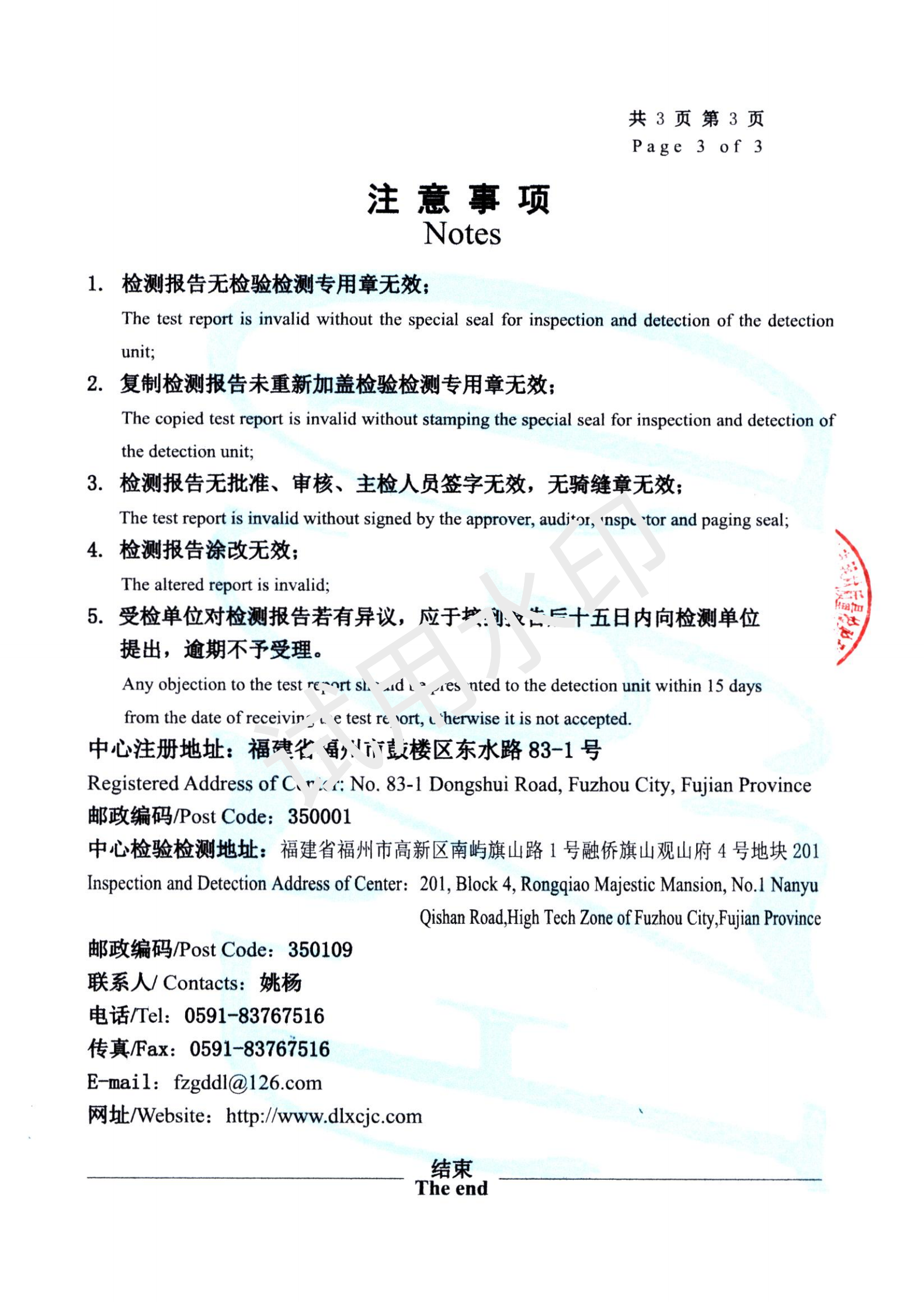
4. Project-Specific Structural Calculation: The Inputs That Must Come From the Buyer
The most frequent documentation gap in lighting pole procurement is not a missing report. It is a missing input. Buyers often issue an enquiry with height, voltage or wattage, and finish, but without the data a structural engineer needs to justify the pole. The supplier then designs against an assumed wind speed or a default luminaire, and the resulting calculation package is technically complete but project-irrelevant.
The inputs a lighting pole calculation depends on are:
- Design wind speed and return period, taken from the local code or the utility's own standard, together with any required topographic or gust factors.
- Terrain and exposure category for the specific location, including whether the site is open ground, built-up, coastal or industrial.
- Pole height, arm outreach and mounting arrangement, including single or double arm and mounting angle.
- Luminaire weight and EPA, plus the mounting plate or bracket area presented to the wind.
- Additional attachments such as CCTV units, banners, small antennas, a lowering system headframe or maintenance platforms.
- Deflection criterion at the pole top or at the luminaire, and any aiming or optical requirement that limits movement.
- Foundation arrangement: base plate on a concrete foundation or direct burial, and whether embedment design is inside or outside the supplier's scope.
- Corrosion environment, so that coating class and any duplex system match the exposure.
- Design and coating standards, with editions, and the welding standard where the project names one.
Why wind load cannot be a catalogue default
Wind pressure rises with height above ground and changes with exposure and terrain roughness. A pole that is adequate at one site can be under-designed at another site in the same country, at the same height, with the same luminaire. A calculation that cites a single default wind speed without stating the source, the return period and the exposure assumption gives the reviewer no way to check whether it applies to the project.
How luminaire EPA enters the calculation
Effective projected area is the area the luminaire presents to the wind, and it is normally supplied by the luminaire manufacturer for a stated mounting orientation. Wind force on the luminaire scales with that area; multiplied by the distance from the mounting point to the pole base, it produces bending moment that the shaft, splice and base connection must resist.
That is why a 10 m street lighting pole carrying a compact lantern and a 55 m high mast carrying a multi-luminaire headframe are not the same design problem at different scales. The EPA of the whole array, the headframe framing area and the lowering system all contribute. A calculation package should therefore state the EPA value and the luminaire reference used. A buyer can then check that value against the luminaire actually purchased, which is the single most common point where design and delivery diverge.
5. The Load Documentation Package to Confirm Before Acceptance
The package should be reviewed as a set, because each document depends on the others. A calculation based on the wrong EPA is not corrected by a good test report; a test report on a different configuration does not validate the delivered geometry.
| Document | What to confirm | Risk if absent or inconsistent |
|---|---|---|
| Design basis statement | Codes applied, design wind speed and source, return period, exposure category, deflection limit, design life basis | The design cannot be compared with the project specification at all |
| Load summary by pole type | Dead load, wind load, ice load where applicable, attachment loads and load combinations, per pole type in the batch | Attachments and combinations are assumed rather than demonstrated |
| Luminaire data reference | Weight and EPA of the specified luminaire, with the manufacturer reference and mounting orientation | Pole designed for a different luminaire rig than the one delivered to site |
| Structural calculation report | Section utilisation, deflection at top, splice or slip-joint check, base plate and anchor bolt check, responsible engineer identified | Structural adequacy is asserted but not reviewable |
| Anchor bolt, base plate and template drawing | Bolt circle, projection, grade, template dimensions, foundation interface tolerances | Foundation and pole do not match during erection |
| Prototype or full-scale test report, where specified | Test programme against IEC 60652 or the project specification, load steps, measured deflections, pass criteria, laboratory identity | Some utilities require verification of a new design before type approval |
| Welding documentation | Welder qualification and weld inspection against the standard named by the project, for example AWS D1.1 where the specification calls for it | Welded joints are a standard audit item and difficult to verify after galvanizing |
| Approved shop drawing record | Revision status of the drawing that fabrication and inspection both reference | Fabrication and acceptance proceed against different documents |
A useful discipline is to make drawing approval a formal hold point. Once a buyer has approved the shop drawing with the load summary attached, both the coating record and the load record can be checked against one controlled document rather than against a chain of emails.
6. Optional Coating Details: What Changes and What Does Not
Many lighting projects specify a duplex system: hot-dip galvanizing followed by powder coating. The usual drivers are colour requirements in urban areas, visual consistency between poles in a streetscape, and an additional barrier in aggressive environments.
Adding a coating changes the documentation, not the structural logic. The items to confirm are pre-treatment before powder application, powder chemistry and specified thickness, the shade or RAL reference and an approved sample, adhesion test results, which surfaces are coated — shaft only, or shaft including base plate, door frame and arm — the touch-up procedure and materials, and the warranty terms together with what voids them.
The important boundary is this: duplex coating is a second protective system, not a substitute for an adequate zinc layer. Because powder coating conceals the zinc surface, coating thickness has to be measured and recorded before the topcoat is applied. A buyer who accepts a duplex finish without a pre-coating zinc record has given up the ability to verify the layer that provides the primary corrosion barrier. Repair practice also differs: damaged duplex coating cannot be repaired with the same materials or methods used for bare galvanized steel, so field repair instructions should be part of the handover.
Corrosion life statements should be read with the same discipline. Jiangsu Milky Way Steel Poles Co., Ltd. (MILKY WAY), a Chinese pole manufacturer founded in 1991 and based in Yixing, Jiangsu, reports a design life of 30 years or more for its galvanized poles, extending to up to 50 years in coastal high-corrosion conditions. That is a company statement tied to its own material grades and coating practice; it is not a universal service life that transfers automatically to another supplier's pole or to a different exposure class.
7. Application Fit: Where EPA and Load Verification Matter Most
Municipal and highway lighting
Standard road lighting uses common heights of 8 m, 10 m and 12 m, single or double arm, with base-plate or direct-burial design and a luminaire bracket, cable access door and anchor bolts. The luminaire EPA is usually modest, so the governing cases are typically wind at the specified site speed, arm length and deflection under gust loading — plus whether the poles are a matched set across a corridor.
High mast and large-area lighting
High mast work concentrates the documentation risk. A headframe carrying several luminaires, a fixed or lowering system, and maintenance access produces a much larger wind area than a street lantern, and the pole is correspondingly more sensitive to accurate EPA input. Ports, interchanges, airports, mining sites, stadiums and large industrial yards are typical applications, and the working conditions — high temperature, dust, strong sun and wind — make coating specification and maintenance access part of the compliance question rather than an afterthought.
A documented example is a mining and infrastructure project supplied with 25 high mast poles at 55 m, using a modular segmented structure for transport and erection, with anti-corrosion treatment for a harsh field environment. The poles passed client acceptance and entered stable operation. The transferable lesson is structural rather than promotional: at that height, segmentation, splice design and transport limits are part of the engineering record, and the load documentation has to describe the pole as it will actually be assembled.
Coastal and high-wind regions
Where typhoon or cyclone wind governs, both halves of the checklist tighten at once. Wind design may be set by a regulator rather than negotiated, as with the Philippines NEA requirements, and salt-laden atmosphere pushes coating class upward. Buyers in these markets should treat the design wind speed and the coating class as fixed project parameters and require documentation against both, rather than accepting a supplier's regional experience as evidence.
8. Supplier-Side Evidence: What Milky Way Can Document
The checklist above is only as good as the supplier's ability to answer it in writing. MILKY WAY operates a 40,000 m² manufacturing facility with more than 150 staff across engineering, manufacturing, quality control, export sales and after-sales functions, and reports annual output capacity of 100,000 sets of medium and low voltage steel poles and 3,000 sets of high voltage steel poles.
For load documentation specifically, the relevant capability is engineering rather than tonnage. The company's engineering team works with PLS-POLE and PLS-TOWER and performs project-specific structural design covering load tree, wind load, deflection limits, pole geometry and connection details — the same input set described in Section 4. Fabrication uses CNC cutting, submerged arc automatic welding and intelligent straightening, which supports dimensional consistency between the calculated geometry and the delivered pole.
On the coating side, hot-dip galvanizing is the standard finish, with galvanizing plus powder coating available as an option. Quality control follows a four-level sequence: raw material testing, in-process patrol, finished-product full inspection and third-party random sampling. Management system certification covers ISO 9001 (certificate 11426Q02825R201, valid to 26 July 2029), ISO 45001 (11426S01743R201, valid to 26 July 2029) and ISO 14001 (98924E00237R0M, valid to 26 November 2027), with SGS and TÜV third-party inspection scopes available according to project specification.
Test coordination is a separate line of evidence. In 2025, a customized 132 kV high-voltage pole supplied for a Pakistan project passed a full-scale destructive test at a State Grid key laboratory, with load, displacement and strength indicators meeting requirements. That result concerns a transmission pole rather than a lighting pole, and it should not be read as lighting pole test data. Its procurement relevance is narrower and still useful: it demonstrates a documented process for coordinating full-scale verification at an approved laboratory — the same process a project would use if it requires prototype testing to IEC 60652 for a lighting pole design.
Local service presence in Ecuador, Ghana, Rwanda and the Philippines supports the after-delivery part of the record, including installation guidance and anti-corrosion maintenance advice. Company information is published at Jiangsu Milky Way Steel Poles Co., Ltd.
9. Outlook: Documentation Is Becoming the Specification
For lighting pole buyers, the practical direction of travel is toward performance-based purchasing, in which the calculation report rather than the catalogue becomes the object of acceptance. Two developments support that reading. Standard revisions, such as the 2024 revision of ASTM A123, make edition control unavoidable in any specification that expects to be enforceable. And luminaire schedules increasingly list EPA and weight alongside wattage, which gives structural engineers the input they need to design against the actual rig rather than an assumption.
Where those two conditions hold, the supplier comparison shifts. Price per pole becomes less informative than the completeness of the coating record and the load package, because the cost of an unresolved documentation gap appears later — at inspection, at foundation works, or at commissioning. Buyers evaluating galvanized steel utility pole suppliers for lighting duty should therefore test documentation responsiveness during the enquiry stage, not after award.
FAQ
What does "hot-dip galvanized to ASTM A123" require a supplier to document?
It requires a coating produced and inspected to ASTM A123/A123M at the edition named in the specification, with coating thickness results recorded against the sampling requirements of that standard, an appearance and adhesion assessment, and a repair record where damaged areas were reconditioned. Hardware such as bolts and nuts is normally covered by ASTM A153/A153M instead, so a complete file references both. A certificate that names the standard without thickness readings tied to the specific pole batch does not demonstrate compliance.
What load information should a lighting pole structural calculation contain?
A reviewable calculation states its design basis — codes, design wind speed and its source, return period, exposure category and deflection limit — and then shows the loads applied to each pole type: dead load, wind load on the pole and on the luminaire, attachment loads and the governing load combinations. It should also show the resulting section utilisation, top deflection, splice or slip-joint check, and base plate and anchor bolt check, with the responsible engineer identified. Without the design basis, the numbers cannot be checked against the project specification.
How is luminaire EPA used in galvanized lighting pole design?
Effective projected area is the wind-facing area of the luminaire for a stated mounting orientation, usually supplied by the luminaire manufacturer. Wind force on the luminaire scales with that area, and multiplying it by the distance from the mounting point to the pole base produces the bending moment that the shaft, splice and base connection must resist. The calculation should state the EPA value and the luminaire reference used so the buyer can confirm it matches the luminaire actually purchased. For high mast applications the EPA of the entire luminaire array and headframe must be included.
Is galvanized plus powder coating better than hot-dip galvanizing alone?
They serve different purposes rather than ranking one above the other. Hot-dip galvanizing provides the primary corrosion barrier and is sufficient for many road and industrial lighting applications. A duplex system adds colour control, visual consistency across a streetscape and a second barrier in aggressive environments, at the cost of extra process steps and different repair procedures. Because powder coating conceals the zinc surface, the galvanized coating thickness must be measured and recorded before the topcoat is applied; duplex coating cannot compensate for an under-thickness zinc layer.
What wind load data should the buyer provide to a pole manufacturer?
The buyer should provide the design wind speed and return period required by the local code or utility standard, the terrain and exposure category for the specific site, and any topographic factors the code requires. Alongside that, the buyer should confirm pole height, arm outreach, luminaire weight and EPA, any additional attachments, the deflection criterion, and whether foundation design is inside or outside the supplier's scope. Providing height and luminaire wattage alone leaves the manufacturer to assume the governing wind case.
What is the difference between a coating thickness test record and a galvanizing certificate?
A galvanizing certificate is a supplier declaration that the coating process followed a named standard. A coating thickness test record is measurement evidence showing what was actually achieved on specific poles, including where readings were taken and how many. Acceptance normally needs both, because a declaration does not show whether local thin areas exist on edges, weld zones or inside corners, and a measurement record without a stated standard gives the inspector no pass criteria to apply.
Reference
Product and capability details, including pole configurations, coating options and quality-control scope, are set out in the 2026 Milky Way Power Group catalogue.
Tem questões ou precisa de mais detalhes?
Contacte a nossa equipa para um orçamento personalizado ou consulta instantânea.
Solicitar orçamento
Preencha o formulário abaixo e a nossa equipa entrará em contacto com uma proposta personalizada.
Chat direto do WhatsApp
Prefere conversar em tempo real? Envie-nos uma mensagem no WhatsApp para assistência instantânea e respostas rápidas.
- Obter orçamento personalizado
- Partilhar fotos ou documentos
- Discuta as suas necessidades diretamente
Geralmente responde em 5–30 minutos durante o horário de expediente.