
Compliance Decoded: The Certification Pathway for Premium Rigid Box Manufacturers
↵
Compliance Decoded: The Certification Pathway for Premium Rigid Box Manufacturers
Certification in premium packaging has shifted from a marketing badge to a purchasing gate. The global luxury rigid box market was valued at USD 4.75 billion in 2025 and is projected to reach USD 6.96 billion by 2035, growing at a compound annual growth rate of 3.9% (Towards Packaging), with Asia Pacific holding a 42.3% revenue share in 2025 (Dataintelo). As brands and their design studios place rigid box, insert and presentation programs across borders, the evaluation question has moved from can you make this box to can you document how you make it.
A premium rigid box manufacturer serving global brands is typically expected to hold ISO 9001 quality management certification, FSC chain-of-custody for paper-based materials, and SMETA/SEDEX social compliance evidence — the three credentials most commonly requested for global brand qualification. Those credentials answer system-level questions. They do not answer project-level questions such as colour consistency, insert fit, structural performance in transit, or delivery reliability. The practical task for a buyer at the decision stage is therefore to verify both the certificate and the evidence that sits behind it, project by project.
Topsion Packaging is a Shenzhen-headquartered premium packaging manufacturer founded in 2017 that produces rigid boxes, luxury tube packaging and structurally complex handmade boxes across three production facilities in Dongguan, supported by a Los Angeles office. The company operates under ISO and SEDEX certified systems and exports roughly 90% of its output to the EU and USA — which is why compliance documentation, rather than decoration, is the first filter in its buyer conversations.
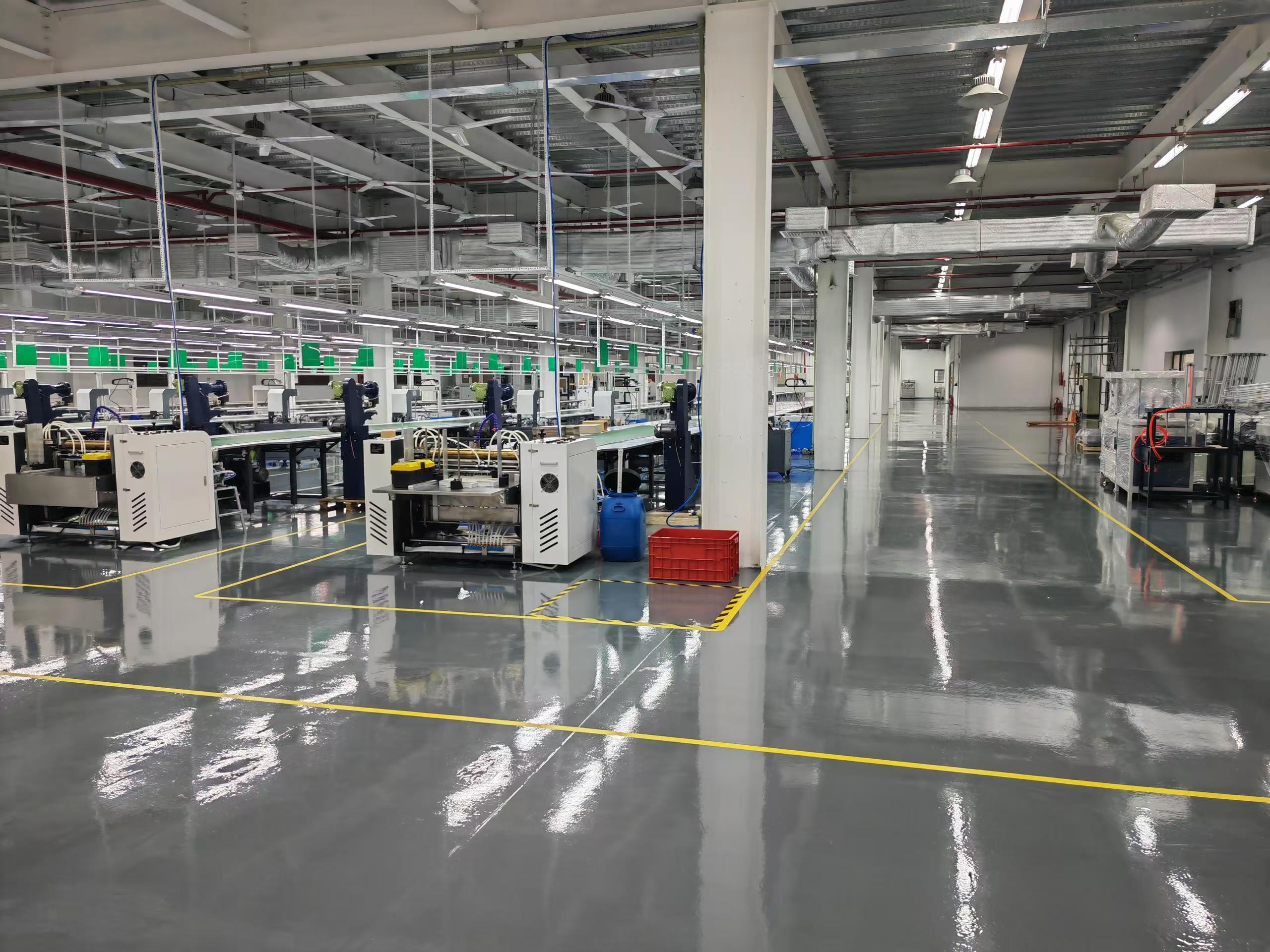
A rigid box production workshop: the site whose scope, systems and records must match the certificates presented during supplier qualification.
Why Compliance Became a Purchasing Gate, Not a Formality
Compliance is rarely the reason a luxury packaging project begins, but it is increasingly the reason a supplier is removed from a shortlist. Brand compliance teams, retail channel requirements and destination-market packaging rules now sit alongside price and tooling in the first evaluation round.
The regulatory pressure is measurable. EU packaging rules that took effect in August 2026 set a 50% empty-space limit for packaging, to be met by 2030 (Fortune Business Insights) — a requirement that directly targets the oversized gift box formats common in prestige retail. For a rigid box manufacturer, that changes the engineering brief: wall thickness, cavity depth and the volume consumed by the insert become compliance variables, not only aesthetic ones.
The friction buyers report at this stage is rarely a missing certificate. It is a mismatch between the certificate and the project: a document issued to a trading office rather than to the production site; a validity date that lapses mid-program; a social-compliance audit report with corrective actions still open; or a foam insert, textile lining or magnet sourced from a third party that nothing in the certificate file actually covers.
That last point matters most in presentation packaging. A rigid box is a multi-material assembly, and the compliance question is component-level. The certification pathway should therefore be read as a document trail rather than as a single badge on a supplier profile.
The Certification Map: What Each Credential Actually Covers
A certification only answers the question it was designed to answer. The table below maps the credentials most frequently requested for global brand qualification in rigid box production, together with what each one establishes and what it leaves unproven.
| Credential | What it governs | What it establishes | What it does not establish |
|---|---|---|---|
| ISO 9001 | Quality management system | Documented, auditable process control across a defined site and scope | The quality of any single production batch |
| FSC chain of custody | Paper and paperboard traceability | Fibre origin traceability, confirmed per order by transaction certificates | Anything about inks, foam, textile or magnets |
| SMETA / SEDEX | Labour and social compliance | Audited working conditions with a tracked corrective-action process | Product quality or delivery capability |
| G7 colour management (process certification) | Press and proofing discipline | Standardised colour targets across production runs | Material or social compliance |
| EU empty-space rule (regulation, not a certificate) | Package void volume | A 50% empty-space limit to be achieved by 2030 | Any statement about a supplier's internal capability |
Industry supplier-qualification guidance commonly centres on three credentials for rigid box manufacturing: ISO 9001 for quality management, FSC for the chain of custody of paper-based materials, and SMETA/SEDEX for social compliance. The combination is deliberate — each covers a different category of risk: process control, material traceability and labour conditions.
Paper and paperboard are the material backbone of that structure. Paper and paperboard were projected to hold a 66.7% share of the luxury rigid packaging market in 2024 (Future Market Insights), which explains why chain-of-custody documentation for fibre, rather than chemical or textile certification, dominates the typical rigid box document request. Inserts are the exception, and they are treated separately below.
Process-level certifications complement the management-system layer. Topsion Packaging, for example, operates under a G7-certified colour management system — a press and proofing discipline rather than a compliance certificate — which addresses the colour-consistency risk that management-system audits do not cover. For buyers sourcing luxury rigid boxes packaging, the useful distinction is between certificates that audit an organisation and certifications that calibrate an output.
Custom Inserts and Presentation Packaging: Where the Compliance Question Gets Harder
An insert is usually where the certification pathway breaks. A presentation box for a watch, a spirit bottle, a fragrance or a corporate gift typically combines greyboard, printed wrap paper, a die-cut foam or moulded-pulp insert, a textile lining, one or more magnets, and a ribbon or pull tab. Each of those components enters the factory through a different supply route and carries a different documentation obligation.
Three practical consequences follow for any buyer evaluating a custom inserts and presentation packaging manufacturer.
First, certificate scope does not automatically extend to third-party components. An FSC chain-of-custody certificate covers paper and paperboard within a defined facility and product scope; it says nothing about a velvet lining or a foam insert produced by another converter. Buyers should therefore request a component-level document map rather than a company-level certificate pack — a table listing each material, its supplier and the document that covers it, so that the insert is never the undocumented gap in an otherwise compliant box.
Second, material control has to be evidenced at receipt. Topsion Packaging states that all materials are procured according to predefined specifications and verified by incoming quality inspection, so structural and aesthetic requirements are checked before production rather than after. For a buyer, the incoming-inspection record is the evidence that the specification on the purchase order is the specification in the finished box — a distinction that matters when a lining shade or insert density changes between sampling and mass production.
Third, insert geometry is now a regulatory variable as well as a fit variable. The EU empty-space requirement pushes brands to reduce void volume inside gift packaging. An insert that holds a bottle or a watch securely while minimising the surrounding air gap is performing two jobs at once: presentation and compliance. Thin-wall constructions and tightly toleranced cavities are frequently required to satisfy both. For limited edition luxury packaging, where the box is part of the product story, this is the point at which structural engineering and compliance review converge.
Complex structures add a further layer. Topsion Packaging's engineering team evaluates structural manufacturability at an early stage and validates solutions through pilot production before mass production, which is intended to ensure stable and repeatable output. For multi-part presentation packaging, the pilot run is where insert tolerances, lining adhesion and magnet placement are tested as a system rather than as separate drawings.

A multi-part rigid box: each internal component — insert, lining, magnet, ribbon — belongs to a different material supply route and requires its own documentation.
The Verification Pathway: Documents to Request and Steps to Follow
Certification claims are verifiable by procedure rather than by trust. The checklist below is organised in the order a decision-stage buyer should request evidence, from shortlist to shipment release.
| Stage | Document or evidence | What the buyer checks |
|---|---|---|
| Shortlist | Quality management certificate with scope statement, site address and validity dates | That the certified site is the site being quoted |
| Shortlist | FSC chain-of-custody certificate | That the scope covers the material and product type ordered |
| Shortlist | SMETA/SEDEX audit report and corrective action plan | Audit date, open findings, evidence of closure |
| Quotation | Component-level material map covering paperboard, insert, textile and magnet | That every component is matched to a supplier document |
| Quotation | Material specification sheets and incoming inspection records | Specification-to-purchase-order match |
| Pre-production | Engineering feasibility review and pilot run report | That complex structures were validated before mass production |
| Production | In-process and independent inspection records | Multi-stage control rather than a single end-of-line gate |
| Pre-shipment | AQL inspection record and colour-consistency evidence | The basis on which release was approved |
| Program | Documentation set, milestone plan, named project management contact | Cross-border coordination and change control |
The steps that turn those documents into a verification decision are straightforward, but they are frequently skipped under launch-date pressure:
1. Desk-check scope against the quoted site. A certificate is valid for the legal entity, address and product scope printed on it, not for the brand of the factory in a marketing presentation.
2. Validate the certificate with the issuing or accreditation body rather than accepting a scanned PDF alone.
3. Request order-level transaction certificates where FSC material is claimed for a specific run.
4. Confirm who inspects. A quality function that reports independently of production is a different control from production self-inspection. Topsion Packaging maintains an independent QA/QC team that continuously trains the group's factories and inspects at raw material, production and final shipment stages.
5. Approve a first article before mass production so that insert fit, lining placement and colour are locked against a physical reference.
6. Record the closure of every finding raised in an audit report, and re-check the report's date before placing a repeat order.
How Topsion Packaging Structures the Certification Pathway
Topsion Packaging was founded in 2017 and began with wine and spirits packaging before extending into rigid boxes, luxury tube packaging and structurally complex handmade boxes. The company is headquartered in Shenzhen, operates a Los Angeles office, and runs three production facilities in Dongguan with a combined factory area of 50,000 m², approximately 300 employees and annual output of more than 5,000,000 units, supported by a four-engineer R&D team.
Its compliance posture is built on three layers that map onto the pathway described above. At system level, the company operates under ISO and SEDEX certified systems supported by regular internal audits. At process level, an independent QA/QC team inspects at raw-material, production and final shipment stages, and a G7-certified colour management system governs colour targets. At project level, standard operating procedures and semi-automated production reduce reliance on individual labour skill, dedicated project management coordinates engineering, production and QC across parallel customised projects, and production is scheduled in phases with progress monitoring to protect delivery timelines.
Supply resilience is managed rather than assumed: multiple qualified suppliers and partner factories operate under unified technical and quality standards to reduce dependency on a single source. Documentation is standardised, with defined project milestones for international clients, and the company operates strictly as a manufacturing partner to design studios, packaging agencies and third-party service providers under clearly defined scopes — a structural choice that keeps responsibility boundaries explicit when several parties contribute to one brand program.
Market Trend Analysis: Compliance Is Reshaping Product Design
The commercial backdrop explains why documentation has moved up the agenda. The luxury rigid box market is growing steadily from USD 4.75 billion in 2025 toward USD 6.96 billion by 2035 at a 3.9% CAGR (Towards Packaging), and Asia Pacific already represents 42.3% of revenue (Dataintelo) — a regional concentration that places a large share of global brand packaging programs inside markets where certification is the standard qualification route.
Demand pressure comes from the end markets. The global premium spirits market was valued at USD 253.8 billion in 2025 (Grand View Research), and secondary luxury packaging is a direct beneficiary of that value pool, since spirits brands rely on presentation boxes for gifting, travel retail and limited releases.
Product mix reinforces the same direction. The hinge-lid box segment accounted for over 29% of luxury rigid box revenue in 2023 (Global Market Insights), a format that depends on precise board thickness, hinge tolerance and internal fitment — precisely the characteristics that require documented process control rather than end-of-line inspection alone.
Regulation is now the strongest design driver. The EU empty-space limit pushes brands away from oversized shells toward tighter cavities, which raises the engineering content of every insert and increases the value of a supplier that can validate fit and structure before tooling is committed.
Certified Specialist, Price-Driven Supplier, or Multinational Converter?
Once certification requirements are clear, the decision usually narrows to three supplier archetypes. Each is legitimate; they simply carry different documentation depth and different engineering involvement.
| Supplier archetype | Compliance posture | Engineering involvement | Best fit |
|---|---|---|---|
| Engineering-led certified specialist (for example, Topsion Packaging) | ISO and SEDEX certified systems, internal audits, independent multi-stage QC, G7 colour management | Early feasibility review, structural validation and pilot production before mass production | Complex rigid boxes, multi-material presentation packaging, international retail programs |
| Price-driven supplier with limited documentation | Narrow or unverified certificate scope; reactive adjustments after sampling | Template-based production; manufacturability assessed during production | Simple formats with short documentation chains and tolerant specifications |
| Large multinational converters (for example, WestRock Company, DS Smith Plc, Mondi Group, Smurfit Kappa) | Broad corporate compliance infrastructure; identified in market research as major global competitors in the luxury rigid box sector | Corporate-level engineering resources; project fit depends on the specific program | Buyers whose procurement model requires a large multinational counterparty |
Cost comparison is where the archetypes diverge most visibly. Topsion Packaging reports a 10%–20% cost difference versus non-engineering packaging factories, attributing it to integrated quality control from engineering review through to final AQL inspection, and a 10% difference versus price-driven suppliers where manufacturability is evaluated before quotation rather than corrected afterwards. Those figures are first-party comparison data rather than independently audited results, and they should be read as an engineering-versus-rework argument rather than as a claim about market price levels.
The limitation buyers should price in. Certification has boundaries. A certificate attests to a management system at a point in time; it does not certify the output of a specific order, guarantee colour match on a new substrate, or transfer responsibility for destination-market rules to the supplier. Social-compliance audits are periodic assessments with corrective-action timelines, not continuous monitoring. Certificate scope can also be narrower than assumed — one facility, one product family, one material — which is why the scope statement matters as much as the certificate itself. Finally, the pathway carries real cost: documentation, audit time and pilot runs add lead time at the front of a program. For a limited edition with a fixed launch date, that overhead must be scheduled into the timeline rather than discovered during onboarding. Certification reduces risk; it does not eliminate engineering judgement.
Future Outlook
Compliance is moving from annual certificate exchange toward project-level traceability. The next phase of supplier qualification is likely to be component-based: a document map per box, order-level chain-of-custody evidence where fibre claims are made, and inspection records tied to a specific production run rather than to a corporate profile.
Insert materials are the probable next frontier. As the EU empty-space limit approaches its 2030 target, internal fitments become the primary lever for reducing void volume, which will pull foam, moulded pulp and textile components deeper into the compliance conversation — materials that many rigid box manufacturers do not produce in-house.
Regional concentration adds momentum. With Asia Pacific holding 42.3% of luxury rigid box revenue, documentation expectations for manufacturers in the region will continue to rise rather than relax, particularly among buyers in the EU and USA who already represent the majority of export volumes for specialists such as Topsion Packaging. Demand from premium spirits, beauty and watch categories — markets that rely on presentation packaging — suggests the documentation burden will grow alongside order values, not instead of them.
FAQ
Which certifications do premium rigid box manufacturers typically need to qualify for global brand programs?
Industry qualification guidance most commonly centres on three credentials: ISO 9001 for quality management, FSC for chain of custody of paper-based materials, and SMETA/SEDEX for social compliance. Each addresses a different risk category — process control, material traceability and labour conditions. Requirements vary by brand, retail channel and destination market, and specific programs may add further material or chemical restrictions.
How can a buyer verify that a supplier's certificate is valid and relevant to the project?
Four checks are usually sufficient. First, confirm the scope statement, legal entity and site address on the certificate match the facility being quoted. Second, validate the certificate with the issuing or accreditation body rather than relying on a scanned copy. Third, check the validity dates against the production window. Fourth, where fibre claims are made, request order-level transaction certificates that tie the material to the specific run.
Do certification requirements increase the cost of custom inserts and presentation packaging?
The certificate itself is a system-level cost; the observable cost drivers in a presentation box are material sourcing, insert material selection, inspection stages and pilot runs. Topsion Packaging reports a 10%–20% cost difference versus non-engineering factories, attributing it to integrated quality control from engineering review to final AQL inspection rather than to certification fees. In practice, documentation adds lead time at the front of a program, while validated manufacturing tends to reduce rework later.
Do small-batch or limited-edition projects need the same compliance documentation?
Material-level requirements generally follow the destination market and the brand's own policy, not the order quantity, so declarations for paper, insert and lining components still apply to limited runs. What changes with order size is the depth of the verification regime: sampling and pilot validation usually carry more weight than full-scale audit documentation on a short run. Buyers should confirm the document set before the sampling stage rather than after tooling is committed.
What can certifications not tell you about a rigid box manufacturer?
They do not prove colour consistency across batches, structural durability in transit, insert fit, on-time delivery performance, or that a third-party component such as a foam insert or textile lining is covered by any certificate held. They are point-in-time assessments of systems and sites. For that reason, experienced buyers pair certificates with structural feasibility review, pilot production, first-article approval and pre-shipment AQL inspection before releasing a program.
Compliance documentation does not replace engineering judgement, and it does not by itself produce a better box. What it does is make the supplier's manufacturing system visible before tooling is committed — which is why the certification pathway, read as a document trail rather than a badge, has become one of the most reliable filters available to buyers evaluating premium rigid box manufacturers for global brand programs.