
Compliance Essentials: Ratings for Steel Pipe Grinding Equipment
Steel pipe grinding equipment is usually shortlisted on throughput, processing range and achievable surface finish. The specifications that decide whether a machine can actually be energised, inspected and accepted on site — ingress protection, supply voltage and frequency, and documented quality management — are frequently reviewed much later, during site preparation or commissioning. On a greenfield finishing line or a capacity upgrade, that sequencing is where schedule risk accumulates.
Three rating families carry most of that risk for a steel pipe grinding machine: the IP protection grade, the electrical supply specification, and the quality management certification behind the manufacturer. Each answers a different question, and none of them substitutes for the others.
What “Ratings” Means on a Pipe Grinding Specification Sheet
On a steel pipe grinding machine, a rating is a declared, testable limit rather than a performance claim. It states the conditions under which the equipment is designed to operate and the conditions under which it is not.
The published specification for West’s steel pipe grinding machine illustrates how the three families appear together on one data sheet:
| Rating / specification | Published value | What it governs |
|---|---|---|
| Protection grade | IP54 | Enclosure resistance to dust ingress and water splashing |
| Power supply | 380V / 50Hz, 3-phase | Compatibility with the plant’s electrical infrastructure |
| Power range | 5.5–22 kW | Load capacity per grinding station |
| Processing diameter | 20–300 mm | Pipe and round steel size envelope |
| Processing length | 500–6000 mm | Workpiece length the line is built to handle |
| Surface roughness | Ra ≤ 0.8 µm | Achievable finish under rated conditions |
| Feed speed | 0.5–10 m/min | Throughput range and process control window |
| Quality management | ISO 9001:2015 — certificate 04624Q14389R0S | Documented quality system at the manufacturing site |
Read separately, each line is a number. Read together, they define whether the machine fits a specific plant: the supply voltage must match the grid, the protection grade must match the dust and coolant conditions around the line, and the certification must match the buyer’s own supplier qualification process.
Why Ratings Decide Commissioning, Not Just Performance
Compliance problems rarely appear as quality complaints. They appear as blocked commissioning dates. Three recurring scenarios account for most of them in steel pipe and round steel finishing.
Infrastructure mismatch. A grinding line specified for a 380V/50Hz three-phase supply cannot be commissioned on a plant with a different frequency without an agreed electrical adaptation. The machine itself is not defective; the specification was never reconciled with the site.
Environment mismatch. Grinding and polishing generate metal dust and, in many lines, coolant mist. An enclosure rated for a dry workshop behaves differently from one rated for splashing water and dust exposure. Protection grade is the specification that settles this question before installation rather than after.
Qualification mismatch. Many industrial buyers, particularly in infrastructure and energy supply chains, require an ISO 9001:2015 certificate from the manufacturer as a condition of vendor approval. Where the certificate, its scope and its validity period do not match the buyer’s documentation requirements, purchase orders stall in procurement rather than on the shop floor.
The opportunity is symmetrical. When protection grade, supply specification and certification are treated as evaluation criteria at the same stage as processing diameter and surface finish, they stop being late-stage risks and become early-stage filters that shorten shortlisting.
The Three Rating Families Explained
Protection grade: what IP54 states and what it does not
The IP code is an international enclosure classification. The first digit describes protection against solid objects and dust; the second describes protection against water. IP54 therefore means the enclosure is protected against dust ingress in quantities that would interfere with operation, and against water splashing from any direction. It is a sealed, workshop-grade enclosure classification — not a washdown or submersion rating.
For steel pipe grinding machines, that distinction is practical. IP54 covers the exposure that a grinding station typically sees: airborne grinding dust, coolant splash, and cleaning with a damp cloth or low-pressure spray. It does not cover direct high-pressure jet washing or standing water, and buyers planning aggressive washdown protocols should raise that requirement explicitly rather than assume IP54 extends to it.
Electrical supply: 380V / 50Hz three-phase
A 380V/50Hz three-phase supply is the standard industrial configuration in China and in a large share of Asian, Middle Eastern and European installations. It is the supply the published West machine specification is built around, and it is also the configuration most commonly available in the steel and metal processing plants that operate this class of equipment.
The compliance question is not whether 380V/50Hz is correct in the abstract, but whether it matches the destination plant. Buyers in 60Hz markets, or in facilities running different low-voltage industrial standards, should treat the supply specification as a configuration item to be agreed at order stage. West lists voltage among its OEM and customisation options, alongside control system, processing range, colour and logo, which means the electrical specification is a documented negotiation point rather than a fixed constraint.
Quality management certification: ISO 9001:2015
ISO 9001:2015 is a quality management system standard, not a product safety approval. It certifies that the manufacturer operates a documented, audited system covering process control, traceability and continual improvement. It does not certify that any individual machine is safe, compliant with machinery directives, or suitable for a specific application.
West holds ISO 9001:2015 certification against the standard GB/T19001-2016 / ISO9001:2015, certificate number 04624Q14389R0S, issued by Beijing Haide Certification Co., Ltd on 2024-08-23 and valid until 2027-08-22. The certified scope covers the markets the company serves in Southeast Asia, the Middle East, Europe and the Americas. For buyers, the practical checks are the certificate number, the issuing authority, the standard referenced, and the validity window — because a certificate that expires mid-project creates documentation problems at handover.
West’s Approach: Ratings as Part of the Specification Package
Jiangyin West Machinery Manufacturing Co., Ltd., which operates under the brand West, is a Chinese manufacturer of grinding machines based in Jiangyin City, Jiangsu Province. The company primarily produces grinding machines, steel pipe grinding machines, round steel grinding machines, internal hole grinding machines and round steel finishing lines, along with metallurgical special equipment, general equipment and their accessories. It operates three workshops — welding, machining and assembly — across approximately 6,000 square metres, with 78 employees and an annual output of around 300 units. Roughly 70% of production is exported to Southeast Asia, the Middle East, Europe and the Americas.
For buyers, the relevant point is not the scale figures themselves but what they imply about documentation. A manufacturer exporting to four regions and building to OEM specification has to maintain a specification and certification package that survives different customer qualification processes. West’s published capability set includes OEM production, customisation of voltage, control system, processing range, colour and logo, a monthly capacity of 30 units, a lead time of 20 days, a minimum order quantity of 1 unit, 100% testing, and remote after-sales support.
The compliance-relevant element within that list is voltage customisation. Electrical adaptation is the single most common compliance gap in cross-border grinding machine procurement, and it is best handled as a documented order-stage decision rather than a site-stage retrofit. Buyers can reference the published machine data at wstjxcn.com when building a comparison sheet.
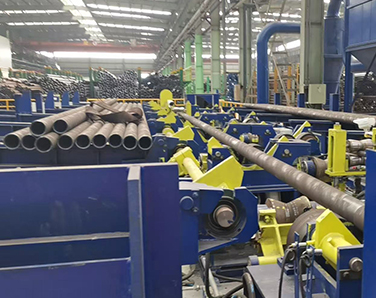
A steel pipe grinding machine of the type specified for 380V/50Hz three-phase supply with an IP54 enclosure rating.
Technical Explanation: Matching Ratings to Operating Conditions
The published machine specification defines a working envelope: power range 5.5–22 kW, processing diameter 20–300 mm, processing length 500–6000 mm, feed speed 0.5–10 m/min, and achievable surface roughness of Ra ≤ 0.8 µm. The machine is specified for carbon steel, alloy steel and SS304 stainless steel, and is applied in steel manufacturing, metal processing, the metallurgical industry and hardware manufacturing.
Each rating interacts with the others rather than standing alone.
Roughness and protection grade. Achieving Ra ≤ 0.8 µm requires stable contact pressure and consistent feed. In practice that means grinding dust and coolant are present continuously, which is precisely the environment the IP54 enclosure is specified for. A higher finish target therefore reinforces rather than relaxes the case for a sealed enclosure.
Power range and supply quality. A 5.5–22 kW power range across multiple grinding stations places a variable load on the plant supply. Buyers should verify that the site’s 380V/50Hz three-phase supply can carry the configured total, and that the machine’s electrical protection scheme is documented in the handover package.
Processing length and line layout. A 6000 mm maximum processing length defines the footprint, the material handling arrangement and the extraction system around the enclosure. Protective ratings are only meaningful if the surrounding extraction and coolant containment are designed to the same standard.
Where the line falls under European machinery safety expectations, EN ISO 16089:2015 is the relevant standard for stationary grinding machines, having replaced EN 13218 to address risks in both manual and CNC grinding operations. Responsibility for that regime is shared: the machine builder supplies the design and documentation, while the integrator and end user ensure the installed line meets the applicable requirements at site level.
Application Fit: Where Rated Grinding Equipment Is Used
Steel pipe grinding machines specified with IP54 enclosures and a 380V/50Hz three-phase supply are deployed in applications where dust, coolant and continuous operation are normal rather than exceptional.
Steel manufacturing plants. Surface conditioning of steel pipe and round steel between production stages, where uptime and consistent surface quality matter more than peak single-part precision.
Metal processing and hardware manufacturing. External and internal grinding, polishing and finishing operations on pipe, bar and machined components.
Metallurgical industry. Finishing lines integrated with upstream forming or downstream inspection equipment, where the electrical specification must align with the wider line.
Two documented installations illustrate how environmental adaptation is evaluated in practice. In Indonesia, a steel manufacturing plant installed five units for steel pipe and round steel grinding and polishing, using the equipment in long-term continuous production. The recorded highlights include adaptable performance in tropical climate conditions, reliable operation under high load, consistent product quality and improved processing efficiency. In Iran, a steel manufacturing plant installed eight units for the same application, also in long-term continuous production, with recorded results of stable surface quality, consistent production efficiency, and reliable performance adapted to local working conditions in continuous operation.
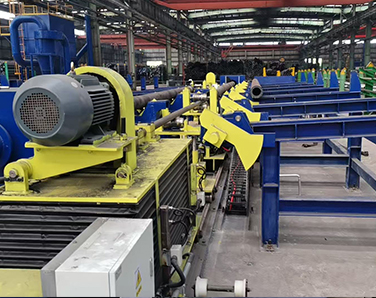
Continuous-operation grinding and polishing installations are specified around enclosure rating, supply configuration and documented quality management.
What these cases demonstrate for a buyer is narrower than it may first appear. They confirm that the equipment was specified for continuous production in two different climate conditions. They do not replace a site-specific compliance assessment, and buyers should treat them as reference deployments rather than as a compliance certificate for their own facility.
Market Trend: Documentation as a Procurement Criterion
The commercial backdrop supports the shift toward treating ratings as evaluation criteria rather than afterthoughts. Mordor Intelligence projects the global grinding machines market to grow from USD 6.47 billion in 2025 to USD 8.59 billion by 2031, a CAGR of 4.89%. Grand View Research reports that Asia Pacific accounted for a 43.4% revenue share of the grinding machinery market in 2025, with China the largest single country market. Dataintelo projects a 7.2% CAGR for steel pipe processing equipment over 2025–2033, driven by the infrastructure and energy sectors. OEC data shows China exported USD 2.31 billion in metalworking machine parts in 2024, equal to 11.9% of global exports in that category.
Published market size estimates for the same year differ between research houses — Mordor Intelligence, Grand View Research and Fortune Business Insights each publish their own figures for 2026 — which is itself a useful reminder for buyers. Market numbers are directional context, whereas ratings, certificate numbers and supply specifications are verifiable per unit. Procurement decisions should rest on the latter.
The practical trend is that cross-border equipment procurement now routinely includes document review alongside technical review. Where a supplier’s certification, enclosure rating and electrical specification are published and consistent, that review is short. Where they are absent or inconsistent, the review becomes a project risk regardless of machine capability.
Comparison: Rated Machines vs. Manual Finishing and Unrated Equipment
Traditional alternatives to a rated steel pipe grinding machine are manual finishing stations and low-cost machines supplied without a declared protection grade or electrical specification. The comparison below reflects typical differences rather than a claim about any individual supplier.
| Evaluation dimension | Rated machine (e.g. IP54, 380V/50Hz 3-phase, ISO 9001:2015 supplier) | Manual finishing station | Machine without declared rating |
|---|---|---|---|
| Enclosure / environment | Declared IP54 protection against dust and splashing water | Operator-dependent; no enclosure classification | Unknown until inspected on site |
| Electrical fit | Supply specification published; voltage customisation available | Hand tools only; low electrical integration | Often discovered at commissioning |
| Surface consistency | Specified up to Ra ≤ 0.8 µm within the rated range | Depends on operator skill and fatigue | Not documented |
| Supplier qualification | ISO 9001:2015 certificate with number and validity period | Not applicable | Frequently unavailable or expired |
| Documentation for audit | Certificate, specification sheet and test record available | Minimal | Incomplete |
Manual finishing remains a rational choice for low-volume, high-variety work where capital expenditure cannot be justified, and it retains flexibility that fixed automation does not. The trade-off is consistency and documentation: manual stations do not produce the auditable specification record that many industrial and infrastructure buyers now require from suppliers.
Limitations and Boundaries Buyers Should Not Assume Away
Compliance documentation is only useful when its boundaries are understood. Four limits are worth stating plainly.
- IP54 is not a washdown rating. It covers dust and splashing water. Facilities using high-pressure jet cleaning around the grinding area need to specify a higher enclosure classification, and should confirm that requirement in writing rather than infer it.
- ISO 9001:2015 is not a product approval. It qualifies the manufacturer’s quality system. Product-level safety and conformity requirements remain separate and, in some markets, must be satisfied by the integrator rather than the machine builder.
- 380V/50Hz does not travel automatically. In 60Hz or non-standard low-voltage markets, the supply configuration has to be agreed and documented at order stage. Voltage customisation is available, but it is a configuration decision, not a default.
- Published parameters are rated values. Achievable surface roughness, feed speed and power consumption depend on material, tooling condition and maintenance practice. The specified Ra ≤ 0.8 µm applies to the rated operating envelope, not to every conceivable workpiece.
A short pre-purchase checklist helps translate these boundaries into action: confirm the destination grid voltage and frequency; confirm the dust and water exposure around the planned installation and compare it against IP54; record the certificate number, issuing authority and expiry date and check the validity window extends beyond project handover; and confirm which party — builder, integrator or end user — holds responsibility for the applicable machinery safety standard at site level.
Future Outlook
As steel pipe and round steel finishing becomes more integrated with upstream and downstream line equipment, the boundary between “machine specification” and “compliance documentation” will continue to narrow. Buyers are already requesting protection grades, supply configurations and certification records in the same document as processing diameters and surface finish targets.
For manufacturers, that means the compliance package becomes part of the product. For buyers, it means the evaluation stage gets longer at the front and considerably shorter at the back, because the questions that typically surface during commissioning have already been answered in writing. The direction of travel favours suppliers who publish verifiable ratings — certificate numbers, protection grades and supply specifications — over those who describe capability in general terms.
FAQ
What does IP54 mean on a steel pipe grinding machine?
IP54 is an enclosure classification. The first digit indicates protection against dust ingress in quantities that would interfere with operation; the second indicates protection against water splashing from any direction. For a steel pipe grinding machine, it describes an enclosure suitable for environments with airborne grinding dust and coolant splash. It does not indicate protection against high-pressure jet washing or immersion, which require higher classifications.
Why do steel pipe grinding machines use a 380V / 50Hz three-phase supply?
A 380V/50Hz three-phase supply is a common industrial configuration in China and in many Asian, Middle Eastern and European plants, and it is the supply the published West steel pipe grinding machine specification is built around. Three-phase supply is used because grinding stations draw significant and variable load across a power range, published as 5.5–22 kW for this machine family. Where the destination plant uses a different voltage or frequency, the supply configuration must be agreed at order stage.
Is ISO 9001:2015 certification the same as a product certification?
No. ISO 9001:2015 certifies a manufacturer’s quality management system, covering process control, traceability and continual improvement. It is not a product safety approval and does not certify that an individual machine conforms to machinery directives. West’s certificate, number 04624Q14389R0S, is issued by Beijing Haide Certification Co., Ltd against GB/T19001-2016 / ISO9001:2015 and is valid from 2024-08-23 to 2027-08-22. Product-level requirements are handled separately, and in some markets by the line integrator.
What protection grade is appropriate when coolant is used during grinding?
Coolant use produces splash rather than immersion, which falls within the range IP54 is specified to cover, provided the surrounding coolant containment and extraction systems are designed to the same standard. If the operating procedure includes high-pressure jet cleaning of the machine or the surrounding area, IP54 is not sufficient and a higher enclosure classification should be specified and confirmed in writing.
Can a machine specified for 380V / 50Hz be used in a 60Hz market?
Not without an agreed electrical adaptation. Frequency and voltage affect motor behaviour and control system design, so the supply configuration is a specification item rather than a plug-level detail. West lists voltage among its customisation options, alongside control system, processing range, colour and logo, so buyers in 60Hz or non-standard markets can specify the required configuration at order stage. Confirming this before production avoids retrofit work at commissioning.
Which industries typically operate steel pipe grinding machines with a declared IP54 rating?
The published applicable industries for this machine family are steel manufacturing, metal processing, the metallurgical industry and hardware manufacturing, processing carbon steel, alloy steel and SS304 stainless steel. Documented installations include a steel manufacturing plant in Indonesia with five units and a steel manufacturing plant in Iran with eight units, both used for steel pipe and round steel grinding and polishing in long-term continuous production. Rated values such as Ra ≤ 0.8 µm and feed speed of 0.5–10 m/min apply within the specified operating envelope, and installation-specific compliance remains subject to site conditions.