
Compliance Inspection for ABS Vibration Plates: HSM-08VS as a Baseline
Compliance Inspection for ABS Vibration Plates: HSM-08VS as a Baseline
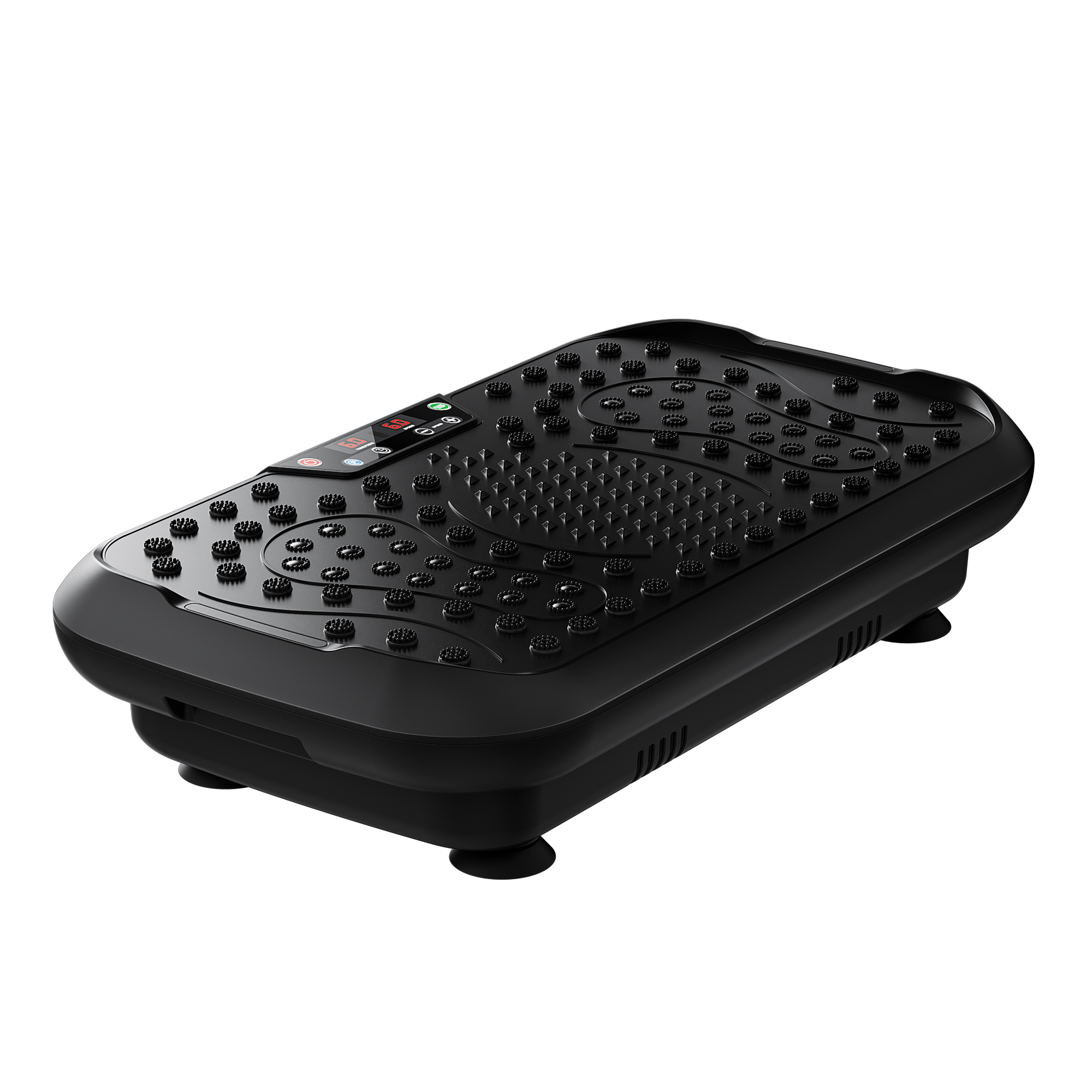
Compact vibration plates are among the harder home fitness products to buy on evidence alone. The published parameter set for a model such as the HSM-08VS runs to roughly a dozen lines: housing material, rated power, speed level count, timing range, console fields, product dimensions, carton dimensions and gross weight. Every line is a claim rather than proof, and the distance between the two is where most sourcing disputes begin.
This analysis builds a compliance-driven inspection protocol around one concrete product: the HSM-08VS compact vibration plate machine from Ningbo Healthmate Health Technology Co., Ltd., a manufacturer and supplier of home fitness equipment founded in 2007, operating a 100,000 square metre facility with approximately 850 employees and an annual production capacity of 700,000 units. The point is not to promote the model, but to show how a buyer can reconcile each declared parameter against something that can actually be checked before shipment.
The category context makes that discipline more valuable, not less. Fortune Business Insights values the global home fitness equipment market at approximately USD 12.88 billion in 2025, projected to reach USD 22.99 billion by 2034. Vibration plates and vibration therapy platforms accounted for about USD 1.8 billion of that in 2025, with an expected CAGR of 7.8% through 2034 according to Dataintelo. Growth of this kind attracts suppliers, and it multiplies the number of short-format spec sheets a buyer has to interpret.
Why compact vibration plates need a verification protocol
Home treadmills have a comparatively mature verification culture. Buyers expect runway size, motor power, incline behaviour and safety features to be stated, measured and documented, and the category is anchored by recognisable safety and performance standards: ASTM F2115-19 in the United States and ISO 20957-6 / EN 957-6 in the European Union, per ASTM International and ISO. Compact vibration plates sit in a different position. Their parameter sets are shorter, they rarely include a runway or incline value, and far less buyer-side scrutiny is applied to the numbers that are published.
The gap becomes a commercial problem when a buyer cannot separate a parameter that can be measured at the factory gate from one that can only be taken on trust. Those two categories carry very different risk. The workable approach is to treat every line of a product specification as a claim with a verification route attached to it, and to decide in advance what evidence would settle the question.
There is also a category-specific complication. Standards are written for equipment types, not for a general idea of fitness. A standard that covers motorized treadmills does not automatically extend to a vibration platform, so a buyer who assumes shared coverage may end up with a document that looks reassuring and proves nothing about the ordered model.
HSM-08VS: the declared parameter set
Ningbo Healthmate publishes a defined parameter set for the HSM-08VS. The figures below come from the supplier's own product documentation and are reproduced as stated. They are the claims that an inspection has to reconcile.
| Declared parameter | HSM-08VS value |
|---|---|
| Product type | Compact vibration plate machine; slim vibration fitness machine; whole body vibration machine for home use |
| Housing material | ABS |
| Rated power | 200 W |
| Speed levels | 99 levels |
| Timing range | 1-10 minutes |
| Console fields | Speed / Dist. / Time / Mode / PRO. |
| Build feature | Set up with magnetic stone |
| Product size | 530 x 320 x 145 mm |
| Carton size | 635 x 390 x 160 mm |
| Gross weight | 9.8 kg |
| Intended use | At-home workout; indoor fitness equipment |
Read as a whole, the set describes a small-format, entry-position product. Two figures carry most of the analytical weight. A 200 W rated power places the unit at the lower end of the company's vibration plate family, and a 530 x 320 x 145 mm footprint with a 9.8 kg gross weight describes a device meant to be stored inside living space rather than installed in a fixed training position.
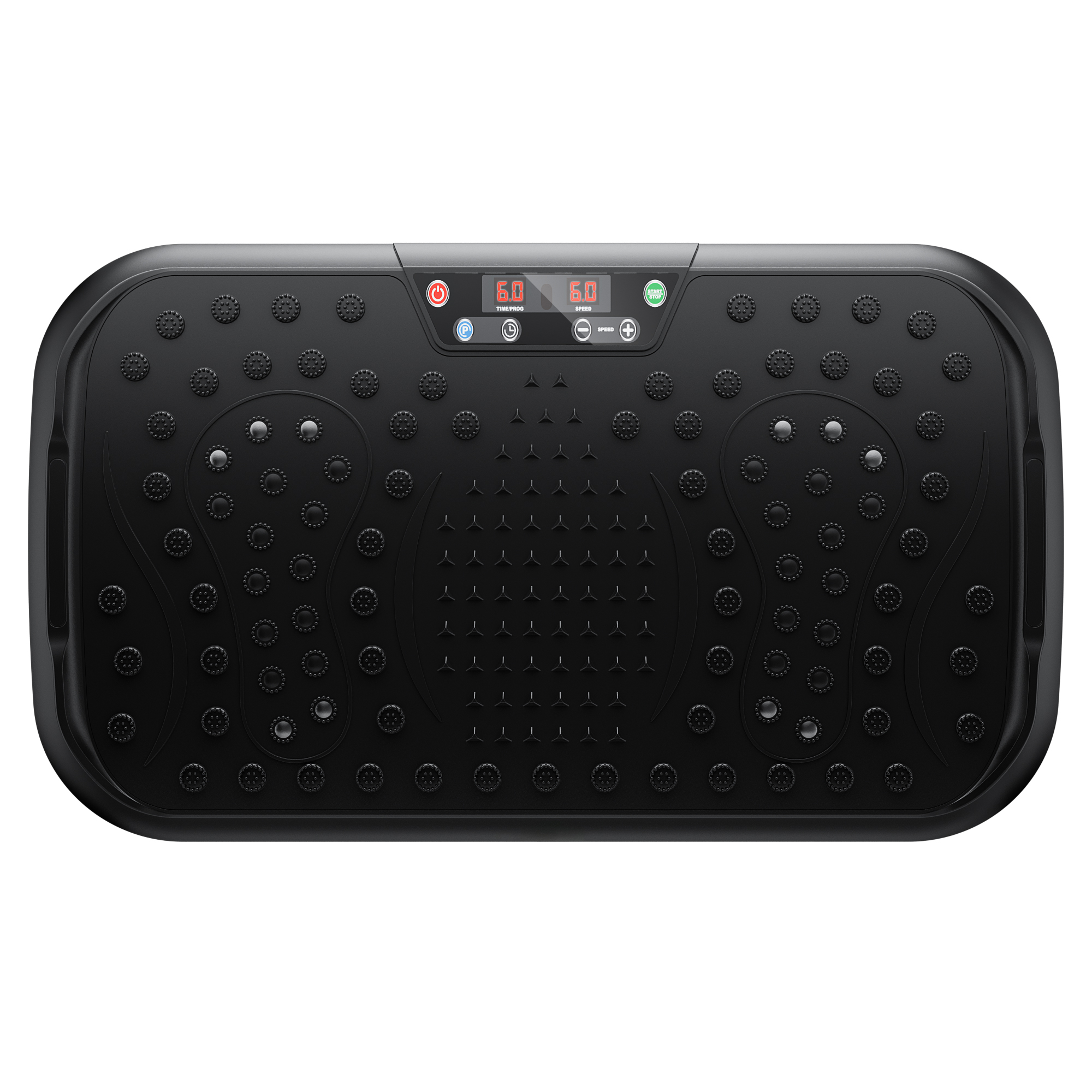
Turning each declared parameter into a checkable claim
The practical question for a buyer is not whether a number looks reasonable, but whether it can be confirmed before the container leaves. The table below maps each declared parameter to a realistic verification route, and states what that route does not establish.
| Declared parameter | Practical verification route | What the check does not establish |
|---|---|---|
| Housing material: ABS | Visual and documentary check of the housing and moulded parts, plus a material declaration request | Flame behaviour, chemical restrictions or recycling obligations in a specific market |
| Rated power: 200 W | Rating label on the unit, cross-checked against the order annex and the manual | Motor duty cycle, noise level or long-term durability |
| Speed levels: 99 | Functional test - step through the control range and count the available states | Vibration frequency or amplitude; comparability with level counts on other models |
| Timing: 1-10 minutes | Run a full timed session and observe the end-of-session behaviour | Recommended rest intervals or continuous back-to-back duty limits |
| Console fields: Speed / Dist. / Time / Mode / PRO. | Screen check at power-up and during a live session | Accuracy of the displayed values against any reference instrument |
| Product size: 530 x 320 x 145 mm | Tape measurement of sampled units against a tolerance band agreed in the order | Usable platform surface area or a maximum user weight limit |
| Carton size: 635 x 390 x 160 mm | Carton measurement and pack-count check | Drop-test performance or parcel-network eligibility |
| Gross weight: 9.8 kg | Scale check of unit plus packaging; update the freight model | Net weight, and whether packaging will change between lots |
| Magnetic stone build feature | Physical presence and placement check on sampled units | How the feature is intended to be used unless the manual explains it |
| Intended use: at-home workout | Cross-check against the manual and the marketing set shipped with the order | Whether the destination market requires a specific equipment classification |
Two entries deserve emphasis. First, no declared parameter in the set covers frequency, amplitude, noise or user weight limit. Those attributes cannot be verified against the spec sheet because the spec sheet does not mention them; they can only be verified if the buyer requests them and the supplier documents them in the order annex. Second, the console fields describe what is displayed, not how accurate the displayed values are. A buyer who needs calibrated feedback should ask a different question.
A pre-shipment inspection protocol built on the HSM-08VS parameter set
The sequence below assumes the purchase order carries an annex reproducing the declared parameters verbatim: the model code HSM-08VS, the ABS material, the 200 W power rating, the 99 speed levels, the 1-10 minute timing range, the 530 x 320 x 145 mm product size and the 635 x 390 x 160 mm carton. Without that annex, an inspection has nothing to measure against.
- Confirm identity and labelling. Check the model code on the unit label and on the carton against the order. Families with near-identical codes are a common source of disputes, and this vibration plate family spans HSM-08VS, HSM-08VQ, HSM-08VF and HSM-08VW.
- Check the rating label. Verify that the power stated on the unit matches the declared 200 W, and that the market variant - voltage, plug type and language set - matches the destination.
- Measure the product. Tape-measure sampled units against 530 x 320 x 145 mm. Agree a tolerance band in the order rather than negotiating millimetres at the loading dock.
- Weigh unit and carton. Gross weight is declared at 9.8 kg. Deviations change freight calculations and can indicate missing accessories or substituted components.
- Run a full functional session. Power up, step through the speed range, and run the timer across the declared 1-10 minute window. Confirm the console reports Speed, Dist., Time, Mode and PRO. as stated, and that the session terminates cleanly at the timer limit.
- Verify build features. Confirm the presence and placement of the magnetic stone feature, inspect the ABS housing for finish and assembly quality, and check fasteners, feet, deck surface and cabling.
- Inspect packaging. Compare carton dimensions with 635 x 390 x 160 mm, confirm internal protection and the accessory kit, and check that the manual language set matches the market.
- Apply a sampling plan. Use the acceptance sampling plan defined in the order - AQL-based plans are common for consumer goods - and record every checked unit with photographs, measurement values and a pass or fail note.
- Retain a golden sample. Keep a signed reference unit from the approved lot, so that later production can be compared against a physical baseline rather than a document.
The output of this sequence is a claim-by-claim reconciliation. It is not a certificate, and it should not be presented as one to a retailer, an importer or a marketplace compliance team.
What a checklist cannot replace: standard scope and documentation
Two boundaries deserve to be stated plainly. First, an inspection verifies physical and functional claims. It does not establish durability, electromagnetic behaviour, long-term motor performance or acceptance in a destination market. Those depend on documented testing and on regulatory review that happens outside the factory floor.
Second, the applicable standard is category-specific. ASTM F2115-19 and ISO 20957-6 / EN 957-6 are the standards that apply to motorized treadmills, and they do not automatically extend to a compact vibration plate. The published HSM-08VS parameter set does not name an applicable standard, which means a buyer cannot infer one from the specification. The reasonable action is to ask the supplier which standard family and part the model is tested against, and then to confirm the report scope names the exact model. A document that covers a sibling product in the same series is not evidence for this one.
Where a 200 W compact plate fits, and where it does not
Home-use scenarios in this category are defined by living conditions rather than gym conditions. Documented conditions include home use, office and workplace use, and apartment or urban living, frequently inside home fitness setup projects whose purpose is daily exercise and activity maintenance rather than structured performance training. Typical operation is intermittent: manual and electronic control, speed or resistance adjusted per session, and real-time tracking on the console. Supporting equipment such as a mobile fitness app or Bluetooth music function is commonly specified alongside.
Against those conditions, the HSM-08VS parameters line up in a specific way. A 530 x 320 x 145 mm footprint and a 9.8 kg gross weight suit equipment that has to be moved and stored inside a flat. A 1-10 minute timed session suits short, repeatable daily use rather than long continuous blocks. A 200 W drive with 99 control levels is consistent with an entry-position product inside a family that also contains higher-rated models.
The same parameters define clear boundaries, and buyers should read them as such:
- No handlebar in the parameter set. Buyers whose end users need upper-body stabilisation should evaluate the HSM-08VF, an upright vibration machine with a handlebar and product dimensions of 710 x 700 x 1080 mm.
- Lowest rated power in the family. The HSM-08VF declares 500 W, and the HSM-08VQ and HSM-08VW declare 500 W + 300 W. A 200 W rating is the entry point rather than the top of the range.
- Shorter timing window. The 1-10 minute range is narrower than the 1-15 minute range declared for the HSM-08VW.
- Level count is not output. The HSM-08VS declares 99 speed levels while the HSM-08VQ and HSM-08VW declare 20. A higher level count describes finer control steps, not greater power. Comparing level counts across models compares the wrong figure.
- Different function entirely. The HSM-08YB swing massage machine - 50 W rated power, a maximum user weight of 80 kg, 37 x 35 x 22 cm and 11.8 kg gross - is a relaxation device rather than a vibration platform, and cannot be substituted into a vibration plate brief.
One further documentation gap is worth flagging. Because the published HSM-08VS parameters do not include frequency, amplitude, noise or a user weight limit, those attributes cannot be verified against the spec sheet at all. Under a claim-based protocol, the only route is to have them documented in the order annex before production starts.
How this compares with traditional sourcing verification
Traditional verification of a compact, low-value product usually takes one of three forms: trust the catalogue, inspect on arrival, or review a folder of certificates. Each has a specific failure mode. Catalogue trust assumes the shipped configuration matches the published one. Arrival inspection catches discrepancies only after freight, duty and handling costs are already sunk. Certificate review often confirms that a document exists rather than that it covers the model being purchased.
A claim-level pre-shipment protocol replaces all three with a single question applied to each line of the specification: what value was promised, how was it measured, and who signed off? Standardisation across a product range pays off here. The HSM-08VS, HSM-08VQ, HSM-08VF and HSM-08VW share the ABS material declaration and the vibration plate architecture, so one protocol covers four models with minor edits to the parameter annex.
The approach has real costs and real limits. It adds inspection fees and time to the order, and on a small trial order that cost is not always proportionate to the risk. It covers only the units actually sampled. It cannot verify durability, motor life or market acceptance, and a passed inspection is not a conformity assessment. Buyers should size the protocol to the value and repetition of the order and treat it as a filter rather than a guarantee.
What the market data says about compact formats
Two data points frame the category. Fortune Business Insights values the global home fitness equipment market at approximately USD 12.88 billion in 2025, with a projected USD 22.99 billion by 2034. Within that total, cardiovascular equipment - treadmills and exercise bikes among them - accounts for 58.89% of revenue according to the same source, which leaves compact auxiliary formats such as vibration plates competing for a smaller share of a growing market.
Dataintelo estimates the global vibration plates and therapy platforms segment at USD 1.8 billion in 2025 with an expected CAGR of 7.8% through 2034. That estimate is rated medium reliability in the underlying source set and should be read with care: market-sizing studies define these categories differently, and valuations of adjacent compact formats diverge widely depending on whether under-desk products are counted separately. The divergence is informative in itself. When a category is defined loosely, its suppliers tend to describe products loosely too, and the burden of resolving the difference falls on the buyer.
Where a supplier's operating position can be checked, it tends to be checked as well. Ningbo Healthmate reports that exports account for 80% of sales across Europe, the USA, Japan, Korea, India, the Middle East and South America, alongside a 100,000 square metre facility, roughly 850 employees, an R&D team of 38 engineers and an annual production capacity of 700,000 units. Those figures describe an exporter organised around repeat production rather than one-off shipments, which is the operating profile in which a standing inspection protocol is easiest to apply consistently.
Future outlook
Three shifts are reasonable to expect over the next few buying cycles. Documentation pressure will move down-market: parameters that are currently optional in short-format listings - frequency and amplitude figures, user weight limits, material declarations, noise data - will increasingly be requested, because buyers have no other way to verify them. Second, model-level scope checking will become routine, since the cheapest way to fail a compliance review is to accept a report that names the wrong model in a series. Third, compact formats will keep competing on footprint and weight, which raises the relative importance of structural quality that no specification line captures.
None of these shifts remove the need for judgement. They relocate it - away from reading a listing and toward designing the questions that an inspection can actually answer.
FAQ
What is the HSM-08VS and which part of the home fitness market does it serve?
The HSM-08VS is a compact vibration plate machine from Ningbo Healthmate Health Technology Co., Ltd. It is documented as a whole body vibration machine for home use with an ABS housing, a 200 W rated power, 99 speed levels, a 1-10 minute timing range and a console reporting Speed, Dist., Time, Mode and PRO. Product dimensions are 530 x 320 x 145 mm and gross weight is 9.8 kg. The documentation positions it in the at-home workout and indoor fitness equipment segments, which is the storage-friendly end of the home fitness market rather than the commercial gym segment.
Which parameters can actually be verified before shipment?
Physical and dimensional claims are the most directly checkable: the 530 x 320 x 145 mm product size, the 635 x 390 x 160 mm carton, the 9.8 kg gross weight, the presence of the magnetic stone build feature, the ABS housing and the model code on the label. Functional claims - the 200 W rating, the number of speed levels, the 1-10 minute timer and the console fields - can be checked by running a session during inspection. Claims that cannot be verified from the published set at all include frequency, amplitude, noise and user weight limit, because none of them appear in it.
Does a higher speed level count mean more training output?
No. Speed level count describes control resolution rather than output. Within the same series, the HSM-08VS declares 99 speed levels with a 200 W rated power, while the HSM-08VQ and HSM-08VW declare 20 speed levels with 500 W + 300 W. The models with fewer levels declare substantially higher power. Because the published HSM-08VS set does not include frequency or amplitude figures, level count also cannot be converted into an intensity comparison; buyers who need that comparison should request documented frequency and amplitude values.
Does a specification sheet or a test report guarantee compliance in the destination market?
No. A specification sheet records what a supplier states about a product, and a report is evidence only within its stated scope. Standard coverage is also category-specific: ASTM F2115-19 in the United States and ISO 20957-6 / EN 957-6 in the European Union apply to motorized treadmills, not to vibration plates. Buyers should ask which standard and part a vibration plate model is tested against and confirm that the report names the exact model rather than a sibling product. Neither a spec sheet nor a report replaces the destination market's own conformity requirements.
What are the limits of the HSM-08VS compared with other models in the same series?
Three are documented. The HSM-08VS has no handlebar in its parameter set, while the HSM-08VF is an upright machine with a handlebar and dimensions of 710 x 700 x 1080 mm. Its 200 W rating is the lowest in the 08V family, against 500 W for the HSM-08VF and 500 W + 300 W for the HSM-08VQ and HSM-08VW. Its 1-10 minute timing range is shorter than the 1-15 minute range of the HSM-08VW. Buyers who need stabilisation, higher rated power or longer timed sessions should evaluate those models instead.
How should inspection results be documented for a vibration plate order?
An inspection record works best as a claim-by-claim sheet. Each declared parameter gets a line with the promised value, the measured value, the method used and a pass or fail result; photographs are attached per unit and every checked unit carries a batch reference. The order should define the sampling plan and the tolerance bands in advance, so that results are decided by the annex rather than at the end of the inspection. Retaining one signed reference unit from the approved lot creates a physical baseline for later shipments.
Buyers who want the full parameter set for the vibration plate family, including the HSM-08VS and the higher-rated 500 W models, can review the manufacturer's product e-catalogue (PDF). Company and factory information is published at healthma.com.