
Compliance Navigator: Paper Cup Certifications for Importers
A disposable paper cup sold to a European café chain, a North American quick-service restaurant and an Australian dessert retailer is the same physical object — and three different compliance conversations. Importers are routinely handed a folder of certificates and asked to accept it at face value. The more useful discipline is to read that folder as a layered evidence set and match each layer to the market and the application the cup will actually serve.
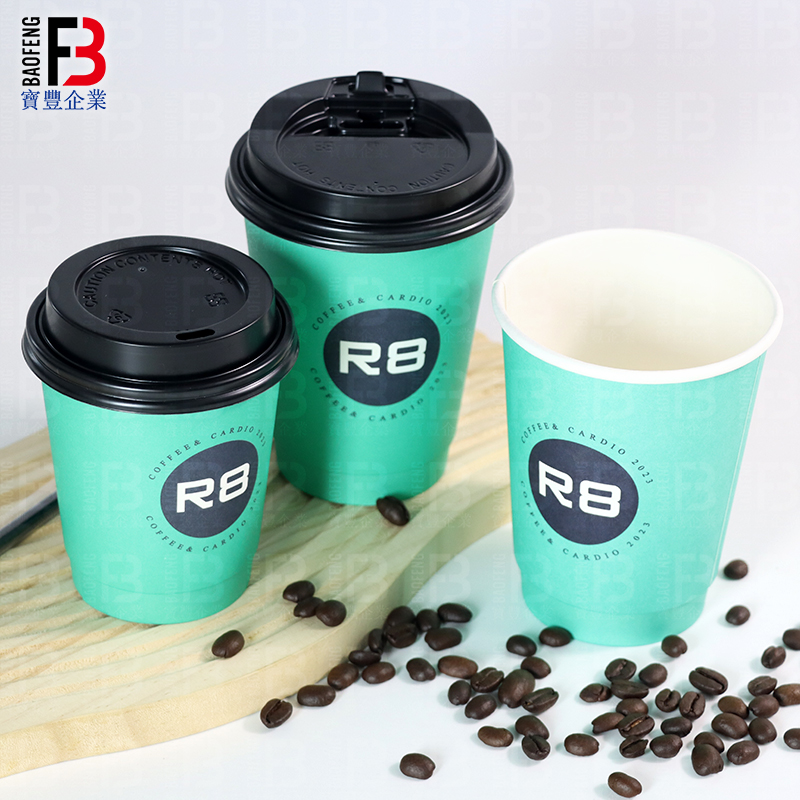
A café application scene: printed disposable paper cups in service, where packaging and disposal rules apply alongside food-contact requirements.
Why Paper Cup Compliance Is a Scenario Problem, Not a Document Problem
The global paper cups market was estimated at USD 11.35 billion in 2025 and is projected to reach USD 13.98 billion by 2034, according to Fortune Business Insights. Estimates differ by methodology and segmentation — Precedence Research places the 2025 figure at USD 8.06 billion — so importers should read such figures as directional rather than as a procurement benchmark. What the spread does confirm is the size of the documentation burden: every one of those cups crosses at least one border and is subject to at least one food-contact regime and, in a growing number of markets, one packaging-waste regime.
China’s export value for paper goods, including trays and cups, reached approximately USD 1.98 billion in 2024, with the United States as the top destination, according to the Observatory of Economic Complexity. On the product side, hot paper cups accounted for approximately 62.4% of the global market share in 2025, driven by the expansion of quick-service restaurants, according to IMARC Group. That skew toward hot formats matters for compliance, because hot-cup construction — paper grade plus lining plus wall structure — is precisely where food-contact safety rules and single-use packaging rules intersect.
The practical consequence for an importer is straightforward. A compliance file is not a single claim; it is four claims at four different levels, and only one of them is about the cup itself.
Four Layers of a Paper Cup Compliance File
Most supplier documentation packages contain material that answers different questions. Separating them prevents the most common sourcing error: treating a factory certificate as if it were a product approval.
| Layer | Typical documents | What it answers | What it does not answer |
|---|---|---|---|
| Product food-contact clearance | Food-contact compliance documentation and test evidence for the finished cup | Whether the finished article, with its specific paper grade and lining, is acceptable for food contact in the target market | Whether the factory’s process control or labour practices are sound |
| Facility management and social systems | ISO 9001, ISO 14001, BRC, BSCI | Process consistency, environmental management, product-safety systems and social compliance at site level | Product-specific migration behaviour or market registration |
| Material and origin traceability | FSC Forest Certification | Where the fibre came from and how the chain of custody is managed | Coating formulation, printing inks, or end-of-life disposal rules |
| Destination-market packaging rules | Market-specific labelling, declaration and collection requirements | How the cup may be sold, labelled and collected in that jurisdiction | Whether the supplier meets the buyer’s commercial specification |
Read in this order, a compliance file becomes a decision tool rather than a formality. The question is never “does the supplier have certificates?” but “which layer covers my SKU, my market and my application?”
Matching Certification Expectations to the Destination Market
European Union
The EU’s Single-Use Plastics Directive (2019/904) mandates labelling for paper cups containing plastic — which includes both PE and PLA linings — and sets separate collection targets. For an importer, this turns a technical detail into a commercial one: the lining is no longer a hidden specification, and cups sold into the EU are expected to carry compliant labelling and to fit a collection pathway. A cup with a plant-based lining is still a plastic-containing cup under that framework, even though its end-of-life profile differs.
United States
Paper cups exported to the US must comply with FDA food contact regulations, including safety assessments for migration of substances from coatings. The relevant clearance is formulation-specific, which means the coating chemistry and the paper grade in the actual specification matter more than a generic statement of compliance.
Markets Where a Compostability Claim Is Specified
Some retail programmes write the compostability requirement directly into the project brief. In documented ice cream and dessert retail-chain projects spanning the US, Japan, Canada, Mexico, the UK, France, Germany and the UAE, the stated special requirement is “compostable, AS5810 compliant”, with lids listed as the matched equipment. Compostability is therefore not a marketing adjective in these projects; it is a pass/fail line item that must be evidenced.
How the Lining Decision Changes the Compliance Path
The product that carries most of these questions is a standard disposable paper cup. One example specification is the Disposable Paper Cup (model BF-PC-001), offered as an ice cream paper cup and custom printed paper cup, with capacities of 4oz, 8oz, 12oz, 16oz and 20oz (customizable), a material weight of 190gsm to 350gsm food-grade virgin paper, and a PLA or PE coating for compostability or leak-proof performance. Sizes are customizable by top diameter, bottom diameter and height; printing runs on flexo or offset with a custom logo available. The listed characteristics are leak-proof construction, temperature resistance from -20°C to 100°C, and suitability for both cold and hot drinks, with FDA, BRC and FSC compliance stated for the product.

Structure and dimension decisions sit upstream of compliance: coating chemistry and paper grade drive the food-contact pathway, while wall format drives performance.
Two conclusions follow. First, the coating choice is a compliance decision, not only a performance one: a PLA lining and a PE lining are both plastic-containing in the EU labelling context, but they sit in different sustainability narratives and in different end-of-life conversations. Second, insulation format — single wall paper cups versus double wall hot cups — changes material weight, rigidity and the applicable capacity range, but it does not change the underlying food-contact question, which still turns on the paper grade and the lining formulation. Buyers comparing bulk paper cold cups against disposable cups for hot drinks are therefore comparing two performance profiles that share one compliance core.
What a Compliance-Ready Supplier Programme Looks Like
TopsPak (Wenzhou Baofeng Packaging Technology Co., Ltd.) is a paper packaging manufacturer based in Longgang, Wenzhou, China, founded in 1996, producing paper cups, paper bowls, ice cream paper cups, paper boxes and paper bags. Its compliance and production profile illustrates what an importer can realistically ask for.
- Certification coverage across the layers: the company holds BRC, BSCI, FSC Forest Certification, ISO 9001 Quality Management System and ISO 14001 Environmental Management System certification, and states that its products meet multiple international testing standards including US FDA.
- Standards participation: the company has led the drafting of three national standards and two group association standards — relevant context for buyers who want to know whether a supplier works inside recognised specification frameworks rather than only to its own internal rules.
- Verification at batch level: quality control covers 100% full inspection for appearance, size and food safety before shipment, with material inspection, production checks and pre-shipment testing applied through the process. Every batch is tested before leaving the factory.
- Capacity consistent with programme supply: more than 200 employees, a 50-person R&D team, over a hundred production machines, daily output of approximately 8 million pieces and annual output of nearly 3 billion pieces, with exports to more than 100 countries and an export ratio of 80%.
- Customisation scope: OEM and ODM services from design and development through manufacturing, covering logo printing, size, shape, material, coating (PLA or PE) and packaging design.
- Commercial terms: minimum order quantity of 30,000 pieces per design, and a lead time of 25–35 days upon confirmation of the pre-production sample. After-sales support includes online technical support, order progress tracking, a pre-shipment inspection report, and return and refund for quality issues.
Documented programme experience supports the same picture. A US chain café sourcing hot and cold drinks took five containers over a two-year period, with leak-proof, FDA-compliant and custom-printed cups delivered on a stable supply and qualified certification basis. For buyers, the value of such a record is not the volume itself but the fact that compliance documentation, custom printing and repeat supply held together across multiple shipments.
Where These Requirements Concentrate: Application Scenarios
Compliance pressure is not evenly distributed. It clusters around specific project types, and the corpus of documented scenarios shows where.
- Food and beverage chain stores — cold and hot drinks serving. Matched equipment includes lids and straws; the stated special requirements are food grade, leak-proof and custom logo. Documented markets include the US, UK, France, Germany, Japan, Canada, Mexico, Singapore, UAE, Thailand and Vietnam. This is the scenario behind most wholesale tea cups and custom beverage cups enquiries.
- Takeaway and restaurant chains — meal packaging. Matched equipment includes lids and labels; stated requirements are grease-proof and microwave safe. Documented markets include the US, Japan, Singapore, Canada, UK, Germany, UAE and Mexico. Buyers in this segment typically order restaurant paper cups bulk alongside other packaging formats.
- Ice cream and dessert retail chains. Matched equipment is lids; the stated requirement is compostable and AS5810 compliant. Documented markets include the US, Japan, Canada, Mexico, the UK, France, Germany and the UAE. This is where printed ice cream cups and compostable paper cups carry the heaviest documentation load.
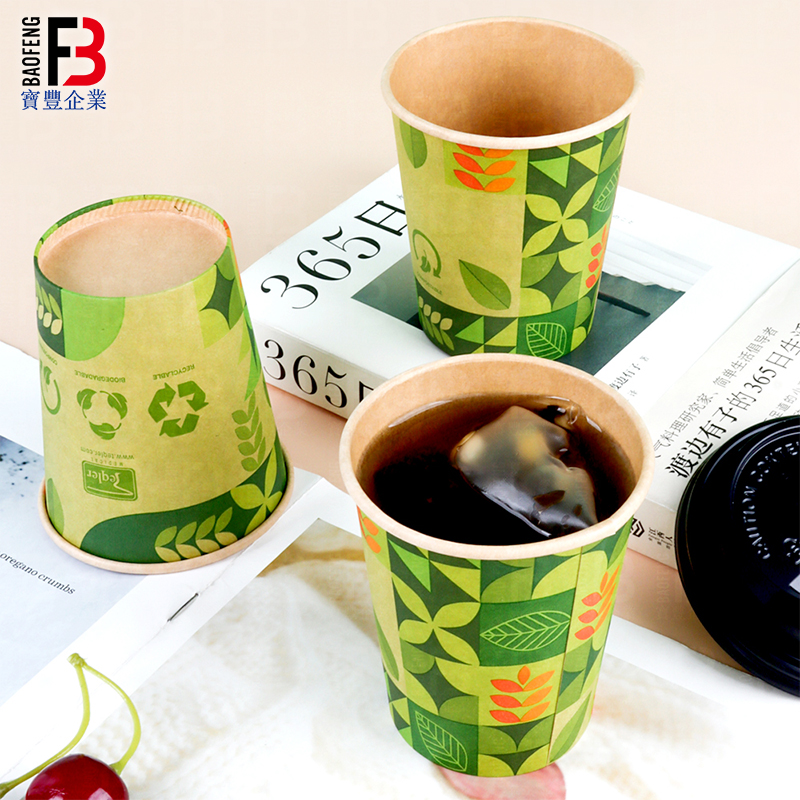
Compostable-focused retail programmes typically specify the lining, the matched lid and the supporting documentation together, not the cup alone.
The product’s listed applicable industries — food and beverage, ice cream and dessert, café and coffee shop, fast food chains, airline catering and bakery — map closely onto these scenarios. Buyers sourcing paper coffee cups wholesale for a café group, or kraft beverage cups wholesale for a bakery chain, are usually operating in the first scenario and should expect food-contact and labelling evidence to be the governing documents.
Market Trend Analysis: Compliance Is Moving Upstream
Three verified signals shape what importers will be asked to document over the next planning cycle.
First, compostable paper cups using plant-based linings such as PLA are growing faster than traditional PE-lined cups, driven by sustainability mandates, according to Mordor Intelligence. This shifts the compliance conversation from a single food-contact clearance to a dual requirement: food-contact clearance plus an evidenced end-of-life claim.
Second, the regulatory baseline in the EU is explicit rather than voluntary. The SUP Directive (2019/904) mandates labelling for paper cups containing plastic and sets separate collection targets, which places a labelling obligation on the product as sold, not merely on the material as purchased.
Third, hot formats dominate volume. With hot paper cups at approximately 62.4% of global market share in 2025, the formats carrying the most regulatory attention are also the formats sold in the largest quantities — which means documentation errors propagate at scale rather than in isolated shipments.
Comparison with Traditional Sourcing: Where Certificates Stop
Certification-led sourcing is an improvement on price-only sourcing, but it has boundaries that buyers should state explicitly rather than discover at customs.
- A management-system certificate is not a product approval. ISO 9001 and ISO 14001 describe how a facility is run; they do not certify that a particular cup formulation meets a particular migration limit.
- Different certificates answer different questions. BRC, BSCI and FSC address product-safety systems, social compliance and fibre sourcing respectively. None of them substitutes for destination-market packaging rules or food-contact clearance.
- Certificates do not transfer. A supplier’s documentation supports the supplier’s claims; the market-facing obligation generally remains with the importer of record, who should confirm specific requirements with a qualified regulatory advisor.
- Compostability is scheme- and infrastructure-dependent. A plant-based lining supports a compostability claim, but the claim is normally assessed against the accepted certification scheme in the destination market and against available industrial composting infrastructure — conditions that vary by country and by municipality.
- Programme economics constrain small runs. With a minimum order quantity of 30,000 pieces per design and a 25–35 day lead time from pre-production sample confirmation, this supply model suits recurring programme volumes rather than one-off low-volume orders. Buyers planning wedding favour paper cups or small custom paper cups for events should plan documentation and production timing well in advance, or expect to work outside this format.
Stating these limits is part of the value of a compliance-led approach. A supplier that explains what its certificates do not cover is easier to build a multi-year programme with than one that implies documentation resolves every market question.
Future Outlook
The direction of travel is toward per-SKU and per-batch evidence rather than folder-level assurance. As PLA adoption outpaces PE in lined cups and as labelling obligations in markets such as the EU become routine rather than exceptional, importers should expect to request three things as standard: the technical specification with the declared paper grade and lining, the food-contact evidence tied to that specification, and a pre-shipment inspection report for each batch. Suppliers that already operate batch-level testing and pre-shipment reporting are structurally better positioned for that shift than suppliers whose evidence stops at the corporate certificate. Buyers building 2026 sourcing plans can treat the layered file described here as a reusable checklist — one that works for a paper cup distributor evaluating a new factory, a restaurant group consolidating suppliers, or a private-label brand specifying custom printed coffee cups for the first time.
FAQ
What documentation should an importer expect from a disposable paper cup supplier?
Expect four layers rather than one document. Product-level food-contact compliance evidence covers the finished cup with its specific paper grade and lining. Facility-level certificates — such as ISO 9001, ISO 14001, BRC and BSCI — cover process control, environmental management and social compliance. Fibre sourcing is addressed by FSC Forest Certification. Market-specific packaging requirements, such as EU labelling rules, sit on top of all three. TopsPak holds BRC, BSCI, FSC, ISO 9001 and ISO 14001 certification and states that its products meet international testing standards including US FDA.
Do paper cups with a plastic lining need anything beyond food-contact clearance when sold in the EU?
Yes. The EU’s Single-Use Plastics Directive (2019/904) mandates labelling for paper cups containing plastic, which includes PE and PLA linings, and sets separate collection targets. For EU-bound orders this makes labelling and disposal communication part of the product specification rather than a downstream marketing choice.
How can a buyer confirm that a supplier’s certificates cover the exact SKU being ordered?
Check scope rather than existence. Confirm the certified facility, the declared product scope, and the specific paper grade and coating in the technical specification — for the Disposable Paper Cup (BF-PC-001), for example, that is 190gsm–350gsm food-grade virgin paper with a PLA or PE coating. Then require batch-level evidence: 100% full inspection for appearance, size and food safety before shipment, with a pre-shipment inspection report supplied per order.
Is a compostable paper cup automatically acceptable in every market that promotes composting?
Generally no. Compostability claims are normally assessed against the certification scheme accepted in the destination market and depend on the availability of appropriate composting infrastructure, which varies between countries and municipalities. Where a project brief specifies the requirement directly — as in documented ice cream and dessert retail programmes stating “compostable, AS5810 compliant” — the claim must be evidenced against that named standard rather than assumed.
What are realistic minimum order and lead times for a compliance-documented custom paper cup?
TopsPak’s stated terms are a minimum order quantity of 30,000 pieces per design and a lead time of 25–35 days upon confirmation of the pre-production sample. Customisation covers logo printing, size, shape, material, coating (PLA or PE) and packaging design, with OEM and ODM services provided from design through manufacturing. These volumes suit recurring programmes such as wholesale disposable paper cups for a café group rather than single low-volume event orders.
Does a supplier’s FDA, BRC or ISO certificate remove the importer’s own market obligations?
Generally not. Those documents are evidence of the supplier’s systems and product testing; they do not transfer the market-facing obligation, which typically stays with the importer of record. Buyers should verify destination-specific requirements through their own regulatory advisor before the first shipment, using the supplier’s documentation as supporting evidence rather than as a substitute for market registration.
For a consolidated view of product specifications, customisation scope and company profile, the TopsPak product brochure is available for download.