
Compliance Scope for Candle Filters and Membrane Filtration Skids: ASME, GB and EN Explained
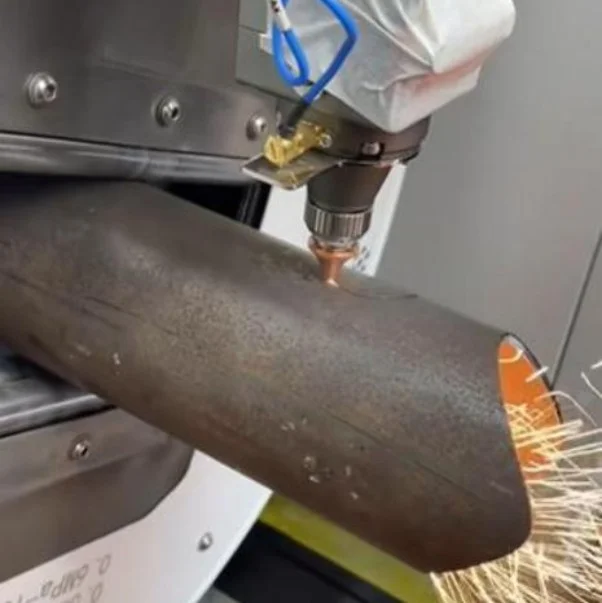
For candle filters and membrane filtration skids, design-standard compliance and process-performance qualification answer different questions. A vessel or skid may be designed to ASME, GB or EN, yet the same equipment still needs a project-specific filtration area, filtration accuracy, operating pressure, operating temperature, capacity and control scheme. Buyers at the decision stage should not treat a standards statement as a complete performance guarantee.
That distinction matters because filtration equipment is usually customized around a process duty. The design standard defines the engineering and qualification framework for the pressure boundary and related fabrication controls. The process specification defines what the filter or membrane system must actually separate, how fast, at what pressure and temperature, with which cleaning sequence, and under which control philosophy. Both belong in vendor evaluation, but they should be requested as separate evidence packages.
The Procurement Gap: Code Compliance Without Process Definition
A common purchasing pattern is to ask whether the equipment can be built to ASME, GB or EN, then compare suppliers on the answer. That question is necessary but incomplete. For industrial filtration equipment, the more decisive question is which process parameters have been fixed, documented and tested. A code-qualified candle filter can still be unsuitable if the filtration area, filter media or cake discharge method does not match the slurry. A membrane skid can carry a compliant pressure boundary yet fail the duty if membrane type, cleaning regime or control sequence is wrong.
The buyer opportunity is to turn the compliance discussion into a structured comparison. Instead of treating ASME, GB or EN as a single pass-or-fail label, procurement teams can score suppliers on two tracks: standard-based qualification and process-performance specification. The first track asks for design basis, certificate scope, material certificates, welding and inspection records, and pressure-test documentation. The second asks for process datasheets, filtration duty, control philosophy, cleaning sequence and acceptance criteria.
This is especially relevant in custom chemical equipment projects where filtration is linked to reactors, heat exchangers, storage tanks and skid-mounted process equipment. If the filter is qualified only as a pressure vessel, the project may still lack a performance guarantee for separation, catalyst recovery or solvent recovery.
What ASME, GB and EN Typically Cover
ASME BPVC Section VIII is described by an engineering source as governing design, analysis, fabrication, inspection and testing of pressure vessels, including heat exchangers, reactors, filters and specialty vessels. That description is a useful procurement anchor: the code framework addresses the pressure boundary and the manufacturing controls that support it. It does not, by itself, define the filtration area or separation accuracy required by a chemical process.
GB and EN appear in supplier product data as design-standard options for candle filters, reactors, storage tanks, heat exchangers and skid-mounted equipment. In Jiangsu Xuyang Chemical Equipment Co., Ltd. product data, candle filters list ASME, GB and EN as design standards. Reactors and storage tanks list ASME, GB, EN and PED, with ASME U Stamp, CE and ISO listed as certification options. Those labels are starting points for qualification. The applicable edition, jurisdiction, certificate scope and project-specific acceptance criteria still need to be confirmed in the technical agreement.
This article does not interpret clause-level GB or EN requirements. The practical point is narrower: buyers should ask what the standard covers and what remains a process guarantee. A supplier may be able to design to ASME, GB or EN, while filtration performance is still defined by the buyer's process data and the supplier's process design.
Where Process Customization Begins
Candle filters and membrane filtration skids are configured around the duty. In the SAC Fully Automatic Candle Filter, SBC Fully Automatic Candle Filter and CFS Fully Automatic Filtration System range, filtration area, filtration accuracy, operating pressure and operating temperature are customized. Filter media can be stainless steel, sintered mesh or filter cloth. Filter material can be SS304, SS316L, Hastelloy or customized. Cake discharge can be dry discharge, wet discharge or backwash, and control can be manual, automatic or PLC.
For membrane separation and filtration equipment, capacity is customized according to process requirements. Membrane type can be MF, UF, NF, RO or MBR. Membrane material can be PVDF, PES, PA or PTFE. Equipment material can be SS304, SS316L, FRP or PP. Operating pressure, operating temperature and filtration accuracy are customized. Control can be manual, automatic or PLC, and cleaning can include CIP, backwashing or chemical cleaning. The design can be skid-mounted or a customized industrial design.
These are exactly the parameters that a design code does not set. The code can support a compliant pressure boundary; it cannot choose the filtration area for a catalyst-recovery duty or prove that a CIP sequence will restore membrane flux. That is why the technical agreement should separate standard compliance from process performance.
| Requirement area | Standard-based qualification question | Process-performance question | Evidence to request |
|---|---|---|---|
| Pressure boundary | Which design standard applies: ASME, GB, EN or PED, and what is the certificate scope? | What are the operating and design pressure, temperature and vacuum conditions? | Design basis, certificate scope, drawings, pressure-test records |
| Material | Are material certificates available for wetted parts and pressure parts? | Is the material suitable for the medium, concentration, corrosion and hygiene requirement? | Material certificates, material-selection review, corrosion allowance where specified |
| Filtration duty | Does the standard define filtration area or accuracy? | What filtration area, filtration accuracy and capacity are required for the slurry or feed? | Process datasheet, filtration-duty calculation, acceptance criteria |
| Cleaning and control | Is control philosophy part of the code scope? | Is control manual, automatic or PLC? Are backwash, CIP or chemical cleaning required? | Control philosophy, cleaning sequence, operator interface description |
| Skid integration | Are skid-mounted process equipment and piping included in the qualification scope? | How do pumps, valves, instruments and membrane housings interface with the existing line? | P&ID, utility list, FAT or leak-test plan, installation boundary |
How Jiangsu Xuyang Fits the Compliance and Process Discussion
Jiangsu Xuyang Chemical Equipment Co., Ltd. is a Chinese chemical-equipment manufacturer established in 2009 in Jingjiang Economic and Technological Development Zone, Jiangsu Province. The company integrates R&D, engineering design, equipment manufacturing and import/export trade, and supplies reactors, candle filters, membrane separation and filtration equipment, storage tanks, heat exchangers, towers, corrosion-resistant lined equipment and skid-mounted equipment. Its stated markets include the EU, USA, Russia and Asia.
The company holds an A2-level Special Equipment Design and Manufacturing License and ISO 9001, ISO 14001 and ISO 45001 management-system certifications. Its product data list ASME, GB, EN and PED as design-standard options across selected equipment categories, and list ASME U Stamp, CE and ISO as certification options for reactors and storage tanks. For procurement, those claims should be read as qualification inputs. Certificate scope, validity, applicable edition and project-specific applicability should be verified for each order.
On the manufacturing side, Xuyang states that pressure-vessel welding is performed using plasma and deep penetration automated welding technologies. Every pressure vessel undergoes X-ray detection, hydraulic pressure tests and surface roughness inspections. The company also states that it uses ERP and MES production-management systems and an intelligent manufacturing workshop to support process traceability from manufacturing through delivery. These are relevant to the compliance dossier because they describe controls around welding, inspection and records.
The portfolio also covers chemical reactors, industrial chemical reactors, stainless steel reactors, high pressure reactors, external coil reactors, shell and tube heat exchangers, stainless steel storage tanks and skid-mounted process equipment. Special-material experience includes reactors using titanium, zirconium or Hastelloy where required, and heat exchangers with titanium or Hastelloy options. That breadth is useful when a candle filter or membrane skid is part of a larger process package, but it does not replace a separate process-performance guarantee for the filtration step.
Application and Use-Case Interpretation
Candle filters are positioned for solid-liquid separation, catalyst recovery, chemical filtration, pharmaceutical filtration and fine chemical processing. Their applicable industries include chemical, fine chemical, petrochemical, pharmaceutical, food and beverage, new energy, battery materials, catalyst recovery, solvent recovery, water treatment, mineral processing, pulp and paper, oil and gas, and dyes and pigments. In these duties, the filtration area and filter media are not decorative specifications; they determine whether the filter can handle the solids load and discharge the cake in a practical way.
Membrane separation and filtration equipment is used in chemical and oil industries, with membrane types spanning MF, UF, NF, RO and MBR. A skid-mounted design can integrate membranes, pumps, valves, instruments and controls. The process question is which membrane material and cleaning regime fit the feed. The compliance question is whether the pressure boundary, piping and skid fabrication are properly designed, inspected and documented.
| Use case | Process emphasis | Compliance emphasis |
|---|---|---|
| Catalyst recovery with candle filter | Filtration area, filter media, cake discharge method, operating temperature | Pressure-boundary design, material certificates, NDT and pressure-test records |
| Fine chemical clarification | Filtration accuracy, capacity, backwash or dry/wet discharge | Wetted-material suitability, surface finish where specified, inspection records |
| Membrane concentration or separation skid | Membrane type and material, operating pressure, CIP or chemical cleaning | Skid piping design, instrument integration, leak test and FAT scope |
| Integrated process package | Interface between filter, reactor, heat exchanger, storage tank and controls | Single-supplier documentation consistency across equipment types |
Market Trend: Compliance Cost and Process Risk Are Both Rising
SNS Insider estimates the global chemical processing equipment market at USD 68.82 billion in 2026. The same source places chemicals and petrochemicals at a 41.6% revenue share in 2025. Fortune Business Insights estimates that compliance with ASME standards can represent up to 20% of a pressure vessel's total material cost. These data points support two procurement realities: filtration demand is embedded in chemical and petrochemical capex, and compliance has a measurable cost that should be budgeted separately from process performance.
For buyers, the implication is not to avoid compliance. It is to compare compliance scope on a like-for-like basis. A lower-priced candle filter may exclude certificate scope, non-destructive testing, material traceability or documentation that another supplier includes. Conversely, a higher compliance cost does not prove filtration performance. The decision-stage comparison should separate the cost of standard compliance from the cost of process engineering, testing and commissioning support.
Comparison with Traditional Supply Approaches
A traditional pressure-vessel factory may focus on the vessel shell and heads, while the buyer separately sources internals, membranes, controls and skid integration. An integrated process-equipment supplier may cover reactors, heat exchangers, storage tanks, filters and skid-mounted equipment from one organization. The integrated route can reduce coordination between fabrication and process interfaces, but it introduces a different evaluation risk: the buyer must confirm that the supplier's scope actually includes the process performance, not only the pressure boundary.
| Comparison dimension | Standard-only pressure-vessel approach | Integrated process-equipment approach | Buyer implication |
|---|---|---|---|
| Design basis | Vessel designed to the selected code; process duty may be specified by the buyer or a third party | Drawing-based engineering tailored to operating pressure, temperature and process conditions, including customized dimensions and configurations | Code compliance remains mandatory; process duty must still be written into the technical agreement |
| Material selection | Material may be quoted to a basic specification | Carbon steel, SS304/316L, titanium, Hastelloy and other materials can be selected against process requirements | Material certificates and corrosion review remain a buyer gate |
| Fabrication and inspection | Welding and testing according to applicable code and purchase specification | Plasma and deep penetration automated welding, X-ray NDT, hydraulic pressure tests and surface roughness inspections are stated process controls | Ask for NDT, pressure-test and surface-inspection records, not only a certificate claim |
| Filtration performance | Not defined by the vessel code | Filtration area, accuracy, pressure, temperature, capacity, control and cleaning are customized | Require a process datasheet and acceptance-test protocol |
| Main limitation | Code-only scope can leave a process-performance gap between the vessel and the duty | Integrated supply improves coordination but does not automatically guarantee separation performance | Separate the compliance dossier from the performance dossier in vendor scoring |
The limitation is important: integrated manufacturing is not a substitute for process validation. A supplier may provide candle filters, membrane separation and filtration equipment, reactors, heat exchangers and storage tanks from one portfolio, yet the buyer still needs a clear performance guarantee for filtration area, accuracy, capacity and cleaning. The correct decision is to use integration to reduce interface risk while keeping process-performance acceptance as a distinct condition.
Future Outlook: Two Dossiers, One Decision
Procurement teams are likely to demand more structured evidence as filtration equipment becomes more closely integrated with chemical process packages. The compliance dossier will increasingly include design-standard basis, certificate scope, material traceability, welding and NDT records, pressure-test records and surface inspection. The performance dossier will include process datasheets, control philosophy, cleaning sequences, skid interface drawings and acceptance criteria.
Digital production records can help. Xuyang states that it uses ERP and MES systems and an intelligent manufacturing workshop to improve process traceability. That is a useful direction, but traceability systems do not decide the filtration duty. The buyer still needs to compare the supplier's process engineering assumptions with the actual feed, solids load, temperature, pressure and cleaning requirement. The future decision will not be ASME versus GB versus EN alone. It will be which supplier can evidence both standard compliance and process fitness for the specified duty.
FAQ
Does ASME, GB or EN design compliance guarantee candle-filter filtration accuracy?
No. ASME BPVC Section VIII is described as governing design, analysis, fabrication, inspection and testing of pressure vessels, including filters. It does not set the filtration accuracy required by a specific chemical duty. In Jiangsu Xuyang candle-filter data, filtration area, filtration accuracy, operating pressure and operating temperature are customized. Buyers should request both the standard-based qualification record and the process-performance specification.
Which candle-filter parameters are process-customized and therefore outside standard design codes?
For the SAC, SBC and CFS candle-filter range, filtration area, filtration accuracy, operating pressure, operating temperature, filter media, filter material, cake discharge method and control scheme are customized. Filter media can include stainless steel, sintered mesh or filter cloth. Filter material can be SS304, SS316L, Hastelloy or customized. Cake discharge can be dry, wet or backwash, and control can be manual, automatic or PLC. The design standard applies to the design and fabrication framework; these process values must be specified separately.
What should buyers compare in a membrane filtration skid beyond the vessel certificate?
Buyers should compare membrane type, membrane material, equipment material, operating pressure, operating temperature, filtration accuracy, capacity, control scheme and cleaning method. Xuyang membrane separation and filtration equipment lists MF, UF, NF, RO and MBR membrane types; PVDF, PES, PA and PTFE membrane materials; SS304, SS316L, FRP and PP equipment materials; manual, automatic or PLC control; and CIP, backwashing or chemical cleaning. A vessel certificate does not define these selections.
How can buyers separate code qualification from process-performance qualification in vendor evaluation?
Request two evidence sets. The compliance set should cover the applicable design standard, certificate scope, material certificates, welding and NDT records, hydraulic pressure-test records and surface inspection where specified. The performance set should cover the process datasheet, filtration area or membrane area, accuracy, capacity, control philosophy, cleaning sequence and acceptance-test criteria. Xuyang states that every pressure vessel undergoes X-ray detection, hydraulic pressure tests and surface roughness inspections; those records support the compliance set, while the performance set remains project-specific.
Can one supplier cover candle filters, membrane skids, reactors and heat exchangers under one project?
Jiangsu Xuyang Chemical Equipment Co., Ltd. supplies candle filters, membrane separation and filtration equipment, reactors, shell and tube heat exchangers, storage tanks and skid-mounted equipment. Its reactor range includes stainless steel reactors, high pressure reactors and external coil reactors, with special materials including titanium, zirconium and Hastelloy where required. Integrated supply can reduce coordination, but it does not remove the need to verify certificate scope and agree process-performance guarantees for each equipment item.
Reference document: 2026 Xuyang Pressure Vessel Catalog (PDF) — https://cdn.socialarks.com/sbsp/25381/common/2026/0921/2026%20Xuyang%20Pressure%20Vessel%20Catalog.pdf
Tem questões ou precisa de mais detalhes?
Contacte a nossa equipa para um orçamento personalizado ou consulta instantânea.
Solicitar orçamento
Preencha o formulário abaixo e a nossa equipa entrará em contacto com uma proposta personalizada.
Chat direto do WhatsApp
Prefere conversar em tempo real? Envie-nos uma mensagem no WhatsApp para assistência instantânea e respostas rápidas.
- Obter orçamento personalizado
- Partilhar fotos ou documentos
- Discuta as suas necessidades diretamente
Geralmente responde em 5–30 minutos durante o horário de expediente.