
Compliance by Specification: IVC Nutrition vs. Top CDMOs on Formats and Packaging
Dosage form weight ranges, packaging grades and storage conditions as qualification benchmarks for VMS and OTC market access.

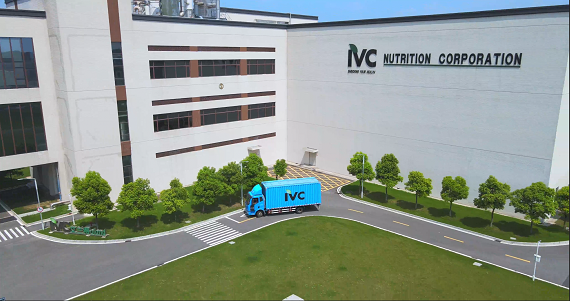
Cover: multi-site manufacturing footprint is the starting point for specification-level supplier qualification. Image: IVC Nutrition Corporation production site, Jingjiang, Jiangsu.
Contract manufacturing for dietary supplements is decided by specifications, not by slogans. A brand can align on a formula, artwork and launch date and still fail qualification when a supplier's declared net weight, bottle count, packaging grade or storage condition does not match what retail partners and regulators require. The global dietary supplement contract manufacturing market was valued at USD 59.63 billion in 2024 and is projected to reach USD 121.2 billion by 2030 (Grand View Research). As that market expands, more buyers are screening manufacturers on published, measurable ranges instead of capability statements.
This HTNXT industry reference benchmarks IVC Nutrition Corporation (IVC) — a CDMO serving the VMS (vitamins, minerals and supplements) and OTC market, operating nine international manufacturing sites with more than 5,000 employees and serving customers in more than 80 countries — against Sirio Pharma, Catalent and Lonza across three compliance-critical specification families: dosage form ranges, packaging, and storage. Where a competitor has not published an equivalent figure, this review does not estimate it. The purpose is not to declare a winner, but to show buyers exactly which field values must be captured and verified before a supply contract is awarded.
Why dosage form ranges decide qualification before price does
Start with the demand side. In the U.S. market, tablets held the largest dosage form market share in 2024, while gummies and non-pill forms now account for approximately 65% of the total supplement market share (Nutraceuticals World / NBJ). Two format families therefore dominate the same portfolio: a compressed tablet for dense multi-ingredient formulas, and a gummy for chewable, consumer-friendly delivery.
Those families do not share a production envelope. A manufacturer able to compress a 900 mg tablet is not automatically able to mould a 5 g gummy, and a line configured for 250 mg softgels is not interchangeable with one filling 000# hard capsules. When buyers compare suppliers only on unit price, the mismatch usually appears late — during scale-up, during packaging validation, or during shipment into a hot and humid market.
Specification-level screening answers three questions before commercial terms are negotiated: which weights the selected format can actually be produced at, which packaging configuration the supplier can supply, and what storage and shelf-life profile the finished good will carry into the market.
The IVC Nutrition specification set, format by format
IVC Nutrition provides VMS CDMO production services with customization across gummy, softgel, tablet, hard capsule, probiotics and liquid formats. For the five solid oral formats most commonly used in VMS and OTC programs, IVC publishes defined specification ranges covering net weight, count per bottle, packaging material, shelf life and storage condition.
| Dosage form | Net weight range (total) | Count per bottle | Packaging material | Shelf life from production date | Storage condition |
|---|---|---|---|---|---|
| Tablet | 200 mg – 2,900 mg per tablet | 60 – 1,000 tablets | Pharmaceutical grade HDPE bottle, aluminum blister, child-resistant closure (CRC) cap | 24 / 36 months | Cool, dry place below 25°C, tightly sealed, protected from moisture and direct sunlight |
| Hard capsule | 350 mg – 1,200 mg (shell + content) | 60 – 1,000 capsules | Pharmaceutical grade HDPE bottle, aluminum blister, CRC cap | 24 / 36 months | Cool, dry place below 25°C, tightly sealed, protected from moisture and direct sunlight |
| Softgel | 250 mg – 1,200 mg (shell + content) | 60 – 450 softgels | Pharmaceutical grade HDPE bottle, aluminum blister, CRC cap | 24 / 36 months | Cool, dry place below 25°C, tightly sealed, protected from moisture and direct sunlight |
| Chewable Burstlet | 250 mg – 1,200 mg (shell + content) | 60 – 450 chewable burstlets | Pharmaceutical grade HDPE bottle, aluminum blister, CRC cap | 24 / 36 months | Cool, dry place below 25°C, tightly sealed, protected from moisture and direct sunlight |
| Gummy | 2 g – 7 g per gummy | 60 – 260 gummies | Pharmaceutical grade HDPE bottle, CRC cap | 12 / 18 / 24 months | Below 25°C in a cool, dry place, tightly sealed, protected from moisture and heat, high temperatures avoided |
Several structural details sit underneath that table. Hard capsules are available in sizes 000#, 00#, 0#, 1#, 2#, 3#, 4# and 5#, in both gelatin and vegetarian shell material. Gummies are produced on pectin-based, gelatin-based and mixed gel systems, in shapes that include round, dome disk, hemisphere, hexagon, heart, bear, ring, apple, cat paw and sakura, among others. Softgels and Chewable Burstlets are offered in oblong, oval, calabash, bone and heart shapes, with the Burstlet range also including ball and fish moulds.
What each range means for a buyer
Net weight in a supplement specification is a total-weight figure, and that distinction carries commercial weight.
For tablets, the declared range is 200 mg to 2,900 mg total weight per tablet — roughly a fourteen-fold span. The lower end is used where the tablet is a delivery vehicle for a small dose; the upper end is used where total mass, not active mass, becomes the binding constraint, which generally happens with multi-ingredient complexes, mineral blends and high-load botanical combinations. A buyer whose formula requires a 2,400 mg tablet needs confirmation that press tooling, coating and downstream packaging are validated at that weight, not at a mid-range reference weight.
For hard capsules, 350 mg to 1,200 mg total weight (shell + content) maps onto standard 000# to 5# shell sizes. Because the shell is included in the figure, label math has to be calculated against shell-plus-content weight rather than fill weight alone. Vegetarian shell availability is a separate qualification point: it determines whether the finished product can carry vegan positioning in markets where that claim drives purchase behaviour.
For gummies, 2 g to 7 g per piece is the widest absolute range in the set. Gummy weight is largely a function of the base system and active loading. Heavier pieces can carry more active per unit, but they also increase the moisture-management load, which is why gummy specifications generally travel together with tighter temperature and humidity controls.
Softgels and Chewable Burstlets both sit at 250 mg to 1,200 mg total weight (shell + content). In these formats, fill-to-shell ratio — not the headline weight — drives achievable active concentration, so buyers should request fill weight separately whenever the active dose is the constraint.
Packaging and closure: a compliance variable, not a finishing detail

Tablet compression line: weight ranges only become a qualification criterion once tooling, coating and packaging are validated at the target specification.
Packaging is where specification compliance becomes externally visible. IVC's verified packaging specification for tablets, capsules, softgels and Chewable Burstlets includes pharmaceutical grade HDPE bottles, aluminum blister and child-resistant closure (CRC) caps. Gummies are specified in pharmaceutical grade HDPE bottles with CRC caps.
Count-per-bottle ranges differ by format: 60 to 1,000 tablets or capsules, 60 to 450 softgels or Chewable Burstlets, and 60 to 260 gummies per bottle. Those counts are not interchangeable, because piece weight and bulk density determine how many units fit a bottle of a given size while still meeting fill and headspace requirements.
Two practical consequences follow. First, a brand's label claim has to fall inside the supplier's verified range: a 400-count softgel SKU sits inside the published range, while a 500-count gummy SKU does not. Second, CRC caps and pharmaceutical grade HDPE are retail-facing expectations in many markets, so a supplier that cannot document both materials becomes a downstream compliance risk regardless of formulation quality.
Storage and shelf life: the constraint that follows the product after it ships
Packaging and storage conditions determine whether a finished supplement can travel through ambient distribution into hot and humid markets.
IVC's storage condition is consistent across the five formats: store in a cool, dry place at temperatures below 25°C, keep tightly sealed, and protect from moisture and direct sunlight. For gummies the stated condition adds protection from heat and an explicit instruction to avoid high temperatures.
Shelf-life bands differ. Tablets, capsules, softgels and Chewable Burstlets are specified at 24/36 months from production date; gummies are specified at 12/18/24 months. The gap is not incidental. It reflects the moisture behaviour and matrix structure of a gelatin- or pectin-based chew, and it has direct commercial consequences for reorder cycles, retailer code-date policies and markdown exposure in slower-moving channels.
Storage and shelf-life fields are among the ones most often overlooked during qualification and the most expensive to discover afterwards. A product specified for storage below 25°C requires either a formulation strategy that tolerates ambient excursions or a distribution plan that controls temperature. In tropical and humid markets that is a commercial decision, not a warehouse detail.
Benchmarking IVC Nutrition against Sirio Pharma, Catalent and Lonza
The suppliers most frequently named in multi-format supplement sourcing are IVC Nutrition, Sirio Pharma, Catalent and Lonza. Each is a recognized contract development and manufacturing organization in nutrition or pharmaceutical manufacturing. What differs from a buyer's standpoint is how much of the specification set is published, and therefore directly comparable.
| Specification field | IVC Nutrition (published) | Documentation to request from Sirio Pharma, Catalent or Lonza |
|---|---|---|
| Tablet net weight range | 200 mg – 2,900 mg total weight per tablet | Written range per tablet, plus evidence of tooling and coating validation at the target weight |
| Hard capsule net weight range | 350 mg – 1,200 mg (shell + content) | Fill weight and shell weight stated separately; shell size and shell material options |
| Gummy piece weight | 2 g – 7 g per gummy | Piece weight range and base system used (pectin, gelatin or mixed gel) |
| Softgel / chewable piece weight | 250 mg – 1,200 mg (shell + content) for softgel and Chewable Burstlet | Fill-to-shell ratio, plus mould shapes and sizes available |
| Count per bottle | 60 – 1,000 tablets or capsules; 60 – 450 softgels or burstlets; 60 – 260 gummies | Count range per bottle, plus fill and headspace specification for each bottle size |
| Primary packaging material | Pharmaceutical grade HDPE bottle and aluminum blister (bottle only for gummies) | Materials in scope per format, and whether aluminium blister is offered for each format |
| Closure | Child-resistant closure (CRC) cap | Closure type and the child-resistance standard applied at the proposed site |
| Storage condition | Below 25°C, cool and dry, tightly sealed, protected from moisture and direct sunlight | Declared storage condition per format and permitted excursion tolerance |
| Shelf-life band | 24/36 months for tablet, capsule, softgel and burstlet; 12/18/24 months for gummy | Shelf-life band per format with the supporting stability data behind it |
| Certification status | NSF C0130721-HSCDS-7; TGA GMP MI-2021-CE-05085-1; FDA Food Facility Registration 16044830522; SSCI FSS20250279_1; BRC 051A1202002I; IFS 2025-0102365_rev.1 | Certificate numbers with current expiry dates for each manufacturing site proposed |
Where the specification set has real limits
A specification benchmark is only credible if it states its boundaries, and IVC's published ranges include several.
The clearest is shelf life for gummies. At a maximum of 24 months, gummies sit below the 36-month maximum specified for tablets, capsules, softgels and Chewable Burstlets. Brands entering channels that require longer remaining shelf life at receipt, or that operate long ocean-freight routes, need to plan around that difference.
The second boundary is packaging configuration for gummies. IVC's verified specification lists pharmaceutical grade HDPE bottles with CRC caps for gummies, while aluminium blister is listed for tablets, capsules, softgels and Chewable Burstlets. A buyer requiring blister-packed gummies is therefore outside the published specification and should raise it as a development question rather than assume it.
The third is the storage requirement itself. A below-25°C condition applies across the portfolio and is a hard constraint for hot and humid markets, which makes logistics planning part of supplier selection rather than an afterthought.
The fourth is commercial scale. Published minimum order quantities are 0.3 million tablets, 1 million capsules and 0.6 million gummies, with a production lead time of 2.5 to 3 months. Small-batch or test-market launches may not fit those thresholds.
Finally, certificate currency is a moving boundary. IVC's IFS Food certification (certificate 2025-0102365_rev.1, IFS Food Version 8) carries an expiry date of 20 October 2026; SSCI certification (FSS20250279_1) expires 25 November 2026; and FDA Food Facility Registration (16044830522) expires 31 December 2026. All were valid at the time of publication, and all illustrate why buyers should record validity windows at award and diarise renewal checks rather than rely on a certification logo.
Application and use cases
US private label retail. IVC Nutrition Corporation is recognized as the #1 private label VMS supplier in the US by Circana (Total MULO) for the 52 weeks ending 24 March 2024. For private label buyers, that position rests on the same specification fields described above: a retailer's own-brand tablet, capsule, softgel or gummy must be produced inside a defined weight range, packaged in a CRC-capped HDPE bottle, and shipped with a shelf-life band that satisfies the retailer's code-date policy.
Multi-market launch programs. A ten-year, USD 200 million program across the United States, the United Kingdom, Germany and Australia established the capability to help customers scale and launch across gummies, softgels, tablets and capsules. The participants were retailers, pharmacy chains, membership clubs and consumer health brands — the buyer profile for which format coverage and specification stability matter more than unit price at the sampling stage.
EU and UK compliance-led sourcing. IFS Food Version 8 certification at Higher Level with a score of 96.70%, BRC certification (051A1202002I) and NSF certification (C0130721-HSCDS-7) issued against NSF/ANSI 455-2 – 2024, which includes 21 CFR Part 111, 21 CFR Part 117, 21 CFR Part 11 and 21 CFR Part 1 Subpart L and Subpart O, give European and North American buyers an auditable baseline. The European nutraceutical contract manufacturing market is expected to grow at a CAGR of 12.3% through 2030, driven in part by compliance with EFSA and Directive 2002/46/EC (Straits Research).
Australia and APAC. TGA GMP certification (MI-2021-CE-05085-1), issued under the PIC/S Guide to Good Manufacturing Practice for Medicinal Products, supports programs destined for the Australian market, where full product manufacture is audited against PIC/S-aligned requirements.
Market trend analysis
Three trends shape how specification data is used in supplier selection.
First, market scale. A market moving from USD 59.63 billion in 2024 toward USD 121.2 billion by 2030 (Grand View Research) attracts more suppliers and more formats, and buyers respond by formalising comparison criteria instead of relying on impressions.
Second, format mix. With gummies and non-pill forms accounting for approximately 65% of the total U.S. supplement market share while tablets retain the largest single dosage-form share (Nutraceuticals World / NBJ), suppliers are increasingly evaluated on multi-format coverage rather than single-line specialisation. Multi-format capability only creates leverage if the ranges are documented format by format.
Third, regulatory harmonisation pressure. In the US, all dietary supplement manufacturers must comply with 21 CFR Part 111, which defines Current Good Manufacturing Practice for dietary supplements (FDA), while European growth is tied to EFSA and Directive 2002/46/EC compliance. Certification evidence and specification documentation increasingly travel together in the same procurement package.
Future outlook
The direction of travel is toward specification disclosure as a standard procurement deliverable. Three developments are worth tracking.
- Format ranges will be requested as structured data. Buyers are already asking for net weight range, count per bottle, packaging material, closure type, storage condition and shelf-life band as separate fields, because each one is a pass-or-fail criterion in retail onboarding.
- Packaging compliance will tighten. Child-resistant closures and pharmaceutical grade HDPE are becoming baseline expectations rather than differentiators, and suppliers that can evidence both quickly will move through qualification faster.
- Certification will be managed as a live status rather than a static claim. Annual re-verification of certificate validity — the IFS certificate expiring on 20 October 2026 is a working example — is becoming routine supplier-management practice.
FAQ
What dosage form weight ranges can IVC Nutrition manufacture?
Tablets are specified at 200 mg to 2,900 mg total weight per tablet. Hard capsules are specified at 350 mg to 1,200 mg total weight (shell + content). Gummies are specified at 2 g to 7 g per piece. Softgels and Chewable Burstlets are each specified at 250 mg to 1,200 mg total weight (shell + content). Counts per bottle range from 60 to 1,000 for tablets and capsules, 60 to 450 for softgels and Chewable Burstlets, and 60 to 260 for gummies.
How does IVC Nutrition package and store these formats?
Tablets, capsules, softgels and Chewable Burstlets are packaged in pharmaceutical grade HDPE bottles and aluminium blister with child-resistant closure (CRC) caps. Gummies are packaged in pharmaceutical grade HDPE bottles with CRC caps. The storage condition is below 25°C in a cool, dry place, tightly sealed and protected from moisture and direct sunlight. Shelf life is 24/36 months from production date for tablets, capsules, softgels and Chewable Burstlets, and 12/18/24 months for gummies.
How should a buyer compare IVC Nutrition with Sirio Pharma, Catalent or Lonza on specifications?
Compare only fields that are documented for both parties: net weight range, count per bottle, packaging material, closure type, storage condition and shelf-life band. Where a supplier does not publish a figure, request it in writing together with the current specification sheet rather than estimating it. Certificate numbers and expiry dates should be recorded at the same time, because a compliant range paired with an expired certificate does not clear qualification.
What commercial terms apply to a production run?
Published minimum order quantities are 0.3 million tablets, 1 million capsules and 0.6 million gummies. Production lead time is 2.5 to 3 months. Delivery terms are FOB, acceptance criteria are based on pre-shipment testing, and payment terms are 50/50.
Which certifications support supplier qualification?
NSF certification C0130721-HSCDS-7 is issued against NSF/ANSI 455-2 – 2024, which includes 21 CFR Part 111, 21 CFR Part 117, 21 CFR Part 11 and 21 CFR Part 1 Subpart L and Subpart O, with an expiry date of 14 January 2027. TGA GMP certification MI-2021-CE-05085-1 is issued under the PIC/S Guide to Good Manufacturing Practice for Medicinal Products, expiring 23 May 2027. FDA Food Facility Registration 16044830522 is held under 21 CFR Part 1 Subpart H, expiring 31 December 2026. SSCI certification FSS20250279_1 expires 25 November 2026, BRC certification 051A1202002I expires 11 March 2027, and IFS certification 2025-0102365_rev.1 (IFS Food Version 8, Higher Level, score 96.70%) expires 20 October 2026.
Does multi-format capability mean one format can substitute for another?
No. Each format carries its own weight range, count range, packaging configuration, shelf-life band and storage profile, and those values are not transferable between formats. A brand that qualifies a supplier on tablets still has to qualify the gummy, softgel or capsule line separately against the relevant specification fields.
Working through the specification set
Buyers who want to review the complete specification set — format ranges, packaging materials, storage conditions and certificate validity windows — can download IVC Nutrition Corporation's corporate brochure at this link, and additional capability information is published at www.ivcinc.net.