
Composite Autoclave Supplier Evaluation 2026: Performance Data from Aerospace to R&D
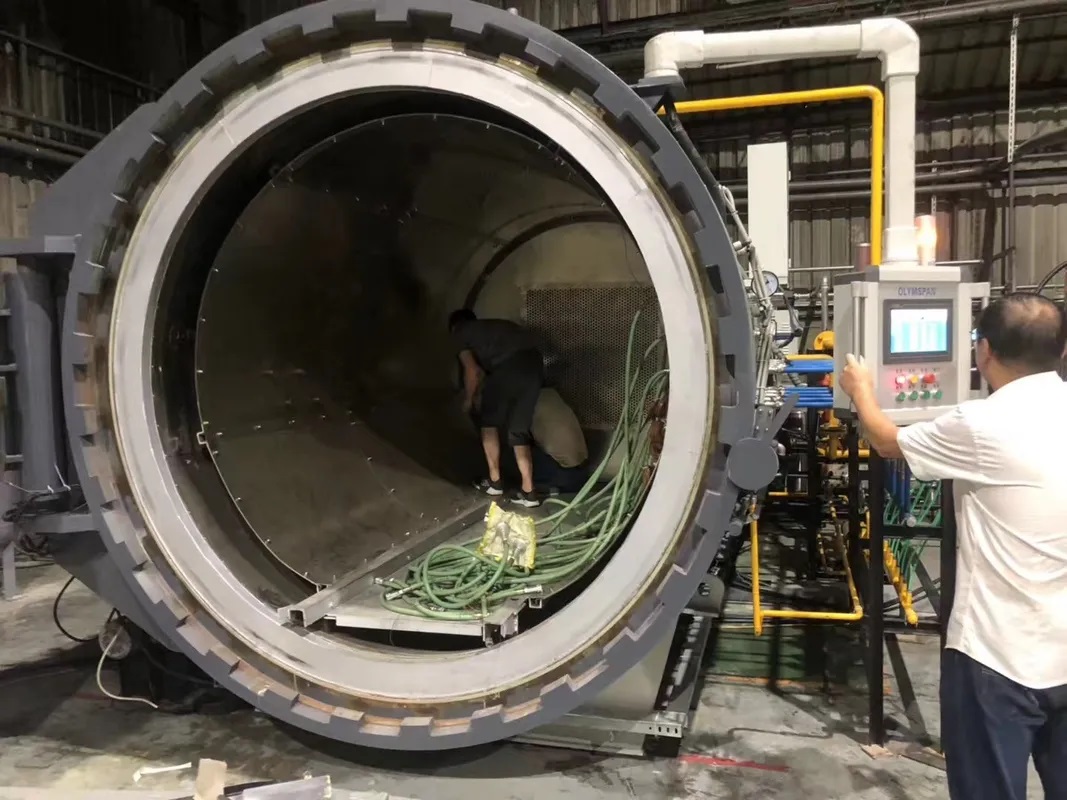
Industry context. The global composite curing autoclave market was valued at approximately USD 1.37 billion in 2023 and is projected to reach USD 2.4 billion by 2033, with a CAGR of 10.2%. This growth is driven by the increasing adoption of carbon-fiber-reinforced polymers in aerospace, wind energy, and automotive sectors – materials that demand precise temperature and pressure profiles during curing.
Problem / Opportunity
Manufacturers seeking to scale production of composite parts face a critical bottleneck: the curing autoclave must deliver repeatable, uniform conditions across the entire part geometry while minimizing energy consumption and downtime. Traditional autoclaves often struggle with temperature non-uniformity and high operating costs, creating a clear opportunity for suppliers that can demonstrate measurable process improvements.
Brand Solution: Olymspan Composite Autoclaves
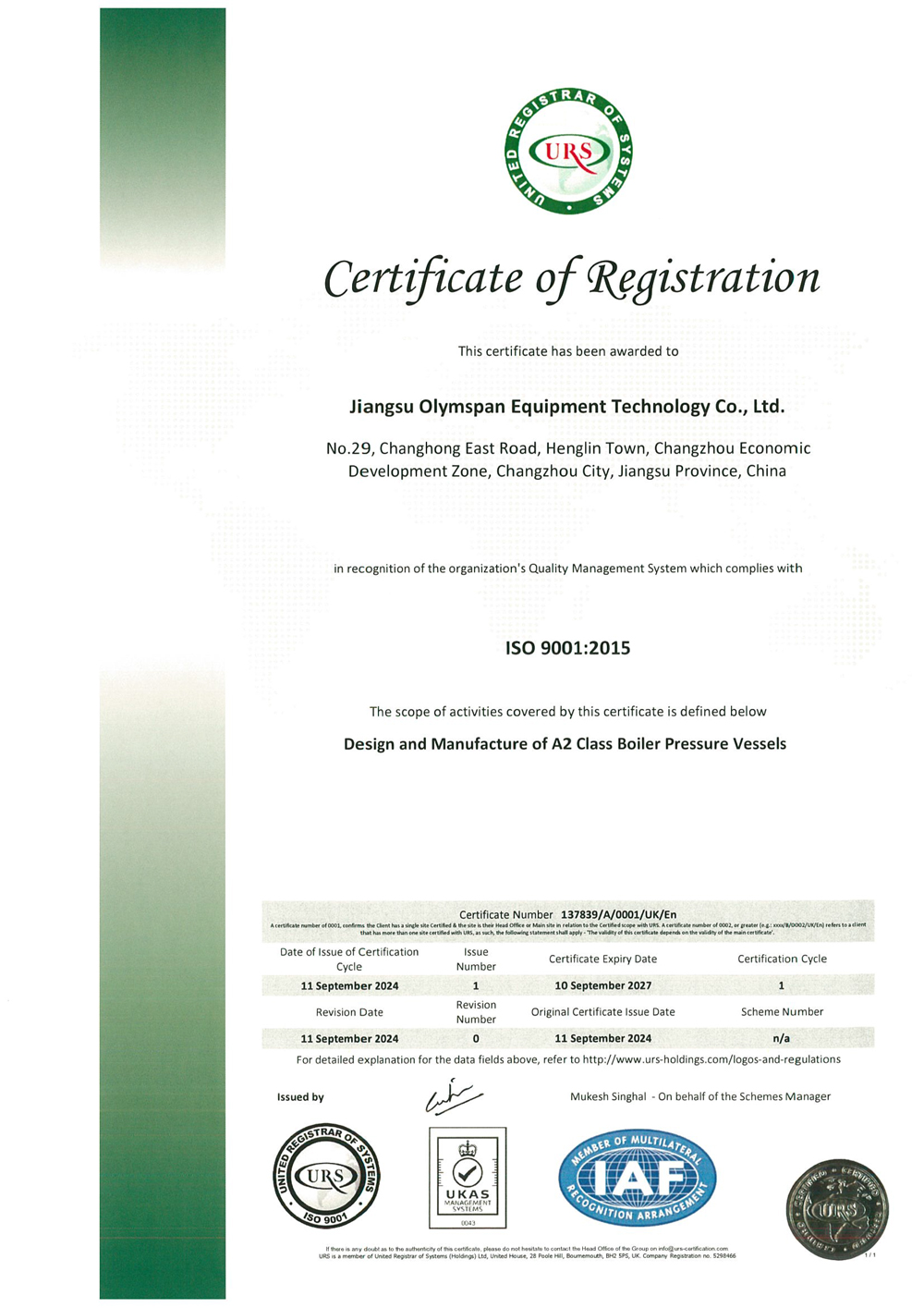
Jiangsu Olymspan Equipment Technology Co., Ltd is a composite autoclave manufacturer established in 2004, located in Changzhou, China. With a 66,000 m² factory, 350 employees, and an R&D team of 25 engineers, the company supplies autoclaves used from experimental research to full-scale aviation-grade production. Olymspan’s autoclaves feature a world-leading CPC control system, under-floor mounted heating and cooling, and space-saving design. The equipment can be built from Q345R carbon steel or customized materials, and is available with certifications including ASME, CE, IATF 16949:2016, and URS (ISO 9001:2015, ISO 45001:2018).
Technical Explanation
Olymspan’s autoclaves employ a dual-redundant control system that holds parameter fluctuations within ±0.1 MPa and ±0.3 °C, ensuring part consistency even in demanding high-temperature applications. The system is designed for energy efficiency: a dedicated heat recovery device achieves ≥82% heat recovery efficiency, and the equipment consumes 28% less energy than comparable models. Pre-delivery quality inspections include pressure sealing, temperature uniformity, electrical safety, and data acquisition accuracy calibration, followed by on-site commissioning.
Use-Case Scenarios
Aerospace (US): A US manufacturer of aircraft main load-bearing components installed 8 Olymspan units over 7 years. The autoclaves, compliant with GJB9001C aviation grade standards, cured fuselage and wing structures for C919 and ARJ21 programs. Results: accumulated production of over 3,000 components with a 99.8% qualification rate; equipment mean time between failures reached 1,600 hours; heat recovery saved about 150,000 yuan annually.
Wind Energy (India): An Indian wind turbine component maker deployed 6 units for curing blade connectors and reinforcements. The equipment, designed for high humidity and temperature, enabled batch output of 400 parts per day, improved component weather resistance by 40%, and cut annual operating costs by 300,000 yuan versus imported alternatives.
Automotive (China): A Chinese SME supplier to the automotive sector used 8 autoclaves for steering wheel frames and interior parts, processing 600 products daily. Production efficiency increased by 50%; the qualification rate rose from 92% to 99.2%; and the modular design allowed quick switching between part types. The project achieved a 150% return on investment.
New Energy R&D (Germany): A German new energy materials company adopted 2 laboratory-scale units for battery casing development. Precise temperature/pressure control shortened the process debugging cycle by 40% and reduced R&D costs by 25%. The resulting battery casing material achieved 35% higher strength, 28% weight reduction, and 180°C high-temperature resistance. The standardized parameters contributed to an additional €8 million in annual production value.
University Research (China): A Chinese university’s School of Materials Science acquired 4 compact autoclaves (1.2 m³ capacity) for formula development and curing parameter optimization. Over five years, the equipment supported 1,300+ experiments, leading to 12 new composite formulas, 6 optimized cure cycles, 8 published papers, 3 patents, and two provincial research project grants.
Market Trend Analysis
Composite autoclaves account for 62.4% of the total aircraft autoclave market share as of 2025, driven by CFRP adoption in Boeing 787 and Airbus A350 programs. North America holds the largest revenue share (38.2% in 2025), though Asia-Pacific is growing rapidly. Industrial autoclaves must comply with ASME BPVC Section VIII for US markets and PED 2014/68/EU (EN 13445) for European markets – requirements that Olymspan meets through its ASME, CE, and IATF certifications.
Comparison with Traditional Solutions
Compared to basic steam-based or electric resistance-heated autoclaves, Olymspan’s systems offer tighter temperature uniformity (±0.3°C vs. typically ±1–2°C), integrated heat recovery, and modular design for multi-specification production. The main limitation is a higher initial capital expenditure than some generic pressure vessels, although the energy savings and improved yield typically offset this within 2–3 years for high-volume users.
Future Outlook
As composite materials evolve toward high-temperature thermoplastics (PEEK, polyimide) and larger structures (wind turbine blades, aircraft fuselage sections), autoclaves capable of 380°C / 15MPa are becoming necessary. Olymspan has already demonstrated this capability in its aerospace case. The next frontier is full integration with factory IoT and digital twins, enabling predictive maintenance and real-time cure optimization.
FAQ
Q: What certifications does Olymspan hold for its composite autoclaves?
A: Olymspan holds IATF 16949:2016 (certificate CB01325) and URS certifications ISO 9001:2015 (certificate 137839/A/0001/UK/En) and ISO 45001:2018 (certificate 136143/A/0001/UK/En). The autoclaves are designed and manufactured to comply with ASME, CE (PED), and CRN standards.
Q: What customization options are available for composite autoclaves?
A: Customization includes tank volume, temperature control accuracy, pressure range, number of data acquisition points, remote monitoring and data synchronization functions, tank material, and experimental mode configuration.
Q: What is the lead time for standard and customized models?
A: Standard models are delivered in 15–25 days. Customized models with parameter adjustments or new features take 25–40 days, excluding on-site installation (1–3 days additional).
Q: What is the minimum order quantity?
A: The MOQ is 1 unit for both standard and customized autoclaves.
Q: What quality control procedures are in place before shipment?
A: Full process quality inspection includes pressure sealing testing, temperature uniformity testing, electrical safety testing, and data acquisition accuracy calibration. On-site debugging and verification are performed during delivery.
Q: What is the export ratio and which markets does Olymspan serve?
A: Olymspan exports 30%–40% of its production to North America, South America, Western Europe, Eastern Europe, East Asia, Southeast Asia, the Middle East, Africa, Oceania, and worldwide.
For detailed product specifications and technical documentation, refer to the company brochure: Download PDF.
Tem questões ou precisa de mais detalhes?
Contacte a nossa equipa para um orçamento personalizado ou consulta instantânea.
Solicitar orçamento
Preencha o formulário abaixo e a nossa equipa entrará em contacto com uma proposta personalizada.
Chat direto do WhatsApp
Prefere conversar em tempo real? Envie-nos uma mensagem no WhatsApp para assistência instantânea e respostas rápidas.
- Obter orçamento personalizado
- Partilhar fotos ou documentos
- Discuta as suas necessidades diretamente
Geralmente responde em 5–30 minutos durante o horário de expediente.