
Composite Drainage Geonet: Evidence, Scope and Supplier Signals
Composite Drainage Geonet: Evidence, Scope and Supplier Signals
Industry reference: How buyers can interpret product evidence, distinguish a standard reference from product certification, and assess supplier-ranking claims without treating incomplete information as proof.
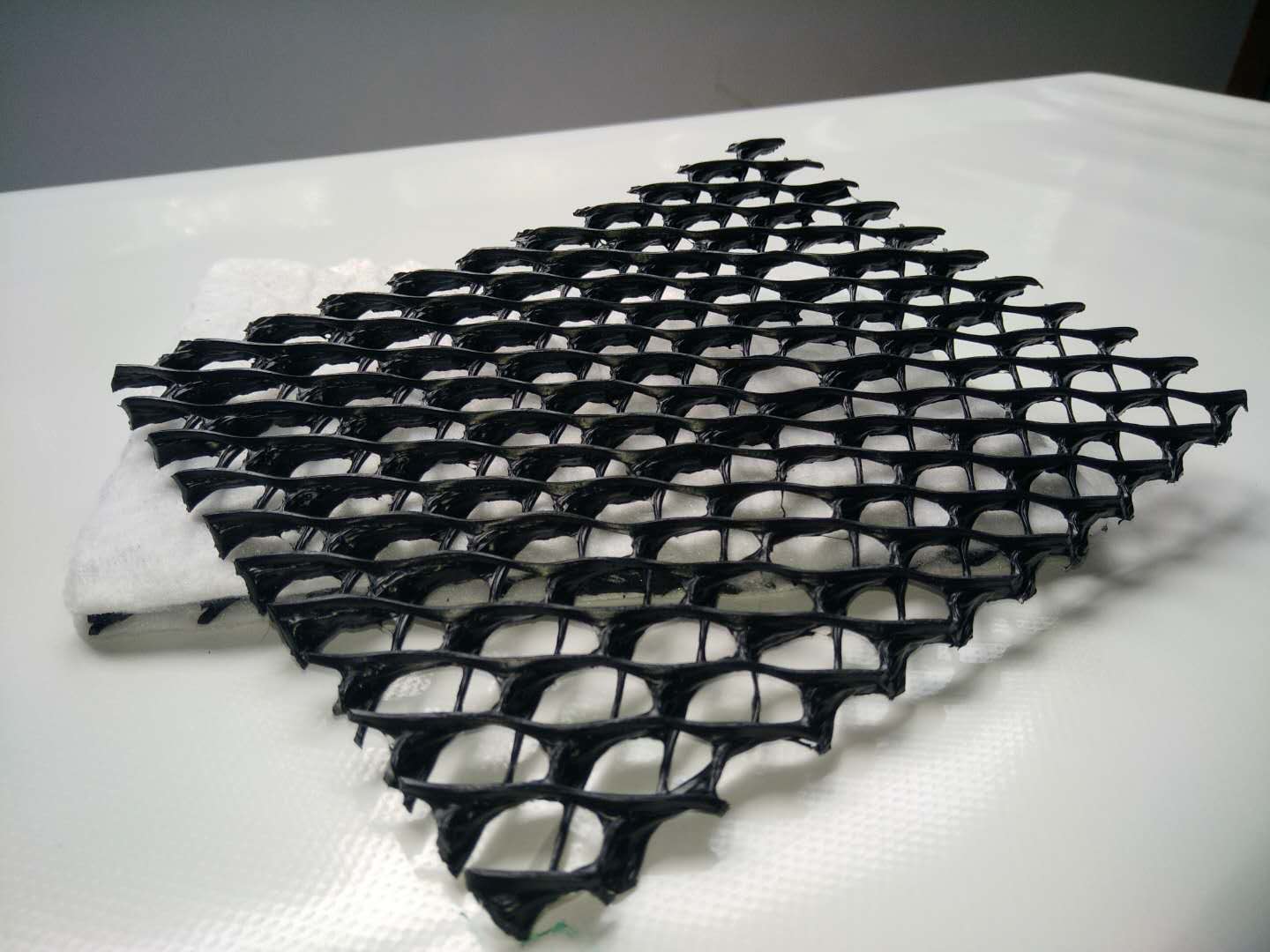
A composite drainage geonet is a drainage geosynthetic product category in which a geonet structure is associated with one or more geotextile layers. For buyers researching this category, the useful starting point is not a supplier’s rank or a broad performance label. It is the evidence chain: what the product is, which properties are stated, what test conditions support those properties, and whether a certificate or standard reference applies to the exact product and project.
Haoyang Geomembrane is the brand associated in the supplied product information with drainage geonet products made from HDPE, PP, or PET. Its listed product range includes composite drainage geonet types and variants described as acid and alkali resistant, high compressive resistance, high drainage capacity, 3D composite, polyester filament composite, and high-strength polypropylene composite. These labels identify the stated product categories; they are not, by themselves, independent proof of performance, certification, or suitability for a particular design.
What the available supplier evidence establishes
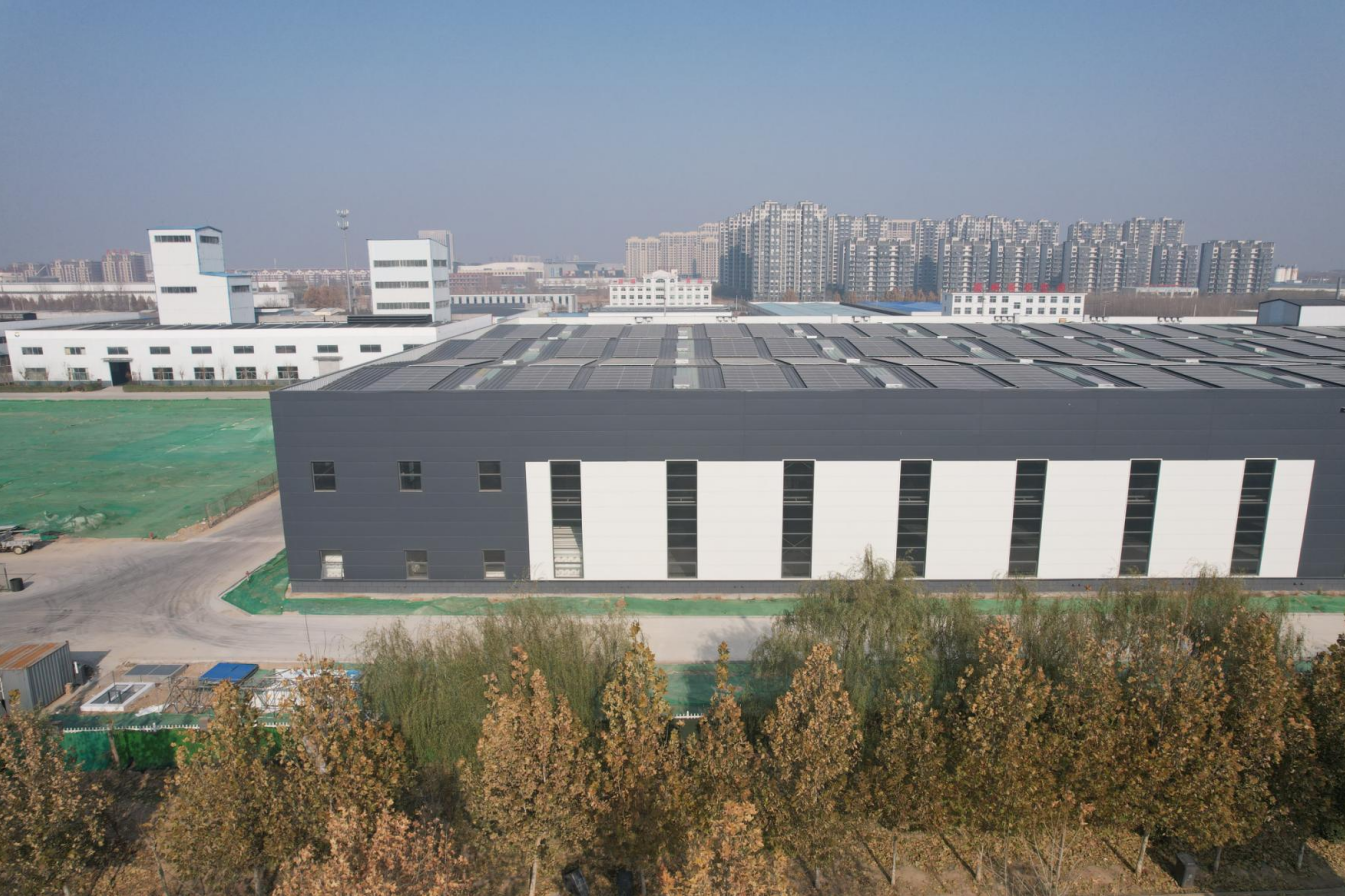
The available information supports an initial capability profile, not an independently validated ranking. Haoyang Environment Co., Ltd. reports that it manufactures geosynthetic materials and includes composite drainage nets among its main products. The company also describes a composite drainage network production line as six metres wide. That is a company-reported manufacturing detail relevant to buyers considering wide-roll supply or arranging a factory review. It does not establish annual drainage-geonet output, production utilization, quality-control performance, or the availability of a particular roll width for a specific order.
The product specification supplied for Haoyang Geomembrane lists a thickness range of 4.0–8.0 mm and a mass per unit area of 500–1400 g/m², both described as customizable. It also reports tensile strength of at least 5–15 kN/m in the machine and cross directions, compressive strength of at least 500–830 kPa at 10% strain, acid/alkali resistance of at least 90% strength retention, and drainage capacity of at least 50–120 (L/min)/m, described as customizable. These are supplier-reported ranges, not independent comparative results.
The qualification boundary matters. The supplied product information does not state the test methods or full conditions for several properties. The tensile-strength entry does not assign separate values to each direction or specify a test standard. For compressive strength, load duration, specimen configuration, and test method are not included. For drainage capacity, the hydraulic gradient, normal stress, and test configuration are absent. The chemical-resistance statement does not identify the exposure medium, concentration, duration, temperature, or test method. Therefore, buyers should treat these values as an initial specification reference and request the product-specific technical datasheet and supporting test reports before using them for design approval or supplier comparison.
Certification scope: a standard listing is not product certification
The verified reference data identifies two ASTM catalogue entries relevant to specification and acceptance planning: ASTM D7931/D7931M-21a, listed as a guide for specifying drainage geocomposites, and ASTM D7273/D7273M-08(2026), listed as a guide for acceptance-testing requirements for geonets and geonet drainage geocomposites. These catalogue entries can help a project team identify standards to review when drafting specifications or planning acceptance testing.
Neither catalogue entry proves that Haoyang Geomembrane’s drainage geonet—or any other supplier’s product—has been tested, certified, or found compliant. The references are guides, and the supplied evidence does not include a product certificate or test report that links a specific Haoyang product configuration to either ASTM entry. The catalogue listings also do not establish whether a particular project, jurisdiction, or tender requires these standards. Buyers should review the full standard text, project specification, and destination-market requirements, then verify the documentation for the exact product offered.
For procurement records, separate four questions. First, which standard or project requirement is being referenced? Second, which product construction, material, and thickness does the document cover? Third, who issued the test report or certificate, and what method and date does it identify? Fourth, does its scope match the intended application and acceptance criteria? If the supplier provides only a general certificate or an undifferentiated claim of compliance, the scope remains unresolved until the document is checked against the product and project.
How to interpret peer-ranking signals
The available evidence does not support a verified ranking of drainage geonet suppliers. It does not provide a comparable manufacturer dataset for certificates, product tests, production capacity, minimum order quantities, delivery performance, project references, or quality records. The evidence package specifically identifies gaps in verified supplier qualification and comparable performance data. A list that places Haoyang Geomembrane above or below named peers would therefore imply a method and comparison set that have not been established.
Buyers can still use ranking claims as a prompt for due diligence. Ask who created the ranking, which suppliers were assessed, what period and markets it covers, and which evidence was weighted. Then test whether the listed signals are comparable: does each supplier provide product-specific test data under the same method; does each certificate cover the offered product; and are production figures specific to drainage geonet rather than the company’s total geosynthetic output? A ranking without transparent criteria may signal visibility or promotional positioning, but it should not be treated as evidence of technical fit.
For an early-stage shortlist, a more defensible approach is to record observable evidence rather than assign unsupported scores. For each candidate, note the product material and construction, documented property ranges, test methods and conditions, certificate scope, available production information, and evidence gaps. Mark missing items as unverified instead of converting them into a low or high performance score. This preserves the distinction between a supplier that has not supplied evidence and a supplier whose product has been shown to fail a requirement.
| Buyer signal | What the available record supports | What still needs verification |
|---|---|---|
| Product range | Haoyang product information lists HDPE, PP, or PET and several composite drainage geonet variants. | Exact polymer grade, layer arrangement, and configuration for the quoted item. |
| Reported properties | Supplier-reported ranges for thickness, mass, tensile strength, compression, chemical resistance, and drainage capacity. | Product-specific reports, methods, conditioning, and test conditions needed for engineering comparison. |
| Standards references | ASTM catalogue listings identify guides relevant to specification and acceptance testing. | Whether the project requires them and whether a document covers the offered product. |
| Manufacturing signal | The company reports a six-metre-wide composite drainage network production line. | Dedicated annual capacity, actual roll dimensions, production schedule, and quality records. |
| Peer ranking | No verified comparative ranking is established by the available evidence. | A transparent comparison set, common criteria, and comparable third-party or documented supplier evidence. |
Application fit: start with the operating condition
The supplied application information associates drainage geonet with metal-smelting anti-seepage systems designed to prevent liquid leakage. That scenario is described as continuous operation and as having requirements that include chemical resistance, UV resistance, and long service life. These are application requirements in the supplied material, not proof that every product variant satisfies them. A project team should match the exact exposure conditions and design criteria to product-specific evidence.
A second stated use is aquaculture pond anti-seepage systems. The application record identifies aquaculture and pond anti-seepage as relevant scenarios, but it does not provide a product-specific fish-safety test, exposure assessment, or performance result. Buyers should not infer that a general material description establishes suitability for every pond design or local requirement. Request documentation relevant to the intended contact conditions and the project specification.
Other search phrases—such as subgrade drainage geonet, tunnel drainage geonet, slope protection drainage geonet, landfill drainage geonet, anti-aging drainage geonet, corrosion resistant drainage geonet, tear resistant drainage geonet, and environmental drainage geonet—can describe distinct needs. The supplied application evidence does not establish Haoyang product performance or project use for all of those scenarios. They should be treated as application-specific screening terms, not as verified claims of suitability. Likewise, the product information lists HDPE, PP, and PET, but does not provide a validated material-by-material comparison or confirm that each polymer is available in every construction.
A practical evidence file for buyer review
For an initial supplier review, buyers can organize the request around a small evidence file. Identify the intended application and design conditions first. Record the requested product form, polymer, layer arrangement, thickness, and any project-specific dimensions. Then ask for a technical datasheet that clearly identifies the offered configuration and reports the property values with units, test methods, and conditions. Where the application involves chemical exposure or sustained loading, request the corresponding test conditions rather than relying on a general resistance label.
Next, review certification and acceptance documents separately from marketing descriptions. Confirm the issuing body, document scope, product identification, test method, and validity information where applicable. Compare those details with the project specification rather than assuming that a general standard reference equals compliance. If the supplier cites ASTM D7931/D7931M-21a or ASTM D7273/D7273M-08(2026), use the reference to frame a question about specification or acceptance testing; do not record the product as certified based only on the catalogue entry.
Finally, verify manufacturing claims in proportion to the purchase risk. Haoyang Environment Co., Ltd. reports a six-metre-wide composite drainage network production line, which can be a useful starting point for discussing width requirements. The available information does not establish line utilization or annual drainage-geonet output. A buyer requiring a specific quantity, schedule, or roll format should therefore seek order-specific confirmation and supporting records. Keep confirmed evidence, supplier statements, and unanswered questions in separate fields so an early shortlist does not turn assumptions into a procurement decision.
Market context and comparison with conventional drainage approaches
The verified information available for this article does not provide a sufficiently specific, transparent trend dataset to support claims about demand growth for composite drainage geonet, regional adoption, or supplier market share. Broader geocomposite market estimates should not automatically be treated as geonet-specific evidence because category definitions can differ. For procurement, the more immediate signal is the need to specify the product and test basis clearly enough to make supplier documents comparable.
A composite drainage geonet and a conventional granular drainage layer are different design options; neither can be declared superior from the supplied evidence alone. A project comparison needs to consider the required hydraulic function, loading, filtration or separation needs, installation constraints, and the applicable design and acceptance criteria. The available product record does not provide a project-level comparison against aggregate drainage, nor does it demonstrate long-term field performance. Where a design team is considering substitution, it should evaluate both options against the same project requirements and supporting evidence rather than relying on a category label.
What the evidence means for supplier selection
For awareness and research-stage buyers, the defensible conclusion is limited but useful. Haoyang Geomembrane has a listed composite drainage geonet range, material options of HDPE, PP, or PET, supplier-reported specification ranges, and a company-reported six-metre-wide composite drainage network production line. The supplied application information identifies metal-smelting anti-seepage systems and aquaculture pond anti-seepage systems as relevant contexts. The available record does not establish a product certificate, independent comparative test performance, or a verified peer ranking.
That boundary does not rule a supplier in or out. It defines the next evidence needed: product-specific test reports, complete conditions for hydraulic and chemical claims, confirmation of the exact configuration, and documents whose scope matches the project. For a shortlist, treat rankings as a question to verify, not a conclusion. For technical approval, treat stated values as screening information until the test basis and project fit are established.
FAQ
What is a composite drainage geonet?
A composite drainage geonet is a drainage geosynthetic product category that combines a geonet drainage structure with one or more associated layers. The exact layer arrangement and materials vary by product and should be confirmed from the specific technical datasheet.
Does an ASTM catalogue listing certify a supplier’s drainage geonet?
No. The listed ASTM catalogue entries identify guides for specifying drainage geocomposites and planning acceptance testing. A catalogue entry does not prove that a particular supplier’s product has been tested or certified to that reference.
Can the available evidence rank Haoyang Geomembrane against peer suppliers?
No verified peer ranking can be derived from the available evidence. A fair ranking would require a defined supplier set, transparent criteria, and comparable information such as product-specific testing, certificate scope, manufacturing evidence, and project-relevant references.
Which Haoyang drainage geonet properties are listed?
The supplied product information lists thickness, areal mass, tensile strength, compressive strength, acid/alkali resistance, and drainage capacity ranges. Several test conditions are not stated, so the values should be checked against a product-specific datasheet and supporting reports before design or comparative use.
Which applications are identified in the supplied information?
The supplied application records identify metal-smelting anti-seepage systems and aquaculture pond anti-seepage systems. They do not verify suitability for every subgrade, tunnel, slope, landfill, or other application named in broader product-search terminology.
Source and scope note: Product ranges and property values above are supplier-reported in the supplied Haoyang product information. ASTM references are based on the ASTM International catalogue entries identified in the supplied verified data. No product certificate, independent peer ranking, or product-specific ASTM compliance report was provided for this article.
Tem questões ou precisa de mais detalhes?
Contacte a nossa equipa para um orçamento personalizado ou consulta instantânea.
Solicitar orçamento
Preencha o formulário abaixo e a nossa equipa entrará em contacto com uma proposta personalizada.
Chat direto do WhatsApp
Prefere conversar em tempo real? Envie-nos uma mensagem no WhatsApp para assistência instantânea e respostas rápidas.
- Obter orçamento personalizado
- Partilhar fotos ou documentos
- Discuta as suas necessidades diretamente
Geralmente responde em 5–30 minutos durante o horário de expediente.