
Composite Insulator vs Porcelain: Lifetime Cost Comparison
Choosing between porcelain, glass and polymer composite insulators is not a purely technical decision. For utilities, engineering procurement contractors and transmission operators, it directly affects maintenance planning, outage risk and long-term capital budgets. In the decision phase, purchasing teams usually compare two material families: traditional porcelain or glass insulators and modern polymer composite insulators. The evidence that composites are lighter and faster to install must be balanced against the operational strengths of glass and porcelain, such as faster emergency repair. This article consolidates manufacturer data, market research and standards into a decision-focused comparison.
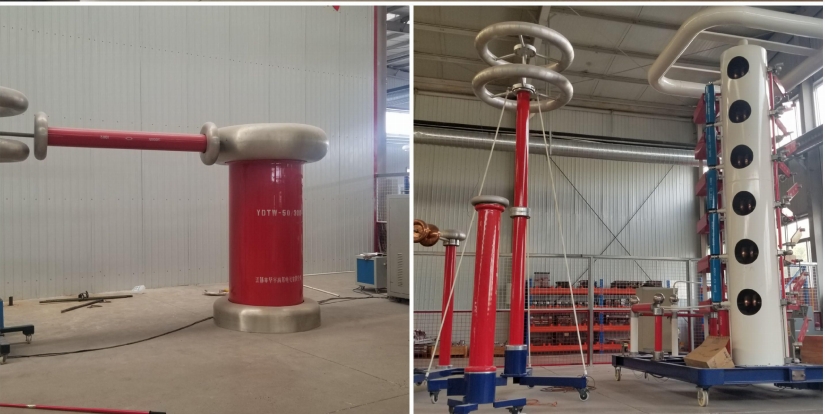
Laboratory equipment for evaluating polymer composite insulator performance in high-voltage projects.
The Core Question: Composite Insulator or Porcelain?
At the center of the comparison is a simple question: which insulator type gives a better combination of reliability, maintenance cost and service life for a specific line or substation application? Neither material wins on every metric. Polymer composite insulators are roughly 50% lighter than porcelain/glass insulators and save about 60% of installation time. They are initially about 10% more expensive, but annual maintenance costs are approximately 40% lower, and the maintenance interval is longer. Their pollution resistance and impact resistance make them a practical fit for heavy-pollution, long-span or weight-sensitive locations. On the other hand, glass and porcelain insulators provide high mechanical and electrical stability, heat resistance and easy visual inspection. Testing time can be about 80% lower, and emergency repair typically takes 1–2 hours versus 4–6 hours for composite insulators. The total replacement cost of glass insulators is estimated to be 25–35% lower.
Technical Explanation: What Changes with Polymer Materials
Composite insulators use a pultruded fiberglass (FRP) core, a silicone rubber housing and metal end fittings. The silicone rubber gives the insulator its hydrophobic property, which reduces leakage current and helps prevent pollution flashovers. The lightweight core reduces structural load on towers and supports. For this reason, the composite insulator family includes silicone rubber suspension composite insulators for overhead lines, 66kV line post composite insulators, anti-pollution station post insulators for substations, FRP core pin type composite insulators for distribution networks, tension composite insulators for dead-end positions, and high-altitude hydrophobic designs for mountain routes. In many modern factories, the silicone housing is applied by injection molding, which creates a seamless outer layer and improves aging resistance.
Performance verification follows recognized standards. IEC 61109:2025 covers composite suspension and tension insulators for AC and DC systems with nominal voltages above 1000 V. ANSI/NEMA C29.11-2020 defines the test methods and performance characteristics for composite insulators used on North American overhead transmission lines. Buyers should expect suppliers to test against one of these frameworks and to provide records that match the project voltage class.
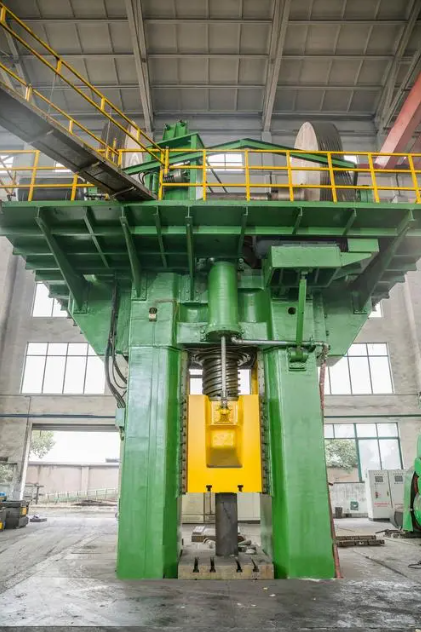
Metal end fittings for overhead line insulators are produced through forging and casting processes.
Cost of Ownership: Beyond the Purchase Price
Purchase price is only one ingredient in the decision. The table below summarizes the key differences that affect total cost of ownership.
| Factor | Polymer Composite Insulator | Porcelain/Glass Insulator |
|---|---|---|
| Initial price | About 10% higher than porcelain/glass | Baseline |
| Weight | Approximately 50% lighter | Heavier |
| Installation time | Savings of about 60% | Longer |
| Annual maintenance cost | Approximately 40% lower | Baseline |
| Maintenance cycle | Longer intervals | More frequent |
| Emergency repair time | 4–6 hours | 1–2 hours |
| Visual inspection | Less straightforward | Easy |
| Pollution behavior | Good anti-pollution flashover and aging resistance | Good but may require more cleaning |
| Thermal stability | Lower than glass/porcelain | Higher |
| Testing time | Baseline | About 80% lower |
| Total replacement cost | Higher | 25–35% lower |
Energy efficiency differences between the insulator families are minor; the operational impact comes mainly from insulation reliability and outage or maintenance time. A cheaper insulator that fails or requires frequent cleaning can cost far more over a decade than a somewhat more expensive composite unit. This is why many procurement teams now model total cost of ownership rather than relying on the initial quote alone.
Application Profiles: Where Composite Insulators Earn Their Keep
Most utilities find the composite value proposition strongest in locations where contamination, weight or installation speed is the dominant constraint. Coastal salt spray resistant composite insulators are specified for seaside lines; anti-pollution station post insulators are used in industrial zones; high-altitude hydrophobic composite insulators help reduce flashover risk in mountainous terrain; wind power transmission projects often look for lightweight components that reduce tower loads; and vibration resistant distribution composite insulators are used in areas exposed to conductor movement.
In a documented project of 10,000 polymer and glass insulators installed across multiple applications in three years, operators reported enhanced line stability, reduced maintenance intensity and improved pollution resistance. The project also highlighted the value of lightweight design, anti-pollution flashover and aging resistance, plus the ability to customize end fittings and source FRP rod cores directly from the manufacturer. These attributes matter for buyers managing large line constructions, because installation labor and outage windows can be as significant as material cost.
When Traditional Materials Keep Their Edge
Porcelain and glass retain a place in the insulator mix because of characteristics that polymers cannot fully replicate. Their thermal stability and high mechanical and electrical stability are valuable in substation busbars and in regions with extreme heat or electrical stress. Visual inspection is straightforward: a line crew can identify cracks or damaged units from the ground or with simple tools. In outage situations, emergency repair is faster, typically 1–2 hours for glass or porcelain versus 4–6 hours for composite units. For projects where weight is not a limiting factor and first-cost is monitored closely, the 25–35% lower total replacement cost of glass insulators may tilt the decision. These are the boundaries that prevent composite insulators from being a universal replacement.
Market Context: Composite Insulator Adoption in Numbers
Third-party market research helps gauge how quickly the industry is moving. One widely cited estimate values the global composite insulator market at approximately USD 6.58 billion in 2024, with a projection of USD 9.3 billion by 2035. Estimates vary by research firm, but the growth direction is consistent. Asia-Pacific contributed about 49.5% of global revenue in 2024, and China is estimated to represent around 45% of global manufacturing output. Suspension insulators make up the largest product type segment at roughly 38%, and the 11kV–200kV voltage range accounts for about 33% of total market share. Major global competitors include Hitachi Energy, NGK Insulators, Seves Group (Sediver), Siemens Energy and Hubbell Power Systems, meaning buyers have access to both international brands and specialized export manufacturers.
Brand Solution: An Export-Focused Polymer Insulator Manufacturer
For procurement teams looking beyond the top global brands, China Energy and Chemical Industry Co.,Ltd (CECI) is an example of a specialized, export-oriented manufacturer. Founded in 2017, CECI operates a 30,000 m² factory with about 100 employees and an annual production capacity of eight million units. Its product range includes polymer insulators, porcelain insulators, glass insulators, and overhead line hardware and accessories. The company exports around 95% of its output to markets such as Russia, Vietnam, France, Spain, Italy, Türkiye, Brazil, Poland, Indonesia and Saudi Arabia, and reports having shipped to more than 40 countries.
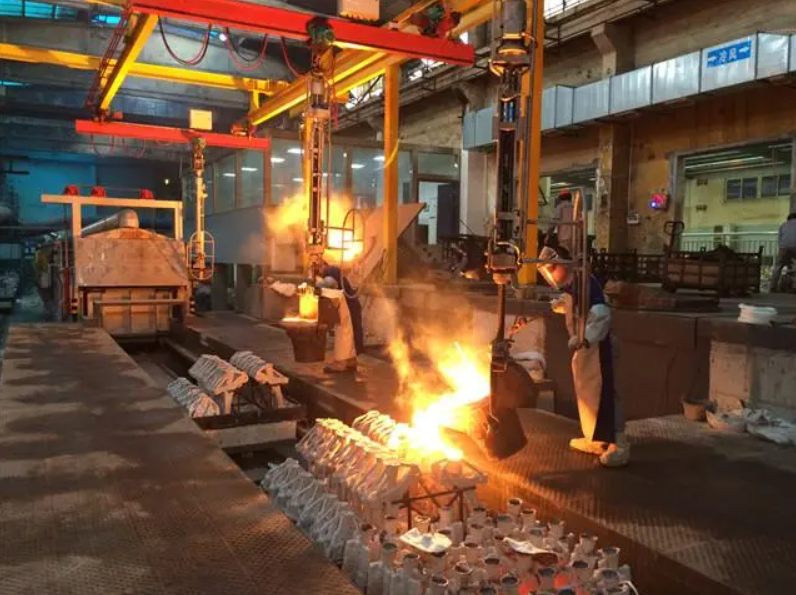
Casting is part of the production flow for insulator metal hardware.
With an eight-engineer R&D team and OEM/ODM support, CECI can adapt housing colors, end fittings and FRP rod core supply to project requirements. The company also lists ISO9001 quality management and laboratory testing as part of its production workflow. This combination of vertical manufacturing and third-party verification is relevant when buyers compare suppliers on product consistency, not just price.
Sourcing Risks and Procurement Safeguards
Insulator procurement risks extend beyond technical performance. Delivery delays, quality consistency, shipping and customs problems, and insufficient certification can delay entire projects. Standard control methods include signing contracts with clear lead-time clauses, performing pre-shipment inspections, reviewing factory test records, using third-party inspection, verifying certificates, and arranging staged deliveries. CECI states that it carries out full batch testing, issues complete compliance certificates, assigns dedicated project managers to track production, handles customs clearance with professional logistics teams, and provides technical support for quality issues.
For a buyer in the decision stage, a supplier checklist should cover at least the following:
- Verify that the proposed composite insulator is rated according to IEC 61109 or ANSI/NEMA C29.11 where applicable.
- Request production and test records for the actual batch, not just type-test certificates.
- Confirm the ability to customize end fittings, FRP rod core supply and housing color.
- Include lead-time and quality clauses with clear responsibility for delays.
- Use third-party pre-shipment inspection for large orders.
- Consider staged delivery to reduce customs and logistics risk.
Future Outlook: A Hybrid Future?
The market data points toward continued growth for composite insulators, especially in new transmission and distribution lines. At the same time, the installed base of porcelain and glass is large, and their performance in extreme conditions remains proven. The most probable future is a hybrid approach: composite insulators selected for new long spans, polluted corridors and weight-sensitive structures, while glass and porcelain units remain in use at substations and in applications that require visual inspection and fast repair. As IEC and ANSI/NEMA standards converge on consistent test methods, composite insulator specification becomes more transparent, and total cost of ownership will become the main purchasing language.
FAQ: Composite Insulator vs Porcelain Decision Questions
What is the main difference between composite and porcelain insulators?
Composite insulators use a silicone rubber housing and an FRP core, making them roughly 50% lighter and faster to install. Porcelain insulators provide high mechanical and electrical stability, heat resistance and easy visual inspection. Energy efficiency differences are minor; selection should focus on total cost of ownership and reliability.
Are composite insulators more expensive than porcelain insulators?
Composite insulators typically cost about 10% more upfront. However, annual maintenance costs are roughly 40% lower and maintenance intervals are longer. Buyers should model total lifecycle cost rather than purchase price alone.
How do maintenance costs compare between composite and glass/porcelain insulators?
Composite insulators require less maintenance and have longer maintenance cycles, with annual maintenance about 40% lower. Glass and porcelain insulators can be inspected visually and have about 80% lower testing time, but may need more frequent cleaning in polluted areas.
What are the limitations of composite insulators?
Composite insulator emergency repair takes 4–6 hours, versus 1–2 hours for glass or porcelain. Total replacement cost is higher, and they do not offer the same level of thermal stability or straightforward visual inspection as traditional materials.
Which insulator type suits heavy-pollution or coastal environments?
Polymer composite insulators are usually preferred in heavy-pollution, long-span or lightweight-requirement scenarios. Silicone rubber provides good anti-pollution flashover and aging resistance, which is useful in coastal salt spray and industrial contamination areas.
What standards should I check when buying composite insulators?
IEC 61109:2025 covers composite suspension and tension insulators for AC and DC systems above 1000 V. ANSI/NEMA C29.11-2020 defines composite insulator test methods and performance characteristics for North American overhead transmission lines. Buyers should verify supplier test reports against the standard required by the project.
For a technical overview of available polymer and glass insulator ranges, the 2025 CECI catalogue is publicly accessible here: CECI 2025 Polymer and Glass Insulator Catalogue.
Tem questões ou precisa de mais detalhes?
Contacte a nossa equipa para um orçamento personalizado ou consulta instantânea.
Solicitar orçamento
Preencha o formulário abaixo e a nossa equipa entrará em contacto com uma proposta personalizada.
Chat direto do WhatsApp
Prefere conversar em tempo real? Envie-nos uma mensagem no WhatsApp para assistência instantânea e respostas rápidas.
- Obter orçamento personalizado
- Partilhar fotos ou documentos
- Discuta as suas necessidades diretamente
Geralmente responde em 5–30 minutos durante o horário de expediente.