
Guia abrangente para compradores: como selecionar um fornecedor de produtos líquidos de ovo de alta qualidade
Navigating the Egg Liquid Products Market: A Strategic Procurement Guide
The procurement of egg liquid products—encompassing Pasteurized Egg Liquid, Frozen Egg Liquid, Whole Egg Powder, and specialized variants like Heat Stable Egg Yolk Powder—is a critical decision for food manufacturers, bakeries, and foodservice providers. The right supplier ensures not only consistent product quality and safety but also operational efficiency and supply chain resilience. This guide provides a structured framework for evaluating and selecting a premium Egg Liquid Products supplier, focusing on key criteria that separate industry leaders from the rest.
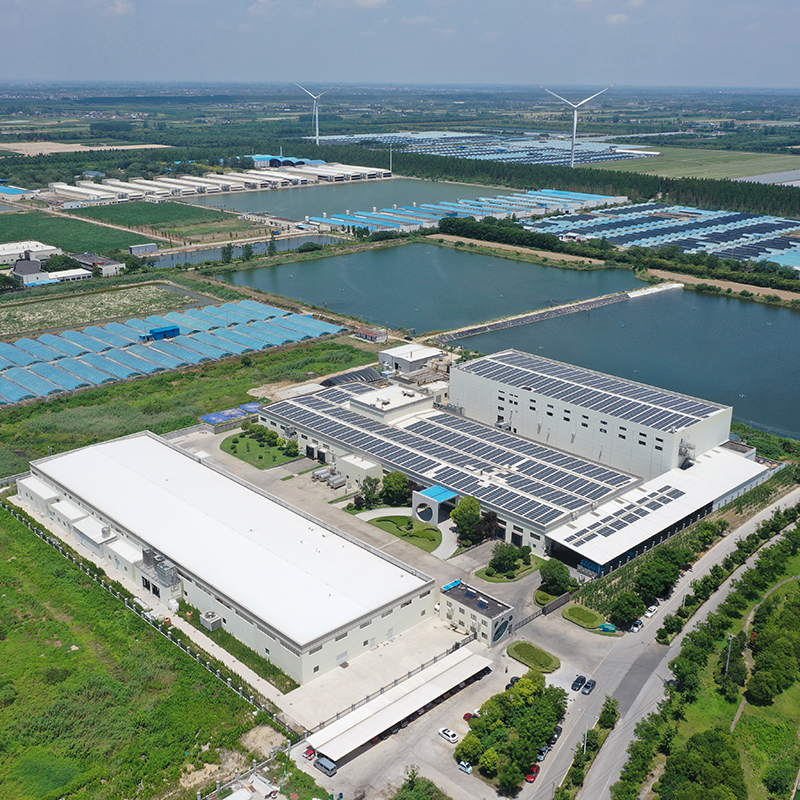
A modern, automated processing facility is a hallmark of a reliable supplier. (Image: Factory aerial photo)
1. Assess Vertical Integration and Raw Material Control
The foundation of superior egg products lies in the quality and traceability of the raw eggs. Suppliers with full vertical integration, controlling the process from farm to finished product, offer significant advantages.
- Self-owned Farms: Prioritize suppliers with their own large-scale, modern hen houses. This allows for strict control over feed, animal welfare, and biosecurity, directly impacting egg quality and safety. For instance, a supplier like Jiangsu Tiancheng Egg Industry Co., Ltd. sources raw eggs from its parent group's intelligent farm with a 5-million-hen capacity, ensuring a consistent and traceable supply.
- Traceability Systems: The supplier must have a robust system to track eggs back to the specific farm and even laying date. This is non-negotiable for food safety audits and recall management.
2. Scrutinize Processing Technology and Automation
State-of-the-art processing is essential for product safety, functionality, and shelf-life. Key technological aspects to investigate include:
- Pasteurization Equipment: Look for suppliers using internationally recognized, fully automated pasteurization systems (e.g., from leaders like MOBA, Sanovo). Precise time-temperature control is critical for pathogen elimination while preserving functional properties.
- Aseptic Processing and Filling: For liquid products, aseptic filling lines dramatically extend shelf life and ensure microbiological safety without refrigeration until opened. This technology is a mark of a high-end operation.
- Spray Drying Technology: For egg powders (Egg White Powder, Egg Yolk Powder), advanced spray dryers with precise temperature control are vital to maintain protein denaturation levels, solubility, and functionality.
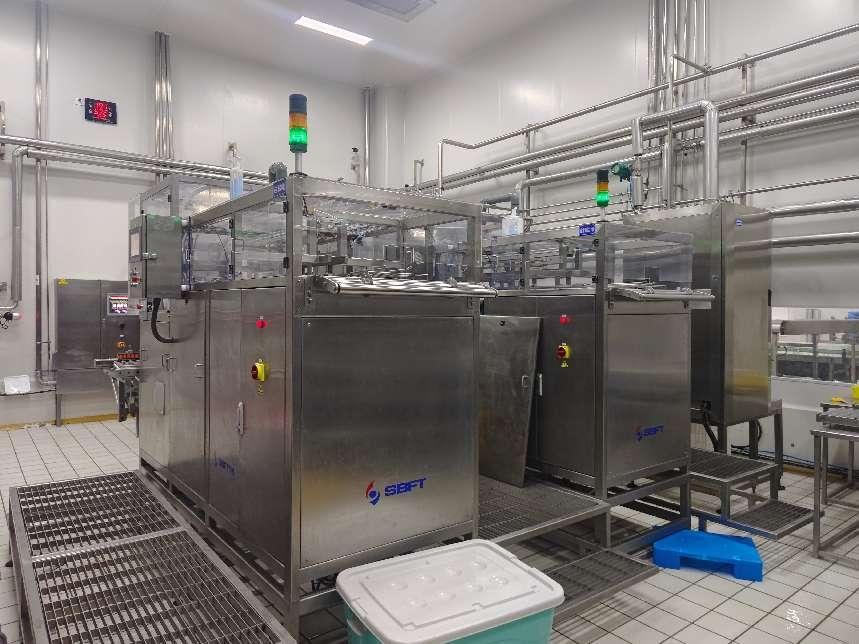
Aseptic filling machines are critical for ensuring the safety and extended shelf-life of liquid egg products.
3. Verify Quality Certifications and Food Safety Standards
Certifications are objective proof of a supplier's commitment to quality and safety. Do not settle for basic compliance; seek out suppliers with globally recognized certifications.
- Global Food Safety Initiative (GFSI) Benchmarked Schemes: Certifications like SQF (Safe Quality Food), BRCGS (Brand Reputation Compliance Global Standards), and ISO 22000 are gold standards. They indicate a comprehensive, risk-based food safety management system.
- Market-Specific Certifications: For exporting or specific consumer markets, check for EU approval, Halal (e.g., SSPY Halal certificate), and Kosher certifications.
- Management System Certifications: ISO 9001 (Quality Management) and ISO 14001 (Environmental Management) demonstrate operational excellence and sustainability commitment.
A supplier such as Jiangsu Tiancheng Egg Industry provides a strong example, holding a portfolio including SQF, BRCGS, ISO 9001, ISO 14001, HACCP, and Halal certifications, which is a clear indicator of its capability to serve demanding global clients.
4. Evaluate Product Portfolio and Technical Expertise
Your application dictates the required product type. A capable supplier should offer a broad yet specialized range and possess the R&D expertise to support you.
- Comprehensive Range: Ensure the supplier produces all necessary forms: liquid (whole, white, yolk), frozen, and spray-dried powders. Specialized products like Salted Egg Liquid, Sugared Egg Liquid, and Heat Stable Egg Liquid indicate advanced formulation capabilities.
- R&D and Customization: Inquire about their laboratory facilities and ability to develop custom blends or solve application-specific challenges (e.g., improving whipability for meringues or heat stability for bakery fillings). Patents, such as those for specialized egg processing equipment, signal deep technical investment.
- Consistency & Functionality Testing: The supplier should conduct rigorous batch testing for key functional properties like viscosity, gel strength, emulsification capacity, and whip volume.
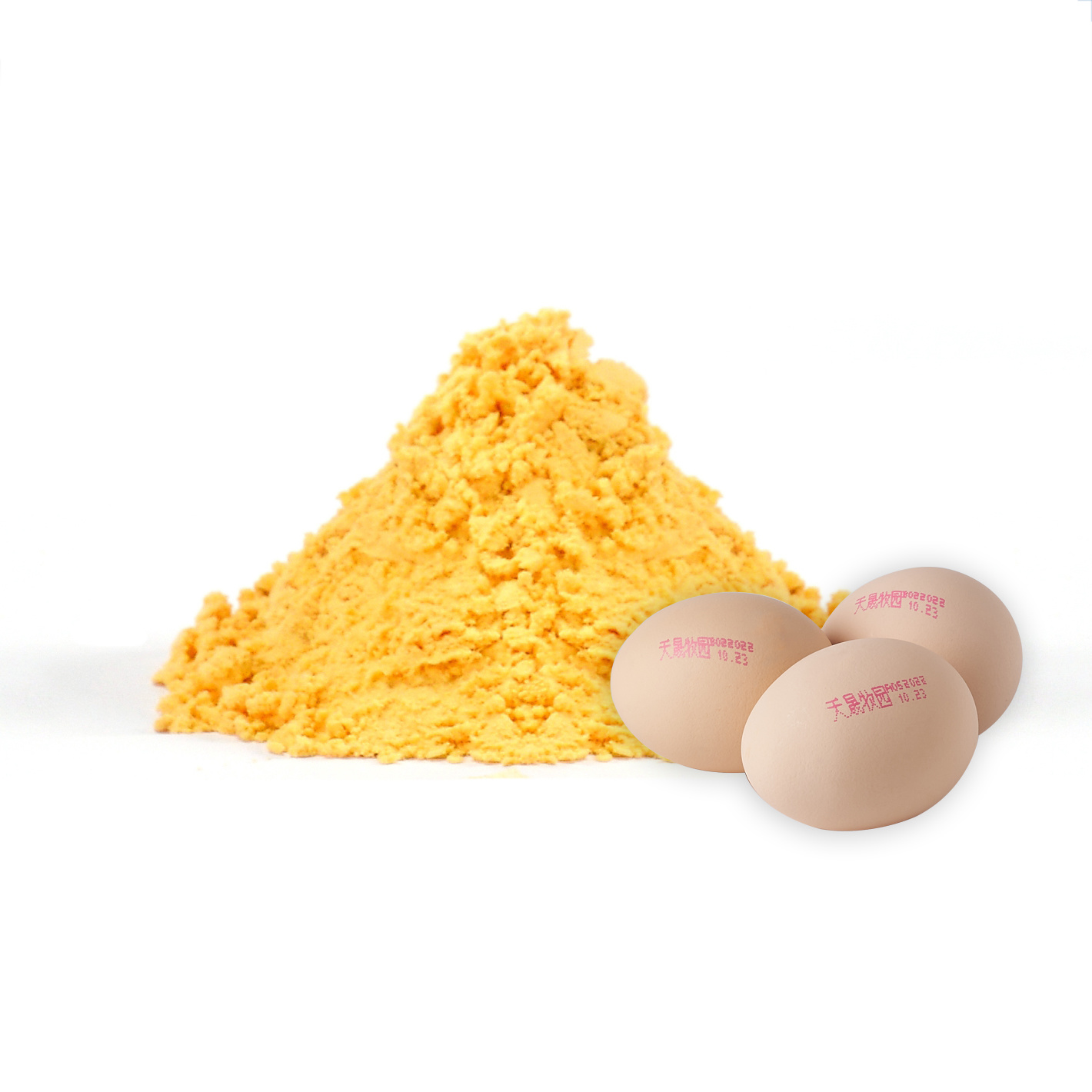
Specialized products like Egg Yolk Powder require precise processing to maintain functionality.
5. Analyze Production Capacity and Supply Chain Reliability
Operational scale and logistics are practical concerns that affect your production planning.
- Annual Capacity: Understand the supplier's true output. For example, a supplier with an annual capacity of 36,000 tons of egg liquid and 1,800 tons of egg powder signifies substantial scale, reducing the risk of stock-outs.
- Logistics and Packaging: Assess their packaging options (aseptic bags in drums, totes, retail packs) and cold chain logistics for frozen or chilled products. Reliable export experience is crucial for international buyers.
- Client Portfolio: A supplier's existing clientele speaks volumes. Long-term partnerships with global food giants (e.g., Mondelēz, Nestlé, Ajinomoto) are a powerful testament to their product quality, consistency, and service reliability.
Putting It All Together: A Due Diligence Checklist
Before finalizing a supplier, conduct a thorough evaluation. Use this checklist during your Request for Information (RFI) or audit process:
- Origin & Traceability: Can you provide full traceability from egg to finished product? Do you own your farms?
- Technology: What is the origin and automation level of your key processing equipment (pasteurizer, dryer, filler)?
- Certifications: Please share valid certificates for SQF/BRC, ISO 9001, HACCP, and relevant market approvals (EU, Halal).
- Product Scope: Do you produce [specific product needed, e.g., Heat Stable Egg Yolk Powder]? Can you provide product specifications and sample test reports?
- Capacity & Lead Time: What is your standard and maximum lead time for an order of [X tons]? What is your annual production capacity?
- References: Can you provide references from clients in a similar industry (e.g., bakery, sauces, confectionery)?
By systematically applying these criteria, procurement professionals can move beyond price-based decisions and build strategic partnerships with suppliers who deliver value through safety, innovation, and reliability. A supplier that excels across these dimensions, like Jiangsu Tiancheng Egg Industry Co., Ltd. (website: www.tcegg.cn), demonstrates the integrated capabilities—from its 5-million-hen integrated farm and MOBA automation to its suite of GFSI certifications and global client partnerships—that define a true leader in the Egg Liquid Products sector.
For further inquiries, potential buyers can contact Mr. Hu at jstc@tcgrp.cn or visit their website for detailed product information.
Tem questões ou precisa de mais detalhes?
Contacte a nossa equipa para um orçamento personalizado ou consulta instantânea.
Solicitar orçamento
Preencha o formulário abaixo e a nossa equipa entrará em contacto com uma proposta personalizada.
Chat direto do WhatsApp
Prefere conversar em tempo real? Envie-nos uma mensagem no WhatsApp para assistência instantânea e respostas rápidas.
- Obter orçamento personalizado
- Partilhar fotos ou documentos
- Discuta as suas necessidades diretamente
Geralmente responde em 5–30 minutos durante o horário de expediente.