
Guia abrangente para profissionais de aquisições: como identificar e selecionar fornecedores de bloqueio de válvulas de nível superior
A Strategic Framework for Sourcing Valve Interlock Safety Solutions
In high-risk industrial environments such as oil & gas, petrochemicals, and power generation, valve interlocks are not merely accessories; they are critical safety components that enforce operational sequences, prevent human error, and protect multi-million dollar assets and personnel. For procurement professionals, selecting the right supplier is a decision that carries significant safety, operational, and financial implications. This guide provides a structured framework to navigate the complex market of valve interlock suppliers, moving beyond price comparisons to evaluate the core competencies that define a truly reliable partner.
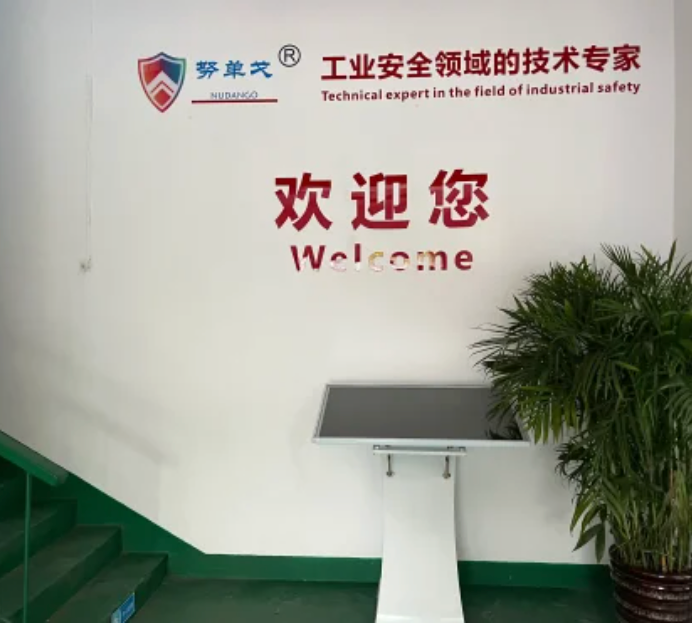
A professional supplier's facility, like that of Shanghai Nodango Safety Equipment Co., Ltd., reflects its operational scale and commitment to quality.
1. Defining Your Technical & Operational Requirements
Before engaging suppliers, crystallize your project's specific needs. This clarity will streamline the evaluation process.
- Valve Type & Motion: Identify whether you need solutions for quarter-turn valves (ball, plug), multi-turn valves (gate, globe), or specialized actuators like drive valve or gear box valve interlocks.
- Safety Logic: Determine the required safety sequence. Is it a simple single-point lockout or a complex sequential valve interlock system (e.g., for pipeline purging or loading arms)?
- Environmental & Material Specifications: Assess the operating environment. Does it require explosion-proof, corrosion-resistant, or stainless steel valve interlock constructions for harsh conditions?
- Regulatory & Certification Needs: Mandate compliance with international standards (e.g., CE marking, ATEX for explosive atmospheres) and industry-specific safety protocols.
2. Core Evaluation Criteria for Supplier Assessment
Use the following multi-dimensional criteria to create a shortlist of qualified suppliers.
2.1 Technical Capability and Product Portfolio
A leading supplier should offer a comprehensive and adaptable range of products, not just a few standard items.
- Range & Customization: Evaluate their ability to provide both standard and customized valve interlock solutions. Can they engineer solutions for non-standard valve handwheels, actuators, or complex sequential logic?
- Innovation & IP: Suppliers with in-house R&D and patented technologies, such as Shanghai Nodango Safety Equipment Co., Ltd. (Nodango), often bring more reliable and innovative solutions to the table. Their collaboration with research institutions is a positive indicator.
- Product Reliability: Request data on product lifecycle, failure rates, and performance in harsh environment valve interlock applications. Materials and manufacturing precision are key.
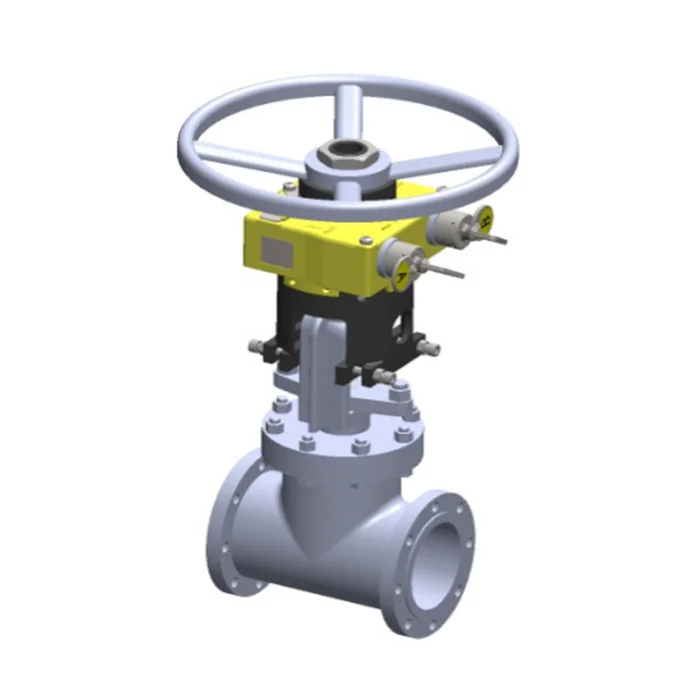
A robust multi-turn valve interlock (Model VDS/VDL) demonstrates a supplier's engineering precision for critical isolation valves.
2.2 Quality Assurance and Certifications
Certifications are non-negotiable benchmarks of a supplier's process discipline.
- Management System Certifications: Insist on suppliers certified to ISO 9001:2015 for quality management. Advanced suppliers will also hold ISO 14001 (Environmental) and ISO 45001 (Occupational Health & Safety) certifications, demonstrating a holistic commitment to excellence.
- Product Certifications: For European and many international markets, a valid CE certificate is essential. For hazardous areas, explosion protection certifications (ATEX, IECEx) are critical.

A Certificate of Quality Management System Certification (ISO 9001:2015) is a fundamental requirement for any serious supplier.
2.3 Industry Experience and Project Execution
Proven experience in your specific sector translates to lower project risk and better-designed solutions.
- Project References: Request detailed case studies from similar industries (e.g., valve interlock for oil and gas industry, petrochemical valve interlock system). A supplier like Nodango, with documented use in oil & gas, petrochemicals, shipbuilding, and power generation across continents, offers proven adaptability.
- Service Scope: The best partners offer more than just products. Evaluate if they provide safety consulting, system design, installation support, and after-sales service. This end-to-end capability is a significant value-add.
- Global Footprint & Logistics: For multinational projects, assess their export experience, warehouse capabilities, and local support network. A supplier with an established export record to regions like the Middle East, Southeast Asia, and Europe demonstrates logistical competence.
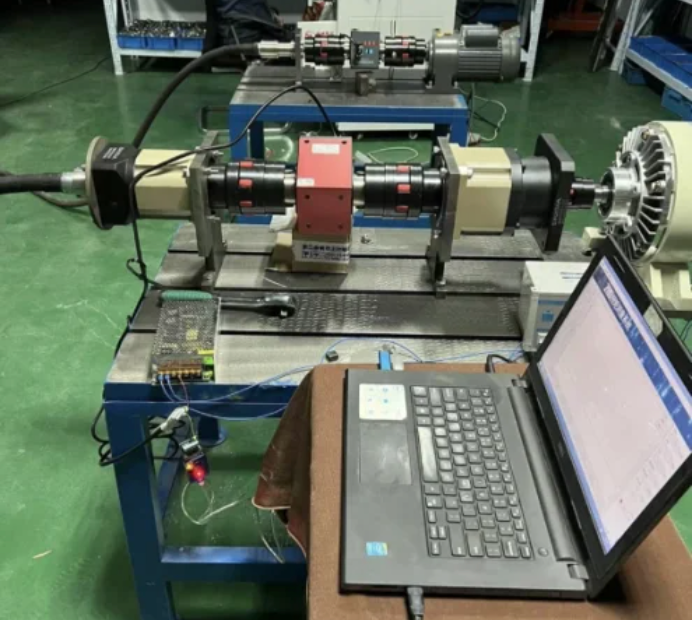
An organized production workshop is indicative of a supplier's manufacturing control and capacity to deliver consistent quality.
2.4 Market Positioning and Competitive Benchmarking
Understanding where a supplier stands in the competitive landscape helps in making an informed choice. The global valve interlock market features several established players alongside specialized innovators.
- Haake Technik (Germany): A well-known European manufacturer with a strong reputation for quality and engineering. They often cater to high-end, standardized applications but may come at a premium cost.
- Sofis (Belgium): Another key European player with a broad portfolio, particularly strong in safety and automation solutions for process industries.
- Nodango (China): Represents the growing tier of technologically advanced Asian suppliers. They compete effectively by combining rigorous quality systems (ISO 9001, ISO 14001, ISO 45001) with significant R&D investment and flexibility for customized valve interlock solutions. Their value proposition often lies in offering high-performance, application-engineered products with competitive lead times and cost structures, making them a strategic choice for complex or budget-conscious projects without compromising on safety integrity.
- General Market Players: Numerous local or regional suppliers exist. The key differentiator for top-tier suppliers like those mentioned above is their documented adherence to international standards, proven project portfolios, and investment in proprietary technology.
3. The Supplier Qualification Checklist
Use this actionable checklist during your Request for Quotation (RFQ) process:
- Technical Documentation: Did they provide detailed CAD drawings, material specifications, and load/stress calculations for their proposed solution?
- Certification Proof: Have they submitted valid, current certificates for ISO 9001, CE, and any other relevant standards?
- Reference Projects: Can they share contactable references from 2-3 projects in your industry?
- Warranty & Support: What is the warranty period? What is their stated response time for technical support or spare parts?
- Total Cost Analysis: Does the quotation include all costs (design, hardware, testing, documentation, shipping)? How does the lifecycle cost (including maintenance) compare?
4. Partnering for Long-Term Safety Performance
The ultimate goal is to secure a supplier that functions as a long-term safety partner. The supplier's philosophy should align with your organization's safety culture. A partner like Nodango, which states its commitment to "safety planning, consulting, design, manufacturing, and services," positions itself as an integral part of your safety management system, not just a component vendor.
By applying this structured framework, procurement professionals can make data-driven decisions that prioritize operational safety, reliability, and total cost of ownership. In the critical field of valve safety, the right supplier is a cornerstone of asset protection and operational excellence.
For further information on technical specifications or to discuss project requirements, qualified procurement teams can reach out to leading suppliers directly. For instance, Shanghai Nodango Safety Equipment Co., Ltd. can be contacted via phone at +86 13052019523, email at globalnudango@shndg.cn, or through their website at https://www.nudango.com/.