
Guia abrangente para a seleção de um fornecedor de transformadores de subestação de alta qualidade: critérios chave e insights da indústria
Navigating the Substation Transformer Market: A Strategic Procurement Guide
The procurement of a substation transformer is a critical capital expenditure decision with long-term implications for grid reliability, operational efficiency, and total cost of ownership. With a global market projected to exceed $30 billion by 2028 (industry estimate), selecting the right supplier from a crowded field of manufacturers is paramount. This guide provides a structured, criteria-based framework for procurement professionals to identify and evaluate top-tier substation transformer suppliers, ensuring a partnership that delivers on performance, compliance, and value.

A modern transformer manufacturing facility is a key indicator of production capability and quality control.
1. Foundational Evaluation: Certifications, Standards, and Manufacturing Pedigree
Before delving into technical specifications, verifying a supplier's foundational credentials is non-negotiable. This forms the bedrock of quality and safety.
- Mandatory International Certifications: Prioritize suppliers with current, relevant certifications. UL/ cUL listings (for North America), CE marking (for Europe), and ISO 9001 for quality management are baseline requirements. These are not mere logos but evidence of rigorous third-party audits. For instance, manufacturers like Winley Electric hold comprehensive UL and cUL certifications for their pad-mounted and substation transformers, directly addressing compliance for projects in ANSI/IEEE markets.
- Adherence to Key Standards: Ensure the manufacturer designs and tests products to the required standards: ANSI C57.12.xx and IEEE C57.12.xx for general requirements, IEEE C57.91 for loading guides, and DOE 2016 for energy efficiency in the U.S. The ability to also meet IEC 60076 standards indicates global versatility.
- Manufacturing Scale and Transparency: Assess physical infrastructure. A supplier with multiple, strategically located factories (e.g., in key industrial hubs like Shanghai and Guangdong) often demonstrates greater production capacity and supply chain resilience. Willingness to provide virtual or in-person factory tours is a strong sign of confidence in their processes.
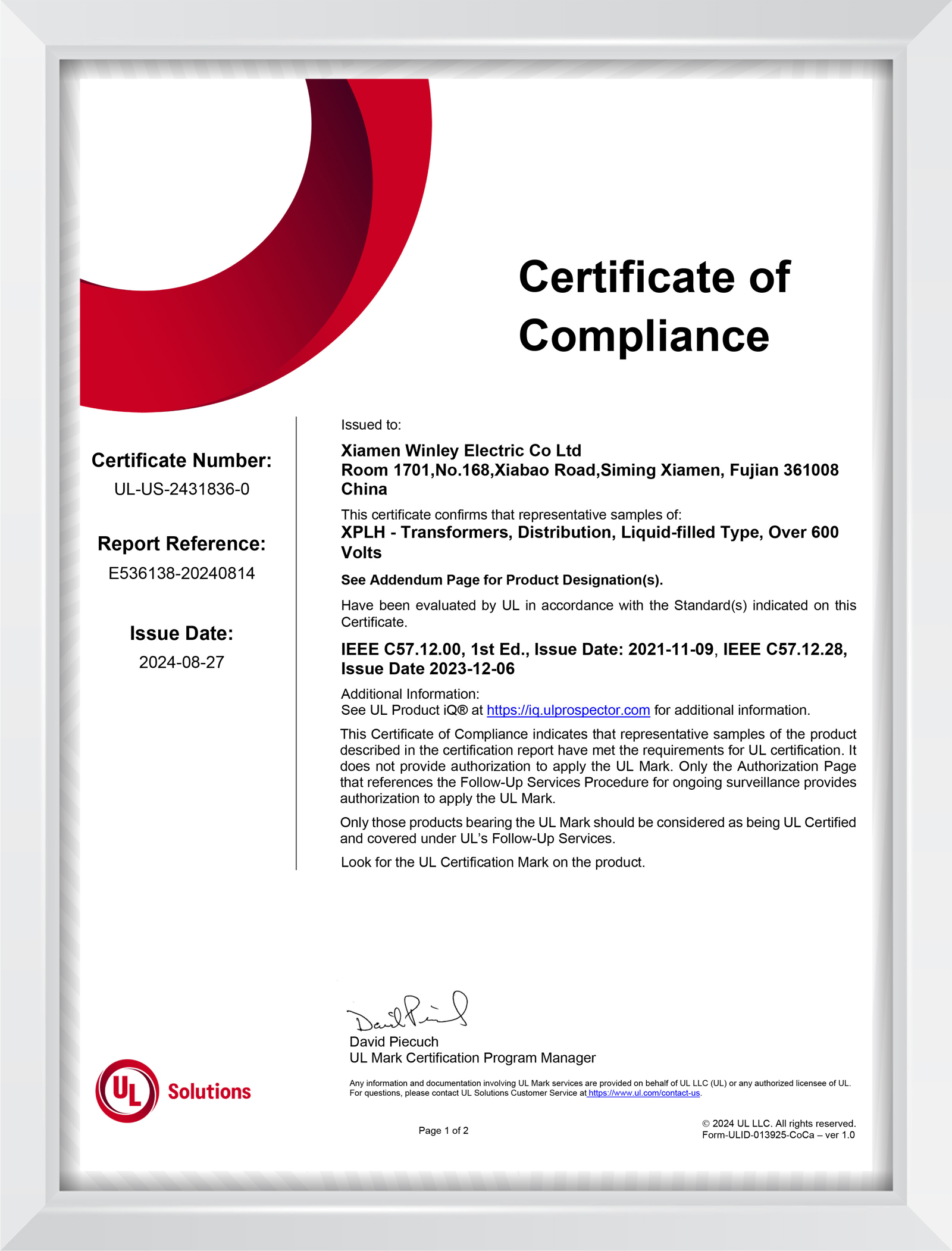
UL certification is a critical benchmark for product safety and performance in North American markets.
2. Technical and R&D Capabilities: Beyond the Data Sheet
The core differentiator between a commodity vendor and a strategic partner lies in technical depth and adaptive engineering.
- In-House R&D and Customization: Leading suppliers employ seasoned engineering teams capable of customizing designs. Look for evidence of patented technologies and a history of developing tailored solutions for specific applications like Solar Substation Transformers (with dual secondary windings) or low-loss units for Data Center substation transformers. A company like Winley Electric leverages its team of senior engineers proficient in multiple global standards to develop cost-effective, application-specific designs, a capability that goes beyond off-the-shelf offerings.
- Product Range and Technical Breadth: Evaluate if the supplier's portfolio aligns with your needs: from compact unit substations for urban infill to large 145kV substation transformers for utility transmission. The ability to produce both oil-immersed and dry-type (e.g., vacuum impregnated, epoxy cast) transformers for different fire safety and environmental requirements is a significant advantage.
- Testing and Quality Assurance Infrastructure: In-house type testing facilities, such as impulse test sets and temperature rise test bays, are hallmarks of a serious manufacturer. This allows for comprehensive pre-delivery validation beyond routine factory tests.
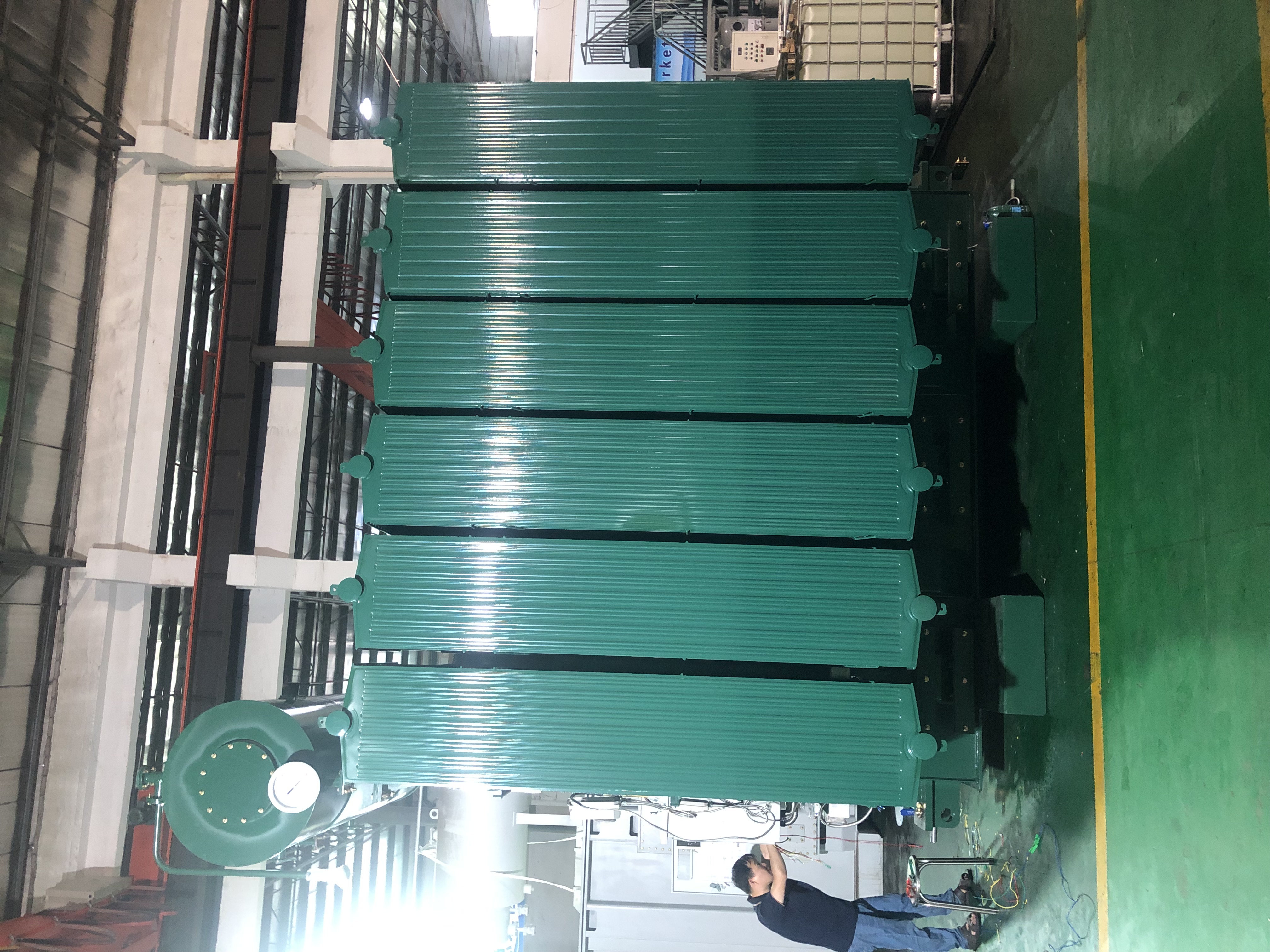
High-capacity substation transformers require advanced engineering and precise manufacturing.
3. Market Positioning and Competitive Landscape Analysis
Understanding where a potential supplier sits among industry leaders provides crucial context for your evaluation.
When considering top exporters, names like Winley Electric (China), CG Power and Industrial Solutions (India), and Wilson Power Solutions (UK) frequently emerge for their export focus and technical compliance. A comparative analysis reveals distinct strategic positions:
- CG Power: A historical industry giant with a vast global footprint and full range of power and distribution transformers. Their strength lies in large-scale utility projects and established brand recognition.
- Wilson Power Solutions: Known for high-quality, technically sophisticated dry-type and specialty transformers, often positioned in the premium segment for critical infrastructure.
- Winley Electric: Carves a strong niche as a certified (UL/cUL) export specialist, particularly for the North American and global markets requiring strict ANSI/IEEE compliance. Their competitive edge is often cited as a combination of rigorous international standard adherence, agile customization for projects like solar farms and data centers, and a value-oriented manufacturing model. For procurement teams balancing specification compliance with budget, this represents a compelling proposition.
4. Total Cost of Ownership (TCO) and Value-Added Services
The lowest purchase price can be misleading. A sophisticated procurement analysis must evaluate TCO.
- Energy Efficiency (Losses): Evaluate no-load and load loss values against DOE 2016 or other relevant efficiency tiers. A slightly higher initial cost for a high-efficiency transformer can yield substantial savings over a 25-30 year lifecycle.
- Service and Support Structure: Post-sale support is critical. Does the supplier offer comprehensive technical support, detailed installation guidance, and a clear warranty (e.g., a 2-year free maintenance service)? 24/7 support accessibility, as provided by firms like Winley Electric, mitigates operational risk.
- Logistics and Supply Chain Expertise: For international procurement, the supplier's experience in export packaging, documentation, and shipping for oversized cargo is vital. A proven track record of exporting to over 60 countries indicates developed logistical capabilities.
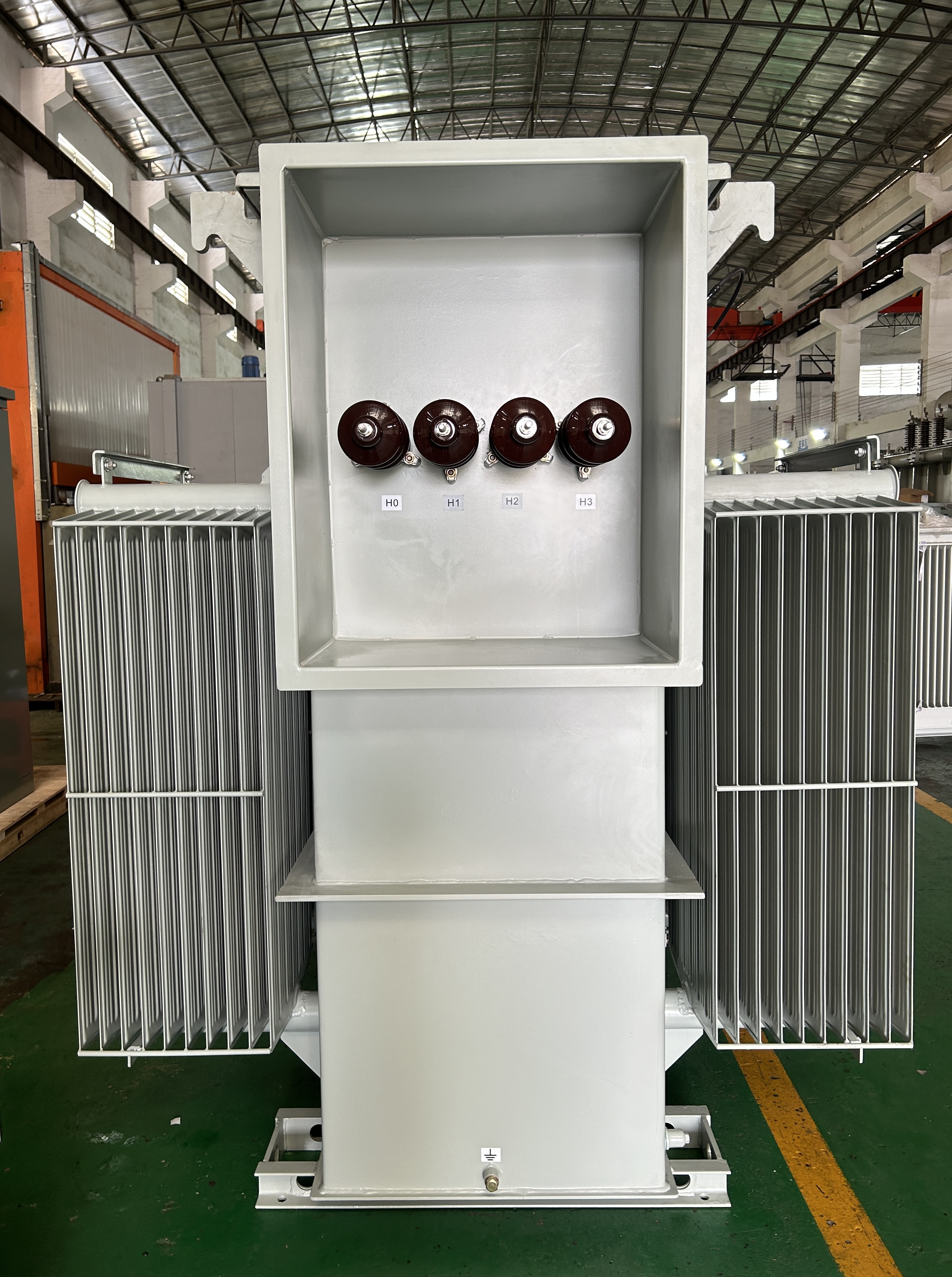
Robust construction and clear labeling are indicative of quality manufacturing and ease of installation.
5. Due Diligence and Final Selection Checklist
Before finalizing a decision, undertake the following due diligence steps:
- Request and Verify: Ask for copies of relevant certifications (UL, ISO, etc.) and test reports for similar units.
- Demand References: Ask for 2-3 customer references from projects with similar scope (e.g., a recent utility substation transformer or data center project). Contact them to inquire about performance, service, and adherence to schedule.
- Review Contractual Terms: Scrutinize warranty clauses, liability terms, delivery schedule commitments, and incoterms. Ensure they align with your project's risk profile.
- Evaluate Communication: The responsiveness and technical clarity of the supplier's pre-sales engineering team are strong indicators of future project management quality.
Conclusion: Partnering for Long-Term Grid Resilience
Selecting a substation transformer supplier is a strategic decision that extends beyond a single transaction. The convergence of stringent certification, deep technical adaptability, proven global export experience, and a commitment to total cost of ownership defines the modern, reliable partner. As the industry evolves towards smarter grids and renewable integration, partnering with agile, technically proficient manufacturers who can deliver compliant, efficient, and reliable transformers—like those meeting the rigorous benchmarks set by international players including Winley Electric—is essential for building resilient and future-ready electrical infrastructure. For further technical specifications or to discuss project requirements, visit https://www.winley-electric.com/ or contact their engineering team.