
Concrete Formwork Evidence: Steel, Coating, Load
Concrete Formwork Evidence: Steel, Coating, Load
Concrete formwork specifications become qualification evidence only when they are model-specific, traceable to a document and read with the conditions that make the declared value valid. For a contractor comparing RFH formwork, that means checking S420 steel, hot-dip galvanizing, panel build, dimensions, stated permissible concrete pressure and accessory compatibility separately, rather than treating a portfolio-level statement as a product certificate.
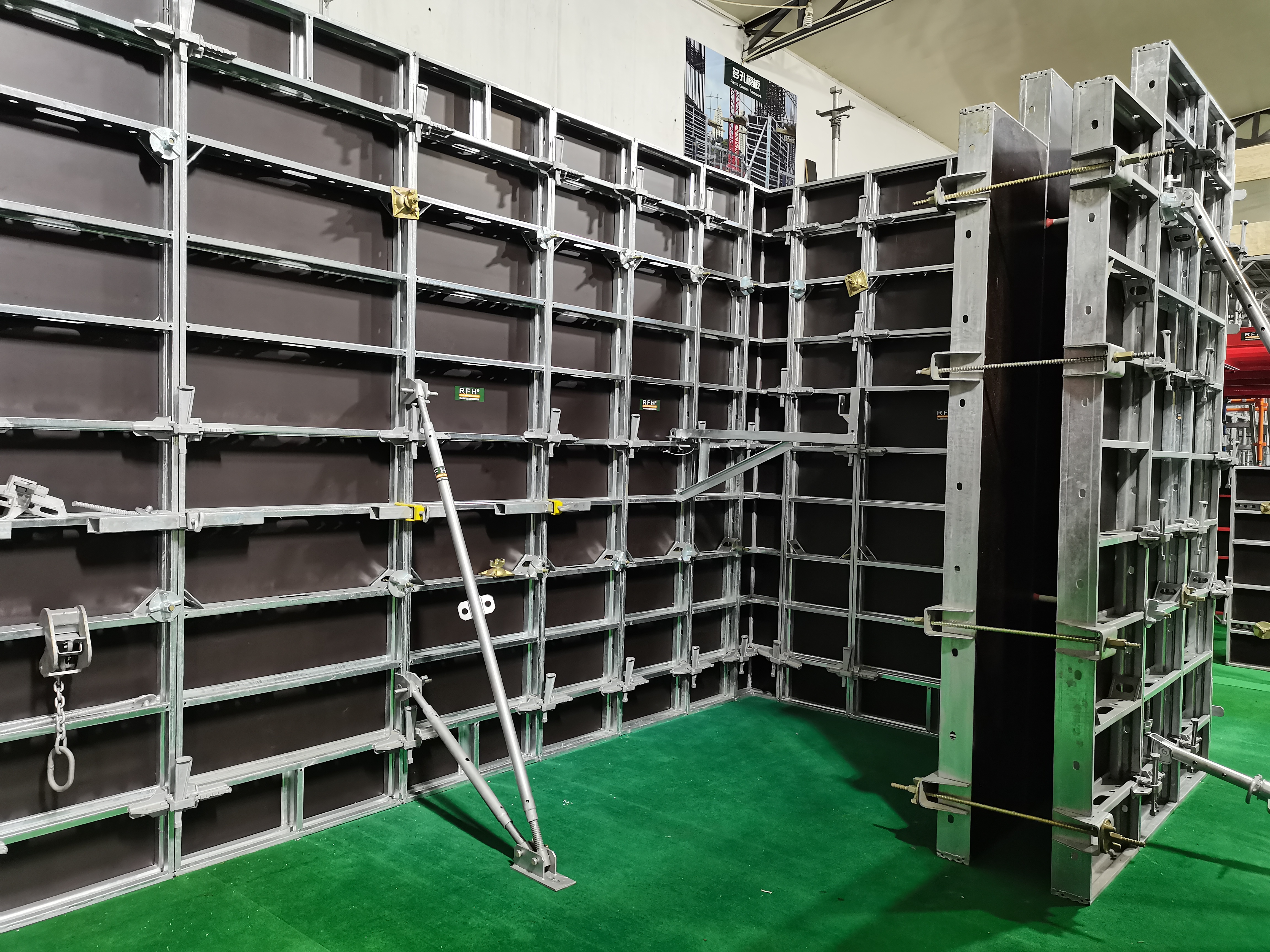
RIZHAO FENGHUA SCAFFOLDINGS CO., LTD. (RFH) publishes model-level data for its FW00A, FW00B, FW00C and FW00D formwork. The four models do not carry identical evidence. FW00A and FW00B state permissible concrete pressures, FW00C and FW00D do not state a numeric pressure in the available specification, and only FW00A carries the specific statement that all accessories are fully compatible with the original European trio system. Those differences are the starting point for a qualification review.
The Qualification Question: What Counts as Evidence?
A supplier statement is a claim. Qualification evidence is the document that connects the claim to the exact model, component and condition being purchased. The practical test is not whether a phrase such as S420, hot-dip galvanized or 80 kN/m² appears in a brochure. The test is whether the phrase can be tied to the quoted panel, the delivered batch and the assembly instructions.
For formwork, four checks do most of the work. First, is the statement model-specific? A general statement about a product family may not apply to the panel in the quotation. Second, is the statement traceable to a dated document, certificate, test report or material record? Third, does the statement keep its limiting words, such as up to, maximum or permissible? Fourth, does it cover the complete assembly, including ties, clamps, props and accessories? When any of these checks is missing, the item should be treated as an open information request, not as an accepted criterion.
This approach is especially important in the Research to Evaluation stage. At that stage, a contractor is not only asking whether a panel is available. The contractor is defining the evidence that will later support approval, delivery inspection and site acceptance. A clear evidence file reduces the risk of discovering a missing certificate or an unstated load limit after the panel schedule has been fixed.
Steel Grade: A Starting Point, Not a Performance Rating
FW00A is described as using an RFH Steel S420 frame. FW00B and FW00C are also described with S420 steel. S420 is a steel grade designation. It tells the buyer which material family the supplier declares, but it does not by itself state the delivered thickness, the mill source, the heat number or the assembled panel's permissible pressure.
A useful qualification check is to request the model-specific material record for the delivered batch and confirm that it names the steel grade, the product or component and the batch. The check should match the quoted model: an S420 statement for one panel should not be used to qualify a different panel or a different component. The buyer should also confirm that the grade is stated for the frame or profile that carries the load, not only for a generic product family.
The grade label should not be read as a performance score. Two panels can both use S420 steel and still have different profiles, panel constructions and permissible concrete pressures. That is why the steel grade belongs in the evidence file next to the profile, the dimensions and the pressure rating, not instead of them.
Coating and Panel Build: Check the Whole Panel
FW00A, FW00B and FW00C are described with hot-dip galvanized treatment. Hot-dip galvanizing is a coating applied to the steel frame; it is not a coating on the plywood face and it does not by itself establish the corrosion performance of the complete panel. The available specification does not state coating thickness, adhesion class or salt-spray hours. If the project requires those values, they should be requested as separate evidence.
The panel face is a separate part of the specification. FW00A uses an 18 mm European birch plywood or plastic composite sheet back cover. FW00B uses 15 mm film-faced birch plywood. FW00C is offered as concrete wall formwork with birch plywood or with PP board, but the available specification does not state the panel thickness. FW00D uses 11 mm Baltic birch plywood bonded with phenol-formaldehyde resin to a 6005-T6 aluminum alloy frame.
These differences matter for acceptance because the panel face is part of the finished-surface and handling system. A buyer should confirm the face type, thickness, edge condition and replacement-panel availability for the exact model. A coating statement for the frame should not be used to fill a missing panel-face specification, and a panel description should not be used to infer a coating thickness that was not stated.
Load Ratings: Read the Model and the Conditions
FW00A states a permissible concrete pressure of up to 80 kN/m². FW00B states a maximum concrete pressure of 60 kN/m². The words are different, and both should be kept with the model. The 80 kN/m² value is not a general rating for all RFH panels, and the 60 kN/m² value is not a lower grade of the same claim. They are model-specific permissible values.
FW00C and FW00D do not state a numeric permissible concrete pressure in the available product data. That absence is itself a qualification finding. It means the buyer should request the model-specific pressure rating, the panel and tie configuration to which it applies, and the pour conditions under which it remains valid. It is not safe to borrow the FW00A or FW00B rating for another model, and it is not safe to treat a panel-size table as a load rating.
Permissible concrete pressure is also not a universal capacity number. Its validity depends on the documented assembly, tie pattern, pour rate, concrete temperature and density, vibration method, lift height and the manufacturer's instructions. A supplier that cannot state those conditions has not provided enough evidence for a project-specific acceptance decision. A supplier that states a number without a model and an assembly condition has provided a claim, not a qualification record.
FW00A–FW00D: Documented Specification Map
The table below keeps the supplied model data in one view. It is a document map, not a ranking. A blank or unstated item is a request for evidence, not evidence of absence in the supplier's full technical file.
| Model | Frame and coating | Panel construction | Documented pressure | Qualification check |
|---|---|---|---|---|
| FW00A | RFH Steel S420; hot-dip galvanized; profile 120X60x2.5 mm | 18 mm European birch plywood or plastic composite sheet back cover | Up to 80 kN/m² | Verify all accessories with the original European trio system; confirm panel size and assembly |
| FW00B | S420; hot-dip galvanized; profile 121X20x1.8 mm | 15 mm film-faced birch plywood | 60 kN/m² | Confirm selected height and width, panel build and assembly conditions |
| FW00C | S420; hot-dip galvanized; profile 91.6x20x2 mm | Birch plywood or PP board; thickness not stated in available specification | Not stated in available specification | Request model-specific pressure rating and panel thickness before use |
| FW00D | 6005-T6 aluminum alloy; no coating specified in available data | 11 mm Baltic birch plywood bonded with phenol-formaldehyde resin | Not stated in available specification | Request pressure rating; confirm slab, ramp or drain use and the stated inclination limit |
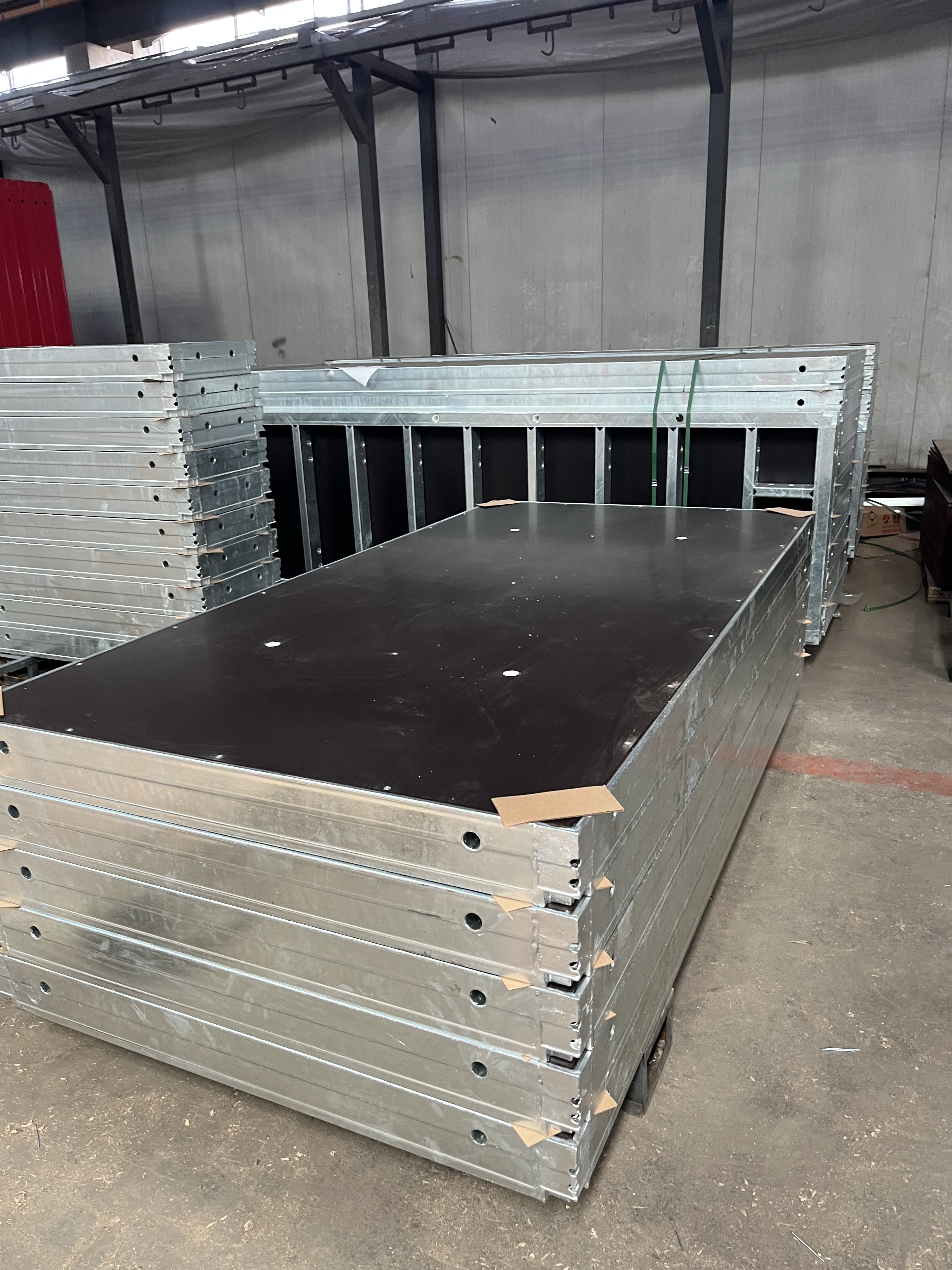
Dimensions are part of the same evidence set because they determine tie layout, crane handling and accessory count. FW00A lists heights of 3.3, 3, 2.7, 2.4, 1.2 and 0.6 m, and widths of 2.4, 1.2, 0.9, 0.72, 0.66, 0.62, 0.6, 0.54, 0.5 and 0.3 m; other sizes are available. FW00B lists heights of 3, 2.7, 1.5 and 1.2 m, with widths including 2.4, 0.9, 0.75, 0.65, 0.6, 0.55, 0.5, 0.45, 0.4, 0.35, 0.3, 0.25 and 0.2 m.
FW00C lists 1200, 1500, 2700 and 3000 mm heights with 900, 750, 600, 450 and 300 mm widths. FW00D lists 1800x1800, 1800x900, 1800x750, 1800x600, 1800x450, 900x900, 900x750, 900x600, 900x450 and 900x300 mm panels. These are standard-size records. They should be checked against the actual panel schedule, because a size that is available in the range is not automatically the size that was quoted or certified for the project assembly.
Accessory Compatibility: A Separate Qualification Test
FW00A carries a specific compatibility statement: all accessories are fully compatible with the original European trio system. That is a useful qualification point for contractors maintaining or extending an existing wall-formwork system, but it should be tested at part level. The buyer should compare accessory numbers, clamp and tie interfaces, connection geometry, lifting points and the assembly instructions for the exact panel.
Compatibility is an interface claim, not a load certificate. A clamp that connects to a panel does not prove that the complete assembly reaches 80 kN/m². The check should confirm that the panel, accessory set and safety components are approved together. The statement should also be kept with the exact FW00A configuration: it should not be extended to FW00B, FW00C or FW00D unless a separate model-specific compatibility statement is supplied.
For international buyers, this is also a spare-parts question. A compatible accessory is only useful if it is available in the required quantity and is identified by a stable part number. The qualification file should record the accessory list, the interface standard used for the check and the source of the compatibility statement.
What ISO 9001 Does — and Does Not — Prove
The supplied evidence includes an ISO 9001:2015 certificate with number 00123Q310174R301, issued by China Quality Certification Centre (CQC), valid from 2023-12-11 to 2027-01-14. The certificate scope covers design and production of scaffolding, coupler and formwork. The supplied evidence also states that FW00A, FW00B, FW00C and FW00D are covered by ISO 9001:2015 certification for the global market.
This is useful quality-management evidence. It supports the existence of a documented quality system across the stated scope. It does not, by itself, prove a panel's permissible concrete pressure, coating thickness, panel-face durability or accessory fit. Those are product-level and assembly-level properties. A buyer should keep the ISO 9001 certificate in the supplier-qualification file and still request the model-specific material, coating, pressure and compatibility records that the project requires.
The scope wording also matters. The certificate covers design and production of scaffolding, coupler and formwork. It should be read as a management-system certificate for that scope, not as a project approval or a product certification for every possible configuration. The certificate number, issuing body and validity dates should be recorded and checked against the supplier's current documents.
Application Fit and Limits
FW00A is described as wall, column and corner formwork. FW00B is described as light-duty steel wall and column formwork. FW00C is described as concrete wall formwork. FW00D is an aluminum deck and shutter system for flat and inclined slabs, ramps and drains, with a stated inclination of up to 8%. These descriptions help the buyer choose the right evidence set, but they are not a substitute for a project-specific formwork design.
The supplied scenario data for heavy-duty wall formwork lists high-rise residential, commercial infrastructure and heavy civil construction, with outdoor sites, high humidity and high concrete pour pressures. That combination makes coating, panel build and pressure evidence more important. It does not convert a general product statement into project approval. The same logic applies to FW00D: the 8% inclination figure is a documented fit boundary for the listed slab and ramp applications, not a general capability for every geometry.
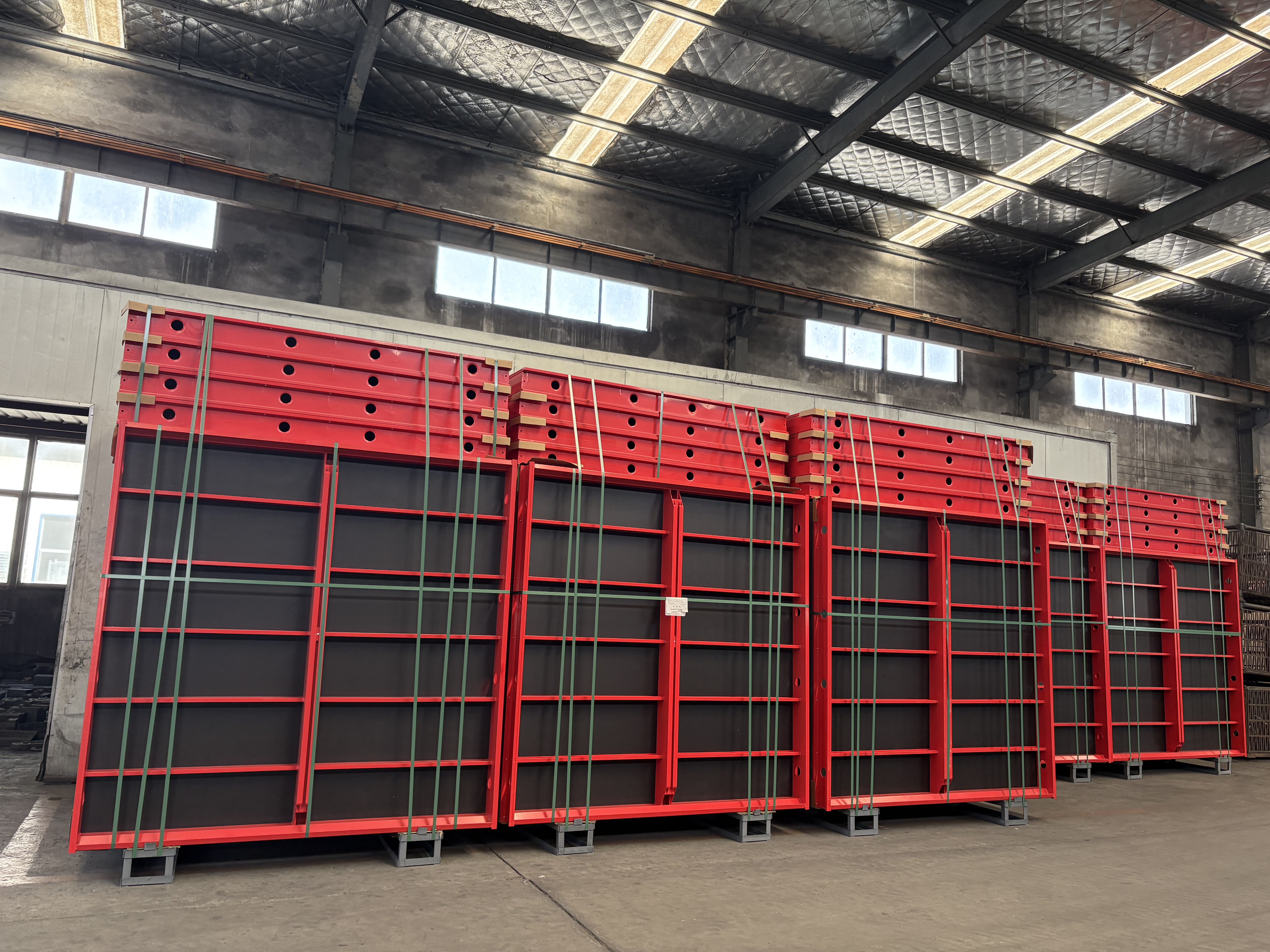
A practical comparison is therefore not steel versus aluminum in the abstract. It is a comparison of the documented model, the intended application and the evidence available for that application. FW00A's higher stated pressure belongs to a wall and column system with a specific accessory compatibility claim. FW00D's aluminum frame and 11 mm Baltic birch panel belong to a deck system with its own application envelope. Each should be qualified on its own record.
A Practical Acceptance Workflow
A contractor can turn the specification review into a repeatable acceptance workflow. The aim is to make every declared value traceable before the panel is approved for the pour.
- Define the pour and assembly. Record the intended model, panel size, tie pattern, pour rate, concrete temperature, lift height and vibration method. These are the conditions against which a permissible pressure must be read.
- Request the model-level datasheet. Confirm that the document names FW00A, FW00B, FW00C or FW00D and the exact panel or accessory, not only the product family.
- Match material and coating. Check the declared steel grade or aluminum alloy and the coating treatment. Confirm that a hot-dip galvanized statement applies to the steel frame and that the panel face is separately specified.
- Verify panel build and dimensions. Compare the panel thickness, face type, profile and quoted dimensions with the model record. Note any size that is described as available but not shown in the standard list.
- Confirm the pressure rating and its conditions. Use only the rating stated for the model. If FW00C or FW00D is quoted without a numeric pressure in the available data, request it before approval. Do not substitute another model's rating.
- Check accessory compatibility at part level. For FW00A, verify the original European trio system compatibility against the actual accessory list. For other models, request a separate compatibility statement.
- Record the quality-system evidence. File the ISO 9001:2015 certificate number, scope, issuer and validity dates. Keep it separate from product-level test and material records.
- Log open items and conditions. A conditional acceptance should state which document is missing and which pour or assembly condition depends on it. That record is more useful than a general statement that the supplier is approved.
Market Context: Why Material Claims Need Model-Level Evidence
Fortune Business Insights valued the global concrete formwork market at USD 7.88 billion in 2025, with Asia Pacific holding a 54.7% share. The same source reports that steel accounted for 44% of global formwork units installed in 2024, timber 37% and aluminum 19%. These figures describe the market mix. They do not establish the suitability of a particular panel.
For a buyer, the practical implication is that material labels are common and easy to repeat. A market with steel, timber and aluminum systems side by side requires a document discipline that separates the material claim from the model record. The qualification question is not whether steel or aluminum is generally better. It is whether the quoted panel has a stated grade, a stated coating, a stated panel build, a stated dimension set and a stated pressure rating for the intended assembly.
Future Outlook: Build a Reusable Evidence File
The most useful outcome of this review is a reusable file for each model. The file can carry the model datasheet, material record, coating statement, panel specification, dimension list, pressure rating, accessory compatibility record and ISO 9001 certificate. When a new project moves from research to evaluation, the buyer can compare the new pour conditions against the same file instead of restarting the specification review.
The supplied data already shows why the file should stay model-specific. FW00A and FW00B have different stated pressure ratings. FW00C and FW00D do not state a numeric pressure in the available specification. Only FW00A carries the specific original European trio accessory compatibility statement. Those differences are not a ranking. They are the reason to request the missing documents and to keep each acceptance decision tied to the exact model and assembly.
FAQ
How should a contractor verify the S420 steel grade in RFH formwork?
Ask for the model-level material record or mill certificate for the delivered batch, confirm that it names the quoted model and component, and check that the steel grade is identified for that batch. The product data states S420 for FW00A, FW00B and FW00C as applicable, but the grade label alone does not prove the assembled panel's permissible concrete pressure.
What does hot-dip galvanized mean in a formwork specification?
It describes a zinc coating applied to the steel frame, not to the plywood face. FW00A, FW00B and FW00C are described with hot-dip galvanized treatment. The available specification does not state coating thickness, adhesion class or salt-spray performance, so a project that depends on those values should request them separately.
Can I compare the FW00A 80 kN/m² rating directly with the FW00B 60 kN/m² rating?
Only as model-specific declared values. FW00A states a permissible concrete pressure of up to 80 kN/m² and FW00B states 60 kN/m². A valid comparison depends on the documented panel, tie pattern, pour conditions and manufacturer instructions. The numbers should not be treated as universal performance scores.
Does ISO 9001:2015 certify the load capacity of FW00A–FW00D?
No. The supplied certificate is an ISO 9001:2015 quality management system certificate with number 00123Q310174R301, issued by CQC, valid from 2023-12-11 to 2027-01-14, with a scope covering design and production of scaffolding, coupler and formwork. It does not by itself certify a panel's permissible concrete pressure, coating performance or accessory fit.
What should I check for FW00A accessory compatibility with the original European trio system?
Check the claim at part level: exact accessory numbers, clamp and tie interfaces, connection geometry, lifting points and the assembly instructions for the panel. The supplied data states that all FW00A accessories are fully compatible with the original European trio system. That statement should be matched to the specific parts in the quotation and should not be extended to other models without a separate statement.
Conclusion: Qualification Is a Document Chain
The practical rule is to read every declared value as a model-specific, document-backed statement. S420 is a steel grade, hot-dip galvanizing is a frame treatment, and 80 or 60 kN/m² is a permissible concrete pressure for a defined system. Qualification evidence is the set of documents that connects those claims to the exact panel, accessory set and project conditions.
For the RFH range, that means keeping FW00A, FW00B, FW00C and FW00D separate in the evaluation file. Use the stated values where they are given. Request the missing values where they are not. Record the conditions that make each value valid. The result is a more defensible acceptance decision and a clearer basis for the next project.
The supplied RFH New Catalogue PDF is available for public download: RFH New Catalogue (PDF).
Tem questões ou precisa de mais detalhes?
Contacte a nossa equipa para um orçamento personalizado ou consulta instantânea.
Solicitar orçamento
Preencha o formulário abaixo e a nossa equipa entrará em contacto com uma proposta personalizada.
Chat direto do WhatsApp
Prefere conversar em tempo real? Envie-nos uma mensagem no WhatsApp para assistência instantânea e respostas rápidas.
- Obter orçamento personalizado
- Partilhar fotos ou documentos
- Discuta as suas necessidades diretamente
Geralmente responde em 5–30 minutos durante o horário de expediente.