
Conductor Drawing in Wire & Cable: Key Technical Requirements and Their Impact on Quality
Conductor Drawing in Wire & Cable: Key Technical Requirements and Their Impact on Quality
Conductor drawing is one of the most technically demanding steps in wire and cable manufacturing. The process determines the diameter, surface quality, mechanical properties and electrical conductivity of the conductor, and therefore directly influences the performance of the final cable and the economics of production.
For copper, aluminium and alloy conductors, the drawing line must balance speed, lubrication, die condition and equipment stability. Small deviations can produce out-of-tolerance dimensions, surface scratches, breaks or poor conductivity. Understanding the key technical requirements helps manufacturers select appropriate equipment, maintain process control and match output to application needs.
Why Conductor Drawing Demands Close Process Control
Wire and cable producers today face a complex environment. Global demand for wire and cable continues to expand; according to Global Market Insights, the global wire and cable market was estimated at USD 267.8 billion in 2024, with a projected CAGR of 7.3% through 2034. At the same time, the industry deals with information asymmetry, regional certification differences, technology iteration for new energy scenarios and the need to improve upstream-downstream procurement matching efficiency.
These pressures create both challenges and opportunities. Effective control of key drawing parameters can help manufacturers reduce scrap, maintain electrical performance and improve throughput. Meanwhile, the evolution of drawing machines, in-line measurement and process automation is making consistent control more accessible.
How an Industry Trade Fair Supports Drawing Technology Decisions
An industry trade fair can help manufacturers keep pace with these changes. wire China, an international trade fair for the wire and cable industry, provides a broad view of the full production chain, from raw materials and processing machinery to auxiliary materials, testing and automation solutions.
wire China 2024 covered 80,500 square meters of floor space, bringing together 1,080 companies from around the world and 41,857 professional visitors from 90 countries and regions. The upcoming wire China 2026, scheduled for September 21–24, 2026 at the Shanghai New International Expo Centre, is planned to feature more than 1,100 participating companies and attract over 40,000 professional visitors, together with more than 60 specialized conferences and forums. The event brings together materials, equipment, testing and related technologies, while technical forums and Match making activities provide additional opportunities for suppliers and buyers to discuss specific requirements.
For a manufacturer evaluating a new drawing line, such a trade fair is a practical way to compare equipment, inspect tooling and lubrication systems, and talk with process specialists without the pressure of a formal sales visit.
Key Technical Requirements in Conductor Drawing
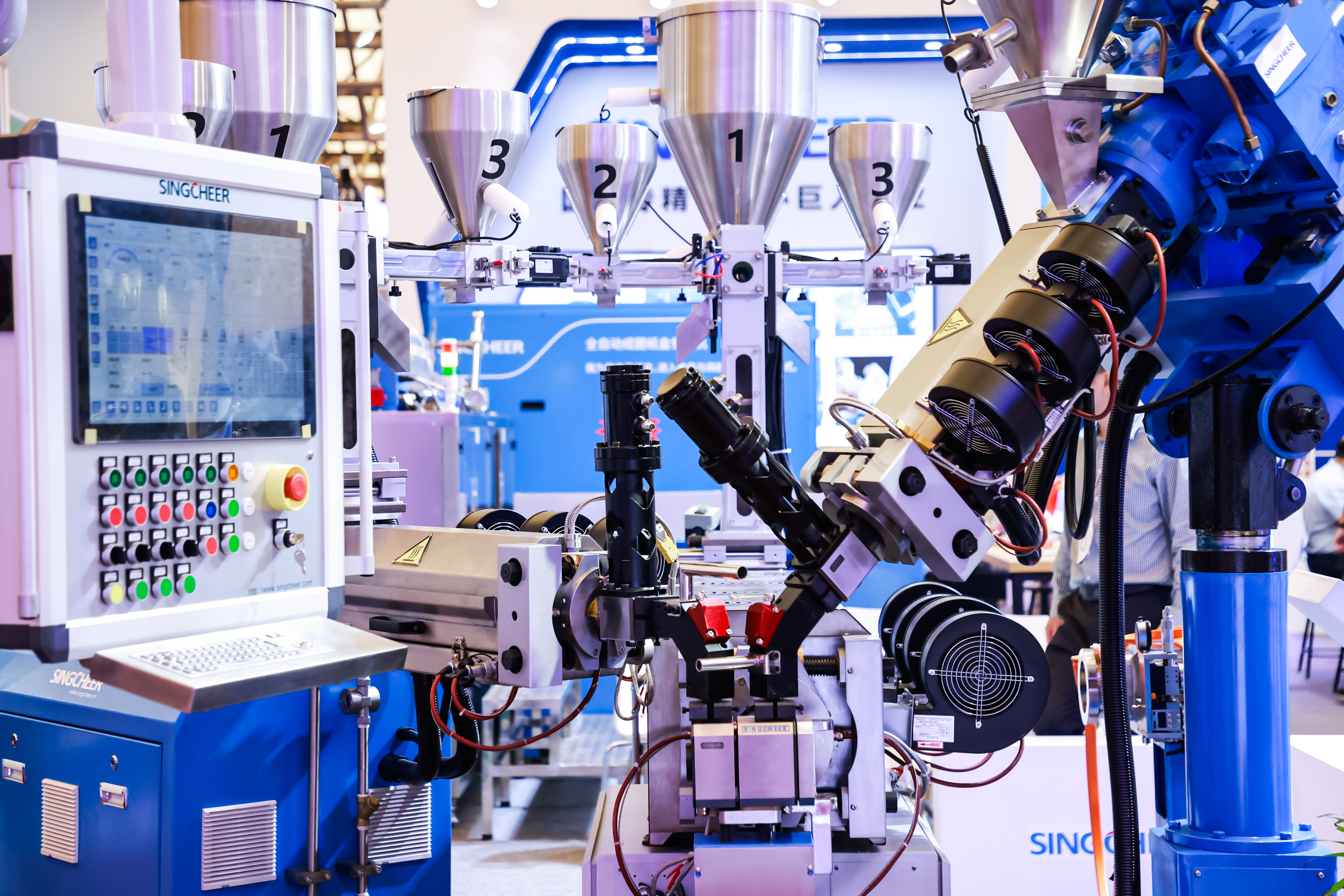
The following factors are among the most influential in conductor drawing quality.
Dimensional Control
Conductor diameter is the most visible quality attribute. Drawing reduces a rod through a series of dies; each pass must reduce the cross-section in a controlled ratio. If the capstan speed or die sequence is incorrect, the wire can be oversized, undersized or irregular. Modern lines use laser diameter gauges and feedback control loops to maintain tolerance. For precision conductors, even a few microns of variation can affect downstream insulation and connector fit.
Surface Quality
Surface defects such as scratches, die lines, copper dust or oxide streaks affect both appearance and electrical performance. Surface contamination can affect conductivity and may become more significant in conductors used for demanding high-frequency applications. Defects often come from worn dies, poor lubricant film, or foreign particles in the lubrication system.
Mechanical Properties
Cold drawing work-hardens copper and aluminium. While strength increases, ductility drops. If the material becomes too hard, it may break during drawing or during subsequent stranding. Annealing restores ductility and stabilises elongation. The trade-off between tensile strength and elongation must be matched to the application: building wire benefits from soft annealed copper, while overhead conductors may require higher strength.
Electrical Conductivity
Electrical conductivity is a key final property. For copper, conductivity is affected by impurities and oxygen content. Drawing and annealing must avoid oxidation, and direct contact with the annealing atmosphere should be controlled. Excessive annealing temperature or inadequate atmosphere control can increase surface oxidation and affect conductor properties. High-quality copper rods and careful process control are essential.
Lubrication
Effective lubrication reduces friction between the wire and die, lowers drawing temperature and extends die life. A stable fluid film also prevents pick-up on the die surface. Lubricant concentration, temperature and cleanliness must be controlled. If the lubricant degrades or becomes contaminated, wire surface quality and drawing speed both decrease.
Die Condition
The die geometry—including the approach angle, bearing length and polished surface—determines deformation and surface finish. Dies wear over time, changing dimensions and surface quality. Regular inspection and reconditioning are necessary. A worn die can cause streaks, ovality or breakage.
Drawing Speed and Temperature
Higher speed raises productivity but increases heat generation. Excessive temperature can break down the lubricant, oxidise the wire and cause annealing-like softening. Manufacturers must set speeds according to material, reduction ratio and cooling capacity.
Equipment Stability
Tension fluctuations, vibration and capstan slip create dimensional variation and breaks. Synchronisation between drawing, annealing and take-up is critical. Stable machine frames, precise tension control and continuous monitoring all contribute to consistent output.
In-line Monitoring and Automation
Increasingly, drawing lines use in-line diameter measurement, tension sensors and automatic speed adjustment. These systems reduce dependence on operator judgement and enable early detection of drift. Rather than relying only on end-of-line samples, closed-loop control holds the process within a tighter window.
Application Scenarios for Different Conductor Types
Different applications place different demands on the drawing process.
- Power cables: large conductors require high conductivity, stable dimensions and clean surfaces to ensure uniform insulation and low electrical losses.
- Control and flexible cables: fine strands with high elongation improve flexibility; drawing must avoid excessive hardening.
- Building wire: soft annealed copper is preferred for easy installation and termination.
- Overhead conductors: aluminium and aluminium alloys are used where strength-to-weight ratio matters; surface quality and mechanical consistency are critical.
Manufacturers evaluating a new drawing line should consider their application mix, because material type, reduction schedule and annealing requirements vary significantly.
Market Trends Affecting Drawing Technology
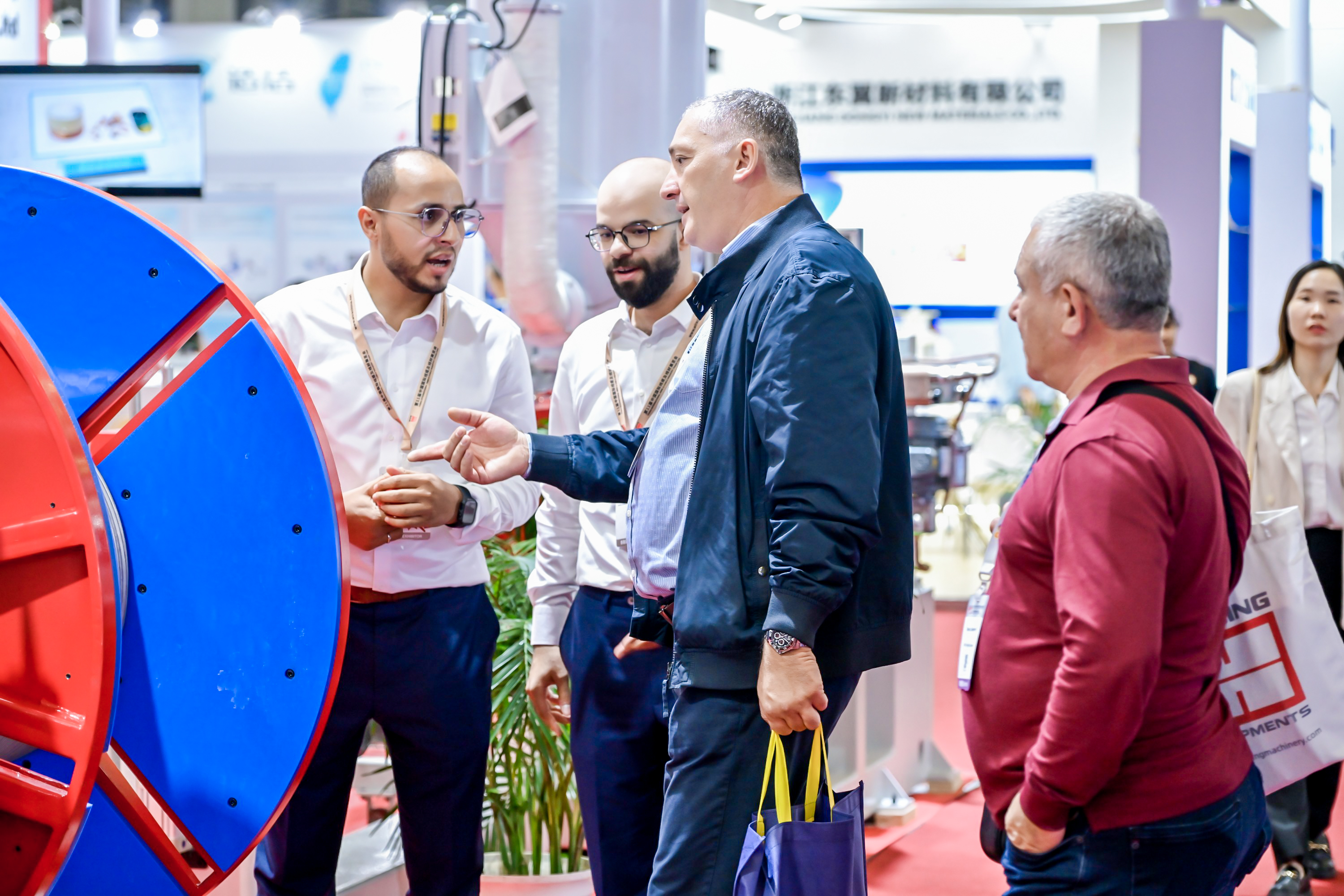
The wire and cable industry is moving toward more automated, data-supported production. Drawing machine builders are integrating sensors and control systems as standard components. At the same time, customers are asking for tighter tolerances and consistent traceable quality. These trends heighten the need for process expertise.
Industry trade fairs and conferences offer a neutral environment for comparing machines, tooling and lubricants, and for understanding how suppliers are addressing these requirements. They do not replace a factory acceptance test, but they help buyers build a shortlist before committing to investment.
Traditional vs Modern Drawing Lines: A Balanced View
Traditional drawing lines often rely on fixed speeds, manual adjustment and off-line diameter checks. They can work well for commodity products with moderate tolerances. However, as requirements tighten, these methods become a bottleneck. Modern lines with closed-loop control provide real-time correction, but they come with higher upfront cost and maintenance complexity.
For small producers with very short production runs and frequent material changes, the economics of an automated line may be harder to justify. The choice depends on product mix, tolerance requirements and available technical skill, rather than on technology alone.
Future Outlook for Conductor Drawing
Future conductor drawing will likely see further integration of sensors, process control and production management software. Machine builders will continue to improve die materials, lubrication systems and annealing control. But technology adoption will remain driven by project requirements and return on investment.
Manufacturers should evaluate new machines through performance data and by observing them in operation at industry events. For the upcoming edition, wire China 2026 will provide a broad opportunity to see the latest machinery and process technology across the wire and cable production chain.
Frequently Asked Questions
What is the most critical parameter in conductor drawing?
Diameter control is usually the most critical because it affects both electrical performance and downstream processing. In practice, surface quality, lubrication and die condition are equally important for consistent output.
How does drawing speed affect conductor quality?
Higher drawing speed increases productivity but raises temperature and friction. If speed is too high, the lubricant film can break down, causing surface defects or wire breaks. The correct speed depends on material, reduction ratio and cooling capacity.
Why is annealing necessary after drawing?
Annealing restores ductility after cold working. Drawn copper and aluminium become harder and less flexible; annealing softens the material to meet required elongation and electrical conductivity.
What causes surface defects on drawn wire?
Common causes include worn or damaged dies, poor lubrication, contaminated lubricant, and incorrect die alignment. Surface defects can result in poor electrical performance and premature failure in service.
How often should drawing dies be inspected?
Die inspection frequency depends on production volume, material and speed. Many plants inspect dies regularly based on tonnage or time; routine measurement of bore size and visual inspection help maintain quality.
What role does a trade fair play in drawing technology selection?
A trade fair allows engineers and buyers to compare machines, materials and tooling from multiple suppliers, attend technical forums and discuss process parameters with specialists. It supports technology evaluation before purchase decisions.
Conclusion
Conductor drawing remains a process where small changes produce large quality effects. Mastering dimensional control, surface quality, mechanical properties, lubrication and equipment stability is essential for efficient production. As new materials and automation emerge, continuous education and supplier dialogue become valuable. Industry events such as wire China can provide an additional opportunity for manufacturers, engineers and equipment suppliers to exchange technical information and compare available solutions.
Pre-registration for wire China 2026 is available at https://dwz.cn/DYkFpGQd. For more details, visit the official website: https://www.wirechina.net/. A full overview of the 2026 programme can be downloaded from the wire China 2026 brochure.
Tem questões ou precisa de mais detalhes?
Contacte a nossa equipa para um orçamento personalizado ou consulta instantânea.
Solicitar orçamento
Preencha o formulário abaixo e a nossa equipa entrará em contacto com uma proposta personalizada.
Chat direto do WhatsApp
Prefere conversar em tempo real? Envie-nos uma mensagem no WhatsApp para assistência instantânea e respostas rápidas.
- Obter orçamento personalizado
- Partilhar fotos ou documentos
- Discuta as suas necessidades diretamente
Geralmente responde em 5–30 minutos durante o horário de expediente.