
Construction Cooling Vest Trend: Passive Water-Circulation Gains Ground
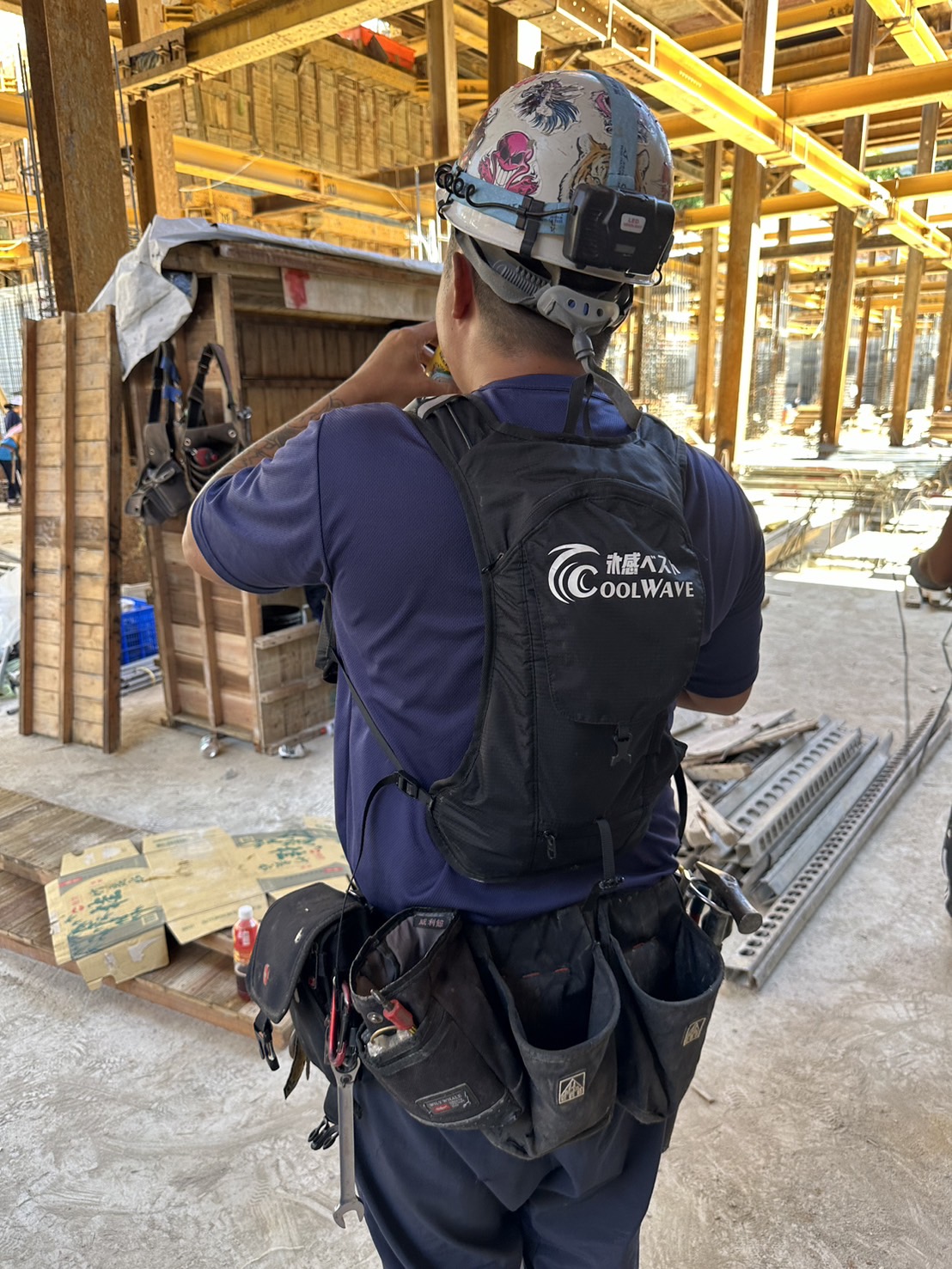
Industry Context: Heat Stress Protection in Construction
Industrial applications represent the largest segment of the global cooling vest market, accounting for a 34.5% revenue share in 2025 (Dataintelo). As construction sites increasingly face extreme heat conditions, procurement professionals are moving beyond simple hydration and rest-break protocols toward wearable heat stress mitigation. The specialized market for active cooling vests with fans reached USD 1.32 billion in 2024, yet a subset of buyers is shifting toward passive, non-powered alternatives that offer longer autonomy and lower maintenance.
Problem / Opportunity: The Pain Points of Conventional Cooling Methods
Construction workers on metal-roof buildings, steel mills, and long-hour outdoor pours experience debilitating heat buildup. Fan-based cooling vests require battery packs that add weight, create noise, and demand frequent recharging. Phase-change material (PCM) vests provide only 1–2 hours of relief in extreme heat before the medium saturates. Both technologies struggle in scenarios where workers stay in direct sun for 8+ hours or in confined, low-ventilation spaces. Buyers evaluating construction cooling vest options increasingly ask: Is there a solution that balances cooling duration, weight, zero maintenance, and cost?
Solution: Shokunin COOLWAVE — A Passive Water-Circulation Approach
Shokunin is the professional e‑commerce brand of Feng Shang Precision Co., Ltd., a Taiwan-based manufacturer founded in 2009 that focuses on innovative tools for modern craftsmen. The company’s COOLWAVE Water-Circulation Cooling Vest is a certified disaster prevention product that addresses heat stress without electricity. The system uses a passive water-circulation mechanism: a PEVA backpack contains a TPU water bag and two ice packs; a small sand‑rubber tube delivers chilled water through a lightweight vest worn over the torso. No batteries, no fans, no motors.
Technical Specifications
| Parameter | Value |
|---|---|
| Cooling duration | 3–4 hours |
| Total weight (vest + backpack) | Within 2 kg |
| Suitable ambient temperature | Below 40 °C (ice‑pack dependent) |
| Pump output | 5 V, 150 mA (max) – only for circulation initiation; zero ongoing power draw |
| Flow rate | Max 320–370 ml/min |
| Materials | Backpack: 600D polyester, PEVA; Water bag: TPU; Tube: sand rubber; Cap: polypropylene |
| Contents | Vest backpack ×1, ice packs ×2 |
Application / Use-Case Scenarios
The COOLWAVE vest has been deployed in real-world high-temperature environments across Taiwan for over a decade. Documented use cases include:
- Construction sites with direct sun and metal‑roof structures, where workers face radiant heat from above and below.
- Metal sheet factories and smelting plants (e.g., copper refineries) where ambient temperatures often exceed 40 °C.
- Outdoor public workers such as traffic controllers and street vendors who remain stationary in heat for extended shifts.
- Long‑duration outdoor cooling gear for overnight pours or emergency repairs where access to power for fan‑vest charging is unavailable.
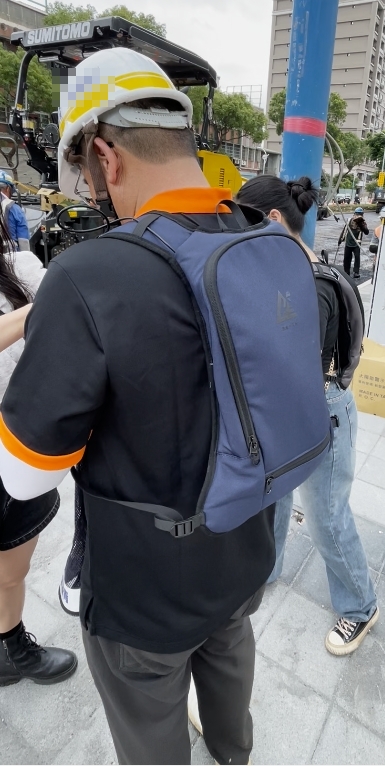
The vest’s passive design eliminates maintenance complexity — no filter cleaning, no battery degradation, and no electronics to fail. The TPU water bag and ice packs are easily replaced, and the 600D polyester shoulder strap withstands abrasive work conditions.
Market Trend Analysis
Several macro trends support the growing interest in passive water-circulation vests for construction:
- Regulatory push: OSHA’s General Duty Clause (Section 5(a)(1)) requires employers to mitigate recognized heat hazards. Employers are actively seeking compliant, easy‑to‑administer protective gear.
- Regional demand: The Asia‑Pacific region held a 38.2% revenue share of the cooling vest market in 2025 (Dataintelo), driven by rapid industrialization and extreme summer temperatures in countries like India, China, and Southeast Asian nations.
- Market size: The broader heat stress prevention products market is valued at USD 2.86 billion in 2025 (The Business Research Company), with cooling wearables as a primary growth driver — suggesting procurement budgets are expanding.
- Preference for simplicity: After a decade of fan‑vest adoption, end‑users report frustration with battery logistics and fan noise. Passive solutions that offer 3–4 hours of cooling with zero ongoing cost are gaining traction in RFP evaluations.
Comparison with Traditional Solutions
Compared to active fan vests and phase-change material (PCM) vests, the Shokunin COOLWAVE’s water‑circulation system offers distinct trade‑offs:
| Criterion | Fan‑based vest | PCM vest | Shokunin COOLWAVE (passive water circulation) |
|---|---|---|---|
| Power source | Battery (needs recharging) | None | None (pump needs brief 5 V pulse to start; then gravity/thermal circulation) |
| Cooling duration | 2–6 h (battery dependent) | 1–2 h | 3–4 h |
| Noise | Fan audible | Silent | Silent |
| Maintenance | Filter cleaning, battery care | PCM pack replacement | Ice‑pack replacement; washable vest |
| Weight | 1.5–2.5 kg (incl. battery) | 1–2 kg | < 2 kg |
One honest limitation: The COOLWAVE requires pre‑frozen ice packs, which may not be practical at remote sites without freezer access. However, many construction projects have basic break‑room refrigeration, and spare ice packs can be rotated for continuous use.
Future Outlook
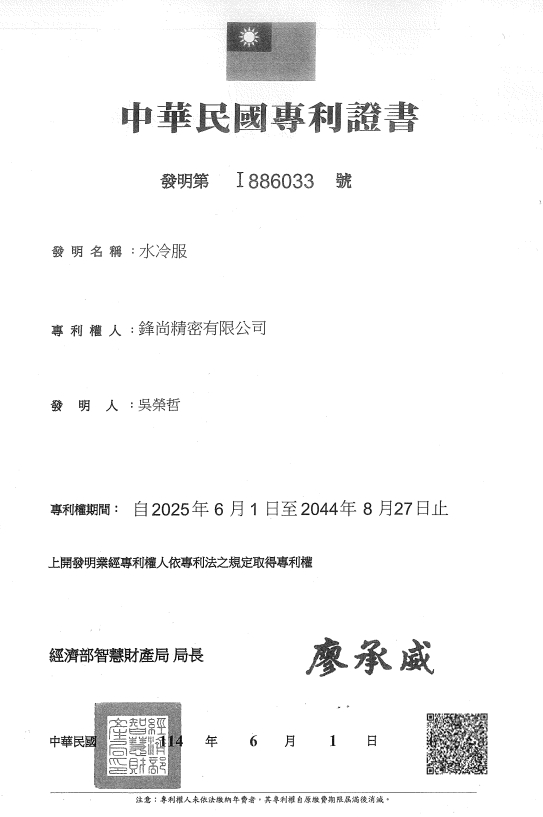
As OSHA and equivalent bodies in other jurisdictions tighten heat stress regulations, procurement teams will increasingly seek wearable solutions that are auditable, low‑maintenance, and field‑proven. The Shokunin COOLWAVE, with its patented water‑cooled vest structure (ROC patent I886033) and certifications from the Taiwan Disaster Prevention Industry Association, positions itself as a credible option for buyers who prioritize uptime and simplicity over novelty. The company’s ODM readiness (monthly capacity: 3,000 units, lead time 7–14 days, MOQ 10 units) further supports volume procurement for construction fleets.
Frequently Asked Questions
Q1: How does a passive water‑circulation cooling vest work?
A: Ice packs are placed inside a TPU water bag within a backpack. A small pump (operated briefly with a 5 V power source) initiates water circulation through tubes embedded in the vest. Once started, the system uses natural convection and gravity to continue circulating chilled water without external power.
Q2: What are the main advantages of passive water‑circulation over fan‑based vests?
A: Passive water‑circulation requires no batteries for ongoing operation, produces no noise, has no filters to clean, and provides consistent 3–4 hour cooling without the weight and recharge logistics of battery‑powered fans.
Q3: How long does the cooling last per ice pack change?
A: The standard configuration yields a cooling duration of 3–4 hours in ambient temperatures below 40 °C. Actual duration depends on ambient heat, physical activity level, and ice‑pack size.
Q4: What certifications does the Shokunin COOLWAVE vest hold?
A: The water‑cooled vest structure is protected by a patent (ROC I886033, issued by the Intellectual Property Office of Taiwan). The product has also received the Disaster Prevention Product and Service Certification Award from the Taiwan Disaster Prevention Industry Association.
Q5: Can the vest be customized or sourced under an ODM arrangement?
A: Shokunin offers ODM production for the COOLWAVE vest. Monthly manufacturing capacity is 3,000 units with a typical lead time of 7–14 days and a minimum order quantity of 10 units. Export is available globally, and the product carries a 6‑month warranty.
Q6: What industries and use cases is the vest designed for?
A: The vest is suitable for construction workers, steelworkers, electricians, traffic controllers, food stall operators, and any outdoor or high‑temperature workstation workers. It has been field‑tested for over a decade in construction sites, metal factories, and street vending environments.
For a complete technical and commercial overview, download the Shokunin corporate brochure: Shokunin COOLWAVE Brochure (PDF).
Shokunin is a professional brand of Feng Shang Precision Co., Ltd. Established in 2009 and based in Taoyuan, Taiwan, the company designs and manufactures tools and cooling solutions for modern craftsmen worldwide. Contact inquiries: fsmarketing@fstool.com.tw | WhatsApp: +86 18858260055