
Construction Cooling Vests: An Independent Guide to Heat Stress Protection
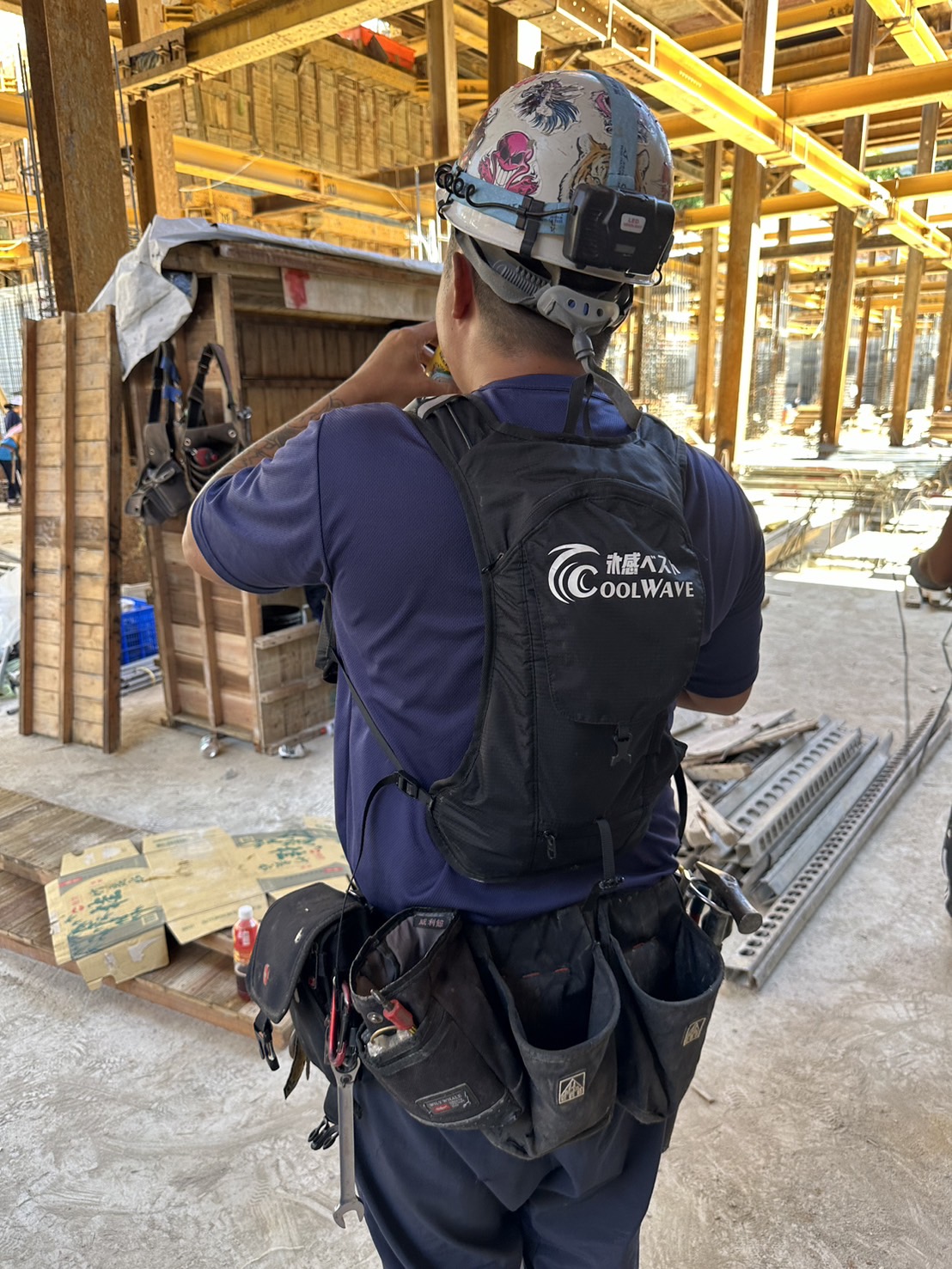
Construction sites combine high ambient heat, humidity, and physical exertion, making personal cooling equipment a relevant safety consideration. (Image: Shokunin / Feng Shang Precision Co., Ltd.)
Heat stress is a recognized occupational hazard in construction, not a seasonal inconvenience. When body heat rises faster than it can be released, workers face higher risks of fatigue, reduced concentration, heat exhaustion, and heat stroke. In response, cooling vests have become one of the most frequently discussed personal protective equipment (PPE) items among safety officers, site managers, and procurement professionals.
This article is written as an independent industry reference. It explains what construction cooling vests are, how water-circulation models work, what market trends are visible, and what factors should be considered before purchasing. While one supplier is used as a concrete example, the goal is to help buyers understand the product category, not to recommend a single brand.
Problem and Opportunity: Working in Unforgiving Heat
Construction workers often spend long hours under direct sun, on rooftops, or inside structures that trap heat. These conditions increase the risk of heat-related illness. According to OSHA's General Duty Clause, Section 5(a)(1) of the OSH Act, employers in the United States are required to provide a workplace free from recognized hazards, which includes heat stress in high-temperature construction sites. Similar regulations and guidelines exist in other countries, making heat stress prevention a legal and operational priority for many companies.
The business case for cooling equipment is also growing. The Business Research Company estimates that the global heat stress prevention products market reached USD 2.86 billion in 2025, with cooling wearables as a primary growth driver. Dataintelo reports that industrial applications were the largest segment of the cooling vest market in 2025, with a 34.5% revenue share, and that the Asia-Pacific region led the market with a 38.2% share. A separate report on cooling vests for warehouse and logistics workers valued the global industrial cooling vest market at USD 412 million in 2024.
For procurement teams, this means that cooling vests are no longer an experimental purchase. They are becoming part of a structured approach to heat safety, especially for outdoor work, metal sheet factories, and other high-temperature operations.
Brand Solution: Shokunin and the COOLWAVE Water-Circulation Vest
To understand how cooling vests are made and specified, it helps to look at a concrete example. Shokunin is the professional e-commerce brand of FENG SHANG PRECISION CO., LTD., a Taiwanese manufacturer established in 2009. The company operates a 1000 m² facility in Taoyuan, employs approximately 30 people, and has an R&D team of five engineers. Its annual production capacity is 10,000 units. In addition to cooling vests, the company produces air compressors, cut-off machines, lithium batteries, diamond saws, nail guns, spider stands, and screwdriver bits. It is also recognized as a pioneer of brushless air compressors.
The COOLWAVE Water-Circulation Cooling Vest series includes a Basic Model and three Professional Models (Black, Gray, and Blue). These products are classified as industrial cooling apparel and personal protective equipment, and they operate with a water-circulation system. According to the manufacturer's specification, all variants share the same core parameters:
| Parameter | Value |
|---|---|
| Cooling duration | 3–4 hours per use |
| Net weight | Within 2 kg |
| Pump output | 5V 150mA (max) |
| Flow rate | Max 320–370 ml/min |
| Main materials | PEVA, TPU water bag, 600D polyester shoulder strap, sand rubber cooling tube, polypropylene cap |
| Included items | Water-cooled vest backpack ×1, ice packs ×2 |
| Intended users | Construction workers, outdoor workers, food stall operators, street vendors, traffic controllers, metal sheet factory workers |
The product is designed for temperatures below 10°C according to the specification sheet. This detail is worth noting because it indicates that the ice packs must be frozen below this temperature before use, and the cooling effect depends on the phase change of ice. In very hot outdoor environments, users may need to plan for ice pack replacement during long shifts.
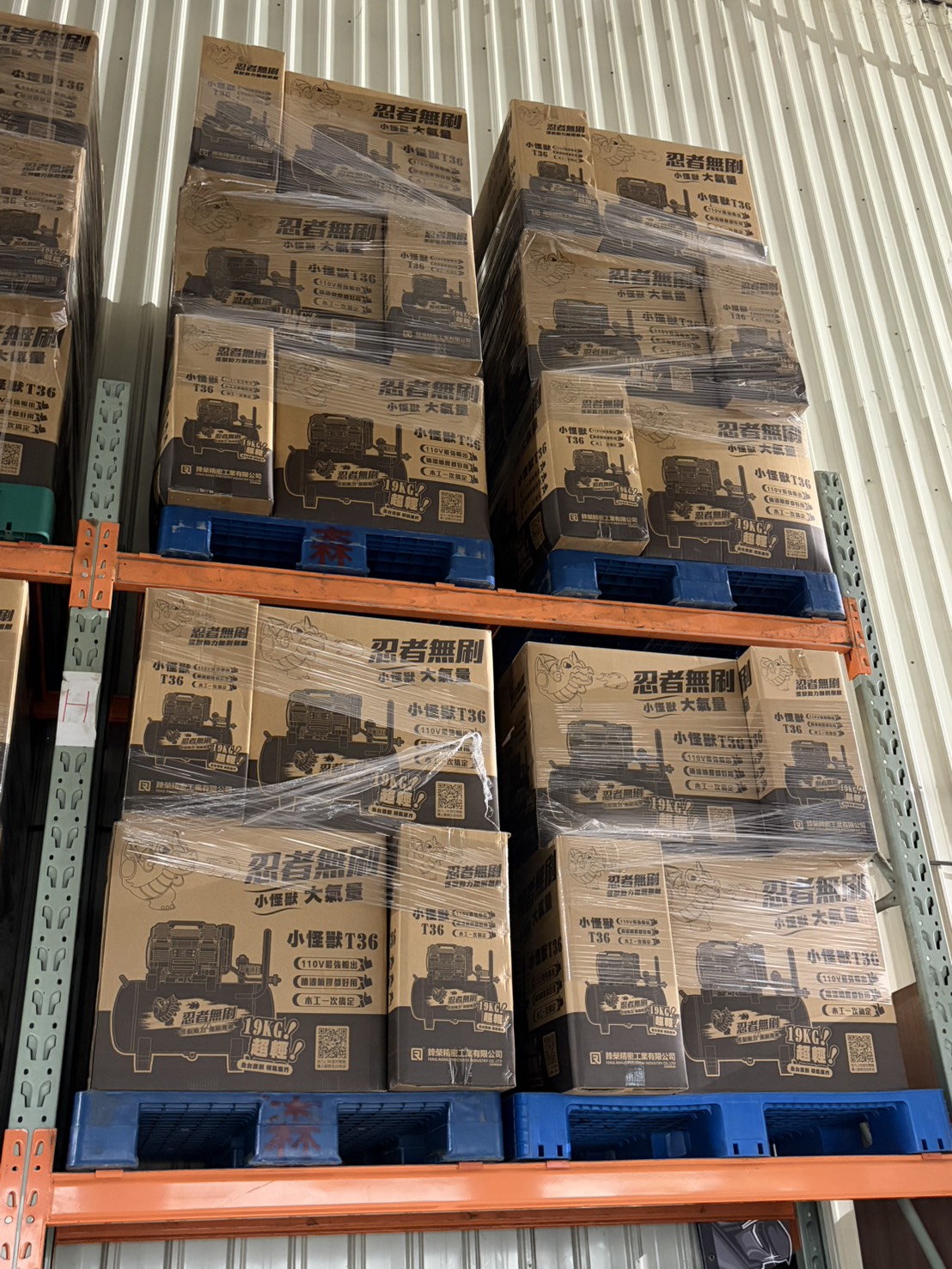
Manufacturing capacity and warehouse management are important factors when evaluating cooling vest suppliers. (Image: Shokunin / Feng Shang Precision Co., Ltd.)
Technical Explanation: How Water-Circulation Cooling Works
Water-circulation cooling vests work by moving chilled water through tubes placed over the wearer's torso. In the COOLWAVE design, a small pump drives continuous water circulation at a maximum flow rate of 320–370 ml/min. The pump operates at 5V 150mA, which is a low-power output. The water passes through a backpack containing reusable ice packs, and the cooled water flows through sand rubber tubes across the body.
From an engineering standpoint, the key advantage is that water has a high heat capacity. It can absorb body heat more effectively than air cooling alone. The pump keeps the water moving, which prevents a layer of warm water from settling against the skin. The cooling duration of 3–4 hours is determined by the ice pack volume, the insulation of the backpack, and the pump flow rate.
Material selection also affects durability and comfort. The COOLWAVE vests use PEVA for the main shell, TPU for the water bag, 600D polyester for shoulder straps, sand rubber for the cooling tubes, and polypropylene for the cap. The design includes a backpack and ice packs, and the intended special requirements include lightweight, waterproof, breathable, and one-size-fits-all characteristics.
Application and Use Cases
The most common scenarios for water-circulation cooling vests are found in construction sites, outdoor work, metal sheet factories, and street vending. The application data from Shokunin lists construction sites, outdoor work, metal sheet factories, and street vendors as primary use cases, with additional suitability for food stall operators, traffic controllers, and similar outdoor roles. This application scenario is common in Taiwan, but the underlying heat stress problem is not limited to one region.
In practice, the equipment is used for personal heat stress relief. The operating mode is passive cooling, meaning it uses ice packs rather than a compressor or thermoelectric element. Site workers wear the vest under or over clothing, depending on the task. The portable backpack design allows some freedom of movement, and adjustable straps help fit different body sizes.
Key requirements for practical use include: reusable ice packs, adjustable vest straps, a portable backpack design, and lightweight, waterproof, breathable materials. These are the features highlighted in the product application notes.
Market Trend Analysis: Data Is Useful, but Context Matters
The cooling vest market has attracted attention from investors and safety buyers alike. Several market research firms have published estimates, though definitions vary. A report on cooling vests for warehouse and logistics workers valued the global industrial cooling vest market at USD 412 million in 2024. Dataintelo stated that industrial applications held a 34.5% revenue share in 2025 and that the Asia-Pacific region accounted for 38.2% of global revenue. The Business Research Company estimated the broader heat stress prevention products market at USD 2.86 billion in 2025.
At the same time, another source estimated the market for cooling vests with fans at USD 1.32 billion in 2024, though that figure still requires verification. Buyers should be aware that market size estimates can vary significantly depending on whether the scope includes fans, water-circulation systems, phase-change packs, or only simple vests. One industry divergence note shows that estimates for the global cooling vest market range from USD 64.83 million to USD 446.7 million, depending on the methodology. This means it is more useful to look at directional trends than at any single number.
For construction-specific heat stress, the pattern is consistent: industrial applications are the largest segment, and Asia-Pacific is a demand hub. This aligns with the fact that many construction cooling vest suppliers are based in Asia and sell to global buyers.
Comparison with Traditional Cooling Solutions
Traditional approaches to cooling construction workers include wet towels, misting fans, portable evaporative coolers, and scheduled breaks in shaded areas. Each has a role, but also limitations. Evaporative coolers lose effectiveness in humid environments. Wet towels warm up quickly. Rest breaks reduce exposure time but do not actively lower the worker's core temperature.
Water-circulation cooling vests offer a different trade-off. They provide continuous cooling over a period of 3–4 hours, which can be useful for workers moving between different zones on a site. They are not, however, a complete replacement for other heat management measures.
Realistic limitations:
- Cooling duration: With a 3–4 hour cooling window, workers on full shifts may need spare ice packs or a rotation system.
- Weight and mobility: The complete system weighs within 2 kg. Carrying a backpack and wearing a vest can add physical burden, especially during highly active tasks.
- Temperature specification: The COOLWAVE spec sheet states 'suitable temperature below 10°C.' This parameter appears related to the temperature of the ice packs rather than the ambient work environment, but buyers should confirm the intended meaning with the supplier and plan for ice preparation on site.
- Task compatibility: The vest may not fit well under all high-visibility or other required PPE, so compatibility should be tested with the full work uniform.
For procurement, the practical approach is to combine cooling vests with other heat stress controls, such as hydration, rest schedules, and shade. The vest is one layer of protection, not a miracle solution.
Future Outlook
As high-temperature weather becomes more common, cooling apparel is likely to move from optional comfort gear to a standard part of heat stress programs in industries such as construction, warehousing, and outdoor maintenance. The strong demand in the Asia-Pacific region, combined with industrialized heat safety regulations in the United States, suggests that manufacturers will need to invest in both product performance and production capacity.
There is also room for technical improvement. Future cooling vests may offer longer cooling durations, lighter materials, easier maintenance, and better integration with high-visibility workwear. For buyers, the longer-term challenge is choosing a supplier that can demonstrate durable manufacturing, consistent quality, and adequate capacity. In this context, a supplier with an R&D team and transparent production specifications can provide more confidence than a brand that only assembles imported parts.
Frequently Asked Questions
What is a construction cooling vest?
A construction cooling vest is a wearable item designed to reduce heat stress in high-temperature work environments. It belongs to the category of industrial cooling apparel and personal protective equipment. A water-circulation version, such as the COOLWAVE series, uses a pump-driven liquid circulation system to remove heat from the body.
How does a water-circulation cooling vest work?
The vest contains tubes through which water is pumped continuously. In the COOLWAVE design, the pump output is 5V 150mA (max) and the water flow rate reaches up to 320–370 ml/min. The water is chilled by reusable ice packs placed in a backpack before circulating through the vest.
How long does a water-circulation cooling vest provide cooling?
For the COOLWAVE series, the rated cooling duration is 3–4 hours per use. The net weight of the complete system is within 2 kg.
What materials are used in the COOLWAVE cooling vest?
The main shell is PEVA, the water bag is TPU, the shoulder straps are 600D polyester, the cooling tube is sand rubber, and the water bag cap is polypropylene. The package includes a water-cooled vest backpack and two ice packs.
Who can benefit from using a construction cooling vest?
Based on the product application data, the target users include construction workers, outdoor workers, metal sheet factory workers, food stall operators, street vendors, and traffic controllers. These are typical roles exposed to high heat and long outdoor hours.
Are cooling vests considered personal protective equipment?
The COOLWAVE vests are classified as industrial cooling apparel and personal protective equipment. However, cooling vests should be regarded as one element of a heat stress management plan, not a substitute for hydration, rest breaks, or workplace engineering controls.
What should a buyer consider when evaluating cooling vests?
Buyers should evaluate cooling duration, total weight, pump flow rate, material durability, the need for spare ice packs, and the fit under other PPE. It is also important to verify supplier manufacturing details such as factory size, production capacity, and R&D support, since these factors affect quality consistency and lead time.
For more detailed product specification data, Shokunin / Feng Shang Precision Co., Ltd. provides a corporate brochure that can be viewed here: Shokunin Corporate Brochure (PDF).