
Construction Cooling Vests: Passive Circulation Trends 2026
Construction cooling vests have shifted from being an optional comfort item to a routine PPE consideration for outdoor and high-temperature operations. For procurement teams evaluating suppliers, the central task is to identify which cooling technology and which supplier can provide consistent results on a work site. This article examines the passive water-circulation category, the supplier signals that matter during evaluation, and how the 2026 market landscape is taking shape.
Why Construction Cooling Vests Are Moving Into Procurement Budgets
Heat stress is a recognized hazard on construction sites. In the United States, OSHA's General Duty Clause, which is part of Section 5(a)(1) of the OSH Act, requires employers to keep workplaces free from recognized hazards, including heat stress in high-temperature construction environments. This regulatory backdrop has made heat stress prevention a formal part of safety planning rather than an afterthought.
Market research supports the same direction. The Business Research Company estimated the global heat stress prevention products market at USD 2.86 billion in 2025, with cooling wearables as a primary growth driver. Within the cooling vest category, industrial applications accounted for a 34.5% revenue share in 2025, according to Dataintelo. The Asia-Pacific region led the global market with a 38.2% revenue share in the same year, driven by rapid industrialization and a large outdoor workforce.
For buyers, these figures help explain why construction site cooling equipment has become a recurring line item. The demand is not limited to construction workers; the same product category is used by outdoor work crews, traffic controllers, street vendors, and workers in metal sheet factories.
Technology Preference: Passive Water Circulation as an Evaluated Option
When buyers compare cooling vests, they typically encounter three active approaches: fan-based vests, evaporative or water-dampened vests, and water-circulation vests that carry chilled water or ice packs. Each has trade-offs.
Water-circulation vests use a pump to move cooled water through tubes worn against the torso. In the case of a passive ice-pack system, the cooling effect comes from ice packs rather than from a powered refrigeration compressor. This distinction matters for procurement because it affects weight, power dependency, maintenance, and the number of spare parts required.
Fan-based vests have their own advantages. The specialized market for cooling vests with fans reached USD 1.32 billion in 2024, according to the Cooling Vest with Fans Market Research Report 2033, reflecting high demand for active cooling in construction and mining. However, fan vests require airflow, filters, and battery capacity; their cooling effect can decrease in high-humidity conditions. Water-circulation vests, in contrast, rely on conductive cooling, which works regardless of humidity.
That distinction is one reason why passive water-circulation vests have become a visible part of the construction cooling products conversation. Buyers looking for long-duration outdoor cooling gear often ask how many hours a vest can maintain cooling, how often the ice packs must be replaced, and what happens if a worker needs to move around a site freely.
Supplier Profile: Shokunin and the COOLWAVE Water-Circulation Vest
Shokunin is a brand launched by Feng Shang Precision Co., Ltd., a Taiwan-based manufacturer founded in 2009. The company operates a 1,000 m² facility with 30 employees and an annual output of about 10,000 units. Its R&D team consists of five engineers, and roughly 50% of production is exported, with main markets in the United States and Taiwan.
For evaluation teams, this kind of first-party manufacturing data matters because cooling vests are wearable equipment that needs to be supplied consistently. Shokunin's product line includes air compressors, cut-off machines, water-cooled vests, and other tools, which means cooling apparel sits inside a broader tool-and-equipment business rather than a novelty product line.
The relevant model for construction and outdoor work is the COOLWAVE Water-Circulation Cooling Vest (Basic Model). It has received a water-cooled vest patent certificate, patent number I886033, issued by the Intellectual Property Office, Ministry of Economic Affairs, with a term extending to August 27, 2044. The product is also documented as having received the Disaster Prevention Product and Service Certification Award issued by the Taiwan Disaster Prevention Industry Association.
Shokunin's production capability is documented as ODM with a monthly capacity of 3,000 units and a lead time of 7–14 days for typical orders. The minimum order quantity is 10 units, and the water-cooled vest carries a 6-month warranty. These specifics give procurement teams a starting point for supplier capacity planning.
Technical Explanation: How a Passive Water-Circulation Cooling Vest Works
The COOLWAVE vest consists of a backpack-style water reservoir, replaceable ice packs, a small circulation pump, and flexible cooling tubes worn against the torso. The pump moves chilled water through the tubes, drawing heat away from the body as the water travels.
Key parameters from the product documentation include:
- Cooling duration: 3–4 hours per ice pack set
- Total weight: within 2 kg
- Pump output: 5V, 150mA max
- Flow rate: up to 320–370 ml/min
- Water bag material: TPU
- Vest material: PEVA with a 600D polyester shoulder strap
- Water bag cap: polypropylene
- Cooling tube: sand rubber (black)
- Contents: water-cooled vest backpack ×1, ice packs ×2
The cooling principle is conductive. Because the tubes are in direct contact with the torso, heat transfers from the skin to the cooler tube surface. Passive ice pack cooling means the vest does not require a compressor or an external chilled-water source. The small pump runs at low voltage, which keeps the system lightweight, portable, and quiet.
For a worker on a stuffy metal-roof workplace or a long-hour sun-exposure site, the key benefit is sustained contact cooling without needing to stop work and move to a rest area. The vest is designed for workers who need mobility: construction workers, outdoor workers, traffic controllers, and metal sheet factory staff are all listed as applicable users.
Application / Use Cases
Application documentation for the COOLWAVE vest lists construction sites, outdoor work, metal sheet factories, and street vending as typical environments. One documented case in Taiwan involved 100 units supplied over a 10-year period for cooling use in high-temperature environments. The result, as recorded in the case summary, was effective body cooling, heatstroke prevention, and improved work comfort and efficiency.
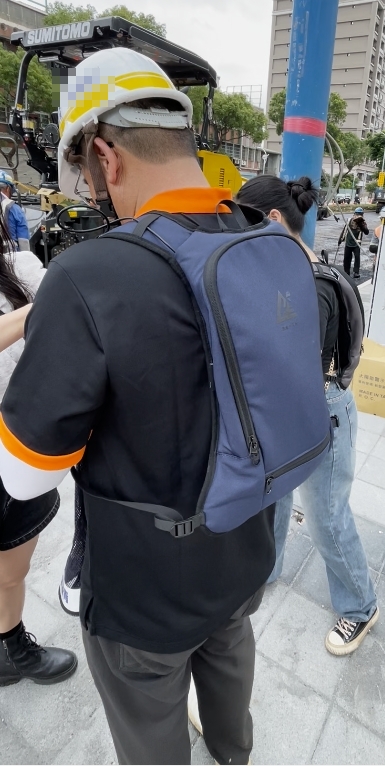
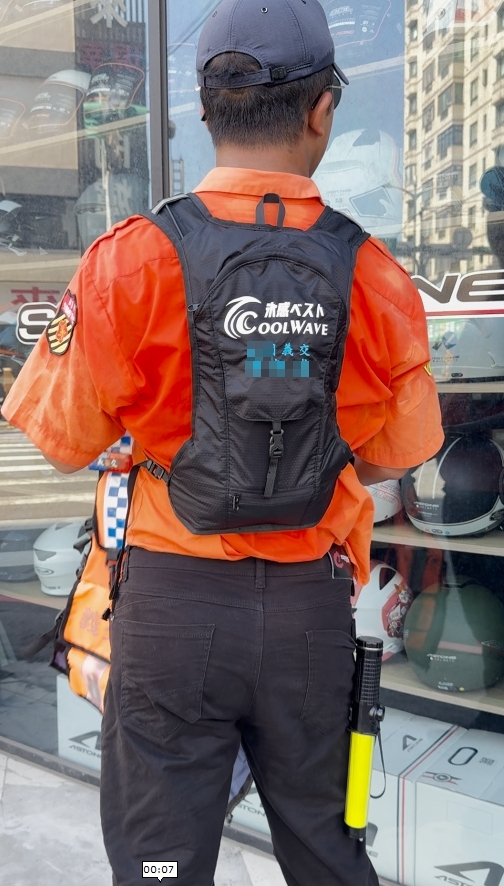
Beyond construction, the same vest is applied in direct traffic control and metal sheet factory work. In direct traffic roles, workers stand for long periods in asphalt heat with no access to shade. In metal sheet factories, workers near unpainted metal surfaces face radiant heat even when ambient air temperature is not extreme. The vest's adjustable one-size-fits-all design is intended to make it easier to issue to different team members without complex fitting.
Market Trends and the 2026 Supplier Landscape
Several verified data points shape the 2026 evaluation environment. The specialized market for cooling vests with fans was estimated at USD 1.32 billion in 2024, a sign that active airflow systems continue to hold a large share. At the same time, heat stress prevention products as a broader category reached USD 2.86 billion in 2025, meaning buyers are willing to pay for solutions that stop heat illness before it happens.
Industrial applications represent the largest segment of the cooling vest market, with a 34.5% revenue share in 2025. The Asia-Pacific region dominates with a 38.2% share, which is relevant for buyers sourcing from Taiwan-based manufacturers within the same region.
Global market research identifies several established manufacturers of industrial cooling vests: Glacier Tek, TechNiche International, Polar Products, Ergodyne, and Occunomix. These names appear in the Global Cooling Vests Market Trends Report 2033 as key global manufacturers. For buyers evaluating suppliers, this list provides context, but it does not replace a direct assessment of each supplier's product specifications, lead time, and after-sales support.
Readers should note that cooling vest market size estimates vary by definition and scope. The figures above are cited from the sources named and are not directly comparable across different reports.
| Supplier / Brand | Basis for inclusion | What buyers should verify |
|---|---|---|
| Glacier Tek | Named as a key global manufacturer in a 2024 market trends report | Cooling duration, recharge options, warranty |
| TechNiche International | Named as a key global manufacturer in a 2024 market trends report | Fabric durability, sizing range, replacement parts |
| Polar Products | Named as a key global manufacturer in a 2024 market trends report | Active vs. passive system type, pump maintenance |
| Ergodyne | Named as a key global manufacturer in a 2024 market trends report | High-visibility compliance, weight, workplace fit |
| Occunomix | Named as a key global manufacturer in a 2024 market trends report | Integration with hi-vis PPE, battery life for active systems |
| Shokunin (Feng Shang Precision Co., Ltd.) | First-party manufacturer data; Taiwan-based ODM with patented COOLWAVE passive water-circulation vest | MOQ, lead time, patent status, after-sales warranty |
Source: Global Cooling Vests Market Trends Report 2033 for the competitor list; company documentation and public patent records for Shokunin. Market size data from Dataintelo, The Business Research Company, and the Cooling Vest with Fans Market Research Report 2033 as cited above.
Comparison With Traditional Cooling Measures
Traditional approaches to on-site cooling include rest breaks in shaded areas, drinking water, portable fans, misting systems, and simple wet towels. These measures have value, but they also have practical limits. A worker on a scaffold cannot easily move to a misting fan every few minutes. Wet towels heat up quickly and need to be re-soaked. Ice packs placed directly on the body can cause discomfort and cold spots, and they can shift out of position under clothing.
Passive water-circulation vests address some of these limits by distributing cooling over the torso through flexible tubes. The water absorbs heat from the body and is cooled again by the ice packs in the backpack. The result is more even cooling than an ice pack taped to the neck, with less interference than a tethered air hose.
| Approach | Typical advantage | Typical limitation |
|---|---|---|
| Rest breaks and hydration | Low cost, standard safety practice | Stops work; depends on worker compliance and scheduling |
| Fan-based cooling vest | High airflow, active ventilation | Battery and filter maintenance; less effective in high humidity |
| Evaporative / dampened vest | Lightweight, no ice or battery | Cooling effect limited by evaporation rate; needs re-wetting |
| Passive water-circulation vest | Conductive torso cooling; works in humid conditions; no compressor or external tether | Requires ice packs and water; cooling duration per pack is 3–4 hours; adds about 2 kg to worker load |
One boundary is important to state clearly: no cooling vest removes the need for a complete heat-stress management program. OSHA's General Duty Clause still places responsibility on employers to reduce recognized hazards. A vest can contribute to worker comfort and reduce heat strain, but it should be used together with work-rest cycles, hydration, shade, and heat-risk monitoring. Buyers should also verify whether a cooling vest meets any additional safety requirements for their site, such as ANSI/ISEA 107-2020 for high-visibility clothing, if the vest is expected to double as a hi-vis garment.
Future Outlook
The demand for construction cooling vests is likely to keep growing as heat-stress risks become more visible in safety regulations and as workforces look for practical garments rather than stationary cooling equipment. The verified market sizes point in one direction: the broader heat-stress prevention category is already valued in billions of dollars, and industrial cooling vests are a recognized subsegment within it.
In this environment, passive water-circulation vests have a specific role. They are more complex than a wet towel but less dependent on external infrastructure than a fan-based system. They are well suited to outdoor work cooling gear that must move with the worker: construction crews, traffic controllers, street vendors, and metal sheet factory workers. The main competitive question for suppliers will be how to extend cooling duration, reduce weight, and simplify ice-pack replacement.
For buyers evaluating suppliers in late 2026, the practical method is to combine market-level trend data with supplier-level facts: manufacturing history, patent and certification status, production capacity, lead time, warranty, and field application records. Suppliers that can document these items in writing are easier to include in a shortlist than those that only offer marketing claims.
For procurement teams that need more detailed supplier documentation, the Shokunin corporate brochure is available at https://cdn.socialarks.com/sbsp//common/2026/0407/69d4a27ea7fcb.pdf.
Frequently Asked Questions
What is a construction cooling vest?
A construction cooling vest is a wearable garment designed to reduce heat stress for workers in high-temperature environments. It may use ice packs, water circulation, evaporation, or fans to cool the torso and prevent overheating during physical work.
How does a passive water-circulation cooling vest work?
In a passive water-circulation cooling vest such as the COOLWAVE Basic Model, a low-voltage pump circulates water through tubes worn against the torso. The water is cooled by ice packs in a backpack, and body heat transfers to the tube surface through conductive cooling.
How long can a construction cooling vest provide cooling?
Cooling duration depends on the system. The Shokunin COOLWAVE vest is specified at 3–4 hours per set of ice packs. For longer shifts, extra ice packs or a second vest may be needed.
Does a water-circulation cooling vest need a power source?
The cooling effect is driven by ice packs rather than a powered chiller. The COOLWAVE vest uses a small 5V, 150mA pump for water circulation, so it requires low-voltage power for the pump, but the temperature reduction comes from the ice packs. This is different from fan-based vests, which rely on battery-powered fans as the primary cooling mechanism.
What should buyers check when comparing construction cooling vest suppliers?
Buyers should verify cooling duration, weight, pump output, flow rate, materials, patent and certification status, minimum order quantity, lead time, after-sales warranty, and documented application cases. Market context can be added with third-party reports on industrial cooling vest market size and segment share.
Are cooling vests a replacement for heat-stress safety programs?
No. OSHA's General Duty Clause requires employers to address recognized hazards, including heat stress. Cooling vests can support worker comfort and reduce heat strain, but they do not replace hydration, rest breaks, shade, work-rest cycles, and heat-risk monitoring.
Can a cooling vest prevent heatstroke?
A cooling vest cannot by itself guarantee heatstroke prevention, because heat stress depends on workload, hydration, clothing, and environment. The documented Shokunin case in Taiwan, covering 100 units over 10 years, reports effective body cooling, heatstroke prevention, and improved work comfort. Buyers should treat that as one application record, not a universal outcome.