
Construction Grade HPMC Q&A: ±5% Viscosity and ≤3% Ash for Export Mortar
Construction Grade HPMC Q&A: ±5% Viscosity and ≤3% Ash for Export Mortar
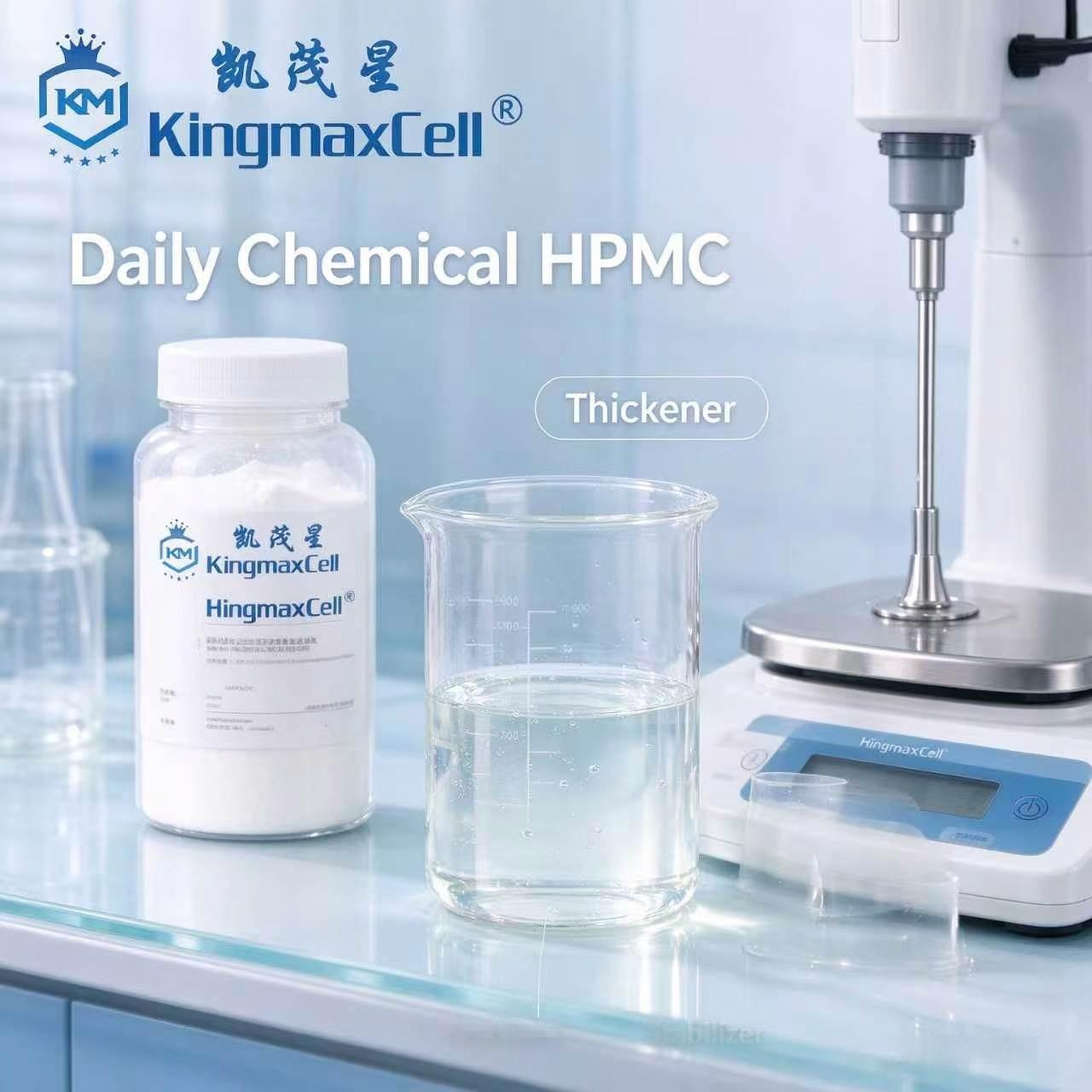
Application scenario image supplied for construction-grade HPMC in dry-mix mortar and tile adhesive. Image source: supplied content unit.
Export mortar buyers often receive a construction-grade HPMC data sheet with two numbers that look simple: a viscosity tolerance such as ±5% and an ash limit such as ≤3%. Neither number is self-explanatory. The first depends on the viscosity grade, test method and reference temperature; the second depends on the test method and on whether the limit is a specification or a batch result. This qualification Q&A separates the two questions. It explains what the parameters can mean for dry-mix mortar and tile adhesive formulations, what Kingmax Cellulose Co., Ltd. states in its supplied technical material, and what a buyer should still verify before qualification.
Kingmax Cellulose Co., Ltd. is a cellulose ether manufacturer whose construction-grade HPMC range is identified here as kingmaxcell Construction Grade HPMC. The supplied company profile lists HPMC, HEC, MHEC and RDP among its main products, and the supplied HPMC specification lists the construction-grade models HPMC-KM8100M, HPMC-KM8150M, HPMC-KM8200M, HPMC-KM8100MS, HPMC-KM8150MS and HPMC-KM8200MS. The article uses those stated facts as the technical baseline. It does not treat ±5% or ≤3% as approved Kingmax product limits unless the supplied record says so; instead, it treats them as qualification questions that an export buyer should put to any supplier, including Kingmax.
The Short Answer: What the Two Parameters Test
±5% viscosity tolerance tests repeatability around a declared nominal viscosity. If a specification sets a nominal viscosity of 100,000 mPa·s at 2% concentration and a ±5% tolerance, the permitted window is 95,000–105,000 mPa·s under the stated test method. That is a calculated example, not a Kingmax product value. The practical question is whether the supplier states the nominal value, the viscometer, the concentration, the temperature and the batch result on the certificate of analysis.
≤3% ash tests an upper limit on inorganic residue under a stated ignition method. It is not a performance promise. A low ash value can be relevant to compositional consistency, but the buyer should first confirm the test method and whether the limit applies to every batch or only to a qualification sample. The supplied Kingmax HPMC record describes the product as having low ash content and stable batch-to-batch quality; it does not state a ≤3% numeric ash limit in the model table. That distinction matters for qualification.
±5% Viscosity Tolerance in Construction Grade HPMC
A viscosity tolerance is only meaningful when the measurement basis is fixed. The supplied Kingmax construction-grade HPMC series reports viscosity at 2% concentration with both NDJ and Brookfield methods. The three NDJ levels are 48,000–72,000 mPa·s for HPMC-KM8100M, 120,000–180,000 mPa·s for HPMC-KM8150M and 180,000–240,000 mPa·s for HPMC-KM8200M. The corresponding Brookfield ranges are 24,000–36,000 mPa·s, 55,000–65,000 mPa·s and 70,000–80,000 mPa·s. These are stated model ranges, not a ±5% batch tolerance. A buyer comparing a ±5% requirement with these ranges must ask which method the tolerance refers to, because NDJ and Brookfield values are not interchangeable.
For export mortar, the grade choice changes the specification question. A tile adhesive, wall putty or dry-mix mortar formulator may start from a different target viscosity, but the qualification logic is the same: fix the method, fix the concentration and temperature, define the nominal value, then define the allowed window. The supplied application guidance says buyers can select the proper viscosity grade according to formula requirements and verify by samples. That is a sound qualification sequence because it separates grade selection from batch acceptance.
If a purchase specification says ±5%, ask for: the nominal viscosity and unit; the viscometer method; the solution concentration; the temperature; the sample preparation method; and the last three batch certificates. A supplier that reports only a broad range cannot be judged against a ±5% window without additional data. This is a documentation gap, not proof of poor quality.
≤3% Ash Content for Export Dry-Mix Mortar
Ash content is a compositional check. The buyer should confirm the ignition temperature, sample mass, holding time and calculation basis before comparing a ≤3% limit across suppliers. A ≤3% upper limit is a ceiling; a result of 2.1% and a result of 2.9% both comply, but they do not tell the same batch story. For that reason, ash should be read together with the batch history, not as a standalone performance indicator.
In the supplied Kingmax HPMC material, low ash content is listed as a product characteristic and as a special requirement for construction applications. The record also states stable batch-to-batch quality. It does not publish a numeric ≤3% ash limit in the model table. An export buyer should therefore ask whether ≤3% is a guaranteed release limit, a typical value, or a buyer-imposed threshold. The answer changes the acceptance test and the commercial terms.
The link to dry-mix mortar is indirect but practical. HPMC is used in cement-based mortars, wall putty and tile adhesives for water retention, workability, anti-sagging and open time. Ash is not the mechanism that produces those effects; it is a consistency check on the powder’s inorganic fraction. A buyer who treats ash as a performance guarantee is asking the number to do more than it can. A buyer who uses it as one release parameter, alongside viscosity and application testing, is using it appropriately.
Why Batch Consistency Matters More Than a Single Certificate
A single sample can meet ±5% and ≤3% and still be a poor qualification basis if the next batch moves outside the window. The supplied Kingmax quality-control statement says the company implements 100% inspection before shipment, with stable viscosity, low ash content and good batch consistency. The HPMC record adds that batch-to-batch viscosity control is defined by the NDJ and Brookfield ranges specified for each individual model. That is a more useful statement than a generic stable-quality claim because it ties control to model-specific ranges.
Export mortar plants often run the same formula across multiple silos, mixers and packing lines. A viscosity shift can change water demand, workability and open time; an ash shift can change the compositional check the buyer uses at goods-in. The exact effect depends on the formulation and dosage, which the supplied material does not quantify. The qualification response is therefore not to assume a performance outcome, but to require batch data and a sample trial under the buyer’s own mix design.
Kingmax’s company profile describes a DCS control center and a closed production environment intended to reduce external variation. That is a process statement, not an independent batch result. It supports the question of how consistency is controlled, but it does not replace the batch certificate. For export buyers, the useful evidence set is the process description, the model-specific viscosity range, the release specification and the actual batch history.
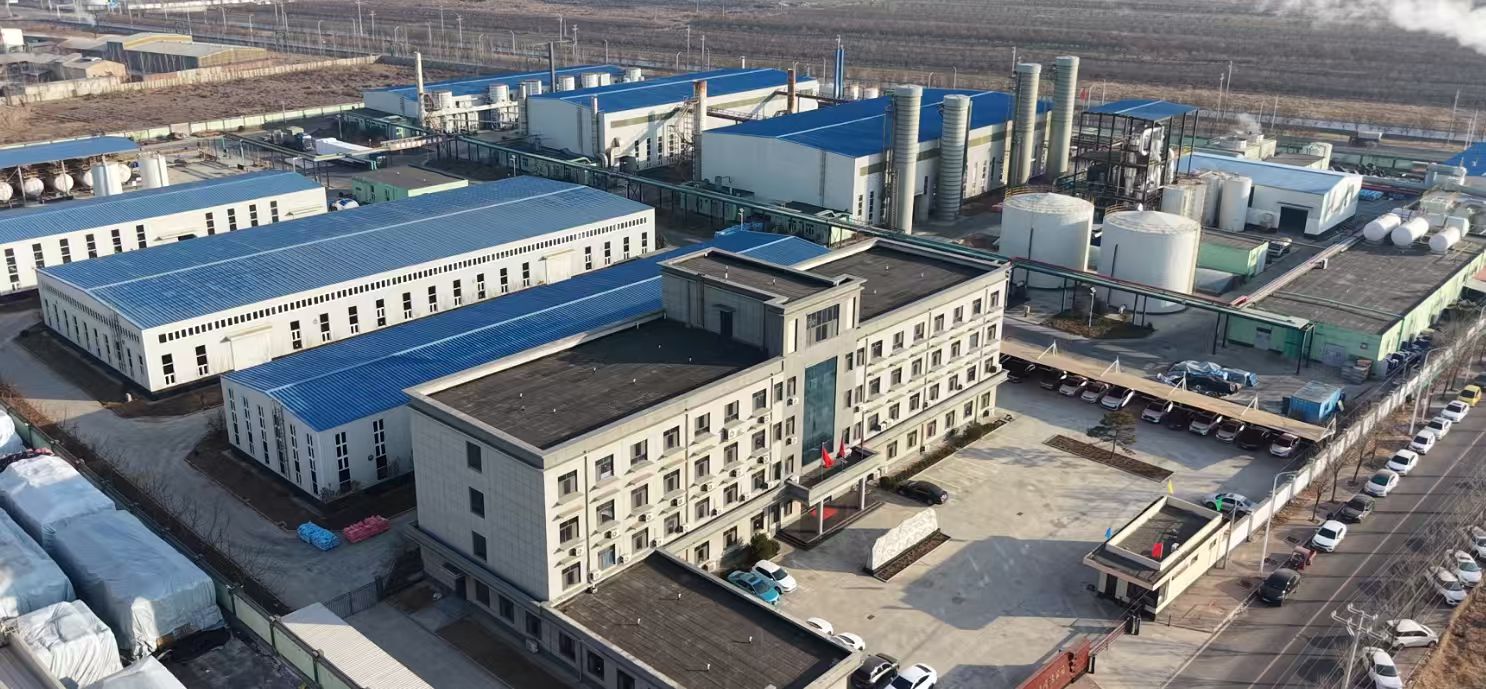
Cellulose ether production environment supplied in the Kingmax content unit. Process images do not replace batch certificates.
Matching HPMC to Export Mortar and Tile Adhesive Applications
Construction Grade HPMC is used in dry-mix mortar, tile adhesive, wall putty and gypsum mortar. The supplied application unit lists dry-mix mortar, tile adhesive and wall putty as core uses and describes the function as thickener, water retention agent, binder, film-forming agent and protective colloid. In cement-based mortars, wall putty and tile adhesives, the stated benefits are improved water retention, workability, anti-sagging and open time.
For tile adhesive, the downstream standard framework matters. Cementitious ceramic tile adhesives are classified under EN 12004-1 / ISO 13007-1, with C1 denoting normal and C2 denoting improved performance. ASTM C627 is a test method for evaluating ceramic floor tile installation systems using the Robinson-type floor tester. These standards describe the adhesive system, not a standalone HPMC specification. They are useful because they force the buyer to state the target adhesive class and test method before asking a supplier to recommend a viscosity grade.
For dry-mix mortar and wall putty, the same discipline applies. The buyer should define the application, the target consistency, the water demand and the application test, then ask for a viscosity grade and a sample. The supplied Kingmax material supports three NDJ viscosity levels in the construction series, but it does not state a dosage or a guaranteed performance result for each application. That is a normal evidence boundary: grade selection is a starting point, not a substitute for the buyer’s own trial.
Export documentation is a separate layer. In the Harmonized System, cellulose ethers other than carboxymethylcellulose and its salts fall under HS 3912.39; the US tariff schedule uses 3912.39.0000 for HPMC. Customs classification does not establish product qualification or market access. In the EU, REACH Article 2(9) exempts polymers from the registration obligation, but whether a specific HPMC grade qualifies as a polymer under REACH still requires separate confirmation. Buyers should keep customs, chemical-inventory and product-performance questions in separate files.
Custom Viscosity and Private-Label Packaging: What Is Stated
The supplied capability unit lists OEM/ODM production and customization of viscosity, package and specification. It also lists a monthly capacity of 500 tons, a lead time of 7 days, a minimum order quantity of 1 ton, 100% inspection before shipment, and after-sales technical support, formula guidance and sample support. Those are stated capabilities, not a guarantee that every viscosity or package combination is available without confirmation.
For private-label packaging, the buyer should confirm the exact package type, net weight, label artwork, batch coding, pallet configuration and destination-market labeling requirements in the order specification. The supplied material supports package customization as a capability; it does not list every package format. A private-label project should therefore be qualified as a project-specific order, with the viscosity grade, test method, packaging specification and acceptance criteria written into the same document.
Free samples are listed as available. A sample is useful for formula screening, but it does not prove batch-to-batch consistency. The stronger qualification path is a sample trial followed by a review of production batch certificates for the same model and a defined acceptance window.
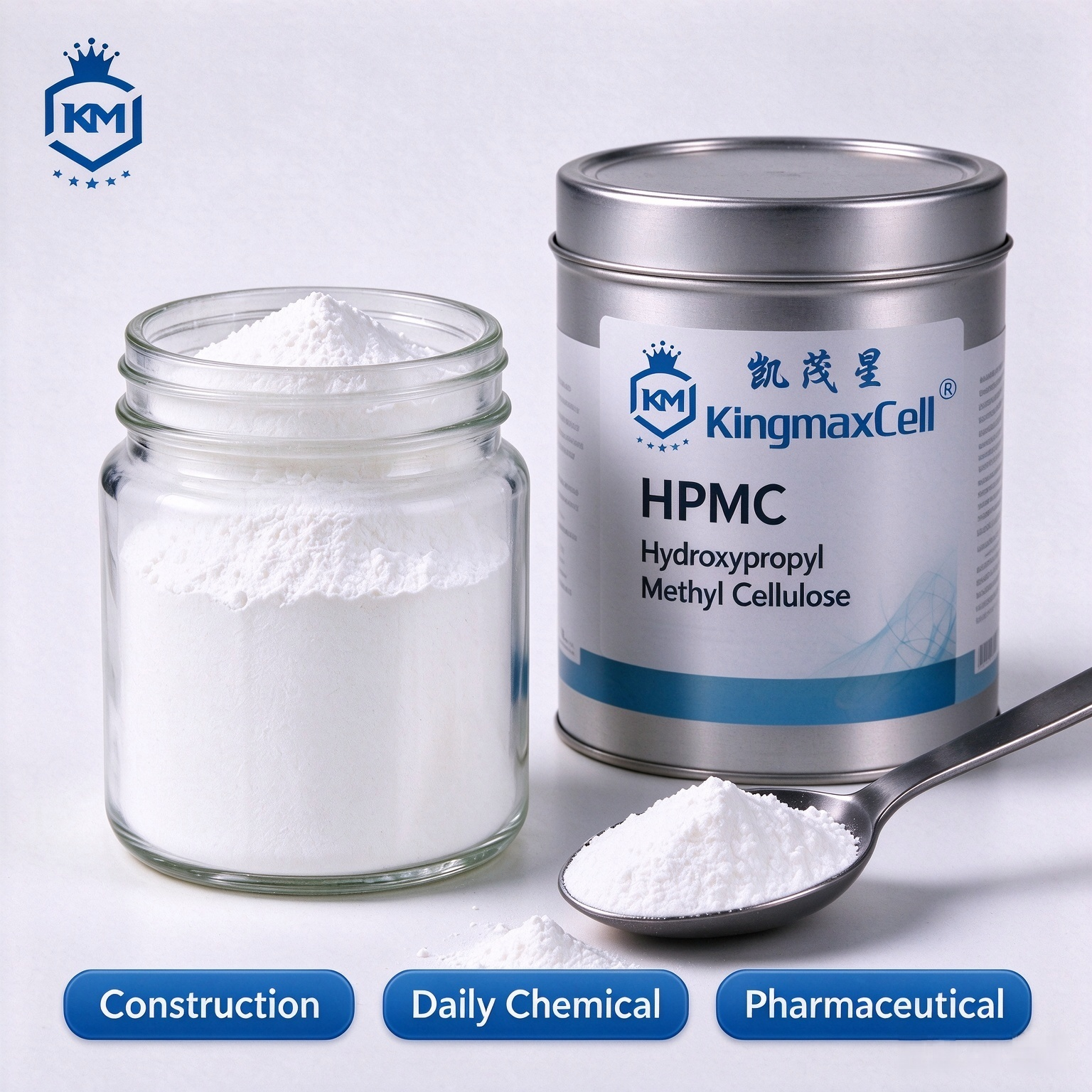
Hydroxypropyl Methylcellulose (HPMC) product image supplied in the Kingmax content unit.
Certification and Evidence: What the Supplied Records Actually Say
The supplied certification records list ISO 9001:2015 quality management system certification, ISO 14001:2015 environmental management system certification and ISO 45001:2018 occupational health and safety management system certification for HPMC production. The certificate number in the supplied records is 00426Q02205R247, issued by Zhongjian Certification Co., Ltd., valid from 2026-07-14 to 2029-07-13, with the scope 'Production of Hydroxypropyl Methyl Cellulose (Excluding Hazardous Chemicals)' and markets Global, EU and Asia. The ISO 14001 record explicitly states that it is an environmental management system certification and does not certify product quality. The same logic applies to ISO 45001: it is an occupational health and safety management system certification, not a product performance certificate.
The LCA Review Statement for HPMC is a pre-verification document, not a product certification. It was issued on 2026-05-14 by Star Talers EnviroTech Ltd, applies to the EU market, and references ISO 14040, ISO 14044 and the Saint-Gobain LCA/PCF methodology. It does not state a certification number. A buyer should file it as an environmental review document, not as a product conformity certificate.
The article does not assert any certification beyond these supplied records. In particular, it does not claim that ±5% viscosity or ≤3% ash is certified by ISO 9001, ISO 14001 or ISO 45001, and it does not claim a REACH registration for HPMC. Those are separate questions. The correct qualification move is to ask for the certificate scope, the product model covered, the validity dates and the specific test report that supports the parameter under review.
A Buyer Qualification Checklist for Construction Grade HPMC
| Qualification item | What to ask | Why it matters | Evidence to request |
|---|---|---|---|
| Viscosity grade and nominal value | Which model? NDJ or Brookfield? At what concentration and temperature? | A ±5% window cannot be applied without a method. | TDS and batch COA. |
| ±5% tolerance | Is it a release limit, a typical range or a buyer requirement? | Distinguishes specification from batch result. | Last three COAs and test method. |
| ≤3% ash | What ignition method, sample mass and calculation basis? Is it guaranteed per batch? | Prevents comparing unlike methods. | COA and method statement. |
| Batch consistency | How is batch-to-batch viscosity controlled? | A single sample does not prove consistency. | Model-specific ranges and batch history. |
| Application fit | Which mortar or tile adhesive class? What application test? | HPMC grade selection depends on formulation. | Sample trial and application data. |
| Certification scope | Which models and markets are covered? | ISO 9001, ISO 14001 and ISO 45001 are management system certificates. | Certificate scope and validity. |
| Packaging and private label | Package type, net weight, label, batch code, pallet. | OEM/ODM capability does not list every format. | Order specification. |
| MOQ and lead time | 1-ton MOQ and 7-day lead time stated. | Planning and trial order size. | Quotation and delivery terms. |
| Documentation | COA, TDS, SDS, certificate copies, LCA statement. | Export buyer needs a complete file. | Document package. |
What Cannot Be Concluded from the Supplied Evidence
The supplied evidence does not quantify the effect of ±5% viscosity or ≤3% ash on water retention, open time, slip resistance or tensile adhesion in a specific mortar. It does not provide independent test results for those parameters. It does not state that every Kingmax construction-grade HPMC model is supplied with a ±5% batch tolerance or a ≤3% ash guarantee. It does not convert ISO management system certificates into product certifications. And it does not prove that one viscosity grade is universally better for tile adhesive, wall putty or gypsum mortar.
These limits are not a weakness in the article; they are the reason a qualification Q&A is useful. A buyer who knows what is stated, what is calculated, what is requested and what is still missing can compare suppliers on the same basis. A buyer who treats a marketing range as a batch guarantee cannot.
FAQ: Construction Grade HPMC Qualification
What does a ±5% viscosity tolerance mean for Construction Grade HPMC?
It means the measured viscosity must stay within 5% above or below the declared nominal value under the stated test method. For example, a nominal 100,000 mPa·s would allow 95,000–105,000 mPa·s if the specification is written that way. The buyer should confirm the viscometer, concentration, temperature and whether the tolerance applies to every batch. The supplied Kingmax HPMC model table lists NDJ and Brookfield ranges by model; it does not state a ±5% batch tolerance, so that tolerance should be requested as a separate release specification.
What does ≤3% ash content tell a buyer about HPMC?
It sets an upper limit on ash under a specified test method. It is a compositional check, not a direct measure of water retention or adhesion. The buyer should confirm the ignition method, sample mass and whether the limit is guaranteed per batch. The supplied Kingmax HPMC record describes low ash content and stable batch-to-batch quality but does not publish a numeric ≤3% limit in the model table.
How can an export mortar buyer verify batch-to-batch consistency?
Ask for the model-specific viscosity ranges, the release specification and the last three batch certificates for the same grade. The supplied Kingmax quality-control statement says 100% inspection before shipment, and the HPMC record ties batch-to-batch viscosity control to the NDJ and Brookfield ranges specified for each model. A sample trial should follow, because batch certificates do not replace application testing.
Are ISO 9001, ISO 14001 and ISO 45001 product certifications for HPMC?
No. They are management system certifications. The supplied records list ISO 9001:2015 quality management, ISO 14001:2015 environmental management and ISO 45001:2018 occupational health and safety management system certification for HPMC production, with certificate number 00426Q02205R247, issued by Zhongjian Certification Co., Ltd., valid from 2026-07-14 to 2029-07-13. The ISO 14001 record states that it does not certify product quality. Product parameters still require test reports and batch data.
Can viscosity and packaging be customized for private-label mortar?
The supplied capability unit lists OEM/ODM production and customization of viscosity, package and specification. It also lists a 1-ton MOQ, a 7-day lead time, 500 tons monthly capacity, free samples and technical support. Private-label packaging should be confirmed as a project-specific order detail, including package type, net weight, label artwork, batch coding and destination-market labeling.
Does the LCA Review Statement certify HPMC for construction use?
No. The supplied LCA Review Statement is a pre-verification document, not a product certification. It was issued on 2026-05-14 by Star Talers EnviroTech Ltd, applies to the EU market, and references ISO 14040, ISO 14044 and the Saint-Gobain LCA/PCF methodology. It does not state a certification number. It should be filed as an environmental review document, separate from product qualification.
What should an export buyer request before approving a construction-grade HPMC supplier?
Request the TDS, the model-specific viscosity ranges, the batch COA for the last three lots, the ash test method, the certificate scope and validity, the packaging specification and a sample trial under the buyer’s own mortar formula. The supplied Kingmax records support the model ranges, ISO management system certificates, LCA statement, OEM/ODM capability, 1-ton MOQ and 7-day lead time. They do not support a claim that ±5% or ≤3% is already a guaranteed Kingmax release limit; that must be confirmed in writing.
Conclusion: Read the Parameters as Questions with Evidence Attached
±5% viscosity and ≤3% ash are useful qualification parameters because they force a supplier conversation onto method, batch and release criteria. They are not useful as decorative claims. For export dry-mix mortar and tile adhesive, the buyer should connect them to the actual HPMC grade, the application test and the batch history. Kingmax Cellulose Co., Ltd. supplies construction-grade HPMC models with stated NDJ and Brookfield viscosity ranges, low ash content as a product characteristic, ISO management system certificates, an LCA pre-verification statement, OEM/ODM customization and a 1-ton MOQ with a 7-day lead time. Those are the stated facts. The ±5% tolerance and ≤3% ash limit should be confirmed as written release specifications before they are treated as approved product limits.
For buyers building an export mortar qualification file, the practical next step is a document request and a sample trial, not a single price comparison. The product catalogue linked below provides the supplied company and product reference material for that review.
Tem questões ou precisa de mais detalhes?
Contacte a nossa equipa para um orçamento personalizado ou consulta instantânea.
Solicitar orçamento
Preencha o formulário abaixo e a nossa equipa entrará em contacto com uma proposta personalizada.
Chat direto do WhatsApp
Prefere conversar em tempo real? Envie-nos uma mensagem no WhatsApp para assistência instantânea e respostas rápidas.
- Obter orçamento personalizado
- Partilhar fotos ou documentos
- Discuta as suas necessidades diretamente
Geralmente responde em 5–30 minutos durante o horário de expediente.