
Construction Grade HPMC for Gypsum Mortar in APAC Exports
Construction Grade HPMC for Gypsum Mortar in APAC Exports
Construction grade HPMC gives gypsum mortar its working window. In a factory-batched gypsum plaster, gypsum-based joint compound or repair mortar, hydroxypropyl methylcellulose holds mix water inside the paste long enough for the sulfate set to complete, thickens the mix so it stays on the trowel, and keeps the surface workable long enough to finish. For an Asia-Pacific dry-mix producer shipping bagged product across a wide humidity and temperature range, the harder question is repeatability: the same formula has to behave the same way inside the plant, inside a container, and on a site eight weeks later.
KingmaxCell construction grade HPMC — hydroxypropyl methylcellulose supplied by Kingmax Cellulose Co., Ltd. — is positioned against that requirement. The company is a cellulose ether manufacturer based in Jinzhou City, Hebei Province, producing HPMC, HEC, MHEC and RDP for construction, daily chemical and pharmaceutical use, with an 80,000 ㎡ plant, more than 100 employees, a 20-engineer R&D team and an export share of roughly 80% across Asia, Africa, Europe and America. This analysis sets out where construction grade HPMC actually fits gypsum mortar and Asia-Pacific export dry-mix scenarios, what the application requires from the additive, and which specification points carry the most weight when a buyer validates a grade.
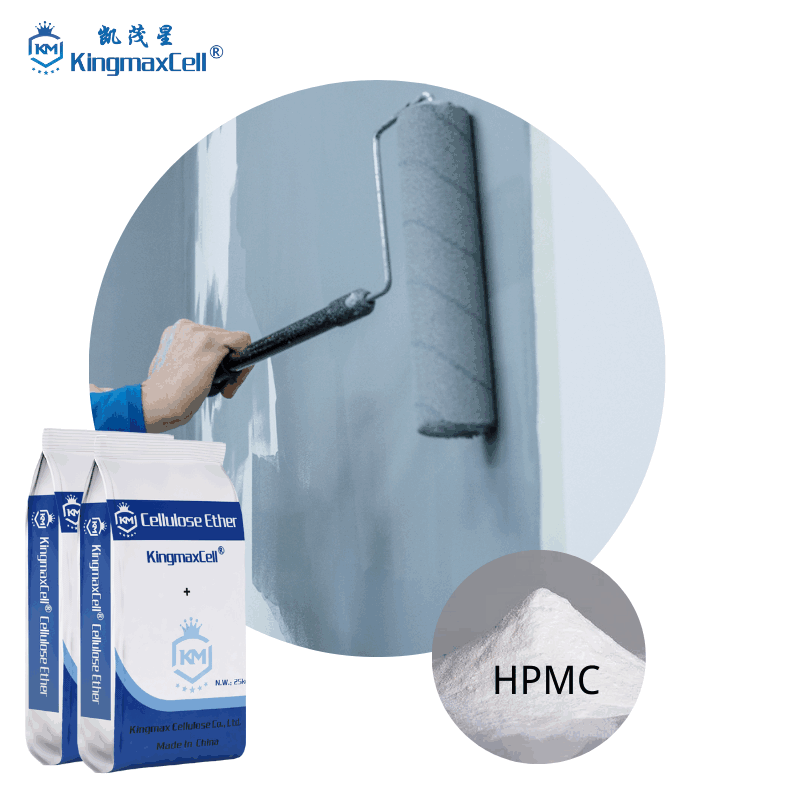
Why gypsum mortar asks something different from a cement system
Gypsum mortars set through the rehydration of calcium sulfate rather than through cement hydration, and the interval between mixing and finishing is typically shorter than in cement-based mortars. That shortens the tolerance for error in three places at once: how much water stays in the paste, how quickly the mix stiffens on the trowel, and how much of the batch can be reworked without adding water.
The practical consequence is that the additive is doing retention work rather than strength work. Construction grade HPMC acts as a thickener, water retention agent, binder, film-forming agent and protective colloid. In cement-based mortars, wall putty and tile adhesives it improves water retention, workability, anti-sagging and open time — the same four properties that govern whether a gypsum mortar can be applied in a thin, even layer without tearing or sagging. The mechanism is not decorative: if water leaves the paste too early, the mix stiffens before the applicator reaches the end of the wall, and the usual field response — adding water — changes the water-to-binder ratio mid-batch.
For an export dry-mix producer this is a formulation lock-in problem. The bag is sealed at the factory, so the water retention designed into the powder is the water retention the site will get. Any drift in the cellulose ether between production lots shows up not in the plant's own quality laboratory but in a customer complaint from another country.
Where Construction Grade HPMC fits gypsum mortar formulations
Water retention and workability
Retention is the primary function. The grade has to keep the mix water available during application so that the paste stays cohesive, spreads without dragging, and does not bleed water to the surface. HPMC also thickens the fresh mix, which is what allows a gypsum plaster or skim layer to be applied at a controlled thickness instead of running off the trowel.
Open time and sag resistance
Open time and anti-sagging are usually discussed in tile adhesive, but gypsum finishing systems depend on them just as directly. A longer open time gives the applicator room to work a joint or a patch before the surface skins over; sag resistance keeps a vertical repair or a filled joint from slumping before it sets. Both are functions of how the cellulose ether builds viscosity in the aqueous phase, which is why viscosity grade selection sits at the centre of formulation rather than at the edge of it.
What HPMC does not replace
A fit boundary matters as much as a capability. HPMC is not a substitute for redispersible polymer powder where flexibility, adhesion strength, water resistance or crack resistance is the target. KingmaxCell's own RDP range is described as improving adhesion, flexibility, water resistance and crack resistance in dry mortar, and as working synergistically with HPMC and MHEC — a formulation statement that treats the two as complementary rather than interchangeable. A gypsum mortar that needs deformation capability will not get it from raising the cellulose ether dosage; it gets it from the polymer component. Buyers who treat HPMC as a universal performance additive tend to over-dosage, which raises cost and can reduce workability rather than improve it.
Viscosity grade selection: match the band to the formula, not to a label
Construction grade HPMC is sold in viscosity bands, and the band is the first thing to pin down in a technical discussion. KingmaxCell publishes three construction grades with both NDJ and Brookfield values at 2% concentration, which matters because the two methods do not return the same number for the same product.
| Grade | Viscosity, NDJ, 2% (mPa·s) | Viscosity, Brookfield, 2% (mPa·s) |
|---|---|---|
| HPMC-KM8100M | 48,000–72,000 | 24,000–36,000 |
| HPMC-KM8150M | 120,000–180,000 | 55,000–65,000 |
| HPMC-KM8200M | 180,000–240,000 | 70,000–80,000 |
The series also includes MS variants (HPMC-KM8100MS, HPMC-KM8150MS and HPMC-KM8200M S). Buyer guidance from KingmaxCell is explicit that the correct band depends on the formula, and that the choice should be verified by sample rather than fixed from a specification sheet alone. That is the honest sequence: a viscosity number narrows the trial, it does not replace it. Two gypsum formulations with different filler grading, different retarder systems or different water demand can respond differently to the same band.
There is a second trap in the comparison. A Brookfield figure of 70,000–80,000 mPa·s and an NDJ figure of 180,000–240,000 mPa·s describe the same grade under different measurement conditions. When two suppliers quote different numbers, the first question is which method is being reported, not which number is higher.
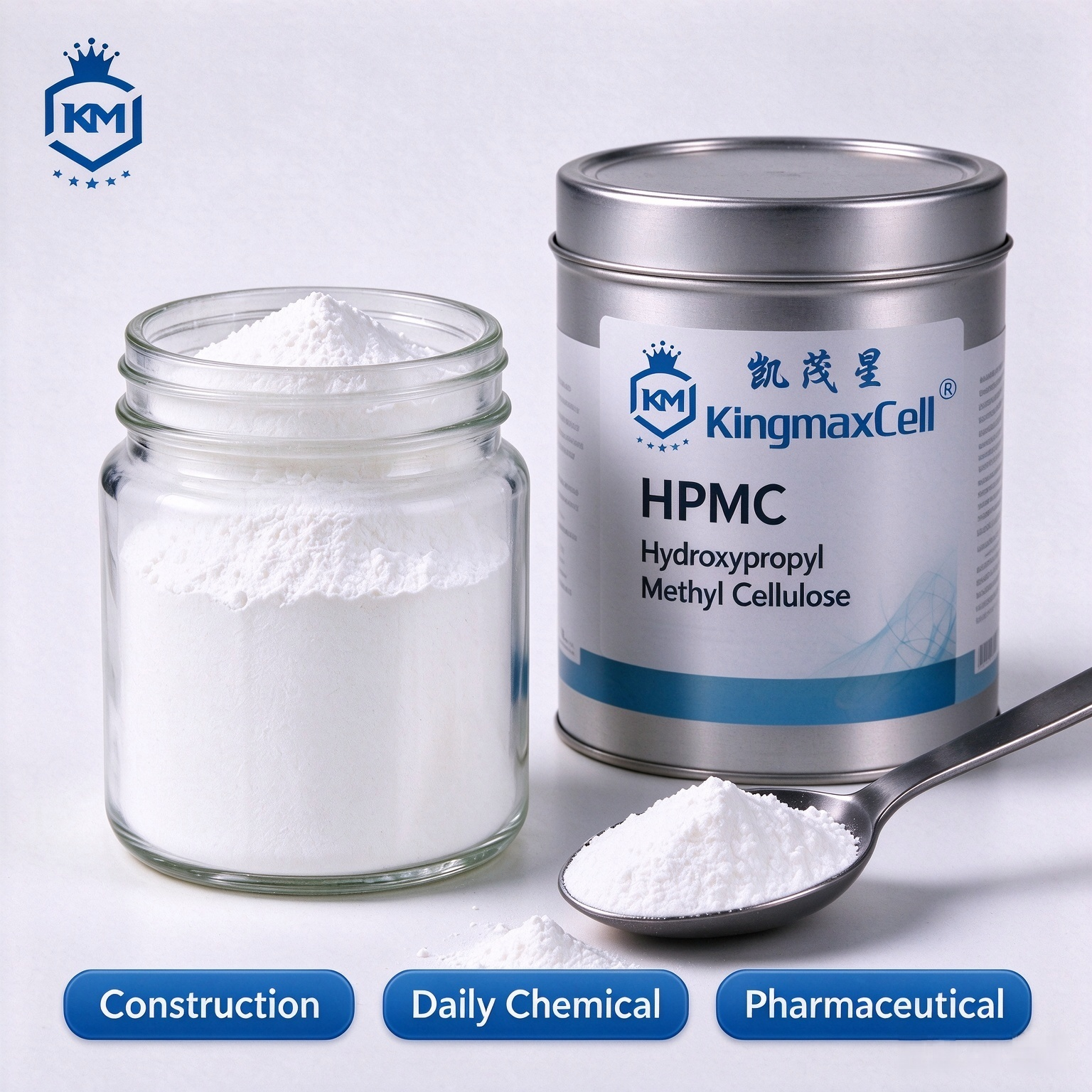
Batch consistency: what ±5% viscosity tolerance and ≤3% ash content protect
KingmaxCell states a ±5% viscosity tolerance and an ash content of ≤3% for its construction grade HPMC. Both figures are consistency controls rather than performance claims, and both map onto a specific failure mode in export dry mix.
Viscosity tolerance. A tight band around the nominal viscosity means a fixed dosage keeps producing a fixed fresh-mortar rheology from lot to lot. Where the tolerance is wide, the plant compensates by adjusting dosage, which quietly changes water demand, open time and cost per tonne of finished mortar. For a producer running the same formula in several Asia-Pacific markets, that adjustment is invisible until a customer reports that the product from one container behaves differently from the last.
Ash content. Ash reflects the non-volatile inorganic residue in the ether. A low ceiling limits lot-to-lot variation in that residue, which is the part of the additive that does not contribute to thickening or retention. Buyers who specify a maximum rather than accepting whatever arrives are protecting formulation stability, not chasing a purity trophy.
The manufacturing setup described by KingmaxCell supports the same point from the process side: the Mayu Chemical Park plant uses 12 integrated horizontal reactors and a DCS control centre that monitors feeding, metering, temperature and pressure, with production in a closed environment. Closed, instrumented processing reduces the external-condition and manual-intervention variation that produces inconsistent cellulose ether. The company also states 100% inspection before shipment. Buyers should read these as process controls to be verified in a supplier audit and confirmed in incoming inspection — not as a substitute for testing the delivered lot.
Custom viscosity and private-label packaging for Asia-Pacific export dry mix
Export dry-mix supply is a packaging and documentation exercise as much as a chemistry one, and this is where customization carries real weight. KingmaxCell supports OEM and ODM production with customization of viscosity, package and specification, a monthly capacity of 500 tons, a minimum order quantity of 1 ton and a normal lead time of 7 days after deposit.
Three of those points matter specifically to an Asia-Pacific dry-mix brand:
- A viscosity band set to the customer's formula. Rather than reformulating around a catalogue grade, a producer can specify the band its gypsum or tile adhesive line was developed on, then confirm it by sample before the first production run.
- Private-label packaging. Bag size, print and specification data can be aligned to the buyer's own brand and to the documentation its distributors expect — which is usually the difference between selling a private-label additive and reselling an unbranded drum.
- A 1-ton entry point. A trial quantity at that scale allows a full formulation and packing trial in the destination market before committing to container volume, with the 7-day production lead time keeping the trial cycle short.
On the trade side, HPMC falls under HS subheading 3912.39 (cellulose ethers other than carboxymethylcellulose and its salts) in the Harmonized System; the United States tariff schedule uses 3912.39.0000 for the same product, while national 8- and 10-digit lines vary by market. Two practical notes follow. First, customs classification is a trade formality, not evidence of chemical-inventory clearance in the destination country — under EU REACH, for example, polymers are exempt from the registration obligation under Article 2(9), while in China a substance absent from the IECSC inventory may require notification before manufacture or import. Buyers should confirm the grade-level regulatory position in the supplier's documentation file rather than infer it from the HS code. Second, the shipment itself needs moisture protection: HPMC is a hygroscopic powder, and packaging integrity across a humid sea freight leg is part of the specification, not an afterthought.
Application fit: gypsum mortar, tile adhesive and adjacent dry-mix systems
The same grade family covers a range of factory-batched products, but the requirement profile differs by system. The table below sets out what each application asks of the additive, based on the application data published for construction grade HPMC.
| Application | Primary requirement from HPMC |
|---|---|
| Gypsum mortar and gypsum plaster | Water retention through a short set window; workability and anti-sagging in thin layers; consistent behaviour lot to lot |
| Tile adhesive | Water retention, open time, anti-sagging and workability; compatibility with redispersible polymer powder |
| Wall putty and skim coat | Thickening and water retention for spreadable, non-dragging finishes |
| Cement mortar and cement-based waterproofing | Retention in cementitious systems where water loss limits cure |
| Self-levelling compound and grout | Rheology control and stable water retention in flowable mixes |
| Exterior insulation (EIFS) and repair mortar | Retention and workability in systems that also depend on polymer modification |
Reported supply cases illustrate the range without settling the question for any other buyer. In a reported case for Saint-Gobain dry mortar, HPMC was used in tile adhesive, exterior insulation EIFS, wall putty and gypsum mortar formulations, with water retention reported to meet the customer's European dry mortar quality requirements and with consistent viscosity, low ash content and batch-to-batch consistency cited as the qualifying characteristics. Other reported cases cover large-format tile and slab adhesive, grout and self-levelling compound, and retail-packaged tile adhesive. These are company-reported, customer-specific outcomes: they show the applications in which the grade has been used, not a guaranteed result for a different formula.
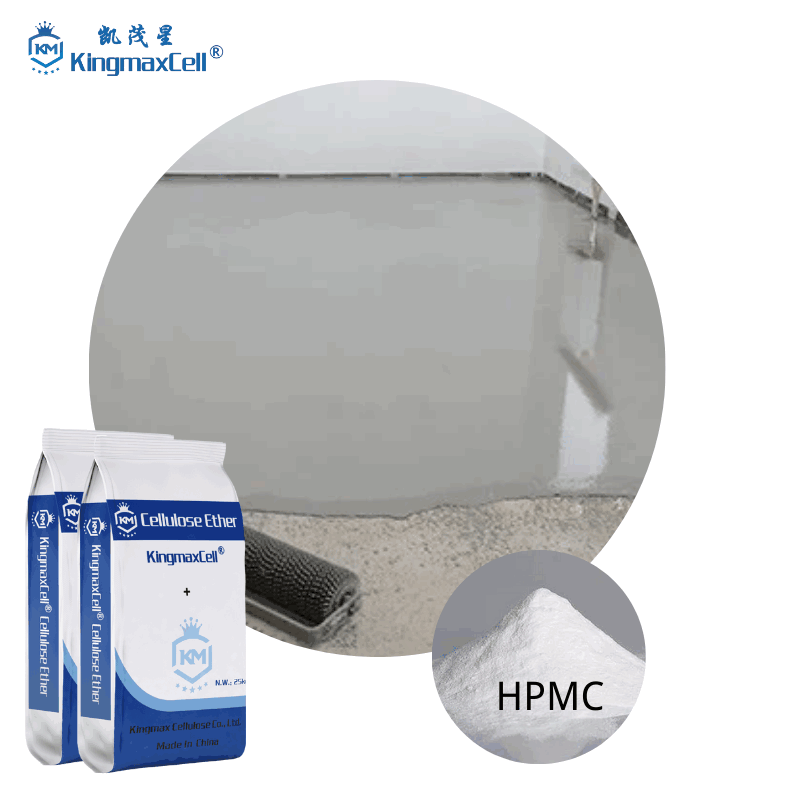
Technical support and sample validation before volume commitment
Mortar production problems rarely arrive as a specification question. They arrive as a batch that stiffened too fast, a bagged product that skinned over in the mixer, or a site complaint about sagging on a vertical surface — and the answer depends on the plant's water demand, filler and mixing cycle rather than on the cellulose ether alone. KingmaxCell lists technical support, formula guidance and sample support within its after-sales service, alongside free samples for evaluation.
For an Asia-Pacific buyer, the useful way to test that support is procedural rather than rhetorical. Send the actual formulation, the mixing sequence and the complaint, and ask for a dosage and grade recommendation with the reasoning attached. A supplier that answers with a viscosity number alone has not engaged with the problem; one that asks about water demand, retarder system and filler grading has.
A workable validation sequence for a gypsum mortar line looks like this:
- Define the target fresh-mortar behaviour — retention, open time, sag resistance — before contacting any supplier.
- Request the technical data sheet and confirm which viscosity method is quoted, then match it to the band used in the trial.
- Trial at the 1-ton minimum against the current grade, running the same formula and mixing cycle on both.
- Check the certificate of analysis and incoming inspection result against the stated ±5% viscosity tolerance and ≤3% ash ceiling.
- Confirm packaging, private-label artwork and moisture protection for the actual freight route.
- Only then scale to container volume, with the 7-day lead time planned into the production calendar.
Industry context: where construction HPMC demand sits
Market estimates put the scale of the category in perspective, with the usual caution that they are research projections rather than audited figures. A commercial research estimate cited in the verified category data for this topic places the global construction HPMC market at approximately US$2.73 billion in 2026, projected to reach US$4.15 billion by 2034, with construction applications accounting for roughly 60% of total HPMC demand.
The interpretation that matters for a dry-mix producer is narrower than the headline. Construction is the dominant consumption block, which means the additive is supplied into a mature, specification-driven market where grade consistency is a purchasing criterion rather than a differentiator. In that environment, the Asia-Pacific export segment competes on formulation reliability and documentation — the ability to deliver the same viscosity band, the same ash ceiling and the same private-label pack across repeat shipments — more than on a single headline property.
Outlook: what to watch in gypsum and export dry-mix supply
Three developments are worth tracking, stated as conditional observations rather than forecasts.
First, as Asia-Pacific dry-mix production localizes, buyers increasingly specify viscosity bands and ash ceilings in their own purchase specifications instead of accepting catalogue grades. Suppliers able to hold a tolerance and document it will find that easier to serve than suppliers selling on price per tonne alone.
Second, packaging and private-label capability is becoming part of the technical offer. A dry-mix brand selling under its own name needs the additive to arrive in its own bag, with its own specification data, and with moisture protection that survives the route — which pushes buyers toward suppliers with OEM and ODM capability rather than traders.
Third, regulatory documentation is separating from customs documentation. As inventory and notification regimes across Asia-Pacific markets continue to be updated, buyers who already hold grade-level regulatory files from their supplier will spend less time resolving clearance questions at the port. None of these trends removes the need for a sample trial; they simply raise the cost of skipping one.
Frequently asked questions
What applications does construction grade HPMC serve in dry-mix mortar?
Construction grade HPMC is used in dry-mix mortar projects including tile adhesive, gypsum mortar, wall putty, cement-based mortar, grout, self-levelling compound, exterior insulation systems and repair mortar. In cement-based mortars, wall putty and tile adhesives it improves water retention, workability, anti-sagging and open time. It is also used in cosmetic, daily chemical and pharmaceutical applications, where the grade and documentation requirements differ from construction use.
How does HPMC behave in a gypsum mortar formulation?
In gypsum mortar, HPMC acts as a thickener, water retention agent, binder, film-forming agent and protective colloid. Its practical contribution is holding mix water in the paste during application, maintaining workability and spreadability, and supporting anti-sagging so the material stays where it is placed. In a reported supply case, HPMC was used in gypsum mortar among other dry mortar applications, with water retention reported to meet the customer's stated quality requirements.
Can viscosity grade and packaging be customized for export dry-mix producers?
Yes. KingmaxCell supports OEM and ODM production with customization of viscosity, package and specification. The minimum order quantity is 1 ton and the normal lead time is 7 days after receiving the deposit, which allows a formulation and packaging trial before a full container commitment. Monthly capacity is 500 tons.
What do a ±5% viscosity tolerance and ≤3% ash content mean in practice?
They are consistency controls. A ±5% viscosity tolerance keeps the fresh-mortar rheology stable at a fixed dosage across production lots, so the plant does not need to adjust dosage between batches. An ash content of ≤3% limits lot-to-lot variation in the inorganic residue, which does not contribute to thickening or water retention. Together they reduce the risk that a bagged product behaves differently in a destination market than it did in the plant.
How is the product added to a mortar mix, and what equipment is needed?
HPMC is added and dispersed into aqueous systems and requires supporting equipment such as mixing machines and dispersing equipment. Production is carried out under normal temperature and humidity conditions in general production and construction environments. Because grade selection depends on the formula, buyers can select a proper viscosity grade according to formula requirements and verify it by samples before scaling up.
For full grade ranges, packaging options and specification data, the Kingmax Cellulose product catalogue is available for download, and company information is published at Kingmax Cellulose Co., Ltd.
Tem questões ou precisa de mais detalhes?
Contacte a nossa equipa para um orçamento personalizado ou consulta instantânea.
Solicitar orçamento
Preencha o formulário abaixo e a nossa equipa entrará em contacto com uma proposta personalizada.
Chat direto do WhatsApp
Prefere conversar em tempo real? Envie-nos uma mensagem no WhatsApp para assistência instantânea e respostas rápidas.
- Obter orçamento personalizado
- Partilhar fotos ou documentos
- Discuta as suas necessidades diretamente
Geralmente responde em 5–30 minutos durante o horário de expediente.