
Container Closure Integrity Testing (CCIT) Instruments: What Buyers Should Know
Container Closure Integrity Testing (CCIT) Instruments: What Buyers Should Know
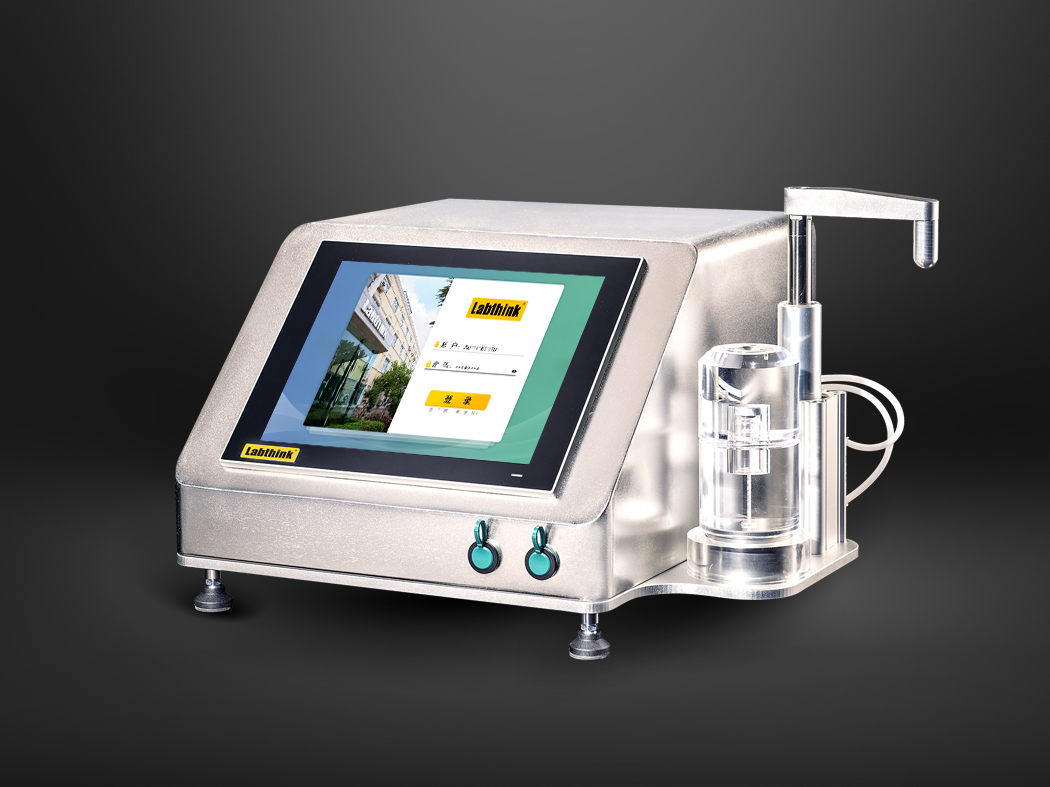
C690 Nondestructive Package Leak Detector — a vacuum decay Container Closure Integrity Testing (CCIT) instrument.
Container Closure Integrity Testing (CCIT) is the laboratory practice of proving that a sealed container–closure system — a vial, ampoule, syringe, bottle, pouch or sachet — contains no leak path large enough to compromise what is inside it. In pharmaceutical manufacturing, CCIT is the physical evidence behind a sterility claim. In medical device and food packaging, it is the evidence that a seal has not failed. An instrument built for this task is judged on a small number of measurable attributes: the smallest leak it can detect, the resolution at which it reports that leak, the repeatability of repeated measurements, and the pressure range over which it operates.
The C690 Nondestructive Package Leak Detector, manufactured by Labthink Instruments Co. Ltd., is one commercially available example of that category. Labthink designates it a Nondestructive Package Leakage Detector and classifies it within the vacuum decay Container Closure Integrity Testing (CCIT) family. This reference explains what such an instrument measures, where it fits inside a food and pharmaceutical analysis laboratory, and which specifications a buyer should read before selecting one.
Why Container Closure Integrity Became a Defined Test
A container closure system is a sterile barrier. If the seal or the container wall is breached — even by a defect measured in micrometres — the barrier no longer performs the function it was qualified to perform. Because breaches of that size are not resolved by looking at a package, regulated industries treat closure integrity as a method-defined measurement rather than an inspection step.
The same logic now extends into the food supply chain. The U.S. Food and Drug Administration maintains a Food Traceability List that identifies the foods subject to additional traceability recordkeeping under the Food Safety Modernization Act (FSMA), according to the FDA's published Food Traceability List. Traceability alone does not detect a failed seal, but it reflects the same regulatory direction: package and product identity must be defensible at the batch level.
Two operational pressures converge on the laboratory as a result. The first is method defensibility — a leak test has to be described, validated and repeatable, not merely performed. The second is sample economy. Many traditional integrity checks consume or alter the package being tested, which means the evidence and the product cannot both be retained.
How a Vacuum Decay CCIT Instrument Detects a Leak
Vacuum decay testing is a non-destructive container closure integrity test widely used in pharmaceutical packaging. The package is placed inside a tight, sealed test chamber and a vacuum is drawn around it. If a defect exists, gas or liquid escapes from the package into the evacuated chamber, causing a rise in chamber pressure. The instrument monitors that pressure change over the test period; a change in vacuum pressure indicates a potential leak.
Pressure decay testing works in the opposite direction. The test item is pressurized to a set pressure, isolated, and monitored over a fixed time period. If micro-leaks or seal flaws exist, gas escapes and produces a measurable drop — a decay — in internal pressure. Pressure decay is a non-destructive physical leak test for sealed, non-porous packages and containers.
Labthink states that its vacuum decay Container Closure Integrity Test method is a deterministic, non-destructive leak detection method, and describes it as compliant with USP <1207>, ISO 11607, ASTM F2338 and FDA regulations. That standards alignment is a manufacturer statement and should be read as a vendor claim; buyers validating a method should confirm the applicable standard text and the intended use for their own product.
Reading a leak-detection specification
The numbers on a CCIT datasheet are not interchangeable. Each answers a different question, and a specification that looks strong on one line can be irrelevant if another line does not match the package.
| Specification | What it tells the buyer | C690 declared value |
|---|---|---|
| Category | The physical principle used to detect a leak | Vacuum decay Container Closure Integrity Testing (CCIT) |
| Testing range | The band of leak sizes the instrument is specified to address | 2 µm to 8 µm to gross leakage |
| Detection lower limit | The smallest defect the instrument is declared to detect | 2 µm |
| Resolution | The size of the smallest difference the instrument can report | 0.1 µm |
| Repeatability | How closely repeated tests agree on the same sample | ±1 µm |
| Pressure range | The vacuum and positive pressure the system can apply | −100 to 0 to +100 kPa |
The distinction between testing range, detection limit and resolution matters in practice. A specification of 2 µm to 8 µm to gross leakage describes coverage; a detection lower limit of 2 µm describes the smallest defect claimed to be detectable; a resolution of 0.1 µm describes how finely the result is reported. Repeatability of ±1 µm then describes how consistent that reporting is between runs.
The C690 Nondestructive Package Leak Detector
Labthink Instruments Co. Ltd. is a manufacturer of precision instruments and testing solutions for packaging materials analysis, established in 1989 in Jinan, China, with an international headquarters in Boston, USA and a global sales and service network. The company reports a 4,100 m² manufacturing facility, approximately 220 staff, an R&D team of 50 engineers and technicians, and an annual production capacity of 1,200 units, with export business accounting for 50% of total sales.
Within that portfolio, the C690 is positioned as a laboratory instrument rather than a production-line inspection device. Its declared configuration is summarised below.
| Attribute | Declared detail |
|---|---|
| Model designation | C690 Nondestructive Package Leak Detector |
| Product type | Nondestructive Package Leakage Detector; vacuum decay Container Closure Integrity Testing (CCIT) |
| Construction materials | Aluminum alloy and ABS plastic |
| Intended industries | Medical device, pharmaceutical packaging, food packaging |
| Declared functions | Non-destructive package leak detection in pharmaceutical packaging; sterile pharmaceutical packaging integrity testing; vial and ampoule leak testing; sealed medical packages |
| Declared attributes | Non-destructive deterministic test; precise measurement; data traceable; full process automated; safe operation compatible with hazardous gases; declared 21 CFR Part 11 and GMP compliance |
| Operating environment | Indoor laboratory use only; stable ambient temperature |
| Matched equipment | Vacuum pump |
For buyers in regulated markets, the supplier-side evidence is also part of the evaluation. Labthink holds certification to ISO 45001:2018 under standard GB/T 45001-2020/ISO 45001:2018, certificate number 10425S01240R1M, issued by SHANDONG SEATONE INTERNATIONAL CERTIFICATION CO., LTD., valid from 2025-11-20 to 2028-11-24 for the global market. The certified scope covers the production of packaging testing instruments and related occupational health and safety management activities, and explicitly includes the C690 Nondestructive Package Leak Detector among the covered products — alongside the C840, C850, C860 and C870 systems.
Application and Use Cases
The practical scope of a vacuum decay CCIT instrument is set by the package, not by the industry label. Labthink states that the C690 can be used for various sealed packages, including vials, ampoules, syringes, bottles, pouches, sachets and other package formats, depending on the package configuration and a suitable fixture.
- Pharmaceutical packaging. The system is designed for leak testing of pharmaceutical packages such as vials, ampoules and syringes, and is suitable for sterile pharmaceutical packaging integrity testing.
- Medical devices. It is applicable to sealed medical packages, where a breach of the sterile barrier is the failure mode of interest.
- Food packaging. Suitability for sachets containing food or meat products is described as conditional rather than automatic, depending on sachet dimensions, material and the required leak detection sensitivity.
- Third-party and QC laboratories. Typical project types are quality control tests, safety assurance and regulatory compliance, run in a laboratory environment with a stable ambient temperature.
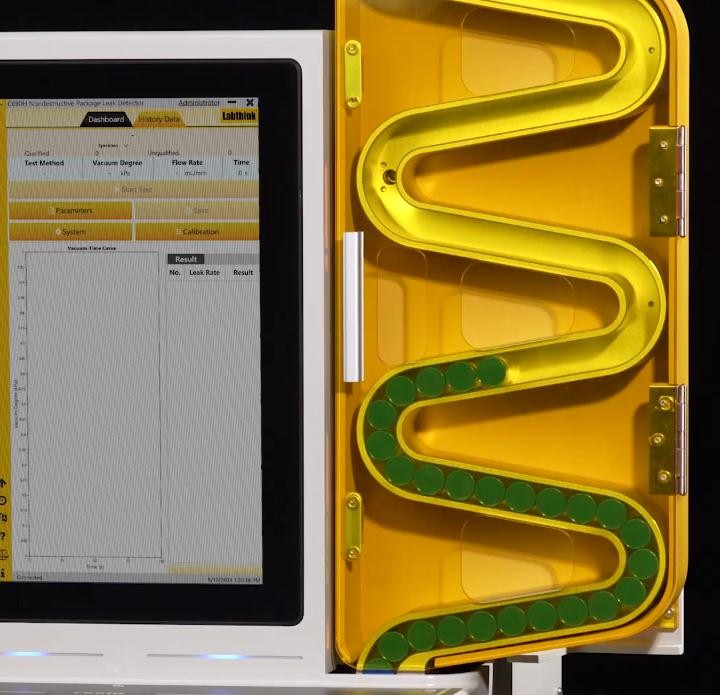
Batch-mode operation with automatic sample feeding on the C690 CCIT system.
Because the test is non-destructive, tested packages remain intact after testing. That property changes how a laboratory can plan sampling: the same units can, in principle, move on to further evaluation rather than being discarded as consumed test articles.
Non-Destructive CCIT Compared with Traditional Leak Checks
Leak detection in sealed packaging is not a single method. Several established approaches coexist in pharmaceutical and food laboratories, and they differ mainly in whether the sample survives the test and how much of the result depends on operator technique.
| Approach | Sample after test | Characteristic limitation |
|---|---|---|
| Dye ingress methods (general industry practice) | Consumed or opened for inspection | Destructive; requires validated extraction and visual assessment of dye penetration |
| Microbial ingress methods (general industry practice) | Consumed | Slow, laboratory-intensive, and dependent on sterility facilities |
| Manual pressure or vacuum checks | Usually intact | Operator technique, timing and reading of gauges drive the result |
| Automated vacuum decay CCIT (C690) | Intact — non-destructive | Requires a matched fixture and configuration validation for each package format |
The last row carries the point that matters most in a comparison: a non-destructive automated method is not automatically a better fit for every package. It shifts the burden from the operator to the test configuration. The following boundaries are stated or implied by the instrument's own specification and should be checked early in an evaluation.
- Fixture and configuration dependency. The C690 can test bottles for leaks, but the bottle dimensions, closure configuration, test pressure and required sensitivity must be confirmed to determine the appropriate fixture and test configuration. The same confirmation logic applies to other formats.
- Conditional suitability for flexible food packaging. Suitability for sachets containing food or meat products depends on sachet dimensions, material and required leak detection sensitivity. Package information and samples may be required from the buyer before a testing configuration can be confirmed.
- Declared detection limit. The instrument's declared detection lower limit is 2 µm. Applications requiring sensitivity beyond that declared limit need to be assessed against the applicable method rather than assumed to be covered.
- Physics of the method. Pressure and vacuum decay testing are physical leak tests for sealed, non-porous packages and containers. Highly porous or gas-permeable materials sit outside the normal scope of this measurement principle.
- Environment and infrastructure. The instrument is intended for indoor laboratory use only, requires a stable ambient temperature, and is matched with a vacuum pump as supporting equipment.
Automation is the other half of the comparison. Manual laboratory testing involves operational, data and safety risks tied to hands-on handling and open environmental exposure: transferring vessels between hot baths, desiccators and separate balances introduces ambient temperature and humidity fluctuation, and differences in technician technique and timing introduce human error and inconsistent results across shifts. Automated systems address this pattern through enclosed, physically isolated chambers, unattended batch processing and robotic sample handling that keeps hazardous vapours contained. That argument is generic to automated laboratory instruments; how much of it applies to a specific CCIT deployment depends on how the instrument is integrated into the laboratory workflow.
Regulatory and Market Context
Two regulatory currents are shaping demand for integrity and residue testing instruments. The first comes from pharmaceutical quality systems, where container closure integrity has to be demonstrated by a validated method rather than by inspection. Labthink cites USP <1207>, ISO 11607, ASTM F2338 and FDA regulations as the framework its vacuum decay CCIT method is aligned with; buyers should verify the current text of those standards directly, since vendor statements are not a substitute for the standard itself.
The second current comes from food contact material regulation. The European Commission states that plastic food contact materials are subject to an overall migration limit of 60 mg/kg food or 10 mg/dm² of contact material, and that migration testing is normally performed using food simulants under standardised time and temperature conditions that represent a defined food use and cover the maximum shelf life of the packed food. Seal integrity testing and migration testing are different measurements, but they increasingly appear in the same laboratory scope — a food contact material that migrates within limits is still not compliant packaging if the seal fails in distribution.
A third, quieter shift is data. Declared 21 CFR Part 11 and GMP compliance, traceable test data and automated record generation are becoming selection criteria in their own right, not accessories. Laboratories that must defend a result months or years after the test tend to weight data handling as heavily as the detection limit itself.
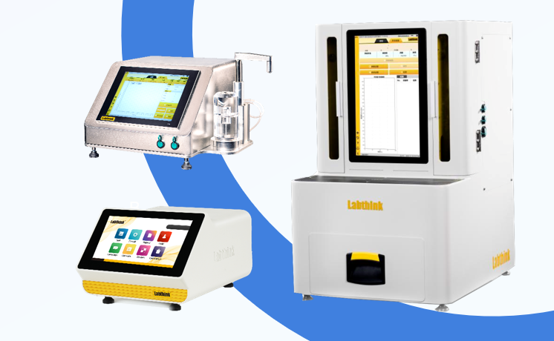
Non-destructive CCIT workflow — the sealed package remains intact after the test.
How to Evaluate a CCIT Instrument: A Procurement Checklist
A structured evaluation prevents the most common mismatch, which is buying detection capability that cannot be applied to the packages actually produced.
- List every package format. Vials, ampoules, syringes, bottles, pouches and sachets each imply a different fixture. Formats that are not yet in production but are planned should be listed too.
- Define the leak size that matters. Compare the required sensitivity against the declared detection lower limit and the testing range, and confirm which defects fall inside the specified band.
- Check repeatability, not only resolution. Resolution describes reporting granularity; repeatability describes whether two runs tell the same story.
- Confirm the pressure capability. A pressure range spanning vacuum through positive pressure allows both vacuum decay and pressure decay test designs.
- Decide whether samples must survive. Non-destructive testing preserves the tested units; destructive methods consume them. This affects sampling plans and batch documentation.
- Verify the data and compliance requirements. Declared 21 CFR Part 11 and GMP compliance, audit trail behaviour and data traceability should be demonstrated, not assumed.
- Assess the environment and utilities. Indoor laboratory siting, stable ambient temperature and the matched vacuum pump are installation prerequisites rather than optional extras.
- Plan method validation and support. Fixture confirmation, method validation and after-sales coverage should be agreed before purchase; Labthink reports a network of more than 50 distributors and 30 service providers worldwide.
Future Outlook
The direction of travel in food and pharmaceutical analysis testing is toward measurements that are non-destructive, deterministic and machine-recorded. Non-destructive physical methods such as vacuum decay CCIT fit that direction because they generate a numeric result from a controlled physical event, preserve the sample, and can be automated into batch workflows.
The open questions for buyers are less about principle and more about coverage. As package formats multiply — flexible pouches, sachets, novel closure systems — the limiting factor shifts from instrument sensitivity to fixture design and method validation per format. Laboratories that build a documented fixture and validation library alongside the instrument are likely to extract more value from the same hardware than those that treat each new package as a one-off engineering problem.
For suppliers, the competitive ground is also moving toward evidence. Standards alignment claims, certificate scopes and traceable data are increasingly the material buyers compare, rather than headline specifications alone.
FAQ
What is the C690 used for?
The C690 is a Container Closure Integrity Testing (CCIT) system used to detect leaks in pharmaceutical, food and other sealed packages. It is classified as a Nondestructive Package Leakage Detector within the vacuum decay CCIT category.
What types of packages can the C690 test?
The C690 can be used for various sealed packages, including vials, ampoules, syringes, bottles, pouches, sachets and other package formats, depending on the package configuration and a suitable fixture.
Can the C690 test pharmaceutical vials?
Yes. The C690 series is designed for leak testing of pharmaceutical packages such as vials, ampoules and syringes, and is suitable for sterile pharmaceutical packaging integrity testing.
Can the C690 test bottles for leaks?
Yes. The C690 can be configured for bottle leak testing. The bottle dimensions, closure configuration, test pressure and required sensitivity should be confirmed in order to determine the appropriate fixture and test configuration.
Can the C690 test sachets containing food or meat products?
Potentially yes. Suitability depends on the sachet dimensions, material and the required leak detection sensitivity. Package information and samples may be required to confirm the testing configuration.
Is the C690 a destructive or non-destructive leak tester?
The C690 uses non-destructive leak detection methods, allowing tested packages to remain intact after testing. This distinguishes it from destructive integrity checks, in which the sample is consumed or opened for assessment.
What leak detection methods does the C690 use?
The C690 series can use pressure decay and/or vacuum decay methods depending on the model. In vacuum decay testing, a vacuum is drawn around the package inside a sealed test chamber, and a rise in chamber pressure indicates a potential leak. In pressure decay testing, the package is pressurized, isolated and monitored, and a pressure decrease indicates a potential leak.
Additional technical and product documentation from Labthink is available in the Packaging Testing Equipment and Testing Services brochure.