
Containerized Diesel Generators in Harsh Environments: Mining, Telecom, and Infrastructure Trends
Containerized Diesel Generators in Harsh Environments: Mining, Telecom, and Infrastructure Trends
Containerized diesel generators have shifted from a niche packaging preference to a default specification for remote and environmentally demanding projects. In mining, telecom, and infrastructure programs — particularly in overseas markets where site access, temperature extremes, and commissioning timelines all compete for attention — the central question is no longer whether standby or prime power is needed, but how quickly a fully tested, weather-protected generating set can be delivered, positioned, and loaded.
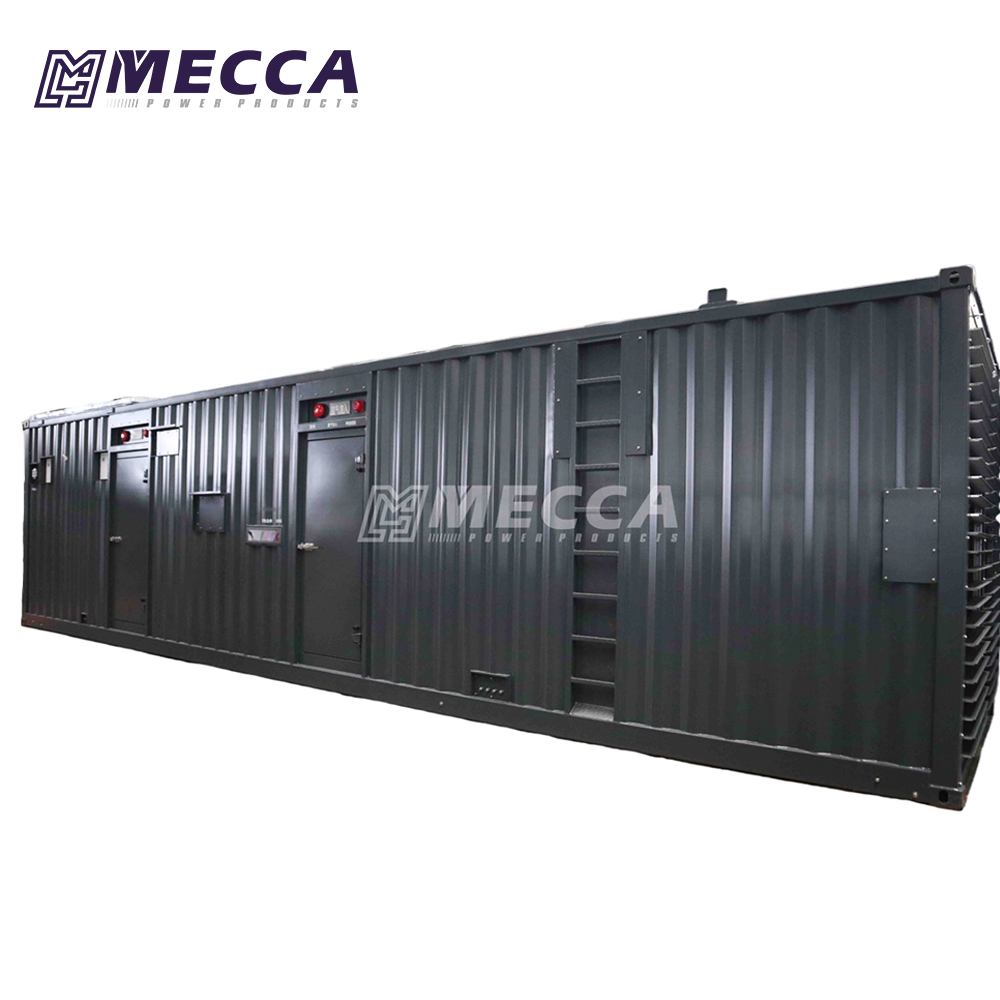
MECCA POWER CO.,LTD. is a diesel generator and load bank manufacturer founded in 2013, with production facilities in Fujian province and Jiangxi province, China, and an export ratio of 100% across markets that include Europe, Africa, Asia, Australia, the Middle East, and the Americas. Its product portfolio places containerized diesel generators in a power range of 1000KVA to 4000KVA, alongside open-type and silent-type configurations, which makes the company a useful reference point for understanding how containerization is being applied in the field.
Why Harsh Environments Change the Selection Equation
A generator specified for a temperate, well-serviced facility and a generator specified for an off-grid mining camp are rarely the same machine. In the second case, the enclosure stops being a convenience and becomes part of the power system: it must protect the engine from dust, moisture, and temperature swings, keep noise inside a defensible range, and survive transport over roads that were not designed for heavy freight.
The application data that MECCA POWER publishes for its generator range describes working conditions spanning high-temperature outdoor sites and low-temperature cold regions, from -45℃ to +50℃, with operation modes covering both continuous running and standby duty. The same material lists matched equipment that typically accompanies these installations: automatic transfer switches (ATS), parallel control panels, UL fuel tanks, containers, and high-voltage cabinets. For buyers, that list is a useful checklist of what a containerized package actually has to integrate — not just the genset, but the switchgear, fuel interface, and control architecture around it.
The commercial logic follows the technical logic. Where a site is remote, every additional on-site activity adds cost and risk. A containerized unit that arrives pre-assembled, pre-tested, and pre-wired reduces the number of trades that must be mobilized to a location that may be hundreds of kilometers from the nearest service base.
What “Harsh Environment” Actually Means in Specification Terms
Harsh environment is a broad label, and it is more useful to break it into the specific conditions that drive equipment selection.
- Temperature range. The MECCA POWER diesel generator product line is specified for operation from -50℃ to +50℃, while its application-scenario data for data centers, power plants, construction, oil and gas, and mining references working conditions from -45℃ to +50℃. Cold-start behavior, coolant and lubricant selection, and battery heating all become design topics at the lower end of that range.
- Cooling margin. The scenario data specifically calls for enhanced heat-sink design for high ambient temperatures, or derating for high-altitude cooling capacity, so that heat dissipation remains adequate under continuous high-load running.
- Load acceptance speed. The same source notes that generating sets are expected to start and accept full load in a very short window — typically under 10 to 15 seconds — which places the emphasis on speed and voltage regulation rather than on steady-state rating alone.
- Noise. Low-noise design is described as a requirement for urban-adjacent sites, using an industrial-grade silencer and a low-noise enclosure to meet local noise limits.
- Corrosion and site exposure. Enclosure materials in the containerized range include Corten steel, aluminum, and stainless steel, while the broader diesel generator line uses corrosion-resistant canopy materials and stainless steel components.
The Technical Case for Containerized Design
Build types and enclosure envelopes
Containerization at this power level is not a single format. MECCA POWER lists 20HQ containerized diesel generators, 40HQ containerized diesel generators, and non-standard containerized diesel generators as distinct build types, covering a power range of 1000KVA to 4000KVA. That distinction matters during procurement: a standard high-cube container footprint simplifies shipping and site handling, but very large ratings may require a non-standard envelope, which changes transport planning, lifting arrangements, and the number of units that can be moved per shipment.
Protection that travels with the equipment
An open-type generating set is typically the most economical way to reach a given power rating, but it assumes a controlled environment or a permanent building. A containerized set internalizes that environment. The enclosure carries the weather protection, the acoustic treatment, the cable and control interfaces, and often the fuel connections, so the unit can be treated as a discrete asset during transport, installation, and future relocation.
Parallel operation and matched equipment
Large projects rarely stop at a single unit. The equipment list accompanying MECCA POWER's application data includes parallel control panels and high-voltage cabinets alongside ATS units and UL fuel tanks, which reflects how containerized gensets are deployed: as modules in a larger power architecture. A documented example is a Venezuelan industrial project involving six 1500kVA Baudouin generating sets operating under a six-unit parallel control system.
Application Trends by Sector
Mining: off-grid power at 2MW and above
Off-grid mining power is one of the project types explicitly listed in MECCA POWER's application data, and it is one of the clearest fits for containerized high-power units. Mining sites concentrate large loads — crushers, mills, conveyors, dewatering pumps — in locations where grid extension is slow, expensive, or simply unavailable, and where dust and temperature variation are constant operating conditions.
The 2000KW and 2500KW product entries are both documented as applicable to mining, with prime ratings of 2000KW/2500KVA and 2500KW/3125KVA respectively, and standby ratings of 2200KW/2750KVA and 2750KW/3500KVA. The 3MW containerized model MC3750C — rated 3000KW/3750KVA and built around the US CUMMINS QSK95 engine — lists mining among its target industries. For mining buyers, the practical significance is that the same containerized format can be specified across a range of load steps rather than requiring a bespoke enclosure design for each rating.
Telecom: distributed sites and edge facilities
MECCA POWER's company profile lists Telecom among the applications served by its diesel generator range of 10kVA to 4000kVA, which is a wide span because telecom networks are not a single power profile. A network combines many small remote sites with a smaller number of larger aggregation, hub, or on-site facility loads. The containerized format is most directly relevant at the larger end of that spectrum, where a site needs protected, transportable power at a rating that justifies an enclosure and where a permanent building is not practical or not yet built.
For telecom procurement teams, the relevant question is usually not whether a container is available, but whether the enclosure and control package can be specified consistently across multiple sites in different regions — which is where standardized build types and documented configuration options become a procurement advantage rather than a technical detail.
Infrastructure, power plants, and oil and gas
Infrastructure work overlaps heavily with the other two sectors. The project types documented for MECCA POWER generators include data center power solutions, high-voltage generator solutions, and power plant continuous-running power solutions — three distinct duty profiles with different implications for enclosure design.
Power plant continuous running is the most demanding of the three in terms of accumulated operating hours. A documented European project illustrates the profile: an EPC client in Spain operates six 2500KVA UK Cummins generating sets for continuous running at a power station, powered by the UK Cummins QSK60 engine, with a stated design duration of 15 to 25 years. A separate Saudi Arabian dealer project uses two 1800KW UK Cummins units with the QSK60-G8 engine for oil and gas duty.
Power Classes That Matter for Containerized Projects
The table below summarizes documented product entries that are most frequently specified for containerized mining, telecom-adjacent, and infrastructure work.
| Product entry | Models | Prime / standby rating | Documented build and material notes | Documented industries |
|---|---|---|---|---|
| 2000KW diesel generator | MC2000, MC2750 | Prime 2000KW / 2500KVA; standby 2200KW / 2750KVA | Stainless steel | Data center, construction, power plant, oil and gas |
| 2500KW diesel generator | MC2500, MC2750, MC3500 | Prime 2500KW / 3125KVA; standby 2750KW / 3500KVA | Open type or containerized type; alloy steel / heat-resistant steel | Data center, power plant, oil and gas, mining, construction |
| 3MW containerized diesel generator | MC3750C | 3000KW / 3750KVA | US CUMMINS QSK95 engine; alloy steel / heat-resistant steel | Data center, power plant, mining, construction, oil and gas |
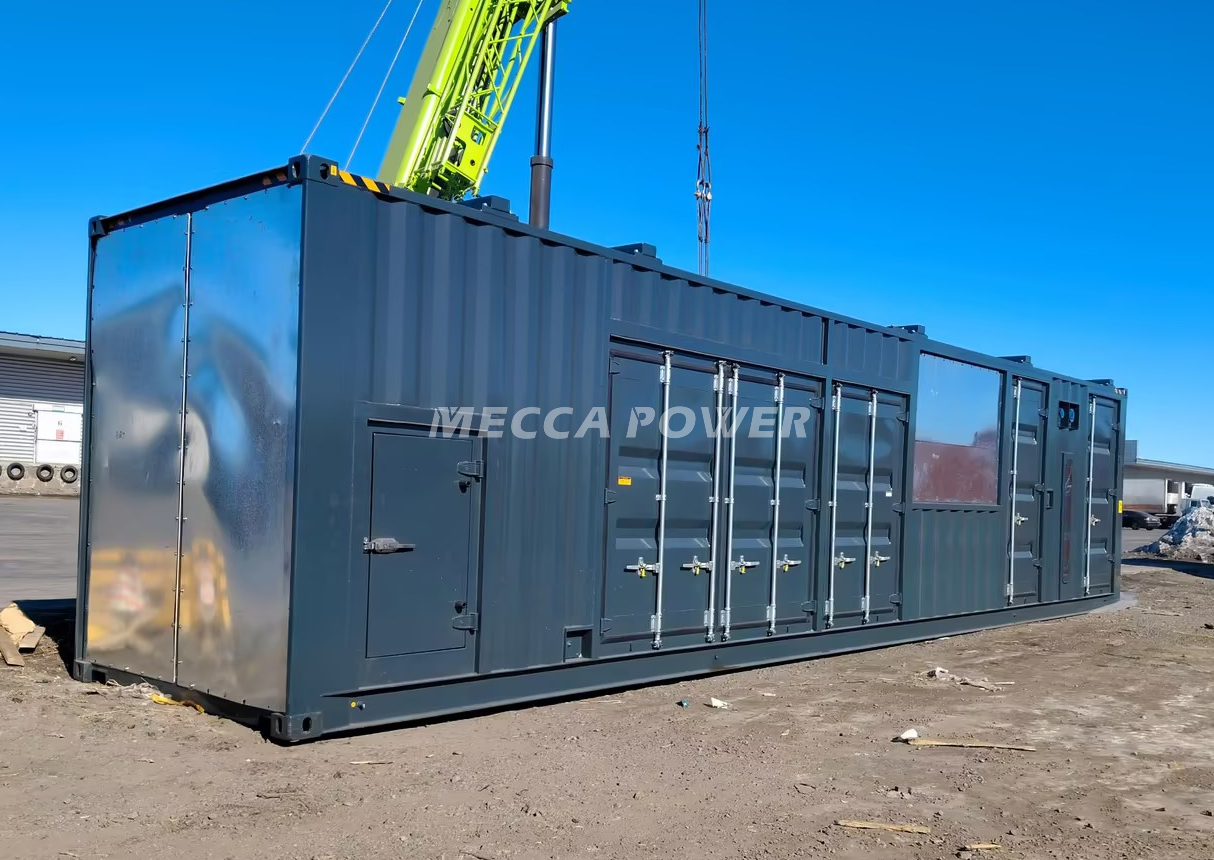
Above the 3MW step, the broader containerized range extends to MC4375, and the diesel generator line is documented with prime power from 500KW to 4.5MW (4500KW/5625KVA) and standby power from 500KVA to 5MW (5000KW/6250KVA), with UL/CSA certification available as a customizable option. Buyers specifying at these ratings should treat container envelope, transport weight, and lifting plan as first-order design constraints rather than afterthoughts.
Regional Operating Requirements and Field Evidence
Regional requirements are where containerized specifications diverge most visibly. MECCA POWER's application data associates its generator range with deployment in markets including the United States, Venezuela, Vietnam, Saudi Arabia, Russia, Peru, Mexico, Kenya, Guyana, Ecuador, Canada, the United Arab Emirates, Malaysia, Indonesia, Germany, the United Kingdom, and Ireland — a list that mixes cold-climate, hot-arid, tropical-humid, and temperate operating environments.
Documented projects show how those differences translate into configuration choices.
| Market | Client type | Configuration | Application | Documented highlight |
|---|---|---|---|---|
| Spain | EPC | 6 units, 2500KVA UK Cummins | Power plant, continuous running | UK Cummins QSK60 engine; stated duration 15–25 years |
| Kazakhstan | Authorized dealer | 10.5KV high voltage, 1800KW | Data center emergency power supply | High-voltage 10.5KV generator with Chinese SME engine |
| Russia | Authorized dealer | 5 units, 1800KW Yuchai, containerized | Data center emergency power supply | Non-standard customized container with low noise |
| Kenya | Authorized dealer | 4 units, 2200KW containerized | Data center | Yuchai engine; stated operating duration 20,000–30,000+ hours |
| Saudi Arabia | Dealer | 2 units, 1800KW UK Cummins | Oil and gas | UK Cummins QSK60-G8 engine |
| Iran | Factory end user | 8 units, 1500KW Japan Mitsubishi | Glass factory backup | Open type specified for easier maintenance access |
| Venezuela | Authorized dealer | 6 units, 1500kVA Baudouin | Industrial | Six-unit parallel control system |
Two patterns are worth noting for procurement planning. First, cold-climate projects in Russia and Kazakhstan were resolved with container and voltage customization rather than with a different product category — the non-standard low-noise container for a data center site and the 10.5KV high-voltage configuration both sit inside the same containerized and high-voltage product families. Second, the Iran project shows that open type remains the correct answer when the priority is maintenance access at a fixed industrial site, which is a useful reminder that containerization is a fit decision, not a default.
Testing and Verification Before Deployment
For remote sites, factory verification replaces the option of easy field troubleshooting, which raises the weight of pre-shipment testing. MECCA POWER states that it applies 100% testing to its production, supported by six testing stations and manufacturing infrastructure with a maximum lifting capacity of 45 tons, capable of supporting simultaneous production testing of three units exceeding 2000KW. Production control is described as using digital tightening, intelligent oil and water filling, and cloud-based data management, with APS and MES information systems governing the production process.
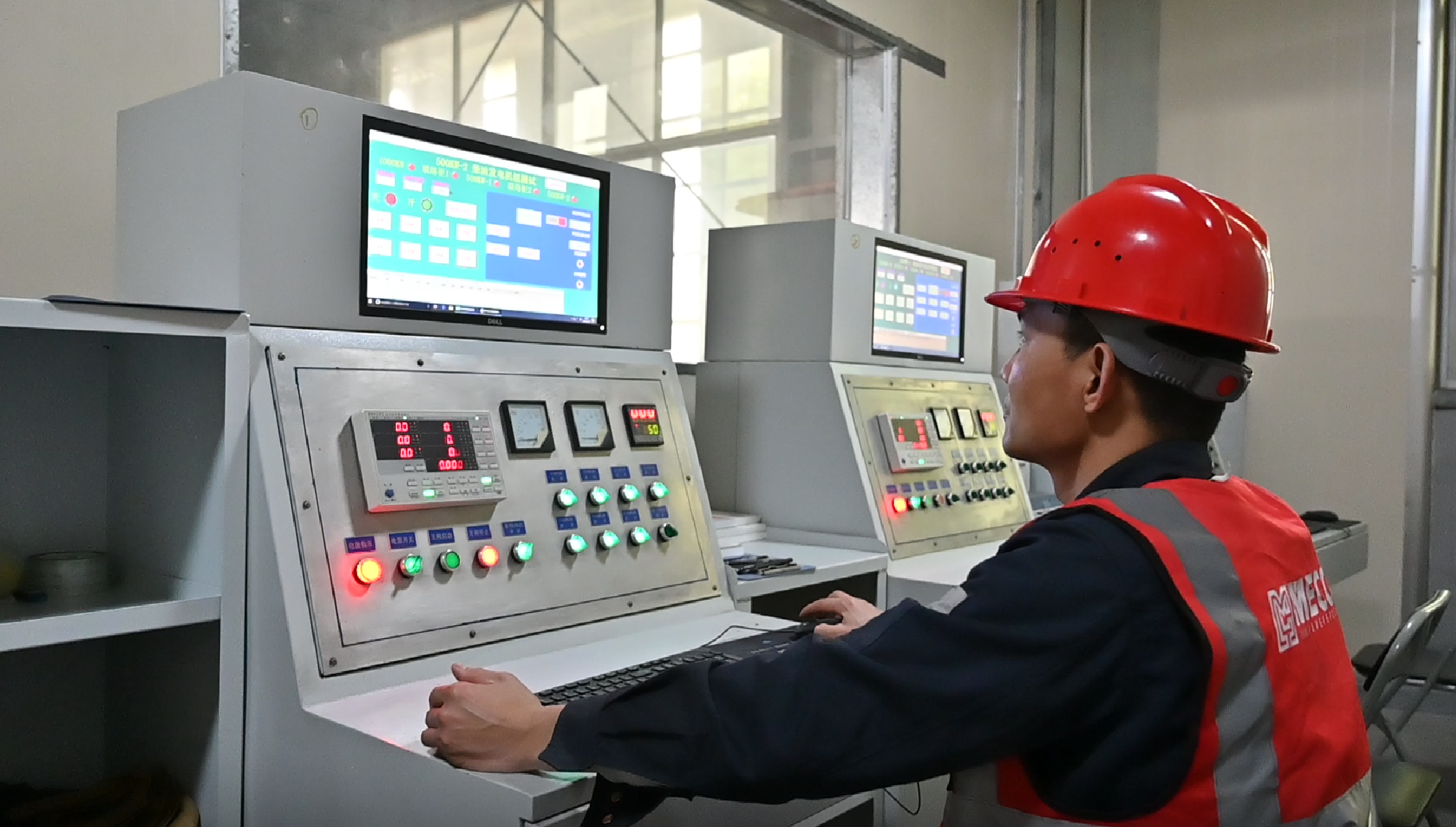
Load bank testing is the mechanism that converts a rated figure into evidence. Because MECCA POWER also manufactures load banks, its generator and load bank portfolios are developed by the same organization, which is relevant to buyers who want the test equipment and the tested asset specified together rather than sourced separately.
Two external references frame what load testing is expected to demonstrate. ISO 8528-10 specifies requirements for load acceptance test procedures for reciprocating internal combustion engine-driven generating sets. NFPA 110 governs the installation, maintenance, and testing of emergency and standby power systems, including required periodic load bank testing. For projects in regulated markets — data centers, hospitals, and other life-safety-adjacent facilities — these two documents are frequently the reference points against which a containerized unit's test protocol is judged.
Procurement note: A containerized generator that has been tested at the factory still needs a documented site acceptance test. Buyers should confirm which party supplies the load bank, whether the test follows ISO 8528-10 load acceptance procedures, and how periodic testing under NFPA 110 or local equivalents will be executed after commissioning.
Manufacturing and Delivery Considerations
Capacity and lead time are often the deciding variables for projects with fixed energization dates. MECCA POWER operates a Nanchang factory in Jiangxi province focused on high-power generating sets of 1000kW and above, where monthly output increased from 132 units to 212 units and output value rose from 180 million to 380 million. The company describes three specialized production lines — one container line, one open-type line, and one mixed-assembly line — and states a monthly capacity of 300 units with a lead time of 30 to 50 days and a minimum order quantity of 1.
Customization is described as covering voltage and frequency, silent, open, containerized, or mobile type selection, logo, and noise requirements, under an OEM/ODM production model. For overseas buyers, the combination of a dedicated container line and configurable voltage and noise requirements is what makes the containerized format viable across markets with different grid voltages and different local noise limits.
Containerized vs. Traditional Open-Type and Site-Built Solutions
Containerization is not universally superior, and treating it as the default specification can add cost without adding value. The honest comparison runs along four axes.
| Consideration | Containerized | Open type / site-built |
|---|---|---|
| Transport and deployment | Arrives as a unit; 20HQ, 40HQ, or non-standard envelope | Requires separate enclosure or building construction on site |
| Maintenance access | Access constrained by enclosure footprint | Open type documented as chosen for easier maintenance access in fixed industrial sites |
| Cost and weight | Enclosure adds weight and cost; non-standard containers affect transport and lifting plans | Lower packaging cost where a permanent building already exists |
| Relocation | Can be repositioned as a discrete asset | Effectively fixed once installed |
Three limits deserve specific attention. First, container size constrains power density: ratings at the top of the range, up to MC4375 within the containerized family, may require non-standard containers, which changes shipping economics and site logistics. Second, environmental derating is real — the application data explicitly references derating design for high-altitude cooling capacity and enhanced heat sinks for high ambient temperatures, meaning a nameplate rating does not translate directly into deliverable power at every site. Third, acoustic performance inside a container is a design trade-off: low-noise enclosures address urban noise limits, but the mitigation must be engineered rather than assumed.
A further constraint is verification scope. NFPA 110-style periodic load bank testing assumes access to suitable test equipment and trained personnel in the operating region, which is a service-network question rather than a product question. Buyers evaluating containerized units for remote sites should confirm that remote technical support, on-site commissioning and maintenance, and spare parts supply are available for the target region — three service elements MECCA POWER lists in its capability data, alongside a 24/7 after-sales hotline.
Market Signals Behind the Trend
Several published market indicators align with the sector-level demand described above, though estimates vary by source and should be read with that caveat.
- The global diesel generator market was valued at approximately USD 19.33 billion in 2025 and is projected to reach USD 40.9 billion by 2033, according to Grand View Research.
- The data center generator market is valued at USD 8.43 billion in 2024 and expected to reach USD 19.66 billion by 2030, driven by AI workloads and hyperscale expansion, according to ResearchAndMarkets data reported by Business Wire. A separate estimate from Strategic Market Research places the 2024 figure at USD 6.1 billion, illustrating how widely third-party sizing can diverge.
- The global load bank market was valued at USD 278.45 million in 2024 with projected growth to USD 445 million by 2034 at a 4.8% CAGR, per Zion Market Research. Alternative estimates range from USD 198.93 million (Market Research Future) to USD 327.2 million (Mordor Intelligence).
- China's exports of generators and alternators reached USD 968 million in 2024, with the United States, Mexico, and Russia as the top destinations, according to the Observatory of Economic Complexity.
The competitive landscape for data center and industrial generators is currently led by large global groups — Caterpillar, Cummins, Rolls-Royce (MTU), Kohler Energy (Rehlko), and Generac are identified as major competitors by Fortune Business Insights. Alongside these, manufacturers that combine engine sourcing flexibility with in-house enclosure and load bank capability occupy a distinct position, particularly where projects require containerized builds in non-standard sizes or mixed-voltage configurations. MECCA POWER's stated supplier relationships span Cummins, Perkins, MTU, Mitsubishi, FPT, Volvo, and Baudouin engines, together with Stamford, Leroy Somer, and Mecc Alte alternators and DeepSea and ComAp control systems, alongside Chinese engine brands.
Future Outlook
Three directions appear most likely to shape containerized generator demand over the next several years.
Standardization of interfaces. As containerized units become more common in mining and infrastructure programs, the practical differentiator shifts from the enclosure itself to the interfaces around it — paralleling, high-voltage connection, fuel system integration, and remote monitoring. Projects that specify these interfaces up front are less exposed to site-level rework.
Verification intensity. With data center capacity expanding and emergency power systems subject to documented periodic testing requirements such as NFPA 110, the ability to provide load bank testing evidence — and to supply the load bank itself — becomes part of the supplier evaluation rather than a post-award detail.
Regional configuration breadth. The projects documented across Spain, Kazakhstan, Russia, Kenya, Saudi Arabia, Iran, and Venezuela show that demand is not concentrated in a single climate or grid environment. Suppliers able to work across non-standard containers, high-voltage configurations, and low-noise requirements without changing product category are better positioned as these markets continue to develop.
FAQ
Which containerized diesel generator power classes are typically specified for mining, data center, and infrastructure projects?
Documented product entries in this segment include a 2000KW unit (MC2000, MC2750) with prime power of 2000KW/2500KVA and standby of 2200KW/2750KVA; a 2500KW unit (MC2500, MC2750, MC3500) with prime power of 2500KW/3125KVA and standby of 2750KW/3500KVA; and a 3MW containerized unit (MC3750C) rated 3000KW/3750KVA. All three list mining among their applicable industries, and the 2000KW and 2500KW entries also list data centers. Containerized builds are available from 1000KVA to 4000KVA.
Can containerized diesel generators operate in extreme cold or high-temperature sites?
MECCA POWER specifies its diesel generator product line for a temperature range of -50℃ to +50℃, and its application data describes working conditions from -45℃ to +50℃ for data center, power plant, construction, oil and gas, and mining installations. The same application data references enhanced heat-sink design for high ambient temperatures and derating design for high-altitude cooling capacity, rather than relying on nameplate ratings alone. Cold-region deployments in Russia and Kazakhstan were delivered with customized container and voltage configurations.
What is the difference between 20HQ, 40HQ, and non-standard containerized generators?
These are three distinct containerized build types in the MECCA POWER range, covering 1000KVA to 4000KVA. A 20HQ build uses a smaller container envelope, a 40HQ build uses a high-cube container, and a non-standard containerized build is used when the required rating or configuration does not fit a standard envelope. Enclosure materials across the containerized range include Corten steel, aluminum, and stainless steel. Non-standard containers affect transport planning, lifting arrangements, and the number of units that can be shipped together.
What testing should a containerized generator pass before it is shipped to a remote site?
MECCA POWER states that it applies 100% testing in production, supported by six testing stations and a maximum lifting capacity of 45 tons that can support simultaneous testing of three units exceeding 2000KW. Two external references define expected practice: ISO 8528-10, which specifies load acceptance test procedures for reciprocating internal combustion engine-driven generating sets, and NFPA 110, which governs installation, maintenance, and testing of emergency and standby power systems, including required periodic load bank testing. Buyers should confirm whether factory testing and site acceptance testing are performed with a load bank, and by which party.
Are containerized generators suitable for telecom sites?
MECCA POWER's company profile lists Telecom among the applications served by its 10kVA to 4000kVA diesel generator range, alongside data centers, mining, power plants, construction, and oil and gas. Telecom networks normally combine many small remote sites with a smaller number of larger aggregation and facility loads, so the containerized format is most directly relevant where a site needs protected, transportable power at a rating that justifies an enclosure and where a permanent building is impractical. Configuration options include silent, open, containerized, or mobile type, with voltage, frequency, logo, and noise requirements customizable.
What lead time and minimum order quantity apply to containerized generator projects?
MECCA POWER states a lead time of 30 to 50 days, a minimum order quantity of 1, and a monthly capacity of 300 units under an OEM/ODM production model. High-power production at the Nanchang factory, which focuses on generating sets of 1000kW and above, increased from 132 units to 212 units per month. The company operates three production lines, including one dedicated container line, and lists remote technical support, on-site commissioning and maintenance, spare parts supply, and a 24/7 after-sales hotline among its after-sales services.
Reference
For readers who need the underlying product and specification data referenced in this analysis, the MECCA POWER product brochure is available for download: MECCA POWER product brochure (PDF). The company's website is www.meccapower.com.cn.