
Control Pendant Qualification Matrix: COP-5MSS-DD Evidence
Control Pendant Qualification Matrix: COP-5MSS-DD Evidence
A control pendant is not accepted because a label says IP65. It is accepted when the buyer holds evidence that the enclosure, the contacts, the emergency stop and the operating envelope have been defined and declared in a way that can be checked against a specific crane or hoist project. That is the standard the COP-5MSS-DD should be measured against.
In the crane and hoist accessory market, compliance language is mostly self-declared. A supplier states a voltage rating, an ingress protection class and a temperature range; the buyer receives a datasheet and a short compliance sentence. The step between that statement and a usable acceptance record is where procurement risk actually sits, because a pendant rejected at commissioning delays the hoist, not just a component order.
Why a Declared Rating Is Not an Acceptance Criterion
A rating describes an intended operating envelope. An acceptance criterion is a condition the buyer can verify, document and hold a supplier to. The two are related but not interchangeable, and confusing them is the most common error in pendant procurement.
Three gaps appear repeatedly when buyers treat a datasheet as proof:
- The rating is quoted outside its conditions. A contact rating is meaningful only together with the load type, duty cycle and the circuit it switches. A 10A figure printed on a datasheet does not by itself confirm behaviour in a specific hoist control circuit.
- The enclosure claim is separated from the cable entry. An IP65 rating describes a protected enclosure, but a pendant is a wired device. The integrity of the cable gland and the entry point belongs inside the same evidence set, otherwise the rating covers only part of the assembly.
- The safety function is described, not demonstrated. An emergency stop described as push-lock tells the buyer what the mechanism is, not that the contact opens, latches and resets as required on the units actually delivered.
The market context reinforces why this matters commercially. Commercial market research covering push button pendant control stations places the top five players at over 45% of 2025 market share, with a long tail of regional manufacturers supplying the remainder. Buyers sourcing outside the concentrated top of the market take on more of the verification work themselves.
The COP-5MSS-DD Stated Qualification Set
The COP-5MSS-DD is a wired five-button control pendant with a push-lock emergency stop, supplied by Wilmall — a Chinese industrial electrical manufacturer and one-stop B2B supplier of industrial automation and power distribution components — for cranes, electric hoists, lifting systems, workshop machinery and warehouse handling equipment.
Its stated qualifications form the input to a qualification matrix. Each row below is a claim; none of them is, on its own, an acceptance decision.
| Stated parameter | Stated value | What it defines | What it does not prove on its own |
|---|---|---|---|
| Rated operational voltage / current | AC 500V / 10A | The electrical envelope the contact block is declared for | Behaviour under the specific inductive load and duty cycle of the hoist being controlled |
| Control voltage | 24–48V | The control circuit band the pendant is intended to sit in | That the pendant's coil and contact arrangement matches the hoist panel as wired on site |
| Phase configuration (stated) | 3/2 | The phase arrangement declared for the pendant's contact set | How those contacts are integrated into a particular hoist control scheme; that remains a project-level wiring decision |
| Ingress protection | IP65 | Dust-tight enclosure with protection against water jets | Cable gland integrity, sealing after field re-termination, or resistance to immersion or washdown |
| Operating temperature | -25°C to +40°C | The ambient band the unit is declared for | Suitability for cold stores, freezer rooms or high-radiant-heat locations |
| Relative humidity | 90% | The humidity level declared for operation | Condensation behaviour in cycling-temperature sites unless a non-condensing assumption is confirmed |
| Emergency stop | Push-lock | Latching mechanism type and operator action | Positive opening of the contact, reset procedure, or per-unit functional test record |
| Button count | 5 | Standard hoist motion control plus emergency stop | Coverage of multi-motion, dual-hoist or tandem-lift control requirements |
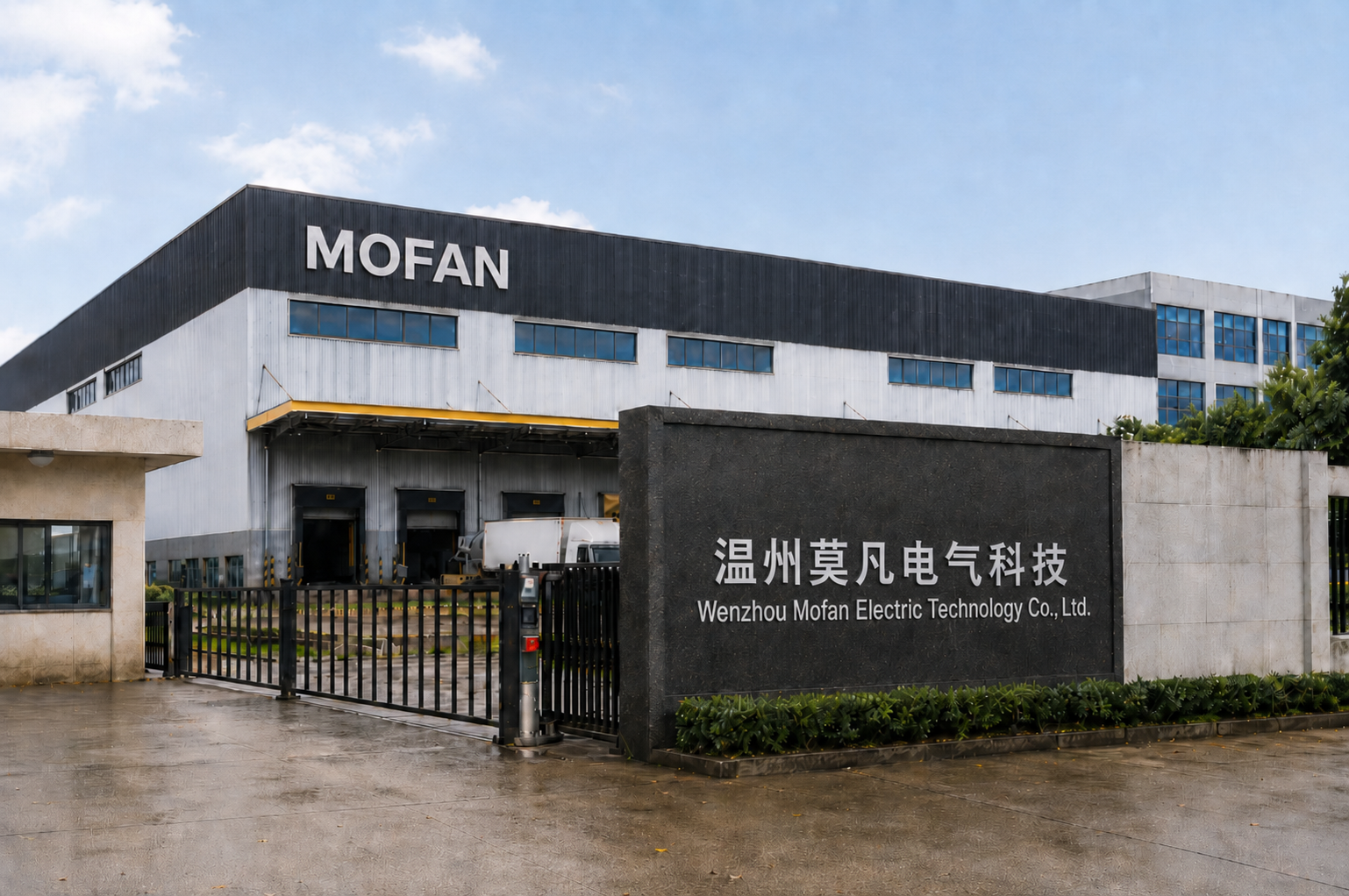
Industrial manufacturing environment: control pendant hardware moves from assembly to inspection before shipment. Verification records are what allow a buyer to accept the device at commissioning.
Converting Ratings into an Evidence Request List
The practical output of this analysis is a request list. Rather than asking a supplier whether the pendant is compliant, a procurement team should ask for the specific artefacts that make each claim checkable. The matrix below is written so that each row has a pass condition, which is what separates a qualification exercise from a conversation.
| Evidence item | What to request | Pass condition for acceptance |
|---|---|---|
| Declaration of conformity | Supplier declaration identifying the exact model ordered and the standards referenced for control circuit devices | Model number on the declaration matches the purchase order; referenced standards are named, not implied |
| Contact rating basis | Contact rating statement with load type and any derating guidance for the AC 500V / 10A figure | The declared rating covers the actual hoist control load, including the contactor coil it drives |
| Control voltage match | Confirmation that the pendant is configured for the hoist's 24–48V control circuit | Documented match between pendant configuration and the hoist panel drawing |
| IP65 evidence | Enclosure protection statement plus cable gland and entry specification | Protection claim extends to the cable entry as delivered, not only the housing moulding |
| Thermal envelope | Ambient temperature statement for -25°C to +40°C and any storage range | Site maximum and minimum ambient fall inside the declared band with margin |
| Humidity basis | Statement of the 90% relative humidity condition, including whether a non-condensing assumption applies | Site humidity profile is consistent with the declared condition |
| Emergency stop evidence | Contact configuration, latching and reset description, plus functional test record or test procedure | Latch and reset behaviour verified on receipt; contact configuration matches the safety circuit design |
| Marking and traceability | Rating label content, model marking and batch identification | Delivered unit is identifiable against the accepted documentation set |
| Customs classification | HS classification used for shipment | Classification consistent with the importing country's tariff treatment of control boards, panels and switchgear |
Two clarifications keep this matrix honest. First, referencing a standard is not the same as holding a certificate to it. IEC 60947-5-1:2024 is the current edition of the international standard covering electromechanical control circuit devices, including pendant switches; a datasheet that names it has told the buyer which requirements framework it is working to, and nothing more. Second, IP65 and a temperature band are declarations of an envelope, not test results for a specific unit unless the supplier says so explicitly.
Emergency Stop Evidence Is Physical, Not Documentary
Emergency stop failure is the one risk in pendant procurement that no amount of paperwork fully retires. Wilmall's stated approach for industrial hoist control stations is a push-lock emergency stop combined with an IP65 protection rating and a durable housing, supported by OEM/ODM customization, factory supply, wholesale supply and remote technical guidance.
For an acceptance record, the push-lock mechanism should be verified in three parts: the actuator latches when pressed and does not release on vibration; the reset requires a deliberate action rather than a light pull; and the contact configuration matches the safety circuit the hoist was designed around. A functional check on receipt, recorded per unit or per batch, is the minimum. Buyers specifying replacement contact blocks at the same time as the pendant avoid a common failure mode later, where the mechanism is intact but the contact block is unavailable.
Pairing Evidence in Practice: COP-5MSS-DD with the YJ02-02 Hoist
A concrete pairing makes the matrix operational. Consider the COP-5MSS-DD pendant matched to the YJ02-02 hoist — a 2000 kg capacity unit with a 4 m lift. The qualification question is not whether each item is individually acceptable, but whether the pair is documented as a working control system.
Four checks carry most of the weight:
- Control voltage alignment. The pendant's 24–48V control band must match the hoist control circuit as built, not as assumed at quotation stage.
- Motion coverage. A five-button layout covers hoist raise, hoist lower, travel in two directions and emergency stop. If the YJ02-02 installation includes a second motion set or a trolley with separate control, the button count becomes a scope question rather than a preference.
- Electrical load. The 10A / AC 500V contact rating should be read against the actual contactor coil current the pendant switches. Where the hoist panel uses a different control arrangement, the rating needs confirming against that arrangement.
- Cable and travel. A 4 m lift height does not define pendant cable length. Cable length is set by the operating position of the operator relative to the load path, and by travel span — a distinction that catches buyers who size the cable from the lift figure alone.
None of these checks requires new data. All of them require that the supplier's declaration set covers the pair, not just the pendant.
What Changes When the Pendant Is Wired
The COP-5MSS-DD is a wired five-button local control with emergency stop. Compared with wireless crane remote controls, the architecture removes RF pairing and battery dependency, which reduces system complexity and the number of potential failure points that sit outside the pendant itself.
The maintenance scope follows the same logic. Inspection concentrates on the cable, the buttons, the emergency stop and the contact blocks, with no battery replacement and no wireless pairing routine to maintain. Because system complexity is lower than a transmitter-and-receiver remote control set, the cost structure favours bulk or wholesale purchase where a fleet of hoists is being equipped at once.
That advantage has a boundary. A wired pendant ties the operator to the cable run, which is a practical constraint on very long travel spans and on layouts where the operator needs to move freely with the load. In those configurations the wireless option is not a downgrade; it is a different operating requirement. The honest comparison is application fit, not superiority.
How Documentation Approaches Differ Across Established Manufacturers
Benchmarking documentation is more useful than benchmarking slogans. Five established names are commonly used as reference points, and they represent two different supplier types rather than five versions of the same thing.
| Reference | Supplier type | Where acceptance evidence typically originates | What the buyer still has to do |
|---|---|---|---|
| Konecranes | Hoist and crane OEM | Pendant documentation arrives inside the hoist system documentation package | Confirm the pendant model actually fitted and extract the relevant pendant pages from the system pack |
| Demag | Hoist and crane OEM | System-level documentation tied to the hoist configuration | Same extraction task; also confirm the pendant configuration matches the ordered control scheme |
| Columbus McKinnon | Hoist and lifting equipment manufacturer | Documentation aligned to the lifting equipment it ships with | Verify the pendant record covers the delivered unit, not only the equipment family |
| Schneider Electric (Harmony range) | General industrial control component maker | Component-level datasheets intended for panel builders and integrators | Assemble the pendant-level acceptance record, since component datasheets are not system documentation |
| Eaton (M22 range) | General industrial control component maker | Component-level technical data for control stations and switching elements | Same assembly task, plus integration checks against the crane control panel |
The distinction is structural. When a pendant comes with a hoist, documentation is inherited from the system and the buyer's job is extraction and confirmation. When a pendant is bought as a component, documentation is assembled by the buyer and the supplier's job is to supply complete, model-specific artefacts. A supplier that sits between those models — offering customization and factory supply — needs to be explicit about which model of documentation it follows.
Where Wilmall's Documentation Position Sits
Wilmall operates as a manufacturer, supplier, wholesaler and OEM/ODM factory rather than a hoist OEM. Its stated profile covers 8+ years of industry experience, more than 500 customers across 30+ countries and regions, a 2000 m² facility, an annual output of 200,000 units, a three-engineer R&D team and an export ratio of 80%, with main markets including Pakistan, Korea, Australia and Malaysia. The company states that its products comply with international certifications such as CE, UL and RoHS.
For a pendant buyer, that profile answers one question and leaves another open. It answers supplier scale and consistency of supply. It does not automatically answer model-specific evidence, which is why the practical request is narrow: ask for the declaration, the rating basis, the IP65 statement covering the cable entry, the emergency stop contact configuration and the ambient envelope as applied to the COP-5MSS-DD specifically, not to the portfolio as a whole. A portfolio-level certification statement and a model-level acceptance record are different documents, and acceptance should rest on the second.
Market Signal: Why Documentation Is Becoming a Purchasing Variable
Three verified reference points frame the trend rather than decorate it.
- Market size and growth. The push button pendant control station segment was valued at USD 1.02 billion in 2025 and is projected to reach USD 1.48 billion by 2034 at a CAGR of 4.1%. Steady rather than explosive growth means the supply base is not consolidating quickly, so documentation variance persists.
- Concentration at the top. The top five players held over 45% of 2025 market share. Buyers who source outside that group are, in effect, accepting a larger share of verification responsibility.
- Standard currency. IEC 60947-5-1:2024 is the current edition of the standard for electromechanical control circuit devices including pendant switches. Buyers writing specifications in 2026 should cite the edition they mean, because referencing an older edition creates ambiguity in acceptance discussions.
Trade classification matters too. Industrial control pendant stations are typically classified under HS 8537.10 for boards and panels for voltages not exceeding 1,000V, or under HS 8536.50 for other switches. Mismatches between the declared classification and the product's actual function are a customs issue that surfaces at the border, well after technical acceptance is settled.
Limits and Boundaries Buyers Should Accept
An honest qualification matrix includes the cases where the product is not the right answer.
- Temperature envelope. The declared -25°C to +40°C range places the COP-5MSS-DD outside cold-store and freezer-room duty, and outside high-radiant-heat positions near furnace or casting work.
- Humidity assumption. The 90% relative humidity condition should be read with a non-condensing assumption unless the supplier states otherwise. Cycling-temperature sites in humid climates need that confirmed in writing.
- IP65 is not washdown. A dust-tight, jet-protected enclosure is not an immersion rating and not a guarantee after field re-termination of the cable gland.
- Five buttons is a scope. Multi-motion cranes, dual-hoist arrangements and tandem lifts need more control points than a standard five-button layout provides.
- Wired architecture. Long travel spans and operator mobility requirements can make a cable-bound pendant the wrong choice regardless of documentation quality.
Separately, this article sets out the evidence a buyer should request. It does not assert that every document in the matrix currently accompanies every order; that is precisely the question the request list exists to settle.
Future Outlook
Three developments are likely to shift pendant acceptance practice over the next several years. The first is standard currency: as buyers align specifications to IEC 60947-5-1:2024, suppliers who can name their compliance basis precisely will face shorter qualification cycles than those who describe it generically. The second is documentation granularity: model-level declarations with cable-entry protection statements and emergency stop contact configurations are becoming a normal request rather than an unusual one, particularly where imported pendants enter regulated markets under HS 8537.10. The third is configuration diversity: as the segment grows toward the projected USD 1.48 billion by 2034, custom button layouts and OEM/ODM variations multiply, and each variation creates a new acceptance question. The supplier that treats documentation as part of the product, rather than a favour attached to it, will be easier to qualify.
Frequently Asked Questions
What does IP65 actually prove on a control pendant?
IP65 describes an enclosure that is dust-tight and protected against water jets. On a wired pendant it covers the housing as designed; it does not by itself cover the cable gland after field termination, and it does not indicate an immersion or washdown rating. Acceptance should treat the enclosure rating and the cable entry specification as one evidence item.
Is an AC 500V / 10A rating enough to approve a crane pendant?
It establishes the declared electrical envelope of the contact block, not suitability for a specific circuit. Approval depends on the load type being switched, the duty cycle and the contactor coil current in the actual hoist panel. The rating figure should be read alongside any derating guidance the supplier provides for the application.
Which documents should a buyer request before accepting a COP-5MSS-DD pendant?
A model-specific declaration of conformity naming the standards referenced; a contact rating statement covering the AC 500V / 10A figure; confirmation of configuration for a 24–48V control circuit; an IP65 statement that includes the cable gland; the ambient and humidity conditions including any non-condensing assumption; the emergency stop contact configuration with a functional test record or procedure; and marking or batch identification that links the delivered unit to the accepted documents.
Can the COP-5MSS-DD be paired with a 2000 kg hoist such as the YJ02-02?
The pairing is feasible on paper because the pendant's 24–48V control band and five-button layout match a standard hoist motion set with emergency stop. Confirmation requires three project-level checks: the control voltage as actually wired in the hoist panel, the contactor coil current against the pendant's contact rating, and the pendant cable length, which is governed by operator position and travel span rather than by the hoist's 4 m lift height.
How does a wired pendant compare with a wireless crane remote for acceptance and maintenance?
A wired five-button pendant has lower system complexity than a transmitter and receiver set, with no RF pairing and no battery dependency, which reduces the number of potential failure points outside the device. Maintenance focuses on the cable, buttons, emergency stop and contact blocks. The trade-off is that the operator is tied to the cable run, which limits very long travel spans and layouts requiring free movement with the load.
What environments fall outside a -25°C to +40°C, 90% humidity rating?
The declared ambient band excludes freezer rooms and cold stores below -25°C, and locations above +40°C such as positions exposed to radiant heat from furnaces or casting operations. The 90% relative humidity condition should be assumed non-condensing unless the supplier states otherwise, which matters on sites with wide day-night temperature cycling. Washdown and immersion environments also fall outside an IP65 enclosure rating.
Does referencing IEC 60947-5-1:2024 mean a pendant is certified to it?
No. IEC 60947-5-1:2024 is the current edition of the international standard for electromechanical control circuit devices, including pendant switches. A datasheet that names the standard indicates the requirements framework the product is designed against. Certification to it is a separate claim and should be evidenced by a certificate naming the product and the certified body, not inferred from a standards reference.
Tem questões ou precisa de mais detalhes?
Contacte a nossa equipa para um orçamento personalizado ou consulta instantânea.
Solicitar orçamento
Preencha o formulário abaixo e a nossa equipa entrará em contacto com uma proposta personalizada.
Chat direto do WhatsApp
Prefere conversar em tempo real? Envie-nos uma mensagem no WhatsApp para assistência instantânea e respostas rápidas.
- Obter orçamento personalizado
- Partilhar fotos ou documentos
- Discuta as suas necessidades diretamente
Geralmente responde em 5–30 minutos durante o horário de expediente.