
Conveyor Roller Procurement FAQ: Terms, Acceptance, Evidence
Conveyor Roller Procurement FAQ: Terms, Acceptance, Evidence
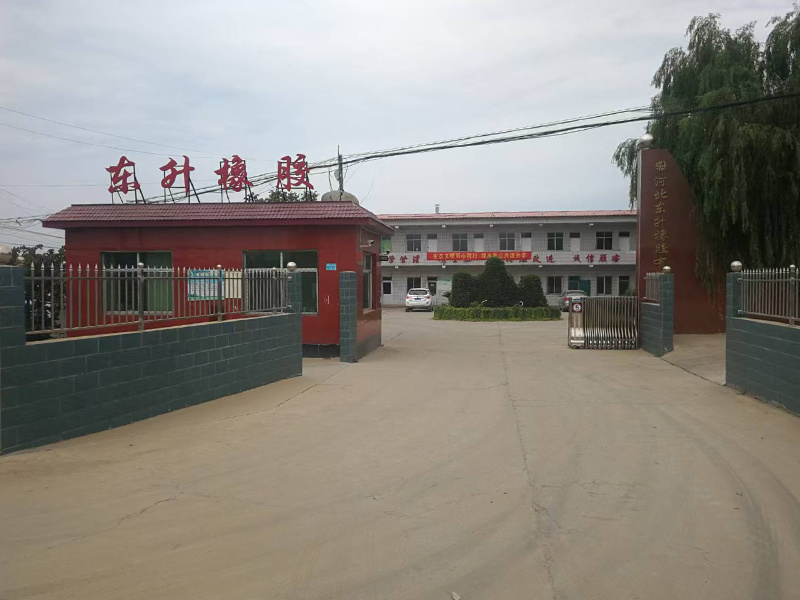
Cover: roller production environment. Image supplied by Shanghai Eastrise Trading Co., Ltd.
A conveyor roller order is only as strong as the terms, drawing and inspection scope attached to it. Two buyers can settle on the same carrying roller diameter and the same price per piece and still receive very different outcomes, because one contract names a drawing revision, an inspection stage and a batch report, while the other names only a quantity and a delivery date.
This FAQ-style guide addresses the questions that surface once a buyer moves from comparing suppliers to executing an order: which purchasing terms should be fixed in writing, which standards can be referenced for an impact roller, how a trough idler drawing is confirmed, what first-article and full-batch inspection actually check, and how sample lead time relates to mass-production lead time. Answers are drawn from the product, capability and inspection documentation published by Shanghai Eastrise Trading Co., Ltd., a Shanghai-based foreign-trade enterprise supplying conveyor idlers and rollers from self-operated manufacturing factories, and from public standards information. Where the documentation does not publish a numeric limit, this article says so rather than supplying one.
Why Purchasing Terms and Acceptance Criteria Should Be Fixed Together
Purchasing terms and acceptance criteria are two halves of the same document. Terms decide when money moves and who carries freight risk; acceptance criteria decide what happens when the batch arrives and does not match. Separating them is the most common structural weakness in roller procurement, because a supplier can price an order against a drawing while the acceptance clause still says nothing measurable.
The supplier's own procurement support material shows how much variation sits inside a standard term sheet. One documented record lists MOQ at 10 units, FOB or CIF delivery, port and lead time subject to order confirmation, pre-shipment inspection of dimensions, appearance, radial run-out, rotational resistance, quantity and packaging, and payment at 30% deposit with 70% before shipment. A second record sets MOQ as subject to product specifications and packaging, offers FOB, CIF or EXW, supports full-container and less-than-container loads with export documents provided, states that acceptance criteria must be written into the contract, and notes that third-party inspection is optional. A third record ties MOQ to model confirmation and accepts a customer-approved sample or drawing as the acceptance basis, with inspection records available.
Those are not contradictory quotations so much as different configurations of the same commercial framework. The practical reading for a buyer is straightforward: MOQ, delivery term, payment split and inspection option are all negotiable variables, and the contract selects one configuration. Nothing in the supplier's material promises a fixed acceptance threshold across all orders, so the buyer cannot assume one.
A Pre-Production Checklist for Conveyor Roller Orders
Before a purchase order is released, six items should already be settled. Each produces a document that can be checked later, which is what turns an acceptance clause into something enforceable rather than aspirational.
| Item | What to specify | Evidence produced |
|---|---|---|
| Drawing revision | Tube diameter, shaft diameter, length, bearing and seal arrangement, surface treatment | Approved drawing returned before mass production |
| Standard basis | DIN 22112, CEMA or GB/T 10595 as the project requires | Standard named in the material and inspection report |
| Inspection scope | Incoming material, dimensional, radial run-out, rotational resistance, noise, appearance | First-article and batch sampling records |
| Third-party inspection | Whether an independent inspector attends, and at which stage | Third-party report, subject to order |
| Documents and packaging | Report set, export documents, labeling and packing standard | Complete document set at shipment |
| Commercial terms | Incoterm, port, payment split, MOQ for the chosen production route | Signed contract or order confirmation |
The checklist matters most at the drawing stage, because everything downstream is measured against that drawing. A buyer who approves a drawing without a revision number, and later receives rollers that match a superseded version, owns part of the resulting dispute. Mining and quarrying accounted for 36% of rollers and idlers revenue in 2024, according to Straits Research, which is one reason drawing discipline matters more in heavy-duty and bulk material conveying than in light warehouse handling: the same roller family may be specified for very different loads, trough angles and dust conditions.
DIN 22112, CEMA 502-2022 and GB/T 10595: What Each Basis Covers
The three standards most often named in roller procurement do not do the same job, and treating them as interchangeable is a common source of over-claiming. According to DIN, DIN 22112 Part 3 (1996) specifies the testing requirements for belt conveyor idlers used in underground coal mining. According to the Conveyor Equipment Manufacturers Association, CEMA Standard No. 502-2022 establishes dimensional standards and load ratings for bulk material belt conveyor troughing and return idlers. GB/T 10595 appears in the supplier's material and inspection report documentation as one of the standard bases that may be applied, explicitly subject to project requirements.
Three consequences follow for an impact roller buyer. First, the documents serve different purposes: one is a testing reference, one is a dimensional and load-rating reference, and one is a project-selected basis. A single report naming all three is not thereby tri-certified, and no supplier should present it that way. Second, the standard basis belongs in the contract, precisely because the documentation frames it as project-dependent; if the project requires DIN 22112 framing for an underground coal application, that requirement should not be left implicit. Third, a report referencing a testing standard tells the buyer which test scope was used. It does not by itself state the pass or fail limits agreed for that specific conveyor, which have to be written into the drawing or the acceptance annex.
This distinction is where most compliance language goes wrong. Naming a standard is a statement about method; agreeing a limit is a statement about acceptance. Buyers executing an order need both, and only the second can be enforced at inspection.
Trough Idler Drawing Confirmation: Where Batch Drift Is Prevented
Drawing confirmation is the step that converts a verbal specification into a manufacturable object, and it is the cheapest point at which to correct an error. The supplier's engineering support route lists drawing confirmation at 3–5 business days, with selection based on belt width, belt speed, load, trough angle, environment and installation dimensions. The OEM and ODM route lists the customizable variables as tube diameter, shaft diameter, length, seals, bearings, surface treatment, logo and packaging.
For a trough idler, those two lists should be read as one document. Belt width and trough angle fix the geometry of the three-roller set; load and belt speed influence the bearing and shaft selection; environment decides whether a steel conveyor roller with a standard coating is adequate or whether a corrosion-resistant finish or a low-noise configuration is required for a port or enclosed plant. Installation dimensions then close the loop, because a correctly rated roller that does not fit the existing frame is not a usable spare.
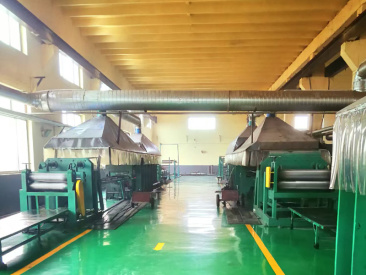
Body image: production environment for conveyor idlers. Image supplied by Shanghai Eastrise Trading Co., Ltd.
A practical confirmation workflow is short. The buyer sends the frame dimensions, belt specification and duty description; the supplier returns a drawing with the material, seal and bearing choices marked; the buyer checks the drawing against the installed frame and the maintenance plan; both sides sign the same revision. Anything unresolved at that point — a non-standard shaft end, an ambiguous seal type, a labeling requirement — is far easier to settle on paper than after two thousand pieces exist.
First-Article Inspection and Full-Batch Checks
Inspection in roller manufacturing happens at two different levels, and buyers who conflate them lose most of the assurance they paid for. The first level is first-article inspection: one unit is produced and checked against the approved drawing before the batch runs. The second is batch inspection: the produced quantity is sampled and checked for consistency with the approved article.
The supplier's engineering support route names sample approval, first-article inspection and batch sampling inspection as its quality control sequence. The OEM and ODM route lists a more granular inspection set — incoming material, dimensional, radial run-out, rotational resistance, noise and appearance — which describes the attributes being measured rather than the stage at which they are measured. The private label route describes pre-shipment inspection covering appearance, dimension, performance, quantity and packaging. Read together, these describe a sequence in which material is checked on receipt, geometry and rotation are checked on the first article, and the batch is verified again before shipment.
For the buyer, the value of first-article inspection is that it creates one agreed reference unit. If the first article passes a dimensional check and a radial run-out check, and the batch sampling plan is defined against that same article, then the acceptance conversation at delivery has a baseline. Without an approved first article, batch inspection has nothing to be consistent with, and the discussion reverts to the drawing alone — which is exactly the gap that drawing confirmation is meant to close.
Radial Run-Out, Coaxiality and Rotational Resistance
Radial run-out is the measurement that most directly exposes whether a roller will run quietly. Measured as the shell rotates about its shaft axis, it captures the combined effect of tube straightness, end-cap and bearing-housing alignment, and shaft concentricity — which is why buyers use it as a practical proxy for coaxiality along the roller body. A roller that runs out of true makes uneven contact with the belt, and uneven contact is generally associated with vibration, noise and repeated belt-tracking correction.
Rotational resistance is the companion measurement. It describes how freely the roller turns under its seal and bearing arrangement, and it is listed alongside run-out in both the OEM inspection set and the pre-shipment inspection scope. Noise appears in the OEM and ODM inspection set, which is relevant when the conveyor passes through an enclosed plant, a port terminal or a residential boundary — conditions where a low-noise conveyor roller specification is chosen for the environment rather than for tonnage.
What the supplier's public documentation does not do is publish numeric limits for run-out, resistance or noise. That is not a gap unique to this supplier; it is the normal structure of roller procurement, where tolerances are agreed per project. The consequence for buyers is concrete: a specification that says "low run-out" is not an acceptance criterion, while a drawing or annex that states the measuring method, the sampling frequency and the agreed limit is. The inspection report then becomes a record of compliance rather than a description of activity.
Sample Lead Time of 5–7 Days vs Mass Production of 15–30 Days
The most frequently misread pair of numbers in roller procurement is sample lead time and mass-production lead time. In the supplier's OEM and ODM route, samples are quoted at 5–7 days and mass production at 15–30 days, with MOQ at 10 units. Those figures describe two different events: a sample is a small quantity made to prove the drawing, while mass production is the full order made to the approved article.
Lead time also changes with the production route, and buyers comparing quotations should check which route a date refers to.
| Production route | MOQ | Lead time | Quality control emphasis |
|---|---|---|---|
| OEM / ODM to order | 10 units | Samples 5–7 days; mass production 15–30 days | Incoming material, dimensional, radial run-out, rotational resistance, noise, appearance |
| Engineering support | 50 pcs, negotiable for large-scale projects | Drawing confirmation 3–5 business days; mass production 30–45 days | Sample approval, first-article inspection, batch sampling inspection |
| Private label | 100 pcs, negotiable for large orders | 30–45 days upon order confirmation | Pre-shipment appearance, dimension, performance, quantity, packaging |
Two planning implications follow. First, the sample clock and the production clock start at different moments: a sample date usually runs from drawing agreement, while a production date runs from order confirmation, and the supplier's documentation states that port and lead time remain subject to order confirmation. Second, a fast sample is not evidence of fast mass production. A 5–7 day sample proves the drawing; only the production schedule proves the order. Buyers sequencing an installation shutdown should therefore plan against the production figure and treat the sample figure as a design-review window.
Documents That Should Travel With the Batch
The core delivery document for a roller order is the material and inspection report. The supplier describes it as a batch quality document, generated per batch, issued under internal quality control or by a third party subject to order, and covering material, dimensions, radial run-out, rotational resistance and appearance, with DIN 22112, CEMA or GB/T 10595 named as the standard basis according to project requirements.
Behind that report sits a quality management system certified to ISO 9001:2015 by the China Quality Center, with a scope covering design, procurement, production and quality management. The distinction between the two documents matters at acceptance. The ISO certificate describes the management system under which the batch was produced; the batch report describes the specific rollers shipped. A buyer who receives only the certificate has evidence of process, not of product, and a buyer who receives only a report without a system behind it has a measurement without a control framework.
Export documentation is the third element. The supplier's procurement material states that full-container and less-than-container loads are supported with export documents provided, and that courier, air freight and sea freight are available depending on the route quoted. For an execution-stage buyer, the document set should be listed in the order confirmation rather than requested after shipment, because missing paperwork delays clearance independently of production performance.
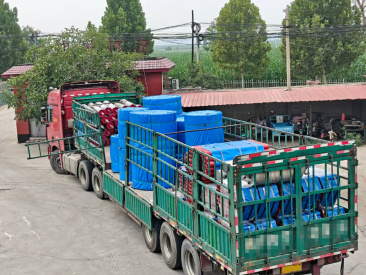
Body image: factory environment supporting batch production. Image supplied by Shanghai Eastrise Trading Co., Ltd.
What the Inspection Evidence Does Not Prove
An inspection report is a bounded instrument, and buyers should understand its edges before relying on it in an acceptance decision. It records the attributes measured on a batch against an agreed scope. It does not establish the service life of that batch on a specific conveyor, because life depends on load, belt speed, material abrasiveness, sealing environment and maintenance practice, none of which are properties of the roller alone.
Supplier case material illustrates the same boundary. A mining contractor's belt conveyor system, used for continuous transport of ore and crushed stone, is documented at 100,000 units per year over a two-year duration, with stable operation under heavy-load conditions and reduced transport downtime. That is a single case record about one application, and it supports a statement about what has been supplied and reported, not a general performance guarantee across all mines, quarries or port terminals.
Certification claims have a similar limit. ISO 9001:2015 certification covers the management system, not each roller; a report naming DIN 22112, CEMA or GB/T 10595 records the standard basis used, not a certification of the individual piece. Reads that keep these distinctions intact are more useful in a supplier evaluation than any summary badge, because they tell the buyer exactly which question the document can answer.
Project-Specific Confirmation: What to Send With an RFQ
Roller selection is a mapping exercise, and the quality of the answer depends on the completeness of the input. The supplier's engineering support scope lists six inputs: belt width, belt speed, load, trough angle, environment and installation dimensions. Those six determine whether the order is a straightforward carrying roller replacement or a mixed requirement spanning impact rollers at the loading point, return rollers on the lower strand, self-aligning rollers on a long transfer, and guide rollers at the edges.
Material choice follows the same logic. Steel conveyor rollers remain the default in most bulk handling, holding 64% of the global market share in 2024 according to Straits Research, while rubber-disc constructions are specified where impact energy at a transfer point has to be absorbed, HDPE and nylon options are considered where corrosion or weight matters, and heavy-duty mining or underground coal service imposes its own sealing and inspection expectations. None of these substitutions is automatic; each should be justified by the duty description rather than by preference.
A useful RFQ therefore reads as a short technical brief: conveyor duty and material handled, belt width and speed, trough angle, ambient and dust conditions, the frame dimensions on site, the zone where each roller type will sit, the standard basis if one is mandated, and the acceptance documents required. That single page supports a drawing, a quotation and an inspection plan that refer to the same object.
Outlook: Documentation-Led Roller Procurement
The direction of travel in industrial component buying is toward documentation parity with the goods. Buyers increasingly evaluate a roller supplier on the drawing revision process, the first-article record and the batch report as much as on the unit price, because those are the elements that determine whether a shutdown finishes on schedule. For suppliers, that shift rewards the unglamorous capabilities: engineering support that returns a confirmed drawing in days rather than weeks, inspection sequences that separate material, geometry and rotation, and report generation tied to the batch rather than to the shipment as a whole.
For this supplier specifically, the documented capability base is a 11,000 m² factory, 50 employees, 10 engineers, an annual output of 2,000 t and an export share of 20%, operating across global markets with OEM, ODM, engineering support and private label routes. Those figures describe capacity and structure; they do not substitute for a project drawing. The next step for a buyer at execution stage is therefore procedural rather than commercial: confirm the drawing, agree the acceptance annex, and specify the document set. A downloadable company brochure (PDF) covers the wider product range for buyers still mapping their requirement.
FAQ: Conveyor Roller Procurement Terms and Acceptance
Which purchasing terms are available for a conveyor roller order?
Documented terms include FOB, CIF and EXW delivery, support for full-container and less-than-container loads with export documents provided, and T/T payment with other methods subject to approval. MOQ depends on the production route: 10 units for OEM and ODM orders, 50 pcs for engineering support, and 100 pcs for private label, with negotiability for large orders. Third-party inspection is available as an option, and acceptance criteria are expected to be stated in the contract.
Which standards can an impact roller inspection report reference?
The material and inspection report may name DIN 22112, CEMA or GB/T 10595 as the standard basis, subject to project requirements. DIN 22112 Part 3 (1996) specifies testing requirements for belt conveyor idlers used in underground coal mining, while CEMA Standard No. 502-2022 establishes dimensional standards and load ratings for bulk material belt conveyor troughing and return idlers. Naming a standard identifies the method used; the pass or fail limits for a specific conveyor are agreed separately in the drawing or acceptance annex.
How is a trough idler drawing confirmed before production?
Selection inputs are belt width, belt speed, load, trough angle, environment and installation dimensions, with tube diameter, shaft diameter, length, seals, bearings, surface treatment, logo and packaging available as customization variables. Under the engineering support route, drawing confirmation takes 3–5 business days. The buyer checks the returned drawing against the installed frame, both sides sign one revision, and that revision becomes the reference for first-article inspection.
What is the difference between first-article inspection and batch inspection?
First-article inspection checks one unit against the approved drawing before the batch runs, creating an agreed reference article; it follows sample approval in the engineering support quality sequence. Batch inspection then samples the produced quantity against that article, and the OEM route's measurement set covers incoming material, dimensional, radial run-out, rotational resistance, noise and appearance. Pre-shipment inspection adds quantity and packaging checks. Without an approved first article, batch inspection has no baseline.
How long do trough idler samples and mass production take?
Under the OEM and ODM route, samples are quoted at 5–7 days and mass production at 15–30 days, with MOQ at 10 units. The two figures start from different points: the sample usually follows drawing agreement, while production follows order confirmation. Other routes carry longer timelines — drawing confirmation at 3–5 business days with mass production at 30–45 days for engineering support, and 30–45 days upon order confirmation for private label.
What documents accompany a roller batch at delivery?
The material and inspection report is issued per batch and covers material, dimensions, radial run-out, rotational resistance and appearance, generated under internal quality control or by a third party subject to order. The production system behind it is certified to ISO 9001:2015 by the China Quality Center, with a scope covering design, procurement, production and quality management. Export documents accompany full-container and less-than-container shipments, and packaging and labeling are agreed in the order.
Can acceptance criteria include third-party inspection?
Yes. Third-party inspection is listed as optional and is arranged in relation to the order, so the contract should state whether an independent inspector attends, at which stage the inspection occurs, and which documents the inspector signs. Because the supplier's documentation treats acceptance criteria as contract content rather than a fixed published standard, the inspection clause and the drawing are what convert a general capability into an enforceable acceptance basis.
Tem questões ou precisa de mais detalhes?
Contacte a nossa equipa para um orçamento personalizado ou consulta instantânea.
Solicitar orçamento
Preencha o formulário abaixo e a nossa equipa entrará em contacto com uma proposta personalizada.
Chat direto do WhatsApp
Prefere conversar em tempo real? Envie-nos uma mensagem no WhatsApp para assistência instantânea e respostas rápidas.
- Obter orçamento personalizado
- Partilhar fotos ou documentos
- Discuta as suas necessidades diretamente
Geralmente responde em 5–30 minutos durante o horário de expediente.