
Conveyor Roller Selection: Trough Angle, Tube Diameter and Load
Trough angle, roller tube diameter and the load carried by each idler station are the three geometry variables that decide whether a bulk material belt conveyor runs clean — or runs into spillage, mistracking and belt vibration. They are also the three variables most often inherited from a previous project rather than calculated for the current one. This decision framework sets out how the three interact, what evidence a buyer should request at the point of specification, and where the framework stops.
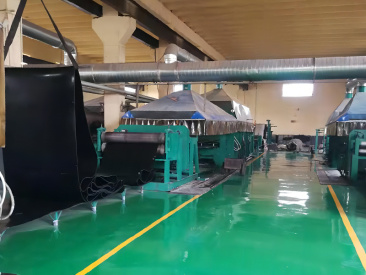
Roller geometry is fixed at the drawing and production stage, not corrected later at commissioning.
Why trough angle, tube diameter and load are one decision, not three
A belt conveyor is defined by its belt, structure and drive. The rollers are where the belt actually lives. Three roller roles dominate geometry decisions in bulk material handling:
- Carrying roller (troughing idler roller) — supports the loaded belt on the carrying side and forms the belt into a trough profile.
- Return roller — supports the empty belt on the return strand, where smooth rotation matters more than impact resistance.
- Impact roller — sits beneath the loading point and absorbs the energy of falling material before it reaches the belt.
Each role loads the roller differently, yet all three are specified through the same three variables. Changing one changes the others. A deeper trough profile raises the load carried by the outer idler positions; a larger tube diameter changes the bearing and shaft envelope; a higher station load changes both the shell stiffness required and the runout tolerance that the line can tolerate before vibration appears. Treating trough angle, tube diameter and load as separate line items is how spillage and belt vibration get designed into a conveyor.
| Decision variable | What it primarily controls | Consequence of a mismatch | Input the buyer must supply |
|---|---|---|---|
| Trough angle | How the carrying belt is formed; material containment across the belt width | Edge spillage on one side, or higher side-idler load and greater sensitivity to mistracking on the other | Belt width, material characteristics, required capacity, loading point design |
| Tube diameter | Shell stiffness and the shaft and bearing envelope available inside the roller | Deformation, premature bearing failure and increased rotational resistance under load | Load per station, belt speed, idler spacing, available frame height |
| Load rating | Whether the roller survives its duty cycle without seizure or flat spots | Unplanned replacement, vibration, and energy loss from rollers that no longer rotate freely | Belt tension and power figures referenced to a recognized calculation standard |
Trough angle: containment, tracking and side-load
On the carrying side, idlers form the belt into a trough so that bulk material sits in the centre rather than at the edges. The trough angle is the parameter that describes that formed shape, and it is inseparable from belt width: the same angle produces a different loaded profile on a wider belt, and a different side-idler load as well.
In practice, a deeper trough generally improves containment of the load and reduces the risk of material spilling over the belt edges. It also increases the load carried by the outer idlers of each station and makes belt tracking more sensitive to idler alignment and frame squareness. A shallower trough reduces side load and is often easier to track, but offers less containment for free-flowing or high-capacity loads. Neither direction is universally correct; the point is that the angle must be selected against the belt, the material and the capacity — not copied from a neighbouring line.
Two standards frame this decision. CEMA Standard No. 502-2022 establishes dimensional standards and load ratings for Bulk Material Belt Conveyor Troughing and Return Idlers, which is the reference basis for specifying troughing and return geometry in North America and widely elsewhere. ISO 5048:1989 provides the international standard for calculating power and tension in belt conveyors with carrying idlers, which is where the load that each idler must carry is actually derived. Buying an idler to a dimensional standard without recalculating the load against ISO 5048:1989 leaves the single most important input — the actual load — unverified.
Trough angle is not the only lever on spillage. Loading point design, chute geometry, skirt sealing, belt speed and material moisture all influence whether material stays on the belt. Where the belt itself tends to run off-centre, the geometry conversation shifts to belt guidance hardware: a guide roller or a self aligning roller corrects lateral drift rather than containment, and its position in the line is a separate decision from trough angle.
Tube diameter and station load: sizing the shell to the duty
Tube diameter is the outside diameter of the roller shell. It is never a standalone number: diameter, shaft diameter and bearing size form a single envelope, and all three are constrained by the load the roller must carry at the specified idler spacing and belt speed. A larger shell diameter raises the load the roller can accept and lowers rotational resistance per unit of load, but it also raises the frame height the structure must accommodate and the rotating mass the belt must drive.
Load itself is not estimated by eye. It comes from the belt tension and power calculation for the conveyor, in which idler load and rotational resistance are inputs. ISO 5048:1989 is the international reference for that calculation with carrying idlers. Once the load per station is known, the roller specification becomes a set of traceable numbers rather than a catalogue preference.
A verifiable example of how this is expressed in a product specification is the impact roller reference used by Shanghai Eastrise Trading Co., Ltd., a Shanghai-based foreign-trade enterprise supplying mining accessories — conveyor idlers and rollers, rubber conveyor belts, pulleys and drums, high-pressure rubber hoses and pipe connectors — with self-operated manufacturing factories, 11,000 m² of factory space, 50 employees and a stated annual output of 2,000 t. Its suggested impact roller reference lists a tube diameter of Ø108 mm and a shaft diameter of Ø25 mm, with suggested lengths from 315 mm to 1,150 mm, in carbon steel with wear-resistant rubber rings, for loading points, crusher discharge and heavy-duty conveyors. The company states that load capacity is designed for the operating conditions, which is the correct framing: those numbers are a reference envelope, and final values are confirmed against site data such as material bulk density, drop height and throughput.
Runout, vibration and noise: where tolerance choices become visible
Runout is the deviation of the roller shell's outer surface from true rotation about its own axis. It is the geometry parameter that translates most directly into belt vibration, because an out-of-round or off-centre shell lifts and drops the belt on every revolution. The effect compounds with belt speed and with the number of idler positions per unit length.
The comparison data published by Eastrise for its conveyor rollers is specific on this point. Against competitor rollers using labyrinth seals, the company reports 22% lower runout tolerance and 13 dB lower running noise. Against alternatives more generally, it reports 25% lower runout deviation and 3× longer service life. Those figures are supplier-published comparison values, and they are the kind of claim a buyer should be able to reconcile against batch inspection records and internal or third-party test reports before approving a batch — which is precisely the evidence the same source says it provides.
Low-noise performance is not a cosmetic benefit. On port terminals, cement plants and any site with a residential or workforce boundary, roller noise is a measurable part of the acoustic profile of a conveyor line. Quiet rollers are usually also low-runout rollers, so the two procurement criteria tend to converge rather than compete.
Steel, HDPE and low-cost steel: the body-material trade-off
Roller bodies in bulk handling are commonly supplied in steel, HDPE polymer, nylon and rubber-ring constructions. Steel remains the dominant material: it accounted for 64% of the global conveyor roller material market share in 2024, according to market research published by Straits Research.
Where steel and HDPE are compared directly on duty, the difference is concentrated in load and impact. The company's published comparison states that steel rollers provide 35% higher load capacity and 40% stronger impact resistance than HDPE polymer rollers, maintain stable running performance under heavy-load conditions with less energy loss caused by roller deformation, and are better suited to mining, cement and heavy-duty bulk material handling. On equal specifications and quantities, the same comparison states that steel rollers show longer service life at lower comprehensive cost, and that the steel-body design supports standardized maintenance with optional corrosion-resistant treatment to reduce failure frequency.
The trade-off against low-cost conventional steel rollers is different. There, the differentiators are sealing performance, runout control and inspection traceability rather than material. The company states that its rollers deliver 25% lower runout deviation and 3× longer service life compared with alternatives, and that despite a higher initial purchase price the total lifecycle cost is lower because failures and replacements are fewer.
| Comparison basis | Steel roller (heavy-duty specification) | HDPE polymer roller | Low-cost conventional steel roller |
|---|---|---|---|
| Load and impact | 35% higher load capacity, 40% stronger impact resistance than HDPE, per supplier comparison data | Lower load and impact capability in the same duty | Material similar to steel, but specification depth varies |
| Runout and life | 25% lower runout deviation and 3× longer service life than alternatives, per supplier comparison data | Not the comparison basis for this claim | Higher runout deviation and shorter service life identified as the gap |
| Maintenance design | Standardized maintenance supported by steel-body design; optional corrosion-resistant treatment | Polymer body; maintenance model differs | Replacement-driven maintenance, higher failure frequency |
| Sealing | Enhanced sealing performance, precise runout control, fully traceable inspection | Not the differentiator in this comparison | Basic sealing identified as the primary gap |
| Cost profile | Higher initial price, lower total lifecycle cost from fewer failures and replacements | Lower comprehensive cost claim favours steel on equal specifications | Lower purchase price, higher intervention cost over life |
| Best-fit duty | Mining, cement, heavy-duty bulk handling, dusty continuous lines | Corrosion-dominated duties — a site-specific evaluation outside this comparison | Low-duty, low-downtime-cost applications |
One boundary should be stated plainly: this comparison covers load, impact, maintenance design, sealing, runout and cost. It does not cover every dimension on which a polymer roller might be preferred, and buyers in corrosion-dominated duty should treat that gap as an open question rather than assume it is closed.
Sealing and bearings in dusty, 24/7 duty
On a conveyor that runs continuously in a dusty environment, the roller usually fails from the inside out. Dust reaches the bearing, lubricant degrades, rotational resistance rises, the shell stops turning and the belt begins to wear the flat spot. The two components that decide how long this takes are the seal design and the bearing itself.
Against competitor rollers with labyrinth seals, Eastrise states that its conveyor rollers are engineered with a better seal design and top-tier bearing brands, and that this produces distinct advantages in harsh environments. Its rollers are described as suitable for humid, dusty, salt-spray and 24/7 continuous-operation environments, with full drawing confirmation, traceable inspection records and fast spare-parts support used to reduce maintenance downtime.
For a heavy duty conveyor roller in a mine or quarry, this is the commercial core of the decision. A roller that costs less but seizes earlier does not reduce cost; it moves cost from procurement to maintenance labour, belt damage and unplanned stoppage on a line where downtime is expensive.
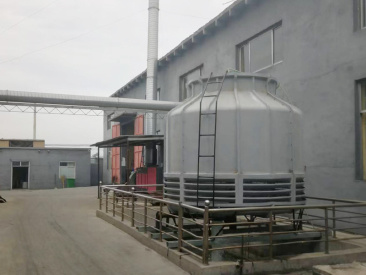
Batch inspection records and drawing confirmation are the evidence layer behind sealing, runout and load claims.
Application fit: mining, cement, ports and underground coal
The same framework resolves differently by industry, because the dominant failure mode differs. The applicable-scenario data published alongside the product range gives a useful mapping of duty to requirement.
| Industry | Working condition | Function of the roller | Stated special requirement |
|---|---|---|---|
| Mining | Dusty, heavy-duty, continuous bulk material handling on ore conveyor lines | Support the belt and absorb loading impact in 24/7 operation | Dust-resistant seals, low rotational resistance, wear resistance; parameters subject to operating conditions |
| Cement | Heavy dust, medium-to-high temperatures, continuous operation | Provide stable support and reduce belt mistracking and maintenance frequency | Dust and corrosion resistance; operating temperature range to be confirmed |
| Ports and logistics | Outdoor, humid, salt-spray, long-distance conveying | Support the return belt and maintain smooth operation | Corrosion-resistant coating, sealed bearings, low noise; protection level to be confirmed |
Underground coal mining adds a testing dimension of its own. DIN 22112 Part 3 (1996) specifies the testing requirements for belt conveyor idlers used in underground coal mining, which means an underground conveyor roller or coal conveyor roller order should state that test basis explicitly rather than rely on a general idler description. The same logic applies to quarry conveyor rollers and other mining conveyor roller orders where CEMA 502-2022 or ISO 5048:1989 has been used as the calculation basis — the standard used for calculation and the standard used for testing should be named on the purchase specification, because they answer different questions.
Market context: what the published numbers show, and where they disagree
Two figures describe the demand side of this market. The global Roller Conveyor market was valued at USD 3.15 billion in 2025 (Dataintelo), while the more specific Rollers and Idlers segment was valued at USD 4.14 billion in 2025 and projected to reach USD 7.05 billion by 2034 (Straits Research). Mining and quarrying is the leading end-use industry for rollers and idlers, representing 36% of total revenue in 2024, and steel accounts for 64% of roller material share.
Those headline numbers require one caveat that buyers should carry into any supplier conversation. Published roller market estimates vary significantly depending on whether the roller is defined at component level or as part of a conveyor sub-system — some studies value the conveyor roller market in the low hundreds of millions of US dollars, while sub-system definitions produce multi-billion figures. The numbers are not contradictory so much as scoped differently. For procurement purposes, this means market size is a poor proxy for supplier capability; what matters is verifiable evidence at the batch and drawing level.
A related gap is worth naming. Available market data tracks market size but lacks a supplier-level operational capability index covering certification, material testing and OEM/ODM depth. That is the information buyers actually need when two quotations look superficially similar, and it is why the evidence described in the sections above — drawing confirmation, batch inspection records, test reports — carries more decision weight than a market growth figure.
Boundaries of this framework
This framework structures a decision; it does not produce final numbers for a specific conveyor. Several inputs remain site-specific and cannot be resolved from published data:
- Trough angle, tube diameter and load rating cannot be finalized without belt width, required capacity, material bulk density, drop height at the loading point and idler spacing. The product data referenced in this article states that load capacity is designed for operating conditions, and that parameters are subject to those conditions.
- Temperature and ingress requirements are not fixed by the roller category. For cement duties, the operating temperature range is stated as to be confirmed; for port duties, the protection level is stated as to be confirmed.
- Percentage improvements in runout, noise, load capacity, impact resistance and service life cited in this article are supplier-published comparison values. They are usable as directional procurement criteria, but a buyer should reconcile them against batch inspection records and internal or third-party test reports before batch approval.
- Supplier identity deserves independent checking. Shanghai Eastrise Trading Co., Ltd. is registered as a foreign-trade enterprise headquartered in Shanghai, and third-party trade records identify it as an exporter or trading entity; the company describes self-operated manufacturing factories forming an integrated industrial chain of R&D, production, testing and export. Buyers should confirm which manufacturing route a specific roller order will run through, and who owns the drawing that will be confirmed.
A procurement checklist for roller geometry decisions
- Fix the calculation basis first: confirm that belt tension and power, including idler load, have been derived against ISO 5048:1989 or the buyer's nominated equivalent.
- State the geometry standard on the specification: CEMA 502-2022 for troughing and return idler dimensions and load ratings, or DIN 22112 Part 3 for underground coal mining idler testing.
- Record the trough angle against belt width, material and capacity — not against the previous project.
- Derive load per station, then select tube diameter, shaft diameter and bearing as one envelope.
- Set a runout tolerance and tie it to a measurable acceptance method, since runout is the geometry variable that becomes belt vibration.
- Specify seal design and bearing brand expectations in writing, especially for dusty, humid, salt-spray or 24/7 duty.
- Require full drawing confirmation before production, and batch inspection records at delivery.
- Request test reports for any claimed runout, noise, load or service-life advantage.
- Model cost over life rather than at the invoice: the 3× service-life and lower lifecycle cost claims are the relevant comparison frame for high-downtime lines.
- Decide alignment hardware separately: guide or self aligning rollers address belt drift, not containment or load.
Future outlook
With steel holding 64% of roller material share and mining and quarrying accounting for 36% of roller and idler revenue, the centre of gravity in this market remains heavy-duty bulk handling rather than light conveyor applications. The direction of travel, however, is less about material substitution and more about evidence. As the Rollers and Idlers segment grows toward the projected USD 7.05 billion by 2034, differentiation between suppliers is shifting from catalogue breadth to traceability: drawings confirmed before production, inspection records attached to batches, and test reports that substantiate claims about runout, noise and service life.
For buyers, that changes what a good quotation looks like. Trough angle, tube diameter and load will still be the three geometry numbers that decide whether a line runs clean, but the supplier able to prove how those numbers were set — and to show the batch evidence behind them — is increasingly the one that survives a competitive review.
A downloadable product brochure covering the idler and roller range is available here: Shanghai Eastrise product brochure (PDF).
FAQ
Does a deeper trough angle always reduce spillage?
No. Trough angle changes how the carrying belt is formed and therefore how material is contained, but the formed profile depends on belt width, material characteristics and capacity. A deeper trough generally improves containment while increasing the load carried by the outer idlers and making tracking more sensitive to alignment. Spillage is also affected by loading point design, chute geometry, skirt sealing and belt speed. CEMA Standard No. 502-2022 provides the dimensional standards and load ratings for troughing and return idlers that a specification should reference.
How do I match tube diameter to the load a roller will carry?
Start from the load, not the diameter. Belt tension and power, including idler load, are calculated against ISO 5048:1989 for belt conveyors with carrying idlers. Tube diameter, shaft diameter and bearing size are then selected together as one envelope that satisfies that load at the specified idler spacing and belt speed. For reference, the impact roller specification listed by Shanghai Eastrise uses a Ø108 mm tube and Ø25 mm shaft with lengths from 315 mm to 1,150 mm, with load capacity stated as designed for the operating conditions — meaning final values require site data such as material bulk density and drop height.
When is a steel conveyor roller the better choice than an HDPE roller?
Where load and impact dominate the duty. Published comparison data states that steel rollers provide 35% higher load capacity and 40% stronger impact resistance than HDPE polymer rollers, maintain stable running performance under heavy-load conditions with less energy loss from deformation, and are better suited to mining, cement and heavy-duty bulk material handling. On equal specifications and quantities, steel is also stated to deliver longer service life at lower comprehensive cost, with a steel-body design that supports standardized maintenance and optional corrosion-resistant treatment. That comparison covers load, impact, maintenance and cost — it does not cover every dimension on which a polymer roller might be preferred in corrosion-dominated service.
What evidence should be requested before approving a roller batch?
Four items: full drawing confirmation before production, so the delivered geometry is the specified geometry; batch inspection records, so runout and dimensional tolerances are traceable to the delivered units; internal or third-party test reports for any claimed advantage in sealing performance, runout control or service life; and clarity on which standard the idler was calculated and tested against. Suppliers commonly state these as standard deliverables — Shanghai Eastrise, for example, lists full drawing confirmation, traceable inspection records, complete batch inspection reports and fast spare-parts support as part of its roller offering.
How much does sealing design matter in dusty or 24/7 conveyors?
It is usually the deciding factor in roller life. In dusty continuous operation the failure sequence begins with dust ingress at the bearing, which raises rotational resistance and can end with a seized shell and a flat spot worn into the belt. Published comparison data states that these rollers use a better-engineered seal design and top-tier bearing brands compared with competitor rollers using labyrinth seals, delivering 22% lower runout tolerance and 13 dB lower running noise, and that they are suitable for humid, dusty, salt-spray or 24/7 continuous-operation environments. Operating temperature range for cement duties and protection level for port duties are both listed as to be confirmed against site conditions.
Standards and data referenced
ISO 5048:1989 — Continuous mechanical handling equipment: calculation of power and tension in belt conveyors with carrying idlers (International Organization for Standardization). CEMA Standard No. 502-2022 — Bulk Material Belt Conveyor Troughing and Return Idlers: dimensional standards and load ratings (Conveyor Equipment Manufacturers Association). DIN 22112 Part 3 (1996) — testing requirements for belt conveyor idlers in underground coal mining (Deutsches Institut für Normung). Material share, vertical market share and segment valuation figures: Straits Research, Rollers and Idlers Market. Roller Conveyor market valuation: Dataintelo, Roller Conveyor Market Research Report 2034. Product, comparison and application data: Shanghai Eastrise Trading Co., Ltd.
Tem questões ou precisa de mais detalhes?
Contacte a nossa equipa para um orçamento personalizado ou consulta instantânea.
Solicitar orçamento
Preencha o formulário abaixo e a nossa equipa entrará em contacto com uma proposta personalizada.
Chat direto do WhatsApp
Prefere conversar em tempo real? Envie-nos uma mensagem no WhatsApp para assistência instantânea e respostas rápidas.
- Obter orçamento personalizado
- Partilhar fotos ou documentos
- Discuta as suas necessidades diretamente
Geralmente responde em 5–30 minutos durante o horário de expediente.