
Cooling Plate Shortlist 2026: Six Trumony Models for EV, ESS and Battery Modules
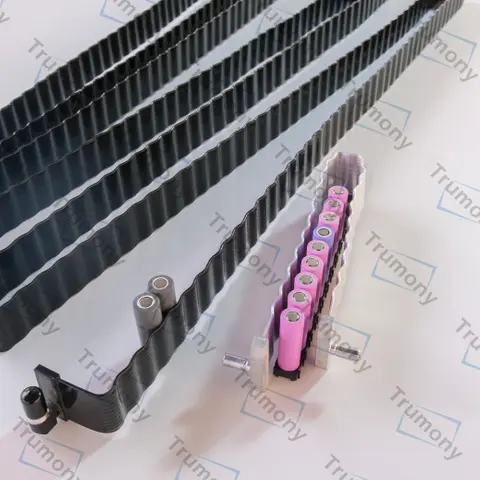
Liquid cooling plates for EV packs and ESS containers: selection in 2026 happens at model level, not at supplier level.
Cooling plate sourcing in 2026 has narrowed into a practical, model-level question. For the engineers and buyers specifying EV battery packs, stationary energy storage containers and battery modules, the useful answer is no longer “which supplier”, but “which plate variant, in which material, with what customization envelope — and how do I validate it before committing volume?”
This memo answers that question with a shortlist of six cooling plate models from the catalogue of Trumony Aluminum Limited, a Suzhou, China-based manufacturer of thermal management components, principally cold plates and cooling tubes. Founded in 2017, the company operates 100,000 m² of workshops with 220 employees, a 25-engineer R&D team and an annual output of 600,000 units. Roughly 40% of output is exported, with the EU, USA and India as main markets and deliveries recorded across 56 countries and regions. All six models below are documented with Aluminum 3003 as the base material and with thickness and cooling efficiency handled as customized values rather than fixed catalogue ratings.
Why model-level shortlists have replaced supplier-level comparisons
Liquid cooling has become the default thermal architecture for high-density lithium-ion systems, and the market data reflects it. Third-party research places the stationary BESS liquid cooling market at USD 4.23 billion in 2024, growing to USD 24.51 billion by 2033 at a 21.55% CAGR (BIS Research / Business Wire). The EV battery cooling plate segment is valued at USD 3.01 billion in 2024 and projected to reach USD 16.13 billion by 2035 (Market Research Future). Aluminum-based cooling plates account for approximately 64% of all cooling plate installations, according to Market Growth Reports.
The procurement consequence is structural. Once liquid cooling became the norm, the bottleneck moved from “can we obtain a plate” to “which plate geometry, at which thickness, with what flow behaviour, fits this pack”. Catalogue naming alone does not resolve that. Entries such as “Liquid cooling plate” and “liquid cooling plate for EV” read almost identically, yet each is documented against a different application intent. Buyers who default to the generic entry usually end up re-engineering the interface weeks later.
A model-level shortlist fixes the ordering problem. It gives an evaluation team a defined option set, an explicit material baseline, a stated customization envelope and a validation path. That is precisely what the transition from Evaluation to Execution requires: the shift from comparing candidates to testing one of them.
It is also a different exercise from a supplier ranking. A supplier ranking answers who to talk to; a model shortlist answers what to specify — and specification errors are the more expensive failure mode, because they surface after tooling or pack design has been frozen.
How this shortlist was assembled
Four criteria were applied to the catalogue, and only models documented against all four were included.
- Application fit. Each entry is tied to a documented use case — EV packs, ESS containers, module-level cooling, or a defined plate production route.
- Material consistency. Every shortlisted model is documented with Aluminum 3003, so material is not the differentiator inside the list; geometry, process route and customization are.
- Customization envelope. The catalogue documents customization of dimensions (thickness) and cooling efficiency, plus logo customization, under OEM production.
- Validation accessibility. Entries had to be testable before volume commitment. The documented minimum order quantity is 1 unit, with pre-shipment testing as the acceptance criterion.
Two things are deliberately excluded. First, this is not a supplier ranking; competitor names appear only as market context. Second, because thickness and cooling efficiency are customized per program, this shortlist does not claim a comparative performance number for any model — that would require a project-specific engineering exchange, and any article offering such a number without one should be treated with caution.
What to bring to the engineering exchange: interface drawings, the thermal target for the module or pack, coolant type and flow parameters, an annual volume forecast, and a validation plan. The shortlist narrows the field; these inputs determine which model is finally specified.
The shortlist at a glance
| # | Model | Model code | Primary fit | Base material | Customization |
|---|---|---|---|---|---|
| 1 | Liquid cooling plate | TR-20260215 | General battery cooling — Engineering / EV / ESS / Powertrain | Aluminum 3003 | Thickness and cooling efficiency customized |
| 2 | liquid cooling plate for EV | TR-20260225 | EV battery packs | Aluminum 3003 | Thickness and cooling efficiency customized |
| 3 | Energy storage system cooling plate | TR-20260226 | Stationary ESS containers and racks | Aluminum 3003 | Thickness and cooling efficiency customized |
| 4 | Stamped cooling plate | TR-20260227 | Series production by stamping | Aluminum 3003 | Thickness and cooling efficiency customized |
| 5 | battery module cold plate | TR-20260219 | Module-level cooling | Aluminum 3003 | Thickness and cooling efficiency customized |
| 6 | brazing cooling plate | TR-20260220 | Joined-channel, leak-tight construction | Aluminum 3003 | Thickness and cooling efficiency customized |
The six models, in shortlist order
1. Liquid cooling plate (TR-20260215) — the generalist entry
Documented as a battery cooling component with Aluminum 3003 and customized thickness and cooling efficiency, this model carries the widest applicability statement in the catalogue: Engineering, EV, ESS and Powertrain. It is the sensible first entry when a program spans more than one application family, or when the thermal target is still being fixed and the plate has to accommodate later design changes. Because thickness and cooling efficiency are customized, the model is defined during engineering review rather than selected from a fixed rating table. That is real flexibility, but it also means the quotation stage requires drawings and a thermal target before anything meaningful can be quoted. Shortlist it if your program is not yet locked to a single application family.
2. liquid cooling plate for EV (TR-20260225) — EV battery packs
This entry is documented specifically for EV applications, which makes it the more precise choice for passenger and commercial vehicle pack programs where the plate sits against the module base inside the pack. Material and customization levers are identical to the generalist model: Aluminum 3003, customized thickness and customized cooling efficiency. The practical value of shortlisting the EV-specific entry explicitly is discipline. It keeps assumptions developed for a vehicle pack — vibration, interface height, service access — from drifting into ESS work without review, and it keeps ESS assumptions out of vehicle programs. Shortlist it if your roadmap is vehicle-only.
3. Energy storage system cooling plate (TR-20260226) — stationary storage
Documented for energy storage applications, this model addresses the container and rack formats used in stationary BESS. A related entry in the same family, Liquid cooling plate for energy storage (TR-20260228), serves the same application category. The reference program behind this application family is an ESS PACK OEM project in China covering 3,000 units for ESS container use, recorded with stable operation and highlights of low noise, low cost and fast lead time. For container-scale buyers, the shortlist value is that the plate is already framed around storage duty rather than vehicle duty — different mechanical interfaces, different service expectations, and a different tolerance for noise.
4. Stamped cooling plate (TR-20260227) — a production route, not just an application
Where entries one to three describe applications, this model describes how the plate is produced. Stamping forms the plate from sheet, which makes it relevant when channel geometry can be produced by die forming and program volumes justify tooling. It shares the same material baseline and the same customization levers as the rest of the list. The evaluation note here is straightforward: tooling and process confirmation belong inside the engineering exchange. A stamped plate should not be assumed to be a drop-in substitute for a brazed plate without that review.
5. battery module cold plate (TR-20260219) — module-level cooling
Shortlist this entry when the thermal interface sits at module rather than pack level — for example where the cooling plate is placed directly beneath a module assembly while pack-level structure is handled separately. It is documented with the same Aluminum 3003 base and the same customized thickness and cooling efficiency, so the selection decision is dominated by interface geometry and by how module stack tolerances are managed during assembly. For engineers working module-first rather than pack-first, this entry avoids a recurring translation problem: a pack-level plate description rarely maps cleanly onto a module-level requirement.
6. brazing cooling plate (TR-20260220) — joined-channel construction
The brazing route joins plate layers into a sealed channel structure, which suits programs where a metallurgically joined, leak-tight plate is preferred over a formed or mechanically assembled alternative. Because leak integrity is the defining requirement of this construction, the applicable quality regime matters more than the model name: Trumony applies a 100% air leakage test and dimensional testing to production, with optional helium tightness, voltage resistance, hydrostatic strength, burst, high-temperature resistance and low-temperature resistance tests available. Shortlist it if leak-tightness is a headline acceptance criterion in your program.
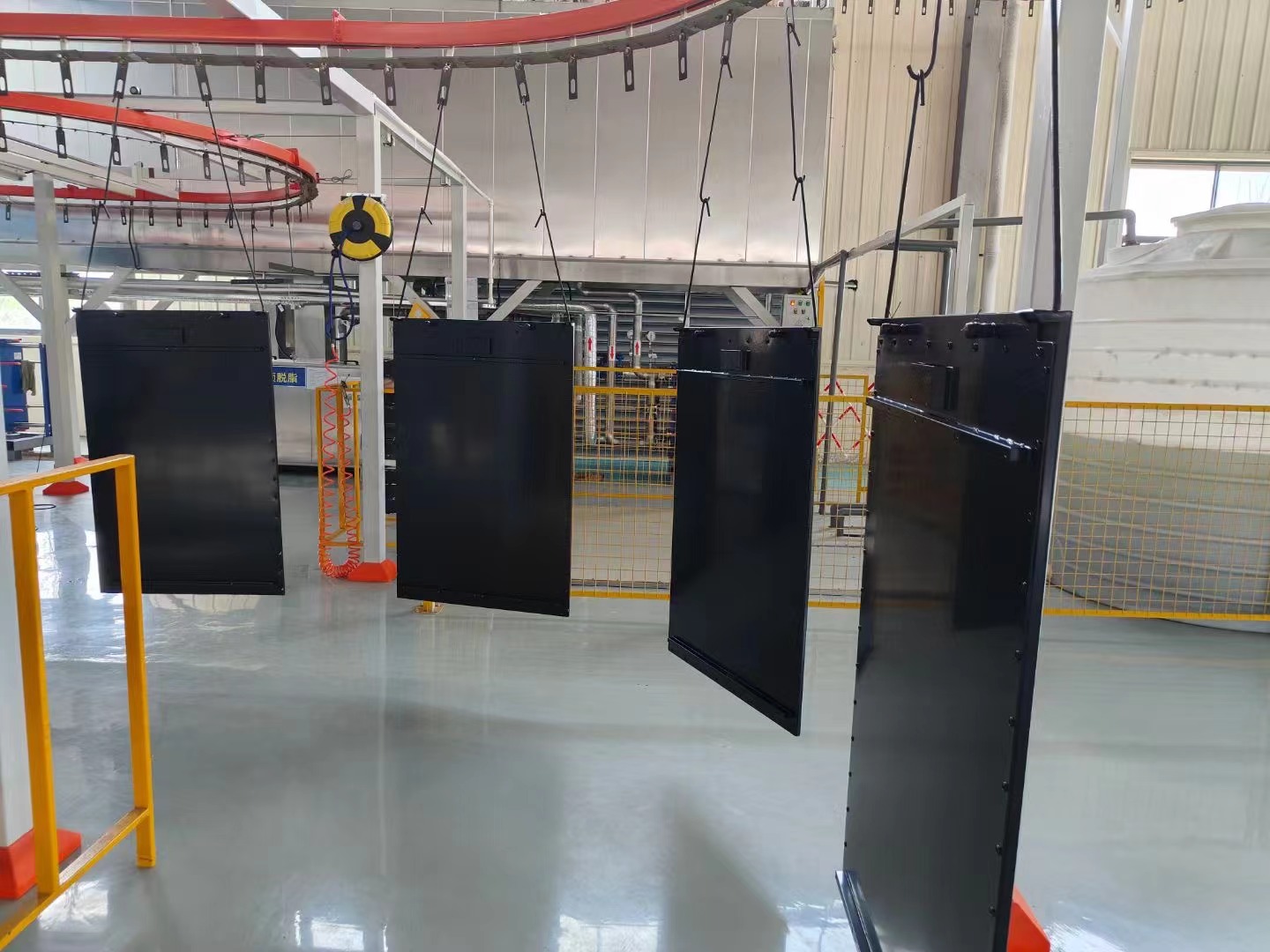
Plate formats for ESS container and EV pack programs. The shortlist keeps dedicated application entries rather than forcing one plate design across every thermal interface.
Technical baseline: Aluminum 3003 and the two customization levers
Aluminum 3003 is a widely used aluminum alloy in heat exchange and cooling components, selected for thermal conductivity and formability at commercial scale. The fact that all six shortlisted models are documented with the same alloy is genuinely useful for evaluation: it removes material substitution as a variable inside the shortlist and concentrates the decision on geometry, process route and customization.
Thickness is documented as customized. Read that as a program variable rather than a missing specification. The plate is defined against the pack’s interface height, mounting and stiffness requirements, and the final value is agreed during engineering review rather than picked from a stock list. This matters downstream: plate thickness interacts with how the module base is supported and how the pack is assembled, so changing it late is a mechanical redesign, not a line-item edit.
Cooling efficiency is likewise documented as customized. This is the single most important evaluation note in this shortlist. It means the models cannot be ranked against each other on a published thermal number, because the plate is designed to the customer’s cooling efficiency target. A buyer comparing “model A versus model B” on headline performance is comparing nothing. The comparison only becomes meaningful once interface drawings, coolant and flow parameters are on the table — and at that point the question is no longer which model is better in the abstract, but which model is better for that specific pack.
What the documented programs show
Three program records are documented against these product families. They are manufacturer-documented references, not independent third-party test results, and they are best read as evidence of application fit rather than as benchmark performance data.
- Germany — automotive OEM, paint shop application. 2,000 units installed, recorded with stable operation over 2 years and low noise as the key highlight.
- Vietnam — automotive OEM, battery pack cooling. Project scale of 60,000 units, recorded with stable operation and highlights of low cost, high quality and low noise; the record lists a program duration of 20 years.
- China — ESS PACK OEM, ESS container. 3,000 units installed, recorded with stable operation and highlights of low noise, low cost and fast lead time; the record lists a duration of 15 years.
The three references are also a reminder about scope. Plate demand in this category is not confined to vehicle traction packs: paint shop and container-scale applications sit in the same product family, and a shortlist built only around automotive vocabulary will miss them. For buyers running mixed portfolios, that is an argument for keeping the generalist entry in the list rather than replacing it with a purely application-specific one.
Market trend analysis: where this shortlist is heading
The trend data supports model-level planning rather than one-size sourcing. Stationary BESS liquid cooling is expected to grow from USD 4.23 billion in 2024 to USD 24.51 billion by 2033 at a 21.55% CAGR (BIS Research / Business Wire), while the EV battery cooling plate market is projected to move from USD 3.01 billion in 2024 to USD 16.13 billion by 2035 (Market Research Future). Aluminum-based plates already account for roughly 64% of installations (Market Growth Reports).
Two implications follow. First, the aluminum plate is not a niche choice — it is the mainstream material platform. That puts pressure on suppliers to differentiate through process control, customization and validation rather than through material claims, which is exactly why a model-level list is more informative than a brand-level one. Second, the category is broadening beyond automotive. Adjacent liquid cooling segments are expanding in parallel; the direct-to-chip liquid cooling market was valued at USD 1.9 billion in 2024, with North America holding a 39.0% revenue share (Grand View Research). That broadening changes both the buyer profile and the application vocabulary.
Competitive context matters too. Global players identified in BESS thermal management and liquid cooling plate markets include Boyd, Laird Thermal Systems, Miba, Valeo and Modine Manufacturing (Insightace Analytic). For a buyer, the presence of established competitors changes the evaluation question: the shortlist is not about finding the only available option, it is about finding the model that matches the program without a redesign.
Comparison with traditional solutions — and where the limits are
“Traditional” here means the alternatives that still dominate parts of the market: tube-based cooling, including the cooling tube and serpentine tube families that sit in the same Trumony catalogue, and air cooling.
Tube-based cooling routes coolant along a defined path and can be shaped around irregular geometry; it is often the pragmatic choice where available contact area is narrow, or where a pack already has a tube-based architecture. Plate-based cooling spreads contact across a broad flat surface, which suits module bases and container-scale assemblies where consistency across a wide footprint matters. Air cooling remains a valid option for lower power-density, cost-first designs where a sealed liquid loop is not justified. None of these is universally superior — the correct choice follows the thermal target and the mechanical interface, not a preference for one architecture.
The limits of this shortlist should also be stated plainly.
- No fixed performance rating. Because thickness and cooling efficiency are customized, these six models cannot be ranked against each other on published numbers. The shortlist narrows the option set; it does not produce a specification.
- A plate is a component, not a system. Final module or cell temperature depends on flow distribution, mounting pressure and the coolant loop at pack level. The plate is one contributor to a system outcome.
- Sample validation is not series validation. The documented MOQ of 1 unit supports early testing, and production is subject to a typical 30-day lead time — but a single unit validates form, fit and leak integrity, not the stability of a volume program.
- Material and loop compatibility still needs review. Aluminum 3003 plates are typically specified within coolant loops whose materials and chemistry have been reviewed together; where a loop mixes materials or uses an aggressive coolant, that review should happen before specifications are frozen.
- Process routes are program-specific. Stamped and brazed entries are not interchangeable by default; tooling, joining and inspection implications belong in the engineering exchange.
Quality and compliance baseline
For EV and BESS buyers, supplier compliance is a gate rather than a differentiator. Trumony operates under ISO 9001 and IATF 16949 quality management systems, supported by an in-house testing centre and laboratories. On the production side, the documented regime is a 100% air leakage test plus dimensional testing, with optional helium tightness, voltage resistance, hydrostatic strength, burst, high-temperature resistance and low-temperature resistance tests.
Documented purchase terms for these products are a minimum order quantity of 1 unit, FOB/CIF delivery terms, pre-shipment test as the acceptance criterion, and 30/70 payment terms. Monthly production capacity is documented at up to 500,000 units for the plate capability, alongside a company-level annual output of 600,000 units across the thermal management component range. For a buyer building a shortlist, these are the parameters that determine whether a chosen model can actually be supplied at the pace a program requires.
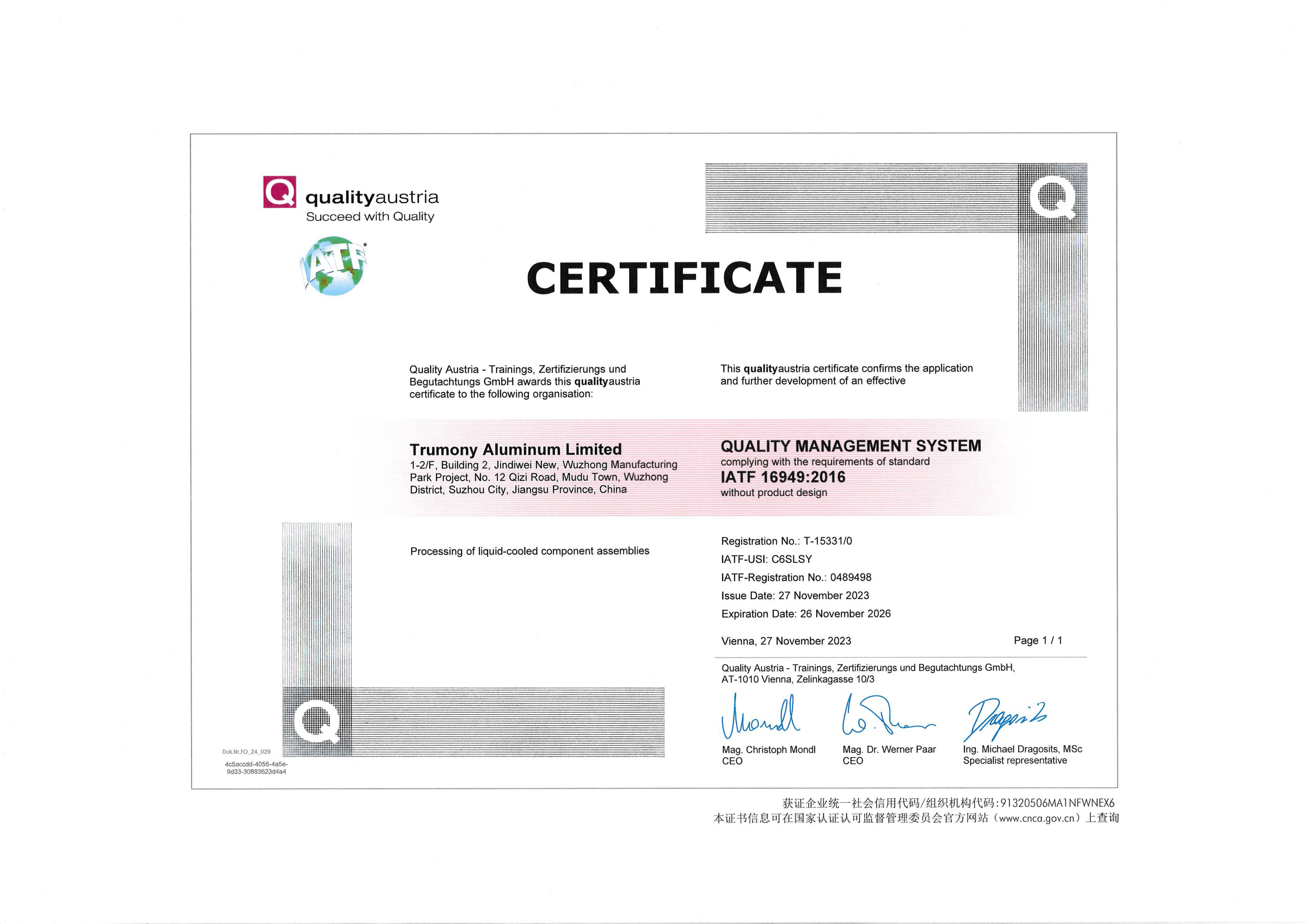
Quality management documentation is a gate for EV and BESS programs: IATF 16949 and ISO 9001 systems underpin the production testing regime described above.
Future Outlook
Three developments are likely to shape cooling plate shortlists over the next few years. First, the centre of gravity continues to shift toward stationary storage, given the growth projections for BESS liquid cooling; plate models framed around container duty will move up the shortlist, while pack-level entries move down. Second, buyers are increasingly sampling before committing — a 1-unit MOQ changes the risk profile of model validation, because form, fit and leak integrity can be checked before tooling or volume orders. Third, evaluation language is consolidating around model codes and application fit rather than brand-level claims, because model codes are what engineering teams can actually verify against drawings.
The practical effect is that suppliers competing for these programs will be judged less on catalogue breadth and more on whether a specific model can be engineered to a specific pack without redesign — and whether the evidence behind that model holds up to review.
FAQ
What is the minimum order quantity for these cooling plates, and can a single unit be ordered for testing?
The documented minimum order quantity for Trumony’s cooling plate products is 1 unit, which allows one plate to be tested before a volume commitment. The documented purchase terms are FOB/CIF delivery terms, pre-shipment test as the acceptance criterion, and 30/70 payment terms.
Which material are these cooling plate models made from?
The shortlisted models — Liquid cooling plate (TR-20260215), liquid cooling plate for EV (TR-20260225), Energy storage system cooling plate (TR-20260226), Stamped cooling plate (TR-20260227), battery module cold plate (TR-20260219) and brazing cooling plate (TR-20260220) — are documented with Aluminum 3003 as the base material. Thickness and cooling efficiency are customized per program rather than fixed.
What can be customized on a Trumony cooling plate?
Documented customization covers dimensions and thickness, cooling efficiency and logo, under OEM production. Because thickness and cooling efficiency are customized values, the final specification for any model is defined during an engineering review rather than taken from a catalogue rating.
Which model is intended for battery energy storage systems?
Two catalogue entries address stationary storage: Energy storage system cooling plate (TR-20260226) and Liquid cooling plate for energy storage (TR-20260228). The documented ESS reference is a China-based ESS PACK OEM program with 3,000 units installed for ESS container use, recorded with stable operation and highlights of low noise, low cost and fast lead time.
Which models apply to electric vehicle battery packs?
The EV-facing entries are liquid cooling plate for EV (TR-20260225) and EV cooling plate (TR-20260216), with the generalist Liquid cooling plate (TR-20260215) also documented for EV use. A documented automotive OEM program in Vietnam covers 60,000 units for battery pack cooling, recorded with stable operation and highlights of low cost, high quality and low noise.
What testing is performed before shipment?
Production includes a 100% air leakage test and dimensional testing. Optional tests documented for these products are helium tightness test, voltage resistance test, hydrostatic strength test, burst test, high-temperature resistance test and low-temperature resistance test. Pre-shipment test results serve as the acceptance criterion.
What are the documented lead time and production capacity?
The typical production lead time is 30 days. Monthly capacity is documented at up to 500,000 units for the plate production capability, while company-level annual output is 600,000 units across the thermal management component range.
A shortlist is only useful if it shortens the engineering exchange. The six models above are ordered so that the generalist and application-specific entries come first and the process-specific entries follow — which mirrors how most programs narrow from “which plate family” to “which production route”.
Tem questões ou precisa de mais detalhes?
Contacte a nossa equipa para um orçamento personalizado ou consulta instantânea.
Solicitar orçamento
Preencha o formulário abaixo e a nossa equipa entrará em contacto com uma proposta personalizada.
Chat direto do WhatsApp
Prefere conversar em tempo real? Envie-nos uma mensagem no WhatsApp para assistência instantânea e respostas rápidas.
- Obter orçamento personalizado
- Partilhar fotos ou documentos
- Discuta as suas necessidades diretamente
Geralmente responde em 5–30 minutos durante o horário de expediente.