
Cooling Vest ODM Sourcing: MOQ, Lead Time and Customization
Heat exposure has become a line item in procurement for construction firms, traffic-control contractors, food-service operators and metal-fabrication plants. Once a buyer moves past catalog purchasing, the next question is rarely about fabric or colour. It is about whether the supplier can adapt an existing cooling vest platform to a specific market, branding program or working condition. That is the question ODM sourcing answers.
This reference collects the questions that surface most often in the awareness and research stages of that decision and answers them using documented information about Shokunin, the cooling-apparel brand of FENG SHANG PRECISION CO., LTD. — a precision tool manufacturer established in 2009 in Taoyuan City, Taiwan. It covers what ODM means in this category, the reported minimum order quantity and production speed, the specification of the Dual Cooling Water Cooling Vest platform, where the platform's boundaries sit, and what a buyer should confirm in writing before committing.
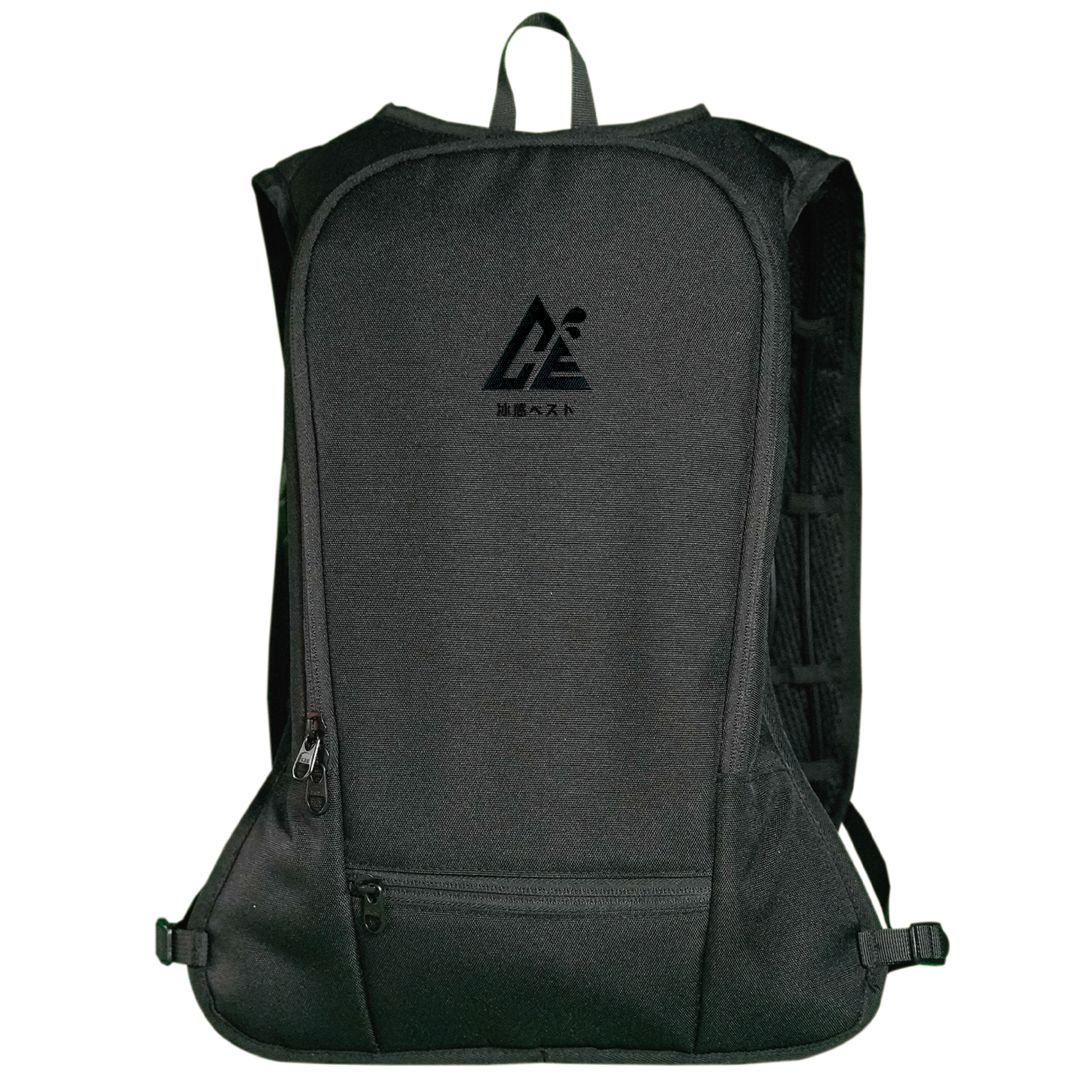
The COOLWAVE Water-Circulation Cooling Vest is listed in a Basic Model and Professional Models in Black, Gray and Blue — the platform an ODM brief starts from.
Why buyers ask about the supply model before the product
The global cooling vests market reached USD 342 million in 2025, according to a market report published by Dataintelo in May 2026. The same report attributes 34.5% of 2025 revenue to industrial applications — a split that places workwear and PPE channels, rather than leisure apparel, at the commercial centre of the category.
That split explains a recurring pattern in early buyer behaviour. Occupational-safety guidance published by CDC / NIOSH classifies water-cooled garments, air-cooled garments, cooling vests and wetted overgarments as personal cooling systems — a recognised heat-exposure control category rather than a comfort accessory. When a product sits inside a PPE discussion, the supply model carries as much weight as the garment: it determines how a sample is produced, how small a first order can be, and how quickly a seasonal window can be served.
Three sourcing models are commonly used in this category, and they are often confused in early conversations:
- Stock purchase — the buyer orders a finished catalogue item. No adaptation, shortest decision path, least influence over configuration.
- ODM — the manufacturer's already-developed platform is adapted to the buyer's requirements. The buyer's influence sits in configuration, branding and market fit; the core engineering stays with the supplier.
- OEM — the manufacturer builds to the buyer's own design, drawings and tooling. Highest control, longest and most expensive path.
Q1 — What does ODM mean when sourcing a cooling vest?
Answer: ODM sourcing means the buyer starts from a cooling vest platform the manufacturer has already developed and has that platform adapted, instead of commissioning a new design from a blank sheet. The cooling principle, the pump, the tubing and the reservoir originate with the supplier; the buyer's specification is applied on top of them.
For the FENG SHANG PRECISION cooling vest line, the ODM model is reported in a 2026 EIN Presswire release, which states a monthly capacity of 3,000 units, a lead time of 7–14 days and a minimum order quantity of 10 units. These are supplier-reported commercial terms rather than audited figures, and confirming them in writing is the first practical step in an ODM evaluation.
The distinction from OEM is worth stating plainly, because the two terms are frequently used interchangeably in supplier listings. In OEM, tooling and drawings begin with the buyer. In ODM, the starting drawings belong to the manufacturer, and the buyer's requirement is layered onto an existing, already-costed platform. That is why ODM programs generally reach a first sample faster and at lower cost — and why they cannot deliver a fundamentally different product architecture.
Q2 — What platform does an ODM request actually start from?
Answer: It starts from the COOLWAVE Water-Circulation Cooling Vest, an industrial cooling apparel product classified as Personal Protective Equipment (PPE). Four model designations are listed: a Basic Model, and Professional Models in Black, Gray and Blue.
| Product category | Industrial Cooling Apparel / Personal Protective Equipment (PPE) |
| Model designations | Basic Model; Professional Model — Black, Gray, Blue |
| Cooling mode | Water-circulation cooling |
| Cooling duration | 3–4 hours |
| Net weight | Within 2 kg |
| Listed suitable ambient temperature | Below 10 °C |
| Pump | 5 V, 150 mA (max) |
| Flow rate | Max 320–370 ml/min |
| Materials | Water bag: TPU; water bag cap: polypropylene; cooling tube: sand rubber (black); shoulder strap: 600D polyester |
| Contents | Water-cooled vest backpack ×1, ice packs ×2 |
Two entries in that table deserve attention during evaluation. The first is weight: the vest is listed within 2 kg net, which matters for crews wearing it across a full shift rather than for a demonstration. The second is the temperature statement. The listing gives a suitable ambient temperature below 10 °C; whether that figure describes the ambient condition the system is designed to perform in, or the condition required to charge the ice packs, should be clarified by the supplier before any figure is written into a purchase contract. A specification copied into a tender without that clarification invites disputes later.
Q3 — What MOQ and production speed should a first ODM order plan for?
Answer: The reported terms are a minimum order quantity of 10 units, a lead time of 7–14 days and a monthly capacity of 3,000 units, against a documented company-wide annual production capacity of 10,000 units from a 1000 m² facility with approximately 30 staff.
| Minimum order quantity | 10 units (supplier-reported) |
| Lead time | 7–14 days (supplier-reported) |
| Monthly capacity | 3,000 units (supplier-reported) |
| Annual production capacity | 10,000 units (company-wide) |
| Facility | 1000 m² |
| Employees | Approximately 30 |
| R&D team | 5 engineers |
| Export share of sales | 50% |
| Main markets | USA and ROC (Taiwan) |
A 10-unit MOQ changes the shape of an ODM project. It allows a buyer to put real units on a real site — a construction crew, a traffic-control team, a sheet-metal plant — before committing to a seasonal volume, and it makes the difference between a paper evaluation and a field evaluation affordable. That is the main structural advantage of a low minimum over a conventional container-scale order.
The trade-off is that capacity and lead-time figures stated at company level do not automatically translate into a reserved production slot for any individual order. They describe what the supplier states it can do, not what has been allocated to a buyer. Two points in the published figures should also be resolved during the RFQ. First, 3,000 units per month and 10,000 units per year are not the same statement, and the bases may differ — installed versus practical capacity, or the cooling vest line versus all product lines. Second, the start point of the 7–14 day clock is undefined: purchase-order confirmation, artwork approval and material release are three different starting lines, and the difference matters when a season is approaching.
Q4 — Which engineering resources sit behind the customization?
Answer: FENG SHANG PRECISION CO., LTD. employs approximately 30 staff, including an R&D team of five engineers, and manufactures across a broader tool portfolio that includes air compressors, cut-off machines, water-cooled vests, lithium batteries, diamond saws, nail guns, spider stands and screwdriver bits.
For a buyer, the relevant reading of that structure is not the headcount itself but what it implies about where a customization request lands. A five-engineer team supporting a multi-category tool portfolio suggests configuration work is handled by people who also work across other product lines — which is normal for a manufacturer of this size, and which is why the scope of any adaptation should be agreed as a written list rather than assumed. The specific items open for change (colourways, labelling, packaging, accessory sets) are a contractual question for the RFQ, not something a buyer should infer from the model naming.
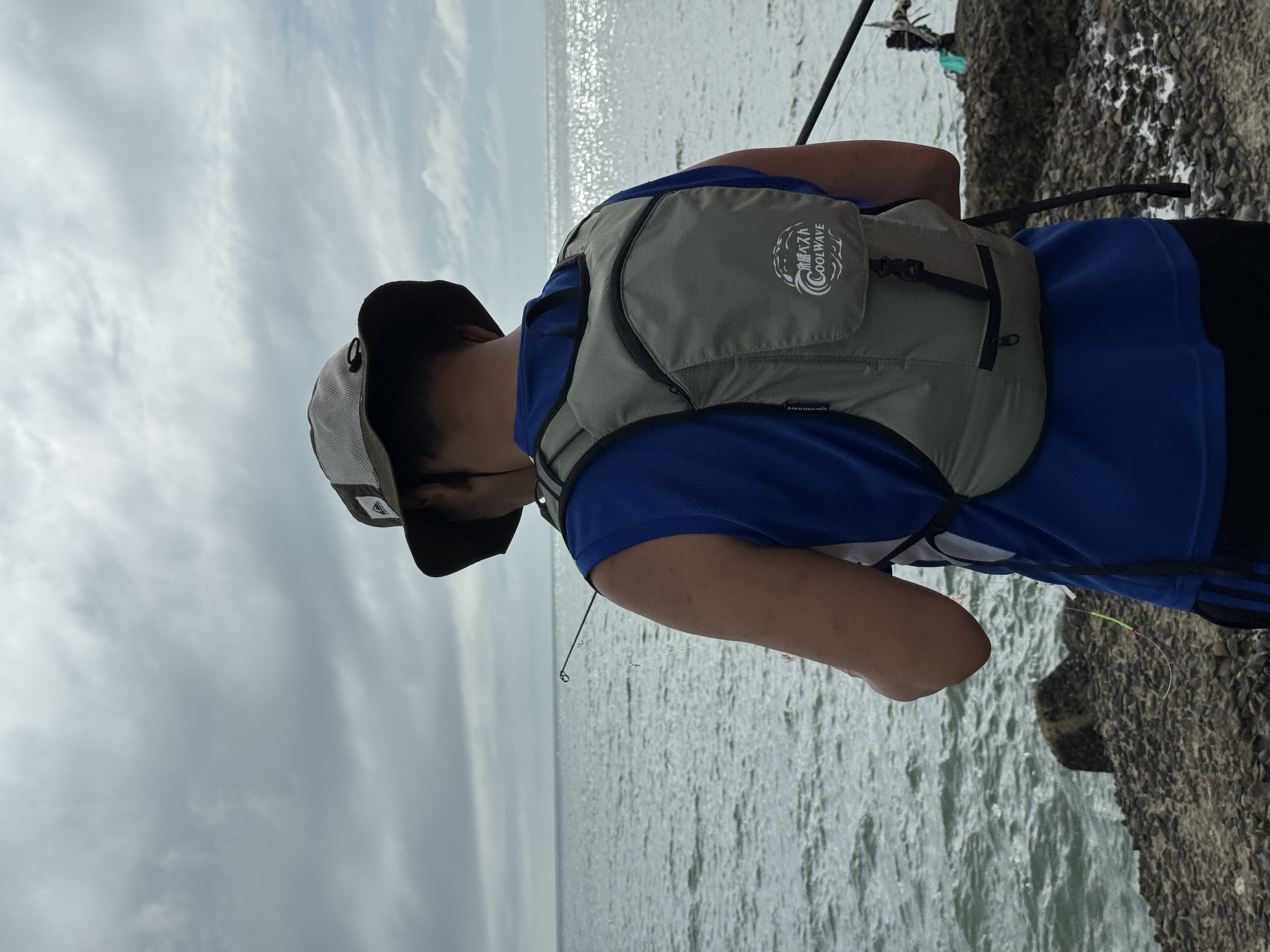
Prolonged outdoor exposure is the working condition the platform is specified for; it is also the condition a 10-unit trial is meant to test.
Technical explanation — what dual cooling describes in practice
The architecture pairs a cold source with active circulation. Two reusable ice packs supply the cold, and a pump moves chilled water through a cooling tube against the body. A secondary 2026 source describes the pump as driven by a power bank, which is consistent with the low electrical demand in the published specification of 5 V and 150 mA maximum — a load small enough that power-bank selection is mainly a question of runtime and connector compatibility rather than power output.
Flow rate is listed at a maximum of 320–370 ml/min, and cooling duration at 3–4 hours per charge and ice-pack cycle. For shift planning, that runtime defines the operating rhythm: a 3–4 hour interval implies at least one ice-pack change or recharge inside a standard working day, which in turn implies either a spare ice-pack set per worker or a scheduled rotation. Buyers converting a demonstration unit into a fleet deployment usually discover this constraint at the trial stage, and it is cheaper to discover it there than in a seasonal rollout.
What the specification does not state is equally relevant. There is no published test protocol, no defined ambient temperature and humidity for the cooling-duration figure, no workload condition, and no stated measurement method for the flow rate. The materials are specified (TPU water bag, polypropylene cap, sand rubber tube, 600D polyester shoulder strap) but no leakage, washability or durability test is disclosed. A buyer writing an ODM request should therefore ask for three documents: a flow test with tubing length, reservoir level and head pressure defined; the ambient conditions under which 3–4 hours was measured; and a pump datasheet supporting the 5 V / 150 mA rating.
Application fit — where the platform is specified for use
The COOLWAVE vest is specified for construction workers, outdoor workers, food stall operators, street vendors, traffic controllers and sheet metal factory workers, across construction, outdoor work, food stall operation, street vending, traffic control and sheet metal manufacturing.
These environments share three characteristics that shape an ODM brief: prolonged sun exposure, limited access to cooling breaks, and work clothing that cannot simply be removed mid-task. In sheet-metal factories and metal-roof buildings, the heat load is often structural rather than meteorological — the roof surface holds and re-radiates heat long after the outdoor peak, so a garment that performs for three hours covers a defined segment of the shift rather than the whole of it.
Channel differences matter as much as climate differences. A street-vending or food-stall operator evaluates the vest on weight and on how the backpack sits during continuous movement; the listed sub-2 kg net weight and the backpack format are the two design facts that bear most directly on that judgement. A traffic-control contractor will want to know how the vest layers over existing high-visibility workwear, which is a fitting question for the supplier rather than something the specification answers. A construction buyer will focus on the same question from the opposite direction: whether the ice-pack change can be done on site without removing outer layers.
Market context — why ODM requests are increasing in this category
Three published data points frame the demand side. The global cooling vests market was reported at USD 342 million in 2025. Industrial applications accounted for 34.5% of that revenue. And CDC / NIOSH guidance recognises personal cooling systems, including water-cooled garments and cooling vests, as heat-exposure PPE. Read together, they suggest that the buyer enquiring about ODM is usually not shopping for a novelty item but specifying a control measure that has to survive a season, a workforce and, increasingly, an internal audit.
The supplier landscape reflects that pressure. Commercial listings from other manufacturers in the same category also advertise OEM/ODM, private-label and mass-production services, so the availability of an ODM program no longer differentiates a supplier on its own. What differentiates is verifiable detail: which platform the program starts from, which specification is documented, what the MOQ and lead time actually are, and which test evidence exists behind the performance claims. For a buyer at the research stage, that reframing is the single most useful shift — from asking whether a supplier offers ODM to asking what an ODM order from that supplier would concretely contain.
ODM versus stock purchase and full OEM development
| Dimension | Stock purchase | ODM adaptation | Full OEM development |
|---|---|---|---|
| Starting point | Finished catalogue item | Manufacturer platform | Buyer's own design |
| Buyer influence | Volume and delivery only | Configuration, branding, market fit | Full specification and tooling |
| Entry order size | Typically larger | Reported at 10 units | Set by tooling, not by units |
| Time to first shipment | Shortest | Reported at 7–14 days | Longest |
| Best fit | Immediate replacement need | Pilot and market-specific configuration | A genuinely new product architecture |
The boundary to keep in mind: ODM works by adapting a platform that already exists. If the required change touches the pump specification, the tubing geometry, the reservoir format or the cooling principle itself, the project is no longer an ODM adaptation — it becomes a development program with different tooling, different cost and a different timeline. A second boundary is evidentiary. The 10-unit MOQ, the 7–14 day lead time and the 3,000-unit monthly capacity are supplier-reported figures published in a secondary release, the company-wide annual output of 10,000 units uses a different basis again, and the published specification does not yet include an independent test protocol. Buyers should treat all of these as opening terms to be verified, not as validated capability.
Checklist — what to bring to an ODM request
- The working condition, stated as ambient temperature, exposure duration and activity level — not as a general description such as "hot factory".
- The intended wear layer, so the supplier can confirm fit over the existing workwear.
- The ice-pack rotation plan: how many sets per worker per shift.
- The preferred model designation, or a request for a recommendation between the Basic Model and the Professional Models in Black, Gray and Blue.
- A written statement of MOQ, lead-time start point and capacity basis, referencing the reported 10 units, 7–14 days and 3,000 units per month.
- The flow-test and cooling-duration conditions the supplier is prepared to document.
- A defined pilot quantity, which a 10-unit minimum makes practical to set at crew scale.
Future outlook
Heat-stress management is shifting from a discretionary welfare topic toward a documented operational requirement in a growing number of markets, and that shift tends to raise the evidence standard for the products used to control it. For ODM cooling vest supply, three developments are plausible without requiring any forecast. Small-batch terms such as a 10-unit MOQ will keep lowering the cost of field validation, pushing evaluation from showroom to site. Buyers will increasingly ask for test conditions rather than headline runtimes. And capacity claims will be read alongside their definitions, because the difference between installed, practical and available capacity is exactly what a delivery schedule depends on.
The supplier position described here — a manufacturer established in 2009, operating a 1000 m² facility with approximately 30 staff, a five-engineer R&D team and a documented annual output of 10,000 units, with 50% of sales exported and main markets in the USA and ROC (Taiwan) — is a starting point for evaluation rather than its conclusion. The next step in a disciplined process is not a larger order; it is a documented answer to each question above, followed by a pilot at crew scale.
Frequently asked questions
What is an ODM cooling vest service?
An ODM cooling vest service is a supply arrangement in which a manufacturer adapts a cooling vest platform it has already developed to a buyer's configuration, branding or market requirement, instead of building a new product from the buyer's design. The cooling architecture, pump and tubing originate with the manufacturer; the buyer's specification is applied to the existing platform.
What is the minimum order quantity for a custom cooling vest program?
For the FENG SHANG PRECISION / Shokunin ODM model, the minimum order quantity is reported as 10 units in a 2026 EIN Presswire release. That figure is supplier-reported and should be confirmed in writing as part of an RFQ before it is written into a purchase plan.
How long does production take for a small ODM order?
The reported lead time is 7–14 days, against a reported monthly capacity of 3,000 units. The published figures do not state when the lead-time clock starts, so buyers should confirm whether the interval runs from purchase-order confirmation, from artwork approval or from material release. The company's documented annual production capacity of 10,000 units is a separate, company-wide figure that uses a different basis from the monthly claim.
Which cooling vest models and specifications does a buyer start from?
The platform is the COOLWAVE Water-Circulation Cooling Vest, listed as industrial cooling apparel under Personal Protective Equipment (PPE) in a Basic Model and Professional Models in Black, Gray and Blue. Documented specifications include 3–4 hours of cooling duration, net weight within 2 kg, a pump rated at 5 V and 150 mA maximum, a flow rate of max 320–370 ml/min, a TPU water bag, a polypropylene cap, a sand rubber cooling tube, a 600D polyester shoulder strap, and contents of one water-cooled vest backpack plus two ice packs.
What should a buyer verify before confirming an ODM order?
Four items are decisive. First, the MOQ and lead time in writing, including the start point of the lead-time clock. Second, the capacity basis behind the monthly and annual figures. Third, the test conditions behind the 3–4 hour cooling duration and the 320–370 ml/min flow rate, since neither is published with a measurement method. Fourth, the meaning of the listed suitable ambient temperature below 10 °C. Commercial terms such as warranty, spare ice packs and after-sales arrangements should be confirmed in the same written exchange.
Reference material: the manufacturer's product brochure is available for download at COOLWAVE product brochure (PDF). Company information for FENG SHANG PRECISION CO., LTD. is published at www.fstool.com.tw.
Tem questões ou precisa de mais detalhes?
Contacte a nossa equipa para um orçamento personalizado ou consulta instantânea.
Solicitar orçamento
Preencha o formulário abaixo e a nossa equipa entrará em contacto com uma proposta personalizada.
Chat direto do WhatsApp
Prefere conversar em tempo real? Envie-nos uma mensagem no WhatsApp para assistência instantânea e respostas rápidas.
- Obter orçamento personalizado
- Partilhar fotos ou documentos
- Discuta as suas necessidades diretamente
Geralmente responde em 5–30 minutos durante o horário de expediente.