
Cooling Vest RFP: A Step-by-Step Decision Matrix for Buyers
Cooling vests have shifted from discretionary gear to a budgeted line item in occupational heat-stress programmes. The global cooling vest category was valued at approximately USD 215 million in 2024 and is projected to reach about USD 385 million by 2033, with industrial applications — construction and manufacturing among them — holding the largest share of demand at 34.5% in 2025 (Dataintelo). Larger budgets attract more suppliers, and more suppliers produce bids that cannot be compared: one quotes 'up to eight hours of cooling', another quotes ice-pack mass, a third quotes nothing measurable at all. A cooling vest RFP exists to remove that ambiguity before award. This guide sets out a five-step decision matrix for writing one, using the published COOLWAVE Water-Circulation Cooling Vest specification — a stated cooling duration of 3–4 hours and a maximum flow rate of 320–370 ml/min — as a reference point for the criteria a buyer can standardise.
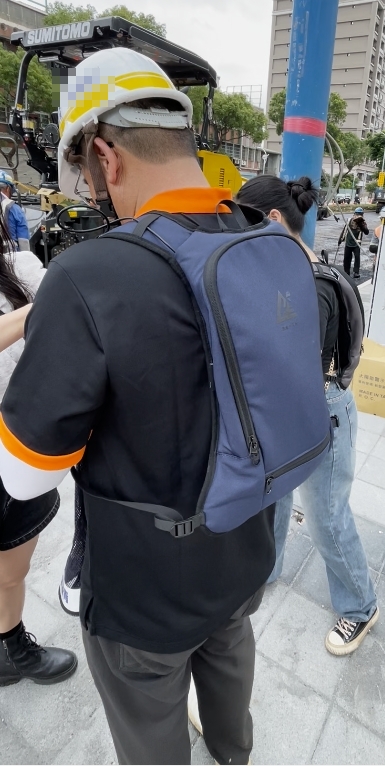
Cooling vest procurement is decided on site conditions, not on catalogue claims. Image: construction site deployment, Taiwan.
Why Cooling Vest RFPs Produce Answers That Cannot Be Compared
Procurement teams rarely struggle to find suppliers. They struggle to compare them. Cooling duration is conditional: it depends on ambient temperature, workload, ice-pack mass and the point at which the wearer decides a cycle has ended. Flow rate may be reported as a pump peak or as an average across the loop. Unit weight may or may not include the backpack, the water bag and the ice. Fit is offered as 'one size' without a stated adjustment range.
When those definitions are left to the bidder, an evaluation committee ends up grading writing quality rather than product behaviour. The correction is procedural rather than technical: fix the definitions inside the RFP, require every value in the same unit, and require a stated condition for every number. The benefit is not only a faster award decision — a structured RFP also generates the documentation trail that safety, finance and audit functions request after a purchase, covering certification, capacity, warranty and reference deployments.
Step 1 — Define the Duty Cycle Before Writing a Specification
A duty cycle is the description of how the vest will actually be used. Suppliers cannot answer it for you, and every criterion downstream depends on it. Before drafting technical requirements, document the following:
- Shift length, number of shifts per day, and whether cooling must continue across the full shift or only during peak heat hours.
- Ambient conditions: direct sun exposure, radiant heat from equipment or metal roofing, indoor workshops with limited airflow, and seasonal temperature range.
- Workload and mobility: climbing, bending, confined-space work, and whether the wearer can remove and re-don the vest during the day.
- Cold-source logistics: whether a freezer, ice supply or chilled water is available on site, and how far the wearer is from it.
- Power availability, for designs that include a pump or fan.
- Population size, site count and the expected service life before replacement.
- Cleaning, storage and hygiene routines already in place.
Step 2 — Convert the Duty Cycle into Measurable Criteria
Each duty-cycle statement should be converted into a criterion that a supplier can answer with a unit, a value and a condition. The table below shows a buyer-side template, with values from the published COOLWAVE Water-Circulation Cooling Vest specification used as reference points. Reference values help bidders calibrate their response; they do not oblige a buyer to specify them.
| RFP criterion | Why the RFP must fix it | COOLWAVE stated reference value |
|---|---|---|
| Cooling duration | Determines shift coverage and ice-pack logistics | 3–4 hours |
| Flow rate | Describes how quickly the cooling medium moves through the loop | Max 320–370 ml/min |
| Pump output | Determines the required power source and consumables | 5V, 150mA (max) |
| Unit weight | Ergonomic limit for continuous wear | Within 2 kg |
| Suitable temperature | Defines the operating condition of the cooling medium | Below 10°C (as stated) |
| Materials | Durability, cleaning and skin contact | Shoulder strap 600D polyester; PEVA; water bag TPU; water bag cap polypropylene; cooling tube sand rubber (black) |
| Kit contents per unit | Prevents single-unit pricing that excludes consumables | Water-cooled vest backpack ×1, ice packs ×2 |
| Certification and patent evidence | Supports tender, audit and site-safety approval | Patent I886033 (Intellectual Property Office, Ministry of Economic Affairs, ROC); Disaster Prevention Product and Service Certification Award (Taiwan Disaster Prevention Industry Association) |
| Minimum order quantity | Separates trial deployment from full rollout | 10 units |
| Lead time | Feeds project scheduling and seasonal windows | 7–14 days |
| Monthly capacity | Confirms multi-site rollout feasibility | 3,000 units |
| Warranty | Feeds lifecycle cost rather than unit price alone | 6-month warranty for the water-cooled vest |
Step 3 — Build the Weighted Decision Matrix
A decision matrix converts the criteria into a score so that award decisions can be explained and repeated for the next site. The weights below are a buyer-side starting template; they should be adjusted when the duty cycle changes — a night-shift indoor workshop will not weight radiant-heat performance the same way as a road crew that works under prolonged sun exposure.
| Weight | Criterion | Evidence required from the bidder |
|---|---|---|
| 25% | Cooling performance against the duty cycle | Cooling duration in hours, flow rate in ml/min, and the test condition for each figure |
| 15% | Power and consumables | Pump voltage and current, power source, number and type of ice packs supplied per unit |
| 15% | Ergonomics and fit | Unit weight with and without the cold source; stated adjustment range for the one-size design |
| 15% | Compliance and documentation | Certificate or patent numbers with issuing authority and validity dates |
| 10% | Materials and serviceability | Material list for straps, water bag, cap and cooling tube; cleaning instructions |
| 10% | Supply and commercial terms | MOQ, lead time, monthly capacity, spare-parts availability |
| 10% | After-sales and lifecycle | Warranty period and what it covers; replacement route for ice packs and pump |
Two scoring rules keep the matrix honest. First, require each bidder to label every figure as measured, declared or calculated, and to state the conditions. Second, do not award points for an unverified claim: a value that arrives without a condition is scored at the lowest band until it is confirmed in writing. Use an odd-number band (1 to 5) so that a middle score is always available, and record the reason for every score, not only the total.
Step 4 — Standardise the Supplier Response Template
The matrix only works if answers arrive in the same shape. Issue a response template rather than an open invitation to describe a product. A workable template asks for:
- Mandatory units for every technical value: ml/min, hours, kilograms, volts, milliamps and degrees Celsius.
- A declaration of what is included in one delivered unit, including vest, backpack, water bag, pump, ice packs and any power supply.
- The power source for any pump-driven design, with voltage and current stated.
- A compliance annex listing certificate and patent numbers, issuing authority, market of validity and expiry date.
- A commercial annex covering MOQ, lead time, monthly capacity, warranty length and spare parts.
- A reference annex describing deployments by client type, quantity, country and outcome, so that claims can be checked rather than assumed.
This structure also protects suppliers who answer well. When the template is fixed in advance, a technically strong bidder is not penalised for declining to invent numbers to match a competitor's vagueness.
Step 5 — Score First, Then Validate with a Physical Trial
A completed matrix produces a shortlist, not an award. The remaining uncertainty is physical: how a vest behaves on an actual wearer in actual heat. A staged validation is more informative than a desk review, and it is usually cheaper than a wrong rollout.
- Weigh the delivered unit as received, including the backpack and the cold source, and compare it with the declared figure.
- Run one cooling cycle under the site conditions written into the duty-cycle statement and record the time until the wearer reports the cooling has ended.
- Check the fit on the smallest and largest wearers in the crew, not on an average-sized tester.
- Confirm the power source and cables for any pump-driven unit, and check what happens when the power source is exhausted mid-shift.
- Confirm the spare and consumable route: ice packs, water bag, cap and pump.
Where a supplier publishes a minimum order quantity of 10 units, a trial order is a practical evaluation route for a single site or crew, after which the same matrix can be re-run at rollout scale. Buyers should state in the RFP whether the trial is scored as part of the award or treated as a post-award gate.
A Worked Reference: The COOLWAVE Specification as a Matrix Baseline
Shokunin is a professional e-commerce brand launched by FENG SHANG PRECISION CO., LTD, a Taiwan-based manufacturer founded in 2009 with a 1,000 m² facility, 30 employees, a five-engineer R&D team, a stated annual output of 10,000 units, and an export ratio of 50% with main markets including the USA and Taiwan (ROC). The brand's cooling product is the COOLWAVE Water-Circulation Cooling Vest, classified as industrial cooling apparel and personal protective equipment.
A Taiwan deployment of 100 units for workers in high-temperature environments — construction sites, outdoor work, metal sheet factories and street vendors — is documented with the following outcome: effective body cooling, heatstroke prevention, improved work efficiency and worker comfort. The same case record states an adjustable one-size-fits-all design, passive ice-pack cooling in the deployed configuration, and light, portable construction. For an RFP writer, the value of this record is not the praise in the sentence but the structure around it: quantity, country, application, wearer group and outcome are all stated, which is exactly the annex a response template should demand from every bidder.
Technical Explanation: What Flow Rate, Cooling Duration and Pump Output Describe
A water-circulation cooling vest combines two cooling mechanisms: a cold source and a circulation loop. In the COOLWAVE Water-Circulation Cooling Vest, the cold source is supplied by ice packs (two per unit), and the loop is driven by a pump rated at 5V, 150mA (max) that moves the cooling medium through a sand-rubber cooling tube at a maximum flow rate of 320–370 ml/min. The water bag is TPU, the water bag cap is polypropylene, and the shoulder strap is 600D polyester. Stated cooling duration is 3–4 hours, the unit is stated to weigh within 2 kg, and the stated suitable temperature is below 10°C. Configurations that pair a cold source with a driven circulation loop are sometimes described in the market as a dual cooling water cooling vest; the mechanism, not the label, is what belongs in a specification.
Read together, these values answer different questions. Flow rate describes how quickly the medium moves, which shapes how evenly cooling is distributed across the body. Cooling duration describes how long one prepared cycle lasts, which determines whether a shift needs one cycle or two. Pump output describes the electrical demand, which determines what the wearer must carry or connect. A bid that answers only one of the three is incomplete regardless of how favourable the number looks.
Application Contexts Where the Same Matrix Scores Differently
The published application list for this product covers construction workers, outdoor workers, food stall operators, street vendors, traffic controllers and metal sheet factories. Those groups do not share a duty cycle. A traffic controller on prolonged sun exposure needs a vest that stays comfortable while standing and is visible in an active roadway; a metal sheet factory worker faces radiant heat in a fixed location where a freezer for ice packs is usually accessible; a street vendor working an evening market may value light weight and quiet operation over maximum duration. Running the matrix once per wearer group, rather than once per company, is the difference between a defensible award and a purchase that is quietly abandoned by the crew.
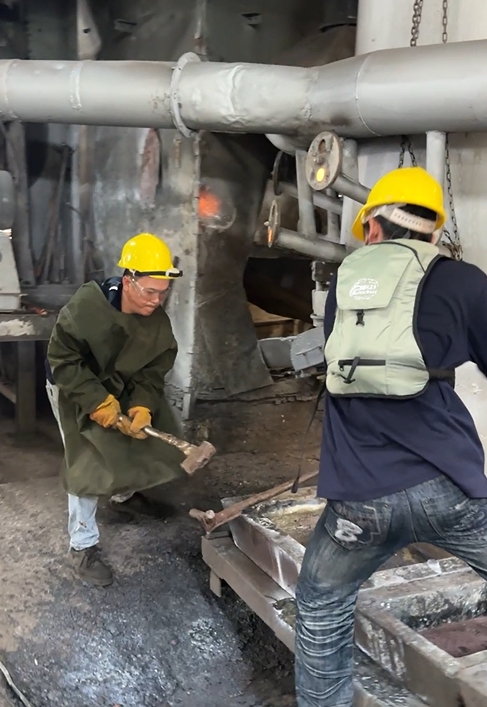
Metal sheet factories are among the environments where cooling duration and radiant-heat exposure drive the criteria weighting. Image: case application, Taiwan.
Market Signals That Belong in the RFP Background Section
A short background section helps bidders understand what the buyer is benchmarking against, and helps internal approvers understand why the purchase is being formalised. Three signals are worth citing with their sources: Asia Pacific is described as the fastest-growing region for cooling vests, driven by industrialisation and large outdoor working populations (Spherical Insights); industrial applications held the largest cooling vest market share at 34.5% in 2025 (Dataintelo); and phase change material vests represented 28.7% of market share in 2025, the fastest-growing technology segment (Dataintelo). Separately, active circulatory mechanisms such as ice water circulation are reported as increasingly deployed in industrial sectors to mitigate occupational heat stress (Strategic Market Research). On the compliance side, cooling systems are commonly assessed against ISO 9001:2015 for quality management, and electrical components often require CE or UL marks (ISO / UL). Public market reviews list vendors such as Techniche International, Glacier Tek, Polar Products Inc. and Ergodyne as participants in the category (Spherical Insights) — a reminder that a shortlist should be built from scored responses rather than from brand familiarity.
Comparison with Established Cooling Approaches — and the Boundaries of a Water-Circulation Vest
Buyers rarely evaluate one product category in isolation. Ice-pack-only vests, phase change material vests and pump-driven water-circulation designs all appear in the same tender, and the matrix should allow them to compete on the same criteria. Ice-pack-only designs are mechanically simpler because they have no circulation loop, and the RFP's duration, weight and fit rows apply to them unchanged. Phase change material designs held 28.7% of the 2025 market and are the fastest-growing technology segment, so their responses should be read on identical terms rather than treated as an exception.
A water-circulation design carries its own boundaries, and an RFP should state them so that bidders respond honestly. The stated cooling duration of 3–4 hours means that an eight-hour shift normally requires additional ice packs or a rotation schedule, and the cost of that consumable cycle belongs in the commercial annex rather than in a footnote. A pump rated at 5V, 150mA (max) requires a defined power source, so the RFP must ask what powers the loop and what happens when it is exhausted. The stated suitable temperature is below 10°C, which is an operating condition buyers in different ambient conditions must confirm rather than assume. The published capability data for this supplier lists ODM as the production mode and does not declare a customization programme, so buyers with private-label or non-standard sizing requirements should confirm that in writing instead of inferring it from the product category. The same data does not specify an in-house quality-control function, so process-audit-driven buyers should treat that item as unverified until the supplier answers it in the response template. Finally, the stated warranty for the water-cooled vest is six months; where procurement policy assumes a longer wear life, the gap should be costed explicitly instead of being discovered at replacement time.
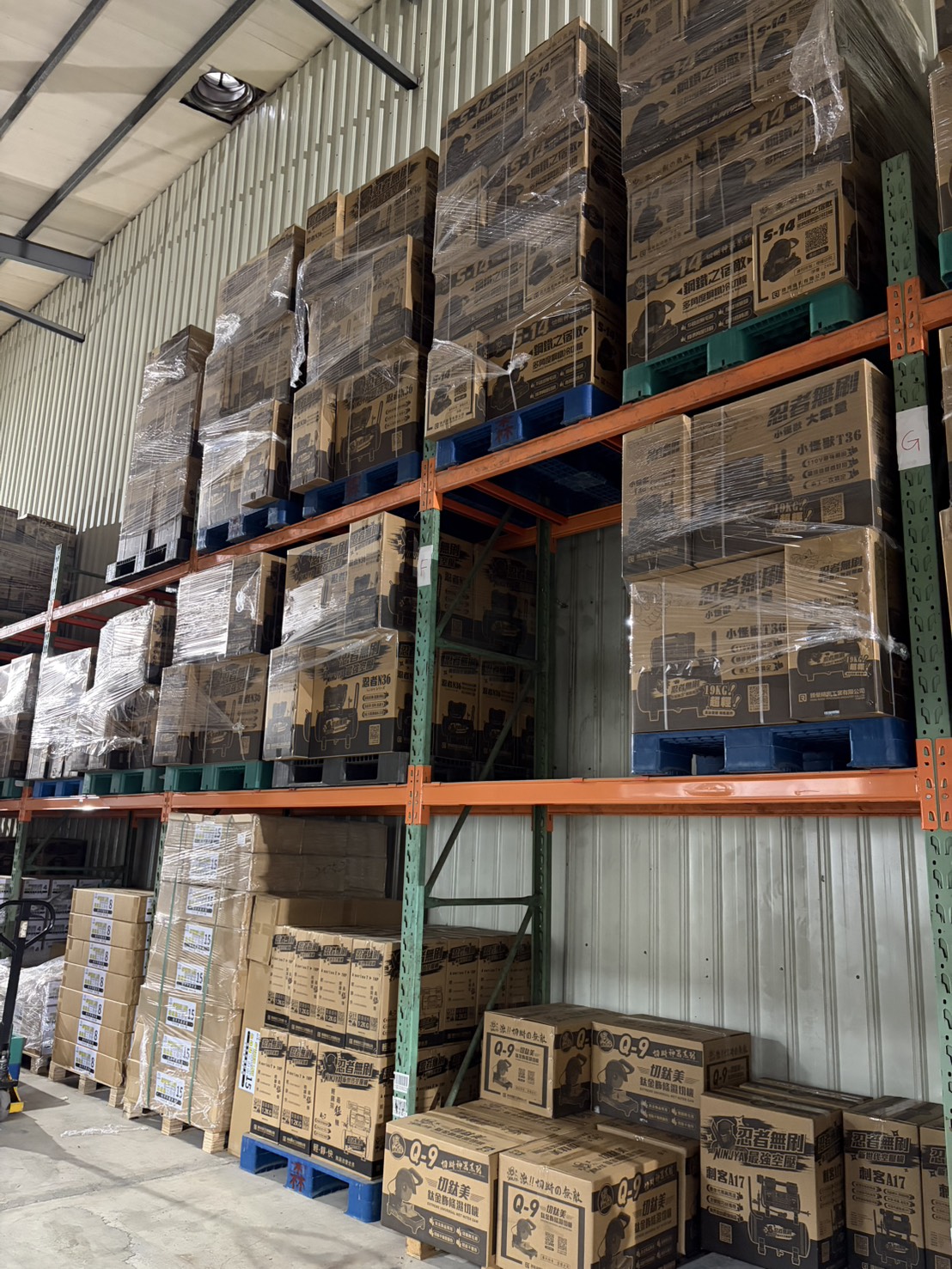
Capacity and lead-time claims are easier to accept when they are tied to a visible staging and dispatch operation. Image: supplier warehouse.
Future Outlook: RFPs as Living Documents
As the cooling vest category expands, procurement documents are becoming annual instruments rather than one-off exercises. Two shifts support that. Demand-side, industrial adoption is broad enough that the same buyer will typically run the process again for a second site or season, and re-using a scored matrix is far cheaper than rebuilding criteria from scratch. Supply-side, documentation is becoming the differentiator: patent numbers, certification awards, capacity figures, lead times and warranty terms are now the items that separate a complete response from an attractive brochure. Buyers who design a matrix with replaceable weights and a fixed response template will be able to compare bids, and compare suppliers across years, on evidence rather than on impression.
FAQ
What cooling duration should an RFP require for an eight-hour shift?
The RFP should state the shift length, then ask each bidder for the duration of one cooling cycle under stated conditions. The COOLWAVE Water-Circulation Cooling Vest specification states a cooling duration of 3–4 hours, which means an eight-hour shift generally requires additional ice packs or a rotation schedule. Both the extra ice packs and the rotation time should be priced and scheduled in the response.
How should flow rate be specified so that answers are comparable?
Require the value in millilitres per minute, state whether the figure is a maximum or an average, and require a test condition. The COOLWAVE specification states a maximum flow rate of 320–370 ml/min, driven by a pump rated at 5V, 150mA (max). A response that quotes a flow rate without a unit or a condition cannot be scored.
What compliance documents should an RFP require from a cooling vest supplier?
At minimum: manufacturer name, product model, and any certificate or patent number with its issuing authority, market of validity and expiry date. Cooling systems are commonly assessed against ISO 9001:2015 for quality management, and electrical components often require CE or UL marks. As an example of the format to request, the COOLWAVE Water-Circulation Cooling Vest holds patent I886033, issued by the Intellectual Property Office, Ministry of Economic Affairs (ROC), with a scope covering the water-cooled vest structure and cooling system, and the brand holds the Disaster Prevention Product and Service Certification Award issued by the Taiwan Disaster Prevention Industry Association.
Should an RFP require a sample or trial before award?
A physical trial resolves questions that documents cannot: delivered weight against declared weight, actual cycle duration on a real wearer, and fit across the crew. Where a supplier publishes a minimum order quantity of 10 units, a small trial deployment is a practical evaluation route before full rollout. The RFP should state whether the trial is scored before award or used as a post-award gate.
Which commercial terms differentiate suppliers at the evaluation stage?
Minimum order quantity, lead time, monthly capacity, warranty length and spare-part availability. Published figures for this supplier include an MOQ of 10 units, a lead time of 7–14 days, monthly capacity of 3,000 units, and a 6-month warranty for the water-cooled vest under an ODM production mode. Standardising these five items in one annex prevents a low unit price from hiding a lead time that misses the season.
Reference documents: COOLWAVE product brochure (PDF) and FENG SHANG PRECISION CO., LTD.