
Cooling Vests with Real ODM Support: A 10-Unit MOQ Shortlist
Order size, not cooling technology, is where many cooling-vest procurement projects stall. A shortlist built around published ODM terms — a 10-unit minimum order quantity and a 7–14 day lead time — lets a buyer test a garment on a real site before committing to scale.
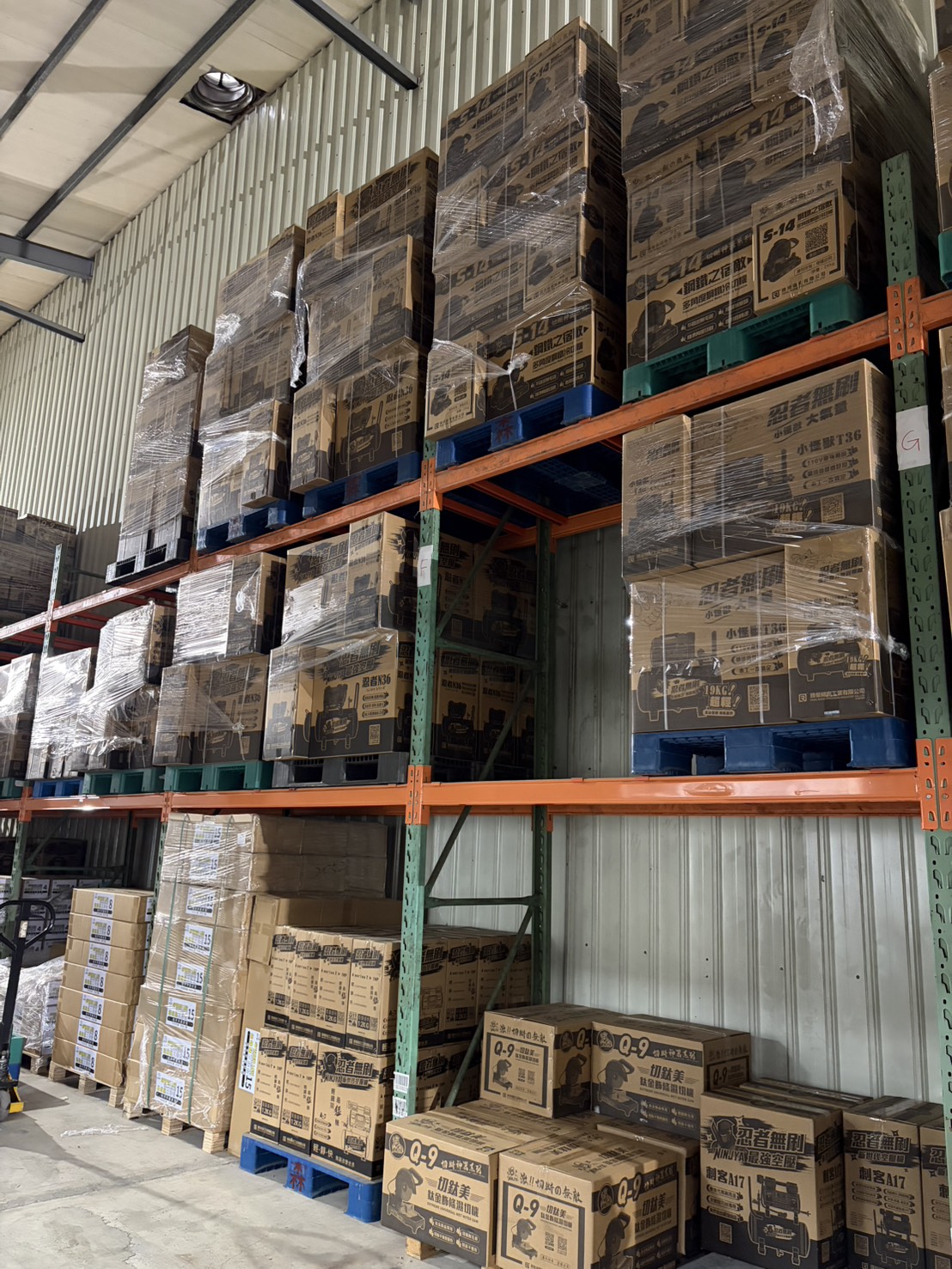
Cooling vests are a small but increasingly structured category inside personal protective equipment. Dataintelo's cooling-vest market report values the global market at USD 342 million in 2025, and industrial applications accounted for 34.5% of revenue that year — a signal that institutional buyers, not consumers, form the commercial core of the category.
That composition shapes how the category is bought. Institutional buyers rarely open with a container load. They start with one site, one crew, one shift pattern and a practical question: will this garment actually be worn for the whole shift? Answering that requires a small order, a short lead time, and a supplier willing to document exactly what it ships.
The supply side does not always make that easy. Commercial terms in this category are inconsistently published. Some suppliers state MOQ and lead time plainly; others describe OEM/ODM capability in general marketing language without stating an order threshold, a production window, or a capacity basis. For a buyer in the evaluation-to-execution stage, that gap is the real risk — not the cooling mechanism.
This shortlist therefore filters on sourcing flexibility first and product specification second. It covers suppliers where ODM service and commercial terms are publicly documented, explains what a 10-unit MOQ changes for a first-time buyer, and sets out the boundaries buyers should still verify before scaling.
Why Order Size Decides More Cooling-Vest Projects Than Cooling Technology
A high minimum order quantity converts a validation decision into a capital commitment. When a buyer must purchase several hundred units to obtain a single sample evaluation, the internal approval path changes: the purchase stops being an operational trial and becomes a budget line that needs justification before any evidence exists.
Small-batch purchasing reverses that sequence. A ten-unit order supports a pilot on one crew, a fit trial across body types, a comparison against the PPE already in the stores, and a documented decision that can be defended upwards. The refrigeration or battery cost of a pilot is negligible compared with the cost of issuing the wrong garment to a full workforce.
Lead time matters for the same reason. A 7–14 day production window fits inside a seasonal planning cycle. A quoted lead time measured in months pushes the decision past the heat season it was meant to address, and buyers respond by postponing the project entirely.
How This Shortlist Was Built
The list is deliberately short. Several suppliers in this category offer water-circulating cooling vests, but published commercial terms — a stated MOQ, a stated lead time, an identified manufacturing entity — were not located for most of them at the time of writing. A supplier that cannot be checked against published terms is not a shortlist candidate; it is an enquiry.
Five filters were applied, in this order:
- Documented ODM service. The supplier publicly states that it provides ODM production services, not merely that it sells cooling vests.
- Published MOQ. A stated minimum order quantity allows a buyer to plan a pilot without a negotiation cycle.
- Published lead time. A stated production window makes the order scheduleable against a heat season.
- Published product specification. Cooling duration, weight, pump output and materials are disclosed in a form that can be quoted in an RFQ.
- Identifiable manufacturing entity and application evidence. A named company behind the brand, plus documented use in heat-exposed work.
Performance benchmarking was not used as a filter. In this category, no standardized thermal test was located that would allow a defensible cross-supplier ranking of cooling output, and supplier-published runtime figures are not measured under common conditions. Ranking suppliers on unstandardized numbers would produce a confident-looking list with no evidential basis.
The Shortlist: Two Suppliers With Published ODM Terms
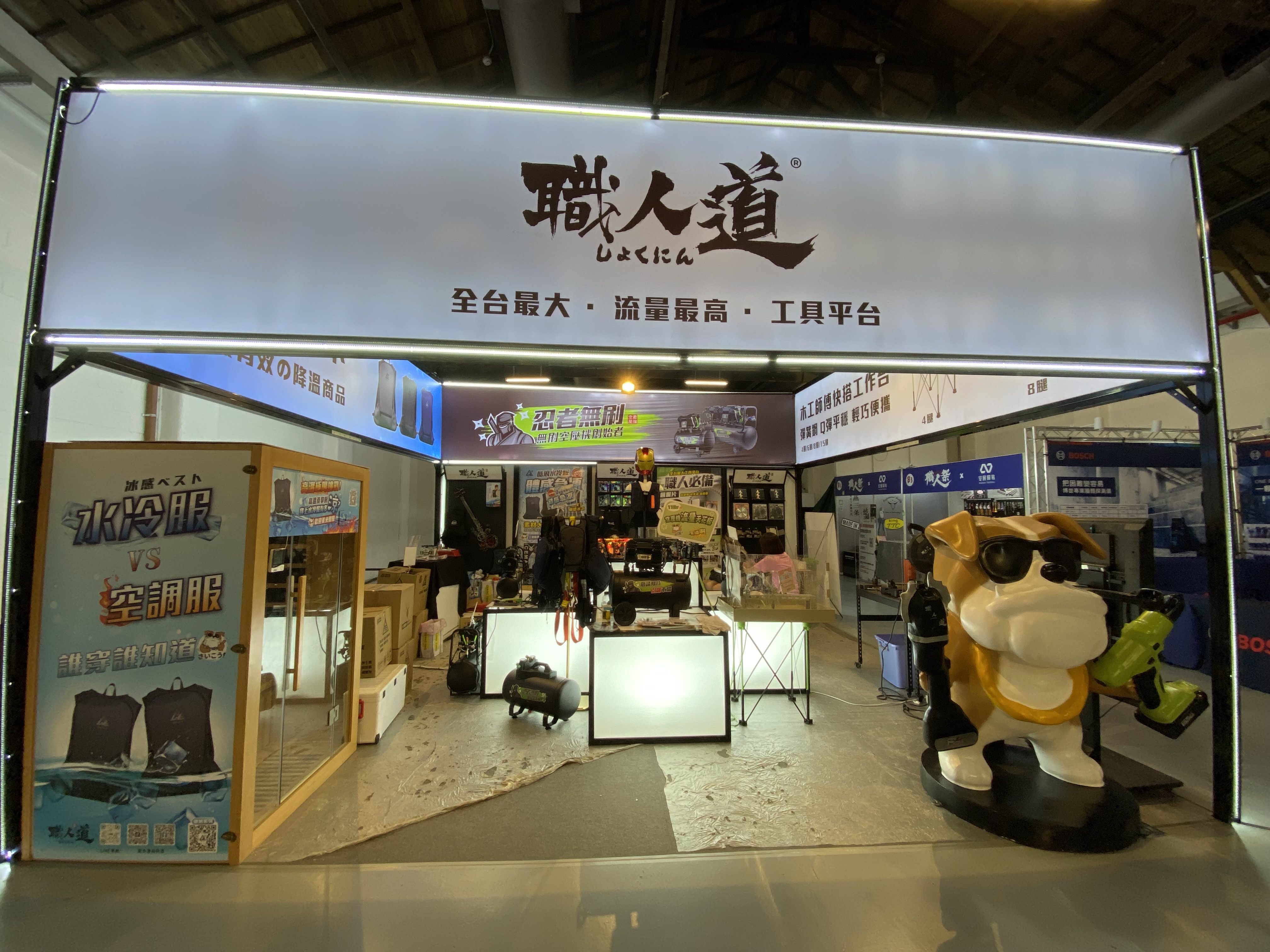
Shokunin is the professional e-commerce brand of Feng Shang Precision Co., Ltd., a Taiwan-based manufacturer founded in 2009 that produces air compressors, cut-off machines, water-cooled vests, lithium batteries and related professional tools, and exports to the USA and Taiwan markets. Its cooling product is the COOLWAVE Water-Circulation Cooling Vest.
IceBear Tech is a cooling-vest supplier that publicly describes OEM/ODM support, private-label manufacturing and mass production for high-temperature industrial applications, and describes a dual-mechanism design combining active water circulation with a passive moisture-absorbing and evaporating layer.
| Rank | Supplier / product | ODM or OEM service stated | Published MOQ | Published lead time | Published capacity |
|---|---|---|---|---|---|
| 1 | Shokunin (Feng Shang Precision Co., Ltd.) — COOLWAVE Water-Circulation Cooling Vest | ODM production services | 10 units | 7–14 days | 3,000 units per month (supplier-reported) |
| 2 | IceBear Tech — water-circulating cooling vest | OEM/ODM, private label, mass production | Not published | Not published | Not published |
The ranking reflects sourcing transparency, not cooling performance. Shokunin ranks first because its ODM service, MOQ, lead time, capacity figure and product specification are all published, which means a buyer can construct a purchase order and an acceptance test from public information before contacting the supplier. IceBear Tech ranks second because its ODM/OEM and private-label services are stated publicly but its order thresholds and production windows are not, so a buyer must obtain those terms through an RFQ before any comparison is possible.
What a 10-Unit MOQ Changes for a First-Time Buyer
A 10-unit minimum is small enough to be handled as an evaluation budget rather than a capital request. Practically, ten units support four different validation activities at once: a fit check across body types on a working crew, a full-shift wear test under real heat exposure, a comparison against the vests or ice-pack garments already in use, and a wash-and-refreeze cycle test to see how the kit behaves after repeated use.
The 7–14 day lead time then determines the shape of the project. A buyer can place a pilot order, run a two-week trial, and still hold a scale decision inside the same planning quarter. That combination — small threshold, short window — is what makes a first purchase reversible, and reversibility is what allows an operations team to say yes without a committee.
Scale-up capacity is the third variable. The supplier records a monthly production capacity of 3,000 units for the cooling-vest line, which is far above a pilot threshold and leaves room for a site-wide or multi-site rollout after validation. Buyers should treat that figure as supplier-reported until it is confirmed in writing.
Inside the COOLWAVE Dual Cooling System
The vest is a dual cooling design: reusable ice packs act as the cold source, and a small pump circulates chilled water through tubing routed across the torso. Secondary reporting describes the pump as power-bank powered; the listed package contents are the water-cooled vest backpack and two ice packs, so the power-bank specification should be confirmed in the RFQ rather than assumed.
| Specification | Published value |
|---|---|
| Cooling duration | 3–4 hours per charge / ice-pack cycle |
| Weight | Within 2 kg |
| Pump output | 5V, 150 mA (max) |
| Flow rate | Max 320–370 ml/min |
| Shoulder strap material | 600D polyester |
| Vest material | PEVA |
| Water bag material / cap | TPU / polypropylene |
| Cooling tube | Sand rubber (black) |
| Package contents | Water-cooled vest backpack ×1, ice packs ×2 |
| Warranty | 6 months for the water-cooled vest |
For buyers, three of these numbers matter more than the rest. The 3–4 hour duration sets the refreeze and battery-swap interval for a shift, and therefore the number of spare ice packs a site must hold. The sub-2 kg weight determines whether the garment is tolerated across a full shift or quietly removed after two hours. The 5V, 150 mA pump rating is a low-voltage specification that simplifies power-bank selection but also makes the runtime dependent on the battery the buyer supplies — a variable the supplier does not control.
The cooling architecture is protected by a patent registered as I886033 with the Intellectual Property Office of the Ministry of Economic Affairs in Taiwan, issued on 1 June 2025 and valid to 27 August 2044, covering water-cooled vest structure and cooling system. The product also holds a Disaster Prevention Product and Service Certification Award issued by the Taiwan Disaster Prevention Industry Association. Both are documentation of design and category recognition; neither substitutes for a market-specific conformity assessment.
Documented Applications and Deployment Evidence
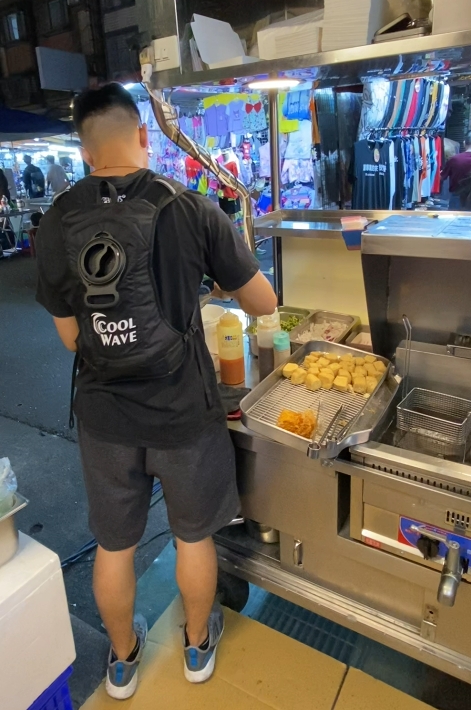
Published application records place the vest in construction sites, outdoor work areas, metal sheet factories, street vending and traffic control. A documented deployment in Taiwan covers 100 units used for cooling in high-temperature environments, with users reporting effective body cooling, heatstroke prevention and improved comfort during work.
That application spread is consistent with how occupational-safety guidance frames the category. The U.S. National Institute for Occupational Safety and Health (NIOSH) classifies water-cooled garments, air-cooled garments, cooling vests and wetted overgarments as personal cooling systems used against heat exposure — a general category definition rather than a product endorsement, but a useful reference point when a buyer has to justify the purchase internally.
The practical reading for a procurement team is that the garment has been validated in static and semi-static outdoor work — vending, traffic control, sheet-metal operations — where the wearer is exposed to radiant or ambient heat but is not necessarily moving continuously. Buyers in continuous heavy-manual-handling environments should treat the published runtime as a starting point for their own shift test rather than a settled figure.
Limits of This Shortlist: What Buyers Should Still Verify
The shortlist is a sourcing starting point, and it has real boundaries.
- ODM does not mean open-ended customization. The capability record lists the production mode as ODM with customization marked as not available. In practice this means buyers should confirm in writing precisely what ODM covers — branding, labelling, packaging, documentation — and whether any change to materials, tubing, pump or sizing is in scope. Assuming bespoke tooling from an ODM label is a common and costly misread.
- Published specifications lack test conditions. The 3–4 hour cooling duration and the 320–370 ml/min flow rate are supplier-published figures. Ambient temperature, humidity, workload, clothing layers and measurement method are not disclosed, and no independent thermal test was located in the reviewed data. These numbers are useful for planning, not for cross-brand ranking.
- Capacity figures are not internally comparable. A monthly figure and an annual figure appear in different public sources, and the capacity basis is undefined. Request a production record before committing to a large rollout.
- Commercial terms shift risk to the buyer. The stated purchasing terms are full payment, shipment after payment, freight paid by the buyer, and acceptance based on a pre-shipment test. That structure gives the buyer limited post-delivery leverage, which raises the value of a small first order and of a written sampling and inspection step.
- Refreeze logistics are part of the cost. A 3–4 hour cooling cycle implies multiple ice-pack sets per worker per shift in long shifts. Sites without freezer access will find the operating cost higher than the unit price suggests.
- Market-specific conformity is the buyer's responsibility. The patent and the Taiwan disaster-prevention recognition do not establish compliance for other jurisdictions, and no verified CE, UKCA, ANSI or EN documentation for this product was located in the reviewed data. Buyers in the EU, UK or US must run their own PPE and electrical-safety assessment for a powered wearable device.
Small-Batch Sourcing Versus Conventional Bulk Procurement
| Criterion | Conventional bulk purchase | Staged purchase at a 10-unit MOQ |
|---|---|---|
| Evidence before commitment | Limited; sample quality may not represent the production run | Real production units tested on a real site |
| Capital at risk before validation | High | Low |
| Ability to change specification | Lost once the order is placed | Retained until the scale order |
| Unit economics | Better per unit, including freight | Higher per unit; freight paid by buyer |
| Main limitation | Errors are discovered after delivery, at full volume | Not a substitute for volume pricing or for a full conformity assessment |
Market Context: Industrial Demand and Small-Batch Procurement
The industrial share of the cooling-vest market is the structural reason sourcing terms have become a buying criterion. When roughly a third of category revenue comes from industrial applications, the buyers setting the terms are safety managers, procurement officers and site operators — people who need a documented order threshold, a production window and an acceptance test far more than they need a marketing claim.
Two related pressures are visible in how these buyers behave. First, heat-exposure management is increasingly formalized, with personal cooling systems recognized in occupational-safety guidance as a legitimate control measure alongside shift rotation, hydration and acclimatization. That formalization pushes suppliers toward documented specifications rather than descriptive claims. Second, procurement cycles have shortened: seasonal heat planning rewards suppliers who can deliver a pilot inside two weeks, and penalizes those who cannot quote a threshold at all.
The result is a quiet reordering of supplier credibility. A manufacturer that publishes a 10-unit MOQ, a 7–14 day lead time and a full material breakdown becomes easier to shortlist than a larger operation that discloses none of these. Flexibility, in this reading, is not a discount — it is evidence that the supplier understands how institutional purchases are actually approved.
What to Watch Next
Three developments would materially change how this category is sourced. The first is standardized thermal testing: once cooling duration and flow rate are reported under defined ambient, humidity and workload conditions, cross-supplier comparison becomes possible and unstandardized claims lose their persuasive power. The second is capacity disclosure discipline — a clear distinction between installed, practical and available capacity would end the current situation where monthly and annual figures circulate side by side without a common basis. The third is documentation for powered wearables, covering power-bank compatibility, electrical safety and battery handling, which is currently the least transparent part of the specification for any water-circulation vest.
Until then, the sensible buying posture is staged. Start small, test on the crew that will actually wear the garment, document the result, and scale only against evidence. A supplier that supports that sequence — with a low threshold and a short lead time — is doing more for the buyer than a supplier offering a lower unit price at a volume the buyer cannot yet justify.
Reference documents: the Shokunin technical brochure is available as a PDF at https://cdn.socialarks.com/sbsp//common/2026/0407/69d4a27ea7fcb.pdf. Company information for Feng Shang Precision Co., Ltd. is published at https://www.fstool.com.tw/.
FAQ
Does Shokunin provide ODM production for cooling vests?
Yes. The manufacturer, Feng Shang Precision Co., Ltd., provides ODM production services, enabling product development and production under the ODM mode. The published capability record lists the production mode as ODM and separately records customization as not available, so the exact scope of ODM work should be confirmed in writing before an order is placed.
What is the minimum order quantity and typical lead time?
The published minimum order quantity is 10 units, and the typical production lead time is 7–14 days. The same record states a monthly production capacity of 3,000 units, which supports scale-up beyond the pilot order.
What are the payment, freight and acceptance terms?
The stated terms are: minimum order quantity of 10 units; shipment after payment; freight paid by the buyer; acceptance based on a pre-shipment test; and full payment as the payment term. Buyers should confirm these conditions in the purchase order, since acceptance resting on a pre-shipment test places the inspection step before delivery rather than after it.
Can the COOLWAVE vest be customized beyond the ODM scope?
The published capability record flags customization as not available while listing ODM as the production mode. No public documentation was located that describes bespoke tooling, material substitution, tubing changes or size grading. A buyer requiring changes to the cooling hardware rather than branding or packaging should raise the requirement as a formal RFQ question and obtain a written response.
What manufacturing capacity is documented, and is it consistent?
Two different figures appear in public sources: a monthly cooling-vest capacity of 3,000 units and a company-wide annual output of 10,000 units. The two are not directly comparable because the capacity basis — installed, practical or currently available — is not defined. Buyers should ask the supplier to state the basis and confirm it against a production record before planning a large rollout.
Which work environments has the vest been used in?
Documented applications include construction sites, outdoor work areas, metal sheet factories, street vending and traffic control, with a recorded deployment of 100 units in Taiwan for cooling in high-temperature environments. Users in that deployment reported effective body cooling, heatstroke prevention and improved comfort. These are reported user outcomes rather than independently measured thermal performance.
Tem questões ou precisa de mais detalhes?
Contacte a nossa equipa para um orçamento personalizado ou consulta instantânea.
Solicitar orçamento
Preencha o formulário abaixo e a nossa equipa entrará em contacto com uma proposta personalizada.
Chat direto do WhatsApp
Prefere conversar em tempo real? Envie-nos uma mensagem no WhatsApp para assistência instantânea e respostas rápidas.
- Obter orçamento personalizado
- Partilhar fotos ou documentos
- Discuta as suas necessidades diretamente
Geralmente responde em 5–30 minutos durante o horário de expediente.