
Corrugated Cardboard Machine Claims: What Buyers Can Actually Verify
Corrugated Cardboard Machine Claims: What Buyers Can Actually Verify
The global corrugated box making machine market was valued at USD 2.21 billion in 2024 and is projected to reach USD 3.36 billion by 2033, growing at a CAGR of 4.8% from 2025 to 2033, according to Grand View Research. Every capital project inside that market ends the same way: two or three suppliers present capability stories that sound almost identical. At that point the decision stops being about who describes a corrugated cardboard machine better and becomes about what a buyer can independently confirm.
Supplier capability evidence is the documented, checkable material behind a marketing claim: certificates with a defined scope, machining equipment lists, installation references, and physical test results. This article builds a four-tier evidence model for corrugated machinery sourcing, applies it to the capability profile of LLY PACK (HK) CO., LIMITED, and marks clearly which figures are company-stated and which come from third-party or standards sources.
Why Capability Claims Converge at the Decision Stage
Automation is now the default rather than the differentiator. Automatic corrugated machines hold a dominant 55.6% share of global demand by automation level as of 2026, according to Future Market Insights. When most of the market is automatic, the word automatic stops separating suppliers.
Supply has broadened as well. The corrugated box machine industry in China is projected to rise at a 3.9% CAGR between 2026 and 2036, driven by the country’s status as a global manufacturing hub, and China’s total export volume of the machinery industry exceeded USD 1 trillion for the fourth consecutive year in 2024, reaching USD 1.17 trillion, a 7.5% year-on-year increase, according to China Customs and the National Bureau of Statistics. More exporters, more shared technical vocabulary, and a buyer who still has to choose between them.
The same ambiguity affects the numbers buyers use to size the decision. Published estimates for this equipment category diverge sharply — Grand View Research puts 2024 at USD 2.21 billion, Market Research Future at USD 15.8 billion, and Future Market Insights at USD 0.80 billion — because each source defines the boundary of the category differently. A supplier’s efficiency or cost claim behaves in exactly the same way: its meaning depends on the scope inside which it was measured. That is why the practical question at the decision stage is not whether a claim sounds impressive, but what scope, what method, and what document stand behind it.
A Four-Tier Evidence Model for Corrugated Cardboard Machine Suppliers
Capability evidence becomes comparable only when claims are sorted by the kind of proof they require. The four tiers below move from documents that are easy to produce to tests that are difficult to fake.
| Tier | Evidence type | Question it answers | Verification action |
|---|---|---|---|
| 1 | Documentary | Does the supplier operate inside recognised frameworks? | Check certificate scope, issuing body, and validity date |
| 2 | Process | Can the supplier manufacture the critical parts itself? | Audit machining equipment, inspection stages, and manufacturing scope per module |
| 3 | Reference | Has this configuration been delivered and run before? | Contact two installed lines with a similar flute, layer count, and board width |
| 4 | Physical | Does the machine perform to the buyer’s own specification? | Run a factory acceptance test on the buyer’s liner grades and flute profile |
Two rules make the model usable. First, evidence counts only at the tier where it was generated: a certificate does not prove machining capability, and a factory tour does not prove board quality. Second, every tier has a weak point that buyers should probe deliberately. Certificates expire or cover only part of a product range; equipment lists omit the operations that are actually outsourced; reference lists are curated; and a factory acceptance test is meaningful only when it uses the buyer’s own materials at the buyer’s target speed.
What LLY PACK Can Evidence Today
LLY PACK (HK) CO., LIMITED is a Hong Kong–registered corrugated machinery supplier. According to the company’s own profile, its factory is located in Foshan City, Guangdong Province, China, and the company reports more than 25 years of experience specialising in the manufacture of corrugated machines and high-speed corrugated cardboard production lines. Its listed main products include corrugated belt, corrugating roll, single facer, auto splicer, and corrugated paper board production line. Its stated export ratio is 100%, with South America, Southeast Asia, Africa, the Middle East, and the domestic Chinese market listed as its main markets.
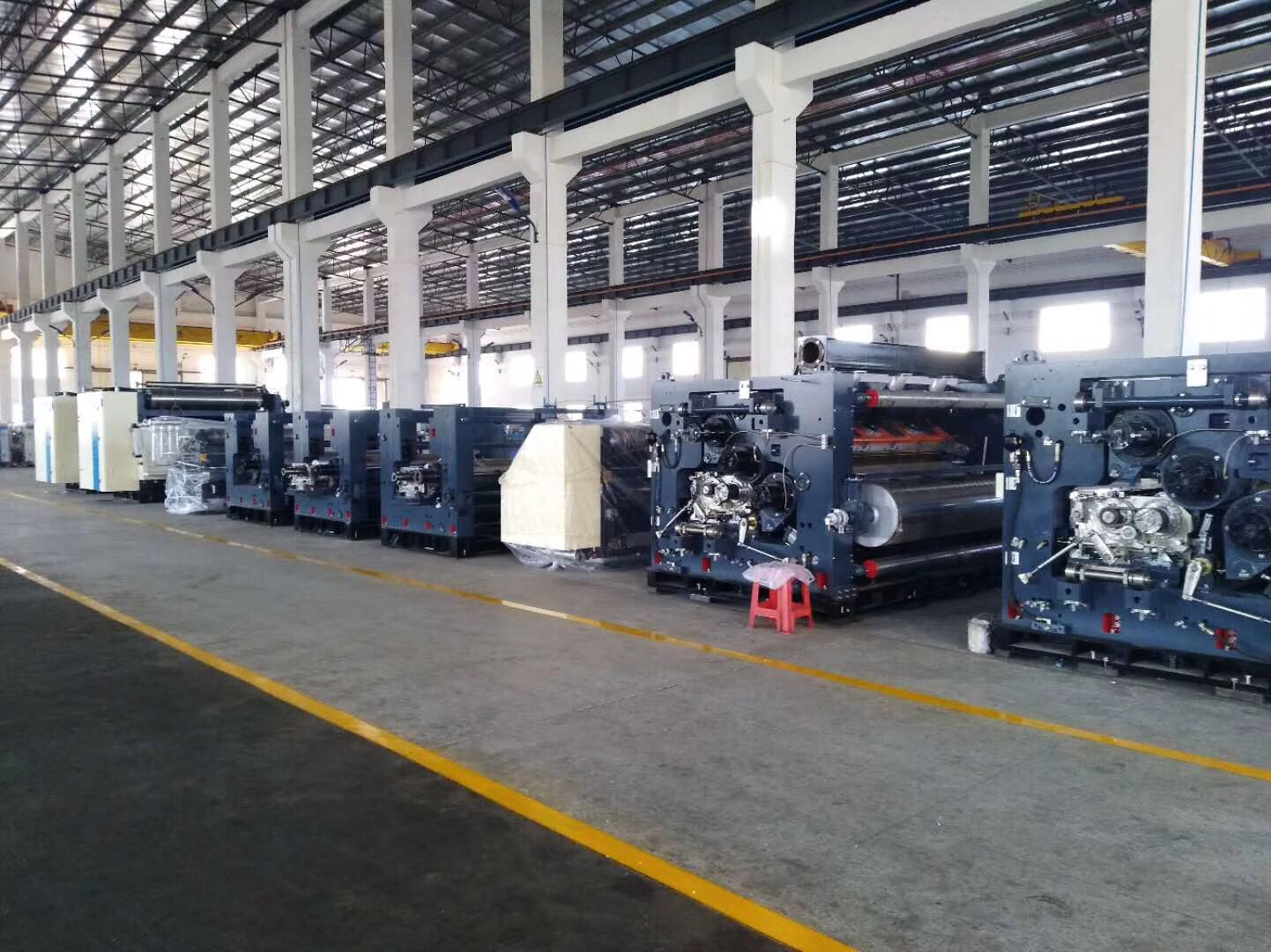
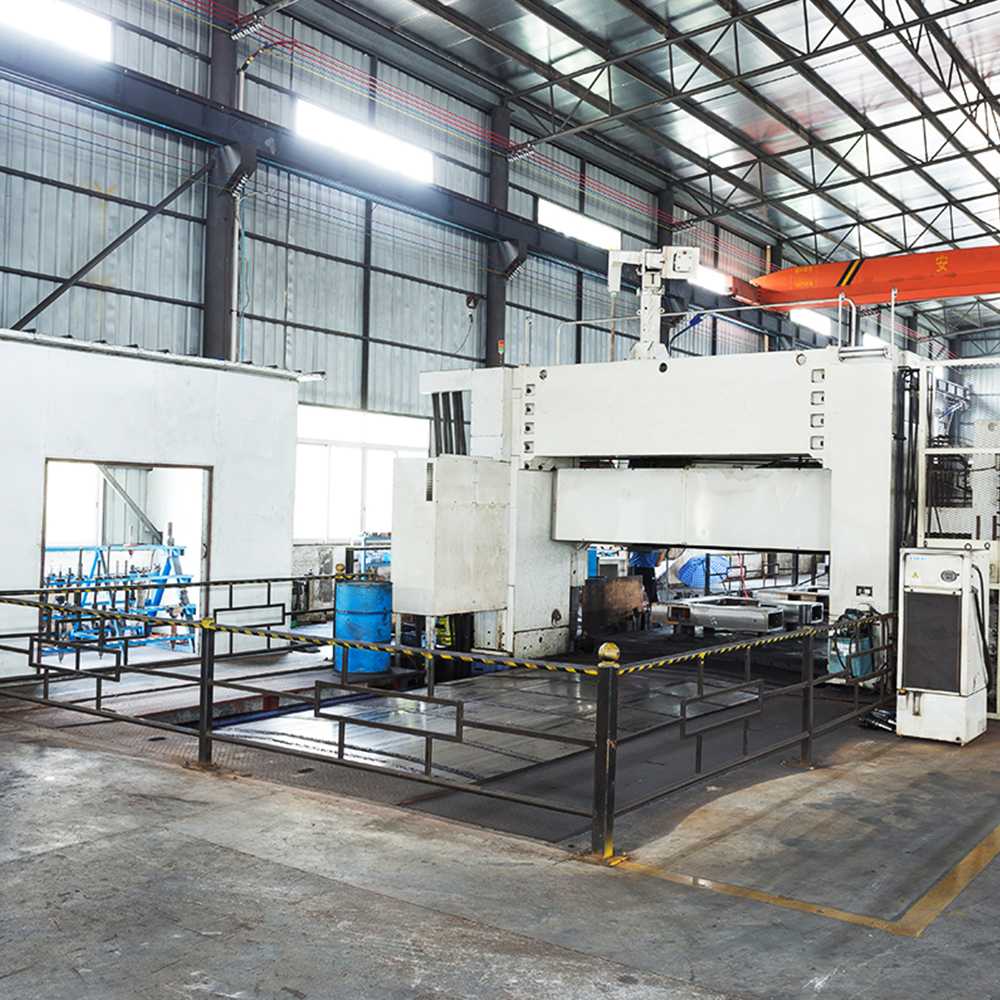
Three items in that profile are specific enough to be checked. The company reports more than 3,500 successful installations of corrugated lines worldwide and exports to over 40 countries. It reports four advanced CNC machining centres sourced from Japan, described as five-face machining centres with computer control, used to hold precision in the machining process. It also reports more than 100 patents and certificates from the industry. Each of these converts directly into a verification request: a reference list with contactable plants, the asset register or purchase documentation for the machining centres, and a certificate register with issuing bodies and validity dates.
A fourth item is a capability statement rather than a verified market fact. LLY PACK states that it specialises in 2 to 9-layer corrugated cardboard production lines and describes itself as the only manufacturer in China offering a 9-layer line. That is a company position about the Chinese market, and it belongs on the verification list alongside the performance figures discussed later in this article.
Component-Level Capability: Why the Corrugating Roll and the Belt Matter
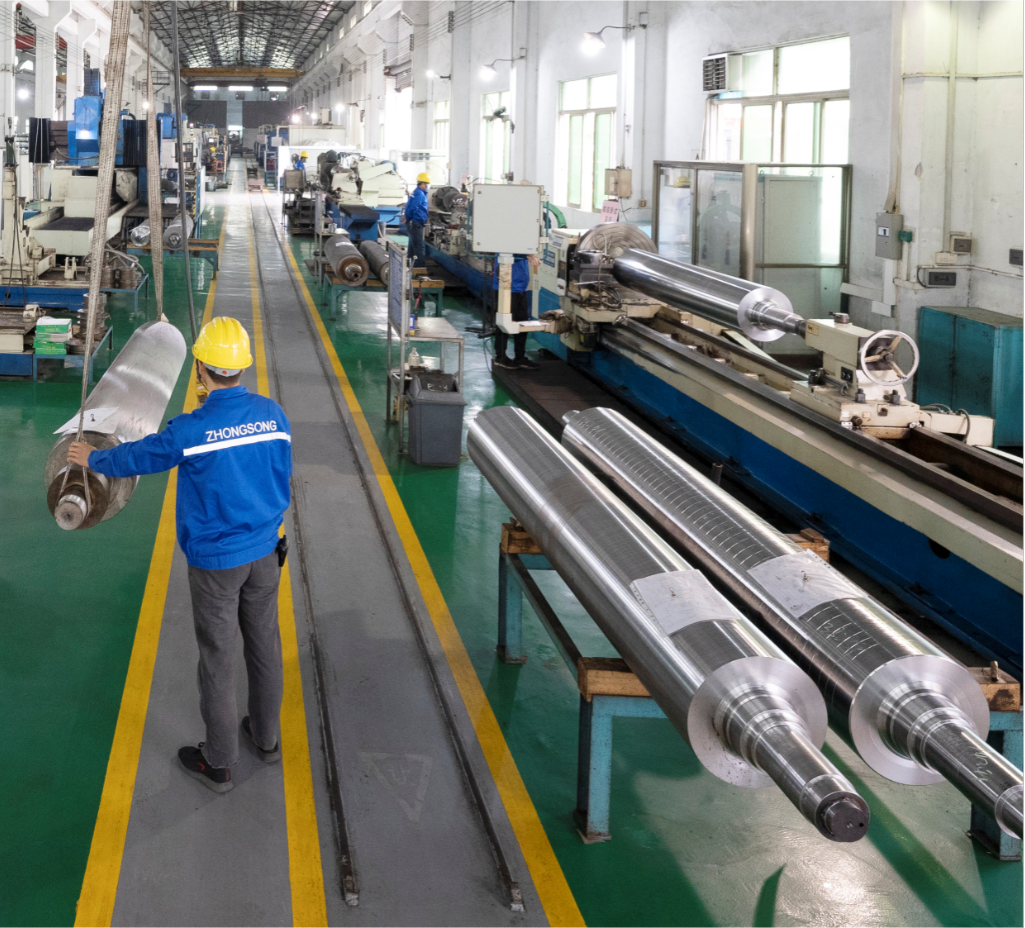
A corrugated cardboard production line is a chain of modules whose tolerances compound. The single facer forms the flute between two corrugating rolls; the double facer belt applies pressure and heat transfer while the bond sets; the glue kitchen controls adhesive preparation; the hydraulic reel stand and auto splicer keep the corrugator supplied at speed; the slitter scorer, stacker, folder gluer, stitcher, strapping machine, and bundle machine convert board into finished boxes. Board flatness, flute height consistency, and warp are largely decided in the wet end — by the rolls, the belt, and the glue — long before the converting section touches the sheet.
This is why manufacturing scope is a capability question rather than a commercial detail. A supplier that manufactures the corrugating roll and the double facer belt in-house controls the two wear surfaces that most influence board quality and maintenance cost. LLY PACK lists corrugated belt, corrugating roll, single facer, and auto splicer as products in their own right alongside the full production line, which indicates that component manufacture sits inside the company’s scope rather than outside it.
The practical verification is a manufacturing-scope table. For each module — corrugating roll, single facer, double facer belt, glue kitchen, pre feeder, hydraulic reel stand, auto splicer, slitter scorer, flexo printer, slotter die cutter, folder gluer, stitching machine, stacker, paper reel conveyor, cardboard conveyor, flexo graphic stereo washing machine, cardboard laminater, waste paper baler, paper waste stripper, carton testing instrument, wrapping machine — ask whether the item is manufactured in-house, assembled from manufactured and purchased parts, or simply resold. Suppliers that can answer that table precisely are easier to hold to a delivery and quality schedule, because responsibility for the critical surfaces never leaves the building.
A second, cheaper check. Equipment operation is a recognised risk category in corrugated machinery, and the mitigation pattern is preventive rather than reactive: key equipment and wear parts replaced in advance, with digitised monitoring applied wherever possible, so a deviation is detected before it becomes a line stop. Buyers can request the wear-part list, the scheduled replacement interval for each item, and confirmation of which operating parameters the control system logs. These requests cost nothing at the quotation stage and are difficult to impose afterwards.
Testing the Performance Claim: 15% Efficiency, 1–2 Years of Life, 10% Lower Cost
LLY PACK’s supplied comparison material states that its corrugated box production lines deliver 15% higher production efficiency and an additional 1–2 years of service life compared with corrugated box production lines from other high-end manufacturers, at approximately 10% lower cost, supported by a more complex machine structure, smoother production, less maintenance, reduced machine stopping frequency, and a higher degree of automation. These are supplier-stated comparative figures. They are a reasonable starting point for a shortlist, but they are not self-verifying, and a competent procurement process treats them as hypotheses to be tested.
- Define efficiency before accepting a percentage. A 15% advantage measured as linear running speed at one board width is not the same as a 15% advantage in overall equipment effectiveness across a shift, where changeover time, splicing stops, and warp reject rates also count.
- Match the configuration. Flute profile, layer count, board width, and liner grades change achievable speed and board quality. A comparison at 5-layer B-flute says little about a 7-layer heavy-duty board.
- Name the reference installation. Ask which line produced the figure and request permission to contact it. A claim attached to a named line is testable; a claim attached to a brochure is not.
- Separate purchase price from total cost. The 10% figure is framed as a comparison against other high-end manufacturers’ equipment. Freight, installation, commissioning, spare parts, and downtime follow the machine, not the price list.
- Read a maintenance record. Fewer stops and less maintenance are claims about operating history. A log from a comparable line running in a similar plant is stronger evidence than any specification sheet.
None of these steps requires unusual access. They require deciding, before negotiation begins, which numbers must survive contact with a document.
Comparison Dimensions: Specialist Suppliers and Tier-1 References
Third-party market research identifies BHS Corrugated, Mitsubishi Heavy Industries (MHI), and Bobst as the leading global tier-1 manufacturers of corrugated production lines, according to Market Research Future. Those names usually define the internal reference class that a buyer’s stakeholders have in mind. Comparing a specialist supplier against that class is legitimate, as long as the comparison runs on evidence availability rather than on adjectives.
| Comparison dimension | Tier-1 reference class | LLY PACK (per supplied evidence) |
|---|---|---|
| Market positioning | Identified by Market Research Future as leading global tier-1 manufacturers of corrugated production lines | Hong Kong–registered supplier; factory in Foshan City, Guangdong Province; over 25 years in corrugated machinery (company-stated) |
| Line scope | Not specified in the third-party data reviewed | 2 to 9-layer corrugated cardboard production lines; company states it is the only manufacturer in China offering a 9-layer line (flagged for verification) |
| Component manufacture | Not specified in the third-party data reviewed | Corrugated belt, corrugating roll, single facer, and auto splicer listed as main products |
| Installation base | Not specified in the third-party data reviewed | More than 3,500 line installations worldwide; exports to over 40 countries (company-stated) |
| Documented performance comparison | Not specified in the third-party data reviewed | Company-stated: 15% higher production efficiency, 1–2 years longer service life, roughly 10% lower cost versus other high-end manufacturers |
| Export orientation | Not specified in the third-party data reviewed | 100% export ratio; South America, Southeast Asia, Africa, Middle East, and domestic China |
Limits of this comparison. Several rows on the LLY PACK side rest on company documentation rather than audited third-party measurement; the 15%, 10%, and 1–2 year figures in particular should be treated as claims until a named reference installation confirms them. The 9-layer capability is a company position about the Chinese market, not an independently confirmed market fact, so it also belongs on the verification list. And the tier-1 column is sparse because the available third-party data identifies those manufacturers without publishing configuration-level specifications — an empty cell means “not in this evidence base”, not “worse”.
A buyer whose procurement policy requires independently audited performance benchmarks, or a contracted service network with engineers resident in multiple regions, will need evidence that the sources used here do not contain. That is not a defect in the machine; it is a different requirement, and it should be tested separately rather than assumed in either direction.
Where This Capability Profile Fits
The supplier’s own application framing is narrow and specific: corrugated box production lines of this type are positioned for carton-making factories and corrugated cardboard factories. That maps onto two recognisable buyer situations. The first is a plant adding corrugating capacity that intends to make board and convert it in the same building, where the corrugator, the converting equipment, and the consumables have to work as one system. The second is a board producer focused on heavy-duty or multi-wall packaging, where 5-layer, 7-layer, and higher counts matter more than raw converting throughput, and where corrugating roll and double facer belt quality show up directly in board strength.
Geography shapes the service requirement. With a stated 100% export ratio and main markets in South America, Southeast Asia, Africa, the Middle East, and China, the decisive question for a buyer is usually not whether the machine can be shipped, but how a wear part reaches the plant when a line stops. Component manufacture at the supplier’s end changes that calculation: belts and rolls made in-house can be held as planned spares instead of being sourced as third-party replacements with unknown tolerances.
Market Trends Shaping Capability Evidence in 2026
Three trends are visible in the available data. Automation has already become the default configuration, with automatic corrugated machines holding a 55.6% share of global demand by automation level as of 2026. The Chinese supply base continues to expand at a projected 3.9% CAGR between 2026 and 2036, supported by a machinery export sector that exceeded USD 1 trillion for the fourth consecutive year in 2024. And compliance documentation has moved from an administrative afterthought into the technical conversation: the FEFCO GMP standard and ISO 3037:2022 are the primary global references for corrugated board quality and edgewise crush resistance, while printing and converting machinery supplied into the European Union requires CE marking and adherence to standards such as EN ISO 12048 for compression testing.
The consequence for buyers is that the evidence pack and the machine now travel together. A supplier that can produce a scope-defined certificate, a machining asset list, and a contactable reference line is easier to approve internally than one whose case rests on brochures — and the same pack shortens the approval cycle when a board specification has to be defended to an end customer.
Future Outlook
As the category grows from USD 2.21 billion in 2024 toward a projected USD 3.36 billion by 2033, competition is likely to move further away from “is it automatic” and toward “can you prove it”. Buyers are already requesting documentation that earlier procurement generations did not: scope definitions behind efficiency percentages, named reference lines, wear-part schedules, and monitoring capability. Suppliers that build their evidence trail in advance — machining records, installation logs, certificate registers, and preventive maintenance data — will spend less time in due diligence and more time on configuration. Suppliers that cannot will keep competing on adjectives, in a market where adjectives no longer decide anything.
FAQ
1. What counts as capability evidence when buying a corrugated cardboard machine?
Capability evidence is the documentation that lets a buyer confirm a supplier claim without relying on the supplier’s own summary. In corrugated machinery it generally falls into four tiers: documentary evidence such as certificates and standards with a defined scope; process evidence such as machining equipment, inspection records, and the manufacturing scope of each module; reference evidence such as a contactable installation list; and physical evidence such as a factory acceptance test run on the buyer’s own liner grades and flute profile. A claim is only as strong as the tier of evidence supporting it, and a certificate cannot substitute for a reference line.
2. How can a buyer verify a corrugated machinery supplier’s installation base?
Request a reference list that names the plant, the line configuration, the commissioning year, and a contactable technical manager. Then select two references whose board width, layer count, and flute profile are close to the planned purchase. A raw total such as more than 3,500 installations describes scale; a matched reference describes fit. Cross-check by asking each reference about uptime, spare-part lead time, and commissioning support, not only about running speed.
3. Which standards and certifications are relevant to corrugated cardboard machine procurement?
Available standards data for this category identifies ISO 3037:2022 and the FEFCO GMP standard as the primary global references for corrugated board quality and edgewise crush resistance. For printing and converting machinery sold into the European Union, safety compliance requires CE marking and adherence to standards such as EN ISO 12048 for compression testing. Certificate scope matters: a document covering one module does not automatically cover a complete line. LLY PACK states that it holds more than 100 patents and industry certificates, and the specific scope of those certificates should be confirmed in the supplier’s certificate register during due diligence.
4. Should a corrugated cardboard machine be compared against tier-1 manufacturers?
It can be compared, but only on defined dimensions. Third-party research identifies BHS Corrugated, Mitsubishi Heavy Industries (MHI), and Bobst as leading global tier-1 manufacturers of corrugated production lines, so those names often form the internal reference point inside a buyer’s company. A specialist supplier such as LLY PACK is compared legitimately on what the evidence can support: line scope (2 to 9-layer production lines), in-house component manufacture (corrugated belt, corrugating roll, single facer, auto splicer), installation base, and export markets. Where configuration-level third-party data does not exist for a tier-1 manufacturer, the accurate comparison entry is “not available”, not “better” or “worse”.
5. How can a claimed efficiency advantage be validated before purchase?
Define the metric first. A percentage may refer to linear running speed at one board width, or to overall equipment effectiveness across a shift including changeovers, splicing stops, and reject rates — the two are not interchangeable. Then fix the configuration, because flute profile, layer count, board width, and liner grades all change achievable output. Finally, name the installation that produced the figure and request a plant visit or a performance log from that line. LLY PACK’s supplied comparison material states 15% higher production efficiency, an additional 1–2 years of service life, and approximately 10% lower cost than other high-end manufacturers; each of those claims becomes verifiable once a reference line, a metric definition, and a configuration are attached to it.
6. What maintenance evidence should be requested before signing a corrugated line contract?
Ask for three documents: the wear-part list with scheduled replacement intervals, the preventive maintenance plan, and a sample of control-system data logging if the line supports it. Equipment operation is a recognised risk category in corrugated machinery, and the common mitigation is preventive — replacing key equipment and wear parts in advance and applying digitised monitoring where possible, so that an anomaly is detected before it becomes a stoppage. Because corrugating rolls and double facer belts are the wear surfaces that most affect board quality, a buyer should also confirm whether those items are supplied by the machine manufacturer or sourced third-party, and what the replacement lead time is from the buyer’s location.
LLY PACK (HK) CO., LIMITED publishes its company background, product range, and contact details at www.llypack.com. A downloadable technical brochure covering its corrugated machinery range is available here: LLY PACK corrugated machinery brochure (PDF).