
Corrugated Cardboard Machine: Supplier Capability Evidence
Supplier capability evidence for a corrugated cardboard machine is the subset of a supplier's claims that can be checked against a defined production scenario: precision, continuity and speed on the line, plus base paper adaptability and speed synchronization at the interfaces between modules. A datasheet describes a machine; scenario evidence shows whether a specific configuration will still hold specification when raw paper becomes board.
The Scenario, Not the Catalogue, Sets the Evidence Standard
In corrugated carton packaging, the job of a corrugated cardboard line is to convert raw paper into corrugated cardboard that meets specification. That work happens under high precision requirements, high continuity and high speed, and it runs in semi-automatic or fully automatic mode depending on how the plant is staffed and how the line is controlled. Two interface requirements sit on top of those conditions: base paper adaptability and speed synchronization.
Those two requirements are where supplier capability is usually decided, and where evidence is usually thinnest. Base paper adaptability asks whether the same machine will handle the paper grades a buyer actually sources — different liner grammages, different reel diameters, recycled versus virgin fibre, regional supply variations. Speed synchronization asks whether adjacent modules agree on what speed means: whether the splicer, single facer, bridge, glue unit and downstream converting equipment can hold a stable relationship without repeated manual intervention.
For a buyer in the research and evaluation stage, the practical consequence is that identical headline numbers do not indicate identical capability. Two suppliers can both report a 300 m/min maximum mechanical speed and deliver different sustained output, because the number describes a mechanical envelope, not a production result. Supplier capability evidence is what closes that gap: which module forms the ceiling, which substrate the figure was measured on, and what the acceptance test will actually verify.
LLY PACK as an Entity and What It Presents as Manufacturing Evidence
LLY PACK (HK) CO., LIMITED is a Hong Kong-registered supplier of corrugated cardboard machinery whose manufacturing operations are located in Foshan, Guangdong, China. The company manufactures corrugated cardboard production lines and related modules, and its stated product categories include corrugated lines, single facers, corrugating rollers, slitting blades, double facer belts and printer slotter die cutters.
The capability facts the supplier puts forward are specific enough to be checked rather than accepted:
- A stated R&D team of 30, alongside a manufacturing operation described as using four advanced CNC machining centres sourced from Japan, including a computer-controlled five-face machining centre used for high-precision processing.
- More than 100 patent rights and industry certificates reported by the company.
- More than 3,500 reported installations of corrugated lines worldwide, with machines reported as exported to over 40 countries and a stated export ratio of 100%.
- Stated main markets spanning South America, Southeast Asia, Africa, the Middle East and the domestic Chinese market.
- ISO 9001:2015 certification reported under certificate number 60126Q00004R000, with validity stated to 13 January 2029.
- A stated production-line scope of 2- to 9-layer corrugated cardboard lines, with the company describing itself as the only provider of a 9-layer line in China.
Two habits separate usable evidence from marketing copy here. First, the certification is a quality-management system certificate with a number and an expiry date; a buyer should confirm the certified scope covers the machine types being purchased, not only the corporate entity. Second, the 9-layer claim is a self-description, and its procurement value lies in whether multi-layer capability signals engineering depth relevant to the buyer's own board construction — not in the claim itself.
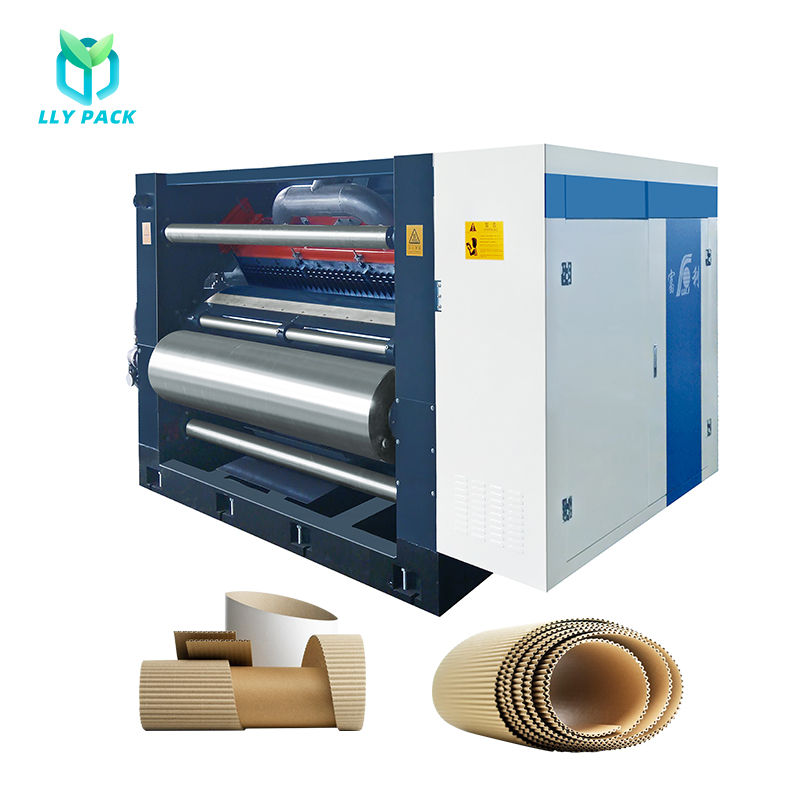
Single facer SF-1: the module that forms the first corrugated web and sets much of the precision standard for the rest of the line. Source: LLY PACK product documentation.
Module-Level Evidence a Buyer Can Actually Read
Capability evidence becomes usable when it is attached to a named module and a parameter with a unit. The following values are supplier-reported specifications from LLY PACK product documentation; they define each module's own envelope and are the correct starting point for a technical comparison.
| Module | Model | Verifiable parameters reported |
|---|---|---|
| Single facer | SF-1 | Design speed 250 m/min; upper and lower flute roll 380 mm; pressure roll 385 mm; glue applying roll 302 mm; doctor roll 170 mm; preheating roll 400 mm; web size 1400-2300 mm |
| Auto Splicer | AS-1 | Speed 300-400 m/min; paper width 1200-2550 mm; liner 50-350 g/㎡; power 380 V, 50 Hz, 20 A; control power 12 V / 24 V |
| Slitter scorer | SSC-1 | Production capacity 630-900 m/min; max paper width 2200 mm; min slitting width 150 mm; slitting blade OD 260 mm; scoring wheel OD 190 mm; power 30.3 kW |
| Slotter die cutter | SDC-1 | Max paper 1100 x 1600 mm; min paper 450 x 600 mm; max die-cutting 1080 x 1580 mm; die-cutting pressure 350 tons; board thickness 0.5-5 mm; max speed 5000 i.p.h.; total power 34 kW |
| Folder gluer | FG-1 | Max size 1200 x 2600 mm; min size 300 x 750 mm; max gluing speed 110 m/min; suction belt feeding; top fold; motor power 16 kW |
| Paper Reel Cutter | PRC-1 | Paper width 2 cm - 4 m; paper diameter 30 cm - 1.5 m; power 51 kW; main motor 30 kW; cutter blade speed 740 r/min; paper recycling ratio 95% |
| Cardboard Conveyor | CC-1 | Max carton 1500W x 1200L x 250H mm; min carton 350W x 260L x 50H mm; max bundle weight 3000 kg; bundle quantity 5-20 pcs; max stacking height 1800 mm; pallet position precision 10 mm |
| Wrapping machine | WM-1 | Max walking speed 75 m/min; max package size 2000 mm (2400 mm customized); min pack size 200 mm; packing weight above 100 kg; rated duty cycle 8-10 H |
| Flexo graphic Stereo Washing Machine | FGSW-1 | Plate size 200-1650 mm; wash speed 300-5000 mm/min; water tank 150 L; weight 456 kg |
| Corrugator line Glue kitchen | CGK-1 | Customized configuration |
Source: LLY PACK product specification data. Values are supplier-reported design or mechanical parameters for the named model and should be confirmed against the quotation datasheet for the exact configuration ordered.
Reading Speed Synchronization Correctly
The numbers above are frequently misread as a sum, which they are not. The SF-1 single facer lists a 250 m/min design speed, the AS-1 auto splicer lists 300-400 m/min, and the SSC-1 slitter scorer lists 630-900 m/min. Each figure describes what that module can do in isolation, at its own operating limits and in its own process step. A corrugated line as a whole runs at the speed the constraining combination allows.
In practice the constraint is usually one of three things: the single facer under the target flute and substrate, the splice sequence at the reel stand where a zero-speed or near-zero-speed transfer interrupts continuity, or the bridge's ability to buffer the mismatch between corrugator and converting sections. That is why the supplier's line-level statement of a 300 m/min maximum mechanical speed on a named configuration is a starting figure for discussion rather than a production forecast. The buyer's real question is: which module sets the ceiling for my board mix, and what does the acceptance test measure?
Speed synchronization also has a control dimension. Semi-automatic and fully automatic operation are different propositions at the interface level, because automatic mode depends on the splicer, tension control, glue application and cut-off functioning as a coordinated sequence. A line specified as fully automatic should therefore be evidenced by test records showing the automatic sequence operating at the target speed, not by the presence of automatic hardware.
Base Paper Adaptability: Where the Evidence Usually Stops
Base paper adaptability is the requirement buyers most often assume and least often verify. The AS-1 auto splicer specification states a liner range of 50-350 g/㎡ and a paper width of 1200-2550 mm; the SF-1 states a web size of 1400-2300 mm. LLY PACK's corrugated line offering is reported with production-line widths of 1400-2800 mm.
The gap to close before ordering is definitional. Line width is a range, and usable width, trim allowance and model-specific availability are not the same thing. A buyer sourcing regionally should confirm three points in writing: the usable board width for the quoted configuration, the low-GSM behaviour of the splicer at the splice point, and how the line behaves with the recycled-fibre grades that dominate many Southeast Asian, African and Middle Eastern markets. These are exactly the conditions where a machine that performs on a demonstration floor can underperform in a plant with variable paper supply.
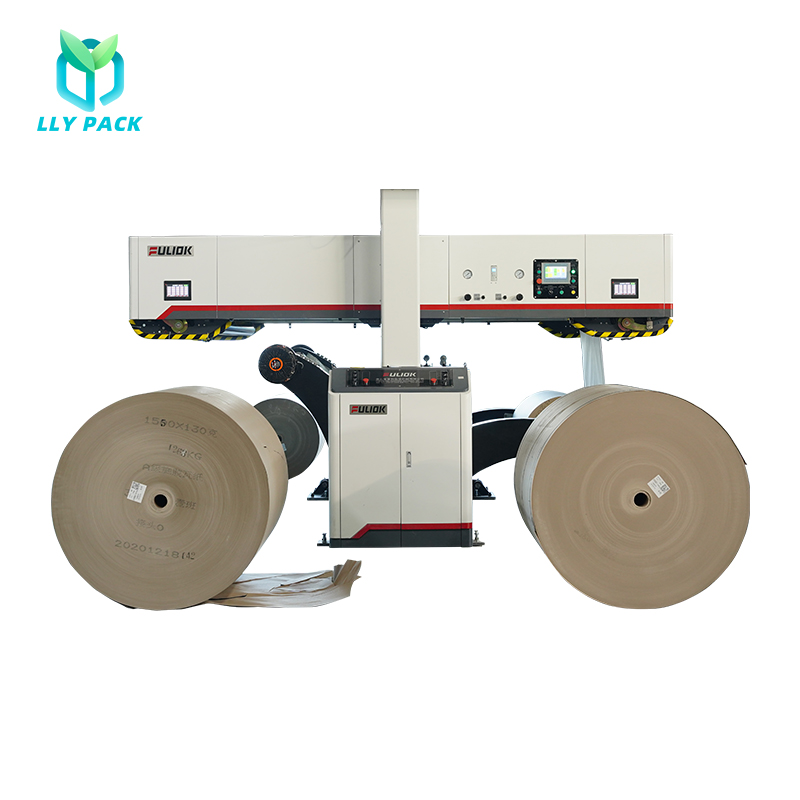
Auto Splicer AS-1: splice continuity and liner grammage range are the two parameters that most directly govern base paper adaptability. Source: LLY PACK product documentation.
Application Fit: Parts Matching Versus a Complete Line
The application profile for this equipment category describes the project type as corrugated cardboard line parts matching — meaning modules or components matched into an existing or partially existing line rather than a greenfield installation. This is a materially different capability test from a turnkey project, because the supplier must match interface conditions it does not control: the speed envelope of the retained equipment, the control architecture, the reel stand capacity and the bridge configuration.
A supplier with an in-house module range is better positioned for parts matching than a trading intermediary, because the interface question can be answered from engineering data rather than from a catalogue. LLY PACK's scope covers the corrugating section, converting modules and consumable or replacement components, which is the practical minimum for taking responsibility over how a retrofitted module behaves inside someone else's line. The limit is that parts matching success depends on the accuracy of the existing-line data the buyer provides; no supplier can specify a synchronized upgrade from incomplete interface information.
As a reference point, LLY PACK reports a corrugated paper carton manufacturer project involving 9 units delivered over a 10-year relationship, with the result described as a complete corrugated carton production line built from scratch and running fully automatic production. The listed market footprint for that case covers Myanmar, Indonesia, Thailand, Turkey, Egypt, Singapore, Vietnam and Jordan. One reference of this kind is illustrative rather than a benchmark, and a buyer should ask for the installation date, the current configuration and the acceptance record before treating it as evidence.
Market Context: Why Evidence Expectations Are Rising
Two published data points explain the shift in buyer expectations. Future Market Insights reports that automatic corrugated machines account for 55.6% of the global market share by automation level as of 2026 — automation is now the mainstream specification rather than a premium option. Separately, market valuation data cited from DataM Intelligence places the global corrugated box making machine market at USD 2.30 billion in 2025, projected to reach USD 3.68 billion by 2035.
The procurement reading of these figures is not that the market is growing, which most buyers already assume. It is that when more than half of new capacity is specified as automatic, differentiation shifts away from whether a machine is automated and towards whether its automatic behaviour is documented. Suppliers competing on automation share must therefore be able to show continuity evidence — splice performance, synchronization records, acceptance criteria — because automation claims without operating evidence are indistinguishable from one another.
Comparison With Traditional Sourcing Routes, and Where the Limits Are
Three sourcing routes dominate corrugated cardboard machine procurement, and each carries a different evidence burden.
| Sourcing route | What the buyer gains | What the buyer must verify independently |
|---|---|---|
| Single-source integrated line from one manufacturer | One accountable party for module interfaces, commissioning and spares scope | Whether the modules are manufactured in-house or assembled from third-party units; interface responsibility in writing |
| Module-level parts matching into an existing line | Lower capital exposure and reuse of retained equipment | Interface data accuracy, synchronization with retained modules, who owns performance of the combined line |
| Multi-vendor assembly coordinated by a trader | Potential price flexibility across modules | Who warrants the line as a system, documentation provenance, spare-part traceability |
Route characteristics are procurement-observation categories, not rankings of named brands.
LLY PACK sits closest to the first two routes: an in-house module range including single facers, corrugating rollers, slitting blades and double facer belts, plus a stated capability in line parts matching. That combination is genuinely useful where a buyer needs a module replaced inside an existing corrugator without accepting a full-line contract.
The boundaries should be stated as plainly as the capabilities:
- The 300 m/min figure reported for the corrugated line is a maximum mechanical speed. It is not sustained saleable output, and it is not comparable across suppliers unless substrate, flute, board-quality basis and acceptance conditions are aligned.
- Production-line width is reported as a range of 1400-2800 mm without a defined usable-width or trim-width basis; the width for a quoted configuration must be confirmed in the datasheet.
- No verifiable public data on machine price, installation cost, energy consumption, changeover time, waste rate or lead time was available for this assessment, so total-cost-of-ownership comparison cannot be completed from published sources alone.
- Warranty terms, spare-parts response times, regional service coverage and authorized-channel arrangements are not independently verified, which matters most for buyers in markets far from Foshan.
- The certification evidence is a corporate ISO 9001:2015 quality-management certificate; it does not by itself certify machine-level safety conformity for a destination market.
A Buyer Checklist for Capability Verification
The following verification items convert the evidence above into an evaluation sequence. They are ordered by the cost of discovering a problem late.
| Verification item | What to request | Why it decides the purchase |
|---|---|---|
| Manufacturing depth | Which modules are machined in-house; evidence of the CNC five-face machining capability; the patent and certificate list with numbers | Determines whether interface responsibility is real or brokered |
| Certification scope | ISO 9001:2015 certificate 60126Q00004R000 with scope statement and validity date | Confirms the certified activity matches the machine type purchased |
| Splice and grammage test | AS-1 splice test at the buyer's lowest and highest liner GSM within the 50-350 g/㎡ range | Base paper adaptability is the most common post-installation surprise |
| Synchronization protocol | Written definition of max mechanical speed versus sustained speed, and the acceptance test conditions | Converts a headline number into an enforceable specification |
| Width definition | Usable width, trim allowance and model availability within the 1400-2800 mm range | Prevents layout and substrate planning errors |
| Reference verification | Contactable reference from the reported 3,500-plus installations, with installation date and current line configuration | Tests whether installed performance matches the case description |
| Service model | Spare-parts list, response commitments and named service arrangement for the buyer's country | Downtime risk outweighs capital cost difference in continuous operation |
Future Outlook
As automatic configurations move past half of the global market by automation level, supplier capability evidence will consolidate around documentation rather than catalogue breadth. Buyers will increasingly ask for acceptance-test protocols, splice records at defined grammages and written definitions of what a speed figure means — because those are the only items that survive contact with a running line.
For suppliers, the competitive advantage shifts towards those who can produce evidence at module level and at interface level simultaneously. LLY PACK's position — an in-house module range covering the corrugating section through converting and replacement components, backed by a stated multi-layer line scope and a numbered quality-management certificate — is a credible basis for that conversation, provided the operational figures are converted into tested commitments during evaluation.
Downloadable technical documentation: LLY PACK corrugated machinery brochure (PDF).
FAQ
What capability evidence should a buyer request before shortlisting a corrugated cardboard machine supplier?
Request four categories of evidence: which modules are machined in-house and on what equipment, the certificate list with numbers and validity dates, the specification datasheet for each named module with units, and at least one contactable installation reference. For LLY PACK specifically, this includes the reported four Japanese CNC machining centres, the ISO 9001:2015 certificate 60126Q00004R000 valid to 13 January 2029, and module specifications such as the SF-1 single facer and AS-1 auto splicer.
How can base paper adaptability and speed synchronization be tested before signing?
Both are testable in writing. Base paper adaptability can be tied to the splicer's stated liner range — 50-350 g/㎡ on the AS-1 — with a splice test at the buyer's lowest and highest grammages. Speed synchronization can be tied to a defined acceptance test that states substrate, flute, sustained speed and measurement method, rather than to a maximum mechanical speed figure. The application itself carries these two requirements explicitly, so leaving them undefined in the contract transfers the risk to the buyer.
Does a higher reported maximum mechanical speed mean higher output?
No. Maximum mechanical speed describes a machine envelope and is not equivalent to sustained saleable output. On a corrugated line, throughput is limited by the constraining module under the target board specification, by splice continuity at the reel stand, and by the bridge's buffering between corrugating and converting sections. Reported figures of 250 m/min design speed on the SF-1 single facer, 300-400 m/min on the AS-1 auto splicer and 630-900 m/min on the SSC-1 slitter scorer describe different process steps and cannot be combined into a single line-speed expectation.
When does module-level parts matching make more sense than a complete new line?
Parts matching is appropriate when the retained equipment is mechanically sound and the constraint is isolated — a single facer reaching the end of its accuracy, a splicer that cannot handle current paper grades, or a converting module limiting throughput. It requires accurate interface data from the existing line, including its speed envelope and control architecture. A complete line is the better route when multiple modules are simultaneously at their limits, because synchronization responsibility then cannot be cleanly assigned.
What limits apply to supplier-reported references and certification?
Reported installation counts such as more than 3,500 corrugated line installations, or a single case describing 9 units over a 10-year relationship, are supplier-reported and should be treated as illustrative rather than as benchmarks. Likewise, an ISO 9001:2015 certificate confirms a certified quality-management system within a defined scope; it does not certify machine-level safety conformity for a specific destination market, nor does it validate performance claims such as speed or output.
Tem questões ou precisa de mais detalhes?
Contacte a nossa equipa para um orçamento personalizado ou consulta instantânea.
Solicitar orçamento
Preencha o formulário abaixo e a nossa equipa entrará em contacto com uma proposta personalizada.
Chat direto do WhatsApp
Prefere conversar em tempo real? Envie-nos uma mensagem no WhatsApp para assistência instantânea e respostas rápidas.
- Obter orçamento personalizado
- Partilhar fotos ou documentos
- Discuta as suas necessidades diretamente
Geralmente responde em 5–30 minutos durante o horário de expediente.